
News
Women Make Up Just 9.7% of 2027 Election Candidates, UN Women Raises Alarm

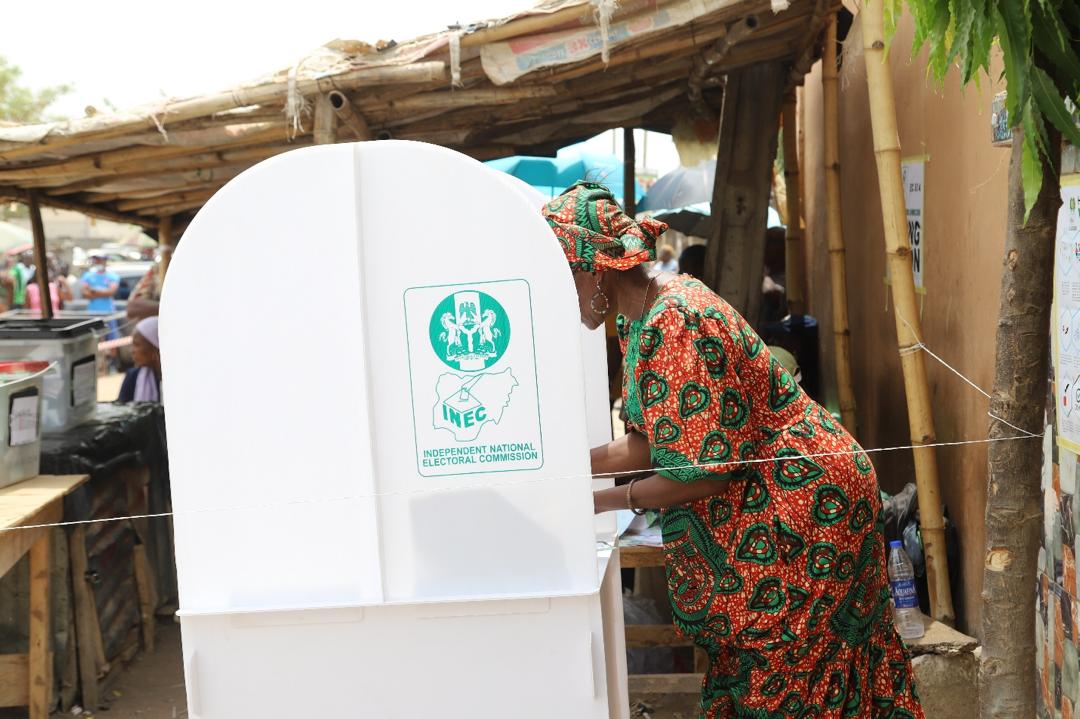
Women Make Up Just 9.7% of 2027 Election Candidates, UN Women Raises Alarm
…Launches #VoteHer2027 campaign, urges Nigerians to reject gender bias at polls, assess candidates on competence, integrity
By: Michael Mike
The United Nations Entity for Gender Equality and the Empowerment of Women (UN Women) has raised concerns over the low representation of women in Nigeria’s 2027 general elections, revealing that female candidates account for only 9.7 per cent of the total candidates.
The organisation warned that Nigeria risked deepening its gender imbalance in governance if voters allowed prejudice against women to influence their choices at the polls.
It consequently launched the #VoteHer2027 campaign, urging Nigerians to judge candidates in the forthcoming elections by their competence, integrity, experience and policy proposals rather than their gender.
UN Women said the 9.7 per cent representation of women among candidates underscored the scale of women’s exclusion from the country’s political process, despite accounting for nearly half of Nigeria’s population.
It noted that even if every female candidate emerged victorious in the elections, women’s representation would still remain significantly below equal participation in elected offices.
The organisation, in a statement issued in Abuja on Wednesday, said women should neither be elected merely because they were women nor denied electoral support because of their gender.
It maintained that women’s participation in governance was fundamentally an issue of fairness, equal rights and social justice, stressing that decisions taken by elected representatives affected both men and women.
“Women must have a fair chance to help shape the laws, policies and priorities that govern their lives and communities,” it said.
The organisation argued that allowing gender stereotypes to determine electoral choices would undermine democratic representation and weaken the country’s commitment to equality.
It also recalled that Nigeria had made several international and national commitments to promoting women’s participation in political leadership, including the Convention on the Elimination of All Forms of Discrimination Against Women (CEDAW), the Maputo Protocol and the Beijing Platform for Action.
It said Nigeria’s National Gender Policy also provided for affirmative action, with representation targets ranging from 30 to 50 per cent.
However, the persistent gap between these commitments and women’s actual participation in elective positions remained a major concern.
As part of efforts to change public attitudes ahead of the elections, UN Women said the #VoteHer2027 campaign would deploy radio, social media and partnerships with media organisations to challenge discriminatory narratives and promote issue-based electoral choices.
A major component of the initiative is NO BE BY GENDER, an issue-based radio drama and expert call-in programme to be broadcast on Radio Nigeria Network.
The programme is designed to use relatable stories and discussions with experts and gender advocates to expose the stereotypes, myths and socio-cultural barriers that discourage Nigerians from supporting women seeking elective positions.
Listeners will also be encouraged to interrogate their assumptions about women in leadership and assess candidates based on their ideas, track records and capacity to deliver.
The organisation said it would further engage media partners to bring gender advocates and other experts into public discussions on women’s political participation, while encouraging fair and balanced coverage of female candidates.
It urged journalists to avoid narratives that reinforce gender stereotypes and instead give women candidates the same level of scrutiny and visibility afforded their male counterparts.
UN Women also called on political and traditional leaders, civil society organisations, influencers and community stakeholders to intensify advocacy against gender discrimination in the electoral process.
It warned that failure to address the barriers confronting women in politics would further widen the gender gap in governance and undermine the principle of inclusive democratic representation.
With women accounting for only 9.7 per cent of candidates, the organisation said Nigeria could not afford to compound their existing political marginalisation with prejudice at the ballot box.
It therefore urged voters to look beyond gender and make electoral decisions based on the quality of candidates, their integrity, experience and capacity to address the country’s challenges.
The campaign comes amid renewed attention to women’s political representation ahead of the 2027 elections, with the debate increasingly focusing on how Nigeria can translate its constitutional and international commitments to gender equality into meaningful participation in political decision-making.
Women Make Up Just 9.7% of 2027 Election Candidates, UN Women Raises Alarm



Nigerian military precision strikes neutralise 19 terrorists in Ngala, Borno
By: Zagazola Makama
The Nigerian military has neutralised at least 15 suspected terrorists in a series of precision airstrikes targeting insurgent positions around Bulabulutube in Ngala Local Government Area of Borno State.
Security sources said the strikes were conducted at about 7:56 p.m. on Nov. 8, following aerial surveillance that identified approximately 30 terrorist fighters gathered under a tree in the area.
The military aircraft subsequently carried out a precision strike on the identified target.
Battle Damage Assessment (BDA) indicated that about 15 terrorists were neutralised, while parts of a nearby building were destroyed.
The aircraft subsequently tracked another group of five fleeing terrorists who had taken cover under a tree and conducted a second precision strike.
The assessment revealed that about four additional terrorists were neutralised, while a secondary explosion was observed, suggesting the possible destruction of explosive materials or other military supplies.
In a related operation, the aircraft proceeded towards the Lake Chad area following intelligence on a suspected terrorist logistics structure located at a crossing point.
A further precision strike was conducted on the structure, which was assessed to have been completely destroyed, with no subsequent movement observed around the location.
The successive strikes represent another significant blow to terrorist formations and logistics networks operating within the Lake Chad axis.
The military continues to sustain intelligence-led aerial surveillance and precision operations aimed at degrading terrorist capabilities, disrupting their supply networks and denying insurgents safe havens across the North-East.
Nigerian military precision strikes neutralise 19 terrorists in Ngala, Borno
News
Nigeria, India Sign Landmark Human Rights Pact, Fagbemi Backs Stronger Institutional Independence
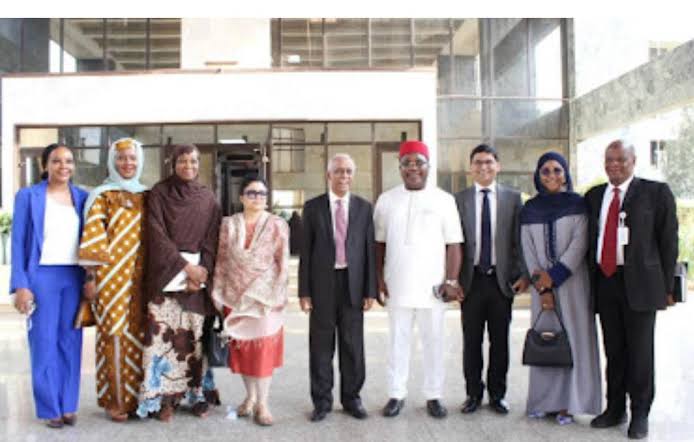
Nigeria, India Sign Landmark Human Rights Pact, Fagbemi Backs Stronger Institutional Independence
…AGF pledges justice ministry’s support for implementation, demands practical safeguards for citizens in AI era
By: Michael Mike
Nigeria and India have signed a bilateral agreement to strengthen human rights protection, institutional capacity and access to justice, with the Attorney-General of the Federation and Minister of Justice, Prince Lateef Fagbemi, SAN, pledging the Federal Government’s support for its implementation.
Fagbemi, who described the agreement as a strategic partnership between the two countries, said its success would ultimately be measured by its impact on ordinary citizens, particularly vulnerable and marginalised groups seeking justice.
The agreement, executed between the National Human Rights Commission (NHRC) of Nigeria and its Indian counterpart, is designed to deepen institutional cooperation, facilitate knowledge transfer, promote technical exchanges and strengthen operational capacity in addressing human rights violations.
The Attorney-General gave the government’s position on Tuesday in Abuja when he received a joint delegation of the two commissions at the Federal Ministry of Justice, describing the partnership as timely, particularly in an increasingly interconnected world where effective human rights protection requires stronger legal frameworks, institutional collaboration and respect for the rule of law.
The development followed a high-level engagement between the two commissions and the Chief Justice of Nigeria (CJN), at the Supreme Court Complex, Abuja, on Monday, as part of a two-day working visit by the Indian delegation.
The Nigerian delegation was led by the Executive Secretary of NHRC, Chief Tony Ojukwu, SAN, OFR, while the Indian delegation was headed by the Chairperson of India’s NHRC, Justice V. Ramasubramanian, accompanied by the Commission’s Joint Secretary, Mr. Samir Kumar.
Fagbemi said the partnership brought together two major democracies with shared common-law traditions, diverse populations and dynamic constitutional frameworks, expressing satisfaction with the thematic areas identified for cooperation under the agreement.
He specifically highlighted access to justice and the protection of digital rights as critical areas requiring urgent attention, particularly as emerging technologies, including Artificial Intelligence, continue to reshape society and create new human rights concerns.
According to him, both countries must develop legal safeguards to protect data privacy, prevent algorithmic bias and safeguard civic space, while ensuring that technological advancement does not undermine fundamental freedoms.
He said the Ministry of Justice expected the two commissions to produce actionable research and policy recommendations capable of addressing these emerging challenges.
Beyond emerging technologies, the Attorney-General stressed that Nigeria’s commitment to human rights must be reflected in the practical implementation of constitutional guarantees and international obligations, rather than merely in the existence of legal provisions.
He cited the African Charter on Human and Peoples’ Rights, which Nigeria domesticated through the African Charter on Human and Peoples’ Rights (Ratification and Enforcement) Act, Cap. A9, Laws of the Federation of Nigeria 2004, as a major instrument underpinning the country’s human rights jurisprudence.
The Charter provides important protections relating to non-discrimination, human dignity, fair trial and personal liberty, reinforcing the fundamental rights guaranteed under Nigeria’s Constitution.
Fagbemi maintained that the true measure of a country’s commitment to human rights was its ability to translate constitutional provisions into accessible institutions, accountable public authorities and an independent judiciary.
He assured the Indian delegation that the Federal Ministry of Justice fully supported the bilateral initiative and was prepared to facilitate technical engagements, joint legal reviews and policy consultations aimed at improving the efficiency of the justice sector.
The Attorney-General also used the engagement to reaffirm the institutional independence of Nigeria’s National Human Rights Commission, stressing that its autonomy was essential to its credibility and effectiveness.
He specifically drew attention to Section 6(3) of the National Human Rights Commission (Amendment) Act, 2010, which provides that the Commission, in exercising its statutory functions, shall not be subject to the direction or control of any other authority or person.
According to him, the administration has continued to respect and protect the Commission’s statutory independence, describing it as fundamental to institutional integrity.
He further noted that the relationship between the NHRC and the Federal Ministry of Justice had been characterised by constructive institutional synergy, mutual respect and a shared commitment to advancing human rights.
The Attorney-General commended Ojukwu and the Nigerian commission for spearheading the bilateral initiative, while expressing appreciation to the Indian delegation for bringing its expertise and institutional experience to the partnership.
Earlier, during Monday’s engagement with the Chief Justice of Nigeria, the Executive Secretary of NHRC Nigeria had emphasised the complementary responsibilities of the judiciary and national human rights institutions in protecting fundamental freedoms, upholding the rule of law and ensuring access to justice.
Ojukwu identified complaint management, Alternative Dispute Resolution, security sector accountability, comparative legal research, digital rights, Artificial Intelligence ethics and environmental justice as priority areas for cooperation between both countries.
The Chief Justice reaffirmed the commitment of the Nigerian Judiciary to human rights protection and encouraged both commissions to exchange experiences and adopt best practices, particularly in strengthening safeguards for vulnerable groups, including women, children and persons with disabilities.
The Indian delegation described the engagement as significant to relations between the two countries, noting that the MoU represented a first-of-its-kind institutional partnership for India’s National Human Rights Commission.
The agreement is expected to promote sustained institutional exchanges, strengthen complaint-handling mechanisms, improve professional capacity and encourage comparative research into legal and policy approaches to human rights protection.
The partnership also comes at a time when national human rights institutions face increasing demands to address abuses linked to security operations, discrimination, environmental degradation, digital surveillance and the misuse of emerging technologies.
For Nigeria, the collaboration offers an opportunity to strengthen its human rights enforcement architecture through international knowledge-sharing while reinforcing the independence and operational effectiveness of its national commission.
Fagbemi, however, cautioned that the ultimate benchmark of the agreement must go beyond official engagements and institutional exchanges to deliver tangible improvements in the lives of citizens, especially those most vulnerable to violations and denied access to justice.
He wished the Indian delegation a productive stay in Nigeria and expressed confidence that the partnership would advance the shared commitment of both countries to human dignity, justice and the protection of fundamental rights.
Nigeria, India Sign Landmark Human Rights Pact, Fagbemi Backs Stronger Institutional Independence
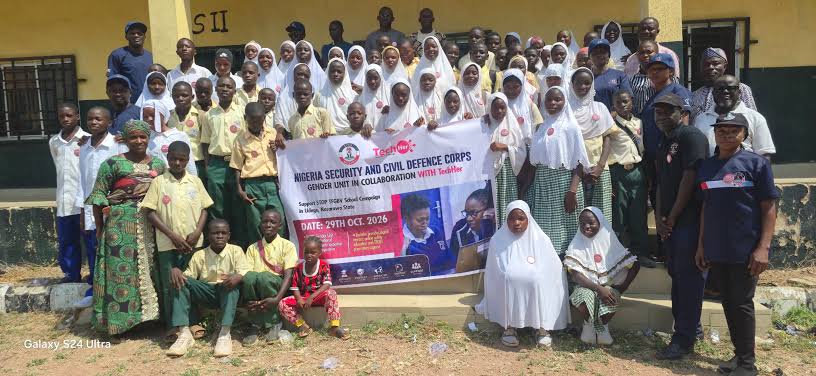
NSCDC Strengthens Gender Policy Implementation, Trains Officers on SGBV, Digital Safety
By: Michael Mike
Corps partners SPRING, FCDO, TechHer to promote women’s participation in peacebuilding, tackle technology-facilitated violence
The Nigeria Security and Civil Defence Corps (NSCDC) has intensified efforts to combat sexual and gender-based violence (SGBV), strengthen women’s participation in security decision-making and promote digital safety among young people through the implementation of its Gender Policy II.
The Commandant-General of the Corps, Prof. Ahmed Audi, stated this at a two-day Gender, Women, Peace and Security capacity-building training organised at the NSCDC College and Support Staff Service, Udege, Nasarawa State.
The training was organised in collaboration with Strengthening Peace and Resilience in Nigeria (SPRING), with support from the United Kingdom’s Foreign, Commonwealth and Development Office (FCDO).
Audi, who delivered his keynote address through a representative, said the policy provided a framework for mainstreaming gender considerations into the Corps’ operations, personnel management, leadership structure and community engagement.
He stressed the need for effective prevention and response to sexual and gender-based violence, including conflict-related abuses and technology-facilitated violence.
The Commandant-General also called for increased participation of women in peacebuilding and security decision-making, equal opportunities within the Corps and stronger partnerships with traditional institutions, government agencies, civil society organisations and development partners.
He urged commands and personnel, particularly Gender Desk Officers, to ensure effective coordination, timely reporting, appropriate referrals, monitoring and accountability in handling gender-related cases.
Audi described the implementation of the policy as a collective responsibility requiring sustained commitment across all levels of the Corps.
In a goodwill message, the Osu Ajiri of Edege Chiefdom, Alhaji Suleiman Ahmed Eko IV, commended the NSCDC for its presence in the community, saying its operations had strengthened the sense of security among residents, particularly farmers.
The traditional ruler pledged the support of his council in addressing gender-based violence, describing the protection of the community as a priority.
Earlier, the Commander of the College, ACG Jamilu Indabawa, said collaboration among relevant stakeholders was critical to achieving effective implementation of the gender policy.
The Gender Equality, Diversity and Social Inclusion Lead of SPRING, Mrs Amina Akano-Bello, said the training was designed to promote peaceful and resilient communities through early identification and response to gender-based violence, as well as the inclusion of women and young people in leadership.
Also, the NSCDC National Headquarters Gender Unit Adviser, DCC Ajet Kemi, provided participants with insights into the different forms of sexual and gender-based violence, their societal implications and preventive measures.
A retired Assistant Commandant-General, Ahmed Abodurin, who facilitated a session on institutional ethics in gender policy implementation, emphasised professionalism, accountability, gender sensitivity and adherence to institutional standards.
Beyond the capacity-building exercise, the Corps partnered TechHer, an organisation promoting women’s advancement through technology, to extend digital safety awareness to schools in Udege.
The outreach, themed “Stop Technology-Facilitated Gender-Based Violence”, educated students on the dangers of digital abuse, responsible online behaviour and measures for staying safe in digital spaces.
Representatives of the Federal Ministry of Interior, Nasarawa State Ministry of Women Affairs and Social Development, Nasarawa State Ministry of Justice and Gammuo International also delivered goodwill messages, reaffirming the importance of collective action in advancing gender equality, peace and security.
NSCDC Strengthens Gender Policy Implementation, Trains Officers on SGBV, Digital Safety

Nigerian military precision strikes neutralise 19 terrorists in Ngala, Borno

Troops, hunters neutralise ISWAP terrorist in ambush operation in Yobe

LET PLATEAU BREATHE AGAIN

Roger Federer’s Shock as DNA Results Reveal Myla and Charlene Are Not His Biological Children

THE PLIGHT OF FARIDA

FAILED COUP IN BURKINA FASO: HOW TRAORÉ NARROWLY ESCAPED ASSASSINATION PLOT AMID FOREIGN INTERFERENCE CLAIMS
-
 News3 years ago
Roger Federer’s Shock as DNA Results Reveal Myla and Charlene Are Not His Biological Children
-
Opinions5 years ago
THE PLIGHT OF FARIDA
-
 News2 years ago
FAILED COUP IN BURKINA FASO: HOW TRAORÉ NARROWLY ESCAPED ASSASSINATION PLOT AMID FOREIGN INTERFERENCE CLAIMS
-
 Opinions5 years ago
POLICE CHARGE ROOMS, A MINTING PRESS
-

 News3 years ago
EYN: Rev. Billi, Distortion of History, and The Living Tamarind Tree
-

 ACADEMICS3 years ago
A History of Biu” (2015) and The Lingering Bura-Pabir Question (1)
-

 Columns3 years ago
Army University Biu: There is certain interest, but certainly not from Borno.
-

 Politics1 year ago
2027: Why Hon. Midala Balami Must Go, as Youths in Hawul and Asikira/Uba Federal Constituency Reject ₦500,000 as Sallah Gift
