
Politics
2023: Confusion Hits Labour Party As Peter Obi Set To Be Disqualified To Run

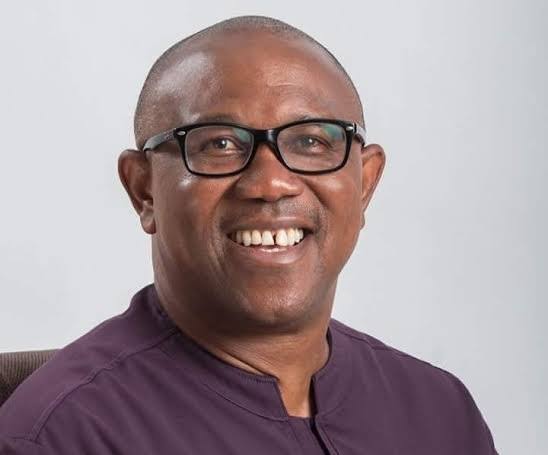
2023: Confusion Hits Labour Party As Peter Obi Set To Be Disqualified To Run
The factional chairman and governorship candidate of the Labour Party in Lagos State, Ifagbemi Awamaridi, has said attempts by some persons in the party to usurp his positions as the “bonafide chairman and governorship candidate of the party” can lead to the nullification of the presidential candidacy of Peter Obi.
Awamaridi, who spoke in a telephone interview on Friday, said he was neither removed nor replaced through any constitutional procedure.
He added that there was a subsisting case in court on the matter.
The Lagos State chapter of the LP has been enmeshed in leadership crisis with regards to the positions of the chairman and the governorship candidate.
Awamaridi also stated that his name remained listed as the governorship candidate by the Independent National Electoral Commission.
Awamaridi said, “There is a governorship candidate of the party, which has been published by INEC, and that candidate has not withdrawn, and that candidate has not died.
“For someone to say that he is organising a second primary election, that person is a political comedian. They (some members of the national leadership) have been compromised by money because whatever they are doing does not have any cerebral basis.”
Speaking on the state chairmanship position of the party, he said, “I am still the state chairman of the LP. You can go and refer to the constitution of the Labour Party. There is a procedure for removing an officer from the party.
“You can be removed by the National Executive Council if you are a national officer, but if you are a state officer, you can be removed by the congress.
You cannot be appointed to a position except by the NEC at the national level or the State Executive Council or the congress of that state.
More so, you don’t just remove an officer; there must be a reason. If it is on disciplinary issues, that person must have gone through a disciplinary process.
“The document with which they said they appointed Kayode Salako was disclosed through a press statement on July 23, 2022, and it was fraudulently backdated to the 18th of May 2022.
“That document can never hold water. In the first place, he (Salako) is not a member of the LP; he is a member of the All Progressives Congress.
“Furthermore, it means that Peter Obi is not the presidential candidate of the LP. It means that as of the 18th of May, Kayode Salako was the Chairman of LP.
“I, as the Chairman of the LP, Lagos State, led the delegates from Lagos that elected Peter Obi to be the presidential candidate on May 30, 2022 (at the special convention).
“So, you are now saying that the delegates that went to the convention from Lagos State are illegal and that delegates that went to that primary election were defective, and that the convention is tantamount to be invalidated.
“Parties are now going for the Certified True Copies of that document in Abuja because they want to use it against Peter Obi. The moment you can prove that the primary was defective, you invalidate the congress and then you nullify the candidate of the party.
“That is what the originators of the Labour Party want to achieve, having been compromised with financial gratification or other things.
In response to Awamaridi, the National Publicity Secretary of the party, Abayomi Arabambi, claimed that they had not been served any notice on the matter.
Arabambi said Awamaridi had ceased to be a member of the party because he had not attended the stipulated number of meetings and did not pay his dues, according to the party’s constitution. He also debunked the alleged threat on the candidacy of Peter Obi.
Arabambi explained that his (Awamaridi) name would be replaced as governorship candidate with Gbadebo-Rhodes Vivour on October 4 by INEC.
The party’s National Publicity Secretary told said, “INEC has pronounced October 4 as the last day that they are going to publish names of the person they substituted.
“The fact that the name is still there does not confer legality on him. It is just according to INEC’s timetable.
“It is obvious that he doesn’t know what he is talking about. If people come and vote for a presidential candidate and you have three months tenure as a caretaker, once your three months expires, many of your actions will be engaged by the new people.
“The national leadership is not at liberty to extend your tenure due to pressure from anybody. It is not in his purview to say that the people that came to the convention, once he is no longer in the executive of the party, the process would be a nullity.”
2023: Confusion Hits Labour Party As Peter Obi Set To Be Disqualified To Run


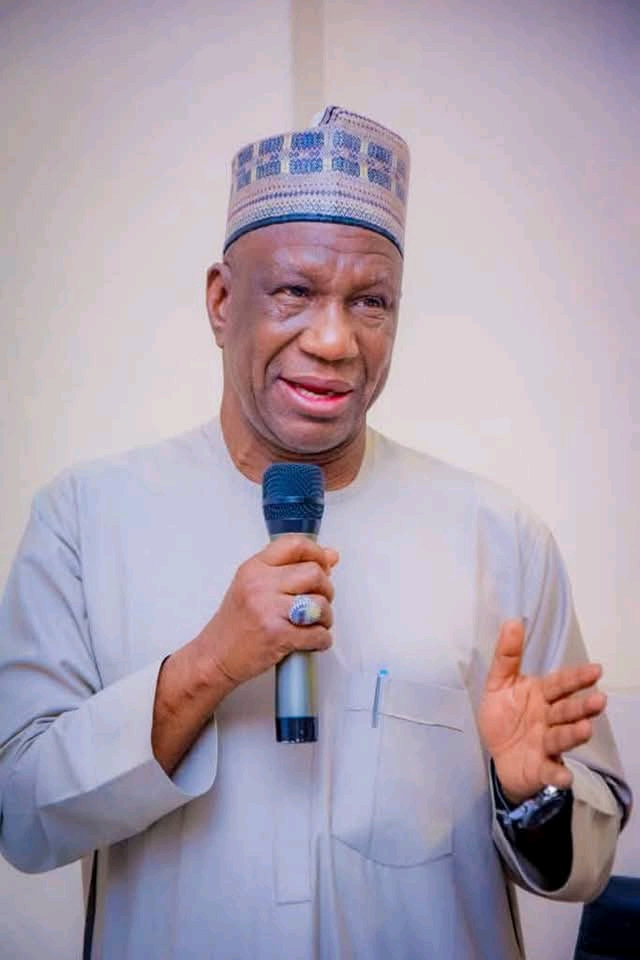
Yobe: APC guber candidate speaks on Buni’s confidence in him
By: Yahaya Wakili
The Yobe State All Progressives Congress (APC) gubernatorial candidate, Alhaji Baba Mallam Wali Fcan, mni, has revealed that His Excellency Governor Mai Mala Buni CON’s confidence in him over the years had afforded him the opportunity to serve the state as secretary to the state government for seven years.
Baba Mallam Wali mni disclosed this today when a delegation of critical stakeholders of the All Progressives Congress (APC) from the Gujba local government area paid him a congratulatory visit in Damaturu, the state capital.
He expressed profound appreciation for the visit, adding that this overwhelming visit shows solidarity and confidence in his candidacy.
According to Mallam Wali, Governor Mai Mala Buni’s confidence in him over the years had afforded him the opportunity to serve the state as secretary to the state government for seven years.
He assured the stakeholders that he would provide inclusive and participatory leadership by carrying every citizen along irrespective of political, social, or regional affiliations.
The acting secretary to the state government, who is also the son of the soil, Dr. Mohammed Goje, leading the delegation, described Alhaji Baba Mallam Wali as a seasoned administrator and accomplished public servant.
“The emergence of Mallam Wali was a well-deserved recognition of his competence, integrity, and commitment to the development of Yobe State to a greater height,” Dr. Goje said.
He assured the candidate of the continued support, loyalty, and commitment of the people of the Gujba local government area, noting that we would remain steadfast in our support for the APC and its candidate in the 2027 general elections.
Yobe: APC guber candidate speaks on Buni’s confidence in him
Politics
VP Shettima’s Invest Lagos Summit: A contest of narratives on both the Dangote and Abdulsamad empires.

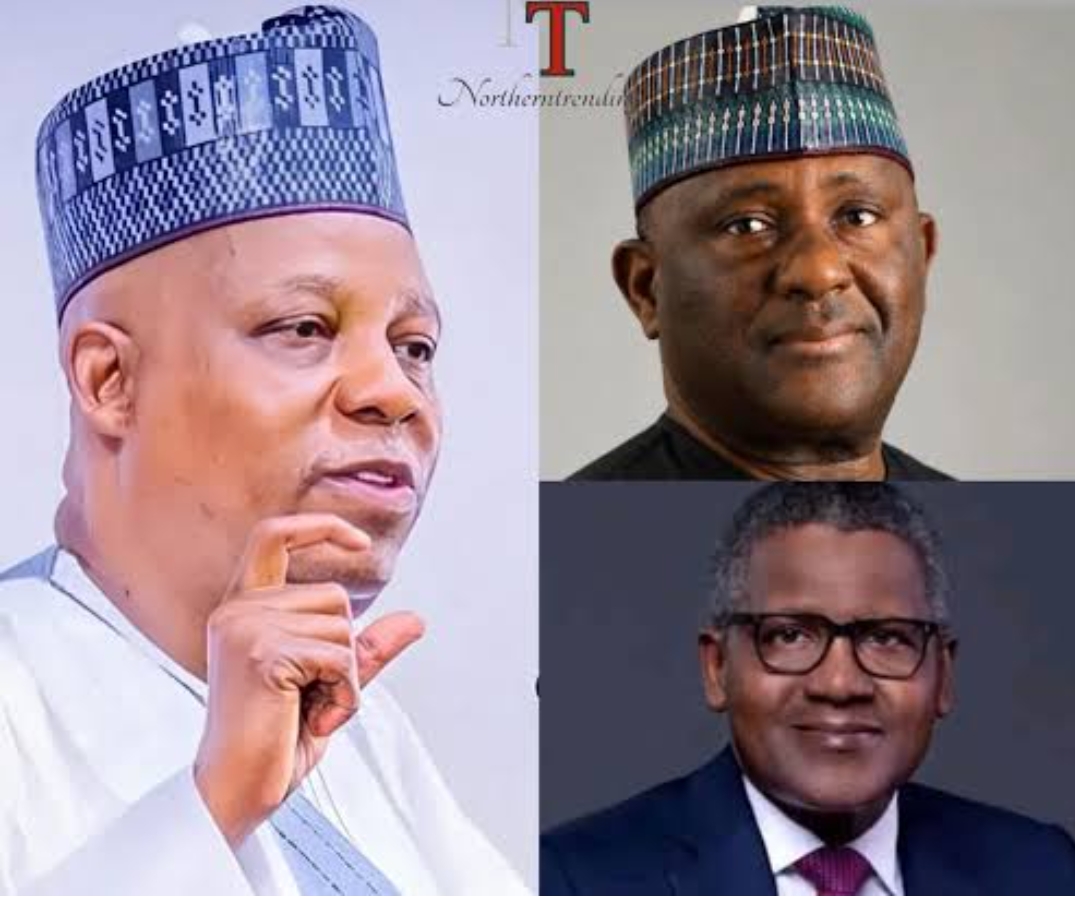
VP Shettima’s Invest Lagos Summit: A contest of narratives on both the Dangote and Abdulsamad empires.
By: Dr James Bwala
Vice President Kashim Shettima’s recent statement at the Invest Lagos Summit, which sparked significant controversy and backlash from various quarters, particularly regarding his remarks about Africa’s richest men, Aliko Dangote and Abdul Samad Rabiu. The vice president asserted that Lagos, not Kano, produced these business magnates, a comment that many interpreted as dismissive of Kano’s historical commercial significance. However, this reaction stems largely from a misinterpretation of Shettima’s words and an overlooking of the broader context in which his remarks were made. It is crucial to understand and defend the vice president’s statement, recognising the economic dynamics at play and the positive intent behind his message.
Vice President Shettima’s assertion that Lagos produced Africa’s richest men was not intended as an erasure of Kano’s rich commercial heritage or an undervaluing of the northern roots of these business icons. Instead, it was a contextual observation highlighting Lagos as the continent’s economic powerhouse and a pivotal hub where business ideas are scaled and transformed into thriving enterprises. Lagos is Africa’s largest sub-national economy, characterised by its vibrant market activities, infrastructural advantages, business-friendly policies, and an environment conducive to private sector growth. This city has historically served as a furnace where entrepreneurial ambitions find fertile ground to flourish and expand. Shettima’s point was that while the initial entrepreneurial instincts and businesses may have originated elsewhere, including Kano, it is within Lagos that these ventures matured into the colossal economic entities they are today.
READ ALSO: https://newsng.ng/radical-approach-ways-of-ending-the-menace-of-insecurity-in-nigeria/
The backlash, particularly from northern commentators and traditional leaders like Emir Muhammadu Sanusi II of Kano, reflects a common regional sensitivity towards identity and recognition. The Emir’s response centred on Kano’s longstanding reputation as a “centre of commerce”, emphasising the city’s role in shaping fundamental entrepreneurial skills and traditions inherited by figures like Dangote and Rabiu. While this perspective honours Kano’s historic significance, it inadvertently overlooks the nuance in Shettima’s statement—that the vice president did not deny Kano’s foundational influence but instead underscored Lagos’s role in providing a strategic platform for growth and scaling operations. The criticism arises from conflating birthplace or origin with the locus of economic success. Recognising Lagos as the city where these businesses “came to the limelight” is not a negation of their roots but an acknowledgement of pragmatic economic realities.
Shettima’s remarks must be viewed through the lens of economic pragmatism rather than political rivalry or regional contestation. Lagos has been, and remains, Nigeria’s commercial nerve centre and a critical node in Africa’s trade and investment networks. Its infrastructure, regulatory frameworks, access to ports, financial markets, and international connectivity create unique advantages that entrepreneurs can leverage to multiply their wealth and impact. Both Aliko Dangote and Abdul Samad Rabiu have attested to the enabling environment provided by Lagos State governments, which implemented policies fostering private-sector investments surpassing $30 billion. These acknowledgements underscore the integral role Lagos played in their skyrocketing success, validating Shettima’s emphasis on Lagos’s contributions without negating Kano’s entrepreneurial legacy.
READ ALSO: https://newsng.ng/radical-approach-ways-of-ending-the-menace-of-insecurity-in-nigeria/
It is also imperative to contextualise the timing and nature of the criticism directed at the vice president. Notably, some individuals and groups who vociferously objected to Shettima’s Lagos-centric remarks had remained conspicuously silent during other contentious moments, such as when the vice president defended the Dangote Refinery amid an industrial dispute with the Petroleum and Natural Gas Senior Staff Association of Nigeria (PENGASSAN) in late 2025. During that dispute, Shettima described Dangote as an “institution” deserving protection, a stance that drew criticism from labour unions but highlighted his consistent recognition of the vital role played by business leaders in Nigeria’s economic fabric. This selective outrage suggests that the current backlash is less about objective critique and more about entrenched regional loyalties or political manoeuvring as learnt in political communications.
The misrepresentation of Kashim Shettima’s position reveals a broader challenge in Nigerian public discourse—a tendency to pre-emptively judge and politicise statements without engaging with their substance or intent. The eagerness to attack the vice president before fully understanding the context exemplifies a mindset that undermines balanced evaluation and constructive debate. Instead of appreciating the VP’s highlighting of Lagos as an epicentre of enterprise and resilience, detractors have chosen to ignite divisive sentiments that distract from economic cooperation and national unity. This pattern of reaction fuels unnecessary regional tensions, which ultimately hinder the country’s collective progress.
READ ALSO: https://newsng.ng/radical-approach-ways-of-ending-the-menace-of-insecurity-in-nigeria/
From a professional standpoint, it is essential to champion nuanced communication and responsible leadership. Vice President Shettima’s remarks align with an economic truth that transcends parochial interests: that success in business often requires not just ingenuity and grit but access to supportive environments where ideas can scale. Nurturing such hubs—like Lagos—is vital for Nigeria’s sustained development and global competitiveness. Recognising and celebrating Lagos’s role, therefore, should not be viewed as an affront to other regions but as a call to replicate such enabling conditions nationwide. Every region, including Kano, must strive to provide similar platforms to nurture and propel their homegrown talents and enterprises.
Vice President Kashim Shettima’s comments at the Invest Lagos Summit were a factual, context-driven affirmation of Lagos’s status as Africa’s premier economic hub, where entrepreneurial ventures achieve their full potential. His statement was neither dismissive of Kano’s historic commercial contributions nor an attempt to diminish the foundational roles played by northern business traditions. Instead, it was a candid recognition of Lagos’s unique capacity to nurture and elevate business successes on an unprecedented scale. The vehement backlash—fueled by misinterpretation and regional sensitivities—serves as a reminder of the need for careful listening, thoughtful analysis, and avoidance of partisan attacks in national conversations. As Nigerians, we can foster unity and propel the country towards inclusive prosperity by embracing diverse pathways to success and acknowledging the layered realities of economic growth. Future critiques should engage constructively with leaders’ insights, considering both intent and context before passing judgements. Only through such mature discourse can Nigeria harness its full economic potential and build a harmonious, thriving society.
* James Bwala, PhD, writes from Abuja.
VP Shettima’s Invest Lagos Summit: A contest of narratives on both the Dangote and Abdulsamad empires.
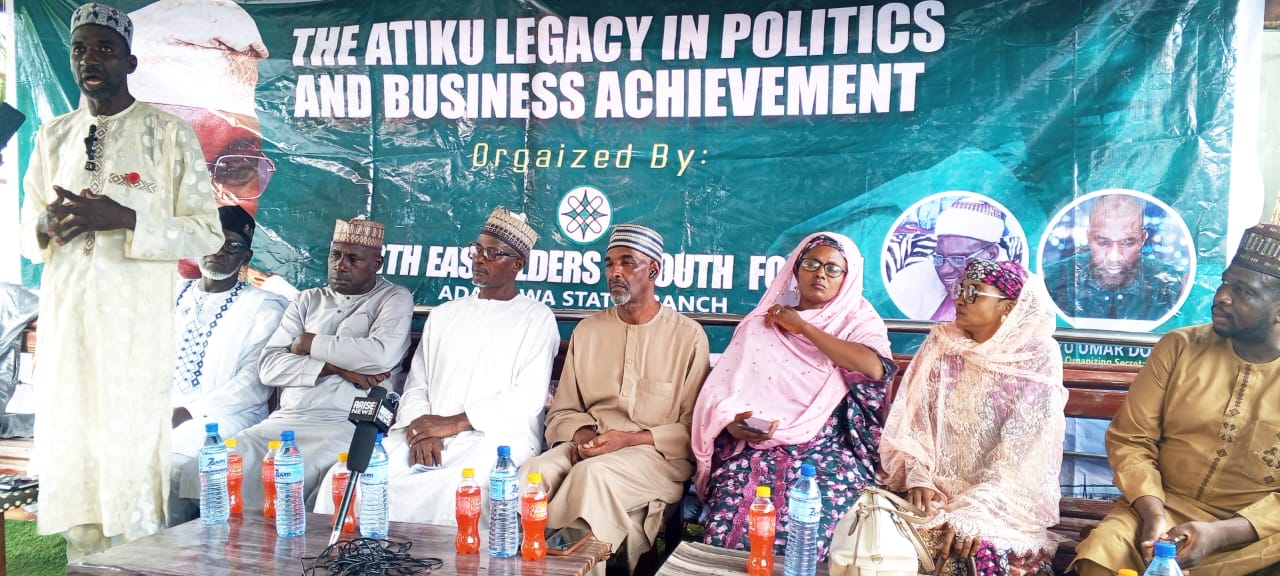
Forum condemns abusive language on Atiku
North-East Elders and Youth Forum, Adamawa Chapter has strongly rejected and condemned the abusive language attributed to the former Vice President Atiku Abubakar by the former Secretary to the Government of the Federation (SGF), Mr Babachir Lawal.
Hamza Sa’ad Dasin, the National Leader of the forum stated this during a press briefing in Yola that Lawal accused Atiku Abubakar of manipulating the recent ADC primary election results while describing him as a religious and tribal bigot.
“Well, that’s not the problem, because leaving or staying with the party remains his absolute right; the most alarming and worrisome approach by the former SGF was his utterances against the Former Vice President.
“Accusing him of being religious and tribal bigot, and even went further to calling him KACHALLA, which connotes direct linkage with banditry”, he said.
He said, Atiku Abubakar, socially and politically remains the symbol of unity Nigeria as he married from South West, South-East and North-East “So he is symbolically democratic even in his own house”.
Dasin further said that Atiku has a very large heart that accommodates all irrespective of religious, tribal or sectional inclinations.
“This can be ascertained by looking at the people surrounding him. He is a believer of cultural multiplicity.
“When Boko Haram entered Mubi in Adamawa State, Atiku used his personal resources to bring in hunters and traditional fighters from different parts of northern Nigeria to come and assist.
“And they eventually succeeded in driving them away, killing a large number of them. This is to tell you that Atiku has never, can never and will never be a supporter of banditry, so count him out of being a KACHALLA”, he said.
He further explained that Atiku is a well recognized Political Guru, not only in Nigeria but in the world.
“He is considered one of the best politicians in Africa and the world”, he said.
Forum condemns abusive language on Atiku

Nigeria Busts Ivory Trafficking Ring, Seizes 130kg Elephant Tusks in Major Wildlife Crime Crackdown

Russia’s African Expendables?

Tegbe Woos Investors to Power 35,000 Health Facilities, Says Healthcare Electrification Biggest Energy Opportunity in Africa

Roger Federer’s Shock as DNA Results Reveal Myla and Charlene Are Not His Biological Children

THE PLIGHT OF FARIDA

FAILED COUP IN BURKINA FASO: HOW TRAORÉ NARROWLY ESCAPED ASSASSINATION PLOT AMID FOREIGN INTERFERENCE CLAIMS
-
 News2 years ago
Roger Federer’s Shock as DNA Results Reveal Myla and Charlene Are Not His Biological Children
-
Opinions4 years ago
THE PLIGHT OF FARIDA
-
 News1 year ago
FAILED COUP IN BURKINA FASO: HOW TRAORÉ NARROWLY ESCAPED ASSASSINATION PLOT AMID FOREIGN INTERFERENCE CLAIMS
-

 News2 years ago
EYN: Rev. Billi, Distortion of History, and The Living Tamarind Tree
-
 Opinions4 years ago
POLICE CHARGE ROOMS, A MINTING PRESS
-

 ACADEMICS2 years ago
A History of Biu” (2015) and The Lingering Bura-Pabir Question (1)
-

 Columns2 years ago
Army University Biu: There is certain interest, but certainly not from Borno.
-

 Politics1 year ago
2027: Why Hon. Midala Balami Must Go, as Youths in Hawul and Asikira/Uba Federal Constituency Reject ₦500,000 as Sallah Gift
