
News
EYN: Rev. Billi, Distortion of History, and The Living Tamarind Tree

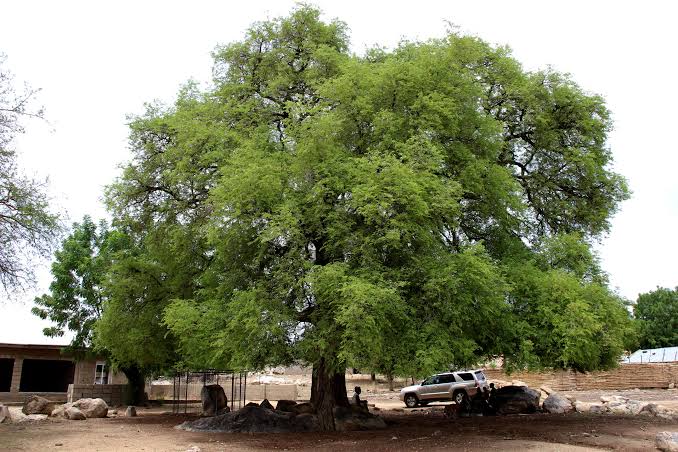
EYN: Rev. Billi, Distortion of History, and The Living Tamarind Tree
By: Balami Lazarus
One man with a Holy Bible forcefully tried in an attempt to disjoint and change the course of history of the 100-year centenary celebration of EYN-CCBN in Nigeria. What is the rationale for “celebring 100 years of existence at two different locations”? Likes of one Rev. Joel Billi, who lacks a sense of history, if given the chance, will turn historical events and their marks upside-down and inside-out to create different versions and interpretations.
Men are subjects of history and have always neglected the importance of their footprints in the place of history, failing to realize that their activities could be a topic of history in discourse. The tempest raised by Rev. Billi at the wake of the 100-year centenary celebration of Ekklesiya Yan’uwa a Nigeriya, Church of Brethren in Nigeria (EYN– CBN ) was alarming, dire, appalling, and hair-rraising that shook the church founded over 100 years ago: March 1923, to March 17th, 2024 (101 years) as of now.
As an observer of the events, I write not only in support of one Mr. Yohanna Yusufu Balami (YY Balami), as he is known. His book, “Emerging Issues and Concerns: The 76th EYN General Church Council (Majelisa),” 2023. Has brought to light the deliberate distortion and near-death of the history of EYN Church in Nigeria. Rev. Joel, the President of EYN-CCBN was at the peak of this urgly and unhealthy situation that nearly consumed EYN as a Christian organization with her churches and members.
Looking at the issues from a historical perspective, considering the fact that Rev. Billi has discredited the true and correct source of a living history from his actions in the aftermath of the church centenary celebration to mark its 100 years of existence at Garkida, where it first started in 1923,. He began this by using the privileges of his official capacity as President of EYN-CCBN to change the course of the living history of the church that first appeared in Ladin Gabas’ northeastern Nigeria, where it was planted precisely on March 17, 1923, under a living tamarind tree at Garkida in Adamawa State by two white, humble missionaries, Rev. Stover Kulp and Dr. Albert Helser.
The news of circumventing the centenary celebration has turned the entire church council into confusion; clerics and members were disturbed by this eruption. With repeated rejection of Rev. Stephen Billi intentions that lack merit with no justification, only but to distort and change the history of origin, date, and site bore out of selfishness wrapped in greed, ethnic and monetary capitalization on the gainers chart, nurtured and promoted by him.
The concerned elders of the church and other high-profile personalities from the region, Rev. Joel, refused to shift ground, and of course darkness fell that came with a thick smell of breakup rearing its head among her many church branches. He was near achieving this feat through the disunity he created, powered, and sponsored through his throng of’vultures’ for the sole purpose of personal interest by tempering with the history of 100 years. Rev. Billi has technically distorted the church history of Nigeria.
In spite of the historical relics—tombs and plagues—on and under the living Tamarind Tree, individuals like Rev. Billi have had the guts to dare see such glaring evidence of church history long before he was born. “All other places the EYN missionaries went to were on different dates after March 17, 1923. Kwarhi was not there and has no significant attachment to its history dating back to 100 years.
The 17th of March 1923 will always and forever remain our Founders Day in Garkida under the blessed Tamarind Tree, making it our spiritual headquarterss.” My individual concern is the near collapse of the church and the damage to the rich history of EYN-CCBN. The question on the lips of members is: What has March 15, 2023, to do with the coming of Rev. Stover Kulp and Dr. Albert Helser? I put it to Rev. Joel Stephen Billi that this is but a broad-day robbery of EYN history. However, the cries of members and some well-meaning individuals in the public have helped to water down his intentions, which might have caused catastrophe for the entire EYN Church. I believe such will and shall not happen again in EYN-CBN as a church.
Balami, a publisher and columnist.
EYN: Rev. Billi, Distortion of History, and The Living Tamarind Tree


DSS, Forest Guards Neutralise Three Bandits, Rescue Nine Kidnap Victims in Kwara
By Zagazola Makama
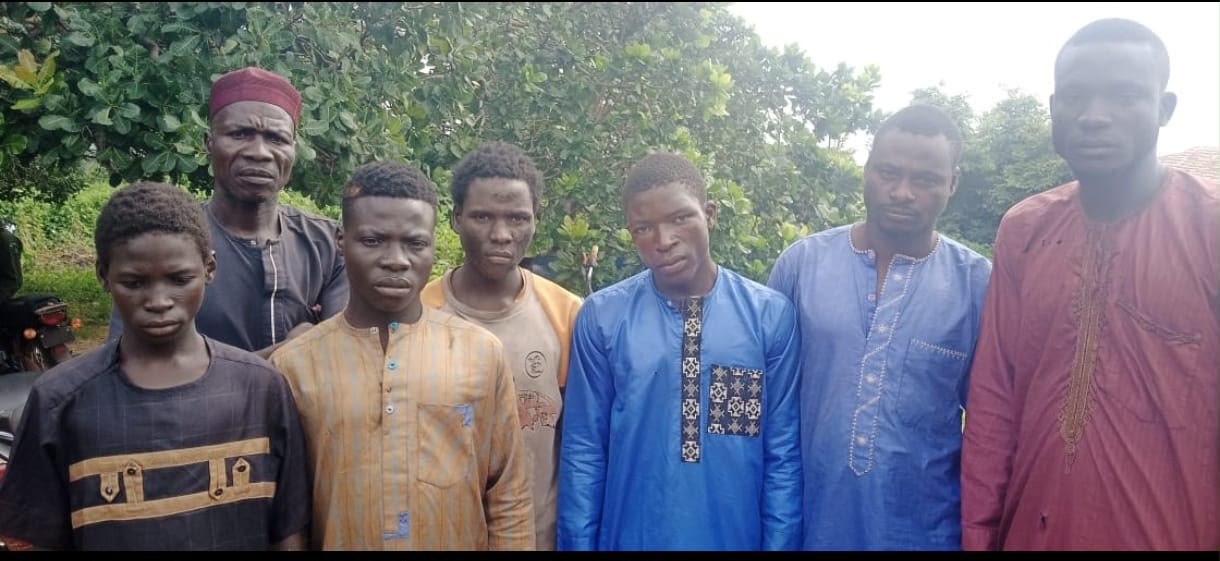
The Department of State Services (DSS), in a coordinated intelligence-led operation with the Kwara State Forest Guards, local hunters and vigilante groups, has neutralised three suspected bandits and rescued nine kidnapped victims during a gun battle in Ekiti Local Government Area of Kwara State.
Intelligence sources told Zagazola Makama that the operation was carried out in the Obbo Aiyegunle, Ejiu Ora and Osi axis of Ekiti LGA, a forested area bordering Kwara and Ekiti states, following credible intelligence on the activities of armed kidnappers operating within the corridor.
The sources disclosed that the armed gang, believed to comprise more than 10 members, had assembled several victims abducted from different locations, including farmers kidnapped from their farmlands in Kwara and victims earlier seized in neighbouring Ekiti State, before security operatives stormed the hideout.
On sighting the advancing security team, the bandits engaged the operatives in a fierce gun battle but were overwhelmed by superior firepower. Three of the suspects were neutralised, while the remaining members of the gang fled into the surrounding forest with varying degrees of injuries, abandoning their captives.
All nine victims were rescued alive during the operation. One of the rescued victims sustained severe head injuries after he was reportedly attacked with a machete by the kidnappers while resisting abduction and is receiving medical attention.
Confirming the development, the Chief Press Secretary to the Chairman of Ekiti Local Government Area, Prince Dada Sunday, said the successful operation followed actionable intelligence gathered by security agencies.
He commended the DSS, Forest Guards, hunters and vigilante operatives for their swift response, noting that their intervention prevented the victims from being moved deeper into the forest.
One of the rescued victims, Umaru Muazu of Obbo Aiyegunle, narrated how he and his son were abducted by armed men while on their farm.
“They came from nowhere and pointed a gun at my head. Four of them took me and my son. They also seized my friend’s motorcycle before forcing us into the bush,” he said.
Another rescued farmer, Ibrahim Danga, said the victims had been held in captivity before the security team launched the rescue operation.
A member of the Kwara State Forest Guards, Owolabi Adebayo, who participated in the operation, said the mission was based on credible intelligence.
“We neutralised three of them and rescued nine victims. They were heavily armed and possessed different types of firearms. However, we need more operational equipment, including body armour, binoculars, night vision goggles, walkie-talkies and adequate ammunition to effectively confront these criminal elements,” he said.
Security sources said efforts are ongoing to track and apprehend the fleeing members of the gang, while surveillance has been intensified across the forest corridor to prevent the regrouping of criminal elements operating along the Kwara–Ekiti border.
DSS, Forest Guards Neutralise Three Bandits, Rescue Nine Kidnap Victims in Kwara

“Sustain the heritage of your emirate,” Buni tells the Ngazargamu council
By: Yahaya Wakili
Governor Mai Mala Buni of Yobe State has told the people of the Ngazargamu Emirate Council that the emirate is renowned for commerce and education; therefore, it is their collective responsibility to sustain and improve this great heritage.
Governor Buni stated this fact when the new emir of Ngazargamu and his subjects paid him a thank-you visit at the Government House, Damaturu.
He informed the people about development. He emphasized that a peaceful atmosphere is essential for achieving development and progress. under a peaceful atmosphere and beyond.
Governor Mai Mala Buni charged the people of the emirate to unite and support the new emir, Alhaji Mahmud Ibn Mustapha, for a successful reign of office that would benefit all the people of the emirate and Yobe State at large.
Speaking earlier on behalf of the emirate, the Waziri of the Ngazargamu emirate, Alhaji Baba Kankare, thanked Governor Buni for approving the people’s choice as the new emir.
He said, “Your Excellency, you gave us our choice, the people’s will. We appreciate you very much. Thank you, sir,” Alhaji Kankare said.
“Sustain the heritage of your emirate,” Buni tells the Ngazargamu council
Crime
Oriire Kidnap: FG Arraigns Ansaru Commanders, Mahmuda, Abu Baraa and The Three New Suspects Arrested By DSS On Fresh Charges of Terrorism, Murder of Teachers
Oriire Kidnap: FG Arraigns Ansaru Commanders, Mahmuda, Abu Baraa and The Three New Suspects Arrested By DSS On Fresh Charges of Terrorism, Murder of Teachers
By: Zagazola Makama
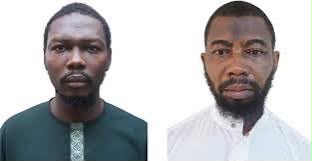
The Federal government, on Wednesday, arraigned two commanders of the Ansaru terrorist organization captured by the Department of State Services (DSS),
and their three foot soldiers, for terrorism, kidnapping and murder of two teachers of schools in Orire LGA of Oyo State.
The five suspects were arraigned before Justice Salim Ibrahin of the federal high Court, Abuja.
In August 2025, DSS operatives captured Mahmuda top commander, Abubakar Abba Mahmuda Abu Bara’a and his deputy, Abubakar Abbas aka Mallam Mahmuda Al-Nigeri.
According to security sources, after the capture, Ansaru made two attempts- one in December 2025, and another in February 2026, to free their commanders. However, the attempts were reportedly foiled by DSS intelligence to the state security council, after which the secret police continued to update intelligence on the group’s activities.
On May 15, 2026, several armed men belonging to Ansaru terror group stormed some schools in Oriire LGA of Oyo State, kidnapping 46 people made up of 39 students and seven teachers. Apparently, to mount pressure on government to release their two captured commanders in DSS’ custody, the terrorists killed two of the teachers.
On July 10, 2026, however, security forces from the DSS and the military, police and other security agencies, stormed the forest where the terrorists were holding the abductees, freeing the hostages.
During the rescue operation, DSS operatives captured three more members of the Ansaru terror organization- Abdulrazak Umar, Yunusa Musa, and Shamsu Adamu Sani.
On July 23, the three men pleaded guilty to concealing information regarding the Oriire school kidnapping and for membership in the proscribed Darul Salam/Ansaru group. They were promptly handed life imprisonment.
Relatedly, a Federal High Court in Abuja, last week, sentenced Mahmud Usman (Abu Bara’a) and his deputy Mahmud al-Nigeri, to life imprisonment after they both pleaded guilty to some charges in the 32-count charge of belonging to a terrorist organization, among other charges.
After the sentencing, feelers from the DSS suggested that the secret police was dissatisfied with the judgement and was going to appeal.
However, in a fresh twist, the DSS, on Wednesday, changed strategy, opting to arraign the terrorist commanders and three of their foot soldiers on fresh charges of terrorism, kidnapping and murder of persons in Oriire LGA.
Justice Salim adjourned the matter to September 24 for the commencement of trial. He ordered that the five suspects remain in the custody of the DSS.
Oriire Kidnap: FG Arraigns Ansaru Commanders, Mahmuda, Abu Baraa and The Three New Suspects Arrested By DSS On Fresh Charges of Terrorism, Murder of Teachers

DSS, Forest Guards Neutralise Three Bandits, Rescue Nine Kidnap Victims in Kwara

“Sustain the heritage of your emirate,” Buni tells the Ngazargamu council

VP Shettima: We Must Praise President Tinubu For Establishing Regional Development Commissions

Roger Federer’s Shock as DNA Results Reveal Myla and Charlene Are Not His Biological Children

THE PLIGHT OF FARIDA

FAILED COUP IN BURKINA FASO: HOW TRAORÉ NARROWLY ESCAPED ASSASSINATION PLOT AMID FOREIGN INTERFERENCE CLAIMS
-
 News2 years ago
Roger Federer’s Shock as DNA Results Reveal Myla and Charlene Are Not His Biological Children
-
Opinions4 years ago
THE PLIGHT OF FARIDA
-
 News1 year ago
FAILED COUP IN BURKINA FASO: HOW TRAORÉ NARROWLY ESCAPED ASSASSINATION PLOT AMID FOREIGN INTERFERENCE CLAIMS
-
 Opinions5 years ago
POLICE CHARGE ROOMS, A MINTING PRESS
-

 ACADEMICS2 years ago
A History of Biu” (2015) and The Lingering Bura-Pabir Question (1)
-

 Columns2 years ago
Army University Biu: There is certain interest, but certainly not from Borno.
-

 Politics1 year ago
2027: Why Hon. Midala Balami Must Go, as Youths in Hawul and Asikira/Uba Federal Constituency Reject ₦500,000 as Sallah Gift
-

 Opinions2 years ago
Tinubu,Shettima: The epidemic of economic, insecurity in Nigeria
