
News
Re-echoing dangers of Holocaust to prevent reoccurrence


Re-echoing dangers of Holocaust to prevent reoccurrence
Re-echoing dangers of Holocaust to prevent reoccurrence
By Fortune Abang
The 1933-1945 Holocaust era during the Nazi regime in World War II may have come and gone, but the international community, diplomats and academics believe such antisemitism still abounds.
Holocaust is the ideological-driven persecution and murder of six million Jews across Europe by the then Nazi Germany and other racist states.
The stakeholders alluded that such ideology was built on pre-existing prejudices against Jews and Roma that entails systematic mass murder and persecution of Jews by Nazis and their collaborators.
The world makes progress in the Holocaust era, stakeholder re-echoe the need to prevent a reoccurrence of that ugly part of human history.
At the 80th anniversary of the International Day of Commemoration in memory of the victims of the Holocaust, stakeholders advocated multilateral efforts toward ending all forms of racism, prejudice, and religious bigotry.
The event which had as its theme: “Holocaust Remembrance for Dignity and Human Rights” was organised by the UN Information Centre in collaboration with UNESCO, the German and Israeli embassies.
It was used to brief students on lessons of the Holocaust and fight against discrimination, religious intolerance, harassment, mass violence, and hate speech.
Experts say that all forms of such ideology can be fueled by the same lies and loathing that nurtured the Nazi genocide.
They pointed at the October 7, terror attacks by Hamas on Israel and Israel’s reaction, Russia and Ukraine war, Sudan conflict situation among others to have been based on anti-Semitism.
These conflicts and many more have resulte to loss of lives and property, including in Europe, Australia, Canada, the U.S. and elsewhere, particularly with Jewish communities facing increasing hostility and violence.
Also worthy to note is the Rwandan genocide, known as the genocide against the Tutsi that occurred from April 7 to July 19, 1994 during the Rwandan Civil war, resulting in not less than 800 000 people been slaughtered in Rwanda by ethnic Hutu extremists.
It is estimated that no the death of thousands of Rwandans while fewer than 2, 000, 000 Rwandans reportedly fled the country during or after the genocide.
The United Nations Secretary-General, António Guterres, called on all citizens of the world to speak up and stand up against hate.
Guterres said: “To allow the Holocaust to fade from our memory would dishonour the past and betray the future; remembrance is a moral act and a call to action.
“To know the history of the Holocaust is to know the depths to which humanity can sink; to understand how the Nazis committed their heinous crimes with the complicity of others.
“We must hold fast to our common humanity. We must condemn all forms of racism, prejudice and religious bigotry, and renew our resolve to defend the dignity and human rights of all.”
The Israeli Deputy Ambassador to Nigeria, Inbar Garden, recounted the Jewish men, women, and children were murdered in the holocaust, alongside millions of others who suffered under the Nazi regime.
She said through collective efforts such occurrences would be prevented.
According to her, it has become necessary to honour their memory not only to mourn the loss of 6-million Jewish men, women, and children alongside millions of others, also to reaffirm commitment to ensuring such atrocities never happen again.
“The Holocaust is not just a chapter of Jewish history; it is a universal reminder of the devastating consequences of hatred, discrimination, and indifference.
“It compels us to reflect on our shared responsibility to fight antisemitism, racism, and all forms of intolerance wherever they may arise,” Garden said.
In the same vein, Mr Mathias Dold, First Secretary of German Embassy, decried the 1933 to 1945 holocaust which he said marked the darkest period across Europe under Nazi Germany and other racist states.
“This is without a doubt Germany’s darkest hour and worst crime ever committed by the then national socialist Nazi government, since the history of the world.
“Beside Jews, other minors were murdered including half a million Roma and Sinti, Persons With Disabilities (PWD), communists, prisoners of war, political enemies and all those the Nazis considered unworthy,” Dold said.
Mr Mendy Albert, Officer -in-charge of UNESCO Country Office in Nigeria, urged people to reflect more on the consequences of hatred, discrimination and intolerance and embrace collective responsibility through peaceful co-existence and education.
He said that UNESCO, as the lead agency for education within the UN system, believes that education can the most powerful tool for re-echoing the dangers of Holocaust and building a just and peaceful world.
“Education for peace is not just about imparting knowledge; it is shaping attitudes, values and behaviours that promote dialogue, understanding and cooperation among individuals and societies,” Albert said.
Analysts agree that a multilateral approach toward raising awareness about ending racism, religious bigotry and all forms of hate is vital in bolstering lasting global peace.
They also believe that if Holocaust should serve as a powerful reminder that hatred, no matter how small it may seem, could grow into unimaginable consequences if left unchecked.
Hatred, often starts with seemingly minor acts of intolerance, hurtful words, exclusion, discrimination, and can quickly escalate into widespread harm and devastation.
Fortune Abang, is an Abuja-based journalist
Re-echoing dangers of Holocaust to prevent reoccurrence


Troops Arrest Suspected Military Impostor in Katsina
By Zagazola Makama
Troops of 17 Brigade have arrested a suspected military impostor during a fighting patrol in Malumfashi Local Government Area.
Security sources told Zagazola Makama that the suspect was apprehended at about 1:30 p.m. on July 4 by troops deployed at the Forward Operating Base (FOB) Malumfashi while conducting routine patrols within Malumfashi town.
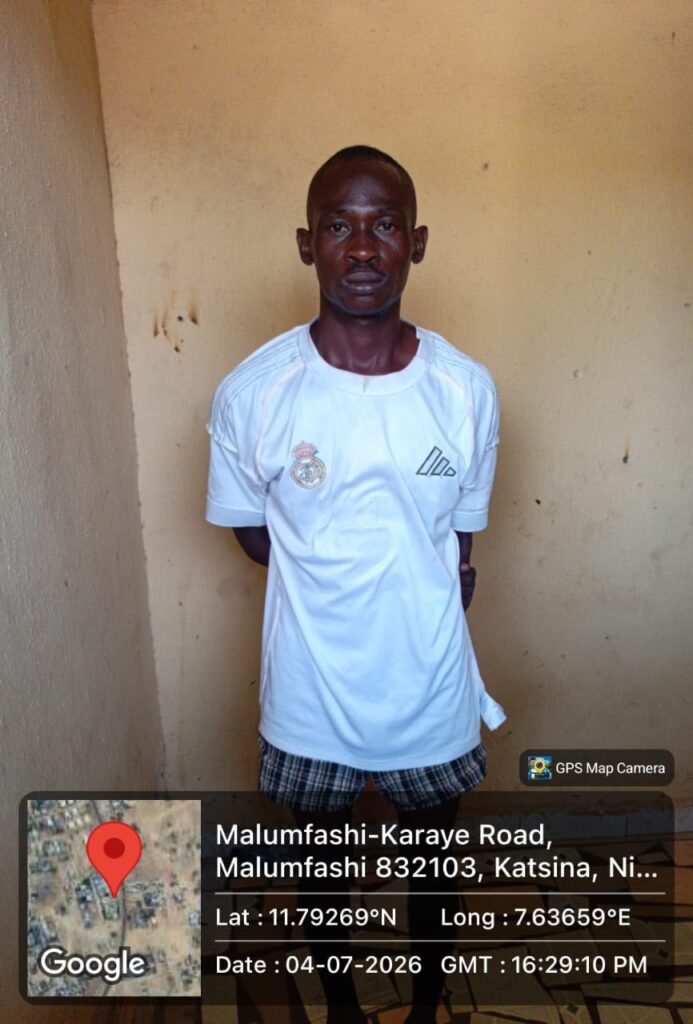
According to the sources, the suspect was intercepted while wearing a woodland camouflage three-quarter short, raising suspicion among the troops.
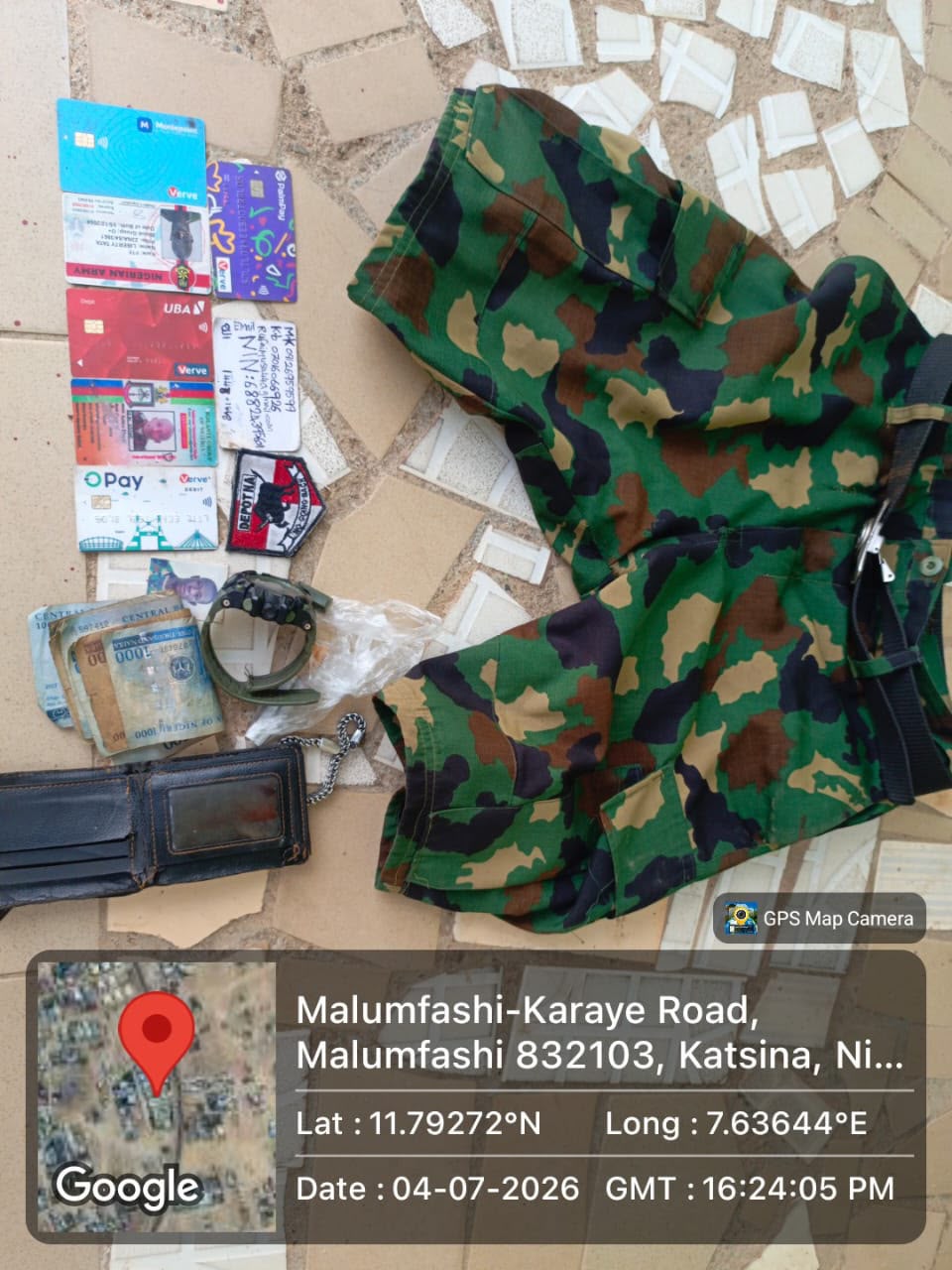
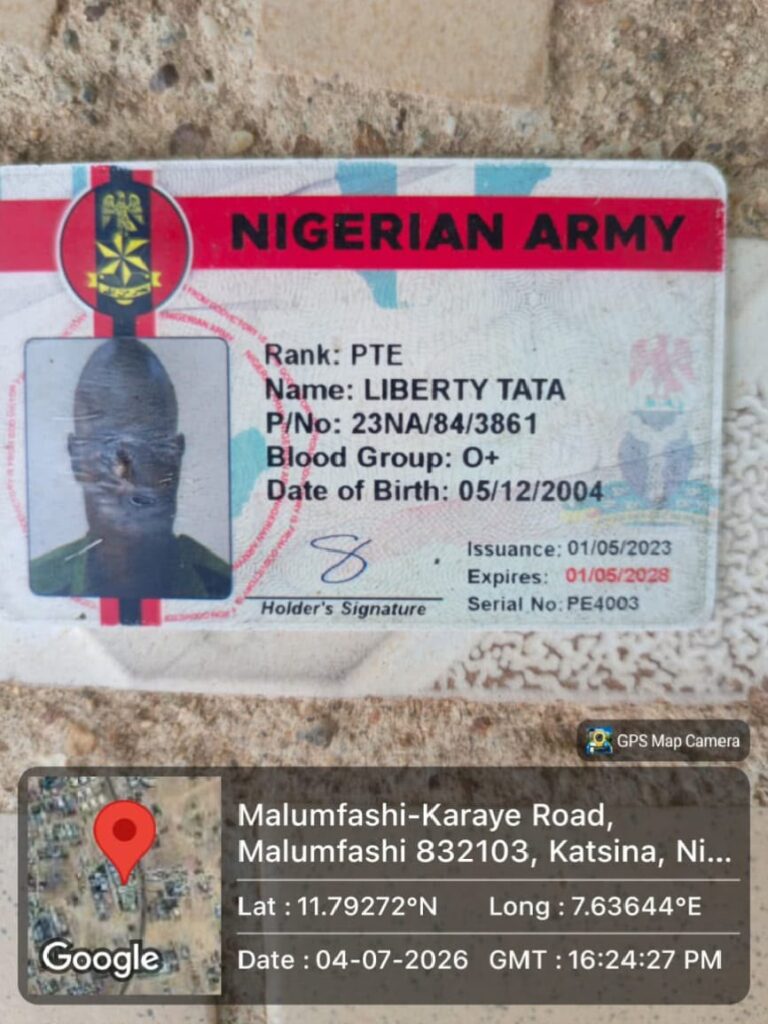
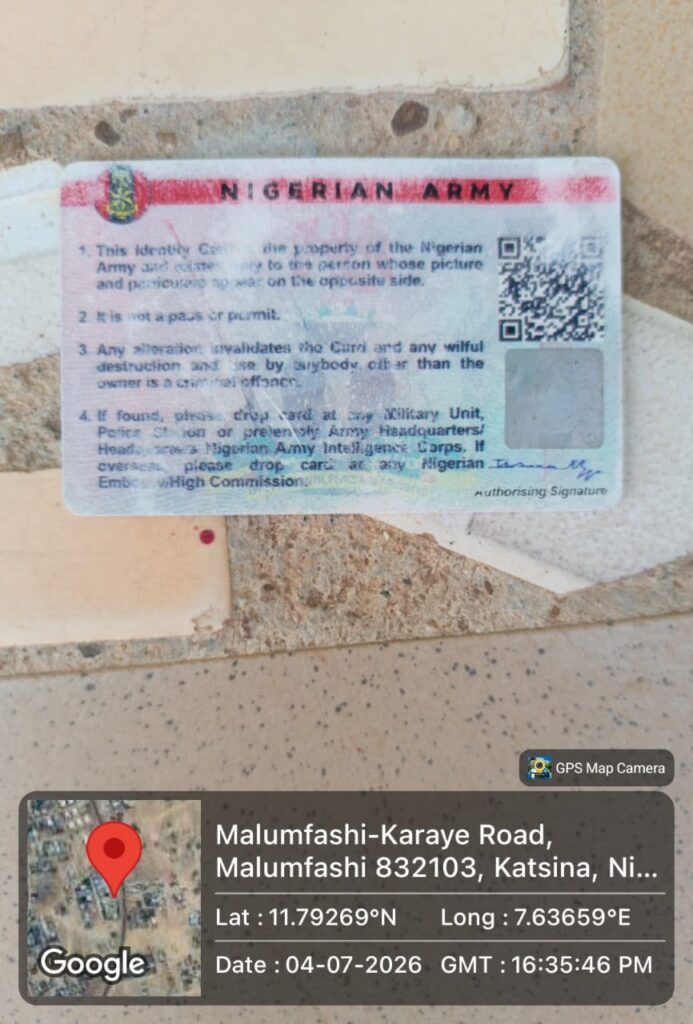
A search conducted on the suspect led to the recovery of a fake Nigerian Army identity card, four Automated Teller Machine (ATM) cards, one woodland camouflage three-quarter short, a wristwatch and the sum of ₦17,000.
The suspect and the recovered exhibits are currently in military custody pending further investigation.
Military sources said the arrest forms part of ongoing efforts to curb impersonation of security personnel and other criminal activities within the area.
Troops Arrest Suspected Military Impostor in Katsina
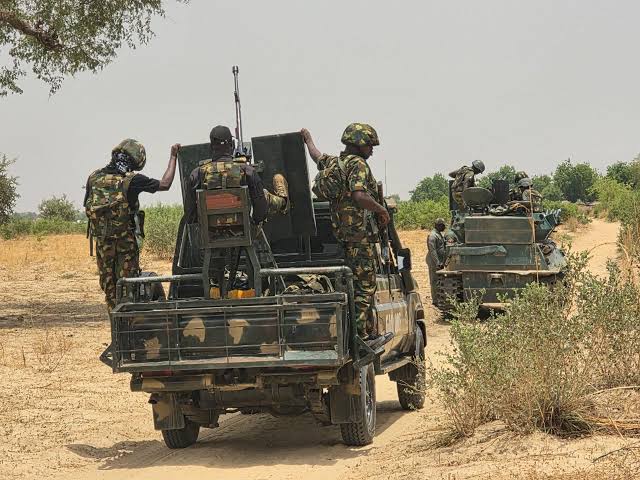
Troops Recover 50 Rustled Cattle, Repel Suspected Rustlers in Kaduna
By Zagazola Makama
Troops deployed at the Forward Operating Base (FOB) Kankomi have recovered 50 rustled cattle after repelling suspected cattle rustlers during an ambush operation in Chikun Local Government Area.
Security sources told Zagazola Makama that the troops responded to a distress call at about 9:55 a.m. on July 4 over the activities of suspected rustlers at Ungwan Gontu community.
According to the sources, the troops swiftly laid an ambush and made contact with the fleeing suspects, forcing them to abandon the stolen livestock and escape into the surrounding area.
During the operation, the troops recovered 50 rustled cattle, which were subsequently identified and handed over to their rightful owner.
Military sources said efforts are ongoing to track down the fleeing suspects as security operations continue to combat cattle rustling and other criminal activities across Kaduna State.
Troops Recover 50 Rustled Cattle, Repel Suspected Rustlers in Kaduna
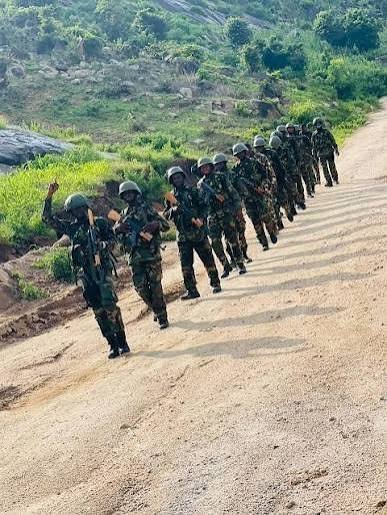
Troops Arrest Suspected Terrorist in Kogi, Suspect Confesses to Group Membership
By Zagazola Makama
Troops of 12 Brigade, in collaboration with Office of the National Security Adviser (ONSA) Hybrid Forces, have arrested a suspected terrorist during an operation in Lokoja Local Government Area.
Security sources told Zagazola Makama that the troops responded at about 1:00 p.m. on July 4 to reports of a confrontation between local residents and a suspected terrorist at a Ruga settlement behind Obajana community.
According to the sources, the troops swiftly intervened and arrested one suspect at the scene.
During preliminary interrogation, the suspect reportedly confessed to being a member of a terrorist group led by an individual identified as Haruna, which allegedly operates within the Okene general area.
The suspect is currently in military custody and is undergoing further investigation to establish the extent of his involvement and identify other members of the group.
Military sources said the arrest forms part of ongoing security operations aimed at dismantling terrorist and criminal networks across Kogi State.
Troops Arrest Suspected Terrorist in Kogi, Suspect Confesses to Group Membership

Troops Arrest Suspected Military Impostor in Katsina

Troops Recover 50 Rustled Cattle, Repel Suspected Rustlers in Kaduna

Troops Arrest Suspected Terrorist in Kogi, Suspect Confesses to Group Membership

Roger Federer’s Shock as DNA Results Reveal Myla and Charlene Are Not His Biological Children

THE PLIGHT OF FARIDA

FAILED COUP IN BURKINA FASO: HOW TRAORÉ NARROWLY ESCAPED ASSASSINATION PLOT AMID FOREIGN INTERFERENCE CLAIMS
-
 News2 years ago
Roger Federer’s Shock as DNA Results Reveal Myla and Charlene Are Not His Biological Children
-
Opinions4 years ago
THE PLIGHT OF FARIDA
-
 News1 year ago
FAILED COUP IN BURKINA FASO: HOW TRAORÉ NARROWLY ESCAPED ASSASSINATION PLOT AMID FOREIGN INTERFERENCE CLAIMS
-

 News2 years ago
EYN: Rev. Billi, Distortion of History, and The Living Tamarind Tree
-
 Opinions5 years ago
POLICE CHARGE ROOMS, A MINTING PRESS
-

 ACADEMICS2 years ago
A History of Biu” (2015) and The Lingering Bura-Pabir Question (1)
-

 Columns2 years ago
Army University Biu: There is certain interest, but certainly not from Borno.
-

 Politics1 year ago
2027: Why Hon. Midala Balami Must Go, as Youths in Hawul and Asikira/Uba Federal Constituency Reject ₦500,000 as Sallah Gift
