
News
Troops, NDLEA Raid Drug Hideout in Katsina, Arrest Suspected Supplier to Terrorists

Troops, NDLEA Raid Drug Hideout in Katsina, Arrest Suspected Supplier to Terrorists
By: Zagazola Makama
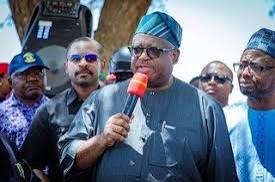
Troops of the Forward Operating Base (FOB) Malumfashi at Kafur, in collaboration with the National Drug Law Enforcement Agency, have raided a suspected drug peddlers’ hideout in Kafur Local Government Area of Katsina State.
Security sources said the operation was conducted at about 12:30 p.m. on May 12, 2026, at Huguma village following intelligence on illicit drug activities within the area.
During the raid, troops apprehended one suspect identified as a major supplier of illicit drugs and other substances to terrorists and criminal elements operating within Kafur Local Government Area and surrounding communities.
Items recovered during the operation included 146 grams of suspected cannabis and 16.5 grams of a substance identified as Exol-5.
The suspect and the recovered drugs have since been handed over to the National Drug Law Enforcement Agency for further investigation and necessary legal action.
Troops, NDLEA Raid Drug Hideout in Katsina, Arrest Suspected Supplier to Terrorists


Russia, Nigeria Target Stronger Economic Ties as Bilateral Trade Hits $1.4bn
…Moscow highlights investment, mineral exploration, military cooperation, scholarships ahead of 66th anniversary of diplomatic relations
By: Michael Mike
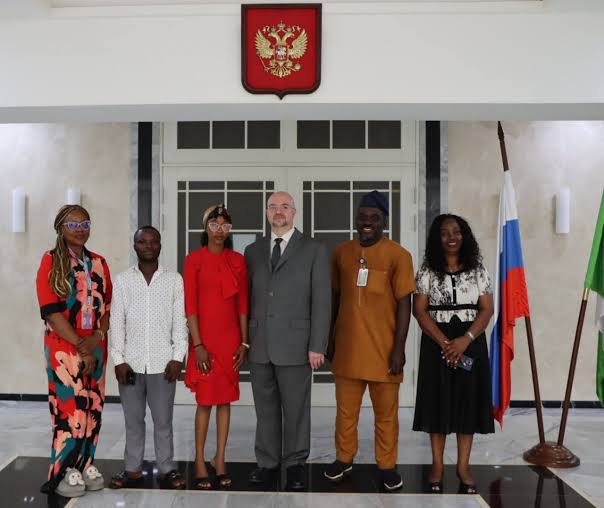
The Chargé d’Affaires of the Russian Embassy in Nigeria, Mr. Igor Ivannikov, has reaffirmed Russia’s commitment to strengthening economic, military, educational and diplomatic cooperation with Nigeria, describing the country as one of Moscow’s key strategic partners in Africa.
Ivannikov, who spoke at a press briefing in Abuja on the outcomes of the Third Russia-Africa Summit and the forthcoming 66th anniversary of diplomatic relations between Russia and Nigeria, said bilateral trade stood at between $1.2 billion and $1.4 billion in 2025, but acknowledged that economic relations between both countries remained below their potential.
He identified trade expansion, mineral exploration, technology transfer, local manufacturing, educational exchanges and security cooperation as priority areas for strengthening the partnership.
The Russian diplomat also disclosed that 2,481 Nigerians were studying in Russian universities during the 2025/2026 academic year, while Moscow continued to offer 220 government-funded university places annually to Nigerian students.
The briefing came ahead of November 25, 2026, when both countries will commemorate 66 years of diplomatic relations, established shortly after Nigeria gained independence in 1960.
Reviewing the outcomes of the Third Russia-Africa Summit, held in Moscow on October 28 and 29, Ivannikov said the event and its accompanying Economic and Humanitarian Forum attracted more than 3,500 participants from 48 African countries, including representatives of approximately 630 companies.
He said about 150 agreements were signed during the engagements, which culminated in the adoption of a Final Declaration, a Declaration on Cooperation in Artificial Intelligence and an Action Plan of the Russia-Africa Partnership Forum for 2027–2029.
According to him, the discussions focused on sovereignty, multipolarity, international cooperation, security, trade, industrial development and Africa’s role in global affairs.
Ivannikov disclosed that Russia-Africa trade had increased from approximately $18 billion in 2022 to more than $27 billion in 2025, representing an increase of about 50 per cent.
He said Russian President Vladimir Putin had set a further trade target of $50 billion, adding that Moscow was interested in helping African countries develop their industrial capacity through technology transfer, skills development, local manufacturing and the processing of natural resources within the continent.
Citing existing projects, he mentioned the construction of the El Dabaa Nuclear Power Plant in Egypt by Rosatom, LUKOIL’s participation in oil and gas projects in Africa and an agreement between Russian aluminium company RUSAL and Ghana’s GIADEC to explore joint bauxite mining and processing opportunities in Ghana.
He said the Ghanaian arrangement was particularly significant because it envisaged the establishment of production facilities within the country, rather than limiting cooperation to the extraction and export of raw materials.
Food security, trade opportunities
On food security, Ivannikov said Russia supplied more than 18 million tonnes of grain to African countries in 2025 and an additional 13 million tonnes in the first nine months of 2026.
He said Russia was also expanding cooperation in fertiliser supplies and supporting food assistance programmes, including through the World Food Programme.
However, he criticised the implementation of the 2022–2023 Black Sea Grain Initiative, arguing that commitments to remove obstacles to Russian food and fertiliser exports were not fulfilled.
He also contended that a significant proportion of Ukrainian grain exported under the arrangement went to wealthier countries rather than those most in need.
According to Ivannikov, Russia remains one of the world’s leading suppliers of food and fertilisers, exporting its products to about 160 countries, and is committed to ensuring African countries have reliable access to agricultural commodities, fertilisers and energy resources.
He further highlighted opportunities for African exporters to access the Russian-led Eurasian Economic Union (EAEU) market through tariff preferences.
Nigeria, he explained, is among developing countries whose eligible products could enter the EAEU market at 75 per cent of the standard customs duty, representing a 25 per cent reduction.
Nigeria signs new cooperation agreements
Speaking on Nigeria’s participation in the Third Russia-Africa Summit, Ivannikov said the Nigerian delegation was led by the Minister of State for Foreign Affairs, Ambassador Sola Enikanolaiye, and comprised approximately 250 participants.
He expressed appreciation for Nigeria’s participation but regretted that Vice President Kashim Shettima, who had initially been expected to lead the delegation following an invitation, was unable to attend.
The Russian diplomat said Moscow valued Nigeria’s involvement and hoped to secure even broader Nigerian representation at future Russia-Africa engagements.
He disclosed that several agreements and cooperation initiatives involving Nigeria were concluded or announced during the summit.
Among them was an agreement on cooperation and mutual assistance in customs matters, providing for information exchange, collaboration in combating customs offences and professional training for customs personnel.
He also disclosed that the Roscongress Foundation signed an agreement with the Ministry of Sports and Youth Development of Abia State to promote contacts between youth organisations, exchange experiences in education and entrepreneurship and facilitate participation in the foundation’s international events.
In another development, Russian organisations Synergy and Innopraktika announced plans to establish 10 educational centres across Africa by the end of 2028, with Nigeria identified as one of the potential host countries.
2,481 Nigerians study in Russia
On educational cooperation, Ivannikov disclosed that 2,481 Nigerian students were enrolled in Russian universities during the 2025/2026 academic year.
He said Russia offered 220 government-funded university places annually to Nigerian students, covering tuition fees.
Extending the picture to the wider continent, he said nearly 40,000 African students were currently studying in Russian universities, while more than 300,000 Africans had graduated from Russian institutions over the years.
He added that Russia increased its government-funded scholarship allocation for African students from 4,800 in 2025 to 5,500 for the 2026/2027 academic year.
According to him, youth cooperation also featured prominently at the summit, including plans to establish a Russian-African Youth Union at MGIMO University to coordinate relations between youth organisations in Russia and African countries.
Russia seeks more Nigerian investments, mineral cooperation
On the economic relationship between both countries, Ivannikov acknowledged that bilateral trade and investment remained below their potential despite decades of diplomatic engagement.
He put bilateral trade turnover at between $1.2 billion and $1.4 billion in 2025, explaining that exchanges had traditionally concentrated on petroleum products, grain and fertilisers.
He said Russia also supplied energy and agricultural equipment to Nigeria, while agricultural commodities constituted a significant portion of Nigerian exports to Russia.
The diplomat said efforts to expand economic relations had intensified since the Russian Trade Representation resumed operations in Abuja in 2024.
He identified geology and mineral extraction as emerging areas of cooperation, disclosing that Russian specialists had undertaken work on geological atlases of Nigerian regions, generating a substantial body of systematically organised geological data.
He added that opportunities for cooperation in rare earth metals were also under discussion.
According to him, Russia wanted to move beyond conventional trade towards partnerships involving local production, technology transfer and joint investment projects.
Military, maritime security cooperation
Ivannikov also described military and military-technical cooperation as an important component of Russia-Nigeria relations, identifying specialist training, professional exchanges and assistance in strengthening Nigeria’s capacity to respond to security threats as priority areas.
He referenced the recent visit of the Russian Baltic Fleet training ship, Perekop, to Lagos, during which a Russian naval delegation held meetings with Nigerian Navy officials and participated in joint manoeuvres with Nigerian forces.
He said the engagements provided opportunities for coordinated maritime operations and professional exchanges, expressing hope that the practice would continue, particularly in support of maritime security and safe navigation in the Gulf of Guinea.
The Russian diplomat further disclosed that his country maintained military cooperation agreements with 45 African countries, reaffirming Moscow’s readiness to support African partners in strengthening their defence capabilities and training military personnel.
Russia backs stronger African voice in global affairs
On international relations, Ivannikov reiterated Russia’s support for greater African representation in the United Nations Security Council and other international institutions, including the World Bank and International Monetary Fund.
He said Africa’s growing importance in global affairs should be reflected in international governance structures, adding that Russia supported an approach to resolving regional crises in which African countries developed solutions themselves.
He also highlighted Nigeria’s status as a BRICS partner country since January 2025, describing the arrangement as another platform for cooperation between both countries on international issues and matters of mutual interest.
Russia rejects chemical weapons allegations, raises concerns over Ukraine in Sahel
The Russian diplomat also used the briefing to reject allegations concerning the use of chemical weapons in the conflict in Ukraine, insisting that accusations against Moscow should not be treated as established facts without impartial investigation.
He said Russia completed the destruction of its entire declared stockpile of chemical weapons in 2017 under the supervision of the Organisation for the Prohibition of Chemical Weapons (OPCW).
Ivannikov further cited an OPCW statement dated October 6, which he said indicated that the detection of chemical substances in individual samples collected in Ukraine did not, in itself, establish their use as a method of warfare or prove Russian responsibility for the alleged incidents.
He also referred to materials submitted by Russia to the OPCW concerning allegations of the use of toxic substances by Ukrainian units, arguing that international monitoring mechanisms should not be used as instruments of political pressure.
The briefing also featured criticism of Ukraine’s alleged activities in Africa, particularly in the Sahel region.
Ivannikov recalled the July 2024 attack by anti-government forces on Malian servicemen and Russian specialists, citing statements attributed to a representative of Ukraine’s military intelligence and the subsequent publication of photographs of fighters holding a Ukrainian flag.
He also raised concerns about reported contacts between separatist movements, armed groups and foreign actors in northern Mali, arguing that such developments posed challenges to regional security.
The Russian diplomat urged African countries to assess the activities of foreign partners based on their actual consequences on the continent and respect the right of African governments to determine their cooperation priorities without external political pressure.
66 years of Russia-Nigeria diplomatic relations
Tracing the historical foundation of the relationship, Ivannikov said Russia and Nigeria would mark 66 years of diplomatic relations on November 25, 2026.
He recalled that Soviet leader Nikita Khrushchev sent a congratulatory message to Nigeria’s Prime Minister, Tafawa Balewa, on October 1, 1960, welcoming the country’s independence and proposing the establishment of diplomatic relations.
Formal diplomatic relations were subsequently established on November 25, 1960.
The Russian diplomat said the Soviet Union had supported Nigeria during periods of significant national challenges, including the civil war, describing the historical relationship as an important foundation for mutual trust and cooperation.
He also recalled several high-level exchanges that had strengthened relations over the decades, including former Nigerian President Olusegun Obasanjo’s visit to Moscow, former Russian President Dmitry Medvedev’s visit to Abuja, former President Muhammadu Buhari’s participation in the First Russia-Africa Summit and Foreign Minister Yusuf Tuggar’s visit to Moscow in 2024.
He said regular political dialogue between both countries continued through bilateral engagements and international platforms, including the Russia-Africa summits.
Ivannikov expressed optimism that the 66-year relationship would provide a stronger foundation for expanding trade, investment, professional exchanges and humanitarian cooperation.
He thanked individuals and institutions that had contributed to the development of Russia-Nigeria relations, particularly media organisations, for helping both countries understand one another and publicise the outcomes of their cooperation.
Russia, Nigeria Target Stronger Economic Ties as Bilateral Trade Hits $1.4bn
News
JBS $2.5bn Nigeria investment raises alarm over land loss, pollution, smallholder farmers’ survival
JBS $2.5bn Nigeria investment raises alarm over land loss, pollution, smallholder farmers’ survival
…Environmentalists, researchers demand independent impact assessment as studies reveal contamination of rivers, farmland losses and growing pressure on rural communities
By; Michael Mike
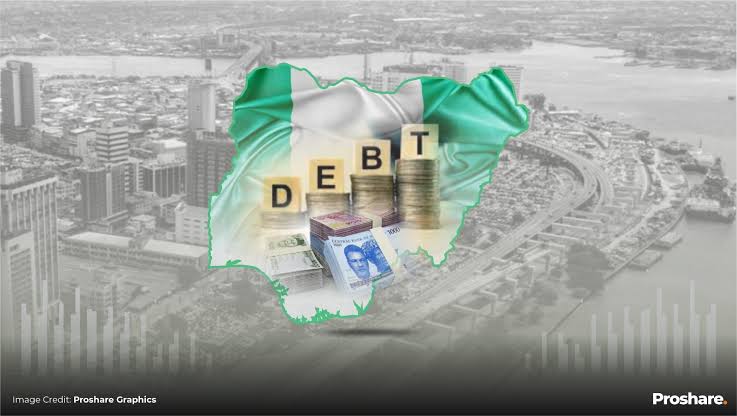
Nigeria’s proposed $2.5 billion investment by global meat-processing giant JBS has triggered renewed concerns over the environmental, social and economic consequences of large-scale industrial animal farming, with environmental rights advocates warning that the country could face serious ecological and livelihood challenges if adequate safeguards are not put in place.
The concerns come amid revelations from existing industrial livestock and slaughterhouse operations across the country, including reported farmland losses, air pollution, water contamination and the discharge of untreated abattoir waste into rivers used by surrounding communities.
At a media training on the real-life impacts of industrial animal farming in Nigeria, organised in Abuja by the Health of Mother Earth Foundation (HOMEF) and Environmental Rights Action (ERA), in collaboration with Youth in Agroecology and Restoration Network and HEDA Resource Centre, environmental campaigners and researchers presented evidence of the consequences of poorly regulated industrial animal production.
The presentation, delivered by Adesuwa James Jang, Founder and Team Lead of Youth for Environmental Sustainability and Development (YESD), examined the environmental, social and economic implications of expanding industrial livestock production, drawing from documented cases in Lagos, Abia and Benue states.
The intervention comes against the backdrop of JBS’s proposed $2.5 billion investment in Nigeria, a five-year plan signed with the Federal Government in November 2024.
The proposed investment involves six major facilities comprising three poultry processing plants, two beef processing plants and a port facility, with Ogun State identified as a major operational hub.
Niger State has also reportedly committed approximately 1.2 million hectares of land to the project.
Although the investment is being presented as an opportunity to expand livestock production, create employment, strengthen food processing and stimulate economic growth, environmental advocates insist that the country must examine the experiences of communities already living with the consequences of industrial animal agriculture before committing extensive land and resources to the proposed expansion.
The economic promise and the livelihoods at risk
Nigeria’s livestock industry is economically significant, with the Federal Ministry of Livestock Development estimating its annual contribution to the economy at about $32 billion.
The poultry industry alone reportedly supports approximately 25 million livelihoods, directly and indirectly, while the country’s livestock population includes about 660 million birds, 58 million cattle, 64 million sheep and 124 million goats.
The government has set a target of increasing livestock’s contribution to the country’s Gross Domestic Product from approximately five per cent to 10 per cent by 2030.
However, the presentation raised questions about who would ultimately benefit from the anticipated expansion and whether large-scale industrial operations could undermine existing livestock producers, particularly smallholder farmers.
According to the presentation, smallholder farmers account for more than 60 per cent of poultry farming in Nigeria but continue to struggle with rising feed costs, expensive day-old chicks and limited access to credit.
While the JBS investment is projected to generate more than 50,000 direct and indirect jobs across its six proposed facilities, the environmental advocates questioned whether the promised employment opportunities would compensate for livelihoods potentially displaced by the industrial model.
They warned that the expansion of large confined animal production systems could marginalise local farmers, increase dependence on costly industrial feed and weaken the economic value of indigenous livestock breeds.
The presentation stressed that the central question should not merely be how many jobs the investment would create, but also how many existing livelihoods could be lost in the process.
Communities already counting the costs
Of particular concern are findings from a study coordinated by HEDA Resource Centre and its partners, which examined the experiences of communities affected by industrial agricultural projects.
The study, cited in the presentation, found that 60 per cent of respondents reported losing farmland to industrial agriculture projects.
Similarly, 76.7 per cent reported suffering air pollution, while 63.3 per cent said nearby factory operations had contaminated their water sources.
Although the study recorded mixed outcomes, the findings point to the potential social and environmental consequences of poorly managed industrial agricultural developments.
The presentation cautioned that the percentages were based on self-reported experiences from several communities and that journalists should establish the study’s sample size and methodology before using the figures as representative of the wider population.
Beyond land loss and pollution, concerns were also raised about the displacement of communities, land acquisition practices, militarisation of affected areas and the casualisation of workers.
Environmental advocates also identified deforestation, tree cutting and chemical spraying as issues requiring closer investigation, particularly where industrial agricultural projects are established close to residential communities and existing farming settlements.
Kara abattoir: A disturbing picture of industrial waste
One of the most striking examples presented was the environmental situation around Kara abattoir, a major slaughtering facility serving Lagos and its surrounding areas.
Studies on the Ogun River reportedly found that blood and wastewater from slaughtering and washing activities at the abattoir were discharged into the river without adequate treatment.
The river is also reportedly used for washing cattle and providing drinking water for livestock, while residents in surrounding communities depend on it for domestic purposes.
This creates a troubling cycle in which untreated slaughterhouse waste enters a water source that is subsequently used by animals and people.
Researchers have also raised concerns about possible risks to consumers because meat processed at the facility is transported daily to Lagos and neighbouring states.
The scale of the problem is underscored by estimates that Lagos slaughters approximately 8,000 cattle daily but has approved only seven abattoirs.
The presentation cited University of Lagos studies on the Ogun River, research published in the Journal of Applied Research and Technology in 2023, and an investigation by the Pulitzer Center in 2021.
For environmental advocates, the Kara experience demonstrates why the expansion of meat-processing facilities must be accompanied by strict wastewater treatment requirements, independent environmental monitoring and effective enforcement of existing regulations.
From Lagos to Abia and Benue: Pollution beyond one location
The environmental challenges are not restricted to Kara.
In Lagos, unlicensed slaughter slabs reportedly leave bones, blood and animal dung in drains and open spaces, contributing to pollution around residential communities.
In Ubakala, Abia State, a 2025 study found that abattoirs were predominantly located close to rivers and streams, while 60 per cent of respondents reportedly said slaughterhouse waste was being burnt.
In Makurdi, Benue State, researchers investigated the presence of heavy metals in the River Benue around the Wurukum abattoir, examining possible contamination associated with untreated slaughterhouse effluent.
The presentation noted that Nigeria accounts for approximately 30 per cent of the meat consumed in West Africa, suggesting that environmental problems associated with meat production and processing could have implications beyond the immediate communities where they occur.
These cases reinforce the need for stronger environmental standards across the livestock value chain, from animal production and slaughtering to waste disposal and meat distribution.
Climate implications of expanding livestock production
The environmental concerns also extend to climate change.
The presentation identified cattle as the largest contributor to livestock-related methane emissions, accounting for approximately 74 per cent of the emissions discussed.
Sheep, goats and other ruminants account for about 22 per cent, while pigs, poultry and other livestock contribute approximately four per cent.
The figures were derived from research indicating that ruminants account for 96.15 per cent of livestock methane emissions.
Nigeria’s livestock population has also expanded considerably, with poultry numbers increasing by 68 per cent between 1991 and 2018, while cattle numbers grew by 67 per cent over the same period.
Although cattle production represents the biggest climate-related concern because of methane emissions, the presentation highlighted the need to address poultry waste and its potential contribution to environmental pollution.
A 2013 laboratory study cited in the presentation found that poultry waste generated more methane-containing gas per kilogram than pig waste under the conditions examined.
The distinction, according to the presentation, is that cattle are a major climate concern because of methane emissions, while poultry production presents significant waste-management and water-pollution challenges.
Public health concerns and disease risks
Health implications were also highlighted, particularly the risks associated with poorly managed livestock production, inadequate waste disposal and the proximity of industrial animal facilities to human settlements.
The presentation cited concerns raised by health experts that industrial livestock operations could contribute to conditions favourable to the spread of zoonotic diseases, including Lassa fever and Mpox.
However, it emphasised that such concerns must be subjected to scientific investigation and should not automatically be presented as established legal or medical findings.
Environmental advocates argued that the potential health consequences of industrial livestock expansion make independent environmental and social impact assessments particularly important.
The demand for transparency and accountability
The emerging concerns have strengthened calls by environmental campaigners for the Federal Government to make the proposed JBS investment more transparent and ensure that affected communities are not excluded from decisions concerning their land, livelihoods and environment.
They are also seeking independent environmental and social impact assessments, public disclosure of project details, adequate consultation with host communities and enforceable safeguards against pollution and displacement.
For journalists covering the proposed investment, the presentation identified three critical questions.
First, were affected communities properly consulted, and was compensation for acquired land fair and adequate?
Second, where will animal waste, wastewater and other industrial effluents go, and are independent environmental and social impact assessments available to the public?
Third, who will benefit economically from the investment, and what will happen to smallholder farmers, livestock workers, local feed producers and food prices?
These questions are particularly significant given the scale of the proposed investment and the amount of land reportedly committed to the project.
Beyond investment figures
Ultimately, the debate surrounding JBS’s proposed Nigerian investment goes beyond the attraction of foreign capital or the number of jobs promised.
It raises fundamental questions about the country’s agricultural development model, the protection of rural livelihoods, food security, environmental sustainability and the rights of communities whose lands and natural resources may be affected.
Nigeria’s livestock sector undoubtedly requires investment, improved technology, better processing facilities and expanded production capacity.
But environmental advocates argue that development should not come at the expense of the country’s rivers, farmlands, biodiversity and the millions of smallholder farmers who sustain the existing food system.
With the government pursuing an ambitious target of doubling livestock’s contribution to GDP by 2030, the challenge is to ensure that economic expansion does not create environmental liabilities and social costs that future generations will be forced to bear.
The experience of communities around existing slaughterhouses and industrial agricultural projects, campaigners insist, should serve as a warning that investment without transparency, regulation and accountability could turn an economic opportunity into a major environmental and livelihood crisis
JBS $2.5bn Nigeria investment raises alarm over land loss, pollution, smallholder farmers’ survival
News
Kogi Group Rejects 16-Year Power Retention Agenda, Demands Rotation, EFCC Probe of Ex-LG Chairmen
Kogi Group Rejects 16-Year Power Retention Agenda, Demands Rotation, EFCC Probe of Ex-LG Chairmen
By: Michael Mike
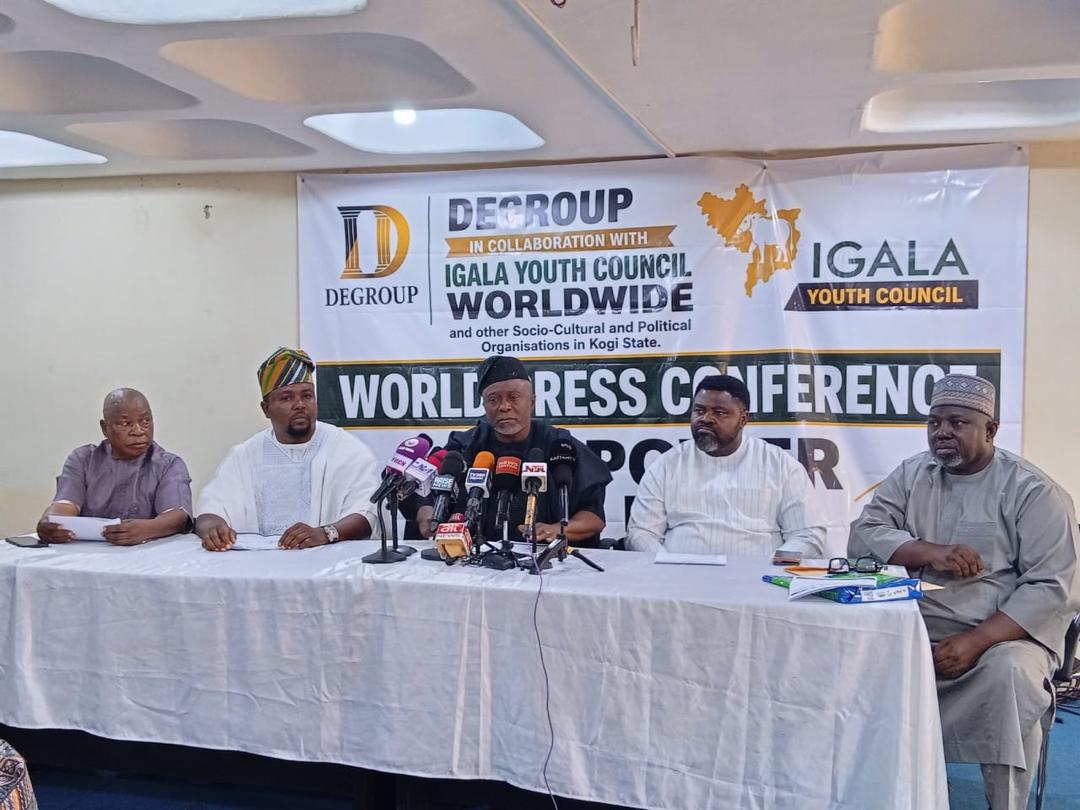
A coalition of socio-cultural and political organisations in Kogi State has rejected what it described as a plot to extend political dominance of one senatorial district in the state to 16 years, insisting that power must rotate among Kogi East, Central and West in the interest of equity and justice.
The coalition, operating under De Group in collaboration with the Igala Youth Council and other organisations, also called on the Economic and Financial Crimes Commission (EFCC) to investigate former local government chairmen in the state over the management of allocations received by the 21 councils.
At a world press conference in Abuja on Wednesday, the coalition accused the administration of Governor Ahmed Usman Ododo of perpetuating a political arrangement that favours a particular zone, while allegedly neglecting workers, youths and other segments of the population.
Under the theme, “No to 16 Years Per Zone: Kogi People Reject Ododo’s Tenure Elongation Agenda — Power Must Shift Now,” the group said the state could not afford to allow one zone to retain political control for 16 consecutive years.
Governor Ododo assumed office on January 27, 2024, succeeding former Governor Yahaya Bello, who served for eight years. Both governors hail from Kogi Central.
The coalition argued that extending political dominance of the same zone beyond Bello’s eight-year tenure would undermine the principles of equity, fairness and political inclusion in the state.
“No zone is superior to another. No zone was created to rule forever while others only watch. Power must rotate. Power must shift now — in the interest of justice, equity and fairness for all Kogites,” the group declared.
The group also questioned the management of the state’s financial resources, arguing that substantial revenue accruing to the government had not translated into visible improvements in the living conditions of residents.
Citing figures it presented at the conference, the coalition said Kogi State received N385.27 billion in allocations between January 2024 and August 2025, comprising N212.45 billion for the state and N172.82 billion for the 21 local government areas.
It further cited state allocation figures of N127 billion in 2024, N270 billion in 2025 and N151.93 billion between January and August 2026.
On internally generated revenue, the group cited figures attributed to the National Bureau of Statistics and the Kogi State Internal Revenue Service, putting the state’s IGR at N27.73 billion in 2024 and N43.94 billion in 2025.
It alleged that despite the revenue inflows, rural infrastructure, education, healthcare and employment opportunities remained inadequate across the three senatorial districts.
The coalition challenged the state government to account for the revenue collected and demonstrate how the resources had been deployed to improve public services.
The group accused successive administrations under Bello and Ododo of failing to adequately address the welfare and career progression of civil servants, alleging that workers had been denied promotions accompanied by corresponding salary increases for years.
It claimed that some civil servants had remained on the same salary grade levels for extended periods, despite rising living costs, describing the situation as a betrayal of workers’ commitment to public service.
The coalition also called for mass recruitment of teachers, health workers and other professionals, lamenting what it described as a lack of meaningful employment opportunities for graduates and young people across the state.
It accused the government of prioritising political loyalists in appointments, contracts and empowerment programmes, describing the administration as a “paddy-paddy government” allegedly serving a narrow circle of political associates.
The group insisted that public appointments, contracts and empowerment initiatives should be distributed fairly and made accessible to residents across the state’s three senatorial districts.
The coalition further raised concerns over the state’s borrowing, claiming that Kogi borrowed N95.8 billion between January and June 2026, comprising N75 billion in international loans and N20.8 billion in domestic borrowing.
It also referenced the state’s Medium-Term Expenditure Framework for 2025–2027, alleging that a substantial portion of internally generated revenue was earmarked for debt servicing.
According to the group, the financial burden of debt servicing was undermining the capacity of the state to invest adequately in infrastructure and essential services.
It listed poor rural roads, dilapidated public schools, inadequate healthcare facilities, insecurity, kidnapping and the lack of sufficient manpower in public institutions as some of the challenges confronting residents.
The coalition called on the state government to urgently address the challenges, insisting that the volume of revenue available to the state should translate into tangible development.
The group also alleged that political actors advocating power rotation were being systematically victimised and excluded from the political process.
It cited the recent Federal High Court judgment nullifying the candidacy of Senator Sunday Karimi, who represents Kogi West, and what it described as the disenfranchisement of Senator Jibrin Isah Echocho of Kogi East as examples of political exclusion.
The coalition alleged that the developments were part of a broader strategy to weaken voices advocating political balance and rotation in the state.
It, however, maintained that its position was not necessarily in defence of the senators but in defence of democratic participation, political inclusion and the rights of citizens to freely express their political preferences.
“If they can do it to a serving Senator, they can do it to any ordinary Kogite,” the group said, urging the President, National Assembly leadership, Independent National Electoral Commission, security agencies, civil society organisations and the international community to take note of what it described as a dangerous political trend.
It warned that political exclusion and perceived persecution of opposition voices could undermine democratic participation and political stability.
The coalition also demanded a forensic audit of allocations received by the 21 local government areas from January 27, 2024, to date, alleging a lack of transparency in the management of grassroots funds.
It cited figures showing that the councils collectively received N172.82 billion between January 2024 and August 2025, while claiming that the 21 local governments received N16.44 billion in July 2026 alone.
The group referenced allocations to councils in Kogi West, including Ijumu, Kabba/Bunu, Yagba East and Yagba West, which it said received hundreds of millions of naira each in July 2026.
It also cited figures for Okene and Dekina, alleging that the councils received more than N1 billion and N900 million, respectively, in July 2026.
In Kogi East, the coalition cited the alleged receipt of more than N625 million by Ankpa in June 2025, questioning the state of the Ankpa Zonal Hospital, which it described as abandoned.
It also referenced N11.05 billion allegedly received by Igalamela-Odolu Local Government Area over 22 months.
The group further relied on a published investigation by ATI and CODWA involving five local government areas — Adavi, Bassa, Dekina, Idah and Yagba East — which it said raised questions about expenditure patterns, salary allocations and service delivery.
According to the coalition, the investigation indicated that salaries accounted for between 15 and 26 per cent of the allocations examined, while it claimed that 87 per cent of 1,200 respondents rated service delivery as very poor.
It called on the EFCC to investigate former council chairmen across the 21 local government areas, insisting that those who managed public funds should account for the allocations received during their respective tenures.
The group said the investigation would either establish the innocence of the former chairmen or hold those found culpable accountable under the law.
Among its demands, the coalition called for the rejection of any arrangement aimed at extending political dominance of one zone to 16 years, immediate power rotation, an end to alleged political persecution, the implementation of promotions with corresponding salary increases for deserving civil servants and mass employment of youths.
It also demanded the payment of outstanding salaries, pensions and gratuities, urgent intervention in security, education and healthcare, transparency in the management of state revenue and a forensic audit of local government finances.
The group further called for full financial autonomy for local governments in line with the Supreme Court judgment on local government autonomy.
The coalition said the campaign was not directed against any individual or ethnic group but was aimed at promoting justice, accountability, fairness and inclusive governance.
“We are East, Central and West — together,” it declared, insisting that political power and public resources must be managed in the interest of all residents of Kogi State.
Kogi Group Rejects 16-Year Power Retention Agenda, Demands Rotation, EFCC Probe of Ex-LG Chairmen

Russia, Nigeria Target Stronger Economic Ties as Bilateral Trade Hits $1.4bn

JBS $2.5bn Nigeria investment raises alarm over land loss, pollution, smallholder farmers’ survival

Kogi Group Rejects 16-Year Power Retention Agenda, Demands Rotation, EFCC Probe of Ex-LG Chairmen

Roger Federer’s Shock as DNA Results Reveal Myla and Charlene Are Not His Biological Children

THE PLIGHT OF FARIDA

FAILED COUP IN BURKINA FASO: HOW TRAORÉ NARROWLY ESCAPED ASSASSINATION PLOT AMID FOREIGN INTERFERENCE CLAIMS
-
 News3 years ago
Roger Federer’s Shock as DNA Results Reveal Myla and Charlene Are Not His Biological Children
-
Opinions5 years ago
THE PLIGHT OF FARIDA
-
 News2 years ago
FAILED COUP IN BURKINA FASO: HOW TRAORÉ NARROWLY ESCAPED ASSASSINATION PLOT AMID FOREIGN INTERFERENCE CLAIMS
-
 Opinions5 years ago
POLICE CHARGE ROOMS, A MINTING PRESS
-

 News3 years ago
EYN: Rev. Billi, Distortion of History, and The Living Tamarind Tree
-

 ACADEMICS3 years ago
A History of Biu” (2015) and The Lingering Bura-Pabir Question (1)
-

 Columns3 years ago
Army University Biu: There is certain interest, but certainly not from Borno.
-

 Politics1 year ago
2027: Why Hon. Midala Balami Must Go, as Youths in Hawul and Asikira/Uba Federal Constituency Reject ₦500,000 as Sallah Gift
