
News
21 passengers rescued by troops as bandits attack multiple vehicles on Kogi highways, 2 security personnel killed

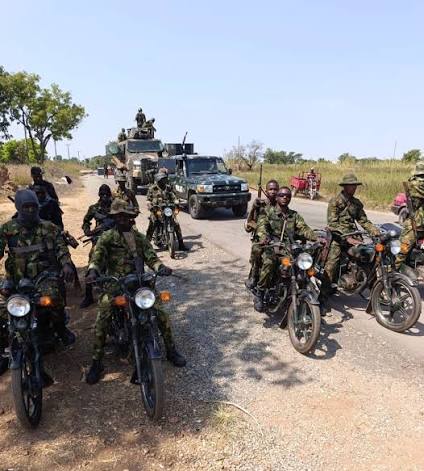
21 passengers rescued by troops as bandits attack multiple vehicles on Kogi highways, 2 security personnel killed
By: Zagazola Makama
At least twenty-one passengers were rescued unhurt following coordinated attacks by armed bandits on multiple vehicles along Kogi State highways on Thursday, while two security personnel were confirmed dead during the ensuing rescue operations.
Sources reported that about 100 armed bandits attacked a Toyota Siena with registration number YAB 968 AX traveling from Oshogbo to Kaduna, a Toyota Hiace bus (7BGT-78LG) conveying passengers from Owo, Ondo State to Abuja.
Another Toyota Hiace (GKP 178 XA) from Abuja to Ekiti State, a Toyota Carina (JMU 648 AA) from Lokoja to Kabba, a Dangote truck transporting 900 bags of cement, and a J5 bus (FTA 313 XV) carrying bags of pepper from Kano to Lagos.
The attacks occurred around 2:00 p.m., leaving passengers vulnerable to abduction.
A joint rescue operation involving the 12 Brigade of the Nigerian Army, Quick Response Units (QRU), Nigeria Security and Civil Defence Corps vigilantes, local hunters, and other security operatives swiftly engaged the bandits in a gun duel.
The operation successfully secured the release of 21 passengers, including men, women, and infants. Rescued passengers include Moses Oladimeji, Adele Jacob, Obed Onche, Babayemi Ajayi, Funmilayo Ajayi, Samuel Olawoyin, Samuel Job, Jemima Joseph, Nanko Joseph, Enenche Paulina, Bright Enenche, Rachael Enenche, Deborah Enenche (9 days old), Bukola Clement, Toyin Clement, Glory Clement, Faith Clement, Peter Olawale, and the drivers of the Dangote truck and J5 bus.
Tragically, one soldier attached to the Oshokoshoko sector and one vigilante from Odoape lost their lives during the exchange of fire. Their identities are yet to be confirmed.
Rescue operations are ongoing to track down any remaining abducted victims and apprehend the perpetrators.
Communities along the highways remain on high alert following the attacks, highlighting the continued threat of organized banditry in Kogi State.
The operation demonstrates the effectiveness of coordinated efforts between military, vigilante, and local security forces in responding to large-scale armed bandit attacks, although the loss of personnel underscores the dangers faced by security operatives during such missions.
21 passengers rescued by troops as bandits attack multiple vehicles on Kogi highways, 2 security personnel killed



Troops intercept 11 youths with donkeys during patrol in Borno
By: Zagazola Makama
Troops of 68 Battalion have intercepted 11 youths during a routine patrol in Mallam Fatori area of Abadam Local Government Area of Borno State.
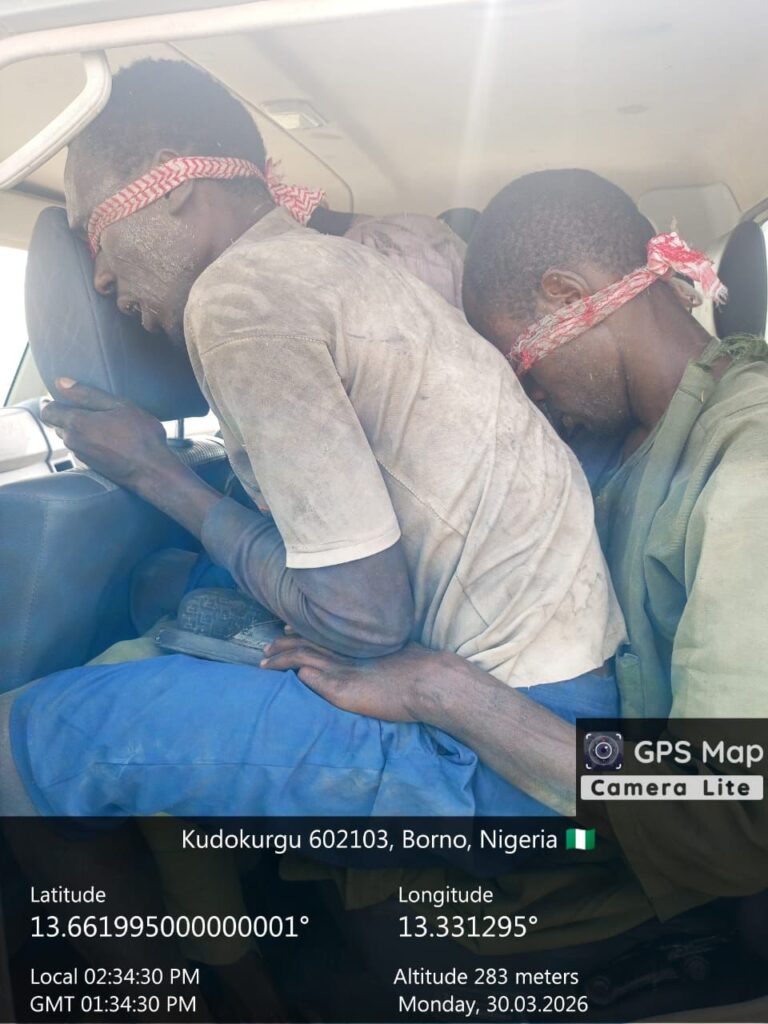
Security sources said the interception occurred along the Bulagana–Cheisa axis on April 2 during ongoing clearance operations in the area.
According to the sources, the individuals were found moving in the area with 12 donkeys when they were stopped and briefly interrogated by troops.
The sources added that the youths were later handed over, alongside the animals, to relevant authorities in a neighbouring country for further necessary action.
The military said the patrol was part of sustained efforts to maintain security dominance and prevent exploitation of border communities by criminal elements.
Troops intercept 11 youths with donkeys during patrol in Borno
Troops recover ammunition, logistics items in Kwara patrol operation
By: Zagazola Makama
Troops of the Nigerian Army under the 22 Brigade have recovered ammunition and other logistics items during a fighting patrol in Ifelodun Local Government Area of Kwara State.
A security source disclosed that the operation was conducted at about 4:00 p.m. on April 2 at Daban Lema, where troops of the brigade, operating from the Patrol Base, encountered signs of suspected terrorist activities in a deserted location.
According to the source, the troops immediately carried out exploitation of the area, leading to the recovery of four rounds of 7.62mm special ammunition and one empty PKT ammunition belt link.
Other items recovered include four mobile phones, two head warmers, two small solar panels, and assorted repair tools believed to have been used by the suspected terrorists.
The source added that the recovery indicates the presence and movement of suspected criminal elements within the area, noting that troops have intensified surveillance and patrols to deny them freedom of action.
Troops recover ammunition, logistics items in Kwara patrol operation
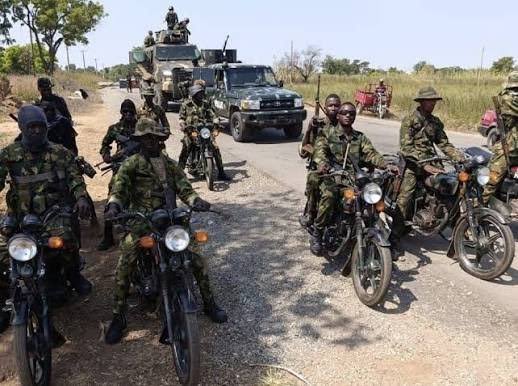
Troops foil attack by Criminal Youths, rescue victims, arrest suspects in plateau
By: Zagazola Makama
Troops of Sector 1, Operation Enduring Peace (OPEP), have foiled an attack on residents at Dutse Uku in Jos North Local Government Area of Plateau State.
A security source said the troops responded swiftly to a report of sporadic gunshots in the area at about 11:50 p.m. on April 2.
According to the source, upon arrival at the scene, the suspected criminals fled, abandoning their operation due to the prompt intervention of the troops.
He said the troops rescued two victims who sustained gunshot wounds during the incident and immediately evacuated them to a hospital for medical attention.
The source further disclosed that two suspects, dressed in black attire, were arrested at the scene.
Items recovered from the suspects include a cutlass and a knife.
He added that the suspects are currently in military custody and undergoing preliminary investigation, while efforts are ongoing to track down other fleeing members of the group.
Zagazola report that despite heightened security, there has been report of pocket of attacks in some communities.
The source reassured residents of the military’s commitment to protecting lives and property and urged the public to continue providing timely information to security agencies.
Troops foil attack by Criminal Youths, rescue victims, arrest suspects in plateau

Troops intercept suspected Boko Haram logistics convoy conveying 13 persons in Borno

Troops intercept 11 youths with donkeys during patrol in Borno

Troops, CJTF arrest three suspected Boko Haram logistics suppliers in Borno

Roger Federer’s Shock as DNA Results Reveal Myla and Charlene Are Not His Biological Children

THE PLIGHT OF FARIDA

FAILED COUP IN BURKINA FASO: HOW TRAORÉ NARROWLY ESCAPED ASSASSINATION PLOT AMID FOREIGN INTERFERENCE CLAIMS
-
 News2 years ago
Roger Federer’s Shock as DNA Results Reveal Myla and Charlene Are Not His Biological Children
-
Opinions4 years ago
THE PLIGHT OF FARIDA
-
 News12 months ago
FAILED COUP IN BURKINA FASO: HOW TRAORÉ NARROWLY ESCAPED ASSASSINATION PLOT AMID FOREIGN INTERFERENCE CLAIMS
-

 News2 years ago
EYN: Rev. Billi, Distortion of History, and The Living Tamarind Tree
-
 Opinions4 years ago
POLICE CHARGE ROOMS, A MINTING PRESS
-

 ACADEMICS2 years ago
A History of Biu” (2015) and The Lingering Bura-Pabir Question (1)
-

 Columns2 years ago
Army University Biu: There is certain interest, but certainly not from Borno.
-

 Opinions2 years ago
Tinubu,Shettima: The epidemic of economic, insecurity in Nigeria
