
News
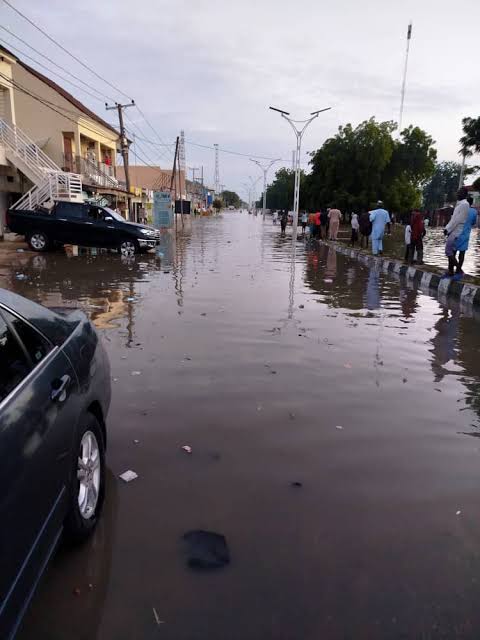
48 doctors displaced by the recent flood in maiduguri

48 doctors displaced by the recent flood in maiduguri
By: Bodunrin Kayode
48 doctors were badly affected by the last flood which took over the city of Maiduguri and some parts of Jere council areas of Borno state.
These practicing members of the Nigerian Medical Association (NMA) were completely displaced with their families from their homes by the raging waters from the Alau dam such that some of them had to seek for solace in 36 camps recreated for internally displaced people (IDPs) from flood.
Chairman of the NMA Dr Bukar Baki gave this revelation recently while having an exclusive interview with this reporter on the celebration of the world physician day at the NMA Secretariat in Maiduguri.
Dr Baki said that the executive did their best in ensuring that they visited the affected doctors who fled their homes from the flood waters and empathized with all of them individually.
“As a matter of fact, we gave them all the support they needed to make them fall in line with our standard of provision of welfare of our members.
” incidentally most of them who found themselves in IDP camps were involved in the provision of services to the entire populace which was affected by the sudden surge of water from Alau dam.
“This meant we had to activate our humanity support system for other flood affected residents to be involved in an instant outreach services to hundreds of residents in various camps that needed instant medical care.
“We even made sure that hot meals were cooked for the idps for the first one week of the flood. And that went a long way to help people out of despair.” Said the chairman.
The Chairman noted that the annual physician week is set aside by the United Nations to celebrate doctors and understand their contemporary challenges even as they proffer solutions to some of them.
Speaking on the peculiar challenges affecting his members, the Chairman regretted that brain drain is one glaring problem which occurs as a result of the lingering disparity between practitioners in the country and others outside who work in much more conducive environments.
“Brain drain is our major problem in this part of the country. We have just about 800 doctors providing services to people in the entire state and you know what that means. It puts a stress on individual doctors who do the jobs of many.
” This is what results into burn out which in most circumstances is a very strong factor responsible for the state government loosing many doctors to other states with more personnel and remunerations.
“Health care should be paid across board because health is not on the exclusive list in terms of remuneration. So in response to your question, we would be glad if the federal government can take over the payments of remuneration doctors as they have done in the judiciary to ensure sanity and stability.
” The state govt loosing lots of medical doctors yearly and this is worrisome to us because one doctor is left to hundreds of patients in a day and you know what that means to the mental state of that practitioner. That is the only way to mitigate the problem.” He stressed.
On arrears for his colleagues, Baki said that the Consolidated Medical Salary Structure (CONMESS) salary structure was revised and implemented from January this year but they are yet to see the corresponding response to this on their pay slips.
No doctor however lost his life to the flood which came about as a result of the sudden collapse of the Alau dam 25km away which collapsed and emptied itself into the city centre destroying the homes of over 200,000 people.
48 doctors displaced by the recent flood in maiduguri


NGX boss restates commitment to gender equality
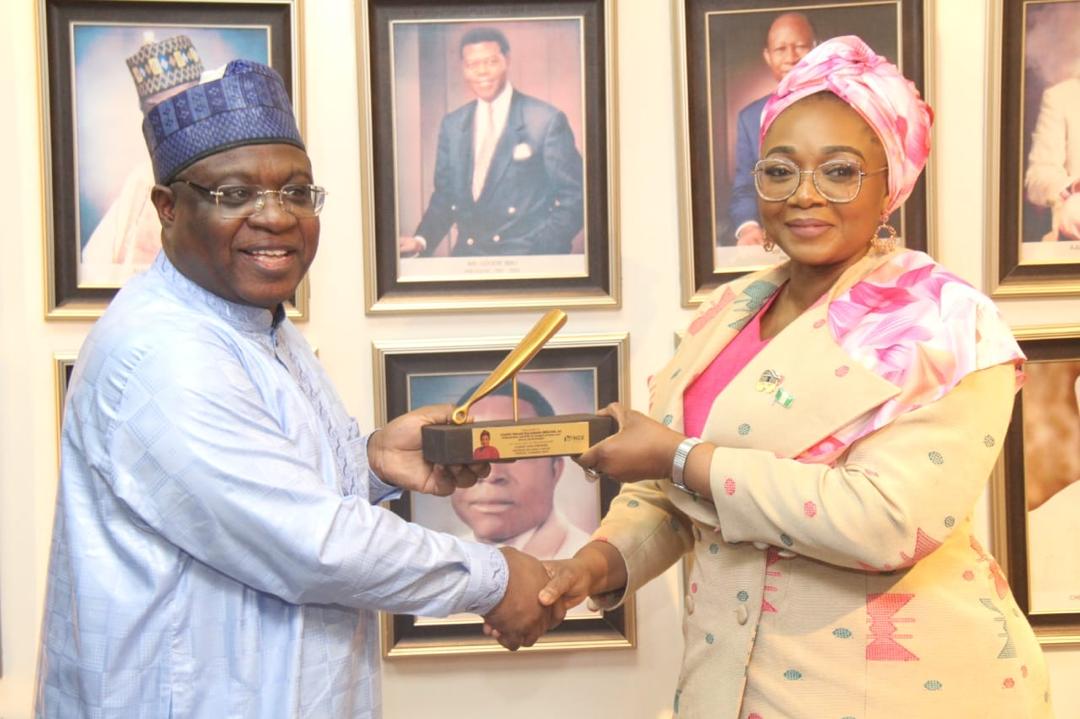
The Group Chairman Nigerian Exchange Group, Dr. Umaru Kwairanga has restated the NGX’s commitment to gender equality and diversity at all levels of the organisation.
Kwairanga stated this in Lagos on Tuesday while delivering his welcome address on the occasion of the closing ceremony in honour of the Honourable Minister of Women Affairs and Social Development, Hajiya Imaan Sulaiman-Ibrahim, who visited the floor of the Nigerian Exchange.
He stated that the Nigerian Exchange Group as an organisation remained committed to inclusiveness that drive growth and development at all levels of the NGX’s dealings.
He stated that through such inclusive representation, the NGX has achieved near parity at the board levels of the organisation and was working to improve the representation of female employees down the line.
“As an institution committed to sustainable growth and practices, we recognise the important qualities and values that women bring to the workplace and know that they perform just as well, if not better than men.
“It is a tradition in finance and investment that can be traced to the origins of the banking, finance and investment professions when most of the trade guilds that evolved into those professions were largely composed of men.
“The tradition has persisted for hundreds of years but despite that nomenclature, let me assure you that the investment and securities sector is very welcoming to and open to city gentlemen who are female.
“Women are very well represented at all levels of our industry and I can confide in you that the next President of the Chartered Institute of Stockbrokers is going to be a woman,” he said.
Kwairanga stated that the NGX would partner with the Ministry to accelerate progress for women’s rights and improve the lot of female gender across the country.
He commended Sulaiman-Ibrahim for her several bold and innovative initiatives that would have positive impact on women and the country as a whole.
NGX boss restates commitment to gender equality
Benue troops neutralize one terrorist, arrest four suspects in Gwer West LGA
By: Zagazola Makama
Troops of Sector 1 Operation Wirld Stroke deployed at FOB Bilawa-Jor conducted a fighting patrol within Mbapa and Mbabuande general areas on March 23, 2026.
During the operation, troops made contact with terrorists, neutralizing one suspect while others fled.
Following a pursuit, four additional suspects were apprehended and are currently in the custody of security forces for further investigation and prosecution.
In a similar development the troops
recovered a vehicle carrying two cows abandoned by suspected cattle rustlers in Uhemba.
The incident occurred at about 0348hrs on March 24, 2026, when the troops responded to intelligence reports of rustling activities in the area.
Upon the arrival of troops, the suspects fled, leaving behind the vehicle and livestock.
The recovered vehicle and cows are now in the custody of the troops for further investigation and legal action.
Military continue to urge the public to provide timely information on criminal activities to support ongoing security efforts.
Benue troops neutralize one terrorist, arrest four suspects in Gwer West LGA
Kogi troops neutralize suspected terrorist in Kabba/Bunu LGA
By: Zagazola Makama
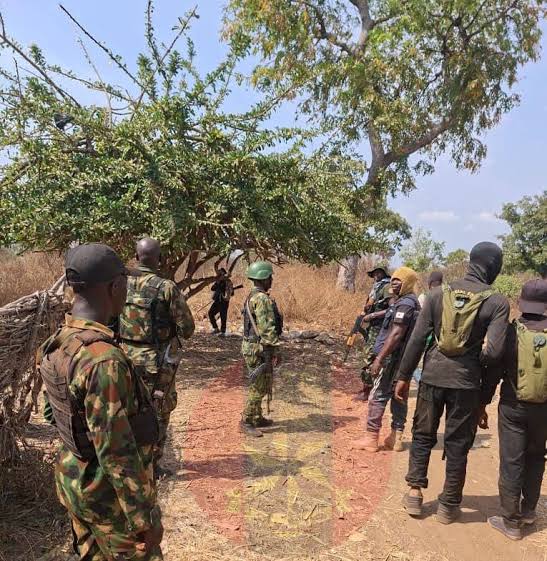
Troops of 12 Brigade have neutralized a suspected terrorist during a fighting patrol at Odoape–Adankolo Forest in Kabba/Bunu LGA.
The encounter occurred at about 1400hrs on March 23, 2026, when the patrol team made contact with the fleeing suspect.
Preliminary investigation identified the neutralized individual as a notorious terrorist involved in providing intelligence and targets for kidnappings, as well as participating in cattle rustling and supplying logs to terrorist groups.
The military has reaffirmed its commitment to sustaining aggressive patrols and intelligence-led operations to curb criminal activities and protect residents in the area.
Kogi troops neutralize suspected terrorist in Kabba/Bunu LGA

NGX boss restates commitment to gender equality

General Chris Musa, Hi-tech Fencing of Nigerian Porous Borders and the Foolish Pride of Sowore

Benue troops neutralize one terrorist, arrest four suspects in Gwer West LGA

Roger Federer’s Shock as DNA Results Reveal Myla and Charlene Are Not His Biological Children

THE PLIGHT OF FARIDA

FAILED COUP IN BURKINA FASO: HOW TRAORÉ NARROWLY ESCAPED ASSASSINATION PLOT AMID FOREIGN INTERFERENCE CLAIMS
-
 News2 years ago
Roger Federer’s Shock as DNA Results Reveal Myla and Charlene Are Not His Biological Children
-
Opinions4 years ago
THE PLIGHT OF FARIDA
-
 News11 months ago
FAILED COUP IN BURKINA FASO: HOW TRAORÉ NARROWLY ESCAPED ASSASSINATION PLOT AMID FOREIGN INTERFERENCE CLAIMS
-

 News2 years ago
EYN: Rev. Billi, Distortion of History, and The Living Tamarind Tree
-
 Opinions4 years ago
POLICE CHARGE ROOMS, A MINTING PRESS
-

 ACADEMICS2 years ago
A History of Biu” (2015) and The Lingering Bura-Pabir Question (1)
-

 Columns2 years ago
Army University Biu: There is certain interest, but certainly not from Borno.
-

 Opinions2 years ago
Tinubu,Shettima: The epidemic of economic, insecurity in Nigeria
