
Politics
Gov. Wike Denies His Allaged Defection


Gov. Wike Denies His Allaged Defection
The Governor of Rivers State, Nyesom Wike, has denied he will leave the Peoples Democratic Party (PDP).
Wike, in a statement signed by his media aide, Kelvin Ebiri, was reacting to a viral video which claimed the governor was threatening to defect to the ruling All Progressives Congress (APC).
In a statement released on Wednesday night, Ebiri insisted the video was intended to mislead members of the public.
Ebiri explained that the video was an excerpt of an old interview that Wike granted while reacting to the defection of the Governor of Ebonyi State, Dave Umahi, from the PDP to the APC.
“Governor Wike has repeatedly maintained that he will never, under any circumstances, defect from the PDP, which has offered him the platform to excel in his political career.
“We urge the public to ignore the distorted video. Those behind it are desperately wicked and intend to mislead the public. Governor Wike remains a faithful, committed member of the PDP and will never leave it for the cancerous APC,” the statement read in part.
Wike is believed to be one of the candidates being considered by the presidential candidate of the PDP, Atiku Abubakar, as a running mate for next year’s election.
Gov. Wike Denies His Allaged Defection


Politics
Engr. Mustapha Gubio: The APC Flag, the Political Signals and a New Chapter in Borno State’s Leadership Conversation

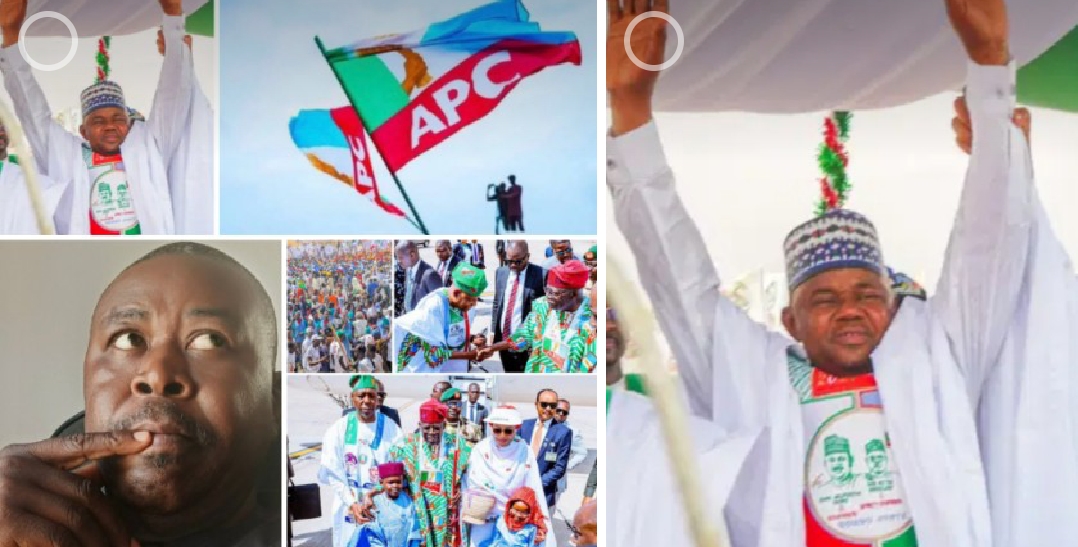
Engr. Mustapha Gubio: The APC Flag, the Political Signals and a New Chapter in Borno State’s Leadership Conversation
By: Dr James Bwala
At the El-Kanemi Warriors Stadium in Maiduguri, history was written in an atmosphere filled with excitement, solidarity, and renewed hope. The massive gathering of supporters, the deafening cheers, the colourful displays, and the vibrant energy that characterised the All Progressives Congress (APC) presidential campaign rally demonstrated the strong political enthusiasm of the people of Borno State. The occasion became even more significant when Engr. Mustapha Gubio received the APC flag as the party’s candidate for the governorship of Borno State.
The event was not merely a political ceremony. It was a public declaration of confidence in a candidate regarded by many as capable of providing purposeful, inclusive, and development-orientated leadership. In the presence of President and Commander-in-Chief, Asiwaju Bola Ahmed Tinubu; the Vice President, Senator Kashim Shettima; the Governor of Borno State, Professor Babagana Umara Zulum; and other leaders of the party, Engr. Gubio’s emergence represented a new chapter in Borno’s political journey. It signalled the party’s determination to consolidate progress, strengthen unity, and build a more prosperous future for the state.
The reception was accorded to Engr. Gubio at the rally reflected more than partisan loyalty. It expressed the aspirations of citizens who desire a government that understands their challenges and is committed to addressing them with competence, courage, and compassion. His candidacy provides an opportunity for Borno State to advance a leadership agenda founded on security, economic recovery, human development, infrastructure, and social cohesion.
Borno State has endured difficult years. The impact of insecurity has affected communities, families, schools, farms, businesses, and public institutions. Although significant progress has been achieved in restoring peace and rebuilding affected areas, much work remains to be done. The state needs a leader who can preserve the gains already made while introducing innovative strategies to address emerging challenges. Engr. Mustapha Gubio’s candidacy is persuasive because it offers the possibility of continuity with improvement—a leadership approach that respects existing achievements but is not afraid to pursue new solutions.
The administration of Governor Babagana Umara Zulum has earned recognition for its efforts in reconstruction, rehabilitation, resettlement, education, healthcare, and infrastructure. The governor’s commitment to the welfare of displaced individuals and vulnerable communities has helped restore confidence in government. However, the scale of the challenges facing Borno requires sustained leadership beyond a single administration. The next governor must build upon ongoing programs, protect public investments, and ensure that development reaches every local government area.
Engr. Gubio is positioned to provide this continuity while bringing his own vision and energy to governance. His acceptance of the APC flag at such a historic gathering symbolises his readiness to shoulder the responsibility of leading the state. The flag is not simply a party emblem; it represents the trust of the party leadership, the expectations of millions of citizens, and the obligation to serve with integrity. By receiving it, Engr. Gubio accepted a mandate that must be fulfilled through action, accountability, and respect for the people.
One of the most compelling reasons to support Engr. Gubio is the need for leadership that places security at the centre of development. Without peace, agriculture cannot thrive, children cannot learn properly, businesses cannot expand, and communities cannot plan confidently for the future. Borno requires a governor who will work closely with the federal government, security agencies, traditional institutions, community leaders, and local stakeholders to strengthen security and prevent the return of violence.
Security must also be understood beyond military operations. It includes employment, education, justice, social inclusion, and opportunities for young people. A young person with access to quality education, vocational training, and decent employment is less vulnerable to recruitment by criminal or extremist groups. Therefore, a comprehensive security agenda under Engr. Gubio should combine effective intelligence and law enforcement with investments in human capital and economic opportunity.
Agriculture should be another central pillar of the proposed administration. Borno possesses vast agricultural potential, yet many farmers have faced displacement, insecurity, inadequate inputs, poor storage facilities, and limited access to markets. A government led by Engr. Gubio should support farmers with improved seeds, modern equipment, irrigation, extension services, affordable credit, and guaranteed market access. The goal should not only be food production but also the development of agricultural value chains that create jobs and generate wealth.
The recovery of Borno’s economy depends largely on empowering small and medium-sized enterprises. Local traders, artisans, transport operators, women entrepreneurs, and young innovators need policies that reduce the burden of doing business. Access to affordable finance, business training, digital tools, and reliable infrastructure can help transform informal economic activity into sustainable enterprises. Engr. Gubio should therefore promote an economic environment in which citizens are encouraged to produce, invest, innovate, and create employment.
Education must also receive urgent attention. The future of Borno depends on the quality of learning available to its children and young people. The state needs well-equipped schools, qualified teachers, safe learning environments, science and technology programmes, and expanded opportunities for technical and vocational education. Special attention should be given to girls, displaced children, children with disabilities, and learners in rural communities.
A forward-looking administration should also expand partnerships with universities, research institutions, private organisations, and international development agencies. Such partnerships can support teacher training, digital learning, entrepreneurship, healthcare education, and skills development. Engr. Gubio’s leadership should make education a practical instrument for rebuilding society and preparing young people for a changing economy.
Healthcare is equally important. Communities affected by conflict and poverty often suffer from inadequate medical facilities, shortages of health workers, maternal health challenges, and limited access to essential drugs. The state requires stronger primary healthcare centres, mobile medical services for hard-to-reach areas, improved maternal and child health programmes, and better emergency response systems. A healthy population is more productive, more resilient, and better able to participate in development.
Infrastructure development will also determine the success of the next administration. Roads, water supply, electricity, drainage systems, housing, and telecommunications are essential to the wellbeing of citizens and the growth of businesses. Reconstruction must be guided by careful planning, environmental responsibility, and fairness. Rural communities should not be neglected in favour of urban centres. Development should connect villages, towns, and cities while ensuring that public projects are durable and beneficial to the people.
Engr. Gubio’s candidacy also carries the promise of inclusive governance. Borno State is diverse in its communities, cultures, professions, and political interests. Effective leadership must therefore unite rather than divide. The government should create platforms through which traditional rulers, religious leaders, women, youth, civil society organisations, professional associations, and persons with disabilities can contribute to policymaking.
Women and young people deserve particular attention. Women are central to the stability and economic life of families, yet they frequently face limited access to finance, education, political representation, and employment. A responsible administration should support women-owned enterprises, maternal health, girls’ education, and participation in public decision-making. Young people, meanwhile, should be treated not only as beneficiaries of government programmes but also as partners in governance and innovation.
The support displayed at the El-Kanemi Warriors Stadium imposes a moral responsibility on Engr. Gubio and the APC. Political enthusiasm must be transformed into measurable performance. Citizens are increasingly aware of their rights and expectations. They want transparent budgets, responsible public spending, accessible leaders, and clear explanations of government decisions. The incoming administration must establish strong institutions, publish development plans, monitor projects, and encourage citizens to participate in evaluating public programmes.
The APC leadership, from President Bola Ahmed Tinubu and Vice President Kashim Shettima to Governor Babagana Umara Zulum and other party stakeholders, has demonstrated confidence in Engr. Gubio by entrusting him with the party’s flag. That confidence should be matched by continued support, especially in the areas of security, infrastructure, reconstruction, and economic development. Borno State cannot be isolated from national development efforts; it must remain an important partner in the federal government’s agenda.
The rally in Maiduguri salutes Mr President and therefore represents both celebration and commitment. It celebrated the emergence of Engr. Mustapha Gubio as the APC candidate, but it also reminded him of the enormous responsibility ahead. The cheers of supporters were a call for service. The colourful displays were expressions of hope. The presence of national and state leaders was a demonstration of political solidarity. Together, these elements formed a powerful mandate for purposeful leadership to come in 2027.
Borno State needs a governor who will listen carefully, plan intelligently, act decisively, and remain accountable. It needs a leader who understands that public office is a trust, not a privilege; that power must be used to improve lives; and that development must reach ordinary citizens. Engr. Mustapha Gubio has the opportunity to present himself as that leader.
As the APC looks toward the next political phase, the people of Borno State should evaluate candidates according to their competence, character, experience, vision, and commitment to peace and development. On these grounds, Engr. Gubio’s candidacy deserves serious consideration and broad support. His emergence provides an opportunity to consolidate the progress of the present administration while opening a new era of innovation, inclusion, and prosperity.
The message from the El-Kanemi Warriors Stadium was also very clear: the people of Borno State have declared their support for President Tinubu and Vice President Kashim Shettima. Borno is ready for leadership that will protect its people, rebuild its communities, empower its youth, strengthen its economy, and unite its citizens. With the support of the APC, the guidance of President Tinubu, the partnership of Vice President Shettima, the contributions of Governor Zulum, and the trust of the people, Engr. Mustapha Gubio is the next man in Borno state; newspapers will struggle for space to ink his achievements in the new era, which comes in 2027.
- James Bwala, PhD, writes from Maiduguri.
Engr. Mustapha Gubio: The APC Flag, the Political Signals and a New Chapter in Borno State’s Leadership Conversation
Politics
2027: THE SILENT WAR FOR POWER! How Political Tensions, Opposition Campaigns, and the Bamayi Syndrome Could Shape Tinubu’s and Shettima’s Fate
2027: THE SILENT WAR FOR POWER! How Political Tensions, Opposition Campaigns, and the Bamayi Syndrome Could Shape Tinubu’s and Shettima’s Fate
By: Dr. James Bwala
Borno State, known as a political boiling pot, is always a compass to Nigeria’s political environment. The country is entering another decisive phase. As preparations for the 2027 general elections gradually intensify, the nation may be witnessing sharper disagreements within and across political parties. The #TinubuMustGo campaign, the growing opposition rhetoric, and what some supporters describe as the “#Bamayi syndrome” have become symbols of the broader political contest. Yet, beneath the noise of social media, public criticism, and partisan arguments, President Bola Ahmed Tinubu and Vice President Kashim Shettima appear to be building a political foundation that could significantly influence the outcome of the next presidential election.
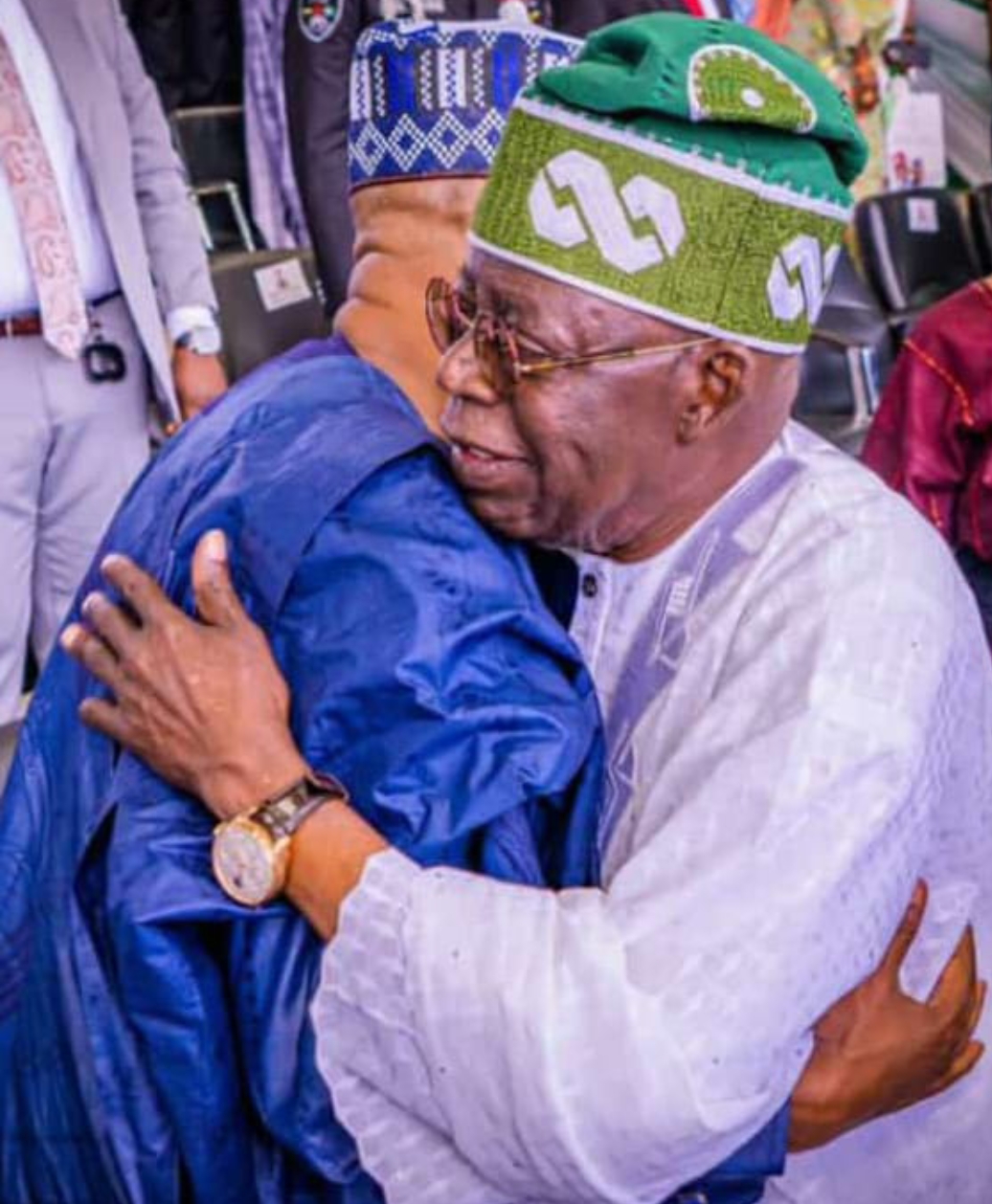
Vice President Kashim Shettima landing in Maiduguri on Monday and songs that welcome his presence had described the central argument that victory in 2027 is already guaranteed. This is not confidence because elections require more than just confidence, declarations, or public celebrations to be won. Rather, the evidence suggests that the Tinubu-Shettima administration is positioning itself through sustained grassroots engagement, policy implementation, strategic communication, and the presentation of measurable achievements. While opposition groups may believe that their rhetoric is weakening the administration, the governing team may be gaining an advantage by consistently revealing the extent of its work and by connecting national policies to local realities. Maiduguri, the home city of Vice President Shettima, is already expressing strong confidence in the ticket, and that mood may become an important part of the larger political narrative.
Political tension is natural in a democracy, but Nigeria’s current tension is unusually intense because it reflects deep economic hardship, public frustration, ethnic and regional calculations, and the struggle for control of the national political space. The government’s economic reforms, especially the removal of fuel subsidies and changes in foreign-exchange policy, have produced painful consequences for households and businesses. Inflation, rising transportation expenses, unemployment, and declining purchasing power have made many Nigerians impatient. These conditions have created fertile ground for anti-government campaigns such as #TinubuMustGo.
The campaign’s appeal is understandable. Citizens who are struggling to feed their families or sustain their businesses are likely to judge the government primarily by their immediate experiences. For many Nigerians, policy explanations do not erase the reality of increased prices. Political opponents have therefore used the hardship to argue that the administration has failed. Their message is simple and emotionally powerful: the government promised renewal, but ordinary citizens are experiencing suffering.
However, public dissatisfaction does not automatically translate into electoral defeat. Governments are often judged not only by present hardship but also by whether citizens believe that their policies are producing a better future. The Tinubu administration has repeatedly argued that its reforms were necessary to correct structural weaknesses that had accumulated over many years. Its supporters contend that the removal of subsidies, efforts to increase government revenue, reforms in the foreign-exchange market, and investment in infrastructure are intended to create a more sustainable economy.
This argument may not immediately satisfy every citizen, but it can become politically effective if the government succeeds in demonstrating results. Roads, rail projects, agricultural initiatives, student loan reforms, social investment programs, and efforts to strengthen local production can provide visible evidence that the administration is not merely making promises. In politics, visibility matters. Citizens may disagree with the government’s direction, but they are more likely to acknowledge it when they can see projects, programs, and institutional changes in their communities.
This is where the administration’s “groundworks” become significant. Political victory is rarely secured through online arguments alone. It depends on organization, alliances, party structures, local mobilization, communication networks, and the ability to connect national policies with voters at the ward, local-government, and state levels. A government that remains active in these areas may be stronger than its critics assume.
The opposition, on the other hand, may be making the mistake of confusing rhetorical dominance with electoral strength. Social media can create the impression that a political movement is larger than it actually is. Hashtags can trend, powerful speeches can attract attention, and criticism can dominate public debate. Nevertheless, elections are won through voters, polling units, party agents, mobilization, funding, coalition-building, and effective organization. Online popularity is useful, but it is not a substitute for a nationwide political structure.
The #TinubuMustGo campaign may therefore have two different effects. It can pressure the administration to respond more effectively to public concerns, which is healthy for democracy. At the same time, if the campaign remains focused mainly on denunciation without presenting a credible alternative, it may fail to convert anger into electoral support. Nigerians want change, but they also want to know who will bring it, how it will be achieved, and whether the alternative is more trustworthy than the government being criticized.
The so-called “#Bamayi syndrome” can be understood as a political and social attitude in which critics assume that constant condemnation, ridicule, or rejection of a political figure will automatically produce that figure’s downfall. Such an approach can become counterproductive when it ignores the resilience of political structures and the ability of incumbents to recover from unpopular periods. Political actors who underestimate their opponents often discover that public anger is not permanent and that voters can distinguish between genuine criticism and partisan propaganda.
The Tinubu-Shettima administration also benefits from the institutional advantages of incumbency. Access to national visibility, government programs, official communication channels, and a broad network of political actors gives the ruling party opportunities that opposition groups do not possess to the same extent. If these advantages are combined with genuine delivery and effective public engagement, they may create a formidable electoral machine.
Vice President Kashim Shettima’s role is particularly important. As a former governor of Borno State and a leading figure from the Northeast, he brings political experience, regional credibility, and a deep understanding of the security and developmental challenges affecting Northern Nigeria. His association with Maiduguri gives the administration a symbolic base in a region that has endured terrorism, displacement, poverty, and economic disruption.
Maiduguri’s apparent confidence in the vice president and the administration therefore carries more than local significance. It represents a perception among many supporters that Shettima has remained connected to the people and that his experience in Borno has prepared him for national responsibilities. If the city and the wider Northeast continue to express strong support, the region could become a crucial pillar of the administration’s 2027 campaign.
Of course, regional support cannot by itself guarantee a national victory. Nigeria’s electoral politics are complex, and no serious campaign can rely exclusively on one zone, ethnic group, religion, or political bloc. The Tinubu-Shettima ticket must continue to build bridges across the South, North, Christian and Muslim communities, urban and rural populations, young voters, women, workers, entrepreneurs, and the business community. Its success will depend on whether it can present itself as a national project rather than merely an incumbent political arrangement.
The administration’s revelations about its achievements and its presentation of its “balance sheet” are also politically important. Governments must communicate what they have done in a clear, consistent, and credible manner. Citizens cannot be expected to support achievements they do not know about. At the same time, communication must not become mere propaganda. Nigerians are increasingly sophisticated voters. They will compare official claims with their lived experiences. For this reason, the government must provide evidence, acknowledge shortcomings, and explain how unfinished projects will be completed.
A strong political message should combine achievement with humility. The administration must recognize that economic reforms have imposed serious burdens on citizens. It should demonstrate empathy, strengthen social protection, reduce waste, improve security, and create more opportunities for young people. If the government responds to hardship only with political arguments, it may deepen resentment. But if it couples its achievements with practical relief and accountable governance, its message will become more persuasive.
The opposition also has an important role to play. Its criticism is necessary, particularly when it exposes failures, corruption, insecurity, or poor implementation. Yet opposition parties must move beyond slogans. Nigerians deserve alternative policies, credible candidates, internal democracy, and a clear program for economic recovery. A campaign built entirely on the rejection of Tinubu may not be enough. The opposition must show why its leadership would be better and how it would address the same structural problems that confront the country.
Ultimately, the 2027 election will be decided by the relationship between performance, perception, organization, and trust. If voters perceive that the administration’s reforms are beginning to produce lasting benefits, if visible projects continue across the country, and if the ruling party maintains its grassroots structure, Tinubu and Shettima may enter the election with a significant advantage. Their supporters are therefore justified in believing that the administration’s groundwork could outweigh the opposition’s rhetorical attacks.
Nevertheless, confidence must not become complacency. The same Nigerians who supported the administration may also withdraw their support if hardship remains severe, insecurity continues, or corruption undermines public trust. Victory cannot be assumed merely because the government has announced achievements or because opposition campaigns appear disorganized. The administration must earn the confidence of voters continuously.
The political tension in Nigeria is therefore not an indication that one side has already won. It is evidence that the contest has begun in earnest. The #TinubuMustGo campaign reflects real frustration, while the government’s emphasis on its achievements reflects an effort to shape public perception before the election season reaches its peak. The #Bamayi syndrome warns against the belief that repeated attacks automatically defeat an incumbent. Maiduguri’s support for Shettima demonstrates the importance of local legitimacy, but national victory will require broader inclusion and continued performance.
Tinubu and Shettima may indeed have gained an early advantage through their groundwork, political organization, and efforts to reveal their administration’s accomplishments. Their potential victory in 2027 will depend, however, on whether they can transform that groundwork into improved living conditions, credible governance, and a compelling national vision. In the final analysis,
* James Bwala, PhD, writes from Maiduguri.
2027: THE SILENT WAR FOR POWER! How Political Tensions, Opposition Campaigns, and the Bamayi Syndrome Could Shape Tinubu’s and Shettima’s Fate
Politics
BAMA, KONDUGA SPEAKS LOUD: MASSIVE 2027 TURNOUT REAFFIRMS GUBIO’S GROWING POLITICAL MOMENTUM IN BORNO
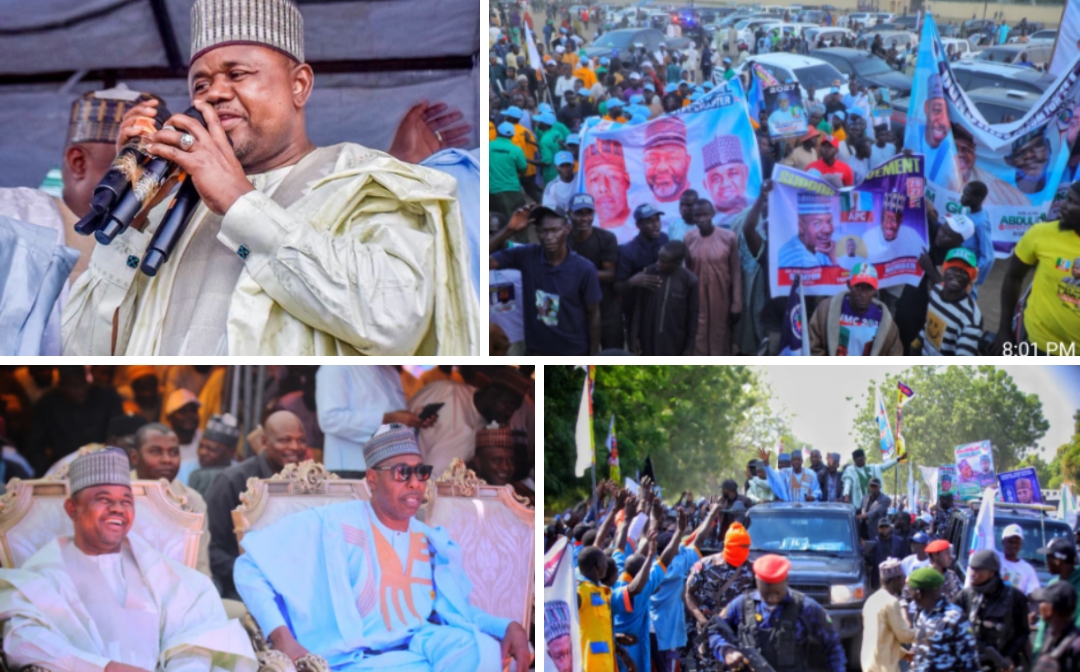
BAMA, KONDUGA SPEAKS LOUD: MASSIVE 2027 TURNOUT REAFFIRMS GUBIO’S GROWING POLITICAL MOMENTUM IN BORNO
BY: JAMES BWALA
The massive turnout witnessed in Bama and Konduga in support of Engr. Mustapha Gubio represents more than a political gathering. It is a powerful expression of public confidence, renewed hope, and a collective desire for continuity in the development of Borno State. The warm reception accorded to Engr. Gubio demonstrates that many residents recognize the importance of sustaining the progress achieved under the administration of Governor Babagana Umara Zulum while extending its benefits to communities that still require greater attention.
In his response to the impressive reception, Engr. Gubio expressed sincere appreciation to the people of Bama and Konduga for their support, hospitality, and confidence. His message was not merely one of gratitude; it was also a reaffirmation of purpose. He emphasized his commitment to building on the achievements of the Zulum administration, strengthening existing programs, addressing emerging challenges, and ensuring that development opportunities reach communities across Borno State.
This commitment is important because a society’s progress depends on not just successful policies but also on the ability to maintain, improve, and expand them. Development must be continuous. It must move beyond major urban centers and reach rural settlements, vulnerable populations, young people, women, farmers, traders, and families affected by insecurity and economic hardship. The enthusiasm displayed in Bama and Konduga therefore reflects a demand for inclusive governance—governance that places communities at the center of decision-making and treats every part of the state as an important contributor to its future.
The Zulum administration has gained recognition for its focus on rebuilding communities, improving public infrastructure, investing in education, strengthening healthcare delivery, supporting livelihoods, and restoring hope among citizens affected by years of insecurity. These accomplishments provide a foundation upon which future leaders can build. However, the existence of progress does not mean that all problems have been solved. Borno still faces significant challenges, including unemployment, poverty, displacement, inadequate access to services in some communities, and the need for sustained investment in security and economic recovery.
For this reason, the question before the people is not simply whether development has taken place, but whether that development will be protected, expanded, and made more effective. Engr. Gubio’s pledge to build on the achievements of the current administration offers a persuasive answer. Continuity does not mean refusing to improve existing policies. Rather, it means preserving what works, correcting what requires adjustment, and introducing new ideas where circumstances demand them.
Bama and Konduga’s reception is particularly meaningful because the community symbolizes both the difficulties Borno has faced and the resilience of its people. Residents have endured insecurity, disruption of livelihoods, displacement, and the destruction of social and economic infrastructure. Yet they have continued to demonstrate courage, patience, and determination. Their enthusiastic welcome for a leader who speaks of inclusive development suggests that they are ready to participate actively in the state’s recovery and transformation.
A responsible development agenda for Bama, Konduga, and other communities must begin with security. Poverty and violence made life difficult for people in El Salvador. Security, therefore, should not be viewed only as a military concern. It must also include employment opportunities, youth engagement, access to education, community dialogue, early-warning systems, and programs that reduce vulnerability to violence and criminality.
Engr. Mustapha Gubio’s commitment should consequently be understood within a broader vision of human security. Protecting communities requires creating conditions in which citizens can live with dignity and confidence. Young people need access to skills, technology, vocational training, and meaningful employment. Women need support to expand businesses and participate in decision-making. Farmers need access to inputs, storage facilities, markets, and reliable transportation. These measures can strengthen local economies while reducing the social pressures that contribute to instability.
Education must also remain at the heart of Borno’s development strategy. The future of the state depends on the quality of opportunities available to its children and young people. Investments in schools, teacher training, learning materials, science and technology, and vocational education are essential. Communities such as Konduga should not be left behind in the digital and knowledge economy. A child in a rural settlement deserves the same opportunity to develop talent and pursue a meaningful future as a child in Maiduguri.
Healthcare is equally important. Development cannot be measured only by roads, buildings, or political programs. It must also be measured by whether mothers can access safe delivery services, whether children receive immunization, whether families can obtain affordable treatment, and whether communities have trained health workers and functioning primary healthcare centers. Expanding healthcare services across Borno would improve productivity, reduce preventable deaths, and strengthen public confidence in government.
Infrastructure remains another critical area. Roads connect farmers to markets, students to schools, patients to hospitals, and communities to administrative centers. Water supply, electricity, sanitation, and communication networks are equally necessary for economic and social development. Engr. Gubio’s vision should therefore include an infrastructure plan that prioritizes both major projects and smaller community-based interventions. A borehole, a rehabilitated health center, a rural road, or a functional school may appear modest individually, but together such projects can transform daily life.
The importance of agriculture cannot be overstated. Borno has vast agricultural potential, and many communities depend directly or indirectly on farming, livestock, and trade. Supporting agriculture would promote food security, create employment, and diversify household incomes. Government can assist through improved seeds, fertilizers, irrigation, mechanization, extension services, processing facilities, and access to credit. The goal should not be limited to increasing production; it should also involve developing value chains that allow farmers to earn more from their efforts.
Furthermore, Borno’s development must be inclusive. Every local government area should be able to identify visible and measurable benefits from state policies. Inclusiveness requires transparent planning, fair distribution of resources, consultation with traditional institutions, partnership with civil society, and regular engagement with local communities. The people of Konduga and other parts of the state should not merely receive government projects; they should participate in determining priorities and monitoring implementation.
This is where Engr. Gubio’s professional background and public commitment can become valuable assets. Effective governance requires technical competence, strategic planning, financial discipline, and the ability to convert ideas into practical results. Citizens are increasingly interested in leaders who can articulate clear objectives, establish realistic timelines, measure performance, and accept constructive criticism. Appreciation for public support must therefore be matched by accountability to the people.
The warm reception in Bama and Konduga should not be interpreted as an unconditional endorsement of political promises. It should be viewed as a mandate for service. The people are expressing their willingness to support a vision, but they also expect that vision to produce tangible results. Roads must be completed, schools must function, healthcare centers must serve patients, empowerment programs must reach genuine beneficiaries, and public funds must be used responsibly.
To sustain public confidence, any future administration must communicate openly with citizens. Regular reporting on projects, budgets, outcomes, and challenges would strengthen trust. Community members should have channels through which they can provide feedback and report abandoned projects, corruption, or unequal access to services. Transparent governance is not a burden; it is an investment in stability and cooperation.
The political significance of the Bama and Konduga gathering is therefore inseparable from its developmental significance. Elections should not be treated merely as contests for power. They should be opportunities for citizens to choose the leadership and policy direction that best reflect their aspirations. The reception for Engr. Gubio indicates that many residents value a platform based on continuity, inclusiveness, and practical development. It also suggests that people are prepared to support leaders who recognize the achievements of the past while remaining focused on the unfinished work of the future.
Nevertheless, political support must be rooted in issues, not personality alone. The people of Borno deserve detailed plans, credible commitments, and measurable targets. They should ask how development will be financed, how projects will be distributed, how corruption will be prevented, how employment will be created, and how vulnerable communities will be protected. A persuasive political vision is strongest when it is specific, realistic, and open to public scrutiny.
Engr. Gubio’s message of appreciation provides an encouraging starting point. By acknowledging the people’s reception, he recognizes the central role citizens play in public leadership. By reaffirming his commitment to the achievements of the Zulum administration, he signals respect for continuity and institutional progress. By promising to extend development opportunities across Borno, he presents a vision that seeks to unite the state around shared prosperity rather than isolated advancement.
The people of Bama and Konduga have demonstrated that they are not passive observers of Borno’s future. Their turnout reflects political awareness and a desire to participate in shaping the direction of governance. Their message is clear: they want security, dignity, opportunity, and leadership that understands their realities. Other communities across the state share these expectations.
As 2027 approaches, the choice before Borno’s citizens should be guided by careful consideration of competence, character, experience, vision, and commitment to inclusive development. The state needs leadership capable of preserving hard-won gains while confronting new challenges with courage.
and innovation. It needs leaders who will not concentrate development in a few locations but will deliberately extend opportunities to every community.
Engr. Engr. Mustapha Gubio appreciates the Bama and Konduga reception and pledges to build on the achievements of the Zulum administration, offering a compelling framework for that future. If translated into transparent policies, accountable implementation, and broad-based participation, the vision can contribute meaningfully to Borno’s continued recovery and transformation.
* James Bwala, PhD, writes from Abuja.
BAMA, KONDUGA SPEAKS LOUD: MASSIVE 2027 TURNOUT REAFFIRMS GUBIO’S GROWING POLITICAL MOMENTUM IN BORNO

Engr. Mustapha Gubio: The APC Flag, the Political Signals and a New Chapter in Borno State’s Leadership Conversation

“I Can Throw Stones At Atiku, But Obi, Kwankwaso, Makinde Are My Friends” — Shettima

Shettima Unveils 10,000 Electric Vehicles in North-East, NEDC Plans 100,000 Fleet, Airline, Pharmaceutical Firm

Roger Federer’s Shock as DNA Results Reveal Myla and Charlene Are Not His Biological Children

THE PLIGHT OF FARIDA

FAILED COUP IN BURKINA FASO: HOW TRAORÉ NARROWLY ESCAPED ASSASSINATION PLOT AMID FOREIGN INTERFERENCE CLAIMS
-
 News3 years ago
Roger Federer’s Shock as DNA Results Reveal Myla and Charlene Are Not His Biological Children
-
Opinions5 years ago
THE PLIGHT OF FARIDA
-
 News2 years ago
FAILED COUP IN BURKINA FASO: HOW TRAORÉ NARROWLY ESCAPED ASSASSINATION PLOT AMID FOREIGN INTERFERENCE CLAIMS
-
 Opinions5 years ago
POLICE CHARGE ROOMS, A MINTING PRESS
-

 News3 years ago
EYN: Rev. Billi, Distortion of History, and The Living Tamarind Tree
-

 ACADEMICS3 years ago
A History of Biu” (2015) and The Lingering Bura-Pabir Question (1)
-

 Columns3 years ago
Army University Biu: There is certain interest, but certainly not from Borno.
-

 Politics1 year ago
2027: Why Hon. Midala Balami Must Go, as Youths in Hawul and Asikira/Uba Federal Constituency Reject ₦500,000 as Sallah Gift
