
Crime
UNODC and NDLEA partner to sensitize the Nigerian Governors Wives on Drug Use, Treatment, Prevention and Care

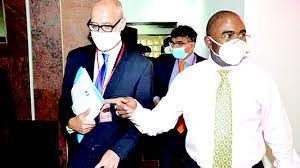
UNODC and NDLEA partner to sensitize the Nigerian Governors Wives on Drug Use, Treatment, Prevention and Care
By: Our Reporter
In 2019, with the support of the European Union and the United Nations Office on Drugs and Crime, UNODC, Nigeria officially launched its first ever comprehensive national survey on drug use and health – Drug Use in Nigeria 2018.
The survey revealed that Nigeria has over 14.3 million people who use drugs and 1 in 4 of these populations is a woman or girl. Even more alarming is the data that indicates that only 1 in 20 people in treatment for using drugs, is a woman.
Whilst there is a generally acknowledged dearth of drug treatment services in Nigeria, the gap is even more disproportionate for female drug users who for a myriad reason are unable to access treatment as easily as their male counterparts. This is further buttressed by the findings of the World Drug Report 2022.
It is therefore no surprise that members of the Nigerian Governors Wives Forum are at the forefront of advocating for improved access to drug prevention and treatment services in Nigeria.
After all, it was on the initiative of the First Lady of Nigeria, Hajia Aisha Muhammadu Buhari, that the Presidential Advisory Committee on the Elimination of Drug Abuse (PACEDA) was first established in 2018 – recommended a series of targeted interventions for elimination of drug abuse in Nigeria.
The active advocacy of the First Lady of Kebbi State Nigeria, Dr Zainab Shinkafi Bagudu, led to the establishment of a community-based drug treatment center as well as introduction of UNPLUGGED – a school-based drug prevention programme in State-owned Secondary Schools in Kebbi.
As a great step forward, the Nigeria Governors Wives Forum led by the First Lady of Ekiti State, Erelu Bisi Fayemi adopted drug abuse as a flagship project “to address the alarming problem of drug abuse in our communities.”
Encouraged by the active advocacy by the Governors Wives Forum, NDLEA and the UNODC within the context of the EU-funded Project “Response to Drugs and Related Organised Crime in Nigeria” partnered to sensitize the Forum on critical issues related to drug use, prevention, treatment and care.
The 2-day sensitisation event, organized in conjunction with World Drug Day, held on 28 and 29 June 2022, had in attendance, the wife of the Vice President of Nigeria, H.E Mrs. Dolapo Osinbajo as Special Guest of Honour as well as the First Ladies of Abia, Adamawa, Akwa Ibom, Bayelsa, Benue, Delta, Ekiti, Enugu, Imo, Kaduna, Kebbi, Kwara, Ogun, Niger, Sokoto, Taraba, and Yobe States, and the representatives of all other States.
Other participants included, the senior management of the NDLEA led by the Chairman/Chief Executive Brig Gen. Mohamed Buba Marwa (rtd.), the UNODC Country Office Team led by the Country Representative Dr Oliver Stolpe, and representative of the European Union Delegation (EUD) to Nigeria and ECOWAS, Ms. Eleni Zerzelidou.
Also Read: Buhari tasks Nigerians abroad on responsible social media…
Speaking during the event, the NDLEA Chairman/Chief Executive, Brig. Gen. Mohamed Buba Marwa urged the Forum to spearhead the establishment of State Drug Control Committees (SDCCs) in their respective States to facilitate the implementation of drug control responses at all levels of government and society.
H.E Mrs. Dolapo Osinbajo, Wife of the Vice President of Nigeria, remarked that the sensitization exercise will enhance participants’ knowledge and skills in implementing appropriate drug control interventions in health and humanitarian crises, which is also the theme for this year’s World Drug Day.
Also Read: Buhari tasks Nigerians abroad on responsible social media…
She emphasized that we “all need to contribute our quota to the national drug control efforts.”
The UNODC Country Representative, Oliver Stolpe urged the Governors Wives not to lose sight of the public health crisis caused by drug use, noting that what is being invested right now is nowhere near sufficient to cater for the needs of millions of persons living with a drug use dependency.
He therefore solicited their support for the implementation of UNPLUGGED across the 27,000 public and private secondary schools in the country as well as providing access to quality drug treatment to the millions of persons, in particular women and girls, living with a drug use disorder by: (i) creating drug treatment facilities in all states, (ii) establishing drop-in centers across all LGAs, and (iii) equipping primary health care providers with basic drug treatment, counselling and referral skills.
The EUD representative, Ms. Zerzelidou, noted that the Governors Wives, with their influence, can pave the way for more initiatives on drug demand reduction.
The two-day proceeding exposed Governors Wives to core sensitization modules on drug prevention, treatment and care (DPTC), along with several drug prevention and treatment initiatives being implemented under the “Response to Drugs and Related Organized Crime in Nigeria”, including sport based prevention programme – Line up Live Up (LULU), Strengthening the Family Programme(SFP), and UNPLUGGED, the latter being implemented in all 104 unity secondary schools run by the Federal Government, as well as in Bayelsa and Kebbi states.
The UNPLUGGED programme is also being implemented in selected schools in Oyo, Rivers and Kano States in partnership with the MTN Foundation through its Corporate Social Responsibility (CSR) intervention – the Anti Substance Abuse Programme (ASAP).
At the end of the event, the Forum adopted a communique outlining the actions the First Ladies will take to strengthen drug prevention, treatment and care in their respective states.
UNODC and NDLEA partner to sensitize the Nigerian Governors Wives on Drug Use, Treatment, Prevention and Care



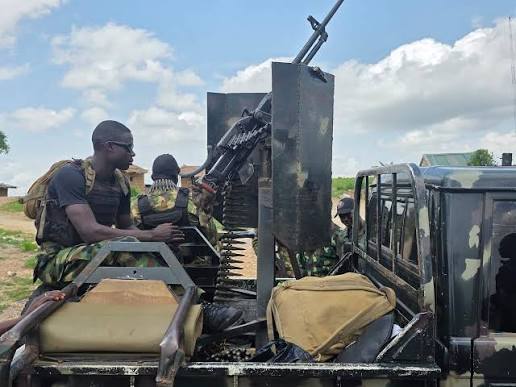
Troops Arrest Suspect Over Killing of More Than 50 Cattle in Edo
By: Zagazola Makama
Troops of Operation MESA have arrested a suspected criminal linked to the killing of more than 50 cattle belonging to Fulani herders in Esan South-East Local Government Area of Edo State.
Security sources said that the suspect was arrested at about 4:30 a.m. on Thursday following credible intelligence on his whereabouts.
According to the sources, troops of 4 Brigade operating from the Forward Operating Base (FOB) in Uromi apprehended the suspect at his residence in Oloshi Main Town.
The suspect had reportedly been on the run since May 31, when he allegedly led an attack that resulted in the killing of over 50 cattle in the Oloshi general area.
The sources said the arrest was made after sustained efforts by security agencies to track down those involved in the incident.
Following his arrest, the suspect was handed over to the Nigeria Police Force for further investigation and possible prosecution.
Security agencies have assured residents that efforts are ongoing to apprehend other individuals connected to the attack.
Troops Arrest Suspect Over Killing of More Than 50 Cattle in Edo
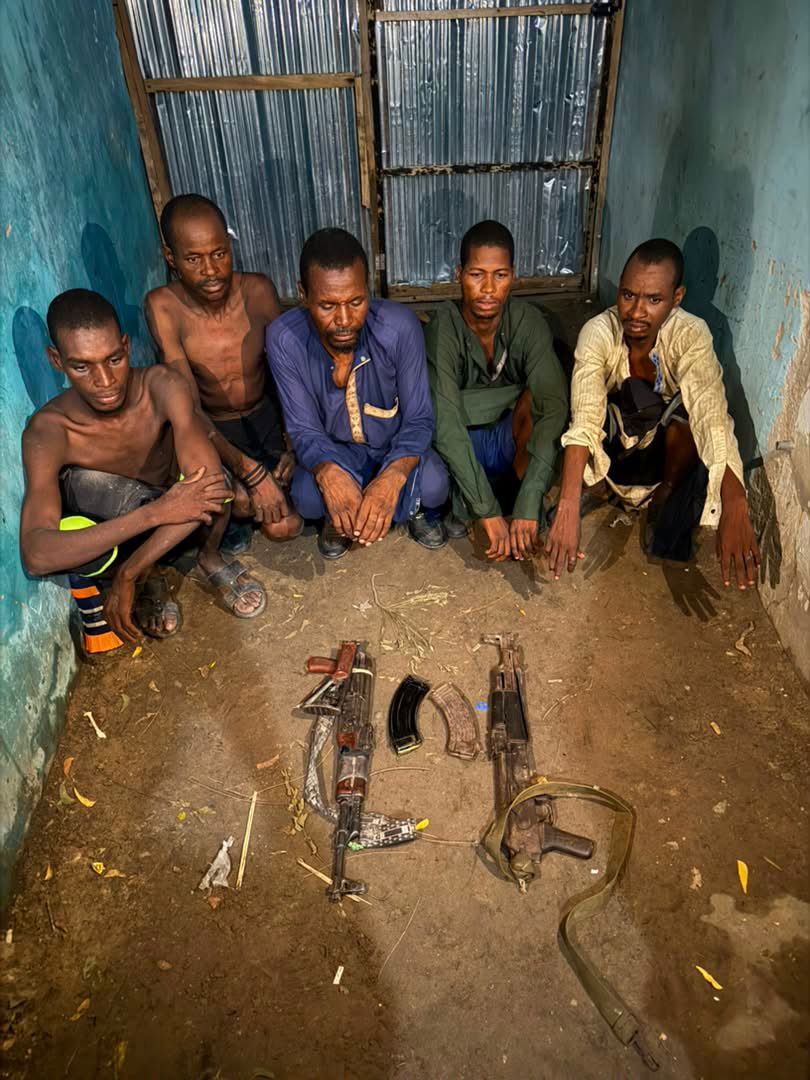
Troops Arrest Suspected Kidnappers, Recover Two AK-47 Rifles in Magumeri Borno
By: Zagazola Makama
Troops of Operation HADIN KAI conducting an ongoing operation in Magumeri Local Government Area of Borno have arrested suspected kidnappers and recovered two AK-47 rifles from them.
Sources involved in the operation disclosed on Friday that the suspects were apprehended during a targeted security operation ahead of Magumeri town.
According to the sources, the operation led to the recovery of two AK-47 assault rifles believed to have been used by the suspects in criminal activities within the area.
The sources further revealed that preliminary interrogation of the suspects had yielded valuable intelligence that could assist security agencies in tracking and arresting other members of the kidnapping network.
“The suspects have provided useful information that can aid further operations and lead to the arrest of additional members of the criminal syndicate,” the source said.
The arrests are part of ongoing efforts by security forces to dismantle kidnapping and other criminal networks operating in parts of Borno State.
Security authorities have yet to issue an official statement on the operation, while investigations and follow-up actions are continuing.
Troops Arrest Suspected Kidnappers, Recover Two AK-47 Rifles in Magumeri Borno
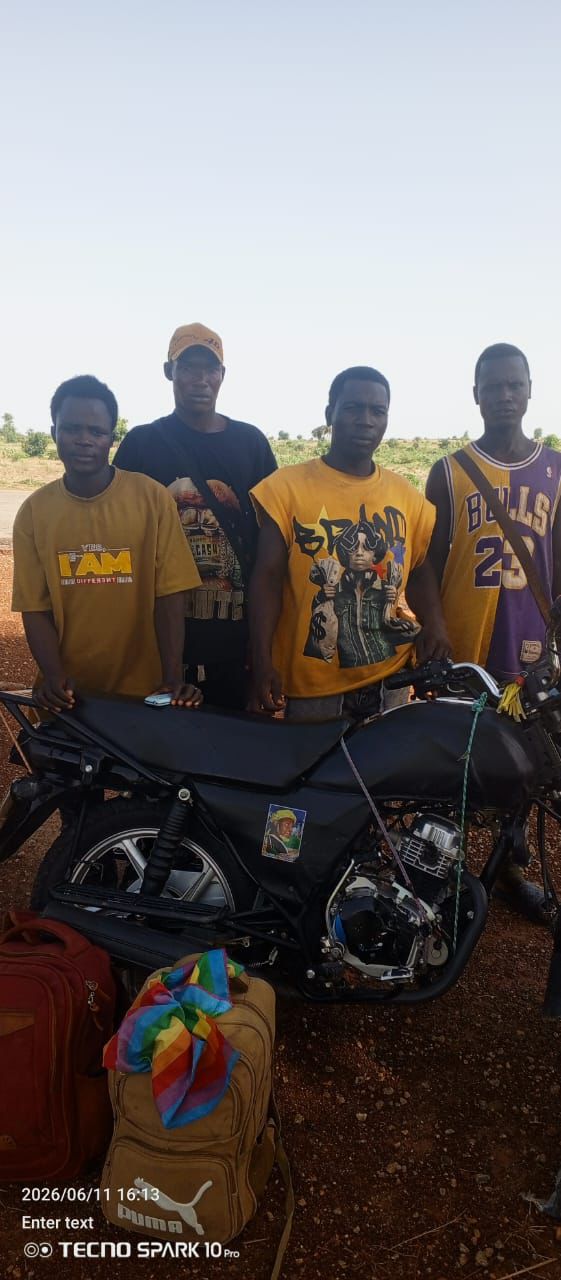
Police Rescue Six Kidnap Victims, Recover Stolen Motorcycle in Zamfara
By Zagazola Makama
Operatives of the Zamfara State Police Command have rescued six kidnapped victims and recovered a stolen motorcycle following a gun battle with armed bandits along the Anka–Gurusu Road in Zamfara State.
The command said the operation was carried out at about 4:30 p.m. on Thursday by personnel of the Violence Crimes Response Unit (VCRU) during ongoing anti-banditry operations.

According to the police, the operatives received credible intelligence that heavily armed bandits had blocked the Anka–Gurusu Road and abducted six travellers along with their two motorcycles while they were travelling from Mayanchi village in Maru Local Government Area of Zamfara to Zuru Local Government Area of Kebbi State.
Acting on the information, the police team mobilised to the area and tracked the bandits to their hideout.
Upon contact, the suspects reportedly engaged the operatives in a gun duel.
The police said the operatives responded with superior firepower, forcing the bandits to flee into the surrounding forest with suspected gunshot injuries.
As a result of the operation, all six abducted victims were rescued unhurt, while one of the stolen motorcycles was recovered.
The second motorcycle was, however, taken away by the fleeing bandits.

The command said efforts were ongoing to track down and arrest the suspects as well as recover the remaining motorcycle.
The Zamfara State Police Command reiterated its commitment to tackling banditry and other violent crimes across the state and urged residents to continue providing timely and actionable information to security agencies.
Police Rescue Six Kidnap Victims, Recover Stolen Motorcycle in Zamfara

Zulum Delivers Relief, Cash Support to 434 Ngoshe Residents Rescued from Boko Haram

DEMOCRACY AND THE COURAGE TO BELIEVE

Army Distributes Fertiliser to Farmers in Jigawa Under Civil-Military Cooperation Programme

Roger Federer’s Shock as DNA Results Reveal Myla and Charlene Are Not His Biological Children

THE PLIGHT OF FARIDA

FAILED COUP IN BURKINA FASO: HOW TRAORÉ NARROWLY ESCAPED ASSASSINATION PLOT AMID FOREIGN INTERFERENCE CLAIMS
-
 News2 years ago
Roger Federer’s Shock as DNA Results Reveal Myla and Charlene Are Not His Biological Children
-
Opinions4 years ago
THE PLIGHT OF FARIDA
-
 News1 year ago
FAILED COUP IN BURKINA FASO: HOW TRAORÉ NARROWLY ESCAPED ASSASSINATION PLOT AMID FOREIGN INTERFERENCE CLAIMS
-

 News2 years ago
EYN: Rev. Billi, Distortion of History, and The Living Tamarind Tree
-
 Opinions4 years ago
POLICE CHARGE ROOMS, A MINTING PRESS
-

 ACADEMICS2 years ago
A History of Biu” (2015) and The Lingering Bura-Pabir Question (1)
-

 Columns2 years ago
Army University Biu: There is certain interest, but certainly not from Borno.
-

 Politics1 year ago
2027: Why Hon. Midala Balami Must Go, as Youths in Hawul and Asikira/Uba Federal Constituency Reject ₦500,000 as Sallah Gift
