
International
Ukraine/Russian War May Lead to Famine in Africa, Rest of Developing Countries

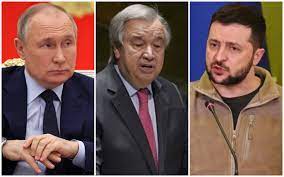
Ukraine/Russian War May Lead to Famine in Africa, Rest of Developing Countries
By: Our Reporter
Alarm has been raised of likely famine in countries in Africa and other developing countries across the world as a result of ongoing war between Russian and Ukraine.
This was the concern of experts during a virtual round table discussion by Sputnik parent company Rossiya Segodnya held between Russian and African diplomats, analysts, and officials to discuss the subject of “Global Challenges to Food Security.”
Specialists discussed a range of topics related to the current food security crisis threatening the planet as it relates to both Africa and the wider world, including its origins, as well as the impact Western restrictions on Russia have had in exacerbating the emergency. The specialists also outlined ways to resolve the crisis.
Oleg Ozerov, Russian ambassador-at-large and head of the secretariat of Russia-Africa Partnership, emphasized that a consensus had formed among the international community that the current emergency came about long before the escalation of the crisis between the West and Russia over Ukraine in February.
“In the expert community there is a view that the hike in food prices is not accidental, and has the aim of creating a resource imbalance in the international division of labour with and moving toward a new stage of neo-colonial policy toward developing countries,” Ozerov said.
The West’s anti-Russian sanctions have served to create new food security problems for African nations, and the path toward resolving the crisis lies in removing “all the obstacles created by Western countries” to Russian-African cooperation in this field, he said.
Also Read:Buhari Participates In Trial Census In Daura, Congratulates…
The diplomat added that the West’s sanctions have targeted food in spite of assurances not to do so, with key Russian banks dealing in agricultural transactions, including with African countries, slapped with restrictions limiting their ability to carry out their operations.
Ozerov emphasized that food security will be a top priority topic for discussion at the upcoming Russia-Africa Summit and Economic Forum in St. Petersburg this fall.
Carlos Sardinha, Ambassador and Director for international cooperation at Angola’s Ministry of External Relations, highlighted Russia’s critical role in matters of his country’s food security, and expressed Luanda’s readiness to expand investment cooperation with the Russian agro sector, and to forge new private and public partnerships. Angola, Sardinha stressed, is not producing enough food domestically to meet the demands of the market, and forecasts have been made that the country will begin to face problems in the field of cereals in September.
“Here, of course, we want to take advantage of the long years of cooperation with the Russian Federation to cooperate in the area of food. Much can be done – we pin our hopes on Russian entrepreneurs who will see a strategic partner in Angola,” Sardinha said.
Oleg Kobiakov, director of the United Nations Food and Agriculture Organization’s Russian liaison office, warned that the current crisis is taking the planet away from the UN’s goals of sustainable development aimed at eliminating world hunger, and that even before the Ukraine calamity, the COVID crisis had resulted in widespread food insecurity for people in the developing world.
“According to statistics for 2021, the number of people suffering from hunger in the world reached 828 million, which is about 150 million more than in the pre-COVID year 2019,” Kobyakov explained. Other crises, including military conflicts in Africa and Asia, natural disasters, economic upheaval and rampant inflation caused by excessive money-printing, are other factors which helped bring about the current crisis, he said.
“Progress in this area is possible and requires concerted action by all UN member nations,” Kobiakov said, emphasizing that the FAO has proposed the creation of an international fund to support the export of food, fertilizers, and energy, particularly to support the interests of developing African nations.
For his part, Louis Gouend, a representative of the Council of African Communities in Russia and president of the Cameroonian diaspora association in Russia, called for special attention to be paid to logistics, as well as investments for the appropriate trade infrastructure, and the possible creation of a new Russian bank specializing on Africa.
“Western banks have always been involved in financial settlements, and today all of these [links] have been ripped up. But I believe that this question is being solved, and one possibility, I think, would be to open a Russian bank in Africa,” Gouend said, adding that its creation could “significantly simplify settlements between countries.”
For Mr. Cheta Nwanze, lead partner and head of research at SBM Intelligence, a Nigeria-based geopolitical affairs think tank, focused his remarks on the importance of Russian grain and fertilizers to Africa, pointing out that in the tropical climates which stretch across much of the continent, wheat grows either very poorly or does not grow at all.
Unfortuantely, Nwanze noted, “many” of Africa’s own agricultural transport companies have sought to avoid transporting grain and fertilizers from Russia, fearing Western reprisals in the form of secondary sanctions. In this light, “alternative supply corridors are needed, for example, through Iran,” he said.
“The world needs a more honest economic system, one that is not dictated by only one group of countries or people,” the researcher stressed.
Tuesday’s event was hosted by Anastasia Alyamovskaya, chief specialist of Rossiya Segodnya’s international cooperation directorate.
Ukraine/Russian War May Lead to Famine in Africa, Rest of Developing Countries



WAHO Pledges Support for Nigeria’s Ebola Response, Donates 20,000 Thermometers
By: Michael Mike
The West African Health Organisation (WAHO) has reaffirmed its commitment to supporting Nigeria’s health emergency preparedness and response, following confirmation of the country’s first Ebola case.
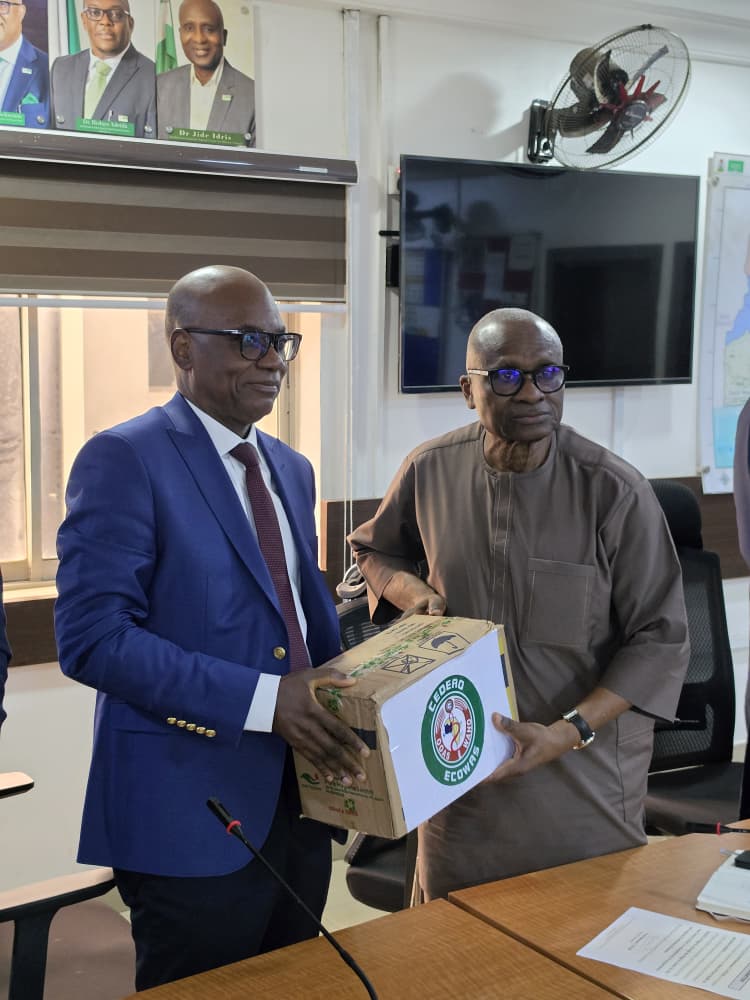
The organisation also announced the donation of 20,000 non-contact infrared thermometers and 1,200 bottles of alcohol-based hand sanitiser to the Nigeria Centre for Disease Control and Prevention (NCDC) as part of efforts to strengthen the country’s response to the outbreak.
The Director-General of WAHO, Prof. Palokinam Pitche, gave the assurance when he led a delegation to the NCDC headquarters in Abuja on November 2, 2026, to discuss regional support for Nigeria’s health emergency preparedness and response.
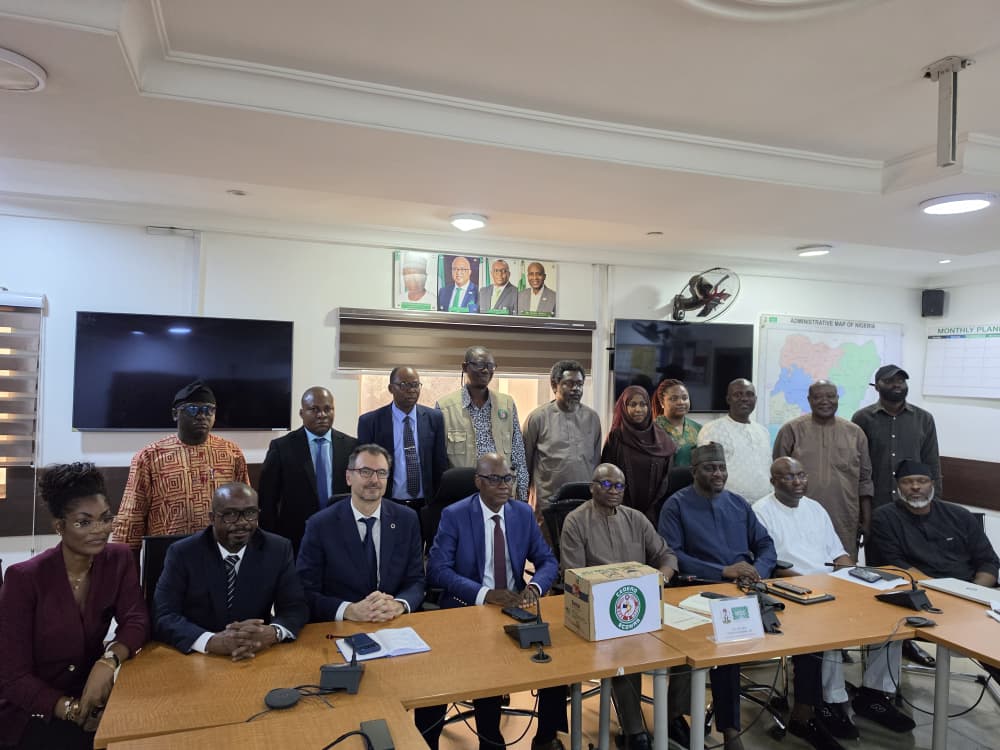
The delegation included the Executive Director of the ECOWAS Regional Centre for Surveillance and Disease Control (RSCDC), Dr Mamadou Diarrassouba, and the Acting Director of Public Health and Research at WAHO, Prof. Joseph Olorunda.
The meeting was attended by officials of the NCDC and representatives of the World Health Organisation (WHO) and Africa Centres for Disease Control and Prevention (Africa CDC).
Discussions centred on aligning international and regional assistance with Nigeria’s national priorities, avoiding duplication of interventions and ensuring effective utilisation of available resources.
Pitche reaffirmed WAHO’s readiness to support Nigeria, stressing that health threats confronting the country had implications for the wider West African region and required coordinated regional action.
He recalled the organisation’s ongoing collaboration with Nigeria in disease surveillance, laboratory capacity development and technical assistance, noting that clearly identified needs would guide further support and strengthen collective responses to shared health challenges.
Welcoming the delegation, the Director-General of NCDC, Dr Jide Idris, expressed appreciation for WAHO’s continued support, stressing that effective management of public health emergencies required sustained collaboration among national, regional and international institutions.
Idris highlighted the need for a coordinated response covering surveillance, disease detection, case management, risk communication and logistics, particularly in tackling health threats capable of spreading across national borders.
Representatives of WHO and Africa CDC also pledged to work with WAHO to align their contributions with Nigeria’s government-led response plan.
They emphasised the need for assistance to be guided by clearly established priorities, defined institutional responsibilities and accountability mechanisms, while ensuring that each organisation deployed its technical expertise effectively.
The partners further reaffirmed their commitment to ensuring that emergency interventions translated into sustainable improvements in Nigeria’s preparedness and overall health system capacity.
WAHO’s technical and financial assistance is being channelled towards implementing the incident management plan following confirmation of the first Ebola case in Nigeria.
The donation of the thermometers and hand sanitisers is also expected to support infection prevention and control measures as the country strengthens its preparedness and response capacity.
WAHO Pledges Support for Nigeria’s Ebola Response, Donates 20,000 Thermometers
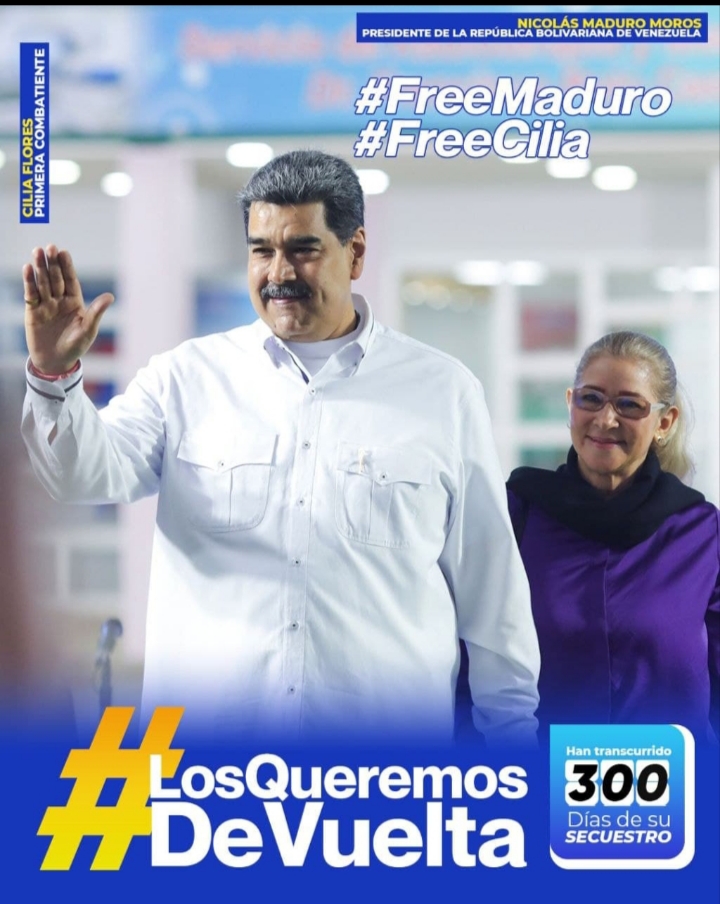
Venezuela Solidarity Campaign Demands Release of Maduro, Flores
By: Michael Mike
The Venezuela Solidarity Campaign in Nigeria (VSCN) has demanded the immediate and unconditional release of Venezuelan President Nicolás Maduro and his wife, Cilia Flores, whom it accused the United States government of detaining illegally.
The campaign, in a statement issued on Friday by its Coordinator, Dimeji Macaulay, said the continued detention of the Venezuelan leaders represented an assault on national sovereignty and international law.
It called on Washington to end what it described as political persecution of Venezuela, abandon its interference in the affairs of sovereign nations and respect the right of the Venezuelan people to determine their political future without external pressure.
The group also condemned the reported expansion of criminal charges against Maduro and Flores, alleging that the US administration was using its judicial system to exert political pressure on governments opposed to its interests.
“We reject the use of military power, economic coercion and politically motivated prosecutions as instruments for determining the political future of Venezuela,” the statement said.
The campaign further demanded an end to economic sanctions against Venezuela and the US economic blockade of Cuba, arguing that the measures imposed hardship on ordinary citizens, including workers, children and vulnerable communities.
It described the restrictions as collective punishment for the political and economic choices of the two countries, insisting that their populations should not suffer because of their governments’ preferred systems of social and economic organisation.
The VSCN expressed solidarity with Cuba, citing its achievements in education, healthcare, international solidarity and social development, and urged Washington to end what it called economic strangulation of the Caribbean nation.
Beyond Venezuela and Cuba, the campaign criticised the global capitalist system, arguing that the concentration of wealth in the hands of billionaires had worsened inequality while millions of people continued to face hunger, homelessness, inadequate healthcare and limited educational opportunities.
It cited the wealth accumulated by billionaires, including Elon Musk, as an example of what it described as an unequal economic order in which a small minority controlled resources generated through the collective labour of millions.
The group called on workers, peasants, students, trade unions, socialist organisations and progressive movements worldwide to unite in pursuit of what it described as a socialist system founded on equality, democracy, solidarity and collective ownership of productive resources.
On Western Sahara, the campaign reaffirmed its support for the Sahrawi people’s right to self-determination, rejecting any attempt to impose Morocco’s autonomy proposal as a substitute for a democratic decision on the territory’s political future.
It called for a free, fair and internationally supervised referendum that would allow the Sahrawi people to choose their future, including independence.
The group noted that Western Sahara remained on the United Nations list of Non-Self-Governing Territories and argued that its people should not be denied the right to determine their political status.
It maintained that self-determination should apply equally to the peoples of Palestine, Western Sahara and Venezuela, as well as other nations facing occupation, domination or foreign interference.
Venezuela Solidarity Campaign Demands Release of Maduro, Flores
Nigeria, Japan Move to Set Up Industrial Hub to Unlock Investment
…Abuja seeks Japanese capital, technology transfer as Tokyo promises faster visa processing
By: Michael Mike
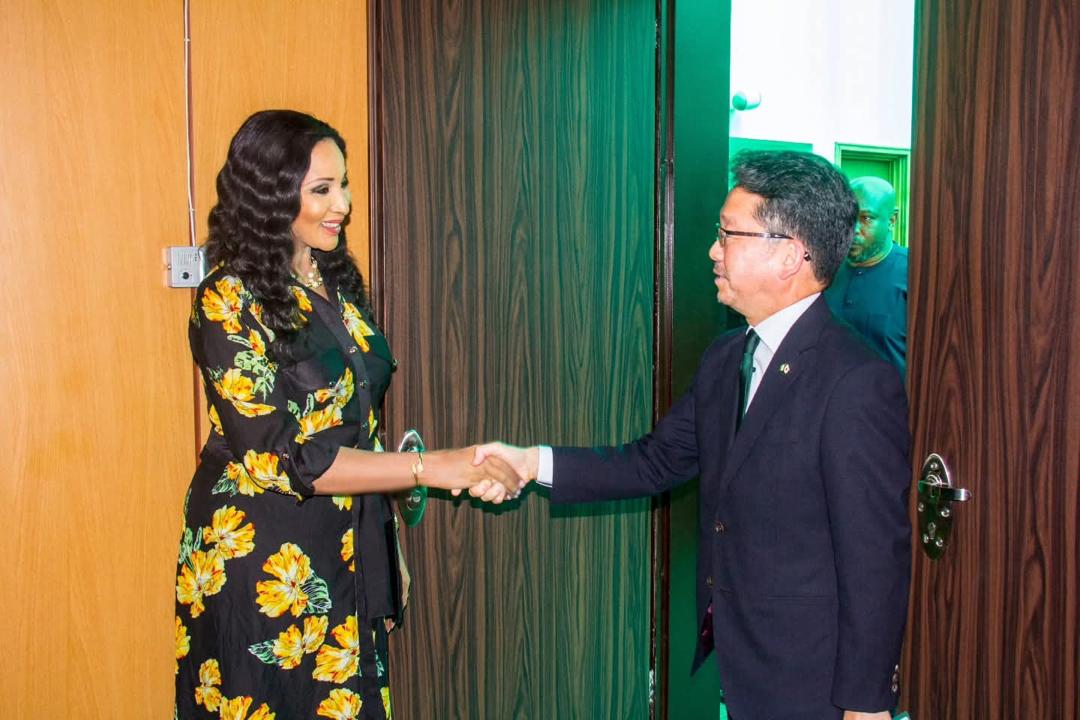
Nigeria is seeking to establish a joint industrial and investment hub with Japan to attract foreign capital, accelerate technology transfer and position local businesses to tap into Japanese supply chains and the wider African market.
The proposal, put forward by the Minister of Foreign Affairs, Ambassador Bianca Odumegwu-Ojukwu, signals Nigeria’s push to turn 66 years of diplomatic relations with Japan into a stronger economic partnership driven by investment, industrialisation and job creation.
Odumegwu-Ojukwu made the proposal during a bilateral meeting with Japan’s Ambassador to Nigeria, Suzuki Hideo, urging Tokyo to work with Nigeria on a practical roadmap for the proposed Nigeria–Japan Industrial and Investment Hub.
The initiative is expected to facilitate joint ventures, connect investors with credible Nigerian businesses, promote skills development and encourage Japanese companies to establish stronger industrial links with Africa’s largest economy.
The minister stressed that existing bilateral agreements must translate into concrete investment commitments and measurable development outcomes, rather than remain diplomatic declarations.
“The outcomes of the Forum must be translated into concrete programmes, investment commitments and measurable development outcomes,” she said.
She urged both countries to implement the agreements reached at the 10th Nigeria–Japan Special Partnership Forum, held in Abuja on August 27, through practical programmes and regular consultations between their foreign ministries.
To strengthen private-sector participation, Odumegwu-Ojukwu called for more partnerships between Nigerian and Japanese companies through joint ventures, local content development, skills transfer and the integration of Nigerian businesses into Japanese supply chains.
She also sought greater engagement by the Japan External Trade Organization (JETRO) to link Japanese investors with Nigerian enterprises and public-sector partners.
Beyond manufacturing and trade, Nigeria is seeking Japanese investment in solid minerals, gas development, cleaner energy technologies and industrial decarbonisation, with the minister highlighting the strategic importance of resilient energy and critical-mineral supply chains.
The proposed investment push comes alongside Japan’s development cooperation in infrastructure, healthcare, agriculture, education and technical training through the Japan International Cooperation Agency (JICA).
Odumegwu-Ojukwu welcomed a $10 million JICA-supported initiative to strengthen Nigeria’s startup ecosystem through catalytic capital and institutional development, in partnership with the Nigeria Sovereign Investment Authority.
She also called for sustained Japanese support for peacebuilding, humanitarian assistance and stabilisation in Nigeria and West Africa, reaffirming Nigeria’s commitment to regional stability through the African Union and the Economic Community of West African States.
On mobility and business exchanges, the minister urged continued dialogue to resolve visa-related challenges affecting businesspeople, students, researchers, government officials and tourists.
Responding, Suzuki said Japan was desirous of deepening cooperation with Nigeria, which he described as a strategic African giant.
He also assured that visa-related issues would be handled expeditiously, an undertaking that could help facilitate business and people-to-people exchanges between the two countries.
Odumegwu-Ojukwu said the existing cordial relations between Nigeria and Japan offered an opportunity to build a more dynamic partnership anchored on investment, industrialisation, technology transfer and shared prosperity.
The renewed engagement comes as both countries seek to move beyond decades of diplomatic relations towards stronger commercial ties, with the proposed industrial hub emerging as a potential platform for converting bilateral goodwill into investments and economic opportunities.
Nigeria, Japan Move to Set Up Industrial Hub to Unlock Investment

Borno: Biu residents commend Betara over construction of township roads

Gallant Troops Overrun Terrorist Camps in Dajin Madam Forest, Neutralise Two Bandits in Plateau

Troops Recover AK-47 Rifle, Discover Suspected Bandit’s Corpse in Old Oyo National Park

Roger Federer’s Shock as DNA Results Reveal Myla and Charlene Are Not His Biological Children

THE PLIGHT OF FARIDA

FAILED COUP IN BURKINA FASO: HOW TRAORÉ NARROWLY ESCAPED ASSASSINATION PLOT AMID FOREIGN INTERFERENCE CLAIMS
-
 News3 years ago
Roger Federer’s Shock as DNA Results Reveal Myla and Charlene Are Not His Biological Children
-
Opinions5 years ago
THE PLIGHT OF FARIDA
-
 News2 years ago
FAILED COUP IN BURKINA FASO: HOW TRAORÉ NARROWLY ESCAPED ASSASSINATION PLOT AMID FOREIGN INTERFERENCE CLAIMS
-
 Opinions5 years ago
POLICE CHARGE ROOMS, A MINTING PRESS
-

 News3 years ago
EYN: Rev. Billi, Distortion of History, and The Living Tamarind Tree
-

 ACADEMICS3 years ago
A History of Biu” (2015) and The Lingering Bura-Pabir Question (1)
-

 Columns3 years ago
Army University Biu: There is certain interest, but certainly not from Borno.
-

 Politics1 year ago
2027: Why Hon. Midala Balami Must Go, as Youths in Hawul and Asikira/Uba Federal Constituency Reject ₦500,000 as Sallah Gift
