
News
Christmas : Non- Indigenes Laud Zulum For Free Transportation , Donation To Widows

Christmas : Non- Indigenes Laud Zulum For Free Transportation , Donation To Widows
By Francis Okoye
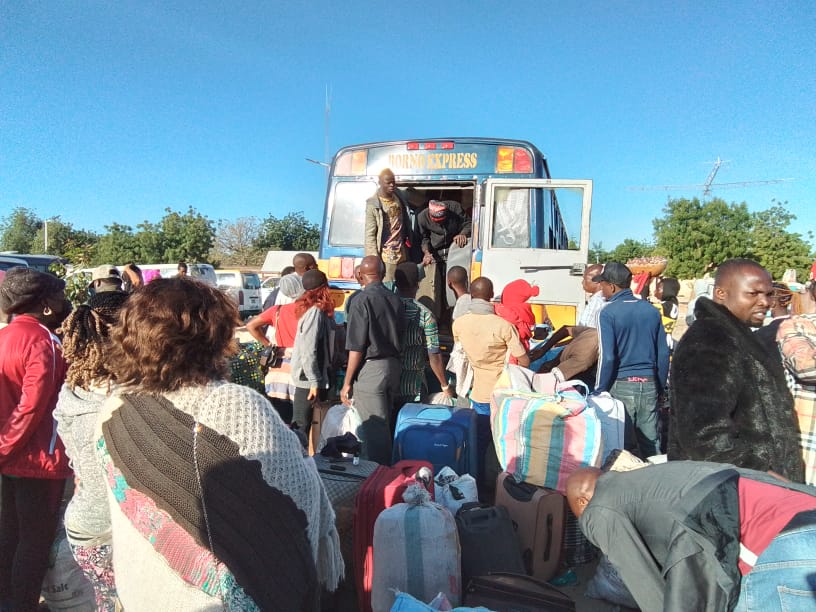
Non- indigenes resident in Borno have lauded the State Governor, Babagana Umara Zulum for providing free transport for them to go and celebrate Christmas and new year with their loved ones, as well as donation of cash to widows for the Christmas celebration.
Over 645 persons from 10 communities comprising the Igbo, yoruba, Hausa, Tiv, Tangele, Ngas, Eggon , Igala, Ibra and Niger Delta Peoples Forum benefitted from the Zulum’s Christmas free transport scheme.
Speaking on Friday in Maiduguri, the Zonal Coordinator of Ohanaeze APC Support Group, Chief Emmanuel Ugochukwu Egwudike (Go-Easy), said the Governor’s gesture is coming at a time when many had lost hope of travelling to celebrate the Christmas with their loved ones due economic realities facing the State and the country at large.
Chief Egwudike who is also the zonal Coordinator Northeast of Omaluegwuoku , a support group promoting the election of the All Progressives Congress ( APC ) presidential Candidate in the 2023 presidential election, Sen. Asiwaju Bola Ahmed Tinubu and his Vice presidential running mate , Sen. Kashim Shettima, assured that the votes of all non-indigenous ethnic groups in the state will go for Zulum and other APC candidates to the upcoming election.
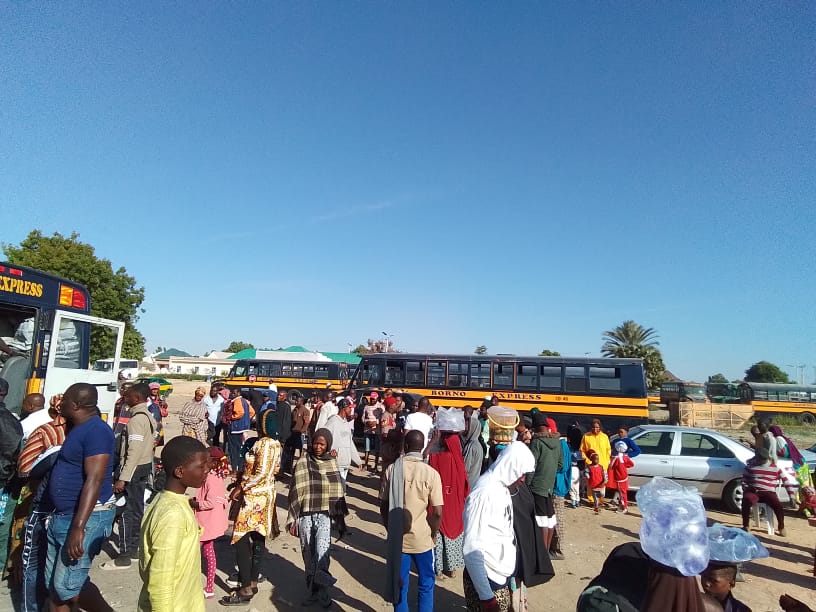
He noted that since the assumption of office of Governor, he has been providing free transport to non- indigenes every Christmas to travel home and at the same time giving palliative to widows who are not travelling for the celebration of the Christmas and new year.
“Come 2023 , we will support the APC from top to bottom. We urge other Governors to emulate Zulum. About 10 communities of non- indigenes in the State benefitted from this transport scheme while 645 persons travelled with feeding allowance and return given to them. The 645 travellers began the journey to their respective homes from 20th to 23rd of this month,” Chief Egwudike said.
Also, the President of the Niger Delta Peoples Forum in Borno State, Chief John Azimeye , described Governor Zulum as a detribalised man who is doing his best to ensure that everyone is carried along in his administration.
“Despite the meagre resources at his disposal, he still go out of his way to provide free transport to the non- indigenes in the State to ensure that they celebrate Christmas with their loved ones. It is a wonderful gesture, we are indeed going to give him every support for him to continue the good work he is doing,” Azimeye said.
Hon. Asiwaju Olusegun Alabi, the Secretary General Ohanaeze APC support group appreciated Governor Zulum for the wonderful gesture, noting that it is a gesture that the Governor has been providing since 2020 to date.
Alabi said the gesture is a clear evidence that Zulum projects are not paper projects and his promises not paper promises but reality.
In his remarks, the President Ohanaeze Ndigbo, Borno State Chapter, Chief Sunday Okonkwo, thanked God for Governor Zulum for providing free transport to the lesprivilleged who wouldn’t have travelled if not for the gesture.
He assured that non- indigenes in the State will work to ensure that the Governor returned for the second time to continue his good work.
Abraham Kaanti, the President of Tiv community in the State , said the Governor has exhibited his love for the downtrodden and less privileged by this gesture.
“So we the internal diasporas have resolved that we are going to throw our full support to Governor Zulum’s second term bid,” he said.
Christmas : Non- Indigenes Laud Zulum For Free Transportation , Donation To Widows



Troops Arrest Three Suspects in Rayfield in Jos
By Zagazola Makama
Troops of Sector 1, Sub-Sector 12, Operation Enduring Peace, have arrested three suspects during a raid on a reported hideout of suspected miscreants around the residence of retired Gen. H. Umar in Rayfield, Jos South Local Government Area of Plateau State.
Security sources said the operation was conducted at about 1:10 a.m. on Oct. 2, following reports about the suspected hideout.
The suspects were identified as Grace Festus Edang, 25; Zoya Alabi, 23; and Ishaya Pierre, 60.
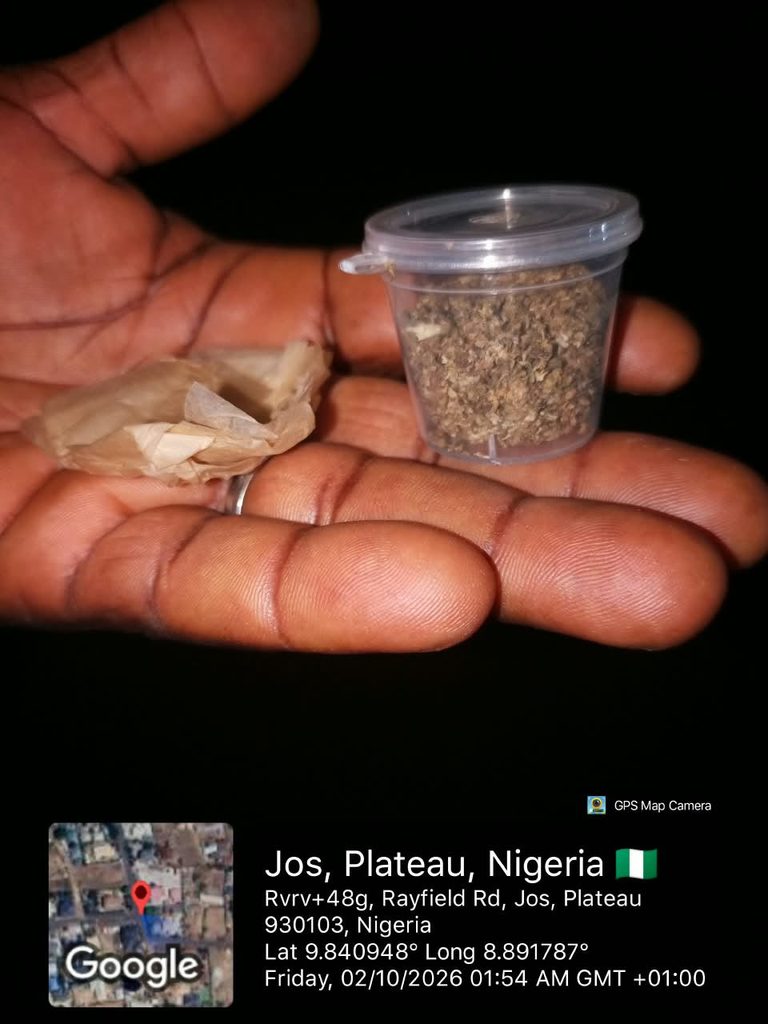
During the operation, troops reportedly recovered substances suspected to be cannabis sativa.
The suspects were subsequently handed over to Keystone Anglo Jos for further investigation and necessary action.
However, during the transfer, one of the female suspects allegedly bit a soldier, identified as X21930 OS Hussaini Ephraim, on the hand.
The injured soldier was evacuated to a nearby hospital, where he received medical attention and was later discharged.
The circumstances surrounding the suspects’ alleged activities and the recovered substances are expected to be established through further investigation.
Security sources said troops would continue operations aimed at addressing criminal activities and maintaining security across their area of responsibility.
Troops Arrest Three Suspects in Rayfield in Jos

Troops Arrest Two Suspected Armed Robbers, Kidnappers in Plateau
By Zagazola Makama
Troops of Sector 6, Operation Enduring Peace (OPEP), in collaboration with local residents, have arrested two suspected armed robbers and kidnappers in Ganawuri town, Riyom Local Government Area of Plateau State.
Security sources said the suspects, identified as Kabiru Mohammed and Abdul-Hamid Yusuf, were arrested at about 10:30 p.m. on Oct. 1, 2026.

Preliminary investigations reportedly indicated that the suspects were allegedly linked to a criminal syndicate suspected of carrying out armed robbery and kidnapping activities in Riyom and neighbouring communities.
The sources said the suspects remained in custody and were undergoing interrogation to establish their alleged roles in the criminal activities and identify other members of the suspected network.
The arrest forms part of ongoing security efforts to track down criminal elements and address threats to lives and property across Plateau State.
Security agencies are expected to sustain investigations and take further action based on the findings.
The suspects’ alleged involvement in the crimes has yet to be established through a judicial process.
Troops Arrest Two Suspected Armed Robbers, Kidnappers in Plateau
Troops Foil Fulani Bandits Kidnap Attempt, Rescue Gunshot-Wounded Victim in Kaduna
By Zagazola Makama
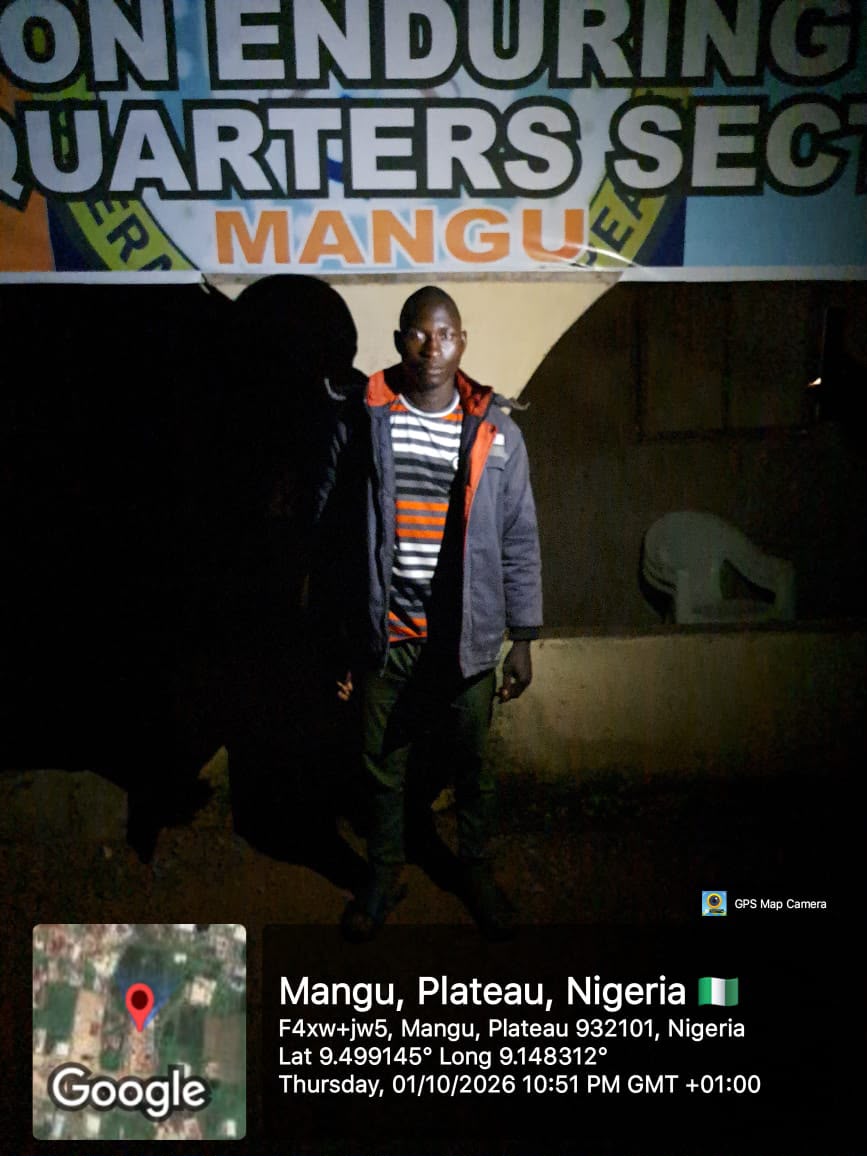
Troops of Sector 7, Operation Enduring Peace (OPEP), have foiled a kidnapping attempt by Fulani Bandits along the Godogodo–Gidan Waya road in Jema’a Local Government Area of Kaduna State, rescuing a victim who sustained gunshot wounds.
Security sources said the incident occurred at about 12:09 a.m. on Oct. 2, 2026, when troops deployed at Godogodo responded to a report of an attempted abduction involving a man identified as Baba.
The troops’ swift intervention reportedly disrupted the operation, forcing the suspected kidnappers to abandon their mission and flee the scene.
The victim, who sustained gunshot wounds during the incident, was rescued by the troops and immediately evacuated to General Hospital, Gidan Waya, for medical attention.
Security sources said efforts were ongoing to track down and apprehend the fleeing suspects.
The incident highlights the importance of rapid security response in protecting commuters and residents along vulnerable routes in Kaduna State.
Security agencies have continued operations to prevent kidnappings, rescue victims and bring suspected perpetrators to justice.
Authorities have yet to disclose further details about the circumstances of the attack or the victim’s condition.
Troops Foil Fulani Bandits Kidnap Attempt, Rescue Gunshot-Wounded Victim in Kaduna

Troops Arrest Three Suspects in Rayfield in Jos

Troops Arrest Two Suspected Armed Robbers, Kidnappers in Plateau

Troops Foil Fulani Bandits Kidnap Attempt, Rescue Gunshot-Wounded Victim in Kaduna

Roger Federer’s Shock as DNA Results Reveal Myla and Charlene Are Not His Biological Children

THE PLIGHT OF FARIDA

FAILED COUP IN BURKINA FASO: HOW TRAORÉ NARROWLY ESCAPED ASSASSINATION PLOT AMID FOREIGN INTERFERENCE CLAIMS
-
 News3 years ago
Roger Federer’s Shock as DNA Results Reveal Myla and Charlene Are Not His Biological Children
-
Opinions5 years ago
THE PLIGHT OF FARIDA
-
 News1 year ago
FAILED COUP IN BURKINA FASO: HOW TRAORÉ NARROWLY ESCAPED ASSASSINATION PLOT AMID FOREIGN INTERFERENCE CLAIMS
-

 News3 years ago
EYN: Rev. Billi, Distortion of History, and The Living Tamarind Tree
-
 Opinions5 years ago
POLICE CHARGE ROOMS, A MINTING PRESS
-

 ACADEMICS3 years ago
A History of Biu” (2015) and The Lingering Bura-Pabir Question (1)
-

 Columns3 years ago
Army University Biu: There is certain interest, but certainly not from Borno.
-

 Politics1 year ago
2027: Why Hon. Midala Balami Must Go, as Youths in Hawul and Asikira/Uba Federal Constituency Reject ₦500,000 as Sallah Gift
