
International
British Council Indicates Willingness to Continue to Support Nigeria’s Creative Industry


British Council Indicates Willingness to Continue to Support Nigeria’s Creative Industry
… Insists Industry Has Great Potentials
By Michael Mike
The British Council has indicated its willingness to continue to support Nigeria’s creative industry, insisting that with the right investment and support it has the potential to be the highest employer of labour and contributor to the nation’s wealth.
Speaking at the Creative Enterprise Showcase Programme (CESP) in Abuja, Project Manager Arts and Creative Industry, British Council SSA, Uju Dubas-Agbasi noted that the creative industries in Nigeria are rapidly growing economic powerhouses that are increasingly being recognised as pathways for sustainable livelihoods for young people across art forms.
Dubas-Agbasi while noting that: “However, most (creative artists) are faced with obstacles of weak policy support, a lack of infrastructure, low levels of awareness of the livelihood opportunities that exist within the art sectors and limited opportunities especially for networking, collaborations, and skill-sharing,” added that if the industry is properly harnessed and supported it has the potential of leading the earning index of Nigeria.
She said: “To understand the state of the industry, it is important to highlight some of the several business opportunities that are integral and immensely profitable which include but are not limited to, showcasing of various creative art forms through seminars, art events and residency.”
She disclosed that: “The British Council Creative Economy Showcase Programme aims to stimulate links among Nigerian creatives by providing them access to the British Council exhibition spaces, for displays, showcases and performances.”
She insisted that: “This initiative is in line with our goal at British Council to support the creation of new art and sharing this art to audiences.
“As part of British Council’s engagement with the art community and creative entrepreneurs, we have launched this programme and it will run between the months of September 2022 and March 2023. The programme intends to grant selected exhibitors permitted access to use the British Council exhibition spaces (for up to two consecutive days in Abuja,, Lagos, Kano and Port Harcourt for displays, showcases and performances.”
She revealed that these activities are put together by curators in each of the cities.
The Arts Curator of the Abuja Project, Philip Agbese, on his part, said all that creative art industry needs to attain the lofty height is if the enabling environment and the right legislation.
He said: “The industry has huge potentials, all that is needed is the environment and space for artists to express themselves and to be allowed to run with business model in mind, then we would all see the beauty and potentials of the industry unfolding in our very eyes.”
He added that the creative industry remains perhaps the biggest selling point of Nigeria and the promoter of the country’s image, stating that “can we quantify what people like Wole Soyinka, Chimamanda Adichie, Burna Boy, Kizz Daniel, et al have added to Nigeria’s image.”
At the programme in Abuja were poets, and other creative artists from the Federal Capital Territory and adjourning states.
British Council Indicates Willingness to Continue to Support Nigeria’s Creative Industry


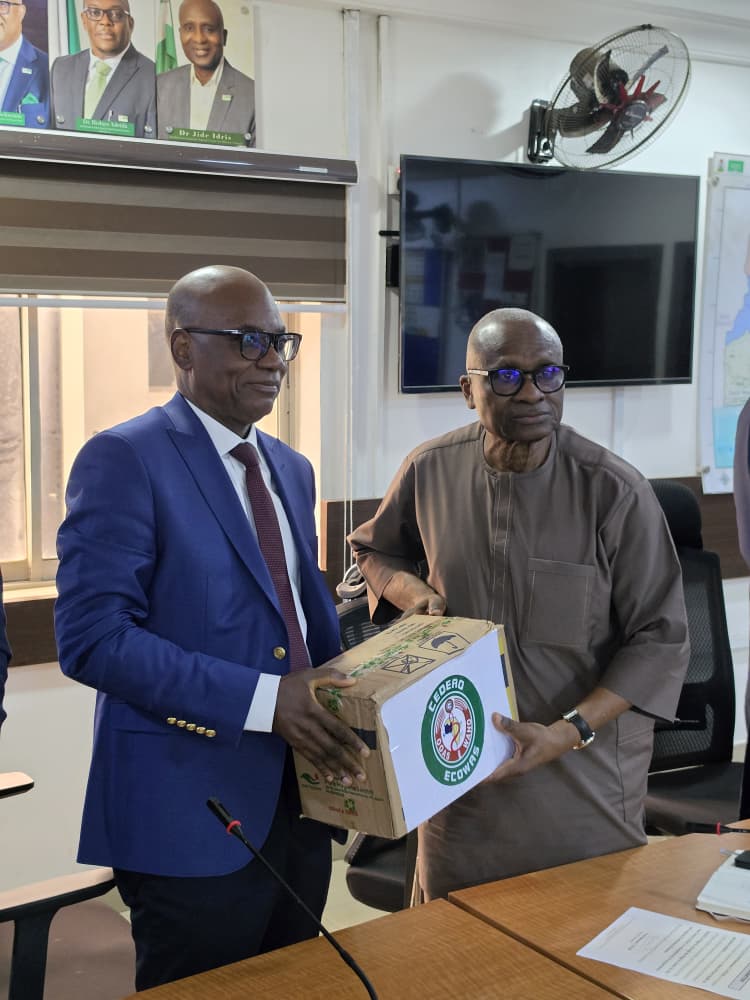
WAHO Pledges Support for Nigeria’s Ebola Response, Donates 20,000 Thermometers
By: Michael Mike
The West African Health Organisation (WAHO) has reaffirmed its commitment to supporting Nigeria’s health emergency preparedness and response, following confirmation of the country’s first Ebola case.
The organisation also announced the donation of 20,000 non-contact infrared thermometers and 1,200 bottles of alcohol-based hand sanitiser to the Nigeria Centre for Disease Control and Prevention (NCDC) as part of efforts to strengthen the country’s response to the outbreak.
The Director-General of WAHO, Prof. Palokinam Pitche, gave the assurance when he led a delegation to the NCDC headquarters in Abuja on November 2, 2026, to discuss regional support for Nigeria’s health emergency preparedness and response.
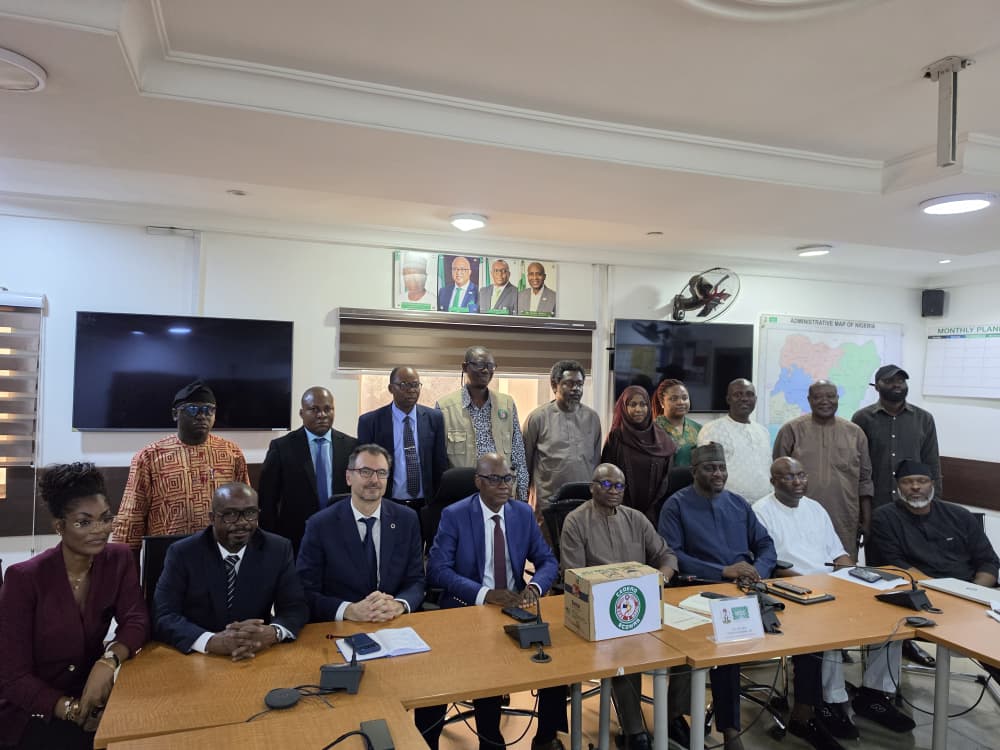
The delegation included the Executive Director of the ECOWAS Regional Centre for Surveillance and Disease Control (RSCDC), Dr Mamadou Diarrassouba, and the Acting Director of Public Health and Research at WAHO, Prof. Joseph Olorunda.
The meeting was attended by officials of the NCDC and representatives of the World Health Organisation (WHO) and Africa Centres for Disease Control and Prevention (Africa CDC).
Discussions centred on aligning international and regional assistance with Nigeria’s national priorities, avoiding duplication of interventions and ensuring effective utilisation of available resources.
Pitche reaffirmed WAHO’s readiness to support Nigeria, stressing that health threats confronting the country had implications for the wider West African region and required coordinated regional action.
He recalled the organisation’s ongoing collaboration with Nigeria in disease surveillance, laboratory capacity development and technical assistance, noting that clearly identified needs would guide further support and strengthen collective responses to shared health challenges.
Welcoming the delegation, the Director-General of NCDC, Dr Jide Idris, expressed appreciation for WAHO’s continued support, stressing that effective management of public health emergencies required sustained collaboration among national, regional and international institutions.
Idris highlighted the need for a coordinated response covering surveillance, disease detection, case management, risk communication and logistics, particularly in tackling health threats capable of spreading across national borders.
Representatives of WHO and Africa CDC also pledged to work with WAHO to align their contributions with Nigeria’s government-led response plan.
They emphasised the need for assistance to be guided by clearly established priorities, defined institutional responsibilities and accountability mechanisms, while ensuring that each organisation deployed its technical expertise effectively.
The partners further reaffirmed their commitment to ensuring that emergency interventions translated into sustainable improvements in Nigeria’s preparedness and overall health system capacity.
WAHO’s technical and financial assistance is being channelled towards implementing the incident management plan following confirmation of the first Ebola case in Nigeria.
The donation of the thermometers and hand sanitisers is also expected to support infection prevention and control measures as the country strengthens its preparedness and response capacity.
WAHO Pledges Support for Nigeria’s Ebola Response, Donates 20,000 Thermometers
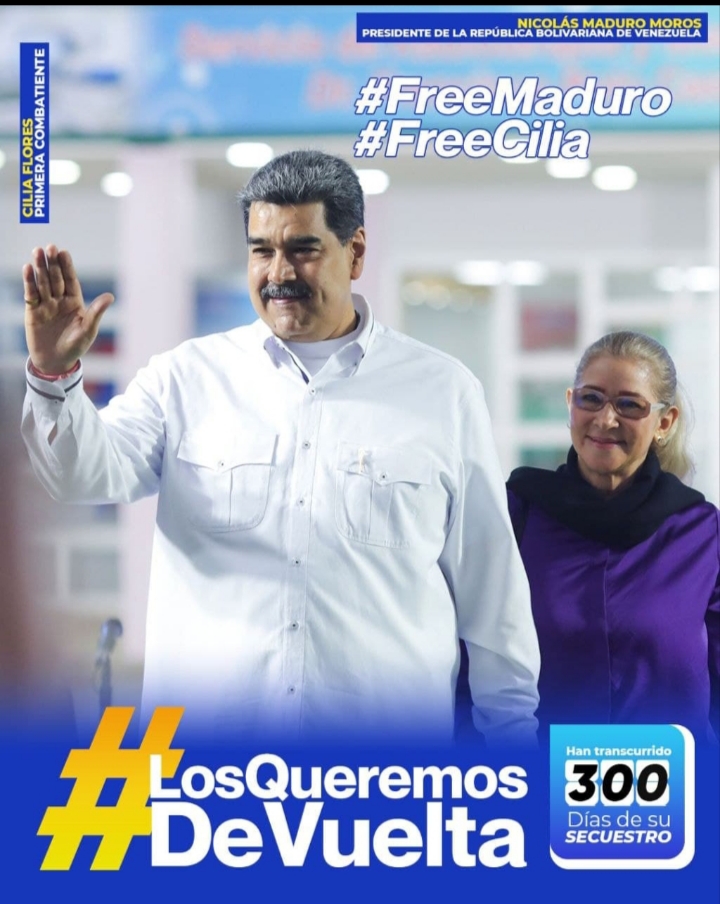
Venezuela Solidarity Campaign Demands Release of Maduro, Flores
By: Michael Mike
The Venezuela Solidarity Campaign in Nigeria (VSCN) has demanded the immediate and unconditional release of Venezuelan President Nicolás Maduro and his wife, Cilia Flores, whom it accused the United States government of detaining illegally.
The campaign, in a statement issued on Friday by its Coordinator, Dimeji Macaulay, said the continued detention of the Venezuelan leaders represented an assault on national sovereignty and international law.
It called on Washington to end what it described as political persecution of Venezuela, abandon its interference in the affairs of sovereign nations and respect the right of the Venezuelan people to determine their political future without external pressure.
The group also condemned the reported expansion of criminal charges against Maduro and Flores, alleging that the US administration was using its judicial system to exert political pressure on governments opposed to its interests.
“We reject the use of military power, economic coercion and politically motivated prosecutions as instruments for determining the political future of Venezuela,” the statement said.
The campaign further demanded an end to economic sanctions against Venezuela and the US economic blockade of Cuba, arguing that the measures imposed hardship on ordinary citizens, including workers, children and vulnerable communities.
It described the restrictions as collective punishment for the political and economic choices of the two countries, insisting that their populations should not suffer because of their governments’ preferred systems of social and economic organisation.
The VSCN expressed solidarity with Cuba, citing its achievements in education, healthcare, international solidarity and social development, and urged Washington to end what it called economic strangulation of the Caribbean nation.
Beyond Venezuela and Cuba, the campaign criticised the global capitalist system, arguing that the concentration of wealth in the hands of billionaires had worsened inequality while millions of people continued to face hunger, homelessness, inadequate healthcare and limited educational opportunities.
It cited the wealth accumulated by billionaires, including Elon Musk, as an example of what it described as an unequal economic order in which a small minority controlled resources generated through the collective labour of millions.
The group called on workers, peasants, students, trade unions, socialist organisations and progressive movements worldwide to unite in pursuit of what it described as a socialist system founded on equality, democracy, solidarity and collective ownership of productive resources.
On Western Sahara, the campaign reaffirmed its support for the Sahrawi people’s right to self-determination, rejecting any attempt to impose Morocco’s autonomy proposal as a substitute for a democratic decision on the territory’s political future.
It called for a free, fair and internationally supervised referendum that would allow the Sahrawi people to choose their future, including independence.
The group noted that Western Sahara remained on the United Nations list of Non-Self-Governing Territories and argued that its people should not be denied the right to determine their political status.
It maintained that self-determination should apply equally to the peoples of Palestine, Western Sahara and Venezuela, as well as other nations facing occupation, domination or foreign interference.
Venezuela Solidarity Campaign Demands Release of Maduro, Flores
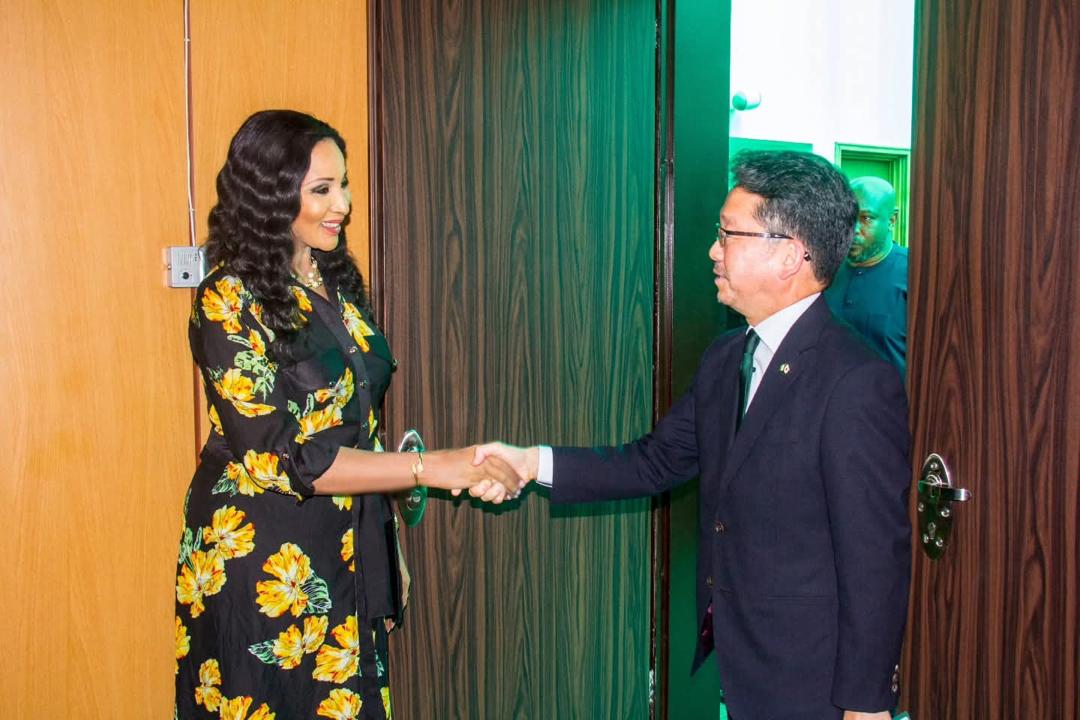
Nigeria, Japan Move to Set Up Industrial Hub to Unlock Investment
…Abuja seeks Japanese capital, technology transfer as Tokyo promises faster visa processing
By: Michael Mike
Nigeria is seeking to establish a joint industrial and investment hub with Japan to attract foreign capital, accelerate technology transfer and position local businesses to tap into Japanese supply chains and the wider African market.
The proposal, put forward by the Minister of Foreign Affairs, Ambassador Bianca Odumegwu-Ojukwu, signals Nigeria’s push to turn 66 years of diplomatic relations with Japan into a stronger economic partnership driven by investment, industrialisation and job creation.
Odumegwu-Ojukwu made the proposal during a bilateral meeting with Japan’s Ambassador to Nigeria, Suzuki Hideo, urging Tokyo to work with Nigeria on a practical roadmap for the proposed Nigeria–Japan Industrial and Investment Hub.
The initiative is expected to facilitate joint ventures, connect investors with credible Nigerian businesses, promote skills development and encourage Japanese companies to establish stronger industrial links with Africa’s largest economy.
The minister stressed that existing bilateral agreements must translate into concrete investment commitments and measurable development outcomes, rather than remain diplomatic declarations.
“The outcomes of the Forum must be translated into concrete programmes, investment commitments and measurable development outcomes,” she said.
She urged both countries to implement the agreements reached at the 10th Nigeria–Japan Special Partnership Forum, held in Abuja on August 27, through practical programmes and regular consultations between their foreign ministries.
To strengthen private-sector participation, Odumegwu-Ojukwu called for more partnerships between Nigerian and Japanese companies through joint ventures, local content development, skills transfer and the integration of Nigerian businesses into Japanese supply chains.
She also sought greater engagement by the Japan External Trade Organization (JETRO) to link Japanese investors with Nigerian enterprises and public-sector partners.
Beyond manufacturing and trade, Nigeria is seeking Japanese investment in solid minerals, gas development, cleaner energy technologies and industrial decarbonisation, with the minister highlighting the strategic importance of resilient energy and critical-mineral supply chains.
The proposed investment push comes alongside Japan’s development cooperation in infrastructure, healthcare, agriculture, education and technical training through the Japan International Cooperation Agency (JICA).
Odumegwu-Ojukwu welcomed a $10 million JICA-supported initiative to strengthen Nigeria’s startup ecosystem through catalytic capital and institutional development, in partnership with the Nigeria Sovereign Investment Authority.
She also called for sustained Japanese support for peacebuilding, humanitarian assistance and stabilisation in Nigeria and West Africa, reaffirming Nigeria’s commitment to regional stability through the African Union and the Economic Community of West African States.
On mobility and business exchanges, the minister urged continued dialogue to resolve visa-related challenges affecting businesspeople, students, researchers, government officials and tourists.
Responding, Suzuki said Japan was desirous of deepening cooperation with Nigeria, which he described as a strategic African giant.
He also assured that visa-related issues would be handled expeditiously, an undertaking that could help facilitate business and people-to-people exchanges between the two countries.
Odumegwu-Ojukwu said the existing cordial relations between Nigeria and Japan offered an opportunity to build a more dynamic partnership anchored on investment, industrialisation, technology transfer and shared prosperity.
The renewed engagement comes as both countries seek to move beyond decades of diplomatic relations towards stronger commercial ties, with the proposed industrial hub emerging as a potential platform for converting bilateral goodwill into investments and economic opportunities.
Nigeria, Japan Move to Set Up Industrial Hub to Unlock Investment

Northern Forum lauds success of table tennis championship in Maiduguri

Bassey: COP31 Failed World, Sidelined Climate Justice, Says Fossil Fuel Lobbyists Hijacked Talks

Fani-Kayode Raises Alarm Over Nigerians’ Treatment in South Africa, Calls for Stronger Bilateral Ties

Roger Federer’s Shock as DNA Results Reveal Myla and Charlene Are Not His Biological Children

THE PLIGHT OF FARIDA

FAILED COUP IN BURKINA FASO: HOW TRAORÉ NARROWLY ESCAPED ASSASSINATION PLOT AMID FOREIGN INTERFERENCE CLAIMS
-
 News3 years ago
Roger Federer’s Shock as DNA Results Reveal Myla and Charlene Are Not His Biological Children
-
Opinions5 years ago
THE PLIGHT OF FARIDA
-
 News2 years ago
FAILED COUP IN BURKINA FASO: HOW TRAORÉ NARROWLY ESCAPED ASSASSINATION PLOT AMID FOREIGN INTERFERENCE CLAIMS
-
 Opinions5 years ago
POLICE CHARGE ROOMS, A MINTING PRESS
-

 News3 years ago
EYN: Rev. Billi, Distortion of History, and The Living Tamarind Tree
-

 ACADEMICS3 years ago
A History of Biu” (2015) and The Lingering Bura-Pabir Question (1)
-

 Columns3 years ago
Army University Biu: There is certain interest, but certainly not from Borno.
-

 Politics1 year ago
2027: Why Hon. Midala Balami Must Go, as Youths in Hawul and Asikira/Uba Federal Constituency Reject ₦500,000 as Sallah Gift
