
Politics
2023 Election: Nigeria Assures EU, it would be the best in history of the country

2023 Election: Nigeria Assures EU, it would be the best in history of the country
By Michael Mike
The Nigerian government has assured the European Union that no Nigerian would be denied his/her human rights,
It also said the Independent National Electoral Commission (INEC) has been given all needed resources by the government to conduct what will be the best elections in the annal of the nation’s history.
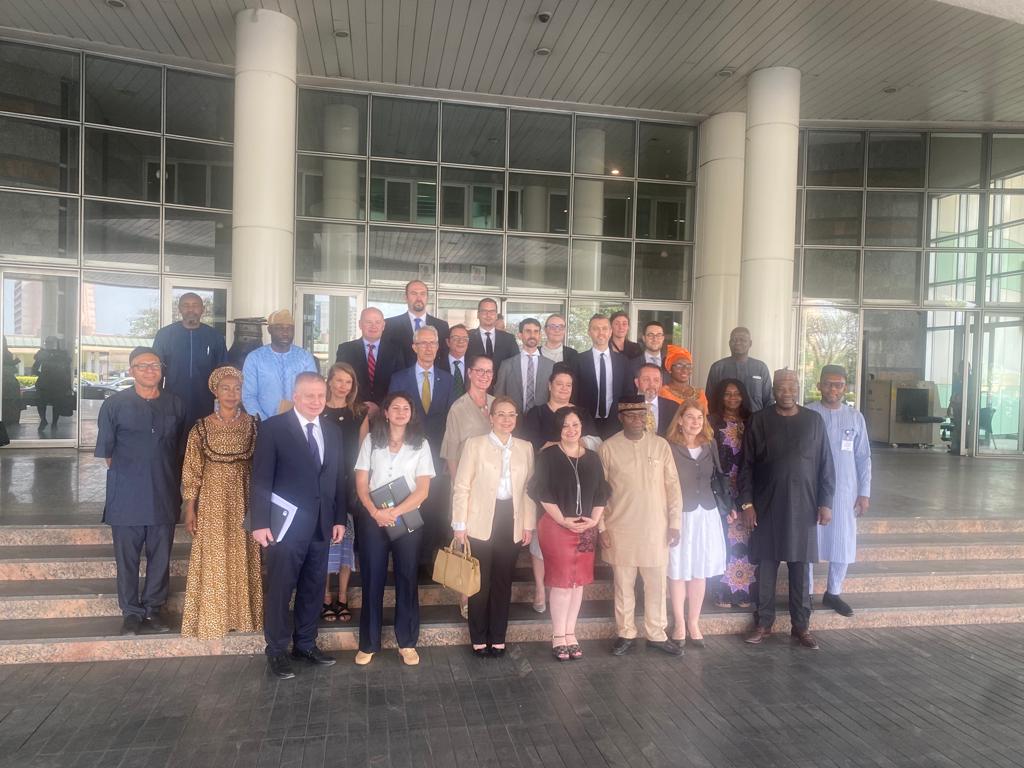
This assurance was given on Friday in Abuja by the Minister of State for Foreign Affairs, Amb. Zubairu Dada during the 6th Round of the Nigeria – European Union Human Rights Dialogue.
He said: “The Nigerian government, led by President Muhammadu Buhari will continue to work to ensure that all Nigerians are not denied their inalienable rights.”
On the meeting which discussed issues including the upcoming Elections, Asset Recovery, Migration, Humanitarian Situations and International Humanitarian Law, etcetera, the Minister said: “These issues are dear to our hearts and I am glad we can provide clarity on issues that the European Union member states will have questions on and vice versa.”
He added that: “On the topics for discussion today, you must have all noted the strides that government has made in the past decade to improve the election process and integrity. The Independent National Electoral Commission (INEC) has received needed resources from government and ready to conduct what will be our best elections ever. The Security agencies are also working to ensure that people will be able to carry out their civic responsibility without fear. They are ready to act swiftly to protect life and properties around the country during the election.l
He noted that in arranging this dialogue, “my colleagues in the Ministries of Justice, Women Affairs, Police Affairs, Defence, Humanitarian Affairs/Disaster Management and Social Development, as well as the Office of the National Security Advisers were very involved. I am grateful for their inputs and I hope the discussions today will help deepen the enjoyment of human rights in Nigeria and in all European Union member states, for our citizens and visitors.”
He also assured that President Muhammadu Buhari is committed to tackling all issues that are necessary for all Nigerians to live in peace, prosperity and dignity, noting that: “This issues which range from fighting crime and extremism to tackling corruption and asset recovery requires unwavering national commitment as well as international cooperation, particularly, as it concerns sharing of knowledge and best practices, as well as provision of financial resources needed for developmental purposes. We will continue to count on our European Union partners to stand with us to resolve these problems.”
He added that “we will continue to work to deepen cooperation on how to fast track asset recovery and commit to zero tolerance for both the source and recipients of the proceeds of corruption.
“Also, we will count on European countries to simplify evidentiary requirements and other mutual legal assistance procedures for timely recovery and return of recovered assets. Furthermore, we will continue to do our utmost to ensure that our people who had fled conflicts in the Lake Chad area can begin to return home voluntarily, safely and with dignity.”
The Minister, also assured that: “We will continue to urge that all European Union member states commit to safe, orderly and regular migration,” stressing that. “There is no doubt in our mind that there must be firm commitments to eliminating all forms of discrimination against migrants.”
After emerging from a close door meeting with the European Union Ambassador to Nigeria and ECOWAS, Ms Samuela Isopi and some ambassadors from European countries in Nigeria, the Director (International Organisation Department) in the Ministry of Foreign Affairs, Amb. Samson Itegboje, told journalists that Nigeria used the opportunity of the meeting to inform the diplomats that it was prepared for the 2023 elections and that the Independent National Electoral Commission (INEC) and security agencies were ready for the elections.
He further disclosed that other prominent issues discussed include the promise that the Nigerian government will continue to make technical and financial commitments to provide hope and restore the dignity of life for the millions of Nigerians affected by the crisis around the Lake Chad Basin. The assistance through the National Social Investment Programme (NSIP) which targets the poor and vulnerable population will continue.
He added that: “Nigeria and European Union member states must play their parts to ensure safe, orderly and regular migration, while we address the push and pull factors that make people embark on perilous journeys across the Atlantic, in search of greener pastures. Nigeria expects that all migrants, regardless of their status, must be respected and protected across all stages of the migration cycle. There must also be firm commitments to eliminating all forms of discrimination against migrants, including racism, intolerance and xenophobia.”
He said “both parties agreed that it was important to continue to cooperate with one another and share experiences and global best practices necessary for developing capacities on how best to ensure that our people are able to live in dignity, no matter their circumstance.”
On her part, the European Union Ambassador to Nigeria and ECOWAS, Ms Samuela Isopi said the meeting was fruitful and there was the need to continue to have it from time to time.
She noted that Europe was happy with assurances received and the preparation for the elections.
She said some agreements were made and that the EU would be happy to work with the next administration in the country.
2023 Election: Nigeria Assures EU, it would be the best in history of the country


Politics
2027: THE SILENT WAR FOR POWER! How Political Tensions, Opposition Campaigns, and the Bamayi Syndrome Could Shape Tinubu’s and Shettima’s Fate

2027: THE SILENT WAR FOR POWER! How Political Tensions, Opposition Campaigns, and the Bamayi Syndrome Could Shape Tinubu’s and Shettima’s Fate
By: Dr. James Bwala
Borno State, known as a political boiling pot, is always a compass to Nigeria’s political environment. The country is entering another decisive phase. As preparations for the 2027 general elections gradually intensify, the nation may be witnessing sharper disagreements within and across political parties. The #TinubuMustGo campaign, the growing opposition rhetoric, and what some supporters describe as the “#Bamayi syndrome” have become symbols of the broader political contest. Yet, beneath the noise of social media, public criticism, and partisan arguments, President Bola Ahmed Tinubu and Vice President Kashim Shettima appear to be building a political foundation that could significantly influence the outcome of the next presidential election.
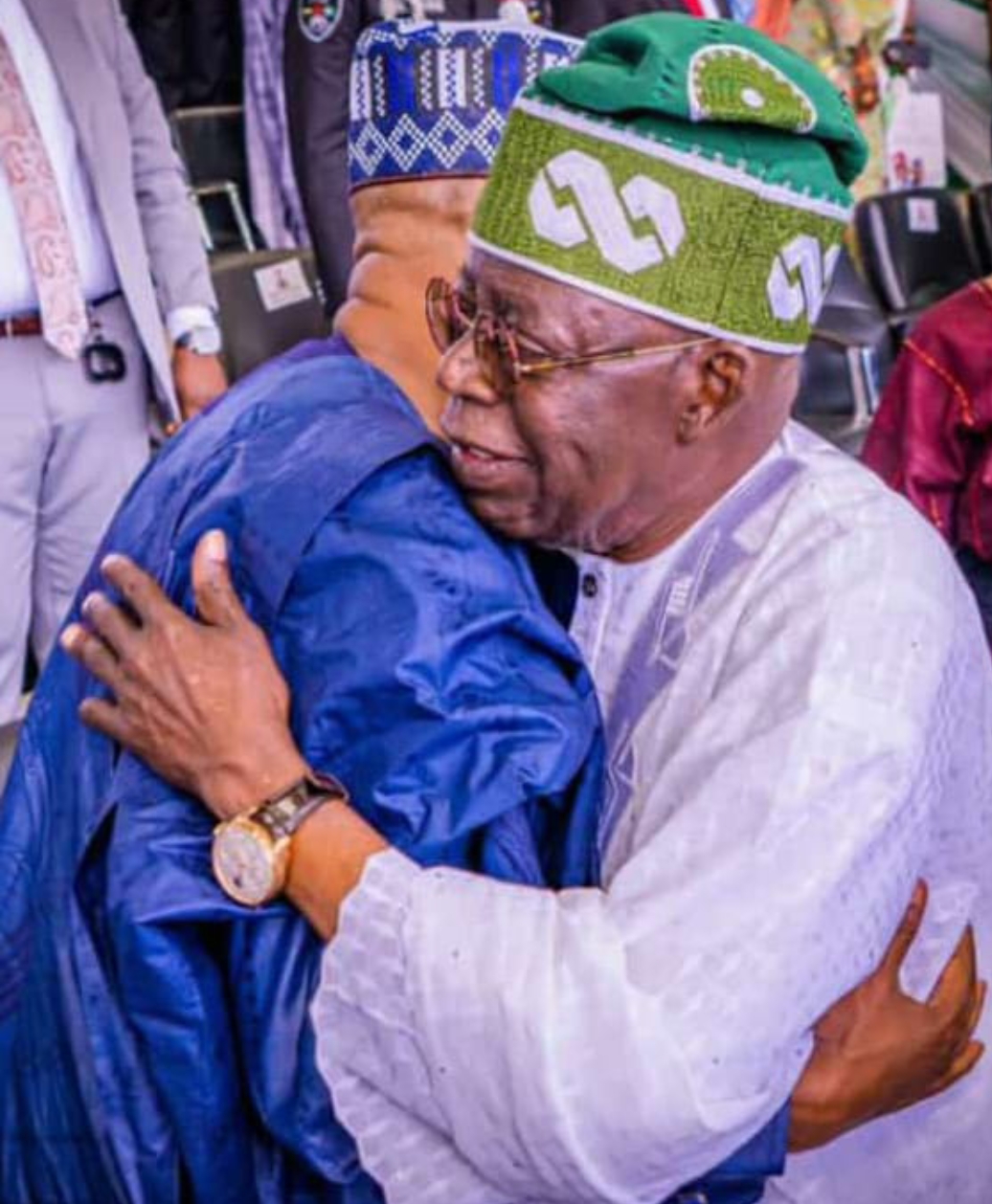
Vice President Kashim Shettima landing in Maiduguri on Monday and songs that welcome his presence had described the central argument that victory in 2027 is already guaranteed. This is not confidence because elections require more than just confidence, declarations, or public celebrations to be won. Rather, the evidence suggests that the Tinubu-Shettima administration is positioning itself through sustained grassroots engagement, policy implementation, strategic communication, and the presentation of measurable achievements. While opposition groups may believe that their rhetoric is weakening the administration, the governing team may be gaining an advantage by consistently revealing the extent of its work and by connecting national policies to local realities. Maiduguri, the home city of Vice President Shettima, is already expressing strong confidence in the ticket, and that mood may become an important part of the larger political narrative.
Political tension is natural in a democracy, but Nigeria’s current tension is unusually intense because it reflects deep economic hardship, public frustration, ethnic and regional calculations, and the struggle for control of the national political space. The government’s economic reforms, especially the removal of fuel subsidies and changes in foreign-exchange policy, have produced painful consequences for households and businesses. Inflation, rising transportation expenses, unemployment, and declining purchasing power have made many Nigerians impatient. These conditions have created fertile ground for anti-government campaigns such as #TinubuMustGo.
The campaign’s appeal is understandable. Citizens who are struggling to feed their families or sustain their businesses are likely to judge the government primarily by their immediate experiences. For many Nigerians, policy explanations do not erase the reality of increased prices. Political opponents have therefore used the hardship to argue that the administration has failed. Their message is simple and emotionally powerful: the government promised renewal, but ordinary citizens are experiencing suffering.
However, public dissatisfaction does not automatically translate into electoral defeat. Governments are often judged not only by present hardship but also by whether citizens believe that their policies are producing a better future. The Tinubu administration has repeatedly argued that its reforms were necessary to correct structural weaknesses that had accumulated over many years. Its supporters contend that the removal of subsidies, efforts to increase government revenue, reforms in the foreign-exchange market, and investment in infrastructure are intended to create a more sustainable economy.
This argument may not immediately satisfy every citizen, but it can become politically effective if the government succeeds in demonstrating results. Roads, rail projects, agricultural initiatives, student loan reforms, social investment programs, and efforts to strengthen local production can provide visible evidence that the administration is not merely making promises. In politics, visibility matters. Citizens may disagree with the government’s direction, but they are more likely to acknowledge it when they can see projects, programs, and institutional changes in their communities.
This is where the administration’s “groundworks” become significant. Political victory is rarely secured through online arguments alone. It depends on organization, alliances, party structures, local mobilization, communication networks, and the ability to connect national policies with voters at the ward, local-government, and state levels. A government that remains active in these areas may be stronger than its critics assume.
The opposition, on the other hand, may be making the mistake of confusing rhetorical dominance with electoral strength. Social media can create the impression that a political movement is larger than it actually is. Hashtags can trend, powerful speeches can attract attention, and criticism can dominate public debate. Nevertheless, elections are won through voters, polling units, party agents, mobilization, funding, coalition-building, and effective organization. Online popularity is useful, but it is not a substitute for a nationwide political structure.
The #TinubuMustGo campaign may therefore have two different effects. It can pressure the administration to respond more effectively to public concerns, which is healthy for democracy. At the same time, if the campaign remains focused mainly on denunciation without presenting a credible alternative, it may fail to convert anger into electoral support. Nigerians want change, but they also want to know who will bring it, how it will be achieved, and whether the alternative is more trustworthy than the government being criticized.
The so-called “#Bamayi syndrome” can be understood as a political and social attitude in which critics assume that constant condemnation, ridicule, or rejection of a political figure will automatically produce that figure’s downfall. Such an approach can become counterproductive when it ignores the resilience of political structures and the ability of incumbents to recover from unpopular periods. Political actors who underestimate their opponents often discover that public anger is not permanent and that voters can distinguish between genuine criticism and partisan propaganda.
The Tinubu-Shettima administration also benefits from the institutional advantages of incumbency. Access to national visibility, government programs, official communication channels, and a broad network of political actors gives the ruling party opportunities that opposition groups do not possess to the same extent. If these advantages are combined with genuine delivery and effective public engagement, they may create a formidable electoral machine.
Vice President Kashim Shettima’s role is particularly important. As a former governor of Borno State and a leading figure from the Northeast, he brings political experience, regional credibility, and a deep understanding of the security and developmental challenges affecting Northern Nigeria. His association with Maiduguri gives the administration a symbolic base in a region that has endured terrorism, displacement, poverty, and economic disruption.
Maiduguri’s apparent confidence in the vice president and the administration therefore carries more than local significance. It represents a perception among many supporters that Shettima has remained connected to the people and that his experience in Borno has prepared him for national responsibilities. If the city and the wider Northeast continue to express strong support, the region could become a crucial pillar of the administration’s 2027 campaign.
Of course, regional support cannot by itself guarantee a national victory. Nigeria’s electoral politics are complex, and no serious campaign can rely exclusively on one zone, ethnic group, religion, or political bloc. The Tinubu-Shettima ticket must continue to build bridges across the South, North, Christian and Muslim communities, urban and rural populations, young voters, women, workers, entrepreneurs, and the business community. Its success will depend on whether it can present itself as a national project rather than merely an incumbent political arrangement.
The administration’s revelations about its achievements and its presentation of its “balance sheet” are also politically important. Governments must communicate what they have done in a clear, consistent, and credible manner. Citizens cannot be expected to support achievements they do not know about. At the same time, communication must not become mere propaganda. Nigerians are increasingly sophisticated voters. They will compare official claims with their lived experiences. For this reason, the government must provide evidence, acknowledge shortcomings, and explain how unfinished projects will be completed.
A strong political message should combine achievement with humility. The administration must recognize that economic reforms have imposed serious burdens on citizens. It should demonstrate empathy, strengthen social protection, reduce waste, improve security, and create more opportunities for young people. If the government responds to hardship only with political arguments, it may deepen resentment. But if it couples its achievements with practical relief and accountable governance, its message will become more persuasive.
The opposition also has an important role to play. Its criticism is necessary, particularly when it exposes failures, corruption, insecurity, or poor implementation. Yet opposition parties must move beyond slogans. Nigerians deserve alternative policies, credible candidates, internal democracy, and a clear program for economic recovery. A campaign built entirely on the rejection of Tinubu may not be enough. The opposition must show why its leadership would be better and how it would address the same structural problems that confront the country.
Ultimately, the 2027 election will be decided by the relationship between performance, perception, organization, and trust. If voters perceive that the administration’s reforms are beginning to produce lasting benefits, if visible projects continue across the country, and if the ruling party maintains its grassroots structure, Tinubu and Shettima may enter the election with a significant advantage. Their supporters are therefore justified in believing that the administration’s groundwork could outweigh the opposition’s rhetorical attacks.
Nevertheless, confidence must not become complacency. The same Nigerians who supported the administration may also withdraw their support if hardship remains severe, insecurity continues, or corruption undermines public trust. Victory cannot be assumed merely because the government has announced achievements or because opposition campaigns appear disorganized. The administration must earn the confidence of voters continuously.
The political tension in Nigeria is therefore not an indication that one side has already won. It is evidence that the contest has begun in earnest. The #TinubuMustGo campaign reflects real frustration, while the government’s emphasis on its achievements reflects an effort to shape public perception before the election season reaches its peak. The #Bamayi syndrome warns against the belief that repeated attacks automatically defeat an incumbent. Maiduguri’s support for Shettima demonstrates the importance of local legitimacy, but national victory will require broader inclusion and continued performance.
Tinubu and Shettima may indeed have gained an early advantage through their groundwork, political organization, and efforts to reveal their administration’s accomplishments. Their potential victory in 2027 will depend, however, on whether they can transform that groundwork into improved living conditions, credible governance, and a compelling national vision. In the final analysis,
* James Bwala, PhD, writes from Maiduguri.
2027: THE SILENT WAR FOR POWER! How Political Tensions, Opposition Campaigns, and the Bamayi Syndrome Could Shape Tinubu’s and Shettima’s Fate
Politics
BAMA, KONDUGA SPEAKS LOUD: MASSIVE 2027 TURNOUT REAFFIRMS GUBIO’S GROWING POLITICAL MOMENTUM IN BORNO
BAMA, KONDUGA SPEAKS LOUD: MASSIVE 2027 TURNOUT REAFFIRMS GUBIO’S GROWING POLITICAL MOMENTUM IN BORNO
BY: JAMES BWALA
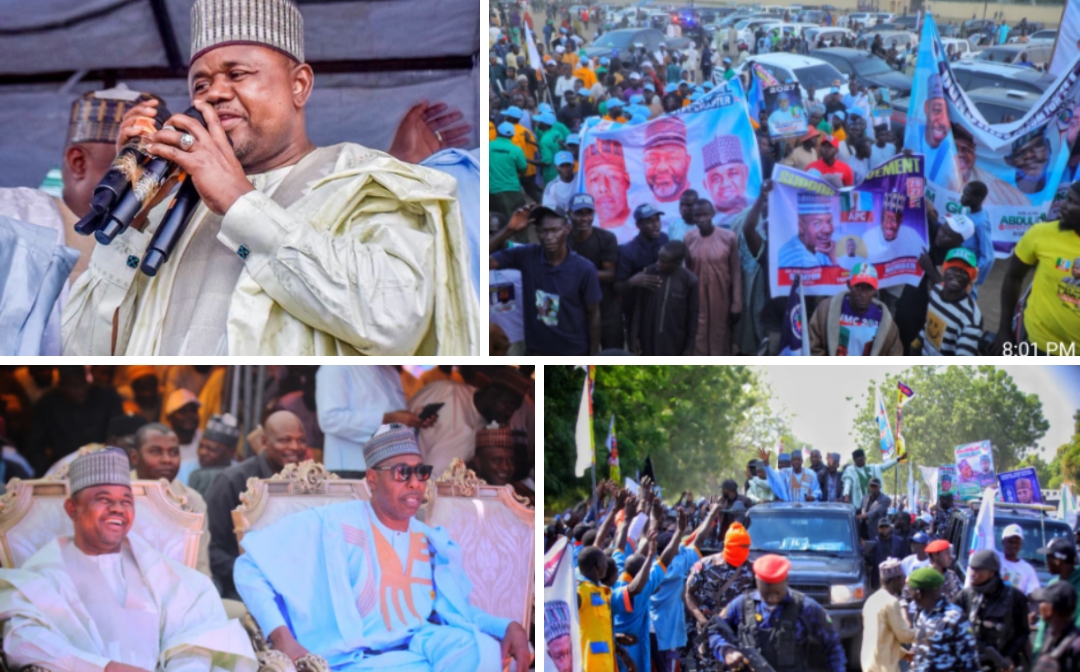
The massive turnout witnessed in Bama and Konduga in support of Engr. Mustapha Gubio represents more than a political gathering. It is a powerful expression of public confidence, renewed hope, and a collective desire for continuity in the development of Borno State. The warm reception accorded to Engr. Gubio demonstrates that many residents recognize the importance of sustaining the progress achieved under the administration of Governor Babagana Umara Zulum while extending its benefits to communities that still require greater attention.
In his response to the impressive reception, Engr. Gubio expressed sincere appreciation to the people of Bama and Konduga for their support, hospitality, and confidence. His message was not merely one of gratitude; it was also a reaffirmation of purpose. He emphasized his commitment to building on the achievements of the Zulum administration, strengthening existing programs, addressing emerging challenges, and ensuring that development opportunities reach communities across Borno State.
This commitment is important because a society’s progress depends on not just successful policies but also on the ability to maintain, improve, and expand them. Development must be continuous. It must move beyond major urban centers and reach rural settlements, vulnerable populations, young people, women, farmers, traders, and families affected by insecurity and economic hardship. The enthusiasm displayed in Bama and Konduga therefore reflects a demand for inclusive governance—governance that places communities at the center of decision-making and treats every part of the state as an important contributor to its future.
The Zulum administration has gained recognition for its focus on rebuilding communities, improving public infrastructure, investing in education, strengthening healthcare delivery, supporting livelihoods, and restoring hope among citizens affected by years of insecurity. These accomplishments provide a foundation upon which future leaders can build. However, the existence of progress does not mean that all problems have been solved. Borno still faces significant challenges, including unemployment, poverty, displacement, inadequate access to services in some communities, and the need for sustained investment in security and economic recovery.
For this reason, the question before the people is not simply whether development has taken place, but whether that development will be protected, expanded, and made more effective. Engr. Gubio’s pledge to build on the achievements of the current administration offers a persuasive answer. Continuity does not mean refusing to improve existing policies. Rather, it means preserving what works, correcting what requires adjustment, and introducing new ideas where circumstances demand them.
Bama and Konduga’s reception is particularly meaningful because the community symbolizes both the difficulties Borno has faced and the resilience of its people. Residents have endured insecurity, disruption of livelihoods, displacement, and the destruction of social and economic infrastructure. Yet they have continued to demonstrate courage, patience, and determination. Their enthusiastic welcome for a leader who speaks of inclusive development suggests that they are ready to participate actively in the state’s recovery and transformation.
A responsible development agenda for Bama, Konduga, and other communities must begin with security. Poverty and violence made life difficult for people in El Salvador. Security, therefore, should not be viewed only as a military concern. It must also include employment opportunities, youth engagement, access to education, community dialogue, early-warning systems, and programs that reduce vulnerability to violence and criminality.
Engr. Mustapha Gubio’s commitment should consequently be understood within a broader vision of human security. Protecting communities requires creating conditions in which citizens can live with dignity and confidence. Young people need access to skills, technology, vocational training, and meaningful employment. Women need support to expand businesses and participate in decision-making. Farmers need access to inputs, storage facilities, markets, and reliable transportation. These measures can strengthen local economies while reducing the social pressures that contribute to instability.
Education must also remain at the heart of Borno’s development strategy. The future of the state depends on the quality of opportunities available to its children and young people. Investments in schools, teacher training, learning materials, science and technology, and vocational education are essential. Communities such as Konduga should not be left behind in the digital and knowledge economy. A child in a rural settlement deserves the same opportunity to develop talent and pursue a meaningful future as a child in Maiduguri.
Healthcare is equally important. Development cannot be measured only by roads, buildings, or political programs. It must also be measured by whether mothers can access safe delivery services, whether children receive immunization, whether families can obtain affordable treatment, and whether communities have trained health workers and functioning primary healthcare centers. Expanding healthcare services across Borno would improve productivity, reduce preventable deaths, and strengthen public confidence in government.
Infrastructure remains another critical area. Roads connect farmers to markets, students to schools, patients to hospitals, and communities to administrative centers. Water supply, electricity, sanitation, and communication networks are equally necessary for economic and social development. Engr. Gubio’s vision should therefore include an infrastructure plan that prioritizes both major projects and smaller community-based interventions. A borehole, a rehabilitated health center, a rural road, or a functional school may appear modest individually, but together such projects can transform daily life.
The importance of agriculture cannot be overstated. Borno has vast agricultural potential, and many communities depend directly or indirectly on farming, livestock, and trade. Supporting agriculture would promote food security, create employment, and diversify household incomes. Government can assist through improved seeds, fertilizers, irrigation, mechanization, extension services, processing facilities, and access to credit. The goal should not be limited to increasing production; it should also involve developing value chains that allow farmers to earn more from their efforts.
Furthermore, Borno’s development must be inclusive. Every local government area should be able to identify visible and measurable benefits from state policies. Inclusiveness requires transparent planning, fair distribution of resources, consultation with traditional institutions, partnership with civil society, and regular engagement with local communities. The people of Konduga and other parts of the state should not merely receive government projects; they should participate in determining priorities and monitoring implementation.
This is where Engr. Gubio’s professional background and public commitment can become valuable assets. Effective governance requires technical competence, strategic planning, financial discipline, and the ability to convert ideas into practical results. Citizens are increasingly interested in leaders who can articulate clear objectives, establish realistic timelines, measure performance, and accept constructive criticism. Appreciation for public support must therefore be matched by accountability to the people.
The warm reception in Bama and Konduga should not be interpreted as an unconditional endorsement of political promises. It should be viewed as a mandate for service. The people are expressing their willingness to support a vision, but they also expect that vision to produce tangible results. Roads must be completed, schools must function, healthcare centers must serve patients, empowerment programs must reach genuine beneficiaries, and public funds must be used responsibly.
To sustain public confidence, any future administration must communicate openly with citizens. Regular reporting on projects, budgets, outcomes, and challenges would strengthen trust. Community members should have channels through which they can provide feedback and report abandoned projects, corruption, or unequal access to services. Transparent governance is not a burden; it is an investment in stability and cooperation.
The political significance of the Bama and Konduga gathering is therefore inseparable from its developmental significance. Elections should not be treated merely as contests for power. They should be opportunities for citizens to choose the leadership and policy direction that best reflect their aspirations. The reception for Engr. Gubio indicates that many residents value a platform based on continuity, inclusiveness, and practical development. It also suggests that people are prepared to support leaders who recognize the achievements of the past while remaining focused on the unfinished work of the future.
Nevertheless, political support must be rooted in issues, not personality alone. The people of Borno deserve detailed plans, credible commitments, and measurable targets. They should ask how development will be financed, how projects will be distributed, how corruption will be prevented, how employment will be created, and how vulnerable communities will be protected. A persuasive political vision is strongest when it is specific, realistic, and open to public scrutiny.
Engr. Gubio’s message of appreciation provides an encouraging starting point. By acknowledging the people’s reception, he recognizes the central role citizens play in public leadership. By reaffirming his commitment to the achievements of the Zulum administration, he signals respect for continuity and institutional progress. By promising to extend development opportunities across Borno, he presents a vision that seeks to unite the state around shared prosperity rather than isolated advancement.
The people of Bama and Konduga have demonstrated that they are not passive observers of Borno’s future. Their turnout reflects political awareness and a desire to participate in shaping the direction of governance. Their message is clear: they want security, dignity, opportunity, and leadership that understands their realities. Other communities across the state share these expectations.
As 2027 approaches, the choice before Borno’s citizens should be guided by careful consideration of competence, character, experience, vision, and commitment to inclusive development. The state needs leadership capable of preserving hard-won gains while confronting new challenges with courage.
and innovation. It needs leaders who will not concentrate development in a few locations but will deliberately extend opportunities to every community.
Engr. Engr. Mustapha Gubio appreciates the Bama and Konduga reception and pledges to build on the achievements of the Zulum administration, offering a compelling framework for that future. If translated into transparent policies, accountable implementation, and broad-based participation, the vision can contribute meaningfully to Borno’s continued recovery and transformation.
* James Bwala, PhD, writes from Abuja.
BAMA, KONDUGA SPEAKS LOUD: MASSIVE 2027 TURNOUT REAFFIRMS GUBIO’S GROWING POLITICAL MOMENTUM IN BORNO
Politics
Beyond Public Frustration: Why Nigeria Must Judge Its Leaders by Their Records, Not Rhetoric Before 2027
Beyond Public Frustration: Why Nigeria Must Judge Its Leaders by Their Records, Not Rhetoric Before 2027
By: Dr. James Bwala
Nigeria’s current political debate is shaped by economic hardship, public frustration, and deep disagreement over the leaders capable of moving the country forward. Many citizens are understandably dissatisfied with rising costs, unemployment, insecurity, and declining living standards. However, frustration must not replace careful judgment. Nigerians must examine the records, principles, and policy choices of political leaders rather than allowing slogans, emotional speeches, or personal popularity to determine the country’s future.
One issue that deserves serious attention is the controversy surrounding the Aluminium Smelter Company of Nigeria, commonly known as ALSCON. The facility was established through substantial public investment, reportedly involving billions of dollars, but was later sold for a fraction of its estimated value. Former Vice President Atiku Abubakar, who was involved in the administration associated with the sale, has described the transaction as a mistake. Regardless of the political explanations surrounding the deal, the central concern remains: a public asset of immense strategic and financial value was transferred at a price that many Nigerians consider grossly inadequate.
Such an outcome should not be dismissed as a minor administrative error. Government assets belong to the Nigerian people. When public property is sold cheaply, the consequences are borne by citizens through lost revenue, reduced industrial capacity, fewer employment opportunities, and diminished national wealth. A transaction that deprives the country of billions of dollars cannot simply be placed in the category of an ordinary mistake and forgotten during an election season. Leadership requires accountability, especially when decisions have lasting consequences for millions of people.
The ALSCON controversy therefore raises legitimate questions about judgment, responsibility, and the protection of national resources. If a leader participated in a decision that resulted in the sale of a major public asset far below its potential worth, Nigerians have the right to ask how such an error occurred, who benefited, what safeguards were ignored, and whether the leader has fully accepted responsibility. It is not unreasonable for voters to consider such questions before entrusting that individual with greater power.
READ ALSO: https://newsng.ng/gubio-under-political-review-borno-elites-and-electorate-deliver-their-verdict/
The concern becomes even more serious when some supporters treat the matter as irrelevant while promoting the same political figure as the solution to Nigeria’s problems. Political loyalty should never require citizens to ignore facts. A democracy becomes weak when supporters defend every action of their preferred candidate while condemning similar conduct by opponents. Nigerians should demand the same standard from every politician, regardless of party, region, religion, or personal popularity.
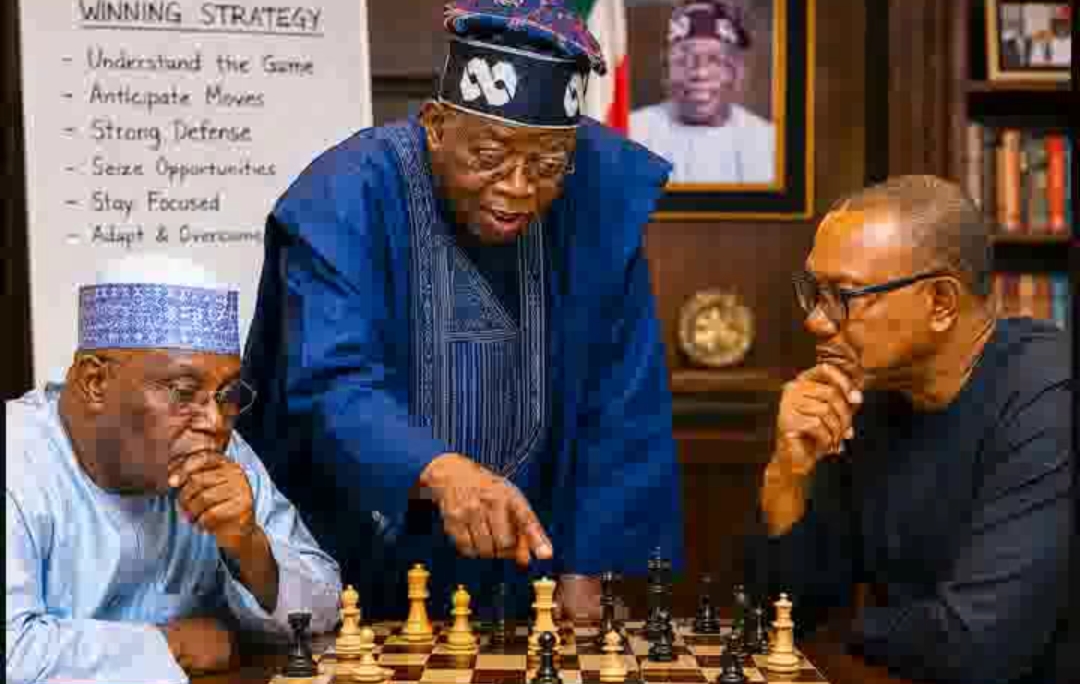
At the same time, criticism of one political leader should not lead to the careless glorification of another. The comparison between former Vice President Atiku Abubakar, Labour Party candidate Peter Obi, and President Bola Ahmed Tinubu must be based on evidence, competence, and realistic expectations. It is understandable that many Nigerians blame President Tinubu for the severe hardship experienced under his administration. The removal of fuel subsidies, exchange-rate reforms, inflation, and other economic policies have imposed painful burdens on households and businesses. The suffering is real, and government must respond with urgency, compassion, and measurable solutions.
Nevertheless, it is inaccurate to suggest that every problem facing Nigeria began with President Tinubu. The nation’s difficulties are the result of decades of accumulated failures, weak institutions, corruption, poor planning, insecurity, inadequate infrastructure, and inconsistent economic policies. These problems developed through successive administrations, beginning long before the present government and continuing through the eras of Shehu Shagari, military governments, democratic administrations, and Muhammadu Buhari’s presidency. Nigeria’s current crisis is therefore both immediate and historical.
Recognizing this history does not absolve the present government of responsibility. Every administration must be judged by its own decisions and results. President Tinubu must explain his policies clearly, reduce waste, protect vulnerable citizens, strengthen security, and ensure that economic reforms do not become excuses for indifference. However, the existence of long-standing national problems means that no responsible assessment should expect a complete transformation within a few months or even a single term. The scale of the damage requires sustained reform and institutional rebuilding.
READ ALSO: https://newsng.ng/gubio-under-political-review-borno-elites-and-electorate-deliver-their-verdict/
In my view, President Tinubu represents an important phase in the development of modern Nigeria. Describing him as the “father of modern Nigeria” may sound provocative to some people, but it reflects the argument that his administration is attempting to confront structural weaknesses that previous governments postponed. Economic reforms that had been avoided for years are now being implemented, even though they are painful. The removal of fuel subsidies and changes to the foreign-exchange system have revealed the weaknesses of an economic model that was already becoming unsustainable.
Reforms, however, are not automatically successful simply because they are bold. Their success depends on implementation, transparency, discipline, and social protection. If citizens are asked to endure hardship for the sake of future stability, the government must demonstrate that leaders are also making sacrifices. Public funds must be protected, corruption must be punished, and relief measures must reach the people who need them rather than becoming opportunities for political patronage. A reform agenda that burdens ordinary Nigerians while allowing waste and privilege to continue will lose public trust.
President Tinubu therefore needs time, but he also needs accountability. Patience should not mean silence, and hope should not mean blind loyalty. Nigerians can support the long-term objectives of reform while demanding better short-term management. The administration must strengthen institutions, uphold the rule of law, improve public services, and create a transparent environment for investment and employment. It must also communicate honestly with citizens instead of dismissing their legitimate frustrations.
The argument that Atiku Abubakar or Peter Obi would necessarily perform better should also be approached with caution. Both men have supporters who believe strongly in their abilities, and both have made important contributions to national political debate. However, political popularity and campaign promises are not the same as demonstrated capacity to repair a deeply damaged system. Leadership should be assessed through a candidate’s record, judgment, understanding of institutions, and willingness to accept responsibility for past decisions.
READ ALSO: https://newsng.ng/gubio-under-political-review-borno-elites-and-electorate-deliver-their-verdict/
It is possible to admire aspects of a politician’s personality or policies while still questioning his record. It is also possible to criticize President Tinubu without assuming that every alternative would automatically produce better results. Nigeria has repeatedly placed its hopes in individuals while neglecting the institutions required to control power and deliver lasting progress. This approach has produced disappointment because no leader, regardless of intelligence or charisma, can transform Nigeria alone.
The country needs strong institutions more than political heroes. An effective legislature, an independent judiciary, professional civil service, accountable security agencies, credible electoral bodies, and transparent public procurement systems are essential to national development. If institutions are weak, even a well-intentioned president may struggle to achieve meaningful change. If institutions are strong, bad decisions can be challenged, corruption can be exposed, and public assets can be protected from careless disposal.
The ALSCON controversy illustrates why institutional reform is necessary. The protection of national assets should not depend entirely on the personal integrity of a president or minister. Major transactions should undergo independent valuation, legislative scrutiny, public disclosure, and open competitive processes. Those who approve questionable deals should be held accountable, and citizens should have access to the information needed to evaluate government decisions. This is how a nation prevents one mistake from becoming a permanent loss.
Nigerians must also reject the politics of selective outrage. It is contradictory to condemn hardship under one administration while defending questionable decisions by a preferred candidate. It is equally wrong to describe every government policy as successful merely because it is associated with one’s political party. Responsible citizenship requires honesty, fairness, and consistency. Leaders should not be worshipped, and supporters should not become defenders of every failure.
READ ALSO: https://newsng.ng/gubio-under-political-review-borno-elites-and-electorate-deliver-their-verdict/
The hardship confronting Nigerians demands unity rather than endless division. Regional, religious, and ethnic competition has often prevented citizens from demanding competent governance from all political parties. Nigeria’s future cannot be secured by one region or one political movement. It requires cooperation among citizens, businesses, civil society organizations, professionals, traditional institutions, and government at every level.
Rome was not built in a day, and neither can a stable and prosperous Nigeria be built within one electoral cycle. The damage accumulated over nearly five decades will require patience, sacrifice, and sustained commitment to repair. But patience must be accompanied by vigilance. Nigerians should give reform a fair opportunity while insisting on justice, transparency, and tangible results.
President Tinubu should therefore be judged neither with blind praise nor with premature condemnation. He should be given the opportunity to implement his agenda, but that opportunity must come with firm public scrutiny. At the same time, politicians whose past decisions harmed national interests should not be allowed to erase those records simply by calling them mistakes. Before handing any leader greater authority, Nigerians must ask whether that person has demonstrated sound judgment, accountability, and respect for public resources.
The country’s future depends on making mature political choices. Nigeria does not need leaders who merely inspire passionate crowds; it needs leaders who protect national wealth, strengthen institutions, respect the law, and accept responsibility for their actions. If citizens remain informed, patient, united, and demanding, the nation can gradually overcome its difficulties. Sustainable progress will take time, but with responsible leadership and an engaged citizenry, Nigeria can build a stronger and more prosperous future.
* James Bwala, PhD, writes from Abuja
Beyond Public Frustration: Why Nigeria Must Judge Its Leaders by Their Records, Not Rhetoric Before 2027

Yobe APC flag-off 2027 campaign in Damaturu

EU Launches ₦152.9m Fund to Protect Women from Electoral Violence Ahead of 2027 Polls

NHRC Wqrns Media Against Electoral Misinformation, Hate Speech Ahead of 2027 Polls

Roger Federer’s Shock as DNA Results Reveal Myla and Charlene Are Not His Biological Children

THE PLIGHT OF FARIDA

FAILED COUP IN BURKINA FASO: HOW TRAORÉ NARROWLY ESCAPED ASSASSINATION PLOT AMID FOREIGN INTERFERENCE CLAIMS
-
 News3 years ago
Roger Federer’s Shock as DNA Results Reveal Myla and Charlene Are Not His Biological Children
-
Opinions5 years ago
THE PLIGHT OF FARIDA
-
 News2 years ago
FAILED COUP IN BURKINA FASO: HOW TRAORÉ NARROWLY ESCAPED ASSASSINATION PLOT AMID FOREIGN INTERFERENCE CLAIMS
-
 Opinions5 years ago
POLICE CHARGE ROOMS, A MINTING PRESS
-

 News3 years ago
EYN: Rev. Billi, Distortion of History, and The Living Tamarind Tree
-

 ACADEMICS3 years ago
A History of Biu” (2015) and The Lingering Bura-Pabir Question (1)
-

 Columns3 years ago
Army University Biu: There is certain interest, but certainly not from Borno.
-

 Politics1 year ago
2027: Why Hon. Midala Balami Must Go, as Youths in Hawul and Asikira/Uba Federal Constituency Reject ₦500,000 as Sallah Gift
