
Military
UK Boosts Efficiency Rice Production in Nigeria

UK Boosts Efficiency Rice Production in Nigeria
By: Michael Mike
The United Kingdom (UK) has assisted in the introduction to Nigeria Systems of Rice Intensification – SRI, a climate smart agricultural practice that would lead to efficiency rice production
The introduced system can lead to reduction of input costs by 50%, with less use of water, doubling yields for farmers and reducing GHG emissions.
A statement on Wednesday by the Senior Press & Public Affairs Officer and Comms Lead, Prosperity and Economic Development, Foreign Commonwealth and Development Office, Ndidiamaka Eze read that: “Since 2021, the UK Government’s LINKS programme implemented by Tetra Tech International Development has been piloting a couple of climate smart farming initiatives; helping farmers to increase yields and become more resilient in the face of climate change while reducing greenhouse gas (GHG) emissions.”

Eze said at a Climate Smart Agriculture results and lesson sharing event which held in Abuja on Wednesday, LINKS demonstrated that the project is starting to deliver impressive results, particularly the Systems of Rice Intensification – SRI, a climate smart agricultural practice which is a different way of producing rice that reduces input costs by 50%, with less use of water, doubling yields for farmers and reducing GHG emissions.
She explained that SRI involves early transplanting of seedlings and wide spacing to allow the plants to flourish, alternative wetting and drying rather than flooding and the use of organic rather than chemical fertilisers.

She disclosed that a further benefit for wider society is the overall climate impact delivered by SRI. Rice production traditionally produces methane (globally contributing approximately 2.5% of all human induced GHG emissions, roughly the same as international air travel) and this is set to grow in Nigeria with increasing consumption and production of paddy rice.
Speaking at Wednesday’s event, Team Leader, LINKS programme, Andrew Thorburn said: “Farmers were sceptical at first but after four seasons we now have over 26,000 farmers in Kano, Kaduna and Jigawa actively using SRI. The use of organic rather than chemical fertilisers equally meant that soil quality further improves every season which continued to deliver improved results as well as increased resilience to changing weather, especially flooding.”
British Deputy High Commissioner in Lagos, Ben Llewellyn-Jones, represented by the FCDO Climate and Nature Lead in Abuja, Martine Sobey said: “The UK Government has a strong focus on supporting Nigeria to deliver its international climate commitments,” adding that: “We are particularly pleased to note that the Systems of Rice Intensification – SRI reduces the GHG emissions produced by rice growers by as much as 40% and look forward to seeing SRI expand throughout Nigeria”.
At the event participants heard from farmers based in Kano and Jigawa who were trained to use the SRI method explain how the change had benefited their lives and that of their communities. They also heard from Silvex International, a LINKS partner and aggregator who is planning to expand SRI to over 1,000 hectares in the coming years that will ensure benefits throughout the value chain. With this positive start, SRI is set to help Nigeria on the road to rice self-sufficiency as well as improving the environment for all.
The LINKS programme – Powering Economic Growth in Northern Nigeria – is a £12m UK government funded programme designed to support the development of a vibrant, inclusive, and diversified economy in three Northern Nigeria States of Kano, Kaduna and Jigawa.
LINKS primary objective is to develop high potential pro-poor value chains supporting them to be productive, competitive, and attractive for investment at every level.
The programme has had two main areas of activity, which are Support for the growth of Climate Smart Agriculture to improve yields, build resilience among farming communities against climate change, as well as reducing the emission of GHG. In addition to SRI, LINKS is also working with 30,000 farmers in Jigawa state to pilot a regenerative farming project that will generate additional revenue from the sale of carbon credits; and the LINKS also works to encourage investment into its focal states, including working with businesses to help them develop plans to access finance for growth and development. Clients range from small holder farmers to high tech start-ups and large corporates.
UK Boosts Efficiency Rice Production in Nigeria





Military
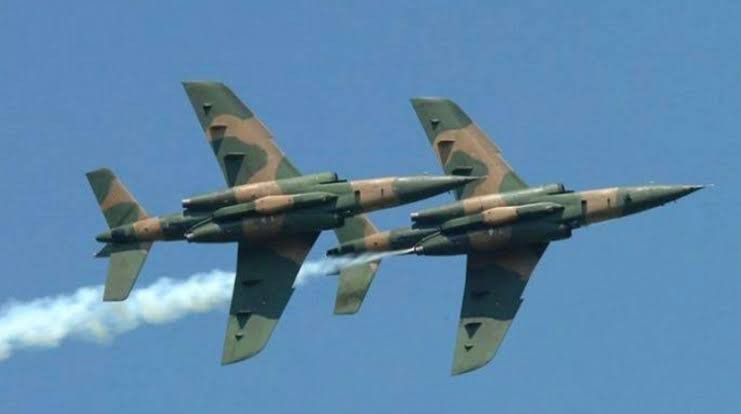
Military Air Strike Kills Over 40 ISWAP Fighters, Destroys Vehicles in Badu Village in Borno
Military Air Strike Kills Over 40 ISWAP Fighters, Destroys Vehicles in Badu Village in Borno
By Zagazola Makama
A preliminary intelligence assessment has indicated that a military air strikes on an Islamic State West Africa Province (ISWAP) position at Badu village, south of Gudumbali in Borno State, killed more than 40 fighters and destroyed two vehicles and about 20 motorcycles.
Security sources told Zagazola Makama that the strike, conducted on Oct. 10, targeted a concentration of ISWAP’s elite Murabitun fighters believed to have been deployed in the area for mobile patrols and surveillance.
According to the preliminary intelligence report, a prominent Qaid (commander) was among those reportedly killed, while the majority of the casualties were recorded inside and around a building hit during the air operation.
The Murabitun fighters are described as an elite mobile patrol element of ISWAP, typically deployed for periods of two to four weeks to conduct opportunistic attacks and provide early warning along the Gudumbali–Kukawa–Gajiram corridor.
Their reported mission in the area is to deter the advance of Nigerian troops towards the Lake Chad region.
Sources further said that ISWAP elements arriving from the Lake Chad area visited Badu at first light on Oct. 11 to evacuate surviving casualties and recover those affected by the strike.
The sources also alleged that the arriving fighters engaged Fulani herders around the abandoned village.
Further details on the incident, including the circumstances surrounding the reported engagement with the herders, were still being awaited as of the latest intelligence update.
Military Air Strike Kills Over 40 ISWAP Fighters, Destroys Vehicles in Badu Village in Borno

Brig.-Gen. Ayoola Takes Over as Chief of Staff of Operation Enduring Peace
By Zagazola Makama
Brig.-Gen. T.A. Ayoola has taken over as the Chief of Staff of Operation Enduring Peace (OPEP) from Brig.-Gen. M.S. Sule in Jos, Plateau State.
The handing and taking over ceremony took place at about 1:00 p.m. on Oct. 10 at the Headquarters of Operation Enduring Peace, Jos.
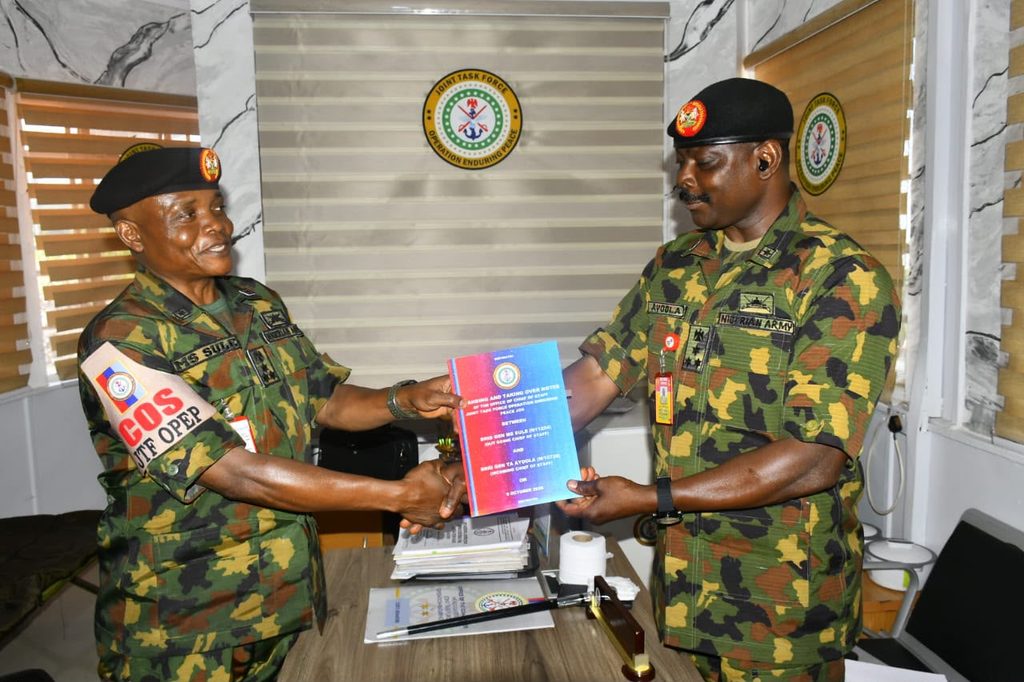
Security sources said the ceremony was conducted smoothly, marking the formal transfer of responsibilities from the outgoing Chief of Staff to his successor.
Brig.-Gen. Sule handed over the position to Brig.-Gen. Ayoola during the brief ceremony.l
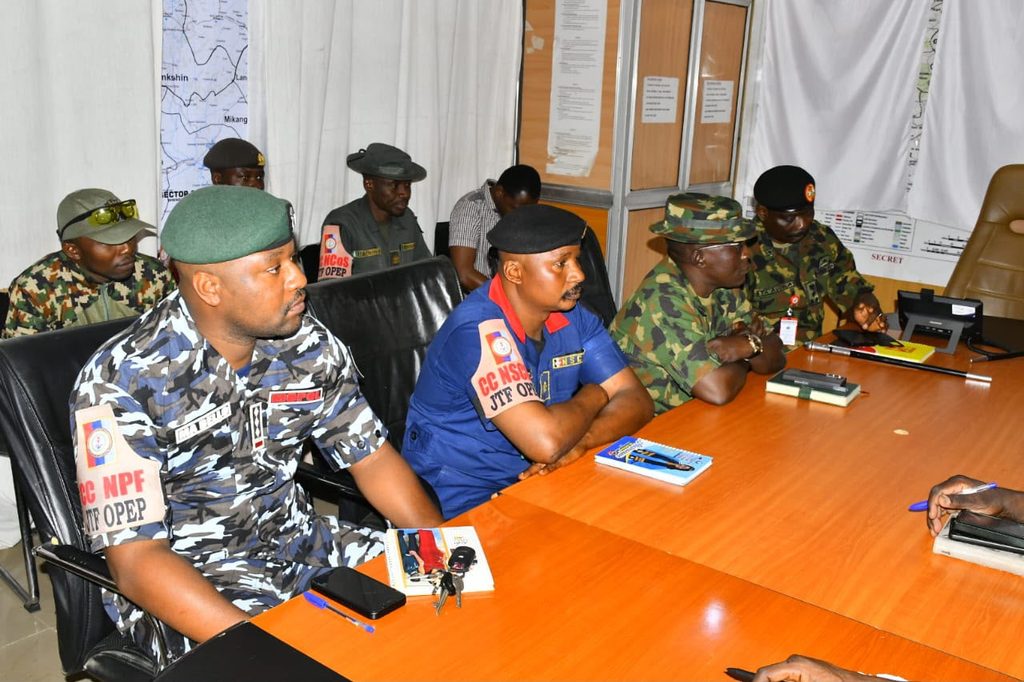
Operation Enduring Peace is responsible for security operations aimed at maintaining peace and stability across its area of responsibility in Plateau State and surrounding communities.
Brig.-Gen. Ayoola Takes Over as Chief of Staff of Operation Enduring Peace

COAS Deepens Military-Traditional Institution Partnership for National Security
By: Zagazola Makama
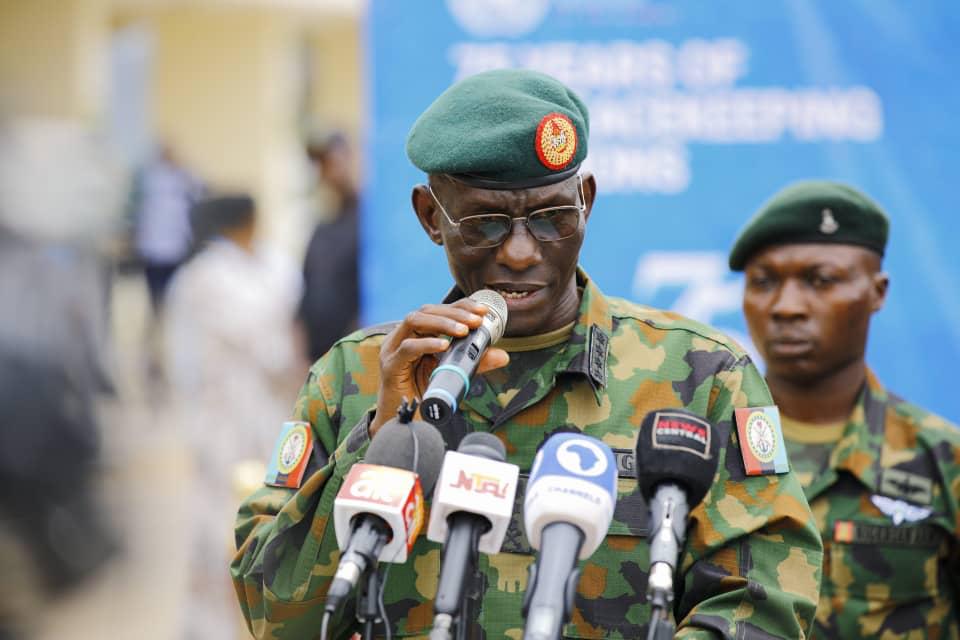
The Chief of Army Staff (COAS), Lt.-Gen. Waidi Shaibu, has reaffirmed the Nigerian Army’s commitment to strengthening partnerships with traditional institutions and host communities to enhance intelligence gathering and national security.
Shaibu gave the assurance on Friday, Oct. 9, when he paid homage to the Andoma of Doma Kingdom, His Royal Highness Alhaji Dr Ahmadu Aliyu Ogga Onawo, at his palace in Doma, Nasarawa State.

The COAS was in Doma for the graduation ceremony of an elite Special Forces Battalion trained at the Nigerian Army Special Forces School in the kingdom.
He acknowledged the strategic role of traditional institutions and host communities in intelligence gathering, early warning, community trust and the promotion of sustainable peace.
Shaibu appreciated the Andoma and the people of Doma for their continued support and hospitality, stressing that a whole-of-society approach remained vital to addressing contemporary security challenges.
He noted that cooperation between the military, traditional rulers and local communities was essential to strengthening security operations and building public confidence.
In his response, the Andoma commended the COAS for his leadership and the establishment of the Nigerian Army Special Forces School in Doma, describing the facility as a significant contribution to the kingdom.
The traditional ruler pledged the continued support of the institution and the people of Doma to the Nigerian Army, while offering prayers for lasting peace, stability and security across the country.

The visit underscores the importance of civil-military cooperation and the role of traditional institutions in supporting security efforts and fostering peaceful coexistence in host communities.
COAS Deepens Military-Traditional Institution Partnership for National Security

Bangladesh High Commissioner Says Lalon Shah’s Philosophy Can Strengthen Nigeria’s Unity

Four Killed as fulani bandits Attack Shurum Community in Plateau

Troops Arrest Suspected Criminal, Recover Dane Gun in Edo

Roger Federer’s Shock as DNA Results Reveal Myla and Charlene Are Not His Biological Children

THE PLIGHT OF FARIDA

FAILED COUP IN BURKINA FASO: HOW TRAORÉ NARROWLY ESCAPED ASSASSINATION PLOT AMID FOREIGN INTERFERENCE CLAIMS
-
 News3 years ago
Roger Federer’s Shock as DNA Results Reveal Myla and Charlene Are Not His Biological Children
-
Opinions5 years ago
THE PLIGHT OF FARIDA
-
 News1 year ago
FAILED COUP IN BURKINA FASO: HOW TRAORÉ NARROWLY ESCAPED ASSASSINATION PLOT AMID FOREIGN INTERFERENCE CLAIMS
-
 Opinions5 years ago
POLICE CHARGE ROOMS, A MINTING PRESS
-

 News3 years ago
EYN: Rev. Billi, Distortion of History, and The Living Tamarind Tree
-

 ACADEMICS3 years ago
A History of Biu” (2015) and The Lingering Bura-Pabir Question (1)
-

 Columns3 years ago
Army University Biu: There is certain interest, but certainly not from Borno.
-

 Politics1 year ago
2027: Why Hon. Midala Balami Must Go, as Youths in Hawul and Asikira/Uba Federal Constituency Reject ₦500,000 as Sallah Gift
