
News
Infrastructure Revamp, Key To Our Economic Policies – VP Shettima


Infrastructure Revamp, Key To Our Economic Policies – VP Shettima
By: Our Reporter
Vice President Kashim Shettima has said ongoing power projects to light up industrial clusters across the country are an indication that the President Bola Ahmed Tinubu administration is on a journey of rekindling the flames of enterprise.
This is just as he added that the Federal Government’s commitment to revamping Nigeria’s Infrastructure framework was the much-needed drive in empowering Nigerians and strengthening the nation’s economic policies.
The Vice President disclosed these during his visit to the Agbara Industrial Cluster for the launch of a collaboration between the Niger Delta Power Holding Company Limited (NDPHC) and its partners on the project to light up industrial clusters.
According to him, while the government has embraced the past as a lesson in mapping a new path for a robust power sector, the historical mistakes that have brought Nigeria to the point it is are rather an inspiration to work harder.
The Vice President stated: “For too long, some of these ventures were forced to pack up, their potential stifled by the persistent energy constraints. Today, we embark on a journey of empowerment, a journey aimed at rekindling the flames of enterprise and ensuring that the promise of prosperity prevails over the darkness of past hindrances.
“We have gone a full cycle in the search for solutions to our energy crisis. We have unbundled and privatized the power assets in generation, transmission, and distribution. We have also implemented the National Integrated Power Project through the NDPHC.”
He vowed to closely monitor the progress of work in the ongoing power projects to light up industrial clusters across the country, with a view to holding every relevant official accountable.
“I assure you that, in my capacity as the Board Chairman of NDPHC, I will hold every relevant official accountable and closely monitor the progress achieved in this project. We owe Nigerians this success story,” the VP declared.
Senator Shettima reiterated the commitment of the Tinubu administration “to providing the necessary institutional and policy support to ensure the successful delivery” of the project.
While delivering his address titled, “Lighting the Path to Economic Development,” the Vice President expressed gratitude to the Governors of Ogun, Lagos and Oyo States where the NDPHC was already developing similar projects, as well as the companies involved.
The VP noted that the partnership between state-owned power companies and the private sector was an embodiment of progress, teamwork, and commitment to fostering synergy to enhance the productivity of businesses and institutions in the country.
The partnership, according to him, doesn’t only align with the vision of the federal government to transform Nigeria into a premier investment destination but also to serve as an industrial benchmark in Africa.
He added that it was an affirmation of President Tinubu’s resolve to revamp the country’s infrastructure framework.
The VP stated: “The launch of this strategic collaboration between our company, Niger Delta Power Holding Company Limited (NDPHC), and its key partners for the design, development, and operation of projects to supply dedicated, steady, and quality power to major industrial and commercial clusters in Nigeria echoes His Excellency, President Bola Ahmed Tinubu’s pledge to reinvigorate our nation’s infrastructure framework.
“The choice of Agbara, Ogun State, as the pilot site of this owes to its function as an artery of Nigeria’s industrial structure. This is our resolve to breathe new life into the enterprises that sustain our economy.”
Noting that addressing the supply deficit in the Nigerian Electricity Supply Industry (NESI) is an intervention that aims to reverse “the generational setbacks that businesses with immense promise have endured,” Shettima said it was one thing to attract investors to the country, and another to make them stay.
He further assured that lighting up industrial clusters across the country signposts the beginning of a promised opportunity for Nigeria.
“By mobilizing private capital, harnessing the generation portfolio of NDPHC, and utilizing the existing power delivery infrastructure, we aim to provide a consistent, reliable, and high-quality power supply to specific customer clusters with substantial capacity demands.
“This effort has initiated an industrial revival of significant magnitude. In essence, it implies that, after a considerable period, the NESI will experience a substantial increase in supply levels without the necessity of injecting public funds, delivering nearly continuous power precisely where it’s most critical for our economy,” he explained.
Senator Shettima described the host community, Agbara, as an archetype of what private sector investment, innovation, and entrepreneurship could accomplish in the economic and infrastructural development of a nation, noting that other planned industrial clusters are a manifestation of how private capital could “drive industrial development and foster economic prosperity”.
The Vice President revealed plans by the Federal Government to ensure the industrial clusters unfolded into a reality.
“We are not only committed to providing the institutional and policy support necessary to enable, promote, and sustain this private sector-led initiative but also to paving the way for the emergence of synchronized development in transmission and distribution infrastructure, aligned with the demands of industrial customers.
“This infrastructure is designed for the efficient and reliable transmission of power from NDPHC’s plants. We will deploy the appropriate technology to ensure the efficient operation of the networks and to minimize commercial, collection, and technical losses that have plagued the industry,” he said.
Earlier, Governor Dapo Abiodun of Ogun State said the location of the pilot phase of the initiative is due to the viability of the Agbara Industrial area as the most successful industrial estate in the country.
He said the initiative aligns with his administration’s drive to provide critical infrastructure in Industrial clusters across the State and thanked President Bola Tinubu and VP Shettima for prioritizing the power sector, noting that it will unlock potentials in different sectors of the economy.
On his part, the Minister of Power, Mr Adebayo Adelabu said the interaction with stakeholders around the Agbara Industrial estate was part of efforts by the Federal Government to deliver safe and reliable electricity to industrial and heavy-user clusters across the country.
He expressed optimism that the initiative to ensure effective power supply to the Agbara Industrial Estate would be achieved and can be a model to be replicated across the country.
Mr Obafemi Hamzat, the Deputy Governor of Lagos State said the challenges experienced in the power can be surmounted with effective collaboration and partnership as well as adherence to set standards and due process
He urged all stakeholders to be cautious in their comments and opinions about systems and institutions in Nigeria.
For his part, the MD/CEO, Niger Delta Power Holding Company (NDPHC), Mr Chiedu Ugbo said the event signifies the unwavering commitment and determination of the Tinubu administration to leverage partnerships with stakeholders to address challenges associated with electricity access for Nigerian homes and businesses.
He said NDPHC remains committed to promoting the bilateral power sales initiative as one of the measures adopted by the company to deliver electricity to industrial clusters and businesses across the country.
Aside from the roundtable, the VP held interactions with representatives of the different clusters in the industrial area.
He had earlier on arrival at the StrongPack premises, the venue of the event, toured the production lines at the factory.
Present at the event were Engr Noimot Salako-Oyedele, Deputy Governor of Ogun State; Hon. Olatunji Akinosi, Deputy Chairman House Committee on Alternative Education; Mr Sola Arifayan, the CEO, Electric Utilities Ltd; Mr Del Tupaz, MD of StrongPack Ltd; representatives of Eko Disco and Ibadan Electricity Distribution Company, among other stakeholders in the Agbara Industrial Area.
Infrastructure Revamp, Key To Our Economic Policies – VP Shettima


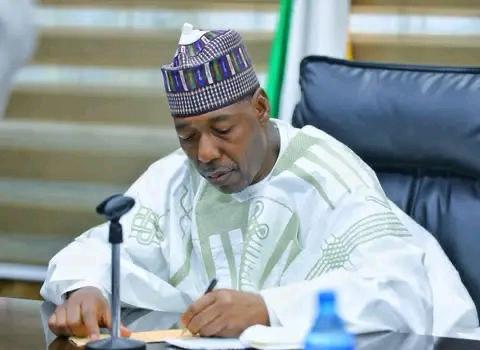
Zulum Appoints Engr Peter Samuel as General Manager BOSAMA
By: Our Reporter
Borno State Governor, Professor Babagana Umara Zulum, has approved the appointment of Engr Peter Samuel, MNSE, MNIAE, as the General Manager of Borno State Agricultural Mechanization Authority (BOSAMA).
In a statement by the Special Adviser to the Governor on Media, Dauda Iliya, the appointment was based on Engr Samuel’s outstanding professional competence, proven track record, and experience in agricultural engineering and mechanization.
The statement noted that Engr Samuel possesses the requisite qualifications, technical expertise and leadership capacity required to reposition BOSAMA in line with Governor Zulum’s agricultural transformation agenda.
The newly appointed General Manager is an Agricultural Engineer with academic, professional, administrative, and practical experience in agricultural mechanization, farm power and machinery, irrigation engineering, and agricultural infrastructure development.
He holds a Master of Engineering (M.Eng.) in Farm Power and Machinery from Joseph Sarwuan Tarka University, Makurdi (formerly the Federal University of Agriculture, Makurdi), a Postgraduate Diploma in Farm Management and Production Economics from Nasarawa State University, and a Bachelor of Engineering (B.Eng.) in Agricultural and Environmental Resources Engineering from the University of Maiduguri.
Engr Samuel has distinguished himself through years of meritorious service in teaching, research, agricultural engineering practice, and project implementation. He currently serves as a Lecturer in Farm Power and Machinery at Ramat Polytechnic, Maiduguri.
Over the years, he has held several strategic leadership positions, including General Manager of a commercial agricultural enterprise, Project Coordinator, Programme Coordinator, and Consultant on numerous agricultural development interventions implemented by reputable national and international organisations.
He is a member of the Nigerian Society of Engineers (NSE) and the Nigerian Institution of Agricultural Engineers (NIAE).
Governor Babagana Zulum congratulated the new General Manager on his appointment and urged him to deploy his wealth of knowledge, technical expertise, and experience in agricultural mechanization to strengthen the operations of BOSAMA
Zulum Appoints Engr Peter Samuel as General Manager BOSAMA
Troops Arrest Suspected Military Impostor in Katsina
By Zagazola Makama
Troops of 17 Brigade have arrested a suspected military impostor during a fighting patrol in Malumfashi Local Government Area.
Security sources told Zagazola Makama that the suspect was apprehended at about 1:30 p.m. on July 4 by troops deployed at the Forward Operating Base (FOB) Malumfashi while conducting routine patrols within Malumfashi town.

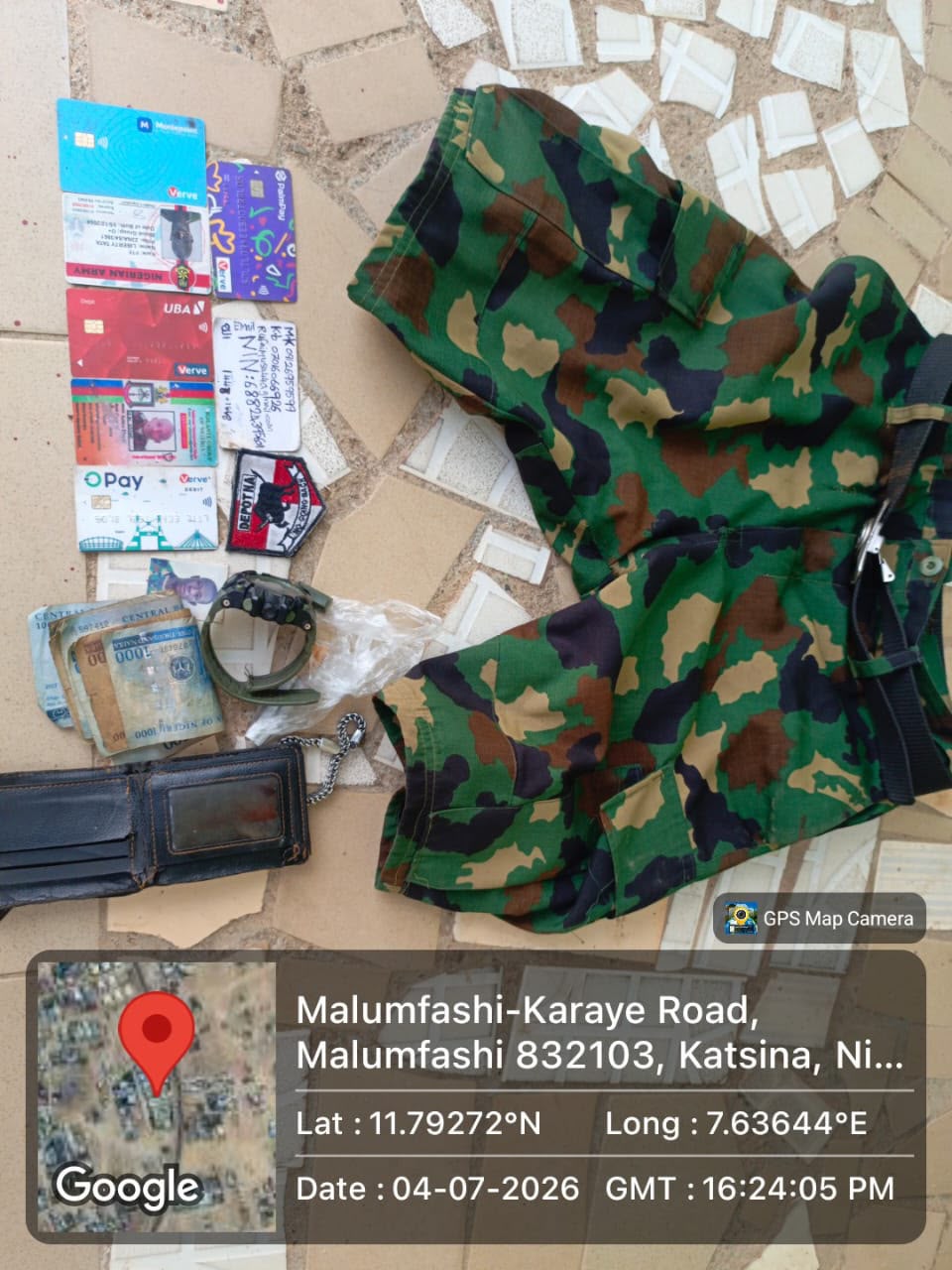
According to the sources, the suspect was intercepted while wearing a woodland camouflage three-quarter short, raising suspicion among the troops.
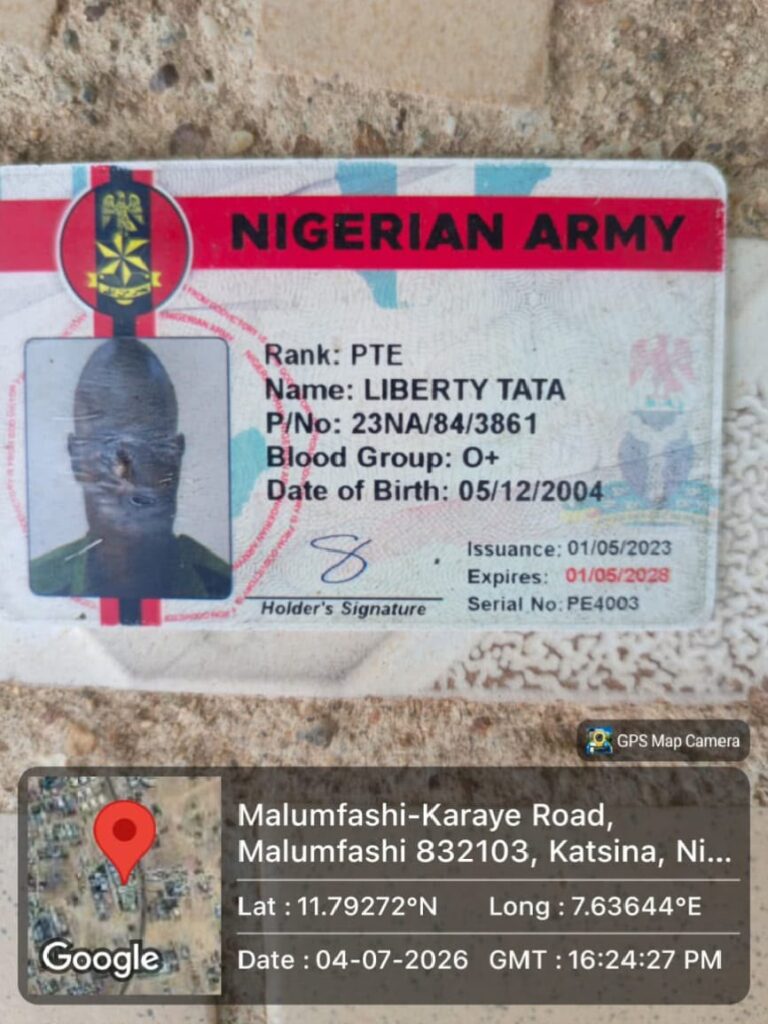
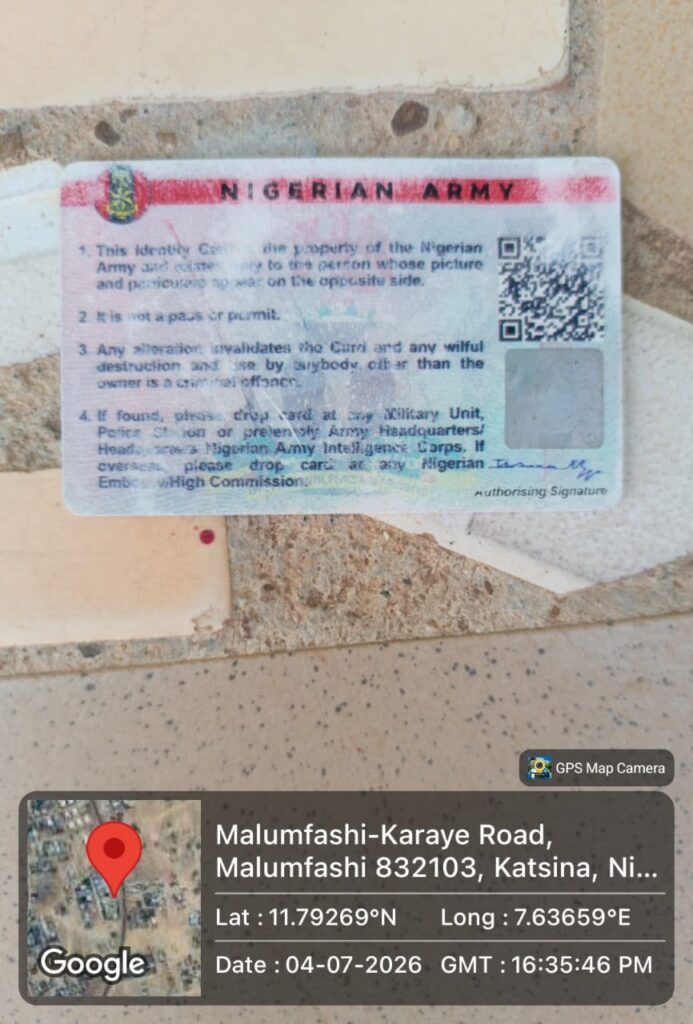
A search conducted on the suspect led to the recovery of a fake Nigerian Army identity card, four Automated Teller Machine (ATM) cards, one woodland camouflage three-quarter short, a wristwatch and the sum of ₦17,000.
The suspect and the recovered exhibits are currently in military custody pending further investigation.
Military sources said the arrest forms part of ongoing efforts to curb impersonation of security personnel and other criminal activities within the area.
Troops Arrest Suspected Military Impostor in Katsina
Troops Recover 50 Rustled Cattle, Repel Suspected Rustlers in Kaduna
By Zagazola Makama
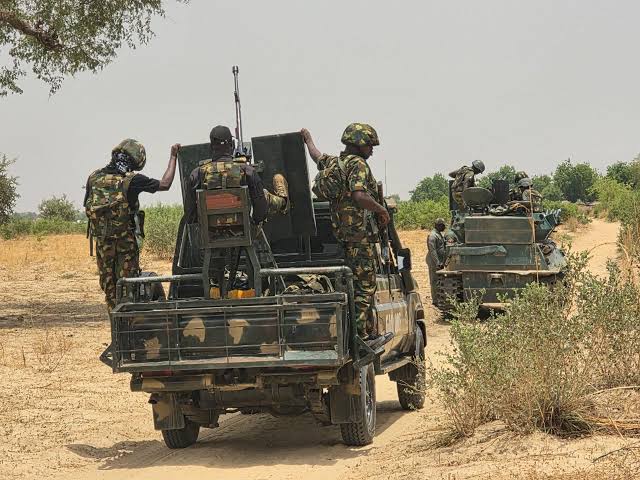
Troops deployed at the Forward Operating Base (FOB) Kankomi have recovered 50 rustled cattle after repelling suspected cattle rustlers during an ambush operation in Chikun Local Government Area.
Security sources told Zagazola Makama that the troops responded to a distress call at about 9:55 a.m. on July 4 over the activities of suspected rustlers at Ungwan Gontu community.
According to the sources, the troops swiftly laid an ambush and made contact with the fleeing suspects, forcing them to abandon the stolen livestock and escape into the surrounding area.
During the operation, the troops recovered 50 rustled cattle, which were subsequently identified and handed over to their rightful owner.
Military sources said efforts are ongoing to track down the fleeing suspects as security operations continue to combat cattle rustling and other criminal activities across Kaduna State.
Troops Recover 50 Rustled Cattle, Repel Suspected Rustlers in Kaduna

Zulum Appoints Engr Peter Samuel as General Manager BOSAMA

DSS Frees Cardiac Surgeon Martin Aghaji on Bail Over Alleged Economic Crime

Troops Arrest Suspected Military Impostor in Katsina

Roger Federer’s Shock as DNA Results Reveal Myla and Charlene Are Not His Biological Children

THE PLIGHT OF FARIDA

FAILED COUP IN BURKINA FASO: HOW TRAORÉ NARROWLY ESCAPED ASSASSINATION PLOT AMID FOREIGN INTERFERENCE CLAIMS
-
 News2 years ago
Roger Federer’s Shock as DNA Results Reveal Myla and Charlene Are Not His Biological Children
-
Opinions4 years ago
THE PLIGHT OF FARIDA
-
 News1 year ago
FAILED COUP IN BURKINA FASO: HOW TRAORÉ NARROWLY ESCAPED ASSASSINATION PLOT AMID FOREIGN INTERFERENCE CLAIMS
-

 News2 years ago
EYN: Rev. Billi, Distortion of History, and The Living Tamarind Tree
-
 Opinions5 years ago
POLICE CHARGE ROOMS, A MINTING PRESS
-

 ACADEMICS2 years ago
A History of Biu” (2015) and The Lingering Bura-Pabir Question (1)
-

 Columns2 years ago
Army University Biu: There is certain interest, but certainly not from Borno.
-

 Politics1 year ago
2027: Why Hon. Midala Balami Must Go, as Youths in Hawul and Asikira/Uba Federal Constituency Reject ₦500,000 as Sallah Gift
