
News
UN, FG Reiterate Importance of Data in Decision Making


UN, FG Reiterate Importance of Data in Decision Making
By: Michael Mike
The need to prioritise data visualization in decision making processes has been reiterated by the United Nations (UN), Federal Government and the Nigeria Bureau of Statistics (NBS).
The organisations expressed the imperative of data in decision making process at the official launch of “Nigeria Visualised Project” on Monday night in Abuja.
The programme was put together by the United Nations Development Programme (UNDP), Federal Ministry of Budget and Economic Planning, and the NBS.
Speaking at the Launch, the UN Resident and Humanitarian Coordinator, Mr Mathias Schmale, noted the project has become important towards full implementation of government policies and programmes in Nigeria.
Schmale, who was represented by Development Coordination Officer/Economist of UN, Nonso Obikili, said: “To meet the UN 2030 agenda for sustainable development requires that we continue to track key indicator of progress that we need around the world.
“Where we have fallen and need acceleration. The UN through instrument of SDG framework is committed to supporting government, in reporting trajectory on SDGs.”
He added that: “Too often data gets lost on the shelves and on countless basis that is why this platform is important, to put human face and help relate with data.“
The Minister of Budget and Economic Planning, Sen. Abubakar Bagudu on his part, said the project would no doubt give more access and information to Nigerians.
He said: “Sometimes, we present them in a way people know, with different opportunities and development challenges and sometimes mutual suspicion.
“Visualisation can give you full view about your country or developmental challenges, cultural opportunities in the landscape.
“When we are dealing with issues, particularly climate change, many people cannot relate to the challenges of others, because they do not know.”
He noted that: @This project will be important tool of knowing Nigeria better both by Nigerians and non Nigerians.”
The Minister of Youth Development, Dr. Jamila Ibrahim, who also spoke, commended UNDP and NBS for commitment to harness data and advance visualisation techniques.
She said the project with more than 40 visualisations, would transform the space and provide for data need in the country, and change the narrative that has been there for ages.
She said: “The Nigeria visualized web-platform is a beacon of progress offering rich visual story about our nation and its diverse population.
“The area of focus being geography, climate, economy, demography among other things underscores commitment to tackle socioeconomic, culture and ecological dynamics.
“The objective of democratizing access to data aligns seamlessly with our shared vision for informed decision-making and sustainable progress.”
The Statistician General/CEO of NBS, Mr Semiu Adeniran on his part, said collaboration with UNDP and the ministry marked new turn in collective data gathering.
He said: “It resonates our present drive to enhance data reporting and visualization capacity, for better understanding and assimilation of data among our users.”
Meanwhile, the UNDP Resident Representative, Mr Mohamed Yahya, said the initiative was designed to boost understanding on data visualization.
He said: “Having data visualised in an accessible manner allows everybody understand what they are seeing and to make decisions based on them.”
UN, FG Reiterate Importance of Data in Decision Making


Military
Mutiny: Presidential Guard Tightens Security Around Niger Presidency Amid Reports of Military Protest
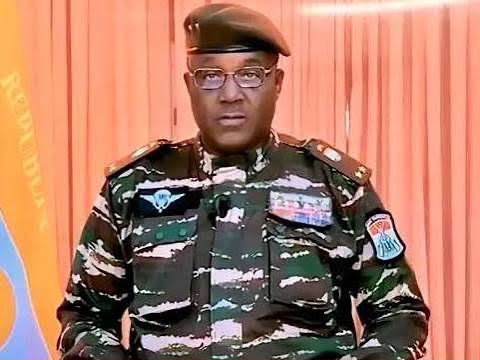
Mutiny: Presidential Guard Tightens Security Around Niger Presidency Amid Reports of Military Protest
By Zagazola Makama
Security was significantly reinforced around Niger’s Presidential Palace in Niamey following reports of unrest involving elements of the country’s armed forces, security sources told Zagazola Makama.
According to multiple security sources, the heightened deployment of the Presidential Guard, supported by armoured vehicles around the Presidential Palace on the night of July 3 and into July 4, followed what was described as a limited protest by personnel of an armoured unit within the Niger Armed Forces (FAN).
The sources said some soldiers reportedly declined deployment to frontline positions in northern Tillabéri Region, particularly around Inatès and Chinagodrar, citing inadequate heavy equipment and insufficient operational resources to confront the growing security threats in the area.
The protest was described by one source as a “small mutiny,” although there has been no official confirmation from the Nigerien authorities.
Security sources said the development triggered concern within the country’s leadership, prompting the reinforcement of security around the Presidential Palace and temporary restrictions on movement in the surrounding area as a precautionary measure.
The Tillabéri Region remains one of Niger’s most volatile security zones, with recurrent attacks by armed extremist groups, including factions linked to the so-called Islamic State in the Greater Sahara (ISGS).
As of the time of filing this report, the Nigerien government and military authorities had not issued any official statement regarding the reported protest or the increased security presence around the Presidency.
The situation remains under close observation.
Mutiny: Presidential Guard Tightens Security Around Niger Presidency Amid Reports of Military Protest
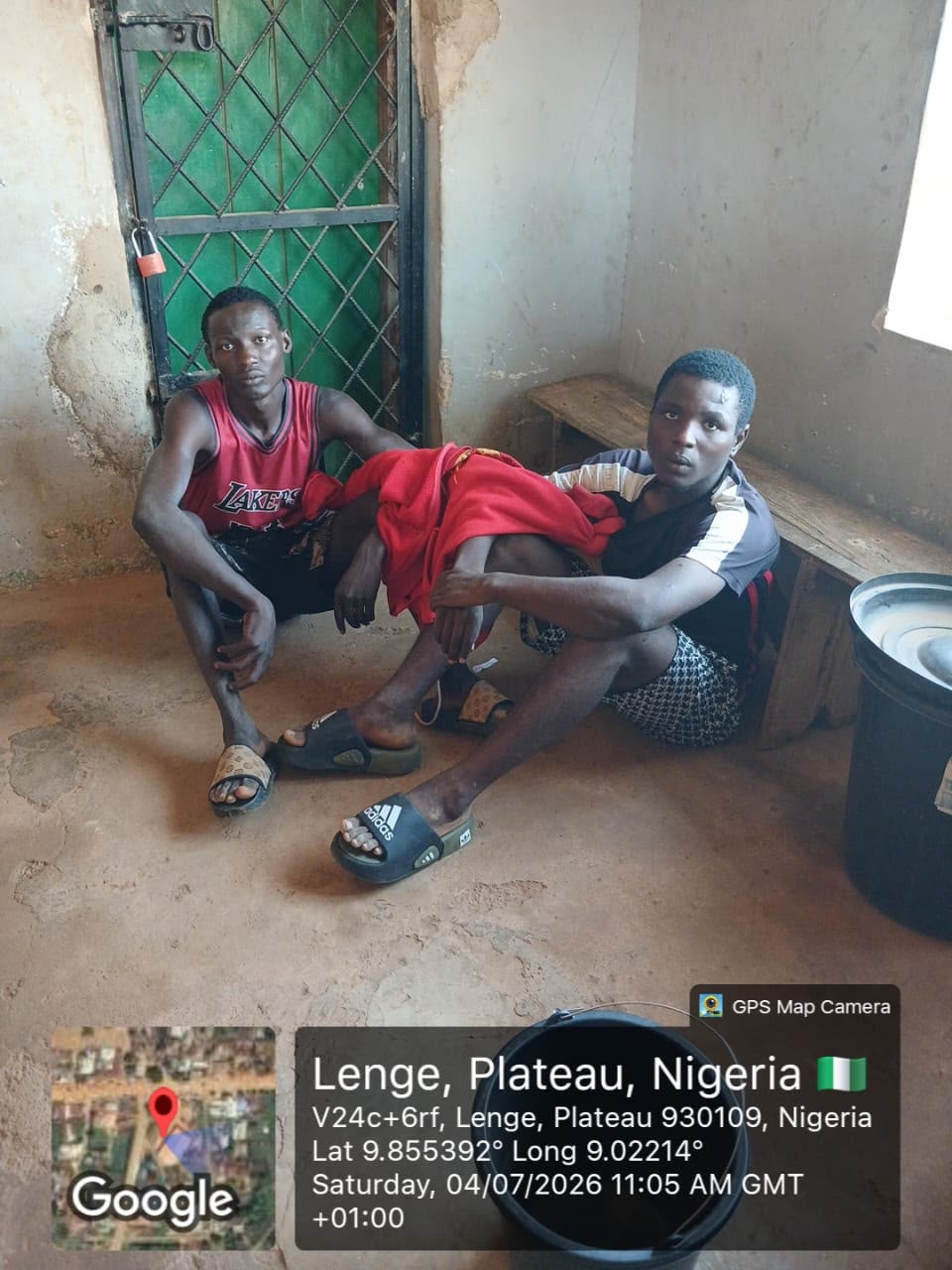
Two suspected criminals arrested during patrol in Plateau
By: Zagazola Makama
Troops of Sector 1 under Operation Enduring Peace have arrested two suspected criminals during a routine patrol in Jos East Local Government Area of Plateau.
Security sources disclosed that the suspects, identified as Azi Ezekiel, 21, and Ajiji Emmanuel, 19, were apprehended at about 10:30 a.m. on Saturday along the road leading to Forbur Village.
The sources said the suspects were intercepted by troops of Sector 1, Sub-Sector 12, while conducting a routine patrol in the area.
According to the sources, the two suspects have been handed over to the Keystone Police Station in Forbur for further investigation and possible prosecution.
The arrest forms part of ongoing security operations aimed at combating criminal activities and enhancing safety across Plateau State.
Two suspected criminals arrested during patrol in Plateau
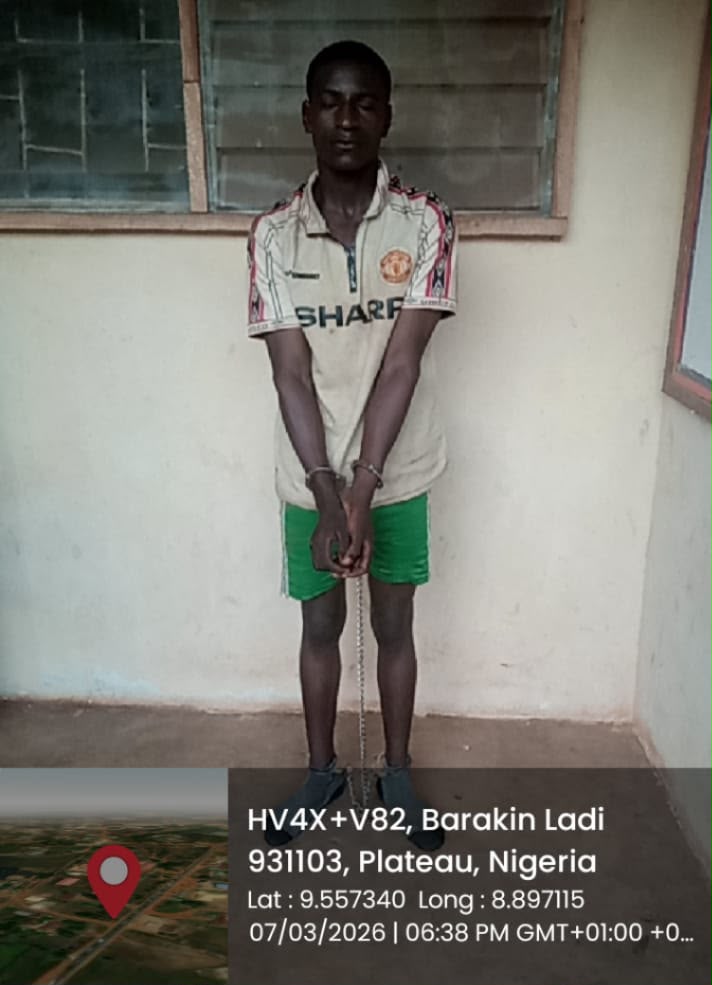
Troops arrest suspected kidnapper in Plateau community
By: Zagazola Makama
Troops of Sector 4 of Operation Enduring Peace have arrested a suspected kidnapper during a security operation in Barkin Ladi Local Government Area of Plateau.
Security sources said the suspect, identified as Mohamdu Surajo, 29, was arrested at about 6:45 p.m. on Friday at Sabon Layi Village following sustained security operations in the area.
The sources disclosed that the suspect is currently in military custody and is undergoing preliminary interrogation to aid ongoing investigations.
They added that the arrest is part of continued efforts by security forces to dismantle criminal networks and enhance security across Plateau State.
Troops arrest suspected kidnapper in Plateau community

President Tinubu Flags Off the Construction of Dikwa–Gamboru Ngala, Bama–Banki International Road Projects

Mutiny: Presidential Guard Tightens Security Around Niger Presidency Amid Reports of Military Protest

Troops Arrest Two Suspected Berom Militia Linked to NIPSS Attack as Security Sources Say Investigation Supports Earlier Leads

Roger Federer’s Shock as DNA Results Reveal Myla and Charlene Are Not His Biological Children

THE PLIGHT OF FARIDA

FAILED COUP IN BURKINA FASO: HOW TRAORÉ NARROWLY ESCAPED ASSASSINATION PLOT AMID FOREIGN INTERFERENCE CLAIMS
-
 News2 years ago
Roger Federer’s Shock as DNA Results Reveal Myla and Charlene Are Not His Biological Children
-
Opinions4 years ago
THE PLIGHT OF FARIDA
-
 News1 year ago
FAILED COUP IN BURKINA FASO: HOW TRAORÉ NARROWLY ESCAPED ASSASSINATION PLOT AMID FOREIGN INTERFERENCE CLAIMS
-

 News2 years ago
EYN: Rev. Billi, Distortion of History, and The Living Tamarind Tree
-
 Opinions5 years ago
POLICE CHARGE ROOMS, A MINTING PRESS
-

 ACADEMICS2 years ago
A History of Biu” (2015) and The Lingering Bura-Pabir Question (1)
-

 Columns2 years ago
Army University Biu: There is certain interest, but certainly not from Borno.
-

 Politics1 year ago
2027: Why Hon. Midala Balami Must Go, as Youths in Hawul and Asikira/Uba Federal Constituency Reject ₦500,000 as Sallah Gift
