
News
Collective Efforts of All is Needed to Stop Nigeria’s Economic Hiccups- Institute

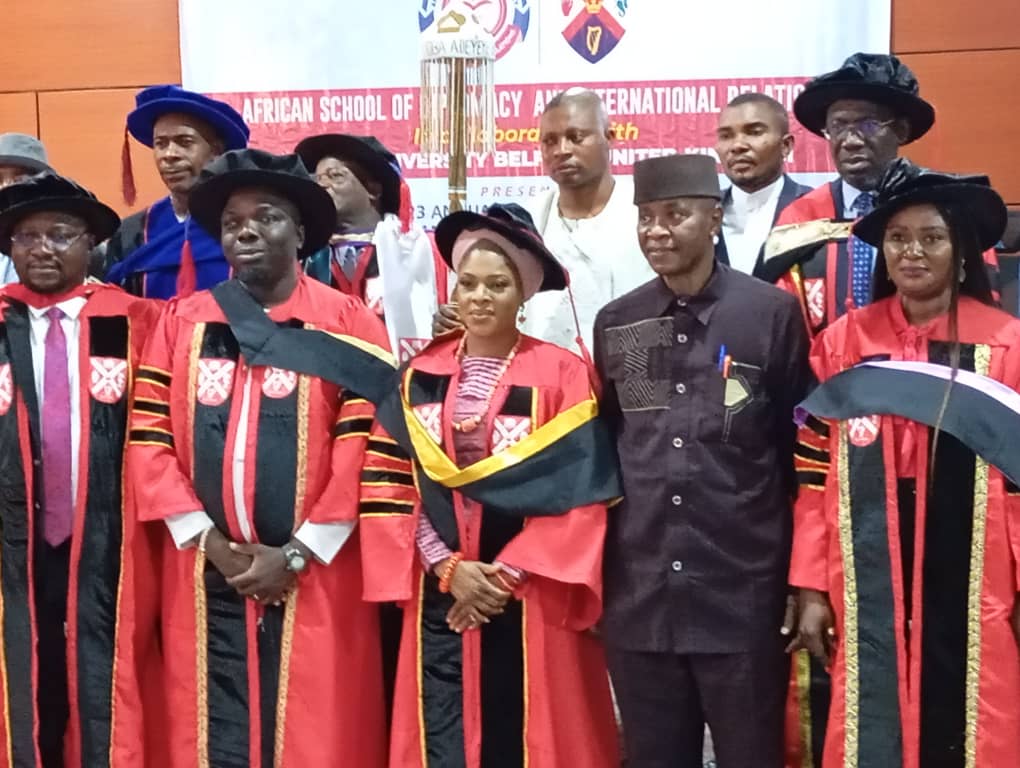
Collective Efforts of All is Needed to Stop Nigeria’s Economic Hiccups- Institute
By: Michael Mike
The African School of Diplomacy and International Relations (ASDIR) has said collective efforts of all is needed to achieve meaningful economic growth in Nigeria, insisting that without this Nigeria’s economy would continue to witness hiccups.
The Vice-Chairman/CEO of ASDIR, Dr Tunji Asaolu, gave the advice at the 2023 annual public lecture series, induction and conferment of honorary doctorate degree ceremony organised in Abuja by the school.
Asaolu, who is also the Deputy Secretary-General, African Affairs, International Society of Diplomats (ISD), said the call has become imperative in order to ensure sustainable progress in the country.
The event, which marked the third edition, had as its theme: “The Political Economy of Nation Building: The World’s Unfinished Business”.
Asaolu said: “To support government efforts to achieve its purpose of representing the people, is the reason we looked at perceived gaps in terms of economic crisis to chart a way forward.
“Critically, we looked at some ways we can be of help in terms of recommending solutions to perceived economic challenges. Then we came up with a topic centered on the political economy of nation building.
“We considered this topic as unfinished business because we will continue to be experiencing economic challenges if all hands are not on deck to tackle issues bordering inequality, socioeconomic crisis, poverty and insecurity.”
He explained that the honourary degrees and fellowship awards were carefully conferred on specific persons based on proven track record of excellence in the society.
He mentioned that the awards, which cut across various fields of endeavour, were conferred through collaboration with Queens University Belfast, United Kingdom, that has the right of conferment.
In his remarks, Prof. Jonathan Aremu, Chairman, Governing Board of ASDIR, said the programme is apt, because it will help to boost the capacity of citizens in the area of diplomacy.
He said: “This programme has become necessary for diplomats like those inducted today, to enable them develop the know-how about best practices and to collaborate with the Ministry of Foreign Affairs on diplomacy.
“What the school is doing is to position the graduands to contribute meaningfully to government efforts centered on diplomatic activities and ensure Nigeria performs excellently, among the committee of developed nations.
“It is mandatory for countries to abide by ratified international relations, therefore, this ASDIR initiative is to enable Nigerians imbibe international best practices and concepts of diplomacy.”
The keynote speaker Prof. Mkpa Agu Mkpa, former Vice-Chancellor, Abia State University, Uturu, described knowledge sharing about diplomacy as apt, saying it will enable people tackle challenges collectively.
According to him, the society that has a sound diplomacy inculcated into its leadership will not experience many conflicts.
“Wherever there is a breakdown of law and order, whenever there is conflict, the first thing people consider is the breakdown of diplomacy.
“So what ASDIR is doing for Nigeria actually is a very key role in bringing peace to this country.
“All over the world, diplomacy is rated as the number one tool to advocate peace wherever there is conflict,” Mkpa said.
High point of the event, was the conferment of 10 honorary fellowship, award of 10 honorary doctorate degrees to distinguished personalities and induction of 40 persons into the ASDIR.
The event was chaired by Sen. Opeyemi Bamidele, Majority Leader of the 10th Senate, represented by Dr Sadiyat Adepoju.
It attracted dignitaries including Rev. Sam Oye, Founder/Lead Pastor of the Transformation Church and Dr Temitope Enitan-Ogunwusi, Wife of the Ooni of Ife, as awardees among others.
Collective Efforts of All is Needed to Stop Nigeria’s Economic Hiccups- Institute


Troops Arrest Suspected Military Impostor in Katsina
By Zagazola Makama
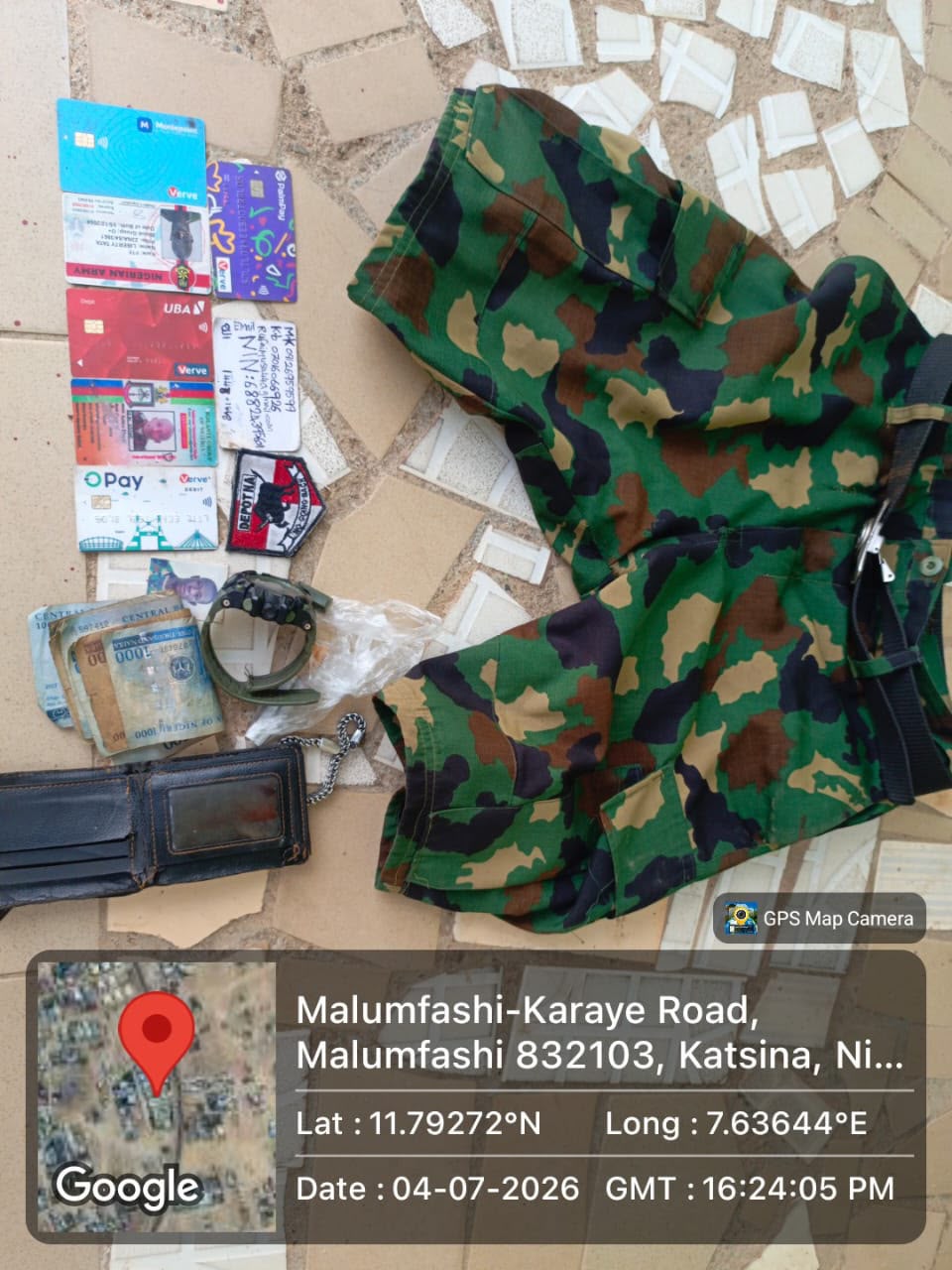
Troops of 17 Brigade have arrested a suspected military impostor during a fighting patrol in Malumfashi Local Government Area.
Security sources told Zagazola Makama that the suspect was apprehended at about 1:30 p.m. on July 4 by troops deployed at the Forward Operating Base (FOB) Malumfashi while conducting routine patrols within Malumfashi town.

According to the sources, the suspect was intercepted while wearing a woodland camouflage three-quarter short, raising suspicion among the troops.
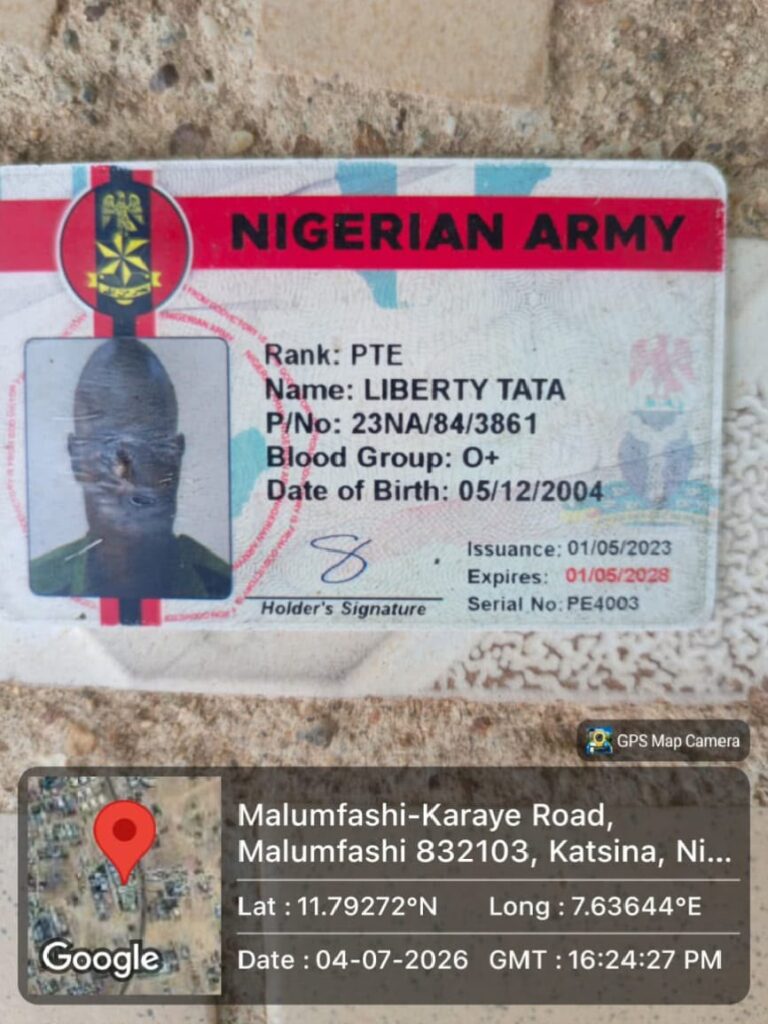
A search conducted on the suspect led to the recovery of a fake Nigerian Army identity card, four Automated Teller Machine (ATM) cards, one woodland camouflage three-quarter short, a wristwatch and the sum of ₦17,000.
The suspect and the recovered exhibits are currently in military custody pending further investigation.
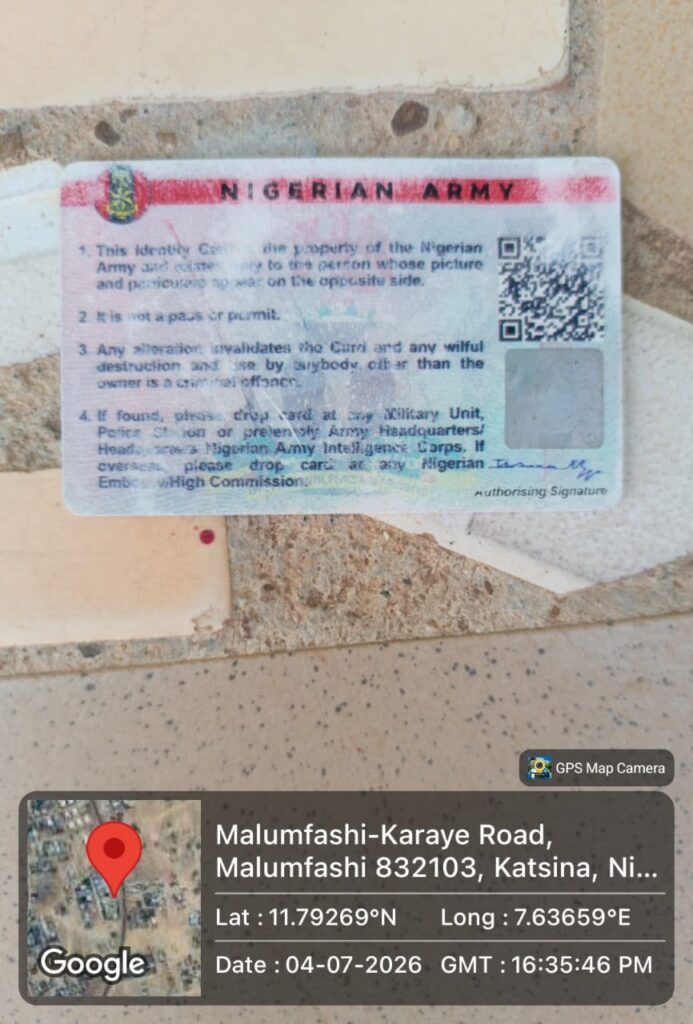
Military sources said the arrest forms part of ongoing efforts to curb impersonation of security personnel and other criminal activities within the area.
Troops Arrest Suspected Military Impostor in Katsina
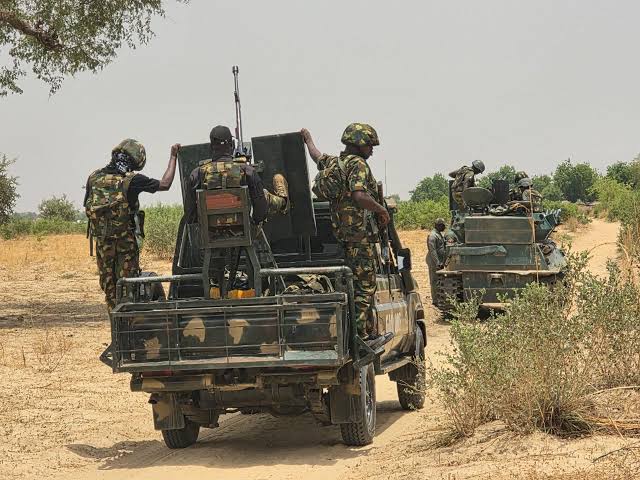
Troops Recover 50 Rustled Cattle, Repel Suspected Rustlers in Kaduna
By Zagazola Makama
Troops deployed at the Forward Operating Base (FOB) Kankomi have recovered 50 rustled cattle after repelling suspected cattle rustlers during an ambush operation in Chikun Local Government Area.
Security sources told Zagazola Makama that the troops responded to a distress call at about 9:55 a.m. on July 4 over the activities of suspected rustlers at Ungwan Gontu community.
According to the sources, the troops swiftly laid an ambush and made contact with the fleeing suspects, forcing them to abandon the stolen livestock and escape into the surrounding area.
During the operation, the troops recovered 50 rustled cattle, which were subsequently identified and handed over to their rightful owner.
Military sources said efforts are ongoing to track down the fleeing suspects as security operations continue to combat cattle rustling and other criminal activities across Kaduna State.
Troops Recover 50 Rustled Cattle, Repel Suspected Rustlers in Kaduna
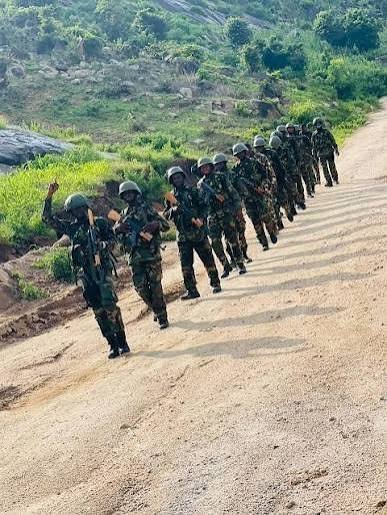
Troops Arrest Suspected Terrorist in Kogi, Suspect Confesses to Group Membership
By Zagazola Makama
Troops of 12 Brigade, in collaboration with Office of the National Security Adviser (ONSA) Hybrid Forces, have arrested a suspected terrorist during an operation in Lokoja Local Government Area.
Security sources told Zagazola Makama that the troops responded at about 1:00 p.m. on July 4 to reports of a confrontation between local residents and a suspected terrorist at a Ruga settlement behind Obajana community.
According to the sources, the troops swiftly intervened and arrested one suspect at the scene.
During preliminary interrogation, the suspect reportedly confessed to being a member of a terrorist group led by an individual identified as Haruna, which allegedly operates within the Okene general area.
The suspect is currently in military custody and is undergoing further investigation to establish the extent of his involvement and identify other members of the group.
Military sources said the arrest forms part of ongoing security operations aimed at dismantling terrorist and criminal networks across Kogi State.
Troops Arrest Suspected Terrorist in Kogi, Suspect Confesses to Group Membership

Troops Arrest Suspected Military Impostor in Katsina

Troops Recover 50 Rustled Cattle, Repel Suspected Rustlers in Kaduna

Troops Arrest Suspected Terrorist in Kogi, Suspect Confesses to Group Membership

Roger Federer’s Shock as DNA Results Reveal Myla and Charlene Are Not His Biological Children

THE PLIGHT OF FARIDA

FAILED COUP IN BURKINA FASO: HOW TRAORÉ NARROWLY ESCAPED ASSASSINATION PLOT AMID FOREIGN INTERFERENCE CLAIMS
-
 News2 years ago
Roger Federer’s Shock as DNA Results Reveal Myla and Charlene Are Not His Biological Children
-
Opinions4 years ago
THE PLIGHT OF FARIDA
-
 News1 year ago
FAILED COUP IN BURKINA FASO: HOW TRAORÉ NARROWLY ESCAPED ASSASSINATION PLOT AMID FOREIGN INTERFERENCE CLAIMS
-

 News2 years ago
EYN: Rev. Billi, Distortion of History, and The Living Tamarind Tree
-
 Opinions5 years ago
POLICE CHARGE ROOMS, A MINTING PRESS
-

 ACADEMICS2 years ago
A History of Biu” (2015) and The Lingering Bura-Pabir Question (1)
-

 Columns2 years ago
Army University Biu: There is certain interest, but certainly not from Borno.
-

 Politics1 year ago
2027: Why Hon. Midala Balami Must Go, as Youths in Hawul and Asikira/Uba Federal Constituency Reject ₦500,000 as Sallah Gift
