
News
Fresh squabbles rock First Bank’s board, threaten recapitilisation

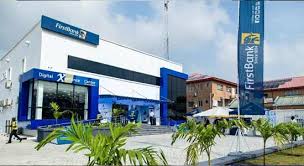
Fresh squabbles rock First Bank’s board, threaten recapitilisation
By: Michael Mike
A fresh round of squabbles is currently rocking the board of First Bank of Nigeria, a development shareholders fear poses major threat to the bid by the first generation financial institution to strengthen its capital base in line with the recent directive of the Central Bank of Nigeria to all banks operating in the country to recapitalize.
The current crisis rocking the bank stems from protests by shareholders who are kicking against the bank’s internal governance and shareholding structure, as a result of which some of them have taken their grievances to the court. One of such is the case of Olusegun Samuel Onagoruwa v. FBN Holdings Plc in Suit No. FHC/L/CP/1271/2022), which is challenging the capacity of the Board of Directors of FBN to appoint new persons to fill vacant slots.
Onagoruwa in his suit is seeking “an order setting aside, nullifying, annulling and/or quashing the appointments and approvals of Mr. Olusola Adeeyo, Mr. Viswanathan Shankar, Mrs. Remilekun Adetola, Mr. Anil Dua and Mrs. Fatima Ibrahim as Non-Executive Directors of First Bank of Nigeria Limited made on the 20th day of March, 2024, by FBN Holdings Plc during the pendency of this action and in defiance of the subsisting order of this Honourable Court made on the 15th day of July, 2022.”
The motion also seeks an order restraining the above-named non-executive directors from acting or taking any steps as non-executive directors of the bank. The current court case follows similar four other cases pending at the Federal High Court in Lagos and Abuja challenging the internal governance of FBN Limited, in addition to existing court injunctions restraining the bank from holding the last two Annual General Meetings which the bank went ahead to hold.
According to one of the workers union leaders in the bank, “as the tenure of the imposed directors is expiring, the same illegitimate Management of FBN, whose legitimacy is being challenged, has gone further, during the pendency of the cases challenging their competence to lead the bank, to arbitrarily appoint further five independent directors. Where they derived the power from remains a mystery.
“Mismanagement and manipulation of shares are also being alleged in some of the cases pending against the bank while the legality of the AGMs and the imposed board of directors remain a challenge.” The union leader expressed the fear that the spate of litigations and board squabbles currently rocking the bank may bring a quick collapse of the over 100-year- old bank.
Also speaking on the development, a shareholder, Mr. Olalekan Babalola, said “it is imperative for the authorities to find a solution to this lingering crisis as Nigeria cannot afford another major bank’s collapse at this critical time when President Bola Tinubu is working hard to revamp the nation’s crumbling economy. This is because the current crisis will definitely impede the bank from getting the new Central Bank’s capitilisation threshold.”
He called for urgent resolution of all court cases in the overall interest of depositors, shareholders and other stakeholders of the bank before further damage is done to the oldest Nigerian bank.
Fresh squabbles rock First Bank’s board, threaten recapitilisation


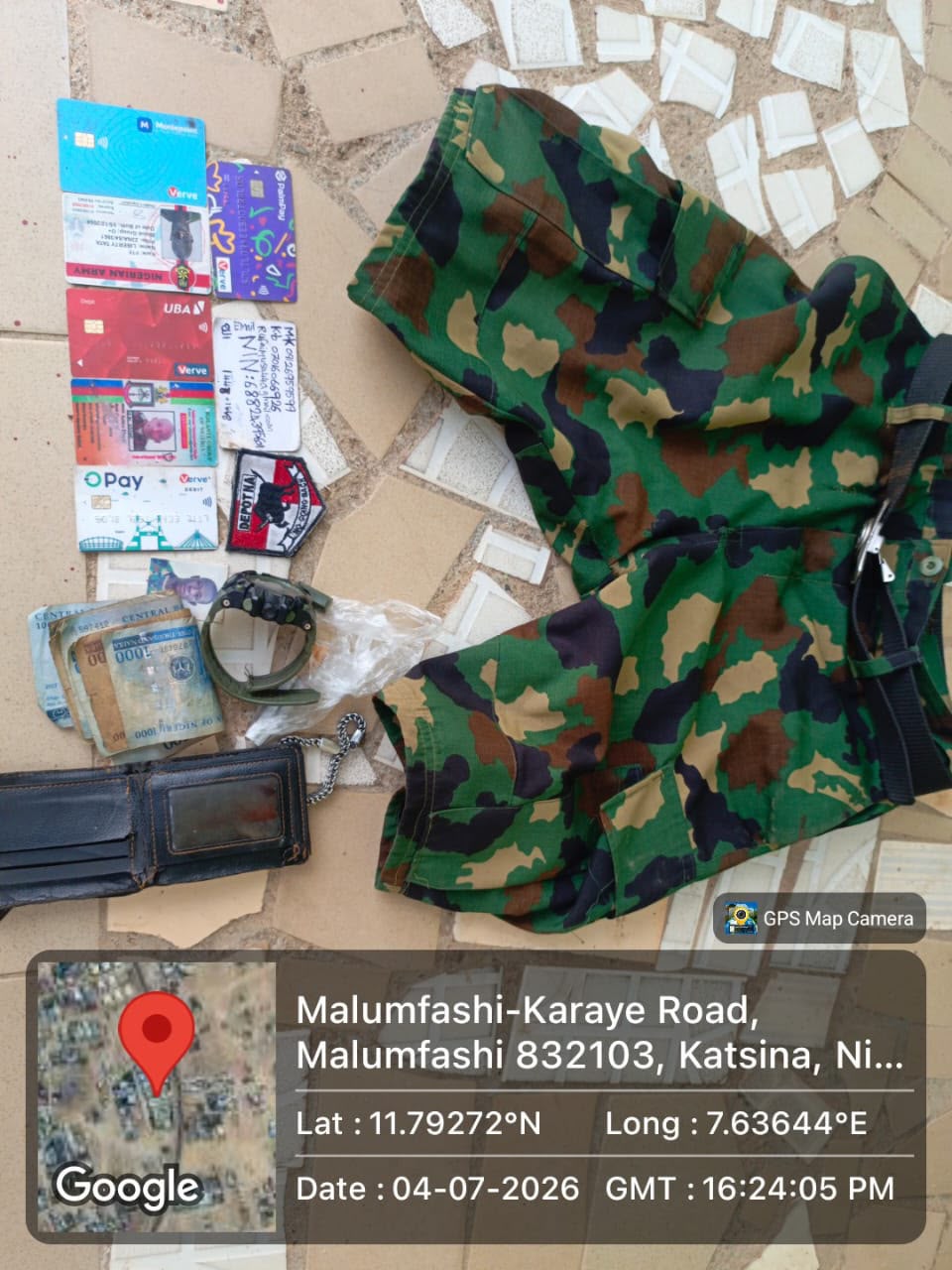
Troops Arrest Suspected Military Impostor in Katsina
By Zagazola Makama
Troops of 17 Brigade have arrested a suspected military impostor during a fighting patrol in Malumfashi Local Government Area.
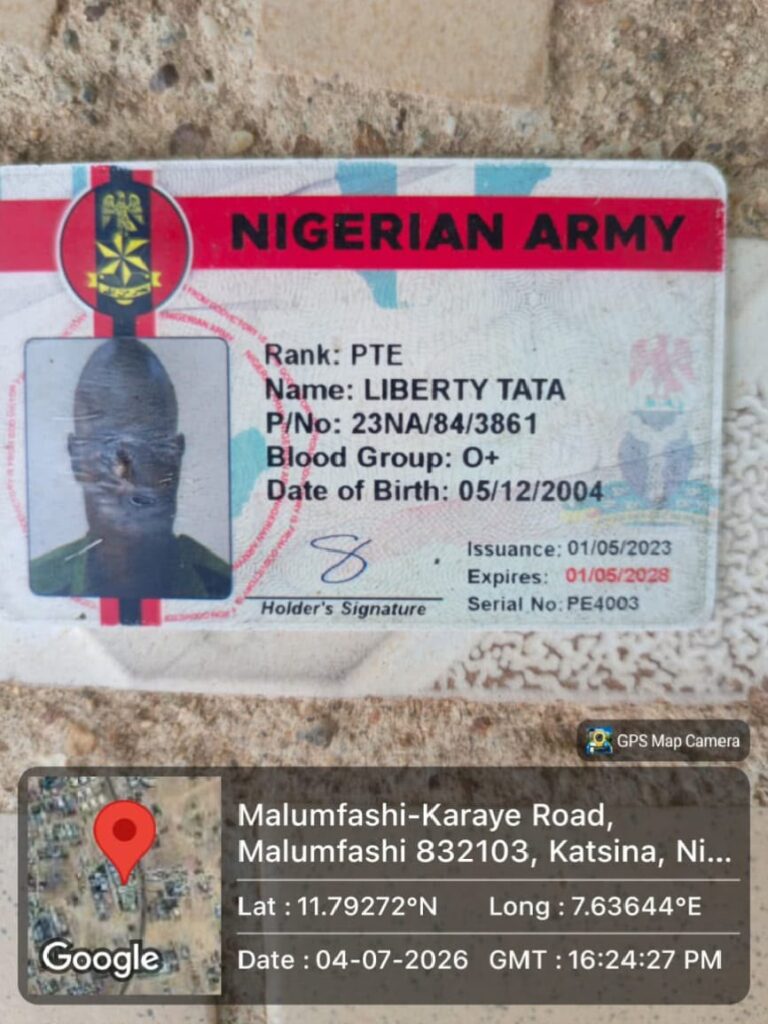
Security sources told Zagazola Makama that the suspect was apprehended at about 1:30 p.m. on July 4 by troops deployed at the Forward Operating Base (FOB) Malumfashi while conducting routine patrols within Malumfashi town.
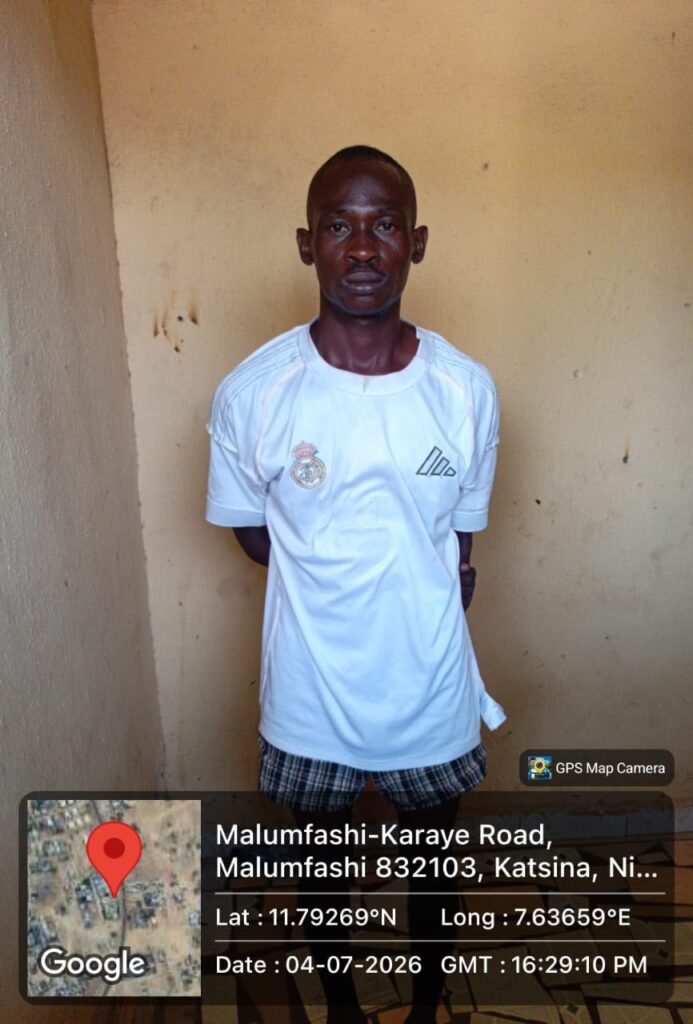
According to the sources, the suspect was intercepted while wearing a woodland camouflage three-quarter short, raising suspicion among the troops.
A search conducted on the suspect led to the recovery of a fake Nigerian Army identity card, four Automated Teller Machine (ATM) cards, one woodland camouflage three-quarter short, a wristwatch and the sum of ₦17,000.
The suspect and the recovered exhibits are currently in military custody pending further investigation.
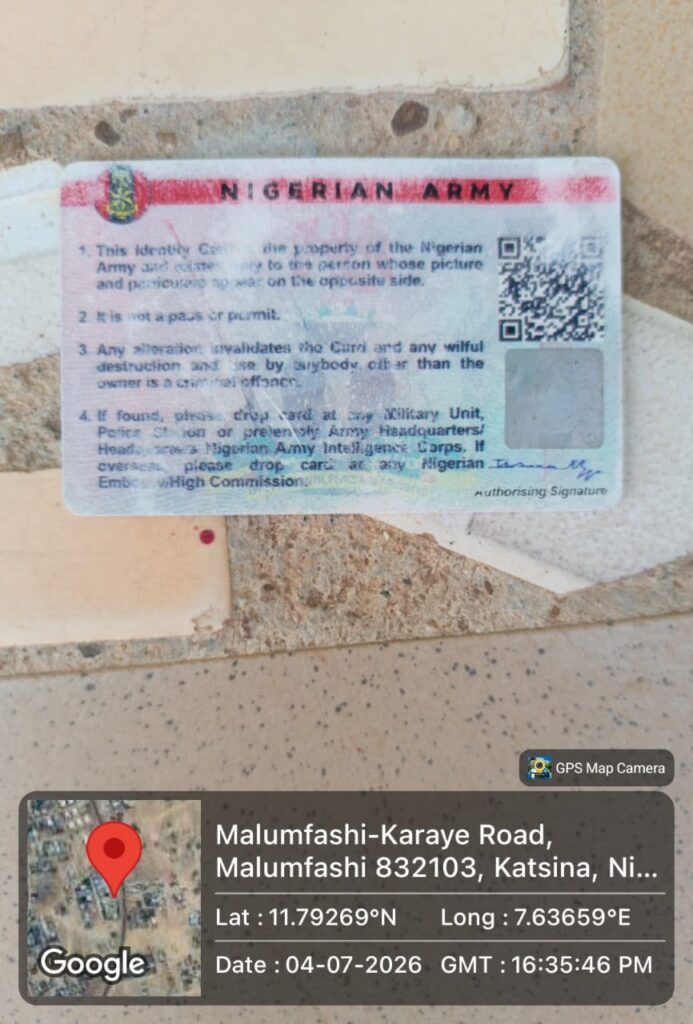
Military sources said the arrest forms part of ongoing efforts to curb impersonation of security personnel and other criminal activities within the area.
Troops Arrest Suspected Military Impostor in Katsina
Troops Recover 50 Rustled Cattle, Repel Suspected Rustlers in Kaduna
By Zagazola Makama
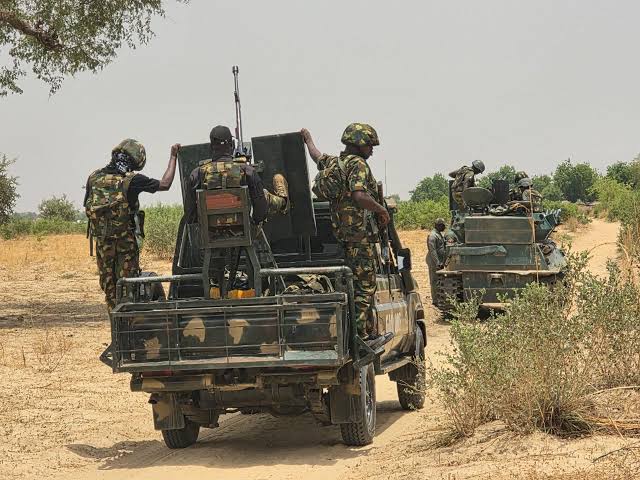
Troops deployed at the Forward Operating Base (FOB) Kankomi have recovered 50 rustled cattle after repelling suspected cattle rustlers during an ambush operation in Chikun Local Government Area.
Security sources told Zagazola Makama that the troops responded to a distress call at about 9:55 a.m. on July 4 over the activities of suspected rustlers at Ungwan Gontu community.
According to the sources, the troops swiftly laid an ambush and made contact with the fleeing suspects, forcing them to abandon the stolen livestock and escape into the surrounding area.
During the operation, the troops recovered 50 rustled cattle, which were subsequently identified and handed over to their rightful owner.
Military sources said efforts are ongoing to track down the fleeing suspects as security operations continue to combat cattle rustling and other criminal activities across Kaduna State.
Troops Recover 50 Rustled Cattle, Repel Suspected Rustlers in Kaduna
Troops Arrest Suspected Terrorist in Kogi, Suspect Confesses to Group Membership
By Zagazola Makama
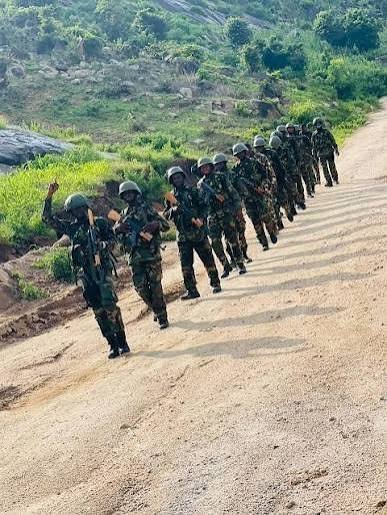
Troops of 12 Brigade, in collaboration with Office of the National Security Adviser (ONSA) Hybrid Forces, have arrested a suspected terrorist during an operation in Lokoja Local Government Area.
Security sources told Zagazola Makama that the troops responded at about 1:00 p.m. on July 4 to reports of a confrontation between local residents and a suspected terrorist at a Ruga settlement behind Obajana community.
According to the sources, the troops swiftly intervened and arrested one suspect at the scene.
During preliminary interrogation, the suspect reportedly confessed to being a member of a terrorist group led by an individual identified as Haruna, which allegedly operates within the Okene general area.
The suspect is currently in military custody and is undergoing further investigation to establish the extent of his involvement and identify other members of the group.
Military sources said the arrest forms part of ongoing security operations aimed at dismantling terrorist and criminal networks across Kogi State.
Troops Arrest Suspected Terrorist in Kogi, Suspect Confesses to Group Membership

Troops Arrest Suspected Military Impostor in Katsina

Troops Recover 50 Rustled Cattle, Repel Suspected Rustlers in Kaduna

Troops Arrest Suspected Terrorist in Kogi, Suspect Confesses to Group Membership

Roger Federer’s Shock as DNA Results Reveal Myla and Charlene Are Not His Biological Children

THE PLIGHT OF FARIDA

FAILED COUP IN BURKINA FASO: HOW TRAORÉ NARROWLY ESCAPED ASSASSINATION PLOT AMID FOREIGN INTERFERENCE CLAIMS
-
 News2 years ago
Roger Federer’s Shock as DNA Results Reveal Myla and Charlene Are Not His Biological Children
-
Opinions4 years ago
THE PLIGHT OF FARIDA
-
 News1 year ago
FAILED COUP IN BURKINA FASO: HOW TRAORÉ NARROWLY ESCAPED ASSASSINATION PLOT AMID FOREIGN INTERFERENCE CLAIMS
-

 News2 years ago
EYN: Rev. Billi, Distortion of History, and The Living Tamarind Tree
-
 Opinions5 years ago
POLICE CHARGE ROOMS, A MINTING PRESS
-

 ACADEMICS2 years ago
A History of Biu” (2015) and The Lingering Bura-Pabir Question (1)
-

 Columns2 years ago
Army University Biu: There is certain interest, but certainly not from Borno.
-

 Politics1 year ago
2027: Why Hon. Midala Balami Must Go, as Youths in Hawul and Asikira/Uba Federal Constituency Reject ₦500,000 as Sallah Gift
