
News
Crack in Boko Haram Camp as Growing Defections Signal Low Morale—Truth Alliance


Crack in Boko Haram Camp as Growing Defections Signal Low Morale—Truth Alliance
By: Michael Mike
The Truth Alliance, a coalition of Civil Society Organisations (CSOs) dedicated to exposing the propaganda and lies of Boko Haram terrorists, has revealed a fracture within the terrorist group’s ranks due to increasing defections. Mr. Ahmed Mustapha, representing The Truth Alliance, unveiled this revelation over the weekend as part of its ‘Time to Tell the Truth’ campaign, titled “Cracks in the Caliphate: Exposing Weakening Resolve and Escalating Desertions among Insurgent Groups.” The group highlighted the surge in surrenders and defections from Boko Haram as indicative of a loss of control and declining morale among its members.
It further stated that in recent weeks, significant revelations have come to light about the internal conflicts and growing disenchantment within Boko Haram, as evidenced by the surrender of six of its members to the Multinational Joint Task Force in the Lake Chad Basin. These defections signify a weakening in the group’s cohesion and operational effectiveness, illuminating the underlying vulnerabilities within their ranks.
Part of the statement read: “Between April 17 and April 27, young insurgents including 19-year-old Alhaji Ali, along with Haoudou Sedik, 37, and Kadja Ousman, 21, turned themselves into authorities in both Nigeria and Cameroon. Their testimonies provide a disturbing glimpse into the group’s operations and the brutal reality that contradicts the group’s recruitment propaganda.
“Boko Haram, infamous for its brutal campaign of violence, has long engaged in heinous atrocities including mass kidnappings, indiscriminate killings, and the exploitation of children as soldiers. The group’s notorious abduction of over 200 schoolgirls from Chibok in 2014 remains a stark reminder of their ruthless tactics. Moreover, the insurgents frequently utilize suicide bombings, targeting innocent civilians in markets, places of worship, and crowded venues, further exacerbating the region’s humanitarian crisis. The defectors’ accounts reveal a common theme of manipulation, with promises of empowerment and religious fulfilment quickly supplanted by the grim realities of violence and coercion. This manipulative recruitment strategy targets the most vulnerable, often deceiving them with twisted interpretations of religious texts.”
“The terror unleashed by Boko Haram has led to widespread displacement, with millions forced into refugee and internally displaced persons (IDP) camps under dire conditions. The social fabric of entire communities has been torn apart, with trust eroded and countless families mourning the loss of loved ones.”
“The growing number of surrenders and defections from Boko Haram indicates a loss of control and diminishing morale among its members. These internal fractures are critical vulnerabilities that could provide strategic opportunities for regional security forces to capitalize on, potentially accelerating the group’s decline.”
The Truth Alliance is committed to unmasking the truth behind violent and extremist groups and empowering communities to resist tyranny and violence. Through education, outreach, and collaboration, the Truth Alliance strives to build a safer, more resilient society for all.
In a campaign tagged ‘Time to Tell the Truth’, the Truth Alliance has come together to expose the truth behind how violent extremist groups draw young people into their ranks. Their message is simple: These groups manipulate, they deceive, they Control, they kill, they kidnap, they destroy, and their movement,, as well as ideology is inherently weak.
Crack in Boko Haram Camp as Growing Defections Signal Low Morale—Truth Alliance



Northern Forum lauds success of table tennis championship in Maiduguri
The Chairman of the Northern States Table Tennis Club Forum, Dr. Mustapha Ibrahim Garga, has expressed his excitement over the successful conclusion of the 2nd Peace and Unity Table Tennis Championship held in Maiduguri, Borno State.
The three-day, action-packed championship reached its thrilling climax at the famous indoor sports hall of the University of Maiduguri.
Mr Adamu Usman Ahmed, the
Media Office,
Northern States Table Tennis Club Forum who stated this in a press statement issued to journalists said the event was organized in collaboration with the North East Development Commission (NEDC).
Ahmed said that the tournament brought together exceptional talents, showcasing intense, competitive, and high-level table tennis from athletes across the region.
Speaking on the success of the event, Dr. Garga expressed profound satisfaction with the high standard of play, the exceptional sportsmanship displayed by the participating players, and the peace and unity fostered throughout the duration of the tournament.
He lauded the NEDC for its steadfast sponsorship and unwavering commitment to youth empowerment and regional development through sports.
In a special note of appreciation, Dr. Mustapha who is also the Kano State Chairman of the Table Tennis club showered immense commendation on the leadership of the Nigeria Table Tennis Federation (NTTF), spearheaded by its President, Dr. Adesoji Tayo, alongside the Vice President, Honorable Khamisu Ahmed Mailantarki.
Dr. Garga praised their continuous encouragement, dynamic leadership, and relentless backing of various competitive tournaments across the Northern States and beyond. He noted that their visionary drive has been instrumental in promoting grassroots development and creating reliable avenues for discovering raw, exceptional talents.
Recounting similar impactful tournaments previously held across Northern states, such as the Kaduna and Kano tourneys with the active backing of the NTTF, Dr. Garga emphasized that these initiatives align perfectly with the current national federation’s vision. He reiterated that such grassroots championships are critical pipelines for unearthing top-tier talents for advanced development, positioning Nigerian table tennis for greater glory nationally and internationally.
Dr. Garga concluded by reaffirming the Forum’s dedication to partnering with relevant stakeholders, corporate bodies, and sports administrators to ensure that table tennis continues to thrive as a veritable tool for youth engagement, peace, and national unity.
Northern Forum lauds success of table tennis championship in Maiduguri
News
Bassey: COP31 Failed World, Sidelined Climate Justice, Says Fossil Fuel Lobbyists Hijacked Talks
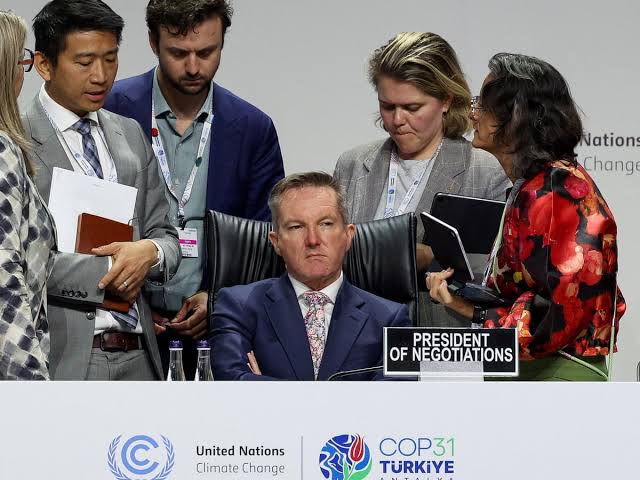
Bassey: COP31 Failed World, Sidelined Climate Justice, Says Fossil Fuel Lobbyists Hijacked Talks
By: Michael Mike
Environmental activist and Executive Director of the Health of Mother Earth Foundation (HOMEF), Nnimmo Bassey, has condemned the outcome of the 31st United Nations Climate Change Conference (COP31), declaring that the global summit failed to deliver meaningful climate action and surrendered critical negotiations to fossil fuel interests.
Bassey accused major oil-producing countries, including Saudi Arabia and Russia, of obstructing efforts to address the root causes of climate change by resisting any explicit reference to fossil fuels in the conference’s draft decision document.
In a strongly worded assessment of the summit in Antalya, Türkiye, Bassey said the exclusion of fossil fuels from the draft outcome represented a major setback, particularly after previous climate conferences had made commitments, however inadequate, towards reducing dependence on coal, oil and gas.
He recalled that COP26 in Glasgow agreed to phase down coal, COP28 in Dubai adopted a commitment to transition away from fossil fuels, while COP30 in Belém produced road maps for moving away from fossil fuel dependence.
He described the failure to sustain that momentum at COP31 as a troubling indication of the influence of fossil fuel-producing nations and corporations over international climate negotiations.
Bassey said the conference had become a gathering dominated by polluters rather than a platform for delivering climate justice and protecting vulnerable populations from the worsening effects of global warming.
The activist said he had anticipated the failure of the negotiations but was particularly disappointed that the summit ended without consensus on an overarching political agreement, despite the urgency of the climate crisis.
He cited the warning by United Nations Secretary-General António Guterres following the collapse of the negotiations, particularly his declaration that the absence of consensus among governments did not diminish the scientific evidence of accelerating global warming.
Guterres had warned that temperatures continued to break records, climate extremes were intensifying and global emissions remained dangerously high, adding that the world was on course to exceed the 1.5 degrees Celsius warming threshold set under the Paris Agreement.
Bassey said the Secretary-General’s warning reinforced the need to confront the political and economic interests sustaining fossil fuel dependence.
“Those who profit from the destruction of our planet must never dictate the terms of the fight to save it,” Guterres had declared.
COP31 ended on November 22 without agreement on its overarching political outcome after prolonged negotiations over fossil fuels, climate finance and other contentious issues. The failure marked the first time since COP15 in Copenhagen in 2009 that a UN climate summit ended without consensus on its principal political agreement. United Nations in Türkiye +2
Bassey traced what he described as the erosion of climate justice to the Copenhagen negotiations, arguing that the voluntary emissions-reduction framework introduced through the Copenhagen Accord and subsequently consolidated under the Paris Agreement had weakened the principle of Common But Differentiated Responsibilities and Respective Capabilities (CBDR-RC).
The principle recognises that countries have different historical contributions to climate change and varying capacities to address its consequences, requiring wealthier industrialised nations to shoulder greater responsibility for reducing emissions and supporting developing countries.
He argued that the voluntary framework had enabled historically high-emitting countries to evade adequate responsibility for their contribution to global warming while placing an unfair burden on poorer nations.
The activist also recalled the controversy surrounding the Cancun climate negotiations, where Bolivia’s objections to the voluntary emissions-reduction framework were, according to him, disregarded in the drive to secure an agreement.
On climate finance, Bassey accused wealthy industrialised nations of failing to translate repeated financial pledges into meaningful support for vulnerable countries facing devastating climate impacts.
He expressed particular concern over the Loss and Damage Fund established at COP27 in Sharm El-Sheikh, Egypt, saying the resources mobilised remained grossly inadequate compared with the needs of developing countries.
Citing figures from the Fund’s report to COP31, he said pledges amounted to only about $822.71 million, while requests for support had reached approximately $2.8 billion, illustrating what he described as a huge disconnect between international commitments and actual assistance.
Bassey rejected the argument that inadequate climate finance was simply a consequence of limited resources, accusing wealthy countries of displaying neocolonial attitudes and refusing to accept responsibility for the consequences of their industrialisation and pollution.
He contrasted the inadequate climate funding with what he described as the enormous resources spent annually by rich countries on military operations and armaments, arguing that a fraction of such expenditure could significantly support vulnerable nations confronting climate disasters.
The environmental campaigner further criticised what he described as the disproportionate emphasis on emissions mitigation at the expense of adaptation funding, insisting that African countries and other climate-vulnerable communities urgently needed resources to protect lives, livelihoods, infrastructure and ecosystems.
He also warned that the proposed COP31 draft decision document promoted potentially dangerous technological interventions, particularly carbon dioxide removal technologies and approaches, which he said could open the door to geoengineering experiments involving the manipulation of oceans, land and the atmosphere.
According to him, such interventions risked legitimising unproven technological solutions while diverting attention from the urgent need to cut fossil fuel emissions at source.
He equally faulted the growing emphasis on carbon removal and so-called nature-based solutions, warning against treating wildlife and natural ecosystems merely as instruments for carbon-offsetting schemes.
Bassey described the conference as a gathering dominated by fossil fuel interests, arguing that the influence of lobbyists and promoters of alternative carbon-removal technologies had undermined the prospects of meaningful climate action.
He maintained that the climate crisis could not be resolved through technological shortcuts or market-driven interventions that failed to address the structural causes of environmental destruction.
With Ethiopia expected to host COP32 in Addis Ababa, Bassey urged governments, environmental movements and civil society organisations to rethink the direction of international climate negotiations.
He called for the establishment of a people’s climate conference anchored on the principles of the 2010 Cochabamba People’s Summit on Climate Change and the Rights of Mother Earth, which advocated a people-centred approach to climate protection and environmental justice.
He said the international community must move beyond conventional climate negotiations and build a movement capable of compelling governments and corporations to take concrete action.
According to him, meaningful climate solutions must be rooted in equity, historical responsibility, respect for the rights of vulnerable communities and a fundamental change in the economic systems driving environmental destruction.
Bassey said the time had come for a Conference of the Peoples, or a People’s COP, where communities most affected by climate change would have a decisive voice in shaping global environmental policies.
The COP31 draft agreement was not adopted, meaning its proposals did not become an agreed conference decision. The unresolved issues, particularly the transition away from fossil fuels and climate finance, will remain central to negotiations ahead of COP32 in Ethiopia. United Nations in Türkiye +2
Editorial note: I have retained Bassey’s central arguments while strengthening the news angle and adding the verified context of COP31’s collapse. The $822.71 million and $2.8 billion figures should be checked against the original Loss and Damage Fund report before publication.
Bassey: COP31 Failed World, Sidelined Climate Justice, Says Fossil Fuel Lobbyists Hijacked Talks
News
Fani-Kayode Raises Alarm Over Nigerians’ Treatment in South Africa, Calls for Stronger Bilateral Ties
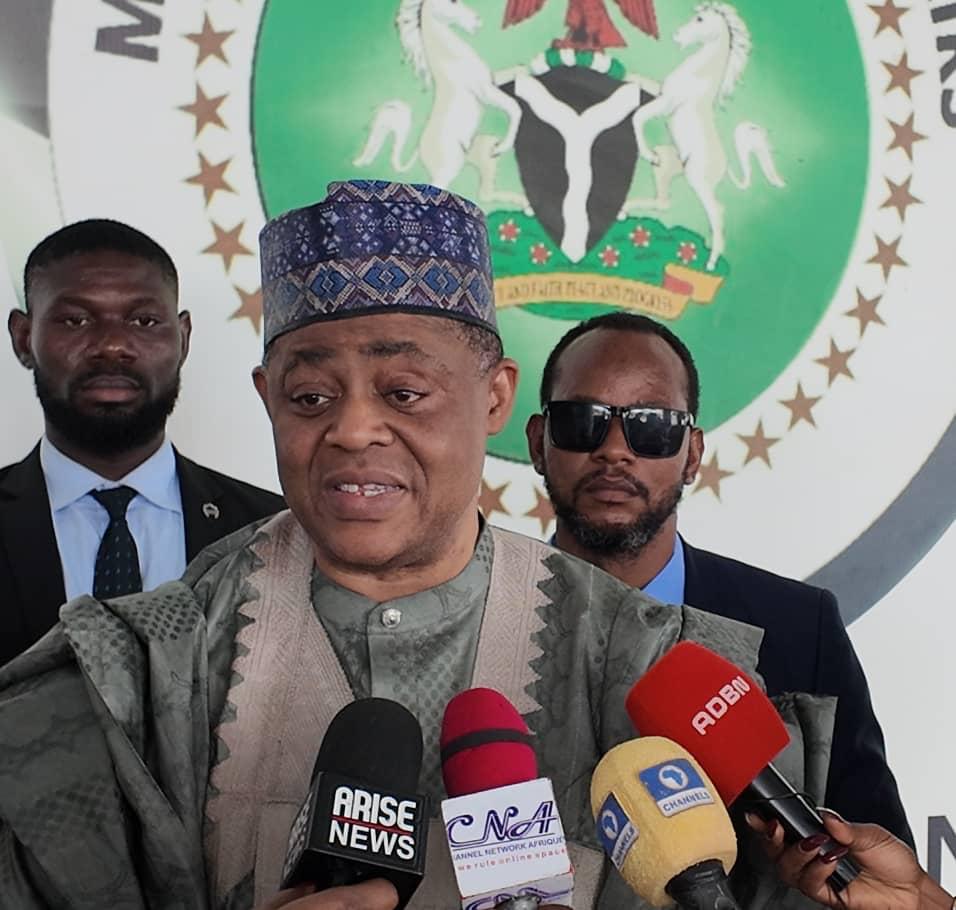
Fani-Kayode Raises Alarm Over Nigerians’ Treatment in South Africa, Calls for Stronger Bilateral Ties
By: Michael Mike
Nigeria’s Ambassador to South Africa, Femi Fani-Kayode, has raised concerns over the treatment of Nigerians in South Africa, citing unresolved deaths, alleged misconduct by security personnel and growing anti-Nigerian rhetoric, while calling for stronger diplomatic cooperation between both countries.
Fani-Kayode said Nigeria remained committed to deepening economic, political and diplomatic relations with South Africa, stressing that the stability of relations between the continent’s two leading economies was critical to Africa’s broader development.
“The future of Africa is closely tied to the relationship between Nigeria and South Africa. If these two countries fail to work together, it could have significant implications for the continent’s progress,” he said.
The ambassador, who said he had consistently advocated dialogue, mutual respect and closer bilateral engagement since assuming office, maintained that cordial relations between the two governments must not come at the expense of addressing concerns affecting Nigerians living in South Africa.
He said Nigeria could not overlook unresolved cases involving the deaths of its citizens, reports of misconduct by some security personnel and recurring hostile rhetoric targeting Nigerians by certain groups.
“As ambassador, I would be failing in my responsibility if I did not raise concerns about the treatment of Nigerians in South Africa,” Fani-Kayode said.
He particularly condemned the tendency to portray Nigerians living in South Africa as criminals, arguing that such generalisations unfairly stigmatise an entire community and undermine the contributions of thousands of Nigerians to the country’s economy and social development.
According to him, Nigerians in South Africa include professionals, doctors, lawyers, academics, entrepreneurs and other law-abiding citizens whose contributions should not be overshadowed by the misconduct of a few individuals.
“A small minority engaged in wrongdoing should not be used to define an entire community,” he said.
Fani-Kayode noted that although anti-Nigerian sentiments expressed by some organisations did not necessarily represent the position of the majority of South Africans, the persistence of such rhetoric remained a source of concern and required sustained engagement.
He called for greater understanding between Nigerians and South Africans, insisting that dialogue, cooperation and respect for the rights and dignity of citizens remained essential to preventing tensions from escalating.
The envoy also commended Nigerian community organisations in South Africa for their role in promoting the welfare of citizens, strengthening engagement with authorities and supporting Nigerians facing difficulties.
He said the diplomatic mission was increasingly giving Nigerians a sense that their concerns were being heard and represented, pledging to remain vocal in defending their interests.
Fani-Kayode further urged Nigerian investors and business owners in South Africa to sustain their investments, expand their operations and support fellow citizens, despite the challenges confronting some members of the Nigerian community.
“Wherever Nigeria’s dignity is challenged or undermined, I will not hesitate to speak out and defend the green-white-green,” he said.
He reaffirmed that strengthening Nigeria-South Africa relations while ensuring the protection, welfare and dignity of Nigerians abroad remained central to his diplomatic mission.
Fani-Kayode Raises Alarm Over Nigerians’ Treatment in South Africa, Calls for Stronger Bilateral Ties

Northern Forum lauds success of table tennis championship in Maiduguri

Bassey: COP31 Failed World, Sidelined Climate Justice, Says Fossil Fuel Lobbyists Hijacked Talks

Fani-Kayode Raises Alarm Over Nigerians’ Treatment in South Africa, Calls for Stronger Bilateral Ties

Roger Federer’s Shock as DNA Results Reveal Myla and Charlene Are Not His Biological Children

THE PLIGHT OF FARIDA

FAILED COUP IN BURKINA FASO: HOW TRAORÉ NARROWLY ESCAPED ASSASSINATION PLOT AMID FOREIGN INTERFERENCE CLAIMS
-
 News3 years ago
Roger Federer’s Shock as DNA Results Reveal Myla and Charlene Are Not His Biological Children
-
Opinions5 years ago
THE PLIGHT OF FARIDA
-
 News2 years ago
FAILED COUP IN BURKINA FASO: HOW TRAORÉ NARROWLY ESCAPED ASSASSINATION PLOT AMID FOREIGN INTERFERENCE CLAIMS
-
 Opinions5 years ago
POLICE CHARGE ROOMS, A MINTING PRESS
-

 News3 years ago
EYN: Rev. Billi, Distortion of History, and The Living Tamarind Tree
-

 ACADEMICS3 years ago
A History of Biu” (2015) and The Lingering Bura-Pabir Question (1)
-

 Columns3 years ago
Army University Biu: There is certain interest, but certainly not from Borno.
-

 Politics1 year ago
2027: Why Hon. Midala Balami Must Go, as Youths in Hawul and Asikira/Uba Federal Constituency Reject ₦500,000 as Sallah Gift
