
Military
Violent extremism, terrorism, biggest threat to ECOWAS subregion —Commandant, Kofi Annan International Peacekeeping Training Centre

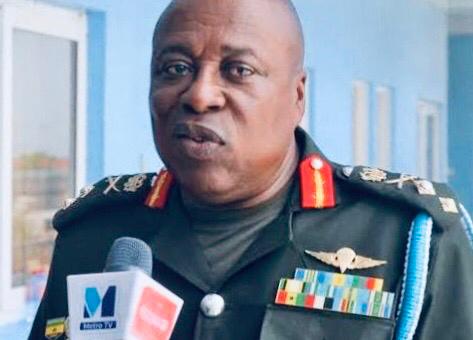
Violent extremism, terrorism, biggest threat to ECOWAS subregion —Commandant, Kofi Annan International Peacekeeping Training Centre
By: Michael Mike
The Commandant, Kofi Annan International Peacekeeping Training Centre (KAIPTC), Maj. Gen. Richard Gyane has described violent extremism and terrorism (VET) as the biggest threat to the ECOWAS subregion, Africa and humanity.
Gyane stated this in Abuja during a chat with journalists during a mobile training course on women, youth, and VET, organized by KAIPTC on Wednesday.
The Commandant said that the security challenges in West Africa had informed KAIPTC’s decision to organize the capacity building for women and youth to build their resilience to tackle terrorism.
He said that the training, organized in collaboration with the Norwegian Government, would empower women and youth with the requisite knowledge about terrorists’ operations and build their resilience against VET threats.
Gyane said: “If you look at our subregion now, violent extremism is a big threat to us; If you look at the Sahel nations, most of these countries are virtually taken over by violent groups.
“If you look at Nigeria and the Boko Haram group, and the movement of these groups southwards, it is worrisome.
“Why are we particular about women and youth? They become vulnerable. These are the most vulnerable groups in our society, who are subject to radicalization by VETs.
“The aim is to engage these women and youth especially and let them understand the issues, the recruitment and all that about these groups who want to destroy our humanity within the subregion,” he said.
He noted that KAIPTC engages and empowers women and youth through its training programs because when people are empowered, it becomes difficult for VET groups, whose aim is to radicalize the people and take over their countries, to do so.
He however noted that no country could tackle VET alone, and stressed the need for collaboration among all stakeholders beyond the security space in order to curb VET’s surging scourge in West Africa and Africa at large.
Gyane said that, given the porous borders of ECOWAS countries, and the need for them to cooperate and share intelligence, ECOWAS member states should do everything possible to bring on board Mali, Burkina Faso and Niger, who are threatening to quit the bloc.
“It is not good for the subregion to have a divided front, and I think whatever we need to do to bring on board these countries, who want to separate themselves from the subregion, is very necessary.
“ECOWAS has done well in certain areas, especially the free movement of persons protocol and I think within the continent of Africa, ECOWAS has done so well.
“But I think we need to collaborate more beyond even the security space. I would want to see us one day using the same currency and all that.
“We should work more as one homogeneous subregion to ensure that people should be free to live and work wherever they are and do business.
“When we do that, it can help us to control violent extremism and terrorism,” Gyane added.
Violent extremism, terrorism, biggest threat to ECOWAS subregion —Commandant, Kofi Annan International Peacekeeping Training Centre


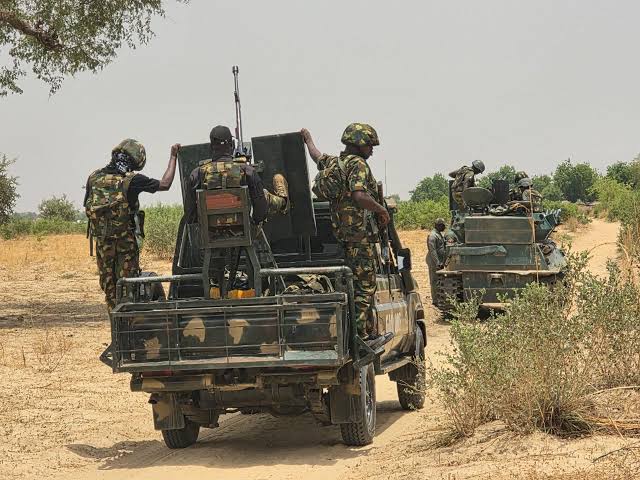
Troops Recover 50 Rustled Cattle, Repel Suspected Rustlers in Kaduna
By Zagazola Makama
Troops deployed at the Forward Operating Base (FOB) Kankomi have recovered 50 rustled cattle after repelling suspected cattle rustlers during an ambush operation in Chikun Local Government Area.
Security sources told Zagazola Makama that the troops responded to a distress call at about 9:55 a.m. on July 4 over the activities of suspected rustlers at Ungwan Gontu community.
According to the sources, the troops swiftly laid an ambush and made contact with the fleeing suspects, forcing them to abandon the stolen livestock and escape into the surrounding area.
During the operation, the troops recovered 50 rustled cattle, which were subsequently identified and handed over to their rightful owner.
Military sources said efforts are ongoing to track down the fleeing suspects as security operations continue to combat cattle rustling and other criminal activities across Kaduna State.
Troops Recover 50 Rustled Cattle, Repel Suspected Rustlers in Kaduna
Military
Mutiny: Presidential Guard Tightens Security Around Niger Presidency Amid Reports of Military Protest
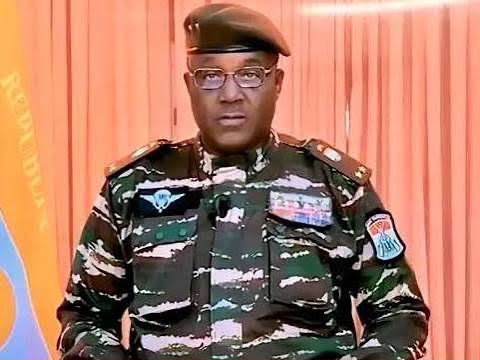
Mutiny: Presidential Guard Tightens Security Around Niger Presidency Amid Reports of Military Protest
By Zagazola Makama
Security was significantly reinforced around Niger’s Presidential Palace in Niamey following reports of unrest involving elements of the country’s armed forces, security sources told Zagazola Makama.
According to multiple security sources, the heightened deployment of the Presidential Guard, supported by armoured vehicles around the Presidential Palace on the night of July 3 and into July 4, followed what was described as a limited protest by personnel of an armoured unit within the Niger Armed Forces (FAN).
The sources said some soldiers reportedly declined deployment to frontline positions in northern Tillabéri Region, particularly around Inatès and Chinagodrar, citing inadequate heavy equipment and insufficient operational resources to confront the growing security threats in the area.
The protest was described by one source as a “small mutiny,” although there has been no official confirmation from the Nigerien authorities.
Security sources said the development triggered concern within the country’s leadership, prompting the reinforcement of security around the Presidential Palace and temporary restrictions on movement in the surrounding area as a precautionary measure.
The Tillabéri Region remains one of Niger’s most volatile security zones, with recurrent attacks by armed extremist groups, including factions linked to the so-called Islamic State in the Greater Sahara (ISGS).
As of the time of filing this report, the Nigerien government and military authorities had not issued any official statement regarding the reported protest or the increased security presence around the Presidency.
The situation remains under close observation.
Mutiny: Presidential Guard Tightens Security Around Niger Presidency Amid Reports of Military Protest
Military
COAS commissions 6 Division RSM House, reaffirms frontline leadership role of regimental sergeant majors
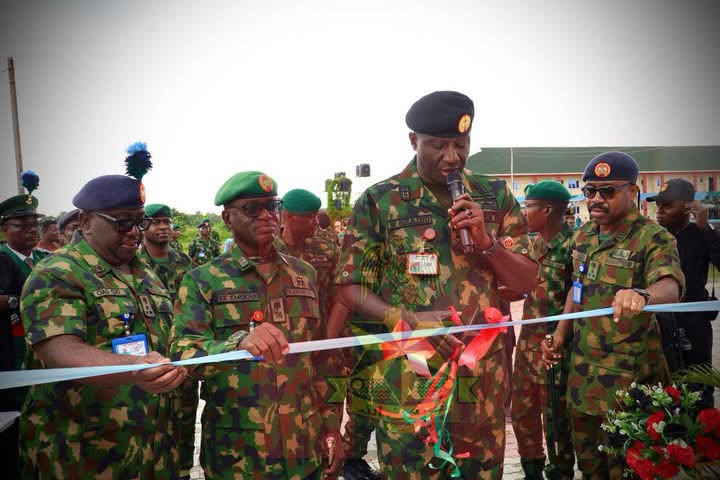
COAS commissions 6 Division RSM House, reaffirms frontline leadership role of regimental sergeant majors
By Zagazola Makama
The Chief of Army Staff (COAS), Lieutenant General Waidi Shaibu, has reaffirmed the critical role of Regimental Sergeant Majors (RSMs) in strengthening discipline, leadership and operational effectiveness across the Nigerian Army.
The COAS made the remarks on Friday during the commissioning of the newly constructed 6 Division Regimental Sergeant Major’s House in Port Harcourt as part of activities marking the 163rd Nigerian Army Day Celebration (NADCEL 2026).
Speaking at the event, Lt.-Gen. Shaibu described RSMs as the backbone of regimental administration and custodians of discipline, standards and morale within the Army.

He said the provision of dedicated accommodation for RSMs was not merely a welfare initiative but a strategic investment aimed at enhancing leadership at the unit level and improving operational efficiency.
According to the Army Chief, RSMs play a vital role in translating command directives into action, maintaining troop cohesion and ensuring effective implementation of operational orders across various theatres of operation.
He added that the senior non-commissioned officers also serve as the crucial link between officers and soldiers, fostering professionalism, mutual trust and esprit de corps within formations and units.

Shaibu noted that the influence of RSMs in mentoring soldiers, enforcing discipline and sustaining troop morale remains indispensable to the success of military operations.
He stressed that providing conducive accommodation for key regimental leaders would enhance their ability to discharge their responsibilities effectively and contribute to improved operational readiness.
The COAS reiterated that under his “Soldier First” philosophy, the welfare of personnel, particularly those occupying critical leadership positions, remains a top priority.
He maintained that sustained investment in welfare infrastructure and leadership development would continue to strengthen the Nigerian Army’s capacity to remain a resilient, professional and combat-ready force capable of addressing the country’s evolving security challenges.
COAS commissions 6 Division RSM House, reaffirms frontline leadership role of regimental sergeant majors

Zulum Appoints Engr Peter Samuel as General Manager BOSAMA

DSS Frees Cardiac Surgeon Martin Aghaji on Bail Over Alleged Economic Crime

Troops Arrest Suspected Military Impostor in Katsina

Roger Federer’s Shock as DNA Results Reveal Myla and Charlene Are Not His Biological Children

THE PLIGHT OF FARIDA

FAILED COUP IN BURKINA FASO: HOW TRAORÉ NARROWLY ESCAPED ASSASSINATION PLOT AMID FOREIGN INTERFERENCE CLAIMS
-
 News2 years ago
Roger Federer’s Shock as DNA Results Reveal Myla and Charlene Are Not His Biological Children
-
Opinions4 years ago
THE PLIGHT OF FARIDA
-
 News1 year ago
FAILED COUP IN BURKINA FASO: HOW TRAORÉ NARROWLY ESCAPED ASSASSINATION PLOT AMID FOREIGN INTERFERENCE CLAIMS
-

 News2 years ago
EYN: Rev. Billi, Distortion of History, and The Living Tamarind Tree
-
 Opinions5 years ago
POLICE CHARGE ROOMS, A MINTING PRESS
-

 ACADEMICS2 years ago
A History of Biu” (2015) and The Lingering Bura-Pabir Question (1)
-

 Columns2 years ago
Army University Biu: There is certain interest, but certainly not from Borno.
-

 Politics1 year ago
2027: Why Hon. Midala Balami Must Go, as Youths in Hawul and Asikira/Uba Federal Constituency Reject ₦500,000 as Sallah Gift
