
News
Obaseki: “The Audacity of a Drowning Governor”

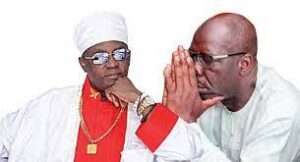
Obaseki: “The Audacity of a Drowning Governor”
By Augustine Osayande
In the intricate landscape of Edo State politics, recent events have thrust the suspension of two esteemed Enigies, Prof Gregory Akenzua and Chief Edomwonyi Ogiegbaen, into the spotlight once more. Their suspension by the monarch of the Benin Kingdom, Omo N’Oba N’Edo Uku Akpolokpolo, Ewuare II, has sparked legal challenges and raised pertinent questions about governance, authority, and political dynamics within the state.
The suspension of Prof. Gregory Akenzua and Chief Edomwonyi Ogiegbaen stemmed from their alleged involvement in leading a delegation to the Governor with the aim of restructuring the traditional councils within the Benin Kingdom. This moves incited backlash from community elders and ultimately led to their suspension by the Benin Palace.
The assertion by the Enigies that only Governor Godwin Obaseki possesses the authority to remove them from their offices has triggered a legal battle, highlighting a chapter in Edo’s political history that will likely endure in collective memory. While the Edo State Government officially distances itself from involvement in the legal proceedings against the revered Oba of Benin, rumors on social media speculate about potential support from Governor Obaseki for the Enigies’ cause. However, these speculations have been vehemently dismissed as the work of malicious elements with ulterior motives by the government’s spokesperson.
The underlying question persists: if Governor Obaseki is not supporting the Enigies, why do they maintain that only him has the power to suspend them? Furthermore, why has the governor refrained from publicly condemning their actions, particularly their claim of being dispatched from the Palace during their visit to Ife? Again, on several occasions, Governor Obaseki have been seen winning and dining with the suspended Enigies
Governor Obaseki’s decision to distance himself from the legal proceedings against the Oba of Benin presents a challenging stance. The complexities of Edo’s political landscape suggest that this case will continue to attract scrutiny, shedding light on the intricate power dynamics within the state.
Governor Obaseki’s administration withheld statutory allocations to Edo traditional institutions amid the controversy, citing unresolved administrative issues between the government and the Benin Palace. However, the subsequent disbursement of these funds separately to the Benin Traditional Council and other newly created traditional councils across Edo South LGAs raised eyebrows and fueled speculation.
The decision by the Edo State Executive Council to create traditional councils especially in Edo South Senatorial District further exacerbated tensions, leading to legal challenges from the Benin Enigies. The ongoing legal dispute underscores broader questions about governance and political allegiances within the state.
The matter concerning the repatriation of artifacts presents another aspect in which Governor Obaseki’s actions have been subject to criticism. It is widely acknowledged that Governor Obaseki enlisted the services of undisclosed consultants without the prior knowledge of the Oba. In doing so, the governor deviated from the agreed-upon strategy established in conjunction with the Palace, of which he was initially a participant. In response to the Palace’s reservations regarding Governor Obaseki’s unilateral approach, characterized as “hasty,” the governor proceeded to mobilize his Chiefs to explore alternative avenues for asserting the Benin Kingdom’s claim to its ancient treasures.
In conclusion, the unfolding events in Edo State underscore the delicate balance between governance, tradition, and political realities. In navigating these intricate power dynamics, Governor Obaseki faces the challenge of balancing governance, tradition, and political realities. While Governor Obaseki’s designated candidate for the forthcoming September 2024 Gubernatorial election, Dr. Asue Ighodalo, and Osarodion Ogie Campaign Council the Campaign Council have formally articulated their stance, expressing profound disapproval towards any actions perceived from Abuja via austinelande@yahoo.com
Obaseki: “The Audacity of a Drowning Governor”


NIMC Pushes Digital Identity Reforms to Boost Service Delivery, Security
By: Michael Mike
The National Identity Management Commission (NIMC) has reaffirmed its commitment to strengthening Nigeria’s Digital Public Infrastructure (DPI) through the deployment of secure digital identity systems aimed at improving governance, enhancing national security, and expanding access to public services.
Speaking at a digital conference in Abuja themed “Building Africa’s Digital Foundations Together,” the Director-General and Chief Executive Officer of NIMC, Abisoye Coker-Odusote, represented by the Head of Infrastructure Technology and Identity Databases, Mr. Sulaiman Falade, said the commission is driving reforms and institutional partnerships to build an inclusive and interoperable digital identity ecosystem.
According to her, the National Identification Number (NIN) has become central to Nigeria’s digital transformation agenda, serving as a key tool for identity verification, biometric authentication, and access to both government and private sector services.
She noted that following the Presidential Directive issued on April 5, 2024, Ministries, Departments and Agencies (MDAs) were mandated to integrate the NIN into digital services, particularly in areas involving data capture, identity verification, and authentication processes.
Coker-Odusote stated that NIMC has already established implementation structures to ensure compliance with the directive and to deepen the adoption of digital identity solutions across the country.
She further stressed that the Federal Government’s vision is to establish a unified, secure, and transparent digital identity framework capable of supporting efficient service delivery and accountability in governance.
The NIMC boss added that the commission is also advancing Nigeria’s broader digital governance goals through the deployment of the National Public Key Infrastructure (nPKI), a system designed to strengthen trust in digital transactions, safeguard citizens’ data, and promote secure online interactions.
She called on stakeholders in both the public and private sectors to continue supporting the implementation of Nigeria’s digital identity ecosystem, noting that the initiative is critical to national development and economic growth.
According to her, NIMC remains committed to leveraging technology and innovation to build a more connected, efficient, and resilient nation.
NIMC Pushes Digital Identity Reforms to Boost Service Delivery, Security
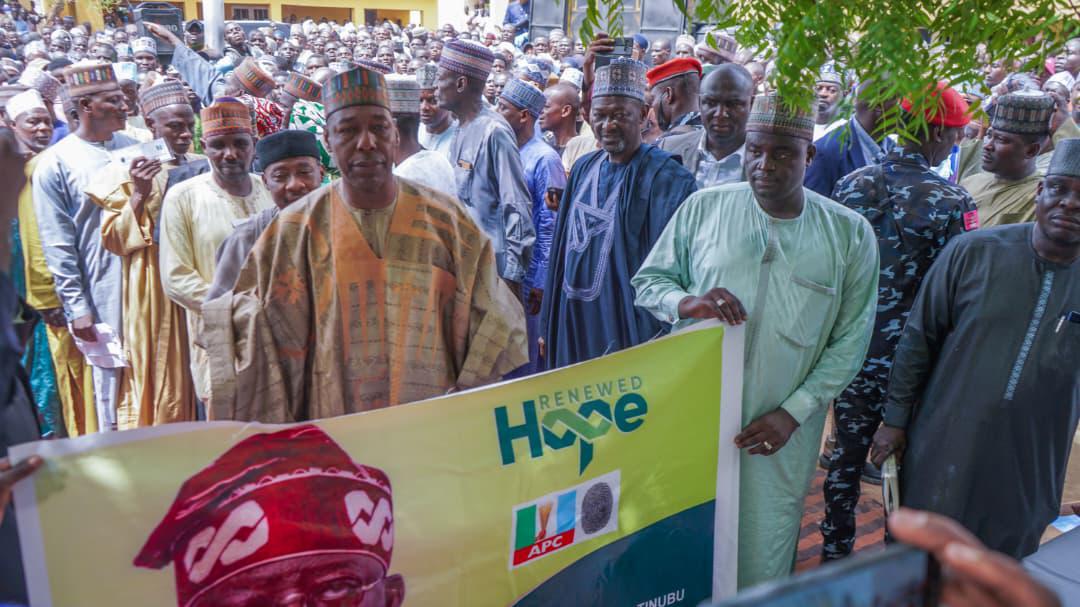
Tinubu Sweeps Zulum’s Ward with 100% Votes in APC Presidential Primary
By: Michael Mike
President Bola Ahmed Tinubu recorded a landslide victory in the All Progressives Congress (APC) presidential primary election in Mafa Ward of Borno State, securing all valid votes cast in the exercise held in the home ward of Governor Babagana Umara Zulum.
The direct primary election took place at Mafa Central Primary School under the supervision of the Chairperson of the Presidential Primary Election Committee, Hajiya Inna Alkali Imam.
According to the results announced at the ward level, Tinubu polled 2,175 votes, representing 100 per cent of the valid votes cast during the exercise. Out of the 2,277 registered APC members in the ward, 2,175 were accredited and participated in the voting process.
Tinubu’s challenger, Stanley Osifo, an APC chieftain and businessman from Edo State, failed to secure any vote in the ward.
Governor Zulum, who served as the Coordinator and Collation Officer for the presidential primary in the state, said he participated in the exercise as an indigene of Mafa Ward.
“I am from Mafa Ward, and that is why I am here to witness and participate in the exercise. We have two candidates, President Bola Ahmed Tinubu and Mr Stanley Osifo,” Zulum stated.
The governor also commended the peaceful conduct of the exercise and the turnout of party members.
“So far so good, we have conducted the presidential primary election for Mafa Ward, and I am very impressed with the turnout. We have a total of about 2,277 registered party members in Mafa Ward, out of which 2,175 were accredited for the voting, and all of them voted for President Bola Ahmed Tinubu, while the other candidate scored zero,” he said.
The APC presidential primary is ongoing in several states across the country, with the party expected to collate and announce final nationwide results at a later date.
Tinubu Sweeps Zulum’s Ward with 100% Votes in APC Presidential Primary
News
I Remember At Age Of 8,General Gowon Would Send Hand Written Letter To Yusuf Signed Uncle Joe-Sanusi
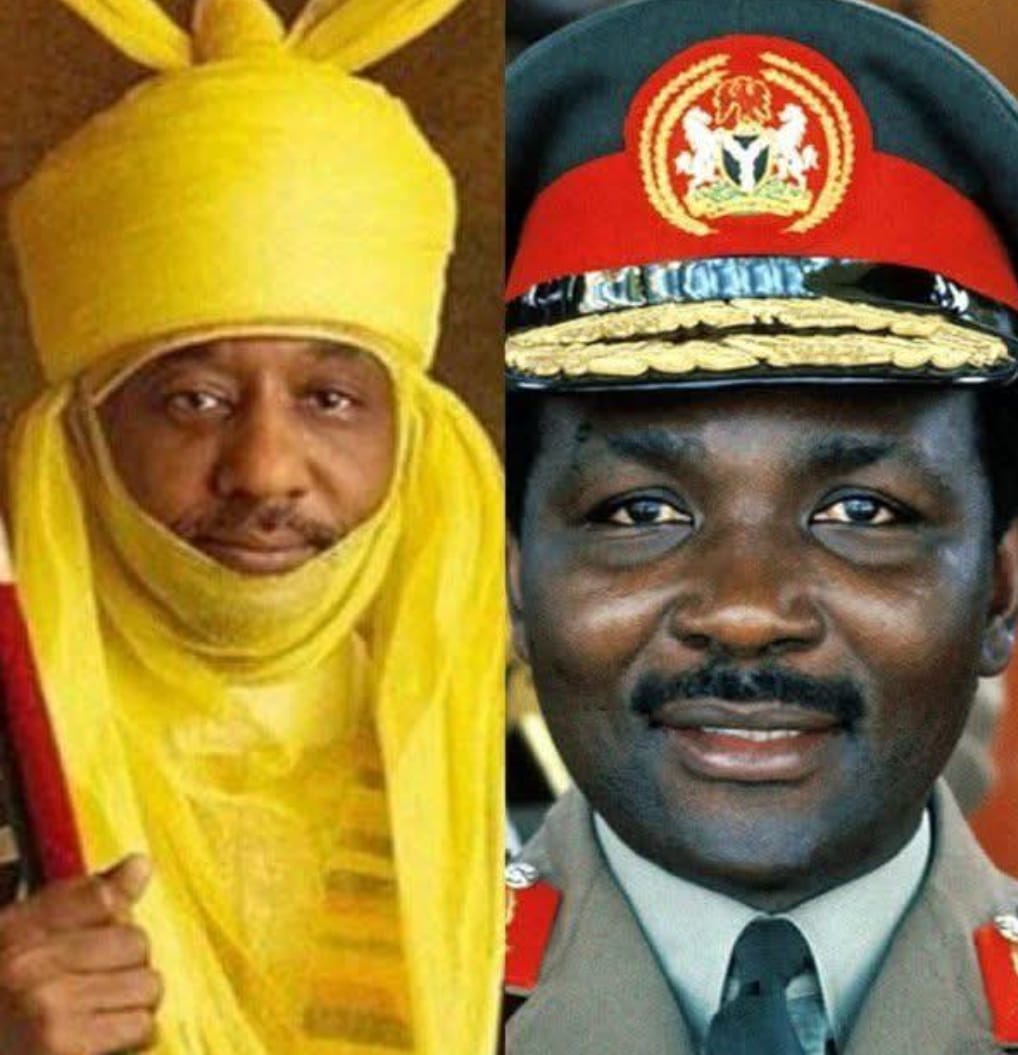
I Remember At Age Of 8,General Gowon Would Send Hand Written Letter To Yusuf Signed Uncle Joe-Sanusi
By: Our Reporter
The 16th Emir of Kano, Muhammadu Sanusi II, has recounted a touching childhood memory about former Nigerian Head of State Yakubu Gowon, portraying him as a compassionate leader who extended personal support to the family of a military officer killed during the 1966 coup.
Speaking during an interview on Signature TV, Sanusi reflected on his early years at St Anne’s Secondary School in Kaduna, where he attended school alongside Yusuf Pam, the son of the late Colonel Joseph Pam, one of the victims of the January 1966 Nigerian coup.
The former governor of the Central Bank of Nigeria recalled that despite the demands of national leadership, Gowon took a personal interest in the wellbeing of Yusuf following the loss of his father. According to Sanusi, the former Head of State frequently sent handwritten letters to the young boy, signing them “Uncle Joe.”
“What I remember at the age of eight was that General Gowon, as Head of State, would send a handwritten letter to Yusuf signed ‘Uncle Joe.’ That is a window into the person you are dealing with,” Sanusi said.
The Emir noted that the gesture has remained vivid in his memory over the years because it revealed a caring and humane side of leadership during one of the most turbulent periods in Nigeria’s history. He suggested that Gowon’s actions reflected empathy and a sense of responsibility toward families affected by the political upheaval of the time.
Colonel Pam was among several prominent figures who lost their lives during the 1966 coup, a pivotal event that reshaped Nigeria’s political landscape and contributed to years of instability and conflict that followed.
I Remember At Age Of 8,General Gowon Would Send Hand Written Letter To Yusuf Signed Uncle Joe-Sanusi

APC Primary peaceful, as Tinubu clears vote in Adamawa South -Abbati

NIMC Pushes Digital Identity Reforms to Boost Service Delivery, Security

Tinubu Sweeps Zulum’s Ward with 100% Votes in APC Presidential Primary

Roger Federer’s Shock as DNA Results Reveal Myla and Charlene Are Not His Biological Children

THE PLIGHT OF FARIDA

FAILED COUP IN BURKINA FASO: HOW TRAORÉ NARROWLY ESCAPED ASSASSINATION PLOT AMID FOREIGN INTERFERENCE CLAIMS
-
 News2 years ago
Roger Federer’s Shock as DNA Results Reveal Myla and Charlene Are Not His Biological Children
-
Opinions4 years ago
THE PLIGHT OF FARIDA
-
 News1 year ago
FAILED COUP IN BURKINA FASO: HOW TRAORÉ NARROWLY ESCAPED ASSASSINATION PLOT AMID FOREIGN INTERFERENCE CLAIMS
-

 News2 years ago
EYN: Rev. Billi, Distortion of History, and The Living Tamarind Tree
-
 Opinions4 years ago
POLICE CHARGE ROOMS, A MINTING PRESS
-

 ACADEMICS2 years ago
A History of Biu” (2015) and The Lingering Bura-Pabir Question (1)
-

 Columns2 years ago
Army University Biu: There is certain interest, but certainly not from Borno.
-

 Politics12 months ago
2027: Why Hon. Midala Balami Must Go, as Youths in Hawul and Asikira/Uba Federal Constituency Reject ₦500,000 as Sallah Gift
