
News
ISWAP Founder’s Son Surrenders In Maiduguri

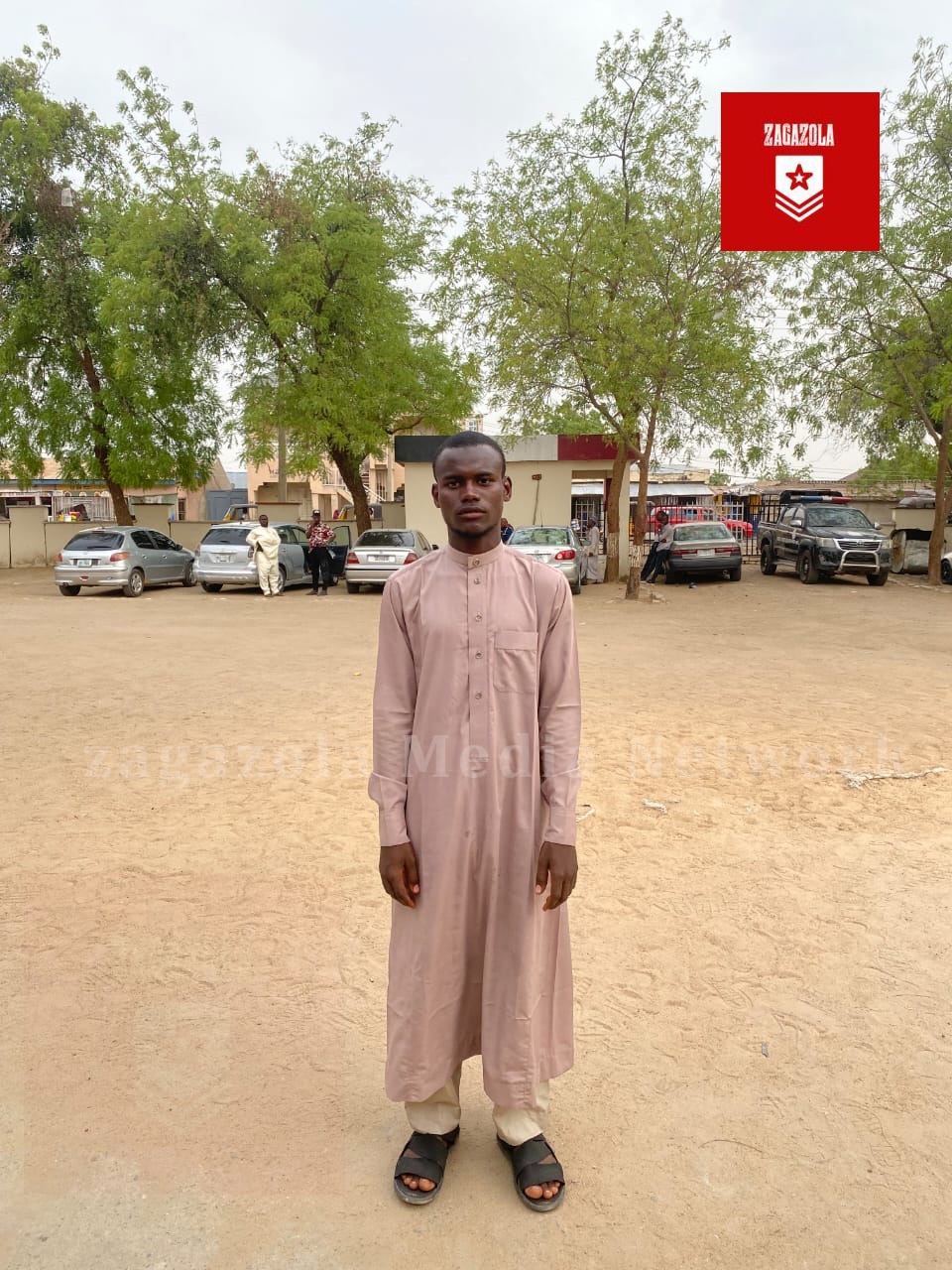
ISWAP Founder’s Son Surrenders In Maiduguri
By: Zagazola Makama
The Eldest son of Mamman Nur, founder of the Islamic State of the West African Province (ISWAP), Mahmud Mamman Nur Albarnawy, has surrendered to the Nigerian Security and Civil Defence Corps in Maiduguri.
Mahmud, 22, surrendered on Sunday, May 12.
Intelligence sources told Zagazola Makama, Lake Chad Basin counterterrorism and insurgency expert, that Mahmud Mamman Nur Albarnawy was confirmed to be the senior son of the late ISWAP founder after undergoing profiling at the Command Headquarters of NSCDC in Maiduguri.
The sources said that men of the command had facilitated his surrender through his uncle in Gamborun Ngala after receiving the information that he was willing to formally surrender to the Nigerian government.
A reliable agent was sent to convey him to Maiduguri. They arrived in Maiduguri on May 11, at about 1 pm.
Mahmud was later debriefed and profiled by an intelligence officer of the command where he confessed to having sneaked out of the Ali Ngulde camp in Mandara Mountain, Gwoza LGA, into Maiduguri and stayed for about a month at Gwange in the city capital before relocating to Gamboru Ngala without any alarm or distress signs from communities.
During his stay in Gamboru Ngala, some of his late father’s loyalists were persuading him to return to the Lake Chad general area to pay allegiance to ISWAP but he refused, citing the betrayal and eventual execution of his late father.
He confessed to having taken part in attacks in Bama, Banki, Gwoza and several other places as a middle rank fighter under the Boko Haram group.
Mahmud was handed over to Bulunkutu rehabilitation facility for further documentation and custody.
Who Is Mamman Nur?
In 2013, top commanders of the late Muhammad Yusuf, founder of the Boko Haram group, including Mamman Nur, Khalid Albarnawi, Abubakar Shekau, Kaka Ali, Mustapha Chad, Abu Maryam and Abu Krimima, were compelled to move out of Maiduguri, following intensified campaign against then by the Joint Security Forces in Maiduguri.
After a while, they regrouped in Sambisa forest and continued their campaign of violence through coordinated attacks on towns and villages.They institutionalized the group to become a terror organization.
In March 2015, Boko Haram pledged allegiance to the ISIS Caliphate of Abubakar Al-Baghdadi. ISIS accepted the pledge of allegiance and named Abubakar Shekau as the first Wali of the Islamic State of the West African Province(ISWAP).
Shekau was later removed by ISIS following a petition against his leadership by Mamman Nur and Abu Mussab Albarawi, who were the members of the Shura Consultative Council.
Shekau was accused of ideological extremism, extra judicial killings, injustice, poor leadership skills and, above all, killing women and children.
The internal crises led to the separation of the Jamā’at Ahl as-Sunnah lid-Da’wah wa’l-Jihād, Boko Haram group and the Islamic State of the West African Province (ISWAP), who moved to the Lake Chad region of Marte and Abadam to establish their caliphate with Mamman Nur as its New Spiritual Leader.
On 21 August 2018, Mamman Nur was eliminated in a mutiny led by Abou Mossab Albarnawyy in company of some ISWAP fighters. Nur was killed for releasing the Government Girls Secondary School Dapchi girls, without demanding ransom from the Nigerian government.
The elimination of Mamman Nur, saw the emergence of Abou-Mossab Albarnawyy as ISWAP spiritual leader.
ISWAP Founder’s Son Surrenders In Maiduguri


NIMC Pushes Digital Identity Reforms to Boost Service Delivery, Security
By: Michael Mike
The National Identity Management Commission (NIMC) has reaffirmed its commitment to strengthening Nigeria’s Digital Public Infrastructure (DPI) through the deployment of secure digital identity systems aimed at improving governance, enhancing national security, and expanding access to public services.
Speaking at a digital conference in Abuja themed “Building Africa’s Digital Foundations Together,” the Director-General and Chief Executive Officer of NIMC, Abisoye Coker-Odusote, represented by the Head of Infrastructure Technology and Identity Databases, Mr. Sulaiman Falade, said the commission is driving reforms and institutional partnerships to build an inclusive and interoperable digital identity ecosystem.
According to her, the National Identification Number (NIN) has become central to Nigeria’s digital transformation agenda, serving as a key tool for identity verification, biometric authentication, and access to both government and private sector services.
She noted that following the Presidential Directive issued on April 5, 2024, Ministries, Departments and Agencies (MDAs) were mandated to integrate the NIN into digital services, particularly in areas involving data capture, identity verification, and authentication processes.
Coker-Odusote stated that NIMC has already established implementation structures to ensure compliance with the directive and to deepen the adoption of digital identity solutions across the country.
She further stressed that the Federal Government’s vision is to establish a unified, secure, and transparent digital identity framework capable of supporting efficient service delivery and accountability in governance.
The NIMC boss added that the commission is also advancing Nigeria’s broader digital governance goals through the deployment of the National Public Key Infrastructure (nPKI), a system designed to strengthen trust in digital transactions, safeguard citizens’ data, and promote secure online interactions.
She called on stakeholders in both the public and private sectors to continue supporting the implementation of Nigeria’s digital identity ecosystem, noting that the initiative is critical to national development and economic growth.
According to her, NIMC remains committed to leveraging technology and innovation to build a more connected, efficient, and resilient nation.
NIMC Pushes Digital Identity Reforms to Boost Service Delivery, Security
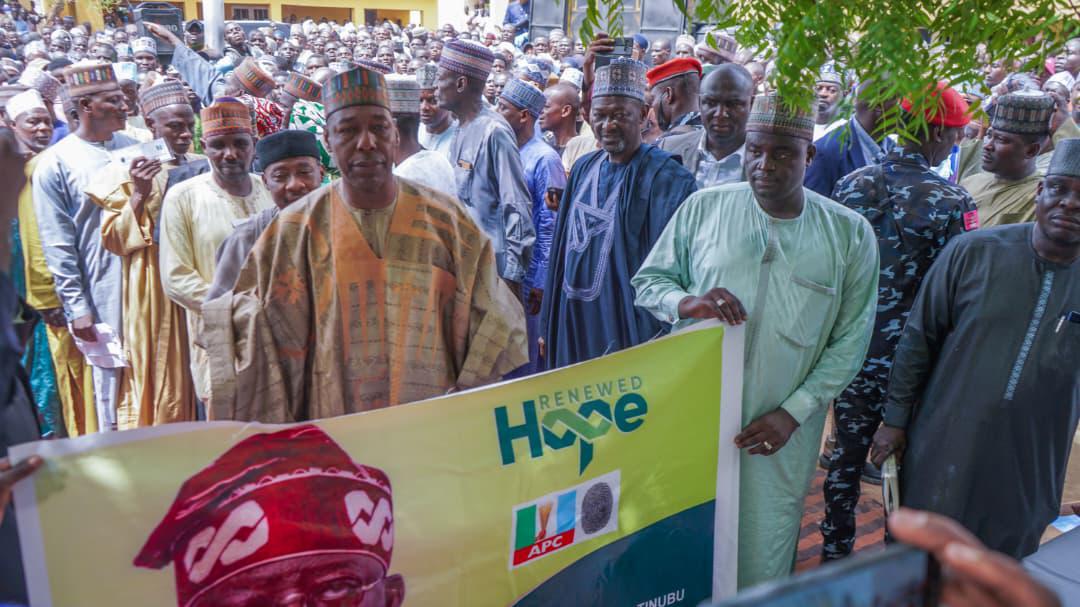
Tinubu Sweeps Zulum’s Ward with 100% Votes in APC Presidential Primary
By: Michael Mike
President Bola Ahmed Tinubu recorded a landslide victory in the All Progressives Congress (APC) presidential primary election in Mafa Ward of Borno State, securing all valid votes cast in the exercise held in the home ward of Governor Babagana Umara Zulum.
The direct primary election took place at Mafa Central Primary School under the supervision of the Chairperson of the Presidential Primary Election Committee, Hajiya Inna Alkali Imam.
According to the results announced at the ward level, Tinubu polled 2,175 votes, representing 100 per cent of the valid votes cast during the exercise. Out of the 2,277 registered APC members in the ward, 2,175 were accredited and participated in the voting process.
Tinubu’s challenger, Stanley Osifo, an APC chieftain and businessman from Edo State, failed to secure any vote in the ward.
Governor Zulum, who served as the Coordinator and Collation Officer for the presidential primary in the state, said he participated in the exercise as an indigene of Mafa Ward.
“I am from Mafa Ward, and that is why I am here to witness and participate in the exercise. We have two candidates, President Bola Ahmed Tinubu and Mr Stanley Osifo,” Zulum stated.
The governor also commended the peaceful conduct of the exercise and the turnout of party members.
“So far so good, we have conducted the presidential primary election for Mafa Ward, and I am very impressed with the turnout. We have a total of about 2,277 registered party members in Mafa Ward, out of which 2,175 were accredited for the voting, and all of them voted for President Bola Ahmed Tinubu, while the other candidate scored zero,” he said.
The APC presidential primary is ongoing in several states across the country, with the party expected to collate and announce final nationwide results at a later date.
Tinubu Sweeps Zulum’s Ward with 100% Votes in APC Presidential Primary
News
I Remember At Age Of 8,General Gowon Would Send Hand Written Letter To Yusuf Signed Uncle Joe-Sanusi
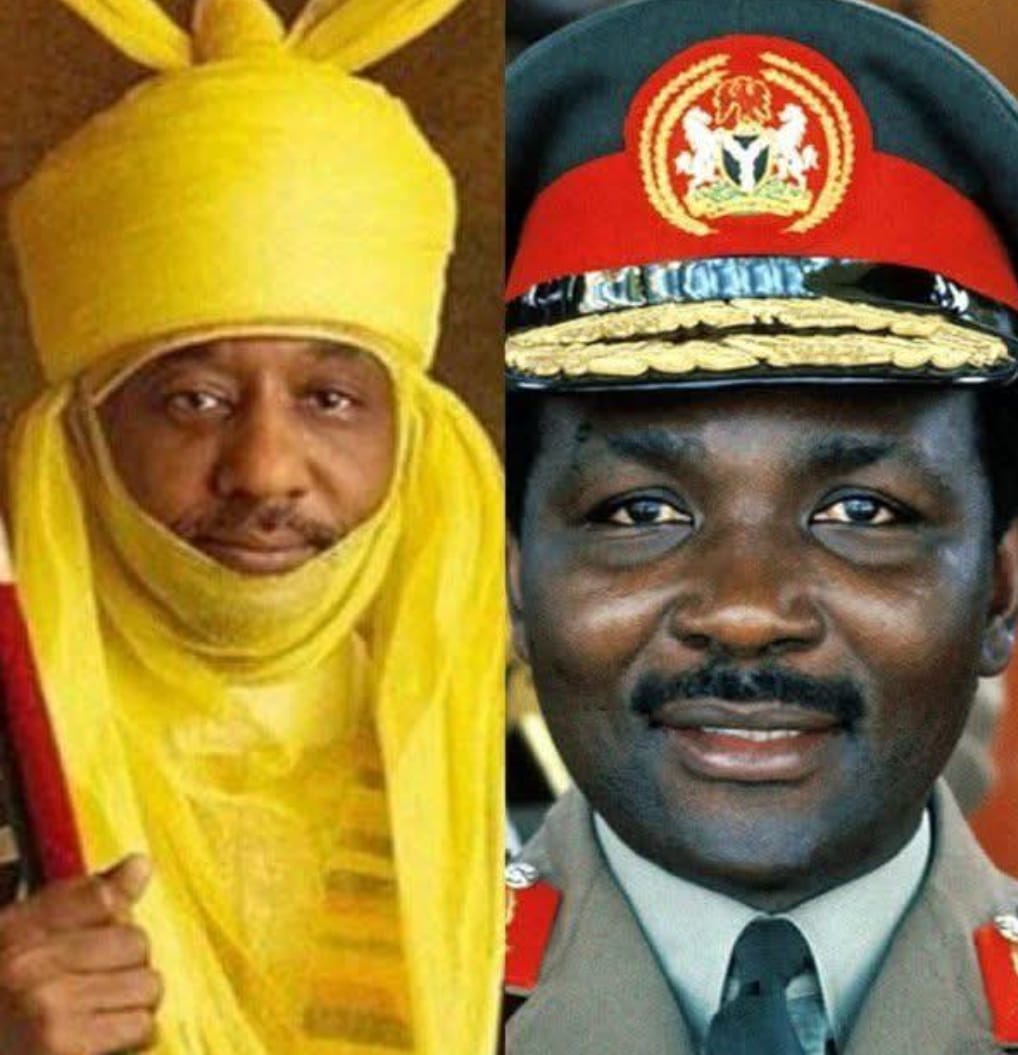
I Remember At Age Of 8,General Gowon Would Send Hand Written Letter To Yusuf Signed Uncle Joe-Sanusi
By: Our Reporter
The 16th Emir of Kano, Muhammadu Sanusi II, has recounted a touching childhood memory about former Nigerian Head of State Yakubu Gowon, portraying him as a compassionate leader who extended personal support to the family of a military officer killed during the 1966 coup.
Speaking during an interview on Signature TV, Sanusi reflected on his early years at St Anne’s Secondary School in Kaduna, where he attended school alongside Yusuf Pam, the son of the late Colonel Joseph Pam, one of the victims of the January 1966 Nigerian coup.
The former governor of the Central Bank of Nigeria recalled that despite the demands of national leadership, Gowon took a personal interest in the wellbeing of Yusuf following the loss of his father. According to Sanusi, the former Head of State frequently sent handwritten letters to the young boy, signing them “Uncle Joe.”
“What I remember at the age of eight was that General Gowon, as Head of State, would send a handwritten letter to Yusuf signed ‘Uncle Joe.’ That is a window into the person you are dealing with,” Sanusi said.
The Emir noted that the gesture has remained vivid in his memory over the years because it revealed a caring and humane side of leadership during one of the most turbulent periods in Nigeria’s history. He suggested that Gowon’s actions reflected empathy and a sense of responsibility toward families affected by the political upheaval of the time.
Colonel Pam was among several prominent figures who lost their lives during the 1966 coup, a pivotal event that reshaped Nigeria’s political landscape and contributed to years of instability and conflict that followed.
I Remember At Age Of 8,General Gowon Would Send Hand Written Letter To Yusuf Signed Uncle Joe-Sanusi

APC Primary peaceful, as Tinubu clears vote in Adamawa South -Abbati

NIMC Pushes Digital Identity Reforms to Boost Service Delivery, Security

Tinubu Sweeps Zulum’s Ward with 100% Votes in APC Presidential Primary

Roger Federer’s Shock as DNA Results Reveal Myla and Charlene Are Not His Biological Children

THE PLIGHT OF FARIDA

FAILED COUP IN BURKINA FASO: HOW TRAORÉ NARROWLY ESCAPED ASSASSINATION PLOT AMID FOREIGN INTERFERENCE CLAIMS
-
 News2 years ago
Roger Federer’s Shock as DNA Results Reveal Myla and Charlene Are Not His Biological Children
-
Opinions4 years ago
THE PLIGHT OF FARIDA
-
 News1 year ago
FAILED COUP IN BURKINA FASO: HOW TRAORÉ NARROWLY ESCAPED ASSASSINATION PLOT AMID FOREIGN INTERFERENCE CLAIMS
-

 News2 years ago
EYN: Rev. Billi, Distortion of History, and The Living Tamarind Tree
-
 Opinions4 years ago
POLICE CHARGE ROOMS, A MINTING PRESS
-

 ACADEMICS2 years ago
A History of Biu” (2015) and The Lingering Bura-Pabir Question (1)
-

 Columns2 years ago
Army University Biu: There is certain interest, but certainly not from Borno.
-

 Politics12 months ago
2027: Why Hon. Midala Balami Must Go, as Youths in Hawul and Asikira/Uba Federal Constituency Reject ₦500,000 as Sallah Gift
