
News
ActionAid Nigeria Responds to CBN’s Interest Rate Hike, Highlights Economic Implications and Proposes Solutions

ActionAid Nigeria Responds to CBN’s Interest Rate Hike, Highlights Economic Implications and Proposes Solutions
By: Michael Mike
ActionAid Nigeria acknowledges the Central Bank of Nigeria’s (CBN) recent decision to raise the Monetary Policy Rate (MPR) to 26.25%, as announced by Governor Yemi Cardoso during the 295th Monetary Policy Committee (MPC) meeting. This marks the third consecutive increase aimed at curbing the surging inflation, which currently stands at 33.69%.
Speaking at its head office in Abuja, ActionAid Nigeria’s Country Director, Andrew Mamedu, noted that, “While the decision to adjust the MPR demonstrates a proactive approach to achieving price and economic stability, it is important to acknowledge its broader implications. We recognise that although inflation is still rising, the month-on-month rate increase is reducing. In the other hand, the increased MPR will inevitably lead to higher borrowing costs for businesses and individuals. Small and Medium-sized Enterprises (SMEs), which are the backbone of our economy, will face heightened challenges in accessing affordable credit. This could stifle innovation, growth, and job creation within this vital sector.
For vulnerable populations, the rising cost of living and food prices, exacerbated by higher interest rates, will further strain their already limited financial resources. This becomes a case of double jeopardy of high inflation and high interest rates. As the cost of borrowing increases, so does the difficulty in securing loans for essential needs, pushing many deeper into poverty.”
To mitigate the impacts of the increase in interest rates and inflation, ActionAid Nigeria proposes that the Federal and State Governments must immediately step-up social protection programs to support the most vulnerable populations. This includes expanding food assistance initiatives, providing targeted financial aid to low-income families, and offering more support to other social sectors, including education, health, and housing.
Andrew Mamedu also reiterated that “It is only fair for the CBN to increase special credit facilities with lower interest rates for SMEs at this crucial time to ensure they can continue to operate and grow. Providing technical and financial support to these businesses will help them sustain their contributions to the economy. Additionally, not many people understand the implications of this hike in interest rates. It is very important for the CBN to collaborate with the National Orientation Agency (NOA) to engage with the public and stakeholders to explain the rationale behind these economic policies. This will foster understanding and patience and enhance transparent communication from the government to manage expectations and build trust and get the citizens to hold greedy businesses and individuals accountable from exploiting the system.
The country director concluded that the fiscal aspects of the economy need to complement the CBN’s efforts in managing monetary policy. This includes improving the ease of doing business, implementing progressive taxation, and ensuring effective budgeting and budget utilisation.
ActionAid Nigeria remains committed to working with the government, private sector, and civil society to address these challenges and promote a more inclusive and resilient economy.
ActionAid Nigeria Responds to CBN’s Interest Rate Hike, Highlights Economic Implications and Proposes Solutions


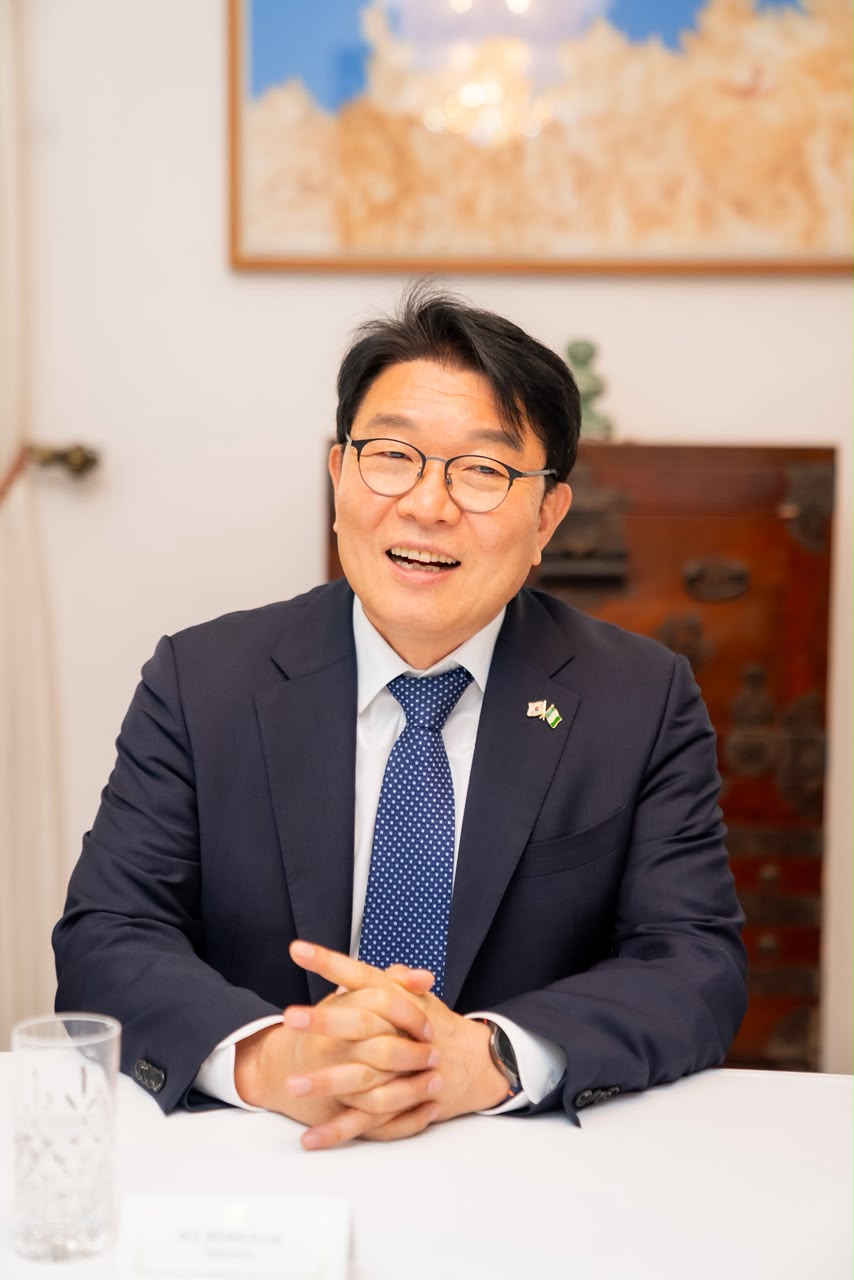
Korea Seeks Nigerian Manufacturing Shift, Urges Ratification of 20-Year Tax Treaty
…Ambassador calls for technology transfer, local production and investment beyond oil trade
By: Michael Mike
South Korea has urged Nigeria to restructure its trade relationship with the Asian country by shifting from crude oil exports and imports of manufactured goods to local production, technology transfer and investment in agriculture and industry.
Korean Ambassador to Nigeria, Jeong Yo-an, made the call on Wednesday in Abuja, saying the existing trade pattern had limited the potential of a bilateral relationship worth about $1.1 billion in 2025.
“Today, Nigeria sells us mostly oil and gas. Korea sells mostly cars, electronics and machinery. We can do much more than that,” he said.
Jeong identified local assembly, agricultural machinery production, digital skills, maritime services and emerging industries as priority areas for stronger cooperation.
He also urged Nigeria to ratify the double taxation agreement signed by both countries in 2006, saying the 20-year delay was affecting investor confidence.
He said predictable policies on foreign exchange, customs and taxation were necessary to attract long-term investments.
The ambassador cited the involvement of Korean companies in major Nigerian projects, including Daewoo Engineering and Construction’s work on the Nigeria LNG Train Seven project and the Indorama fertiliser plant. He also named Samsung, LG, Hyundai and Solpia among companies working with Nigerian partners in various sectors.
He encouraged Nigerian businesses to use the Korea Trade-Investment Promotion Agency (KOTRA) office in Lagos to establish links with Korean companies and explore opportunities in the Korean market.
The beauty and cosmetics industry, he added, offered prospects for local distribution, employment and partnerships, with Korean manufacturers expected to participate in the Beauty West Africa exhibition on November 13.
On development cooperation, Jeong said about 2,000 Nigerian government officials had received training in South Korea through the Korea International Cooperation Agency (KOICA).
He said KOICA’s Smart School project, implemented with the Universal Basic Education Commission, had reached about 8,000 pupils and trained more than 300 teachers and school administrators.
He also highlighted the Abuja Centre for Entrepreneurship, being developed in partnership with the Small and Medium Enterprises Development Agency of Nigeria and the United Nations Development Programme. Groundbreaking for the centre took place in September.
The facility is expected to provide young Nigerians with entrepreneurship training, mentorship and connections to finance and markets.
Jeong said Nigerian institutions would operate the centre, while a Training of Trainers programme would build local capacity to sustain its activities.
“A building alone does not create entrepreneurs,” he said, stressing the need to connect start-ups with investors, markets and private-sector operators.
He disclosed that KOICA was also working with the Food and Agriculture Organisation on agricultural initiatives aimed at creating green jobs for Nigerian youths.
Other areas of cooperation include digital development, postgraduate scholarships and government fellowships in information technology, public administration and health. The Nigeria-Korea Information Access Centre, established in Abuja in 2025, is also expected to strengthen digital literacy and access to technology resources.
The ambassador said future partnerships would place greater emphasis on private companies, start-ups and innovators, particularly in artificial intelligence, digital content and technology-based entrepreneurship.
He urged Nigeria to adapt lessons from South Korea’s development experience rather than attempt to replicate its model.
“The key word is not ‘copy’. The key word is ‘adapt’. Nigeria will write its own story. Korea is ready to share what we have learned,” he said.
On diplomatic relations, Jeong cited the 2024 Korea-Africa Summit in Seoul and the first Korea-Africa Foreign Ministers’ Meeting held in June as milestones in strengthening engagement.
He said South Korea welcomed Nigeria’s offer to host the seventh session of the Nigeria-Korea Joint Commission in Abuja.
He also disclosed that South Korea was working towards expanding its Official Development Assistance to $10 billion by 2030 and providing $14 billion in export financing to support Korean companies operating in Africa. The country is also planning to host the second Korea-Africa Summit in 2029.
The ambassador said cultural exchanges remained an important part of bilateral relations, disclosing that more than 300,000 people had participated in programmes organised by the Korean Cultural Centre Nigeria.
He said this year’s Korean Film Festival attracted about 1,000 participants, while the K-pop Festival in Lagos drew more than 400 young people. The 14th Korean Ambassador’s Cup Taekwondo Championship in Abuja also attracted about 350 athletes.
Jeong said the embassy planned to expand cultural activities to more Nigerian cities and universities and promote joint film and music productions. He disclosed that Nigerian creators had already produced two Korean-Nigerian drama productions.
He also pledged to support opportunities for Nigerian journalists to visit South Korea through media exchange programmes, including the World Journalists Conference.
The ambassador, a former military officer who served for 36 years before joining the diplomatic service, said he would focus on practical results during his tenure in Nigeria.
“The army taught me one simple lesson: trust is built when you keep your word. That is how I want to work in Nigeria – with more results,” he said.
Korea Seeks Nigerian Manufacturing Shift, Urges Ratification of 20-Year Tax Treaty
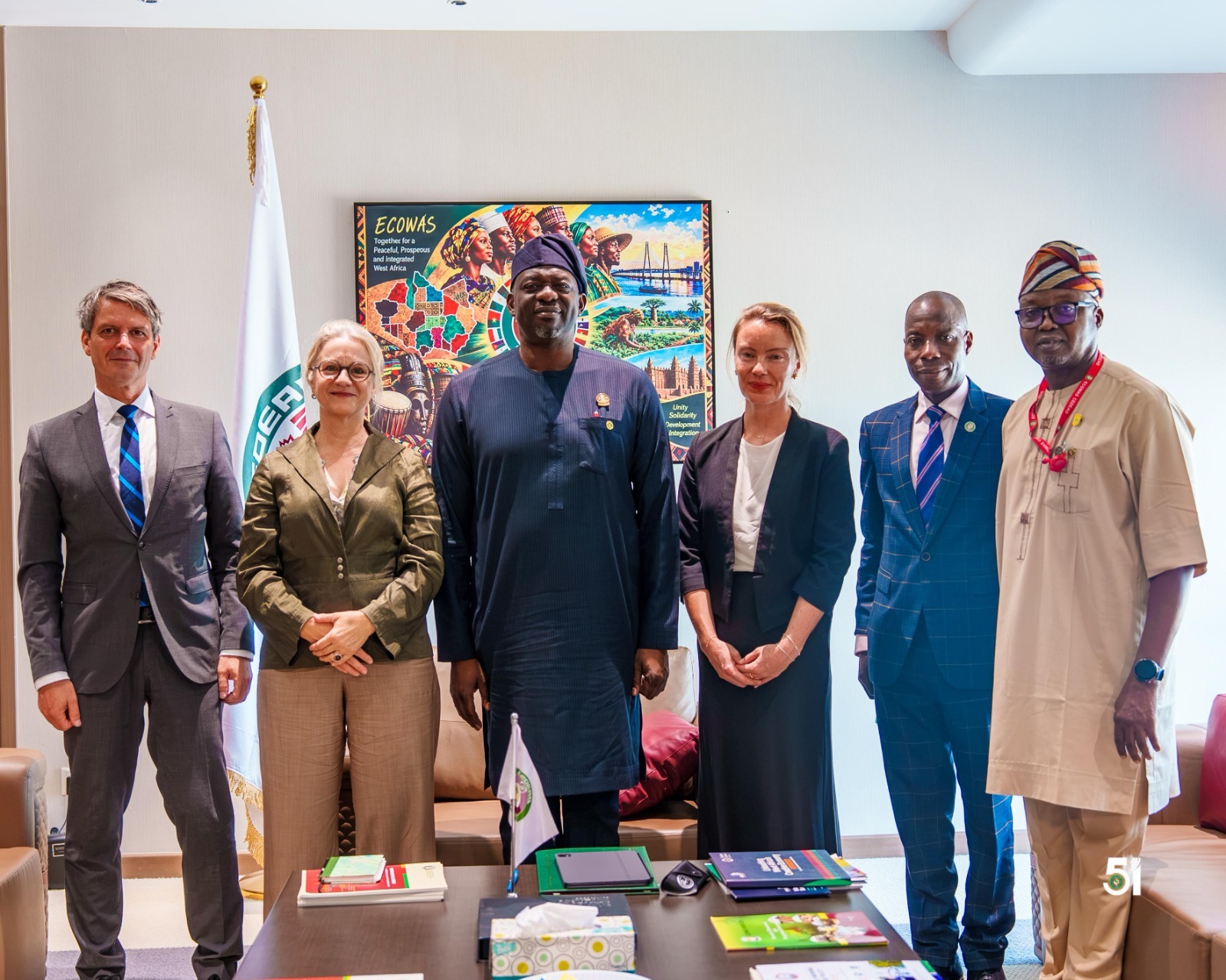
ECOWAS, Germany Open Strategic Dialogue as Berlin Commits €49m to West Africa
By: Michael Mike
The Economic Community of West African States (ECOWAS) and Germany have reaffirmed their commitment to strengthening bilateral cooperation, with Germany committing an additional €49 million to support regional development programmes for 2025 and 2026.
The commitment was highlighted during the opening of the strategic dialogue between ECOWAS and Germany in Abuja.
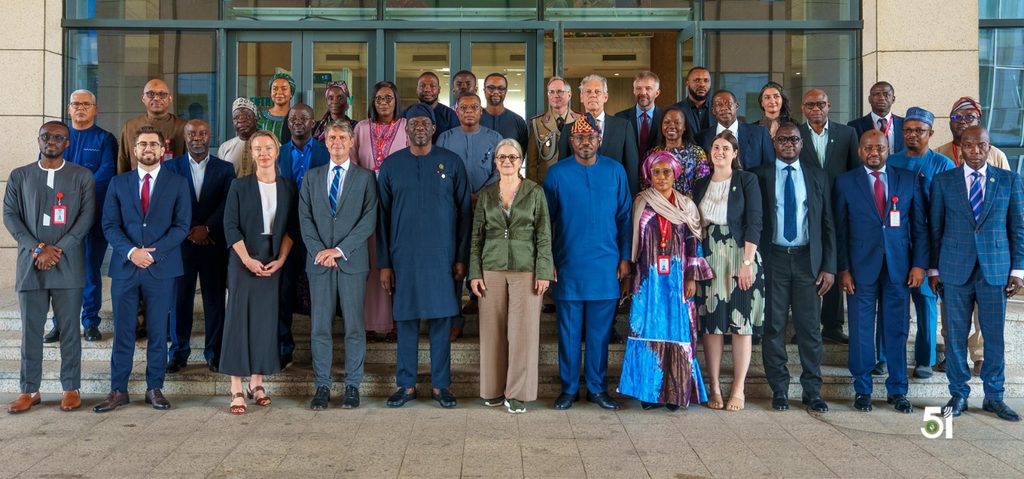
The Vice-President of the ECOWAS Commission, Anthony Ogunjimi, said the engagement marked a renewed approach to cooperation between the regional bloc and Germany, shifting from the traditional concept of consultation to a more strategic, open and constructive partnership.
He said the new strategic dialogue would provide an opportunity for both parties to deepen collaboration and address issues affecting regional development and the welfare of West African citizens.
Germany, which has been a partner to ECOWAS since 1985, has committed approximately €494 million in bilateral technical and financial cooperation over the years.
An additional €49 million was pledged for the 2025–2026 cooperation period during negotiations in November 2025.
The funding comprises €32.8 million for financial cooperation and €16.2 million for technical cooperation.
Ogunjimi, who spoke on behalf of the President of the ECOWAS Commission, Gen. Birame Diop, expressed appreciation to the German government for its longstanding partnership and support for the regional organisation and the people of West Africa.
The meeting was attended by the German Ambassador to Nigeria and ECOWAS, Stefan Rossel; a delegation from Germany’s Federal Ministry for Economic Cooperation and Development (BMZ), led by Karen Pfundt, Head of Division for West Africa II; representatives of the German development agency, GIZ; and directors and senior officials of the ECOWAS Commission.
The strategic dialogue is expected to provide a platform for reviewing existing cooperation and identifying areas for stronger collaboration between Germany and ECOWAS.
ECOWAS, Germany Open Strategic Dialogue as Berlin Commits €49m to West Africa
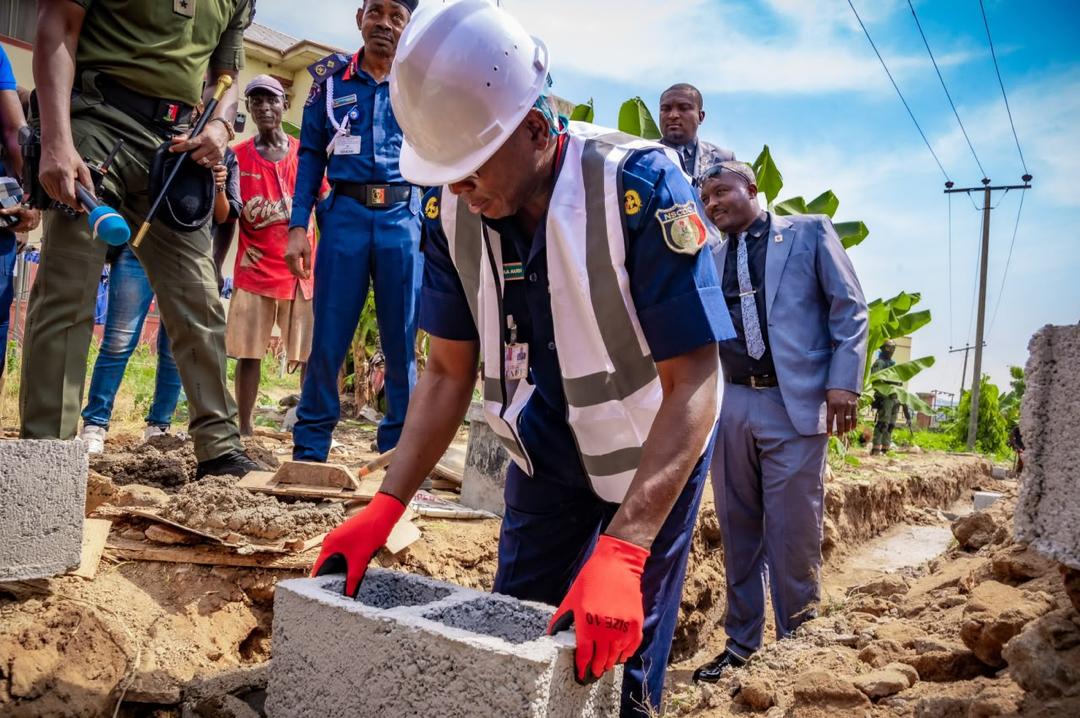
NSCDC Begins Construction of New Gate, Quarter Guard Post, Access Road
By: Michael Mike
The Nigeria Security and Civil Defence Corps (NSCDC) has commenced the construction of a new entrance gate, modern Quarter Guard Post, access road and solar illumination project to strengthen security and improve its operational environment.
The Commandant-General of the Corps, Prof. Ahmed Audi, performed the groundbreaking ceremony for the infrastructure project on Thursday.
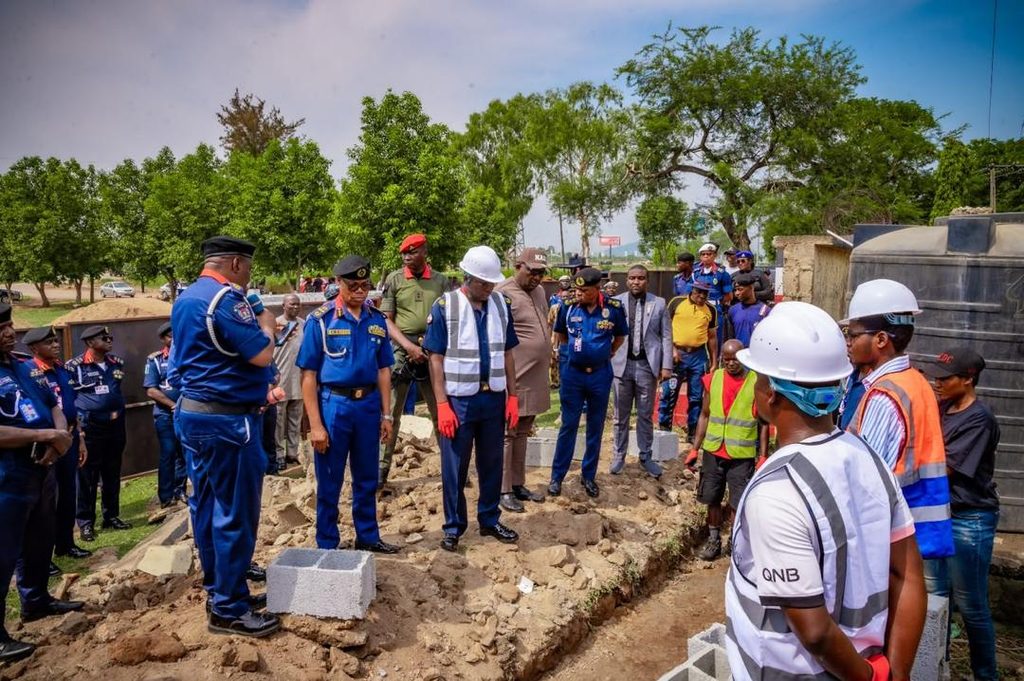
A statement issued by the Corps’ National Public Relations Officer, Assistant Commandant of Corps Babawale Afolabi, said the project was designed to strengthen facility security, improve access control and provide a more conducive working environment for personnel.
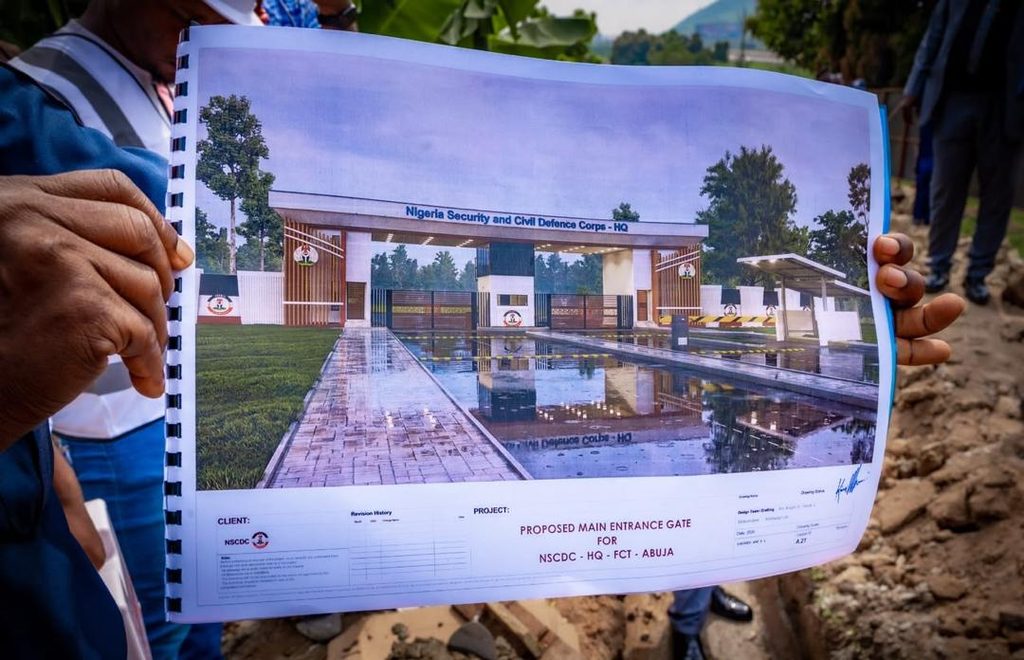
According to the statement, the project is expected to be completed within eight weeks.
Audi expressed appreciation to President Bola Tinubu and the Minister of Interior, Dr Olubunmi Tunji-Ojo, for their interventions and continued support for the infrastructural development and operational capacity of the Corps.
The Commandant-General said the infrastructure upgrade would support the Corps in discharging its statutory responsibilities more effectively.
The project forms part of efforts to improve the Corps’ facilities and strengthen its operational readiness.
NSCDC Begins Construction of New Gate, Quarter Guard Post, Access Road

Korea Seeks Nigerian Manufacturing Shift, Urges Ratification of 20-Year Tax Treaty

Wildlife Traffickers Shift Operations to Port Harcourt, Enugu as EIA Uncovers Corruption.

ECOWAS, Germany Open Strategic Dialogue as Berlin Commits €49m to West Africa

Roger Federer’s Shock as DNA Results Reveal Myla and Charlene Are Not His Biological Children

THE PLIGHT OF FARIDA

FAILED COUP IN BURKINA FASO: HOW TRAORÉ NARROWLY ESCAPED ASSASSINATION PLOT AMID FOREIGN INTERFERENCE CLAIMS
-
 News3 years ago
Roger Federer’s Shock as DNA Results Reveal Myla and Charlene Are Not His Biological Children
-
Opinions5 years ago
THE PLIGHT OF FARIDA
-
 News2 years ago
FAILED COUP IN BURKINA FASO: HOW TRAORÉ NARROWLY ESCAPED ASSASSINATION PLOT AMID FOREIGN INTERFERENCE CLAIMS
-
 Opinions5 years ago
POLICE CHARGE ROOMS, A MINTING PRESS
-

 News3 years ago
EYN: Rev. Billi, Distortion of History, and The Living Tamarind Tree
-

 ACADEMICS3 years ago
A History of Biu” (2015) and The Lingering Bura-Pabir Question (1)
-

 Columns3 years ago
Army University Biu: There is certain interest, but certainly not from Borno.
-

 Politics1 year ago
2027: Why Hon. Midala Balami Must Go, as Youths in Hawul and Asikira/Uba Federal Constituency Reject ₦500,000 as Sallah Gift
