
Columns
Dangote Refinery: Pride to the Nation and Beacon of Hope

Dangote Refinery: Pride to the Nation and Beacon of Hope
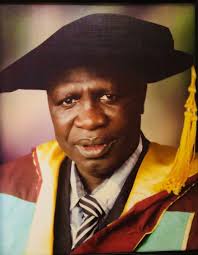
By Prof M.K. Othman
A business mogul the size of Aliko Dangote is assumed to say less outside his business engagements. Yet, as a guest speaker at the 38th ABU convocation lecture on Friday, January 29, 2016, he held an unusual audience: the elites, industrialists, technocrats, academia, and teeming youths, spellbound to breath-taking silence, listening to his soft-spoken golden voice deliver his lecture. Perhaps the silence was not unconnected to the audience’s desire to learn how Aliko Dangote built his empire from the horse’s mouth, hoping to replicate the “how” for other Dangotes. The lecture titled “The Role Entrepreneurship in National Development: The Story of Dangote Group.” The message was educative, thought-provoking, inspiring, and a beacon of hope for the teeming unemployed youth, instilling a sense of optimism and encouragement. It was a fleeting moment with a profound sense of pride and fulfillment to host that giant entrepreneur and accomplished financial guru. Dangote could ostensibly be a distinguished professor of applied business advice and management interested in human and financial resources, including capital formation, savings, and investment. The event was my motivational propeller of nominating Dangote for the conferment of an Honorary Doctorate Degree on the floor of ABU Zaria senate, which was unanimously accepted and done at the 36th Convocation in 2018.
The name “Dangote” resonates in virtually every household in Nigeria and millions of other households in the rest of Africa. In Nigeria, no household can escape the daily use of a series of household essential commodities from the Dangote group: salt, sugar, rice, fruit drinks, vegetable oil, seasoning pasta, and other products such as cement, flour, etc, among others. This widespread influence of the Dangote Group creates a sense of connection and community among the audience, as they realize that Dangote touches the lives of several million people in Africa and beyond through direct employment, job and wealth creation, businesses, and philanthropic activities. The Dangote group is visibly present in about twenty other African countries besides Nigeria.
Although Dangote’s business grew exponentially, patriotism and entrepreneurial acumen made Dangote realize that importation stimulates economic growth in exporting countries while transferring inflation and job losses to importing countries. This realization and Dangote’s trip to Brazil in 1997 marked a turning point for the Dangote group. Dangote said, “I was shocked when I visited Brazil in 1997 and discovered that another third-world country similar to Nigeria had huge manufacturing complexes that provided jobs for its citizens and developed its economy. If they could do it in Brazil, I realized we could replicate it in Nigeria.” Apparently, this patriotic zeal was the sole motivation to address Nigeria’s seemingly unending energy crisis – the importation of petroleum products into the country despite being Africa’s highest crude oil producer.
The petroleum crisis is a multifaceted, hydra-grave problem that has killed the Nigerian refineries and drained Nigerian foreign exchange through massive fraudulent importation of refined petroleum products. The refineries have been gulping enormous financial resources in the last three decades without refining a single drop of crude oil. The government has been paying vast amounts of unaccountable money to subsidize the import of petrol into the country without respite. It is like pouring water into a bottomless bucket with no apparent solution from the legislative and executive arms of government. When the current government withdrew the unsustainable subsidy without comprehending the issue, the cost of transportation tripled, overshooting hyperinflation with consequent hardship. Yet, the refineries are still dysfunctional. With this scenario, Nigerians eagerly waited and prayed for the completion of the 20 billion USD Dangote refinery to take the country out of the woods. With its potential to end decades of Nigeria’s energy crisis, the Dangote Refinery is a beacon of hope and optimism for the future despite the dark forces working against it.
First, the NNPCL, the supposed 20% shareholder of the Dangote Refinery, refused to sell crude oil to the refinery, claiming that Nigerian crude oil was sold in advance and that Dangote should wait for years before the supply started. However, Dangote overcame the problem by purchasing crude oil from as far as America and Brazil.
Next, the Nigerian Midstream and Downstream Petroleum Regulatory Authority (NMDPRA), a subsidiary of NNPCL, condemned the Dangote Refinery. NMDPRA accused the refinery of being a monopoly selling inferior-quality diesel while it was yet to be licensed to commence operations.
The sabotage against the Dangote Refinery has only reinforced Aliko Dangote’s resilience. He refuted the poor-quality claim before the joined House of Representatives committee and accused the NNPCL officials of importing petroleum products from their refineries abroad. He said, “Some Nigerian National Petroleum Company (NNPC) Limited officials and oil traders have blending plants in Malta, an island country in Southern Europe, where they import substandard products. We all know these areas. We know what they are doing”. Dangote associated vehicle problems in Nigeria with substandard imported fuel, noting that diesel produced locally is better quality than imported fuel.
He appealed to the House of Representatives leadership to establish an independent committee to verify the quality of petrol available in Nigeria, particularly those sold at filling stations. “I want you to set up a committee that will bring every representative headed by your chosen honorable member to take samples from filling stations. I must tell you today that all the test certificates that people are busy floating around—where are the labs? Even if they have the labs, I can tell you they are fake certificates.” Despite the challenges, Dangote remains steadfast in supporting the refinery, a testament to his unwavering commitment to national development. His resilience in the face of adversity is inspiring and instills hope for a brighter future.
The internal sabotage attracted unprecedented support for the Dangote refinery from well-meaning Nigerians while condemning the attitude of NNPCL for the apparent lack of support for the refinery. Some of the prominent Nigerians who demonstrated their support were Dr. Akinwunmi Adesina, the President of AfDB; his Royal Highness Sanusi Lamido Sanusi, the Emir of Kano; a multibillionaire businessman; Mr. Femi Otedola, Labour Party presidential candidate, Dr. Peter Obi, the former Bauchi State Commissioner of Education; and Ace Columnist, Dr. Aliyu Tilde, among others.
The officials of the NNPC should have been ashamed of themselves for failing the nation and draining billions of hard-earned USD in the name of refinery maintenance and huge salaries without refining a single drop of crude oil. Instead of supporting the Dangote refinery to acquire easy sailing to see the limelight, but NNPCL created huddles and sabotage, distracting the refinery for smooth take up. Earlier, Nigerians were made to believe NNPCL has 20% shares in the Dangote refinery, but the recent revelation indicates the actual shares of NNPC to be less than 10%. How can someone cripple the business he has shares in?
By its unpleasant behavior toward Dangote’s refinery, NNPCL has dug its grave; the National Assembly must unearth its activities and find reasons why Nigerian refineries have failed to deliver over the years. Why has the habitual turnaround maintenance yielded no result? Who benefits from oil subsidies and oil imports? Who owns the Malta blending plants? Etc. The issues raised by Senator Adams Oshiomhole on the floor of the Senate must be addressed; otherwise, Nigeria will remain economically captive by the unpatriotic people within and without.
The Dangote Refinery, one of the largest in the world, is a source of great pride for Nigeria and, indeed, all of Africa. It marks the end of Nigeria’s petroleum imports and the start of a new economic era that will usher in a prosperous nation with a bright future for our grandchildren. May it happen sooner than later. Amen, and welcome aboard our journey of hope.
Dangote Refinery: Pride to the Nation and Beacon of Hope


IBUAM: The Challenges of a Specialized University
By: Balami Lazarus
Universities are major parts of nation building. its growth, progress, and developments, among other human endeavors. They are known for adding value to human capacity in the realm of intellectual/skills productivity. Therefore,
Universities are playing significant roles in research and development (R&D).
Their core aims are translated into their objectives of teaching, learning, and character, knowing fully well that universities are the citadel of higher levels of educational attainment a country needs.
Whereof, universities are faced with volumes of challenges, both academic and non-academic, laying more in academic works and activities with demands in teaching, learning, and research.
When NEWSng visited the founder of Isaac Balami University of Aeronautics and Management (IBUAM), Engr. Isaac David Balami, recently in Abuja in an attempt to follow up with the progress of this particular specialized private university, the only specialized academic institution in aeronautics and aviation management in academic disciplines/practicalities, including techniques and skills in aviation fields.
It is on record that IBUAM is the only private specialized university that trains and provides students with academics, practicals, techniques, and skills in aeronautics engineering fields and aviation management in sub-Saharan Africa.
Without prejudice, NEWSng has a fair understanding of the challenges our universities are faced with and are struggling to meet.
Be as it may, universities, whether specialized or not, are institutions for serious academic and intellectual studies where large funds are needed to run, manage, and cater to her teaching, learning, and research, including other services. In consideration of this, NEWSng commends kudos to IBUAM.
“I give glory to the Almighty. And let me state here with sincerity of purpose, appreciation, and gratitude to the Borno State Government under my able, progressive, and foresighted governor, Engr. Babagana Umara Zulum, who has made IBUAM see the light of day by her quantum support of sponsoring over 30 native students for various courses at IBUAM. The scholarship package runs in billions of naira. My gratitude also goes to well-meaning Nigerians who stood with me to make IBUAM a reality and the first of its kind on the African continent.”
NEWSng was further informed by the engineer. Isaac Balami, the IBUAM is not a conventional university where you have more academic theories and fewer practicals.
“Let me state here categorically that in IBUAM we are for both academic works and more practical applications. The aviation industry is all about safety, perfection, and security applicable to IBUAM in her courses. With this in mind, our challenges are more than a handful. The management spends hundreds of millions for just services. We are
We’re doing our best to see to the growth of this university. “Most people out there admired universities and their physical structures, including their names, without a second thought. “The aviation industry and its businesses the world over are not a tuft for unserious-minded businessmen or investors; everything surrounding the industry is all about money. Come to think of having a related academic institution (university) like IBUAM, whose objective is to produce graduates of international standard for best practices.”
Take for instance, a university with just three faculties: Sciences, Arts, and Management, with only 300 students. I suppose that, in your opinion, such a university is not impressive.
Thus, if you begin to consider what it takes to run and manage a university in terms of personnel, especially lecturers; facilities; tools; materials; and equipment, you will be shocked.
This has made NEWSng a reason why specialized universities like IBUAM need large funds to function. “You need more than two or three airplanes on the ground for practicals… excluding tax, insurance, and other charges to bring them.”
Reportedly, the challenges faced by a specialized university are much greater than what is commonly heard: “With the collective support of IBUAM management, we are progressing.”
The founder, Engr. Isaac David Balami, said that to bring the attention of the university closer to the people, the management has proposed to have an IBUAM liaison office in Abuja.
IBUAM: The Challenges of a Specialized University

Dadong: A Balanced Voice From Ungwan Rukuba
By: Balami Lazarus
What does it take to be a public mouthpiece? That was the question I asked Comrade Dadong Solomon Antibas. My chats with him were a balanced interface. The answers can be found in the write-up for your review.
Democracy like ours has brought to the limelight public mouthpiece voices; some are weak and political, while others are strong, progressive, constructive, and fearless, demanding progress, growth, and development as dividends of good governance in a peaceful atmosphere.
Governments created by democratic processes are never left alone without citizens asking questions and demanding dividends of democracy for their community and the country at large.
Comrade Dadong Solomon Antibas is a Nigerian, law-abiding citizen. Antibas, a security expert and popular public mouthpiece on the Jos Plateau, has earned the confidence of the people of his community, Ungwan Rukuba, and most parts of the state over the years. For his community, he is their immediate mouthpiece who has been speaking on their plights, calling the attention of the government under the leadership of Governor Caleb Manasseh Mutfwang to do the needful.
Personality like Solomon Antibas’ public impression of him by some citizens of the state is all about seeking relevance and political appointments. “I have no interest whatsoever in any political appointment. My sincere concern for my dear country and my state, Plateau, is peace, progress, growth, and development for future generations.”
Nigerians should begin to speak out on good governance at all levels. Citizens are also responsible for failing to hold them accountable and demand good governance in terms of security, social amenities, and infrastructure.
Ungwan Rukuba is one of the wards in the Jos North Local Government Area. It is an integral part of the city center. Unfortunately, the peaceful Ungwan Rukuba became a flashpoint. The terrorist attack of March 29th, 2026, has put a scar of insecurity on the area.
On insecurity, he said that Mr. President Ahmed Bola Tinubu has failed Nigerians woefully. “Insecurity is a bone of contention. The federal government must take decisive measures on the insecurity challenges bedeviling the nation.”
My findings on Comrade Dadong Antibas revealed that he is not a public affairs commentator or an analyst but a progressive and active public mouthpiece, a voice of the voiceless.
For some, Dadong is attacking the government under the leadership of Governor Mutfwang. ” Is speaking the minds of citizens on bad governance and holding the government of Governor Caleb Manasseh Mutfwang a crime”?
Despite threats on Solomon Dadong, they have not deterred him from speaking for and on behalf of other citizens living in the state. “I have no other way to hold the government accountable than to publicly speak and constructively criticize the leadership’s voicing out feelings and lots of the people…In democracy, governments are made by the people, and as such, they must provide for the collective needs of the masses who voted them in.”
Comrade Antibas is one among the few indigenous people of Plateau who are outspoken and speak with passion and a patriotic mind for his state and Nigeria. “I will live and die in Nigeria speaking, advocating, demanding, and/or holding both federal and state governments accountable for good governance.”
Balami, Publisher/Columnist, 08036779290
Dadong: A Balanced Voice From Ungwan Rukuba
Facts for Understanding Capital Market Investment
By: Balami Lazarus
I grew up in an academic environment where the language is the same: study well, have good grades and be what you desire to be in the future through academic discipline and training.
Many of my contemporaries and I were not spoken to in the language of trade and commerce. But here are some of us as businessmen, entrepreneurs, investors and in other business enterprises far from the academic language we were bred with.
There has never been a market like the capital market the world over where trade per day runs into billions of cash. While market capitalisation is in trillions. The case of the Nigerian Stock Exchange (NSE), now Nigerian Exchange Group, with its trade symbol (NGX) on the floor, is a good example.
Investing in the capital market is profitable for traders and short- and long-term investors. But understanding the market requires some basic facts, which are cash, knowledge, discipline and patience, important for investors to appreciate the market.
Recently a member of my social group came to me to seek my advice on what it takes to invest in the equity market (stock exchange). I was very candid with the fellow, informing him that he needs cash, knowledge, discipline and patience to invest in the capital market after having defined his position as an investor.
First an investor needs cash in his possession set aside to invest in the capital market, the gateway into the market. You can have the other three, but without cash you are not yet an investor.
Lack of knowledge about a business or investments has made so many persons lose money worth millions.
This is typical with good number of Nigerians who attempted to start a business or invest in some going concerns without basic knowledge and understanding of the intricacies of these investments or businesses.
The information and technology age has
made acquiring knowledge very simple; therefore, understanding the stock market is easy these days.
Basically, the capital market depends on and responds to information, government policies, and economic and political happenings/events within and without, which most often determines the graphic movements of the primary market deals on the floor. ‘Bullish’ or ‘bearish’ simply means the plus or minus of the day’s transactions.
The need for monitoring of the market is important for traders and short-term investors. However, with knowledge and careful monitoring of the market, it is a suitable place for short-term gains for investors with multiple numbers of holdings in blue-chip companies like Dangote Cement, Bau Foods, Nestle, Aradel, Okumu Oil Palm, Zenith Bank, Guaranty Trust Bank and others. But for long-term investors, whether the market is bullish or bearish, his investment portfolio is for future use.
Investments like those of the capital market, discipline and being committed are necessary to build a strong, high-quality, profitable portfolio of a large number of holdings of units spread over listed companies of the stock exchange that come with capital appreciation and dividends. This is important, especially for long-term investors.
And the turn key in this type of investment is patience. Generally investments need patience for them to mature for harvest.
In stock market investment, patience plays a vital role in this business. Therefore, for an investor who lacks patience, the capital market is not a tuft for him and shall never be.
To navigate through this market, investors must at all times apply this formula and have it printed on their hearts. Cash = stock units over time + patience = capital apreciation/dividends.
Today there are changes in the exchange which have improved trading. The time of trade has been extended to transactions and payments (T+1). Other electronic applications to aid and encourage investors in the capital market in an attempt to boost the Nigerian economy.
Balami, Publisher/ Columnist 08036779290
Facts for Understanding Capital Market Investment

APC received 5000 decampees in Yobe

Borno APC candidate, Gubio attacked by ISWAP as security forces repel deadly ambush

NSCDC Rescues 15 Trafficked Children, Recovers Stolen Rifles, Busts Telecom Vandalism Syndicate

Roger Federer’s Shock as DNA Results Reveal Myla and Charlene Are Not His Biological Children

THE PLIGHT OF FARIDA

FAILED COUP IN BURKINA FASO: HOW TRAORÉ NARROWLY ESCAPED ASSASSINATION PLOT AMID FOREIGN INTERFERENCE CLAIMS
-
 News2 years ago
Roger Federer’s Shock as DNA Results Reveal Myla and Charlene Are Not His Biological Children
-
Opinions5 years ago
THE PLIGHT OF FARIDA
-
 News1 year ago
FAILED COUP IN BURKINA FASO: HOW TRAORÉ NARROWLY ESCAPED ASSASSINATION PLOT AMID FOREIGN INTERFERENCE CLAIMS
-

 News2 years ago
EYN: Rev. Billi, Distortion of History, and The Living Tamarind Tree
-
 Opinions5 years ago
POLICE CHARGE ROOMS, A MINTING PRESS
-

 ACADEMICS3 years ago
A History of Biu” (2015) and The Lingering Bura-Pabir Question (1)
-

 Columns3 years ago
Army University Biu: There is certain interest, but certainly not from Borno.
-

 Politics1 year ago
2027: Why Hon. Midala Balami Must Go, as Youths in Hawul and Asikira/Uba Federal Constituency Reject ₦500,000 as Sallah Gift
