
News
President Tinubu: I’ll Do All Within My Powers To Equip, Arm The Military

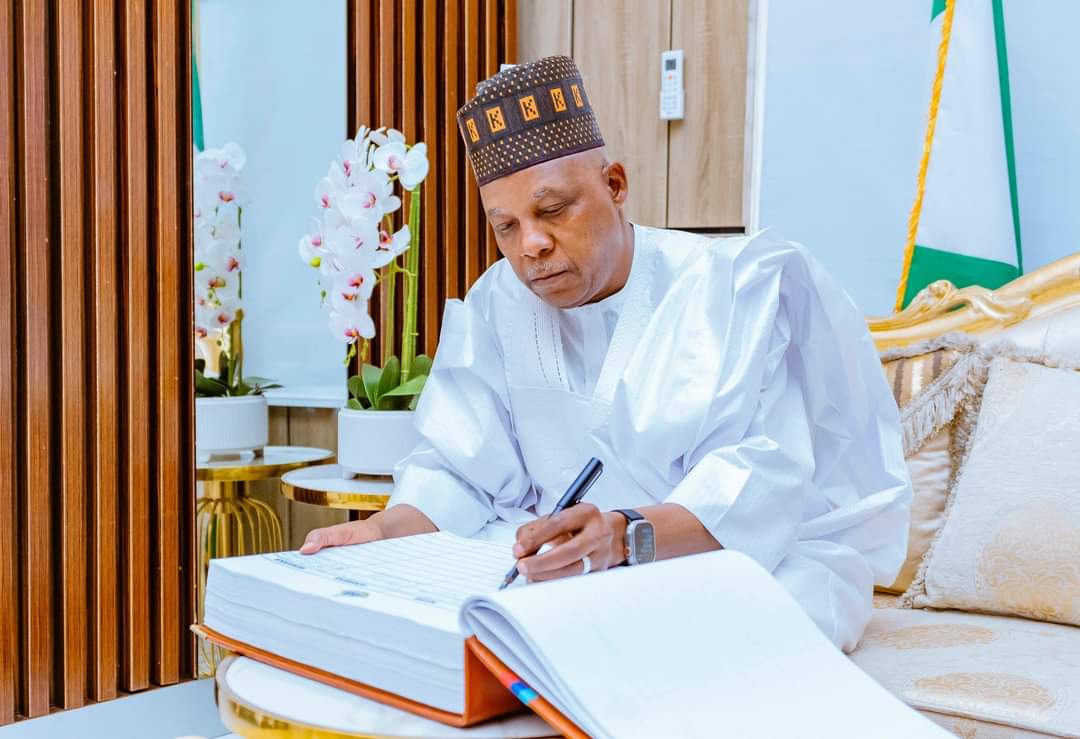
President Tinubu: I’ll Do All Within My Powers To Equip, Arm The Military
*** Applauds Defence College Course 32 graduands’ input in research on mining industry, national security
By: Our Reporter
President Bola Ahmed Tinubu has vowed to invoke his constitutional powers to continue to equip, arm and empower the Nigerian military.
He acknowledged “the importance of strategic leadership in addressing the complex security and development challenges” confronting Nigeria.
President Tinubu made the vow on Friday during the graduation ceremony of the Course 32 participants at the National Defence College, Abuja.
Represented by Vice President Kashim Shettima at the event, the President decried the state of infrastructure at the National Defence College’s permanent site at Piwoyi, Abuja, noting that, while his administration has made substantial progress, there is still more work to be done in the school.
Accordingly, he restated his administration’s commitment to ensuring ongoing work and upgrading of the facilities at the permanent site are completed.
Vowing to arm and equip the nation’s armed forces, the President said, “Under my watch, members of the Armed Forces of Nigeria have made remarkable sacrifices and recorded significant achievements in protecting Nigeria’s territorial integrity and securing the lives and properties of our citizens.
“I will continue to do everything within my constitutional powers to ensure that the Nigerian military is well-resourced and fit for purpose”.
President Tinubu thanked the graduates of Course 32 for their input and contributions to his research aimed at providing “strategic options for harnessing the mining industry in Nigeria to enhance national security and development.
“We are already working with the fundamentals of your recommendations as we look forward to actualising our golden era scenario with substantial security assets supported by robust collaboration and institutional reforms,” he added.
The President praised the unique style of the National Defence College in consolidating knowledge through what he described as “a broad thematic area,” saying it has helped in finding “sustainable solutions to national security and development problems in Nigeria, Africa, and beyond”.
The President highlighted some of the significant progress made by his administration in addressing some of the challenges confronting the nation, including the implementation of the new national minimum wage which, according to him, will not only benefit civilian workers but also personnel of the Nigerian Armed Forces and other security agencies.
He continued: “We are also working tirelessly to curb the menace of crude oil theft and pipeline vandalism in the Niger Delta. I have also tasked the Defence Headquarters and other security agencies with curbing the menace of crude oil theft as soon as possible. This will boost oil and gas production and achieve our desired economic stability
“We are committed to creating an enabling business environment that encourages value addition in our mining sector. We are working with international partners to develop strategies that will harness this sector’s potential for national security and development.”
President Tinubu further charged the graduates of Course 32 to continue upholding the values of excellence, courage, patriotism and integrity, even as he implored them to use their newly acquired knowledge and skills to address the multifarious challenges facing Nigeria.
Earlier, the Commandant of the National Defence College, Rear Admiral Olumuyiwa Olotu, disclosed that the 111 graduates will contribute to Nigeria’s efforts to bolster its strategic leadership across various sectors.
He said, “Our mission is to develop future strategic leaders sufficiently equipped with the requisite knowledge and analytical skills necessary to harness the instruments of national power in a dynamic defence and security environment.
“For participants of Course 32, this mission is achieved through a 9-module curriculum comprising subject areas such as research methodology, science and technology, conflict and war studies, policy formulation analysis, and strategic leadership among others”.
The Course 32 graduates were drawn from national agencies and institutions, including the Nigerian armed forces, Nigeria Police Force, Department of State Security, and several ministries.
Notably, the class also included 19 international participants from countries including India, Brazil, South Africa, and Ghana, as part of Nigeria’s commitment to fostering global cooperation in defense and security matters.
Those present at the graduation ceremony included Minister of Defence, Mohammed Badaru; Minister of Finance and Coordinating Minister for the Economy, Mr. Wale Edun; Minister of State for Defence, Bello Muhammed Matawalle; Chief of Defence Staff (CDS), General Christopher Musa; Chief of Army Staff (COAS), Lt. General Taoreed Lagbaja; Chief of Air Staff (CAS), Air Marshal Hassan Abubakar; Chief of Naval Staff (CNS), Vice Admiral Emmanuel Ogalla; the Ooni of Ife, Oba Enitan Adeyeye Ogunwusi, and former Delta State Governor, James Ibori, among many others.
President Tinubu: I’ll Do All Within My Powers To Equip, Arm The Military


Military
Mutiny: Presidential Guard Tightens Security Around Niger Presidency Amid Reports of Military Protest
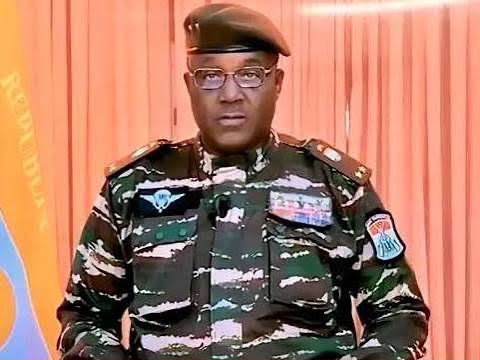
Mutiny: Presidential Guard Tightens Security Around Niger Presidency Amid Reports of Military Protest
By Zagazola Makama
Security was significantly reinforced around Niger’s Presidential Palace in Niamey following reports of unrest involving elements of the country’s armed forces, security sources told Zagazola Makama.
According to multiple security sources, the heightened deployment of the Presidential Guard, supported by armoured vehicles around the Presidential Palace on the night of July 3 and into July 4, followed what was described as a limited protest by personnel of an armoured unit within the Niger Armed Forces (FAN).
The sources said some soldiers reportedly declined deployment to frontline positions in northern Tillabéri Region, particularly around Inatès and Chinagodrar, citing inadequate heavy equipment and insufficient operational resources to confront the growing security threats in the area.
The protest was described by one source as a “small mutiny,” although there has been no official confirmation from the Nigerien authorities.
Security sources said the development triggered concern within the country’s leadership, prompting the reinforcement of security around the Presidential Palace and temporary restrictions on movement in the surrounding area as a precautionary measure.
The Tillabéri Region remains one of Niger’s most volatile security zones, with recurrent attacks by armed extremist groups, including factions linked to the so-called Islamic State in the Greater Sahara (ISGS).
As of the time of filing this report, the Nigerien government and military authorities had not issued any official statement regarding the reported protest or the increased security presence around the Presidency.
The situation remains under close observation.
Mutiny: Presidential Guard Tightens Security Around Niger Presidency Amid Reports of Military Protest
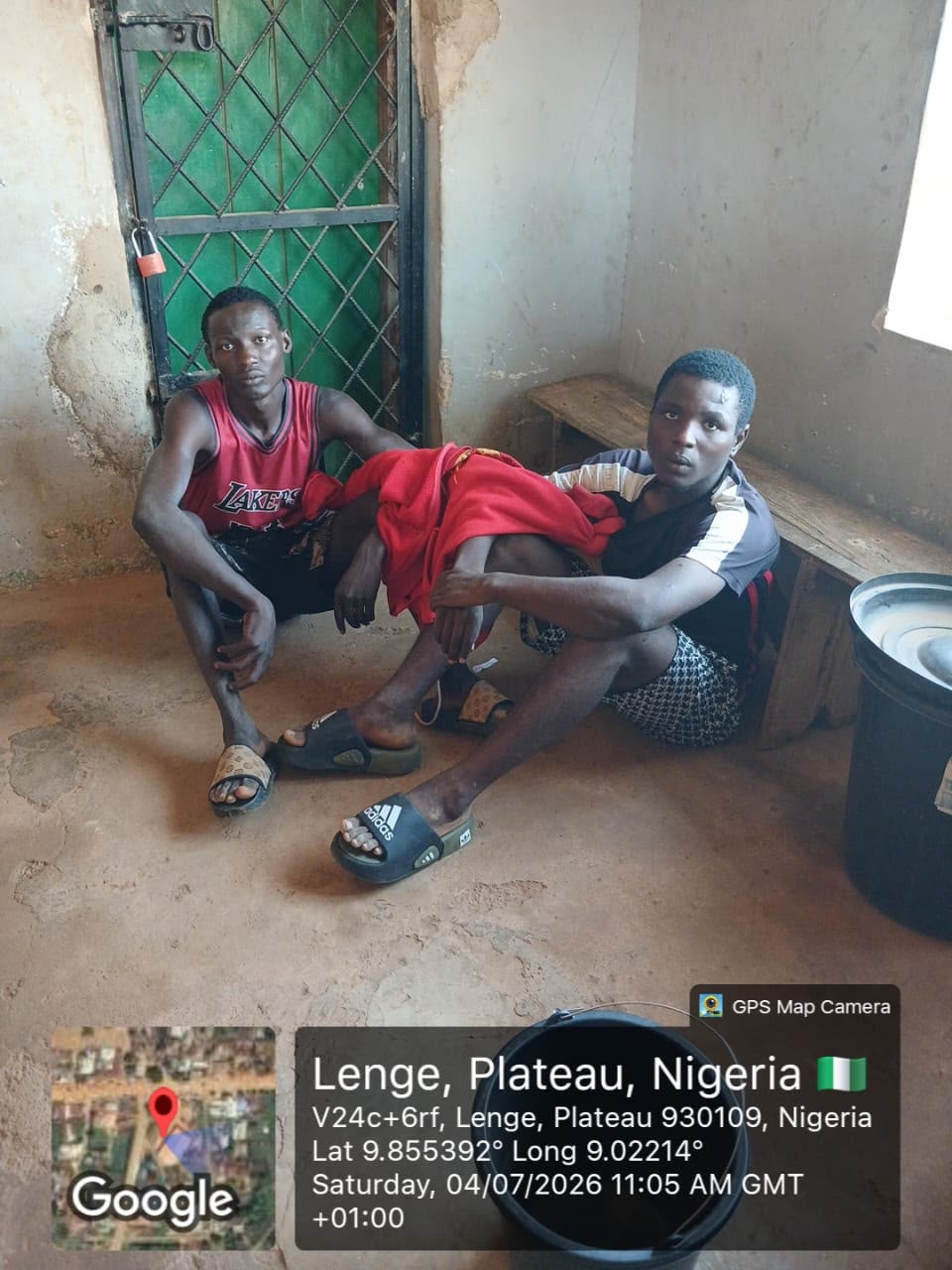
Two suspected criminals arrested during patrol in Plateau
By: Zagazola Makama
Troops of Sector 1 under Operation Enduring Peace have arrested two suspected criminals during a routine patrol in Jos East Local Government Area of Plateau.
Security sources disclosed that the suspects, identified as Azi Ezekiel, 21, and Ajiji Emmanuel, 19, were apprehended at about 10:30 a.m. on Saturday along the road leading to Forbur Village.
The sources said the suspects were intercepted by troops of Sector 1, Sub-Sector 12, while conducting a routine patrol in the area.
According to the sources, the two suspects have been handed over to the Keystone Police Station in Forbur for further investigation and possible prosecution.
The arrest forms part of ongoing security operations aimed at combating criminal activities and enhancing safety across Plateau State.
Two suspected criminals arrested during patrol in Plateau
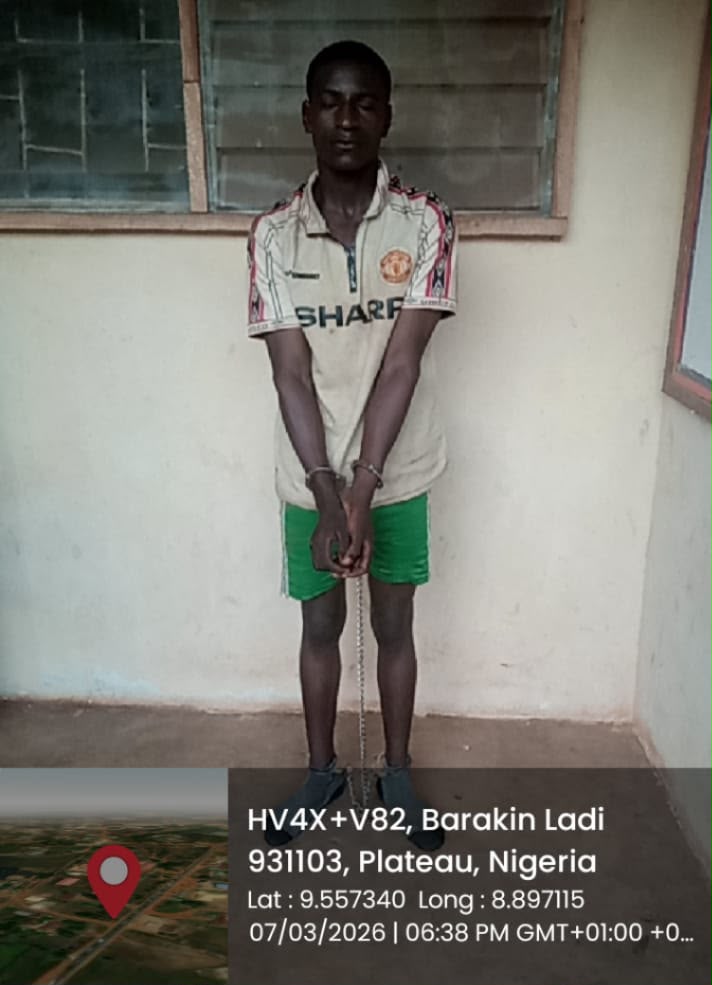
Troops arrest suspected kidnapper in Plateau community
By: Zagazola Makama
Troops of Sector 4 of Operation Enduring Peace have arrested a suspected kidnapper during a security operation in Barkin Ladi Local Government Area of Plateau.
Security sources said the suspect, identified as Mohamdu Surajo, 29, was arrested at about 6:45 p.m. on Friday at Sabon Layi Village following sustained security operations in the area.
The sources disclosed that the suspect is currently in military custody and is undergoing preliminary interrogation to aid ongoing investigations.
They added that the arrest is part of continued efforts by security forces to dismantle criminal networks and enhance security across Plateau State.
Troops arrest suspected kidnapper in Plateau community

President Tinubu Flags Off the Construction of Dikwa–Gamboru Ngala, Bama–Banki International Road Projects

Mutiny: Presidential Guard Tightens Security Around Niger Presidency Amid Reports of Military Protest

Troops Arrest Two Suspected Berom Militia Linked to NIPSS Attack as Security Sources Say Investigation Supports Earlier Leads

Roger Federer’s Shock as DNA Results Reveal Myla and Charlene Are Not His Biological Children

THE PLIGHT OF FARIDA

FAILED COUP IN BURKINA FASO: HOW TRAORÉ NARROWLY ESCAPED ASSASSINATION PLOT AMID FOREIGN INTERFERENCE CLAIMS
-
 News2 years ago
Roger Federer’s Shock as DNA Results Reveal Myla and Charlene Are Not His Biological Children
-
Opinions4 years ago
THE PLIGHT OF FARIDA
-
 News1 year ago
FAILED COUP IN BURKINA FASO: HOW TRAORÉ NARROWLY ESCAPED ASSASSINATION PLOT AMID FOREIGN INTERFERENCE CLAIMS
-

 News2 years ago
EYN: Rev. Billi, Distortion of History, and The Living Tamarind Tree
-
 Opinions5 years ago
POLICE CHARGE ROOMS, A MINTING PRESS
-

 ACADEMICS2 years ago
A History of Biu” (2015) and The Lingering Bura-Pabir Question (1)
-

 Columns2 years ago
Army University Biu: There is certain interest, but certainly not from Borno.
-

 Politics1 year ago
2027: Why Hon. Midala Balami Must Go, as Youths in Hawul and Asikira/Uba Federal Constituency Reject ₦500,000 as Sallah Gift
