
News
Botswana Ready to Learn Nigerian Entrepreneurial, Resilience Spirit, Says Envoy

Botswana Ready to Learn Nigerian Entrepreneurial, Resilience Spirit, Says Envoy
By: Michael Mike
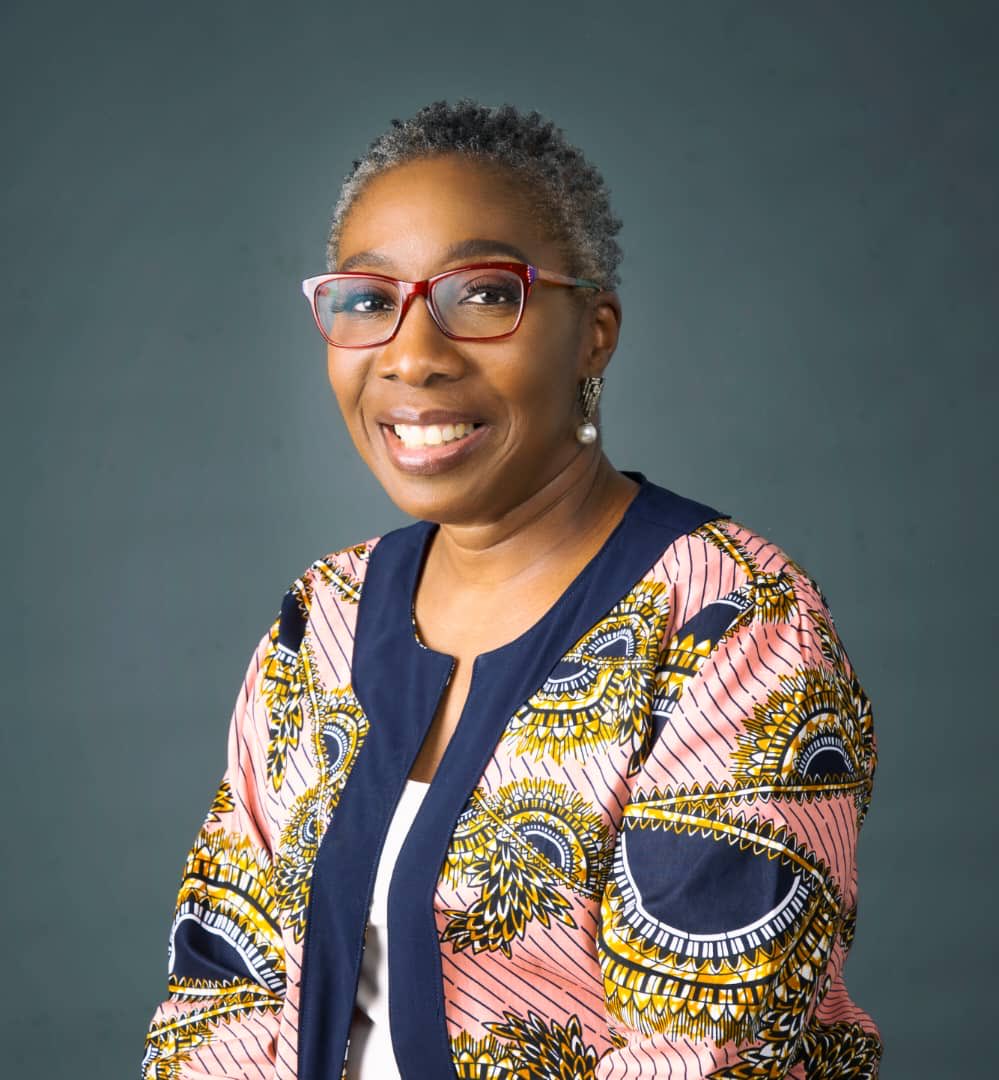
The Botswana High Commissioner to Nigeria, Miss Philda Nani Kereng has sought improved bilateral relations with Nigeria, stating that her country is ready to learn from Nigeria.
Kereng who spoke on Monday night in Abuja on the occasion of her country’s 58 Independence anniversary, said she would be working towards ensuring active projects between both countries.
The envoy said her people want to learn the entrepreneurial and resilience spirit that makes Nigerians excel wherever they find themselves.
She said:”Nigeria for us is a very, very critical partner. We have had relationship with Nigeria for a long time, but this time we want active projects, tangible projects, tangible business collaborations that will see our people trading together, that will see our government trading together, that will see us joining together to lead the rising of the African continent because of the strength that both countries have.”
The envoy said Botswana has special regards for Nigeria, saying “This is a country where we have seen a lot of progress in terms of enterprise, trade, the spirit of enterprise of Nigerians. These people, when they want to do business, they go all out.They hit all milestones and they go against every odds so that they can achieve their intentions.
” We have seen and learned from Nigerians that the mindset of business is something that Botswana wants to learn from. Our people, the government does so much to support small enterprises, micro enterprises, businesses, young people, women and so forth.
“But we want to connect more so that we can learn from you how you do this business, how you venture out in the global space, technology application in trade markets and venturing out into the globe.
” We are also looking up at Nigerian creative sector that is so vibrant. We have talented young people who are not working, but they want to be developed so that they can enter the film industry, fashion industry, food industry, culinary arts, acting, arts, music and everything because Nigeria lives in that space”.
The envoy, who is just four months in Nigeria, said her major task in Nigeria is to foster better trade and business relations between both countries.
According to her: “I’m here to make those connections. And as I celebrate, I know I’m celebrating some milestones because I have already started talking with critical stakeholders. Last week on Monday, we had a business breakfast meeting with the stakeholders in business, giving them information about Botswana investment opportunities. And together we joined one spirit to say we can work together as the two countries.
“At the end of it all, we are using tangible projects and business connections and progress for people of Nigeria and Botswana to make sure that business dealings and business facilitation is made easy for us because we want to both benefit.”
Speaking on areas of interest, the envoy said currently the trade between both countries are secondary and still very small, ” But, you know, we are looking at opportunities where we can get more products from here, especially the natural, you know, products, you know, how you do cosmetics and stuff like that, textiles and so forth.
“We also want to trade on skills and capacities. So there’s not much that we are doing together in terms of volumes of imports and exports, but we are here to cultivate what we have seen a big potential.”
On the other hand, she said Nigeria can learn from her country in the area of agriculture, especially aniimal husbandry.
“Those that are in the agricultural sector, Botswana beef production story, livestock rearing story is very powerful. We have been exporting to the European market the best beef for decades. So we want to teach you how to do animal husbandry, produce quality beef, because here, I’m sorry, I can’t eat the beef because I’ve tasted the best.
“So we want to collaborate for the beef development sector. But Nigeria can also invest in Botswana to do trainings and set academies for the creatives and also bring your products to Botswana. But most importantly also, or more importantly, travel to Botswana as tourists.”
She stressed that “We believe that cultural exchange is a powerful tool for building bridges between nations. By sharing our customs, traditions, and values, we can deepen our understanding and appreciation for one another.
“As we move forward, we’ll continue to promote people-to-people diplomacy, fostering greater understanding and cooperation. We believe that the ties between Botswana and Nigeria will grow stronger with each passing day.”
Botswana Ready to Learn Nigerian Entrepreneurial, Resilience Spirit, Says Envoy


ECOWAS AT A CROSSROADS AS TOURAY ENDS FOUR-YEAR ERA
By Michael Olukayode
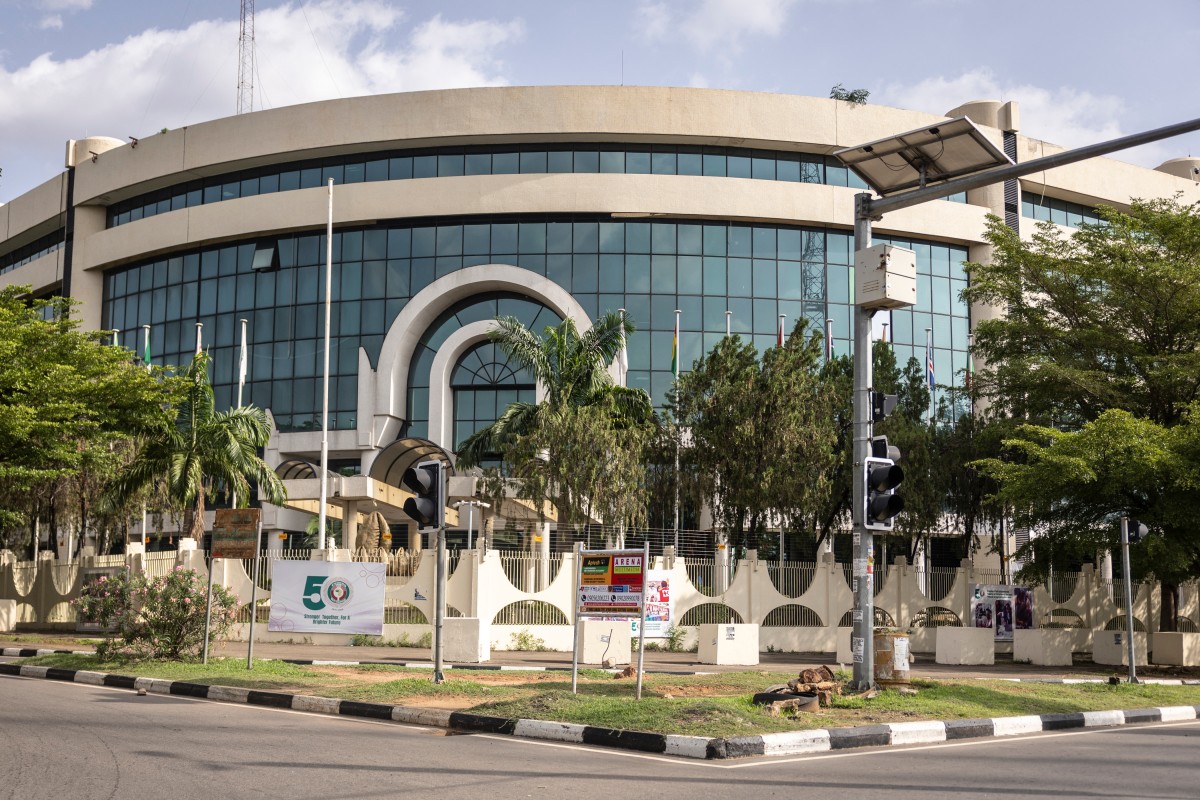
The departure of Dr Omar Alieu Touray as President of the ECOWAS Commission closes a four-year chapter in the history of West Africa’s foremost regional organisation, but it also opens one of its most uncertain.
Touray, a Gambian diplomat who took charge of the Commission in 2022, leaves office after presiding over a period in which the Economic Community of West African States (ECOWAS) was tested by military coups, worsening insecurity, economic pressures and, most significantly, the withdrawal of Burkina Faso, Mali and Niger from the regional bloc.
The formal handover of the Commission’s statutory leadership is scheduled for Monday, August 31, in Abuja, bringing the Touray era to a close and ushering in a new leadership at a defining moment for the 51-year-old organisation.
His exit is therefore more than a routine change of guard. It provides an opportunity to assess not only the record of his administration but also the direction of an organisation that has been fundamentally altered during his tenure.
Created in Lagos on May 28, 1975, ECOWAS was conceived principally as an instrument for economic integration. Over five decades, however, it developed into much more than a trading bloc, assuming responsibilities in peacekeeping, conflict resolution, democratic governance, humanitarian intervention, health, infrastructure and regional security.
Touray inherited this expansive institution in 2022 at a time when many of its traditional assumptions were already under strain.
His four years in office would subsequently be dominated by a succession of political and security crises that tested the limits of ECOWAS’s authority and its ability to hold its members together.
A presidency defined by turbulence
The most consequential development of the Touray years was the rupture with the Sahelian states.
Following military takeovers, Burkina Faso, Mali and Niger increasingly came into confrontation with ECOWAS over the restoration of constitutional government, sanctions and the bloc’s approach to regional security.
The crisis eventually resulted in the three countries withdrawing from ECOWAS and strengthening their alternative regional arrangement under the Alliance of Sahel States.
For an organisation whose central philosophy has been regional integration, the departure of three member states represented perhaps the most serious institutional setback in its history.
It also exposed the limits of ECOWAS’s traditional approach to political crises.
The organisation had established itself as one of Africa’s strongest regional defenders of constitutional government, using diplomatic pressure and sanctions to discourage military takeovers.
But the recent coups demonstrated that the authority of regional institutions could not be taken for granted.
The sanctions imposed on military regimes generated criticism in some quarters, with concerns that the economic consequences were being felt by ordinary citizens. At the same time, ECOWAS faced the difficult argument that failing to respond to unconstitutional changes of government could encourage further military interventions.
Touray’s administration was consequently forced to navigate a difficult balance between defending regional democratic principles and preserving the cohesion of the community.
What ECOWAS built before Touray
Yet the difficulties of the past four years should not obscure the broader record of ECOWAS.
Since 1975, the organisation has achieved considerable progress in bringing West African countries closer together.
The free movement regime remains one of its most visible achievements. Millions of citizens across the region have benefited from arrangements that facilitate travel, residence and economic activity across national borders.
The ECOWAS Trade Liberalisation Scheme and the Common External Tariff have similarly provided a framework for expanding intra-regional commerce and moving the region towards a common market.
The organisation has also played a historic role in peace and security.
Through ECOMOG, ECOWAS intervened in devastating conflicts in Liberia and Sierra Leone, demonstrating that the regional bloc could mobilise collectively when national crises threatened wider regional stability.
Its responsibilities later expanded to mediation, conflict prevention, peacebuilding and the defence of constitutional order.
In infrastructure and energy, ECOWAS has promoted regional projects aimed at connecting economies that were separated by colonial-era boundaries. The West African Power Pool, for instance, represents an attempt to make electricity a regional rather than purely national resource.
The organisation has also developed regional cooperation in agriculture, health and humanitarian affairs.
Under Touray, these areas remained part of the Commission’s agenda.
The implementation of the ECOWAS Vision 2050 continued, with emphasis on regional integration, trade, mobility, youth employment, agriculture, healthcare and development.
The West African Health Organisation also continued regional cooperation in disease surveillance and emergency preparedness. The distribution of 30 medical ambulances to member states was among the practical interventions highlighted during the period.
These initiatives underline an important point: the Touray presidency cannot be measured only by the political crises that dominated headlines.
The unfinished business
But ECOWAS’s long history also contains a catalogue of unfinished ambitions.
The proposed single currency, the Eco, remains unrealised despite decades of planning.
Intra-regional trade remains below its potential, while traders and travellers continue to face cumbersome border procedures, non-tariff barriers, delays and other obstacles.
Regional agreements are frequently undermined by weak implementation at the national level, reflecting the continuing tension between national sovereignty and regional integration.
Security is perhaps the most pressing unresolved challenge.
Despite years of cooperation, terrorism and violent extremism have continued to devastate parts of the Sahel and threaten to spread towards coastal West Africa.
The emergence of the Alliance of Sahel States has added another layer to the security equation, with countries that once operated within ECOWAS now pursuing a separate political and security path.
What Touray leaves behind
It is against this background that Touray’s departure acquires significance.
He leaves behind an ECOWAS that is still one of Africa’s most important regional institutions, but one that is no longer the same organisation he inherited in 2022.
The region has become more politically fragmented. Trust between some member states and the regional institution has weakened. The security environment has deteriorated, while the organisation’s traditional mechanisms for responding to political crises have been subjected to unprecedented scrutiny.
Yet the institution itself has survived.
Touray’s final months in office were marked by farewell engagements with regional leaders, including Côte d’Ivoire’s President Alassane Ouattara, as he prepared to hand over after four years at the helm.
His departure thus offers a moment for both reflection and recalibration.
The incoming leadership will inherit the responsibility of protecting the achievements accumulated since 1975 while addressing the weaknesses that have become increasingly apparent.
It will have to restore confidence in ECOWAS as an institution that delivers tangible benefits to ordinary West Africans, rather than one perceived principally through the lens of sanctions and political disputes.
It will also face the delicate question of relations with Burkina Faso, Mali and Niger and whether the fractures created during the Touray years can eventually be narrowed.
A new test for an old institution
The central question confronting ECOWAS after Touray is no longer simply how to deepen .
It is how to keep West Africa together in an era of growing political fragmentation.
The organisation has demonstrated over the past five decades that regional cooperation is possible. It has made movement across borders easier, established mechanisms for trade and created a regional framework for responding to conflict and political instability.
But the events of the past four years have shown that institutions alone cannot guarantee unity.
The next leadership will therefore be judged not merely by the number of protocols it adopts or summits it convenes, but by whether it can rebuild trust, improve regional security, remove barriers to commerce and make integration meaningful to citizens.
Touray leaves at a crossroads.
His four-year tenure will be remembered for an ECOWAS that confronted some of its deepest crises since its creation—and for an organisation that emerged from those crises smaller in membership, more politically divided and facing a fundamental question about its future.
The end of the Touray era is, therefore, not simply the end of one administration. It is the beginning of a new test of whether ECOWAS can turn its historic achievements into a renewed project of West African unity.
ECOWAS AT A CROSSROADS AS TOURAY ENDS FOUR-YEAR ERA
News
NDLEA Busts N6.2bn International Drug Pipeline, Seizes ‘Jihadi Drug’ Hidden in Ghana Soap, 3.9m Opioid Pills
NDLEA Busts N6.2bn International Drug Pipeline, Seizes ‘Jihadi Drug’ Hidden in Ghana Soap, 3.9m Opioid Pills
By: Michael Mike
The National Drug Law Enforcement Agency (NDLEA) has uncovered a major international drug trafficking operation spanning Africa, Europe and Asia, intercepting illicit consignments worth more than N6.2 billion in Lagos while arresting a suspected cross-border kingpin and several other traffickers.
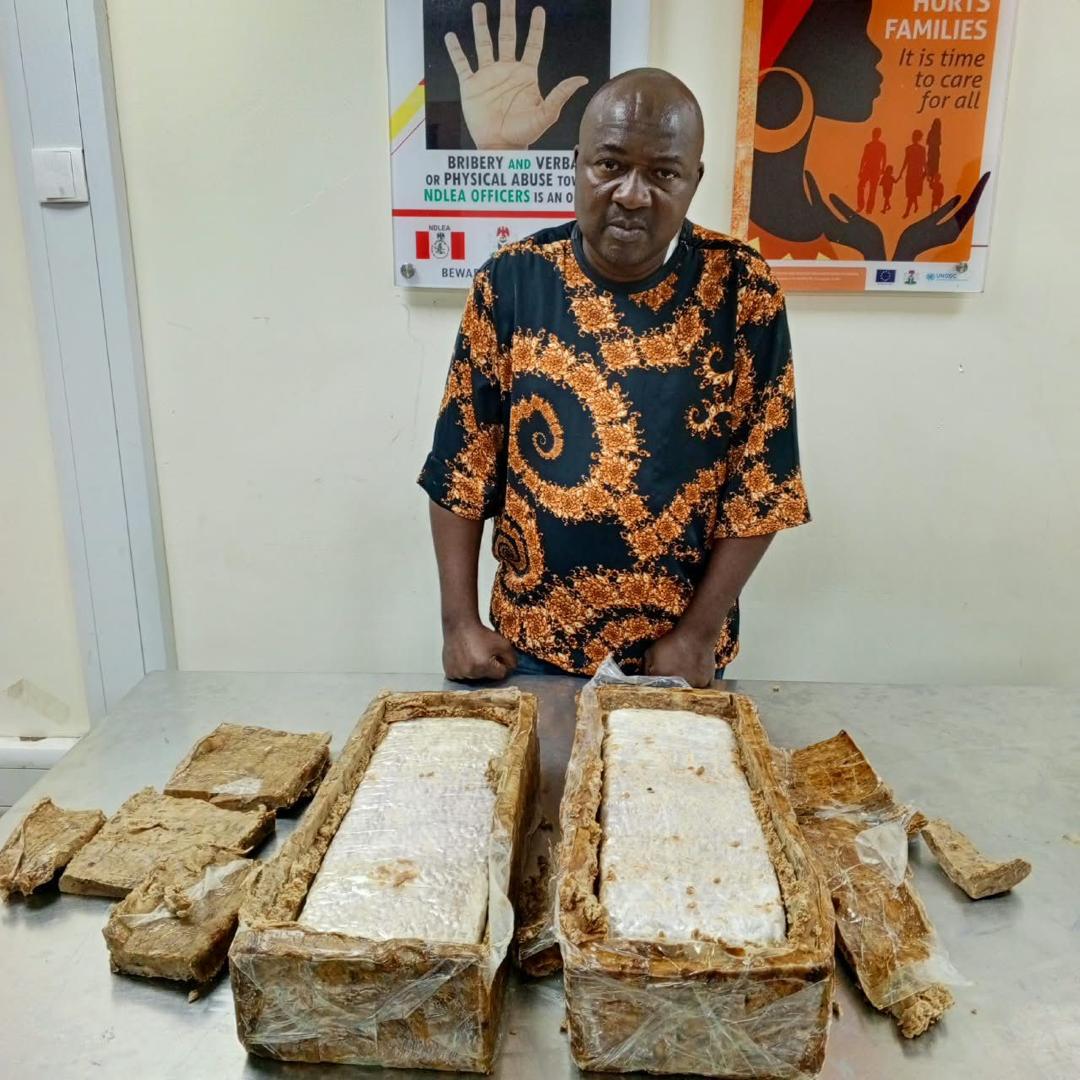
The seizures expose the increasingly sophisticated methods being deployed by drug syndicates to move narcotics into Nigeria, including the concealment of 47,200 tablets of captagon, notoriously known as the “Jihadi drug,” inside ordinary blocks of bathing soap imported from Ghana.

The captagon haul, valued at more than N1.5 billion, was intercepted at the Murtala Muhammed International Airport (MMIA), Lagos, after NDLEA operatives arrested 49-year-old Akinbile Kazeem Aikins, who arrived from Accra aboard an African World Airlines flight.
But the captagon seizure represented only part of a larger haul uncovered at the airport.
NDLEA operatives also recovered 3,900,030 tablets of Tramaking 225mg and Tapentadol 250mg, with a combined weight of 2,787.40 kilogrammes and an estimated street value exceeding N4.6 billion, from four abandoned consignments.
The spokesman of the anti-narcotics agency, Femi Babafemi in a statement on Sunday, said the shipments originated from multiple international routes, with three consignments containing 900,000 tablets of Tramaking arriving from Bangladesh through RwandAir, while another shipment containing more than three million Tapentadol tablets arrived from Amsterdam aboard Qatar Airways.
He noted that the scale and geographical spread of the seizures point to a sophisticated transnational trafficking chain exploiting Nigeria’s international aviation routes and commercial cargo channels to move dangerous pharmaceutical opioids and illicit stimulants into the country.
The development came as NDLEA operations across several states yielded further major seizures, including cocaine, heroin, Colorado and more than one tonne of cannabis, underscoring the expanding challenge confronting Nigeria’s drug-control authorities.
In Rivers State, operatives cracked open a fireproof iron safe recovered from a notorious drug den in Port Harcourt, discovering 316 grammes of cocaine, 10 grammes of heroin and 237 grammes of Colorado concealed inside.
In Ondo State, five suspects were arrested in separate operations with a combined 1,069 kilogrammes of skunk, while Delta State recorded the recovery of more than 176,000 assorted opioid pills.
The latest operations highlight not only the sheer volume of illicit drugs being moved through Nigeria but also the increasingly inventive concealment techniques and international routes being exploited by traffickers.
NDLEA Chairman and Chief Executive Officer, Brig. Gen. Buba Marwa (rtd.), commended the officers involved and ordered personnel across the country to sustain the pressure on traffickers.
He specifically directed operatives to remain vigilant against syndicates deploying unconventional concealment methods, including the use of everyday household items such as bathing soap to smuggle illicit consignments.
With millions of opioid tablets intercepted alongside captagon, cocaine, heroin and cannabis in one week, the NDLEA seizures provide a stark picture of the scale, sophistication and international reach of Nigeria’s illicit drug trade.
NDLEA Busts N6.2bn International Drug Pipeline, Seizes ‘Jihadi Drug’ Hidden in Ghana Soap, 3.9m Opioid Pills
News
A Pain Too Deep for Words: Farewell to My Beloved Sister, Grace Evbayiro Asemota (née Osayande),

A Pain Too Deep for Words: Farewell to My Beloved Sister, Grace Evbayiro Asemota (née Osayande),
By Augustine Osayande, PhD
August 27, 2026, will forever remain one of the darkest and most painful days of my life. It was the day death came knocking and took away someone profoundly dear to my heart—my beloved sister, Grace Evbayiro Asemota (née Osayande).
There are moments in life for which no words are sufficient, and the loss of a loved one is chief among them. No matter how strong we believe we are for life’s realities, losing someone who shared our blood, our history, and our journey leaves a wound that language cannot fully capture.
Grace was far more than a sister. She was an integral part of my life, a pillar of our family’s history, and a true powerhouse within our father’s legacy. Her sudden departure creates a profound emptiness that cannot easily be filled.
It remains difficult to accept that she is gone—to believe that a sister whose voice, warm presence, and counsel were so central to our daily lives must now be spoken of in the past tense. Death has removed her physical presence, but it can never erase the legacy she left behind.
The pain of losing a sister is unique. It is the grief of losing a lifelong companion from the beginning of one’s journey—recalling family gatherings, shared laughter, joint struggles, and the quiet understanding that only siblings possess. While Grace might not always have offered material riches in moments of trial, her wise counsel and steady guidance routinely provided far greater solutions to our deepest challenges.
On that tragic day, a vital link in the Osayande family was broken. A chair stands empty. A cherished voice has gone silent. Our hearts are left searching for answers to questions that mortal understanding cannot resolve.
Grace’s passing serves as a solemn reminder of the fragility and unpredictability of human existence. We plan for tomorrow without knowing what it holds; we bid farewell to loved ones expecting to see them again, unaware that a simple goodbye might be our last. The weight of what we wished we had said, the moments we wished we had shared, and the time we wished we had spent together will linger with us.
If tears could persuade death, or if love could anchor our departed, she would still be with us. But death does not negotiate with human emotion. It takes, leaving behind silence, memories, and grief. Yet, amid this sorrow, I remain deeply grateful to God for the gift of her life, for the years we shared, and for the honor of calling her my sister.
Though her passing brings immense grief, her legacy endures. She lives on in our memories, in the stories we will pass down, and in the unbroken bond of family she helped nurture.
To my beloved sister: your absence is deeply felt, and accepting this reality remains a heavy burden. Yet, even through our tears, we pray for the strength to carry on. We pray that God, in His infinite mercy, will comfort our entire family, particularly those closest to you who bear the heaviest weight of this loss. We ask for peace amid our sorrow and the grace to accept what we cannot change.
Grace, you may be gone from our sight, but you will never be absent from our hearts. Your place in our family is irreplaceable, your name will always be spoken with love, and our bond remains unbroken.
As Thomas Campbell wisely noted, “To live in hearts we leave behind is not to die.” You came into our lives as a blessing, walked beside us as a sister, and left us with memories that will endure forever.
Farewell, my dear sister. Fare thee well, beautiful soul. May you find eternal rest in the bosom of your Creator.
You will be deeply missed, forever cherished, and never forgotten.
Rest in peaceful triumph.
Augustine Osayande PhD
A Pain Too Deep for Words: Farewell to My Beloved Sister, Grace Evbayiro Asemota (née Osayande),

ECOWAS AT A CROSSROADS AS TOURAY ENDS FOUR-YEAR ERA

NDLEA Busts N6.2bn International Drug Pipeline, Seizes ‘Jihadi Drug’ Hidden in Ghana Soap, 3.9m Opioid Pills

A Pain Too Deep for Words: Farewell to My Beloved Sister, Grace Evbayiro Asemota (née Osayande),

Roger Federer’s Shock as DNA Results Reveal Myla and Charlene Are Not His Biological Children

THE PLIGHT OF FARIDA

FAILED COUP IN BURKINA FASO: HOW TRAORÉ NARROWLY ESCAPED ASSASSINATION PLOT AMID FOREIGN INTERFERENCE CLAIMS
-
 News2 years ago
Roger Federer’s Shock as DNA Results Reveal Myla and Charlene Are Not His Biological Children
-
Opinions5 years ago
THE PLIGHT OF FARIDA
-
 News1 year ago
FAILED COUP IN BURKINA FASO: HOW TRAORÉ NARROWLY ESCAPED ASSASSINATION PLOT AMID FOREIGN INTERFERENCE CLAIMS
-

 News2 years ago
EYN: Rev. Billi, Distortion of History, and The Living Tamarind Tree
-
 Opinions5 years ago
POLICE CHARGE ROOMS, A MINTING PRESS
-

 ACADEMICS3 years ago
A History of Biu” (2015) and The Lingering Bura-Pabir Question (1)
-

 Columns2 years ago
Army University Biu: There is certain interest, but certainly not from Borno.
-

 Politics1 year ago
2027: Why Hon. Midala Balami Must Go, as Youths in Hawul and Asikira/Uba Federal Constituency Reject ₦500,000 as Sallah Gift
