
News
Niger Government Faces Backlash Over Pipeline Sabotage Allegations Against Nigeria


Niger Government Faces Backlash Over Pipeline Sabotage Allegations Against Nigeria
By: Zagazola Makama
The Nigerien government is under fire from its citizens and regional observers following its accusations that Nigeria orchestrated the recent sabotage of an oil pipeline between Lido and Karakara in the Dosso region. Despite claims of possessing “concrete evidence” against Nigeria, the Niger government has yet to present any substantiating proof, leading to widespread skepticism and criticism.
On December 18, 2024, Nigerien authorities summoned Nigeria’s Chargé d’Affaires to account for the alleged involvement of Nigerian officials in the pipeline attack. The Nigerien Minister of Energy accused Nigeria of conspiring with foreign powers implicitly referencing France to destabilize Niger by targeting its critical energy infrastructure. These allegations arise amid heightened tensions following Niger’s withdrawal from the Economic Community of West African States (ECOWAS).
The accusations have ignited a wave of criticism among Nigeriens, many of whom view their government as clueless and unfocused. They see these moves as indicative of a government struggling to maintain control and shifting blame to external actors to mask internal security failures.
One critic argued that the leadership is deflecting blame for its failure to secure strategic facilities and prevent attacks, Abdoulaye Boubacar, remarked, “When you are sovereign, you ensure the security of your strategic facilities.” he said.
Some observers interpret the accusations as a misguided attempt to isolate Nigeria due to its close ties with France, a nation that Niger’s junta has frequently accused of interference. “This is not about facts; this is about Nigeria’s relationship with France,” stated Abdou Pagoui, a public commentator.
Amadou Harouna, another resident said Niger’s government is at a critical juncture, and its reliance on external blame is increasingly seen as a dangerous distraction from pressing internal issues. By failing to acknowledge its own security shortcomings, Niger risks exacerbating its vulnerabilities. The economic fallout from leaving ECOWAS, coupled with internal security lapses, has already compounded the challenges facing the nation. “The decision to exit ECOWAS was shortsighted and has brought more harm than good,” remarked a regional analyst. “Blaming Nigeria or anyone else will not solve Niger’s problems.” Said Harouna.
Zagazola Makama, a Counter Insurgency Expert and Security Analyst said the ongoing tensions and unfounded accusations against Nigeria threaten to strain relations with Niger’s largest trading partner and significant economic ally. This diplomatic misstep could worsen Niger’s isolation, particularly as it navigates the fallout from its decision to distance itself from West African norms and allies.
Nigeria and Niger share over 1,400 kilometers of porous borders, making collaboration essential for tackling cross border terrorism and other security challenges. As Africa’s largest economy and a regional leader, Nigeria has consistently sought to strengthen ties with Niger, offering support in areas such as counterterrorism and intelligence sharing.
In July 2024, Nigeria’s Chief of Defence Staff, General Christopher Musa, led a high level delegation to Niger to discuss regional security and enhance military cooperation. This visit marked a significant step toward rebuilding trust and addressing shared threats. However, Niger’s recent withdrawal from key regional initiatives, such as ECOWAS and the Multinational Joint Task Force (MNJTF), has undermined these efforts.
Moreover, the continued focus on external blame diverts attention from critical internal issues, including insecurity, poverty, and poor governance. As Niger’s leadership attempts to portray itself as a bulwark against external threats, it is increasingly perceive it as disconnected from reality.
Niger’s withdrawal from the Multinational Joint Task Force (MNJTF) poses a significant threat to regional stability. The MNJTF was established to combat terrorism and trans border crimes in the Lake Chad Basin. The absence of military collaboration with Nigeria may lead to a resurgence of terrorist attacks. Without Niger’s participation, the MNJTF faces reduced capacity to patrol border areas, leaving them vulnerable to increased terrorist activity. Already, there are concerns that Boko Haram and ISWAP were already exploiting this gap to escalate attacks on both sides of the border.
Historically, such groups have exploited security vacuums, leading to some of the deadliest attacks in the region. Niger’s security failures are not unique, but its approach to addressing them has been counterproductive. The blame game does little to address the root causes of insecurity and alienates allies that are essential for long term stability.
As extremist groups continue to pose a significant threat, Niger must recognize that its success in combating these challenges lies in unity, not isolation. Cooperation with Nigeria and other regional partners is not just an option it is a necessity for safeguarding the future of the Sahel and West Africa. Cooperation with Nigeria is not merely beneficial; it is essential for addressing the escalating security threats that both nations faces . Only through cooperation and a commitment to addressing internal challenges can Niger hope to achieve lasting stability and security in the region.
Zagazola Makama is a Counter Insurgency Expert and Security Analyst in the Lake Chad Region
Niger Government Faces Backlash Over Pipeline Sabotage Allegations Against Nigeria


News
FG Unveils NHRC–Police Liaison Framework to Tackle Rights Violations, Strengthen Accountability

FG Unveils NHRC–Police Liaison Framework to Tackle Rights Violations, Strengthen Accountability
By: Michael Mike
The Federal Government on Wednesday launched a new institutional framework aimed at strengthening collaboration between the National Human Rights Commission (NHRC) and the Nigeria Police Force (NPF), describing it as a major step towards addressing human rights violations, improving police accountability and rebuilding public confidence in law enforcement.
Attorney-General of the Federation and Minister of Justice, Lateef Fagbemi, who inaugurated the NHRC–NPF Liaison Framework at the headquarters of the National Human Rights Commission in Abuja, said the initiative would institutionalise cooperation between both agencies to ensure more effective protection of citizens’ rights and improve the administration of justice.
Fagbemi acknowledged that despite the police and the NHRC being established to safeguard citizens’ rights, a significant number of complaints received by the commission still emanate from alleged abuses by law enforcement agencies.
According to him, government has a constitutional and international obligation under the International Covenant on Civil and Political Rights (ICCPR) to provide effective remedies for victims of human rights violations, making closer collaboration between the two institutions imperative.
“Effective policing and respect for human rights are mutually reinforcing objectives that strengthen public confidence, improve cooperation between law enforcement agencies and the communities they serve, and contribute to the overall effectiveness of the criminal justice system,” he stated.
The Attorney-General described the liaison framework as a practical mechanism that would enable the NHRC and the police to improve communication, facilitate prompt handling of complaints, strengthen oversight of police detention facilities, ensure greater compliance with human rights standards and jointly address systemic challenges affecting justice delivery.
He stressed that sustainable reforms in the criminal justice sector could only be achieved through institutional partnerships rather than isolated interventions.
The Attorney-General noted that the framework introduces designated focal officers at national and operational levels, transforming previous informal engagements into a structured and enduring institutional relationship.
He said the initiative also places emphasis on preventing rights violations through continuous dialogue, training, institutional cooperation and preventive oversight rather than merely responding after abuses occur.
Fagbemi highlighted ongoing reforms undertaken by the Federal Government to modernise Nigeria’s justice system, citing the Administration of Criminal Justice Act, 2015, the Anti-Torture Act, 2017, and the Police Act, 2020 as legislative milestones designed to strengthen accountability and ensure respect for constitutional rights.
He added that the administration of President Bola Ahmed Tinubu had continued to deepen justice sector reforms by improving judicial infrastructure, appointing judges to fill vacancies and significantly enhancing the welfare and remuneration of judicial officers.
The minister also linked the government’s broader security reforms to improved human rights protection, disclosing that President Tinubu had approved a salary increase of between 30 and 80 per cent for personnel of the Nigerian Armed Forces as part of efforts to boost professionalism, morale and operational effectiveness.
According to him, stronger welfare for security personnel complements efforts to build institutions that uphold accountability, human dignity and the rule of law.
He assured that the Federal Ministry of Justice would continue to support initiatives promoting cooperation among law enforcement agencies, oversight institutions, prosecutors, the judiciary, legal aid organisations and civil society.
Fagbemi, however, cautioned that the success of the framework would depend not on its inauguration but on faithful implementation by designated officers and participating institutions.
He urged all stakeholders to ensure regular communication, diligent monitoring and sustained collaboration to achieve measurable improvements in policing and human rights protection.
Earlier, the Executive Secretary of the National Human Rights Commission, Chief Tony Ojukwu, described the inauguration as the beginning of a new phase of institutional partnership between two critical national institutions charged with safeguarding the rights, dignity and security of Nigerians.
Ojukwu said the framework was the culmination of sustained engagement between the Commission and the Nigeria Police Force, tracing its origins to a high-level working visit convened by the Administration of Criminal Justice Monitoring Committee on June 16, 2025, and reinforced through subsequent consultations between the Commission and police leadership.
According to him, both institutions had consistently reaffirmed that protecting human rights and maintaining public safety are complementary responsibilities requiring robust collaboration rather than isolated action.
He commended the Inspector-General of Police for approving the reactivation of the NHRC–NPF Liaison Framework and for supporting the establishment of national coordination structures that would deepen cooperation between the two institutions.
Ojukwu also praised the Deputy Inspector-General of Police and other senior officers for their commitment to translating the initiative into an operational framework through extensive consultations with the Commission.
He explained that the framework was designed to move beyond dialogue to practical implementation by strengthening institutional accountability, promoting respect for human rights, ensuring compliance with the Constitution and criminal justice laws, improving professionalism in policing, enhancing public confidence in law enforcement and deepening strategic collaboration between the NHRC and the police.
According to him, the partnership will establish structured communication channels, improve complaint resolution mechanisms, strengthen detention monitoring, build the capacity of officers and develop coordinated responses to emerging human rights challenges across the country.
“Our shared objective is clear—to ensure that policing activities across Nigeria consistently uphold the rule of law, professionalism and respect for the dignity of every person,” he said.
Ojukwu reaffirmed the Commission’s commitment to working closely with the Nigeria Police Force and other justice sector institutions to ensure the effective implementation of the framework, expressing confidence that the partnership would significantly strengthen accountability, improve human rights compliance and enhance public trust in law enforcement.
The Attorney-General expressed optimism that the NHRC–NPF Liaison Framework would strengthen human rights-compliant policing, improve detention oversight, enhance accountability, expand access to justice and reinforce public trust in Nigeria’s criminal justice system.
He congratulated the leadership of both the National Human Rights Commission and the Nigeria Police Force for initiating what he described as a landmark partnership and urged all participating institutions to remain committed to its successful implementation in the interest of justice, the rule of law and the protection of the rights and freedoms of all Nigerians.
FG Unveils NHRC–Police Liaison Framework to Tackle Rights Violations, Strengthen Accountability
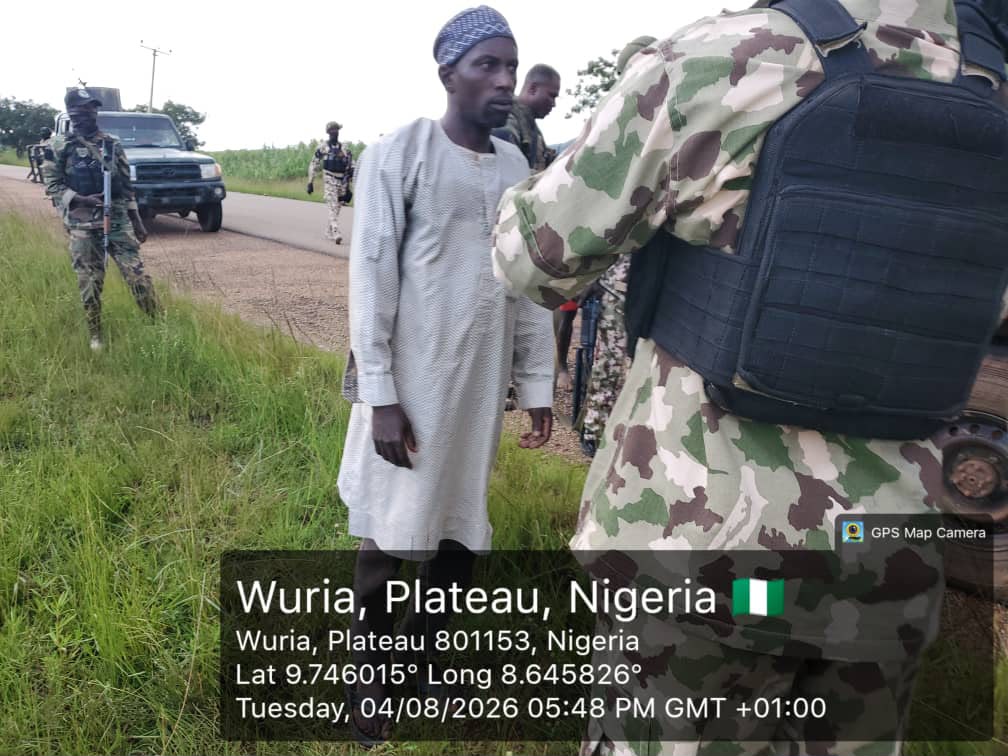
Troops Arrest Herder Over Alleged Farm Destruction in Plateau
By Zagazola Makama
Troops of Sector 1, Operation Enduring Peace , have arrested a herder following the alleged destruction of a farmland in Jos East Local Government Area of Plateau State.
Intelligence sources told Zagazola Makama that the troops of Sub-Sector 12 responded at about 12:30 p.m. on Aug. 4 to a report of farmland destruction belonging to Matthew Ezekiel at Kerker Community.
On arrival at the scene, the troops arrested Yusuf Zakariah, 17, a herder suspected to be connected with the incident.
The sources said efforts are underway to resolve the dispute peacefully, with both parties currently engaged in negotiations alongside the Ardo, Muhammad Zakariah, under the supervision of security personnel.
Operation Enduring Peace said it would continue to promote peaceful coexistence between farming and herding communities while ensuring that individuals found culpable for acts capable of disrupting public peace are brought to justice.
Troops Arrest Herder Over Alleged Farm Destruction in Plateau

Troops Rescue Injured Farmer, Seize 27 Cattle After Violent Herders’ Attacks in Plateau
By Zagazola Makama
Troops of Sector 8, Operation Enduring Peace have rescued an injured farmer and confiscated 27 cattle following separate incidents involving suspected violent herders in Mangu Local Government Area of Plateau State.
Intelligence sources told Zagazola Makama that the first incident occurred at about 4:05 p.m. on Aug. 3 when troops deployed at Komtul responded to a distress call over an attack on a farmer, Kopdi Istifanus, at his farmland in Maraban Village, Pushit District.
The sources said the troops’ swift intervention forced the suspected herders to flee, while the injured farmer was rescued and evacuated to Miton Clinic, Pushit, for medical treatment.
In a related development at about 6:57 p.m. the same day, troops responded to another report of herders allegedly attacking farmers across the Bwor River in Mangu LGA.
On arrival, the troops reportedly sighted some herders chasing farmers away from their farmlands while armed with knives.
According to the sources, the situation became violent when the herders allegedly attempted to attack the troops with a knife during efforts to restore order.
The troops consequently fired two rounds of 7.62 x 39mm special ammunition to subdue the assailants, who abandoned the knife and fled the scene, leaving behind their livestock.
Security personnel recovered the knife and confiscated 27 cattle belonging to the fleeing herders for further necessary action.
Troops are maintaining dominance in the general area, while efforts are ongoing to apprehend the fleeing suspects and prevent further attacks on farming communities.
Troops Rescue Injured Farmer, Seize 27 Cattle After Violent Herders’ Attacks in Plateau

FG Unveils NHRC–Police Liaison Framework to Tackle Rights Violations, Strengthen Accountability
ECOWAS, Africa Agenda Network Deepen Partnership to Showcase Regional Bloc’s 50-Year Legacy

“I Have Never Been Wrong About Vice President Kashim Shettima in Over 1,000 Articles” – Dr James Bwala.

Roger Federer’s Shock as DNA Results Reveal Myla and Charlene Are Not His Biological Children

THE PLIGHT OF FARIDA

FAILED COUP IN BURKINA FASO: HOW TRAORÉ NARROWLY ESCAPED ASSASSINATION PLOT AMID FOREIGN INTERFERENCE CLAIMS
-
 News2 years ago
Roger Federer’s Shock as DNA Results Reveal Myla and Charlene Are Not His Biological Children
-
Opinions4 years ago
THE PLIGHT OF FARIDA
-
 News1 year ago
FAILED COUP IN BURKINA FASO: HOW TRAORÉ NARROWLY ESCAPED ASSASSINATION PLOT AMID FOREIGN INTERFERENCE CLAIMS
-

 News2 years ago
EYN: Rev. Billi, Distortion of History, and The Living Tamarind Tree
-
 Opinions5 years ago
POLICE CHARGE ROOMS, A MINTING PRESS
-

 ACADEMICS2 years ago
A History of Biu” (2015) and The Lingering Bura-Pabir Question (1)
-

 Columns2 years ago
Army University Biu: There is certain interest, but certainly not from Borno.
-

 Politics1 year ago
2027: Why Hon. Midala Balami Must Go, as Youths in Hawul and Asikira/Uba Federal Constituency Reject ₦500,000 as Sallah Gift
