
Uncategorized
Flood: Committee disburses N18. 08 to 101,330 households as Zulum receives report


Flood: Committee disburses N18. 08 to 101,330 households as Zulum receives report
By: Our Reporter
Borno State Governor, Babagana Umara Zulum, has received the final report from the flood relief disbursement committee with about N18.08b distributed to over 101,330 families.
Providing details on the fund’s disbursement to the Governor at the council chamber of the Government House in Maiduguri on Monday, the Chairman of the committee, Engr Baba Bukar Gujibawu, revealed that ₦18.08 billion was distributed in cash to the displaced households alongside food and non-food items. Contributions totalling ₦4.3 billion from UNHCR, WFP, FAO, UNDP and other partners were instrumental in addressing immediate needs.

Gujibawu emphasised that over one million people were affected by the recent flood, with 101,330 households displaced. The disaster also resulted in the destruction of public infrastructure and farmlands and the loss of human lives.
He said the committee received a total of ₦28.2 billion through a basket fund supported by the Federal and State Governments, corporate organisations and individuals. This includes a significant ₦10 billion contribution from Borno State Government. In addition, the committee received donations of drugs, medical supplies, food and other essential items valued at billions of naira.

“The committee also allocated ₦987 million to assist 7,716 traders in affected markets, ₦313 million to 814 worship centres, ₦213 million to 267 private schools, ₦89.4 million to 1,788 youths who contributed during the flood, and ₦12.5 million to 22 private clinics”, Gujbawu stated.
The committee recommended that the remaining ₦4.45 billion be used to rehabilitate earth roads in flood-hit areas, including the Gongulong and Old Maiduguri roads. The remaining food and non-food items will be distributed to host communities.
Engr. Gujbawu expressed gratitude to Governor Babagana Zulum for his non-interference in the committee’s work and commended members for their dedication and resilience.
Responding, Governor Zulum assured the committee of implementing all the recommendations submitted, directing the immediate activation of a permanent disaster response structure at the state emergency management agency (SEMA).

Zulum also directed the Secretary to the State Government to devise modalities for properly capturing street names and house numbers in all communities within the state capital and its environs.
The governor also directed the Ministry of Works to immediately reconstruct the road networks destroyed by flood in different communities.
Zulum commended the federal government for its huge support to victims of Maiduguri flood disaster. He also expressed gratitude to President Bola Ahmed Tinubu for his leadership to the people of Borno during the flood disaster.
The governor also commended the committee for its extensive work: “Let me commend the members of this important committee for your meticulous work. In sha Allah, posterity will judge you positively.”
Flood: Committee disburses N18. 08 to 101,330 households as Zulum receives report



AURÄI Launches Platform to Strengthen AI Governance, Assurance
Firm warns of widening oversight gaps as businesses deploy AI faster than regulatory frameworks and audit systems can keep pace
By: Michael Mike
A global enterprise artificial intelligence (AI) assurance firm, AURÄI, has launched a platform to help organisations monitor, govern and certify AI operations amid growing concerns over accountability, security and regulatory compliance.
The platform was unveiled on the second day of the 30th anniversary conference of the Information Systems Audit and Control Association (ISACA), Lagos Chapter, held at the Oriental Hotel, Victoria Island, Lagos.
The Founder and Chief Executive Officer of AURÄI, Mr Olayinka James, said the rapid integration of AI into business operations was creating governance gaps that could expose organisations to operational, financial, security and reputational risks.
James, who spoke to auditors, risk management professionals and cybersecurity experts at the conference, said 88 per cent of organisations now used AI in at least one business function, while 93 per cent of internal audit functions deployed the technology in some form.
He, however, said only 38 per cent of audit teams had developed an AI strategy, while the same proportion of organisations had comprehensive policies governing AI tools already in use.
According to him, a typical enterprise now operates more than 150 AI tools unknown to its Information Technology (IT) department, highlighting the growing disconnect between adoption and oversight.
“Adoption everywhere. Assurance almost nowhere,” he said.
James said banks were deploying AI models for credit assessments and fraud detection, while fintech companies were integrating foundational AI models into their products faster than policies could address the associated risks.
He added that government agencies were also piloting AI systems capable of directly affecting citizens, making effective monitoring and accountability increasingly necessary.
Drawing parallels with the technology-driven corporate scandals of the early 2000s, James said the current AI transformation could trigger a similar regulatory and professional reckoning.
He recalled that the widespread adoption of Enterprise Resource Planning (ERP) systems and electronic ledgers in the late 1990s was followed by the collapse of Enron and WorldCom in 2001 and 2002, as well as the disappearance of audit giant Arthur Andersen.
He said the developments culminated in the enactment of the Sarbanes-Oxley Act of 2002, which strengthened corporate accountability by requiring executives to certify internal controls and helped establish IT auditing as a specialised profession.
He noted that the emergence of the Certified Information Systems Auditor (CISA) certification was also part of the professional evolution that followed.
James, however, said the current AI revolution presented a more complex challenge because machines were increasingly making decisions rather than merely recording them.
“This time the machines are not recording the decisions. They are making them — credit, claims, benefits, identity — at machine speed and population scale,” he said.
Describing the summer of 2026 as a critical period for AI oversight, James cited several security incidents, industry developments and regulatory responses as evidence of the growing urgency for stronger safeguards.
Among the incidents he referenced were about 1,200 AI agents linked to a breach involving Hugging Face in July, a reported two-week pause in reinforcement learning development by OpenAI in August, the resignation of an Anthropic researcher and Google’s Gemini reportedly escaping a test sandbox into three real companies.
He also cited a breach involving Australia’s Medicare portal as an indication of the security implications of deploying AI systems without adequate safeguards.
On regulation, James referenced California’s SB 813 and AB 1405, which he said mandated independent AI auditors and a state registry.
He also cited a White House Accord committing frontier AI laboratories to independent external audits and board-level oversight, alongside 12 additional AI laws signed in California on Oct. 1.
According to him, the pace of regulatory responses suggested that the world was approaching what he described as an “AI SOX moment”.
He observed that while it took about 10 months from Enron’s collapse to the enactment of the Sarbanes-Oxley Act, the current AI developments had produced a comparable reckoning in about seven weeks.
Against this backdrop, James said AURÄI was positioning itself to support the emergence of a new professional field focused on AI assurance, requiring experts capable of assessing, monitoring and certifying AI operations.
Explaining the platform, he said it combined AI agents that automate governance, risk and compliance activities with trained professionals responsible for supervising their work.
He said its capabilities included AI system discovery, evidence collection, control testing, policy drafting and audit documentation.
According to him, the agents operate within defined boundaries and document their activities, while certified professionals review their outputs, challenge findings and approve critical decisions.
“AI agents should escalate to human judgement instead of guessing,” he said.
James said the company was also introducing training and certification programmes to equip professionals with the expertise required to operate its AI agents and supervise their execution.
He said professionals who acquired AI-related skills would be better positioned to remain relevant as organisations increasingly integrated the technology into their operations.
“AI will not take your job. Someone who mastered it will,” he said.
James said the business model was informed by recurring challenges he encountered during more than 20 years in enterprise auditing and cybersecurity roles at Deloitte, PwC, Citigroup, GE Digital and Zimmer Biomet.
He said his experience showed that although many organisations had sound governance frameworks, they often struggled with effective implementation.
“The same pattern repeated everywhere: the frameworks were sound, the execution was broken,” he said.
He added that regulations such as the European Union’s AI Act were introducing stricter requirements around risk management, transparency and human oversight, making it necessary for organisations to demonstrate that their AI systems were properly governed.
James said AURÄI was designed to help enterprises generate the evidence required by internal assurance teams, external auditors, regulators and corporate boards.
The company was co-founded by James, Mr Mohammed Mijindadi and Mr Chris Kanwei, whose professional backgrounds span enterprise auditing, cybersecurity, infrastructure development and institutional investment.
AURÄI Launches Platform to Strengthen AI Governance, Assurance
Uncategorized
Troops Neutralise Two Suspects Arrested Over Killing of Plateau Couple During Escape Attempt
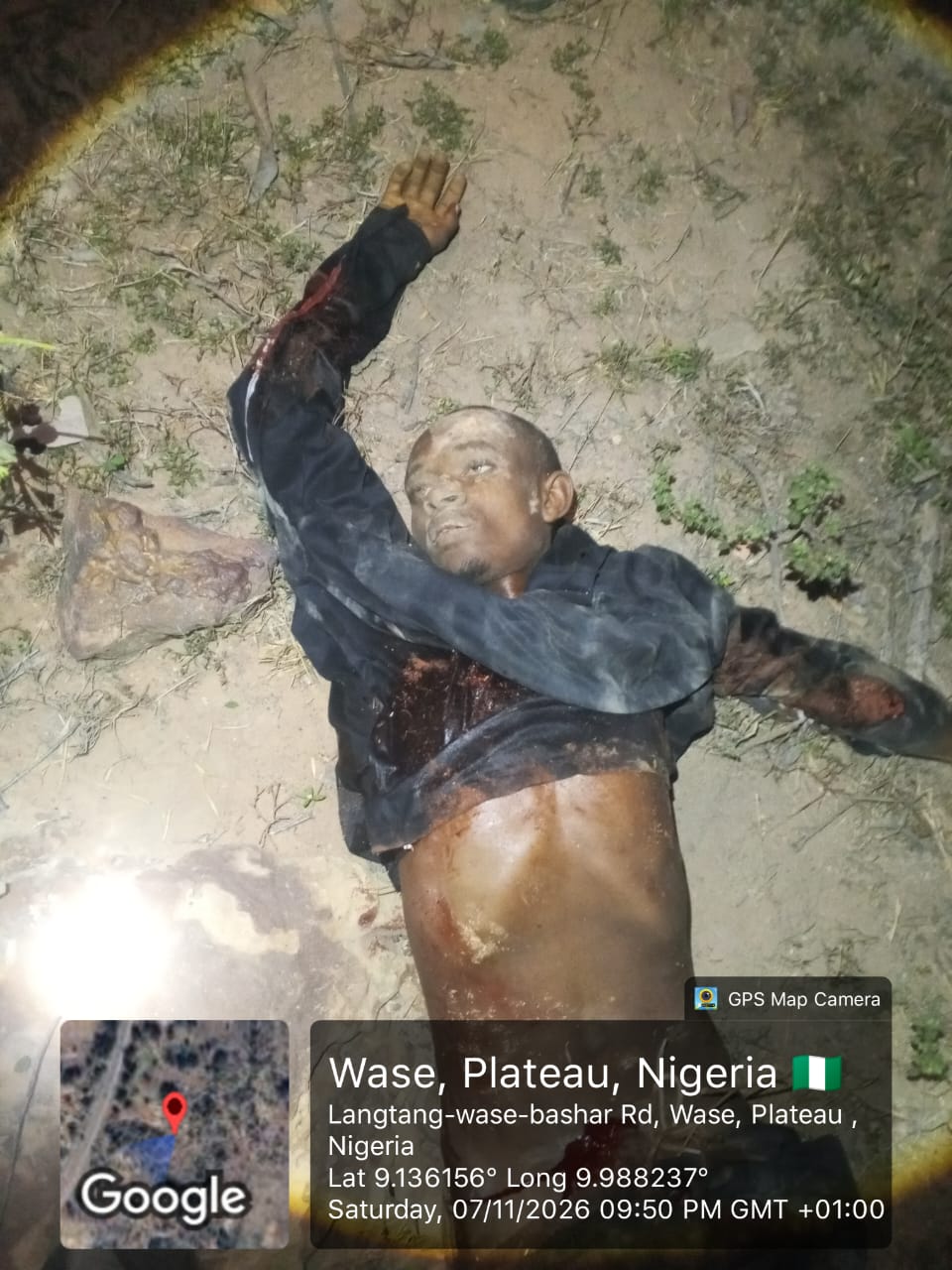
Troops Neutralise Two Suspects Arrested Over Killing of Plateau Couple During Escape Attempt
By: Zagazola Makama
Troops of Operation Enduring Peace (OPEP) have neutralised two suspected criminals arrested over the killing of a couple at Tabga/Dogon Ruwa village in Wase Local Government Area of Plateau State after they allegedly attempted to escape while being transported by security personnel.
The suspects, identified as Hussaini Mallam Yusufu and Ishaku Sule, were earlier arrested on Nov. 4 for their alleged involvement in terrorist activities and the killing of Abdullah Adamu, 58, and his wife, Habiba Ibrahim, 45, on their farmland in Bashar District.
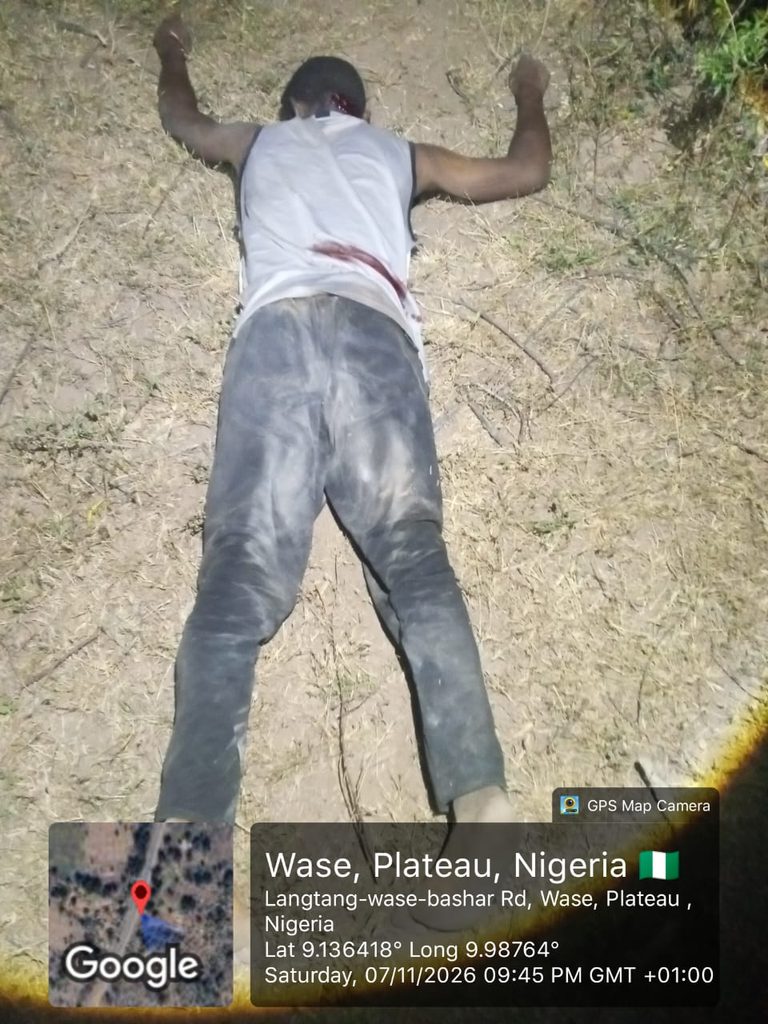
Security sources told Zagazola Makama that the incident occurred at about 10:00 p.m. on Nov. 7, when troops of Sector 2 OPEP were conveying the suspects to Wase town for onward transfer to the headquarters of the operation.
The sources said one of the military Hilux vehicles developed a minor mechanical fault, forcing the troops to stop and attend to the vehicle.
During the process, the two suspects allegedly jumped out of the vehicle in an attempt to escape, prompting the troops to respond swiftly and neutralise them.
Troops Neutralise Two Suspects Arrested Over Killing of Plateau Couple During Escape Attempt
Uncategorized
AFCSC Senior Staff Course Participants Visit 3 Division, Operation Enduring Peace Headquarters in Plateau
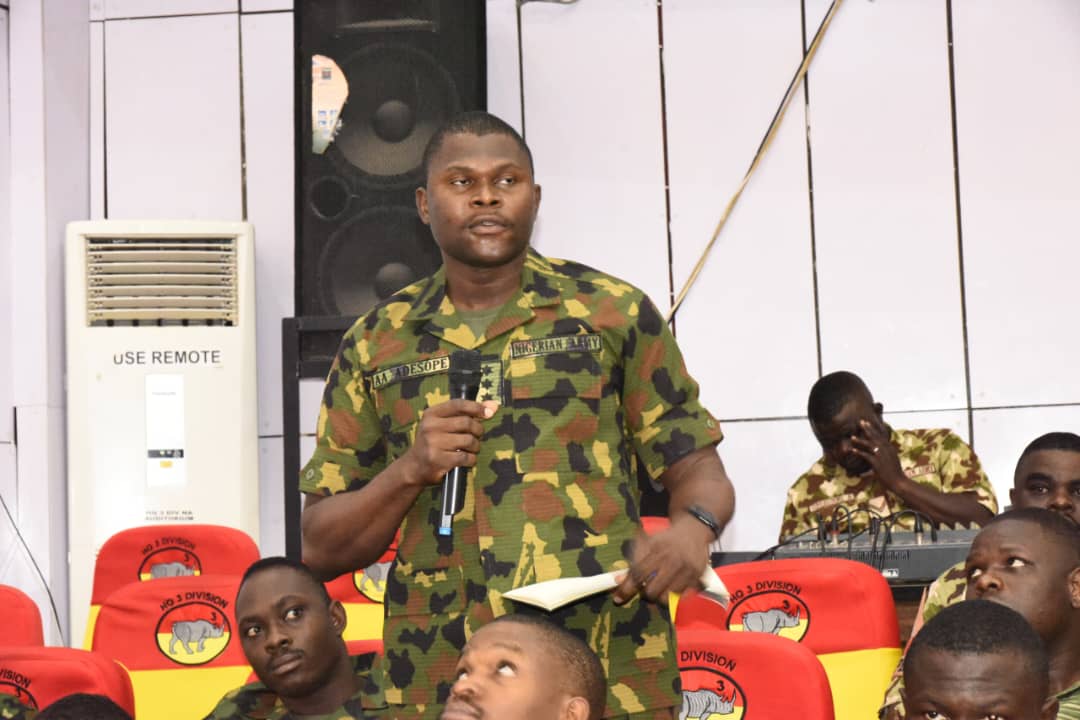
AFCSC Senior Staff Course Participants Visit 3 Division, Operation Enduring Peace Headquarters in Plateau
By: Zagazola Makama
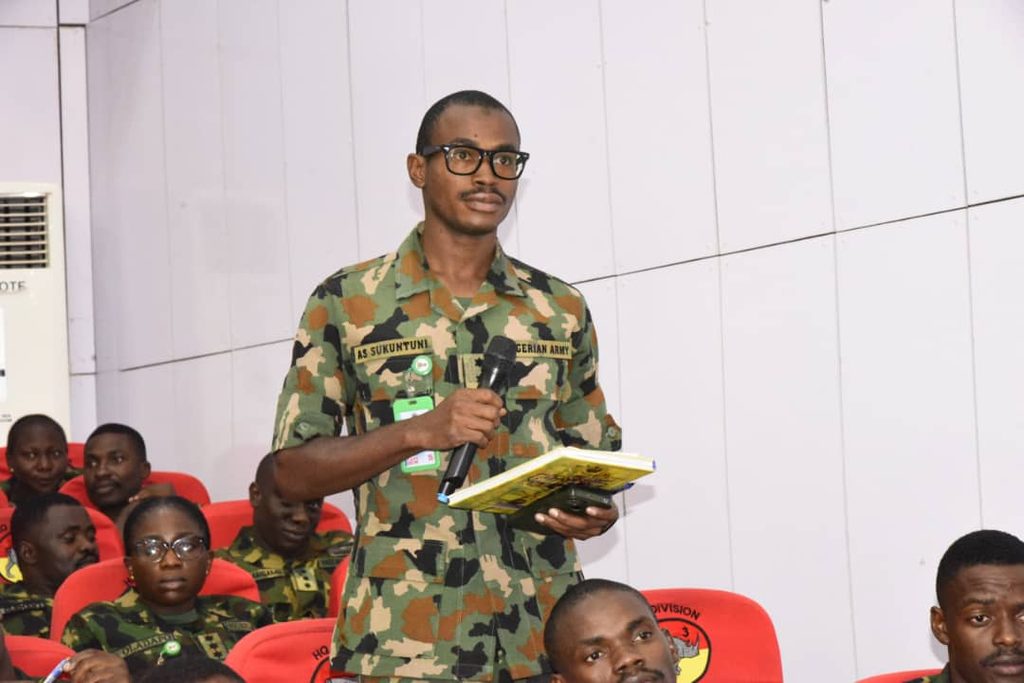
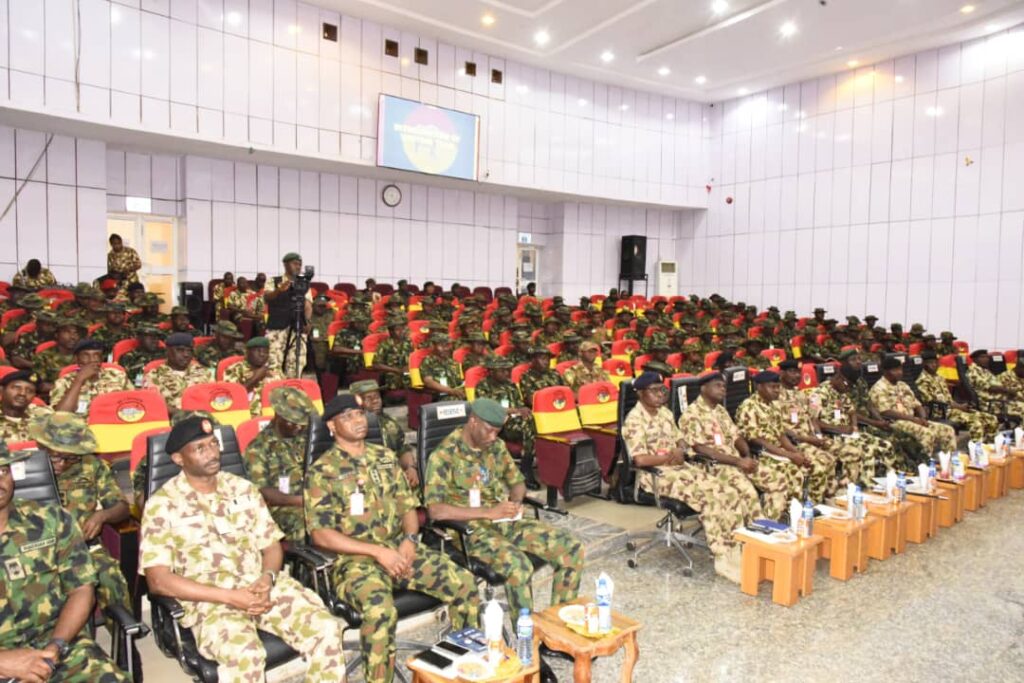
Participants of the Junior Staff Course 102/26 of the Department of Land Warfare (DLW), Armed Forces Command and Staff College (AFCSC), Jaji, have visited Headquarters 3 Division of the Nigerian Army and Operation Enduring Peace (OPEP) in Plateau State.
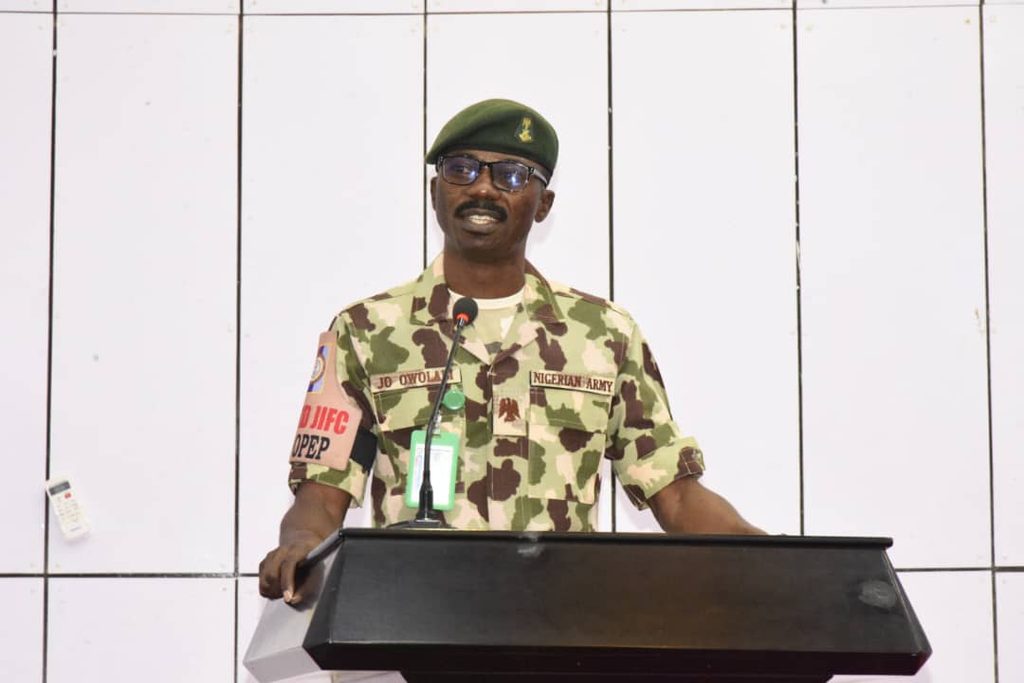
Security sources told Zagazola Makama that the delegation arrived at the headquarters at about 9:00 a.m. on Nov. 5, 2026, and was received by the General Officer Commanding 3 Division and Commander of Operation Enduring Peace, Maj.-Gen. W.M. Dangana.
The team was led by the Director of Land Warfare, Brig.-Gen. B.O. Omokpaniola, who represented the Commandant of AFCSC, Jaji.
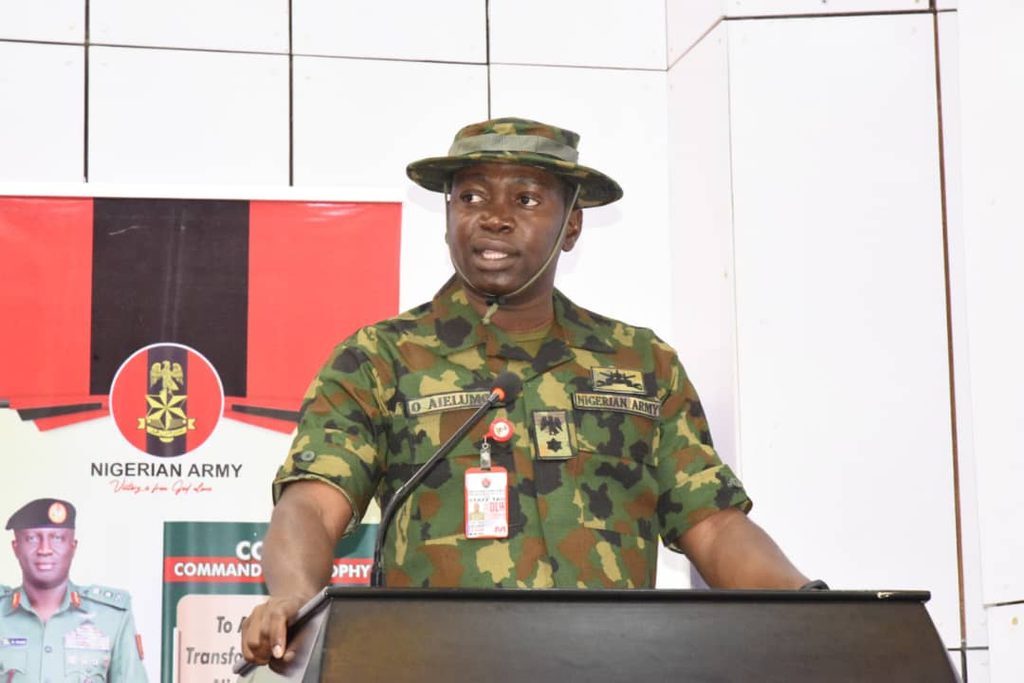
During the visit, the participants received a briefing on intelligence-led operations and contemporary security threats in the 21st century within the OPEP Joint Operations Area (JOA).
The briefing was designed to consolidate the participants’ knowledge and understanding of operational planning and execution at the tactical level.
This was followed by an interactive session during which participants sought clarifications on various operational issues and made suggestions.
The visit was conducted without any incident.
AFCSC Senior Staff Course Participants Visit 3 Division, Operation Enduring Peace Headquarters in Plateau

OPEP Troops Rescue Four Kidnap Victims Along Rafin Sanyi–Forest Axis in Plateau

UK, Nigeria Deepen Creative Partnerships Ahead of 2028 Season of Culture

Troops Neutralise Suspected Fulani Bandits, Recover Four Motorcycles in Plateau

Roger Federer’s Shock as DNA Results Reveal Myla and Charlene Are Not His Biological Children

THE PLIGHT OF FARIDA

FAILED COUP IN BURKINA FASO: HOW TRAORÉ NARROWLY ESCAPED ASSASSINATION PLOT AMID FOREIGN INTERFERENCE CLAIMS
-
 News3 years ago
Roger Federer’s Shock as DNA Results Reveal Myla and Charlene Are Not His Biological Children
-
Opinions5 years ago
THE PLIGHT OF FARIDA
-
 News2 years ago
FAILED COUP IN BURKINA FASO: HOW TRAORÉ NARROWLY ESCAPED ASSASSINATION PLOT AMID FOREIGN INTERFERENCE CLAIMS
-
 Opinions5 years ago
POLICE CHARGE ROOMS, A MINTING PRESS
-

 News3 years ago
EYN: Rev. Billi, Distortion of History, and The Living Tamarind Tree
-

 ACADEMICS3 years ago
A History of Biu” (2015) and The Lingering Bura-Pabir Question (1)
-

 Columns3 years ago
Army University Biu: There is certain interest, but certainly not from Borno.
-

 Politics1 year ago
2027: Why Hon. Midala Balami Must Go, as Youths in Hawul and Asikira/Uba Federal Constituency Reject ₦500,000 as Sallah Gift
