
News
Embrace Artificial Intelligence with ethics, VC urges Nigerians


Embrace Artificial Intelligence with ethics, VC urges Nigerians
By:Michael Mike
The Vice-Chancellor of African School of Economics (The Pan African University of Excellence), Prof. Mahfouz Adedimeji, has urged Africans in general and Nigerians in particular to embrace Artificial Intelligence while cautioning that it is must be used ethically.
Prof. Adedimeji made this submission in his address, “The Past is Present, The Present is Now”, delivered at the maiden Public Lecture of the university held on Thursday, January 30, 2024. The theme of the lecture, delivered by the Managing Director and CEO of Galaxy Backbone Limited, an agency of the Federal Government, Prof. Ibrahim Adeyanju, was “Artificial Intelligence and the Future of Higher Education in Africa”.
According to the two-time Vice-Chancellor, humanity today stands precariously at the brink of a precipice with fascinating and disruptive technologies that can be used to make life easy and abused to commit atrocities. He described Artificial Intelligence, once a subject of science fiction, as a current reality that permeates various facets of our lives, with its potential in education being amazing, adding that it is part of the past that is still present and it is an innovation that will still shape the future and the future is here already.
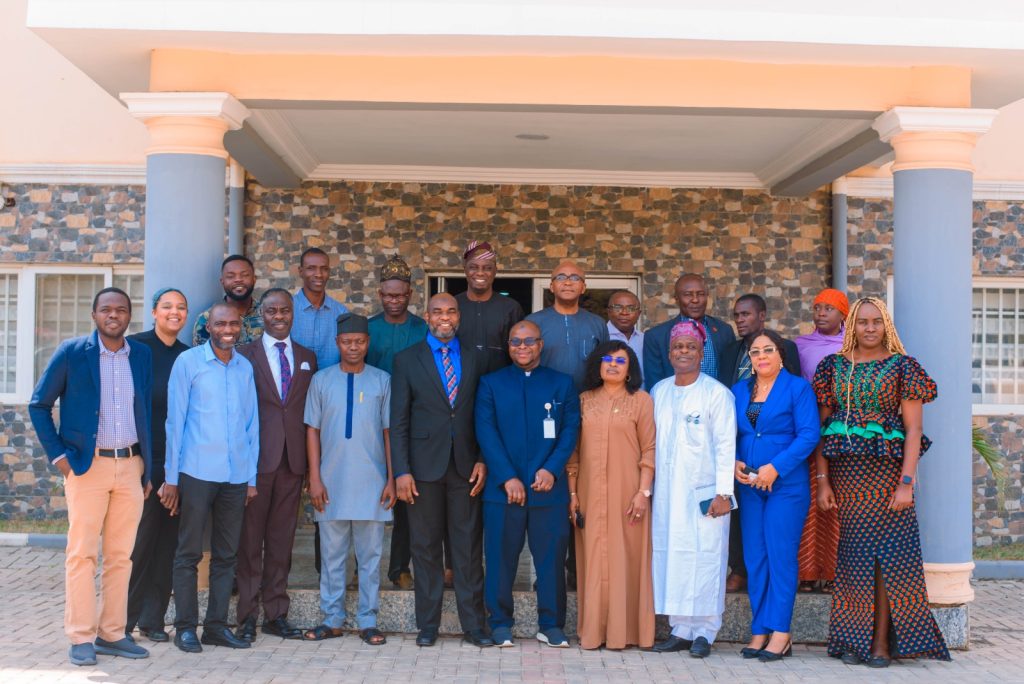
“With AI, it is possible for each student to receive personalised instruction. We can also analyse vast amounts of data and gain insights into how each student learns best, meaning that a one-size-fits-all model of education may no longer be applicable or sustainable. AI opens new doors to customised learning experience that nurtures each student’s potential. With instructional tools, education can be more dynamic, engaging and interactive, sparking curiosity, igniting creative thinking and fostering a love for lifelong learning,” he said.
He also noted the indispensable roles of AI in facilitating access to education. “We know that AI can facilitate global access to quality education, the fourth Sustainable Development Goal, and bring world-class resources to remote and underserved areas, thereby breaking down geographical barriers and democratising access to knowledge. Students anywhere can also have access to the same cutting-edge materials and expert instruction available somewhere, leveling the playing field like never before. The opportunities are limitless,” he stressed.
Nevertheless, he warned against its abuse, arguing that while Africans embark on the exciting journey that AI offers, there is a need for protocol, policies and frameworks the safeguard those values that are dear to us from being eroded, so that technology one day does not become our master, controlling and misleading us. He added that the tail should not wag the dog and humans should always be in charge, not that we should allow technology to control us.
He illustrated the need for ethical use of AI with the situation encountered in the 2004 American film, “I, Robot”, which stars Will Smith. He said the film futuristically portrays intelligent robots filling up public service positions with a smart but technophobic cop investigating a crime that might have been perpetrated by a robot, which eventually constitutes a threat to humanity. He noted that there is ultimately a deadly class between smart robots and humans in the film portraying the threat to humans that created them.
Prof. Adedimeji further used the occasion to invite applicants to the University, which he described as a convention university that offers twenty academic programmes in Arts, Social Sciences, Science and Computing as well as Allied Health Sciences at the undergraduate level. He added that his university also runs approved postgraduate programmes in Economics, Public Administration, Business Administration as well as Finance and Management.
Embrace Artificial Intelligence with ethics, VC urges Nigerians


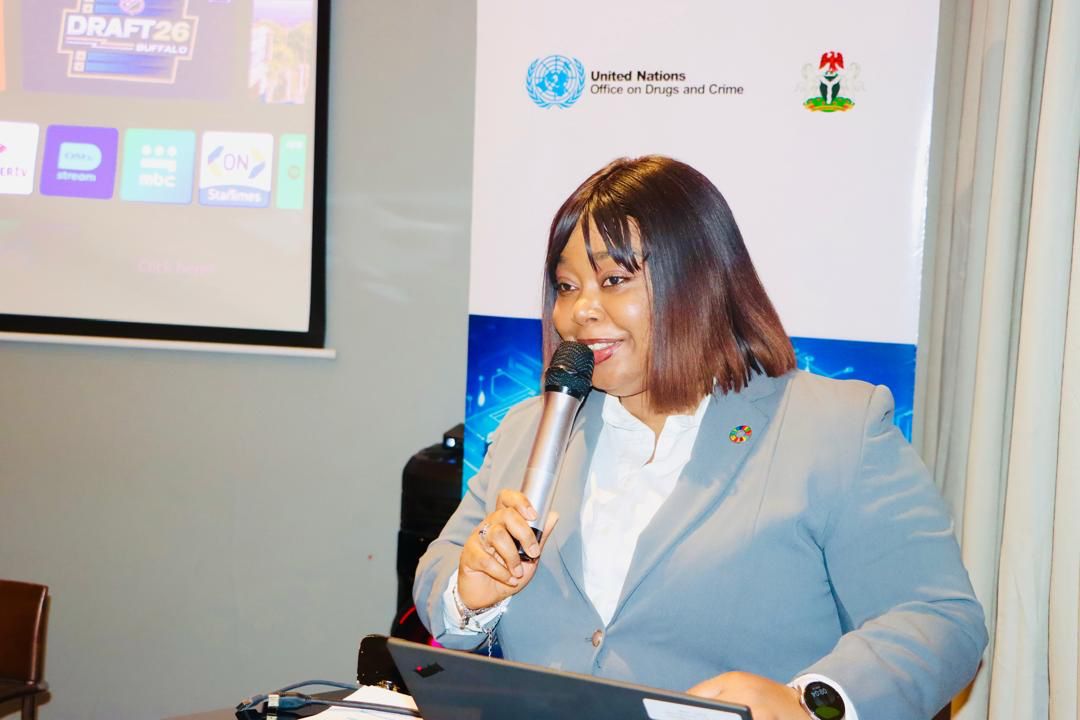
Senate, UNODC Seek Tougher Laws Against Rising Image-Based Sexual Abuse in Nigeria
By: Michael Mike
Alarmed by the growing incidence of revenge porn, sextortion and the non-consensual sharing of intimate images, the Senate and the United Nations Office on Drugs and Crime (UNODC) have called for urgent measures to strengthen Nigeria’s response to image-based sexual abuse and other forms of cyber-interpersonal violence.
The call came at a stakeholders’ workshop held in Lagos aimed at developing a comprehensive Nigerian framework to combat intimate image abuse, a form of online violence that experts said is increasingly destroying lives, damaging reputations and leaving victims with severe emotional and psychological scars.
Participants at the meeting described the abuse as one of the fastest-growing forms of technology-facilitated gender-based violence, warning that advances in digital technology and artificial intelligence have made it easier for perpetrators to create, manipulate and disseminate explicit images without the consent of victims.
They stressed that while the internet has revolutionised communication and social interaction, it has also created new avenues for abuse, blackmail and exploitation, with women and girls bearing the greatest burden of the emerging threat.
The Senate Committee on Drugs and Narcotics pledged legislative support to tackle the problem, while the UNODC advocated a survivor-centred and rights-based approach that prioritises prevention, protection, accountability and access to justice for victims.
Stakeholders noted that victims of intimate image abuse often suffer devastating consequences that extend beyond the digital space. In many cases, survivors are subjected to public humiliation, cyberbullying, social isolation and extortion, with some losing educational opportunities, employment and relationships because of the unauthorised circulation of their intimate content.
Experts at the forum warned that the rise of artificial intelligence-generated “deepfake” technology has added a dangerous dimension to the problem by enabling perpetrators to produce realistic but fake explicit images and videos that can be used to harass, blackmail and destroy the reputations of innocent persons.
They therefore called for stronger laws, improved investigative and forensic capabilities, enhanced cooperation between law enforcement agencies and technology companies, and the establishment of rapid response mechanisms for removing abusive content from digital platforms.
The stakeholders also emphasised the need for greater public awareness and digital literacy, arguing that many victims remain silent because of fear of stigma, victim-blaming and retaliation.
Globally, image-based sexual abuse has emerged as a major human rights and public safety concern. International studies indicate that millions of people, particularly women and young people, have experienced some form of online sexual exploitation, with many incidents going unreported.
In Nigeria, concerns over cyber-enabled abuse have intensified amid increasing internet penetration, widespread use of smartphones and the growing influence of social media platforms. Rights groups and digital safety advocates have repeatedly warned that existing legal and institutional frameworks have struggled to keep pace with rapidly evolving technologies and emerging forms of online abuse.
Participants at the workshop maintained that Nigeria must act decisively to close legal and policy gaps and build a robust framework capable of protecting citizens from digital exploitation.
They argued that ensuring safety in the digital space is no longer merely a technology issue but a pressing human rights and justice imperative requiring coordinated action by government institutions, lawmakers, law enforcement agencies, civil society organisations and the private sector.
Senate, UNODC Seek Tougher Laws Against Rising Image-Based Sexual Abuse in Nigeria
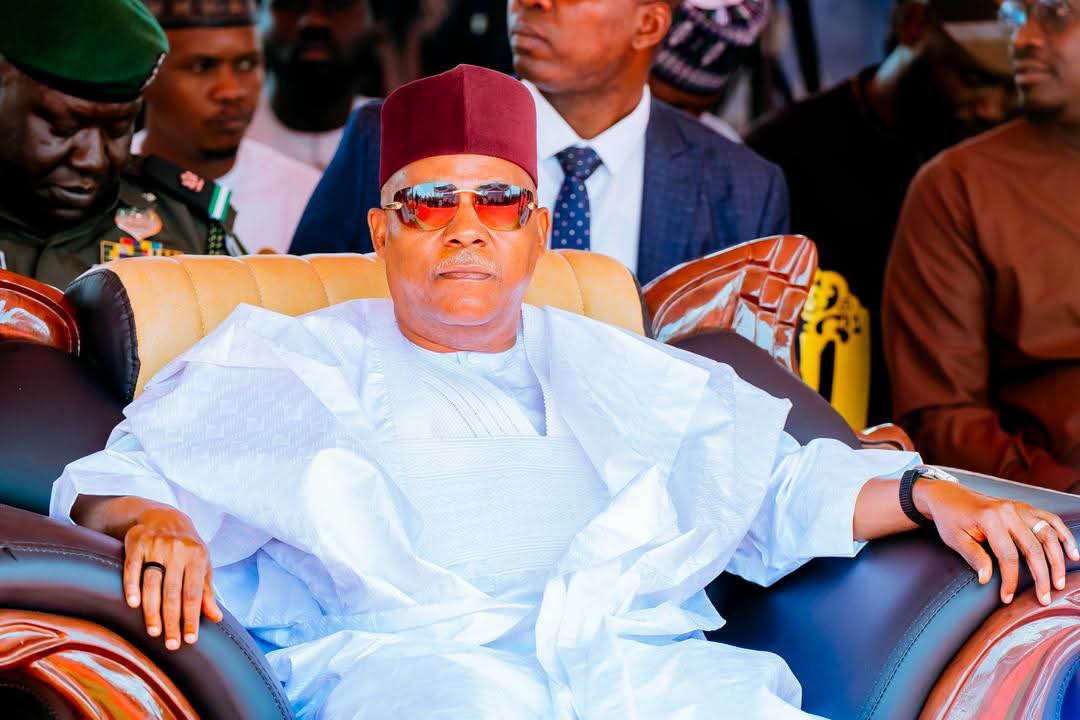
How We Are Laying Foundation For Nigeria’s Prosperity – President Tinubu
By: Our Reporter
President Asiwaju Bola Ahmed Tinubu has said through the provision of critical infrastructure projects executed by his administration in the Federal Capital Territory and beyond, his administration is laying a foundation for Nigeria’s prosperity.
President Tinubu vowed that no community will be left behind under his watch, even as he said his administration is “building the nation of our dreams.”
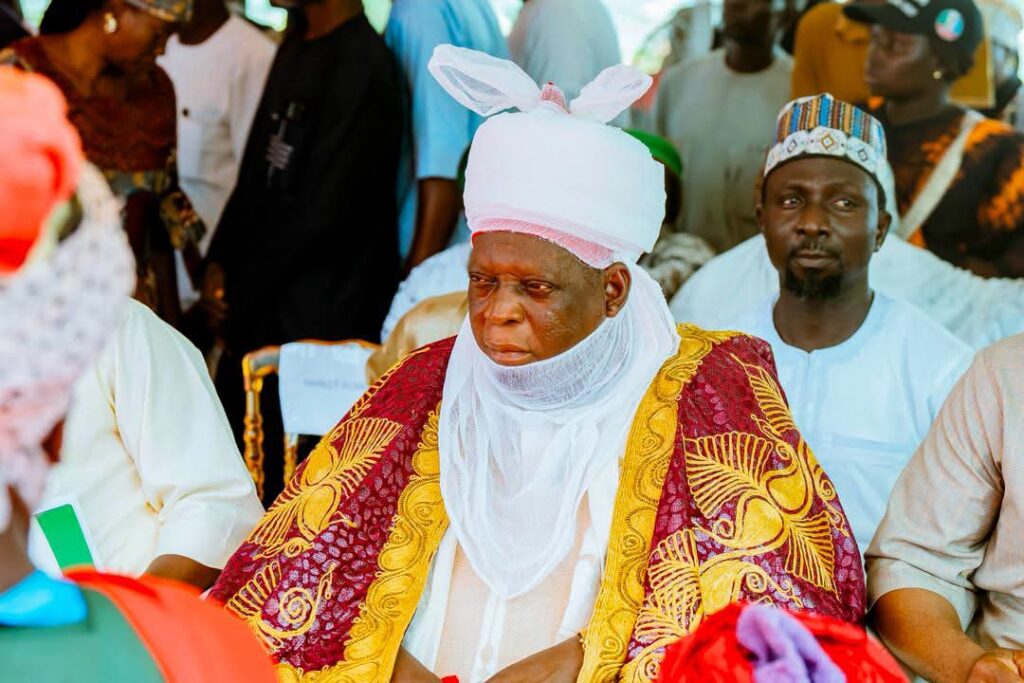
Speaking on Wednesday in Abuja when he commissioned Phase 1 of the Kuje-Gwagwalada Dual Carriage Way, the President, who was represented by his deputy, Vice President Kashim Shettima, said the infrastructural development along the Kuje-Gwagwalada road are taking place across the nation.
He outlined the significance of the Kuje-Gwagwalada Dual Carriage Way, noting that the construction of the road, which had been a death trap for decades, is both economic and geographical.
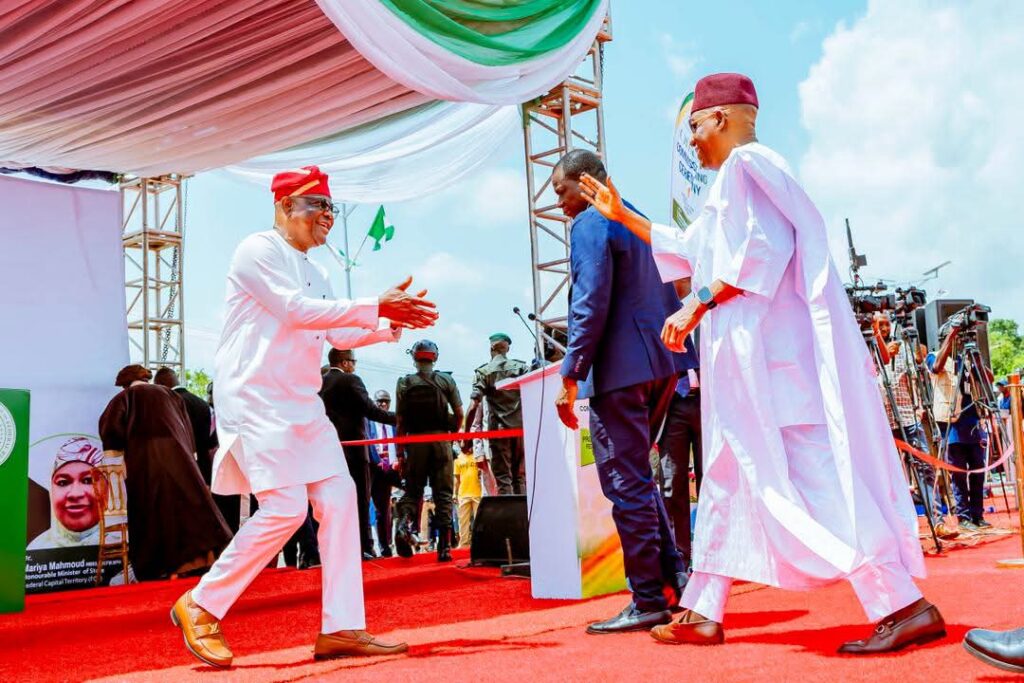
His words: “For decades, this road was a death trap. Traders from Kuje, Gwagwalada, Kwali, and beyond lost time, goods, and sometimes lives while plying this route. Criminals thrived in the darkness. Students of our institutions here wasted hours in traffic. Farmers could not get their produce to market on time. That story ends today.
“This 7km dual carriageway with solar-powered street lights, pedestrian walkways, and proper drainage is more than a road. It is security. It is commerce. It is dignity. It is the economic corridor linking Abuja to three Area Councils and opening an exit route to southern Nigeria.”
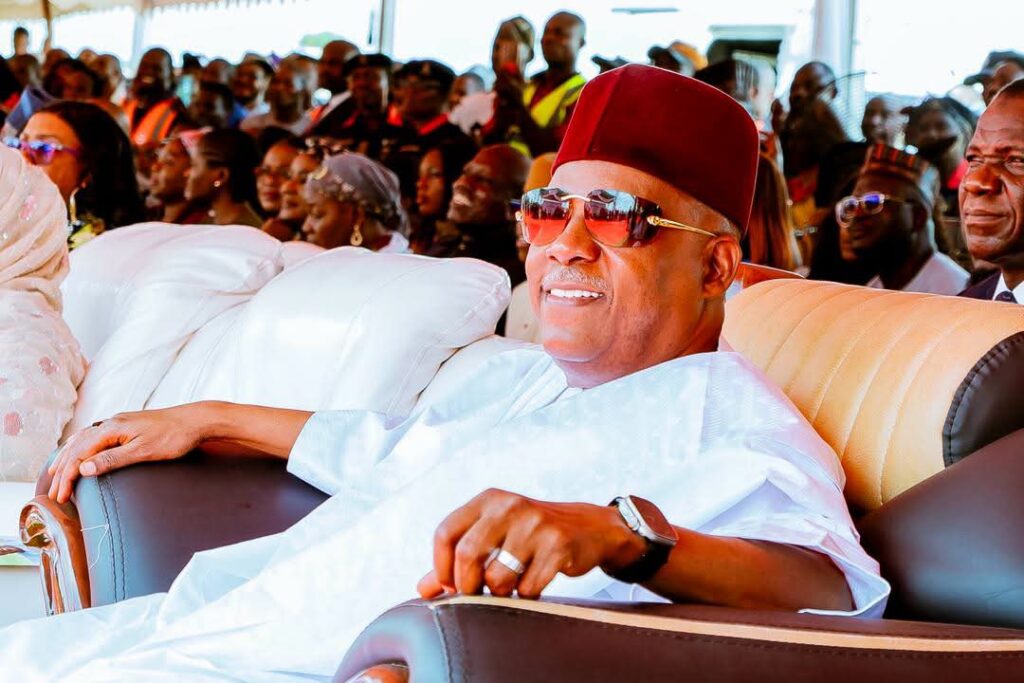
The construction of the road, the Nigerian leader pointed out, has “unlocked the agricultural potential of the area, opened new residential layouts, and made it safer for mothers, students, and workers to move at any hour.”
He appealed to Nigerians to never give up on Nigeria, saying they must support his administration’s Renewed Hope Agenda in order to pull the country out of socioeconomic challenges it was hitherto enmeshed in.

He took full responsibility for the hardship occasioned by the ongoing reforms, assuring the citizens that they are designed to bring lasting prosperity.
“To all Nigerians: I know the reforms have been tough. The hard choices today are for a stronger tomorrow. From the city centre to the farthest satellite town, we are laying the foundation for prosperity.
“Do not give up on Nigeria. Stay with us. Support the Renewed Hope Agenda. The results you are seeing here in Kuje-Gwagwalada are happening across the country,” he stated.
This, he declared, is Renewed Hope delivered to the doorsteps of the people in the satellite towns, just as he commended the Minister of the Federal Capital Territory (FCT), Ezenwo Nyesom Wike, for taking Renewed Hope to the grassroots.
“I gave you one instruction when I appointed you: “Make Abuja work for all Nigerians, not just for those in Maitama and Asokoro”. You have taken Renewed Hope to the grassroots.
“From judicial quarters in Katampe to roads in Kuje and Gwagwalada, you are proving that development must not be selective. You heard the cries of satellite communities, and you responded. That is leadership. Well done,” he told the Minister.
President Tinubu assured the people of Kuje, Gwagwalada, Kwali, all the area councils and satellite towns that the government sees them, and that they are not forgotten.
“For too long, Abuja’s development stopped at the city centre. Under the Renewed Hope, every Area Council matters. Every community counts. We will keep bringing roads, water, schools, and hospitals to you,” he added.
He charged the direct beneficiaries of this infrastructure to protect the road from those who would attempt to build on the median or vandalize the solar lights, even as he urged the citizens to pay their taxes and ground rents, observing that “when government works and citizens cooperate, development moves faster.”
Earlier, the FCT Minister said the FCT Administration under his watch had adopted a community engagement model in the selection and execution of projects across the territory, noting that the completion and inauguration of the road and other projects across the FCT are a manifestation of the model’s efficacy.
He acknowledged and commended the commitment of traditional rulers and stakeholders across the FCT who, according to him, are critical in the effective administration of the territory.
The Minister thanked President Tinubu for his relentless support and commitment in the transformation of critical infrastructure across the territory through the FCT administration.
In her remarks, the Minister of State for FCT, Dr Mariya Mahmoud, said the benefiting communities, people of Kuje, Gwagwalada and the entire FCT, remain grateful to President Tinubu for his commitment to uplifting the state of infrastructure in the FCT, particularly in the satellite towns and communities.
In an overview of the project, the Coordinator of Satellite Town Development Department, Hon. Abdulkadir Zulkiflu, said the completion of the project marked a significant advancement in the present administration’s commitment to improving the state of infrastructure in the satellite towns and a fulfilment of the FCT Minister’s efforts to uplift the wellbeing of people living in the satellite towns.
He said the commissioning of the project is a manifestation of a promise made and kept by the FCT administration under the leadership of the Minister, noting that the inauguration of the road project for use will improve economic as well as social activities in Kuje, Gwagwalada and environs, which aligns with the Renewed Hope Agenda of the Tinubu administration.
How We Are Laying Foundation For Nigeria’s Prosperity – President Tinubu
News
Femi Pedro Assumes Office as Nigeria’s High Commissioner to Australia, Pledges Stronger Trade, Diaspora Ties
Femi Pedro Assumes Office as Nigeria’s High Commissioner to Australia, Pledges Stronger Trade, Diaspora Ties
By: Michael Mike
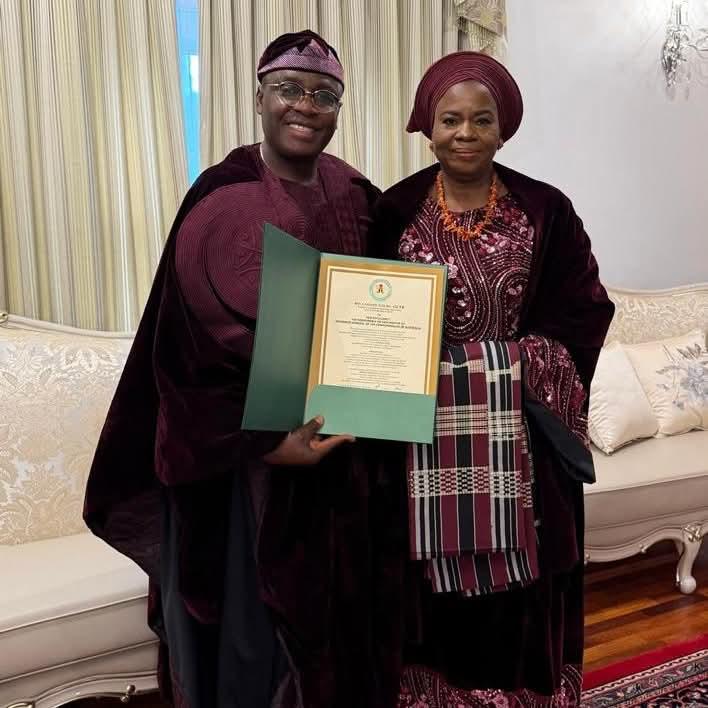
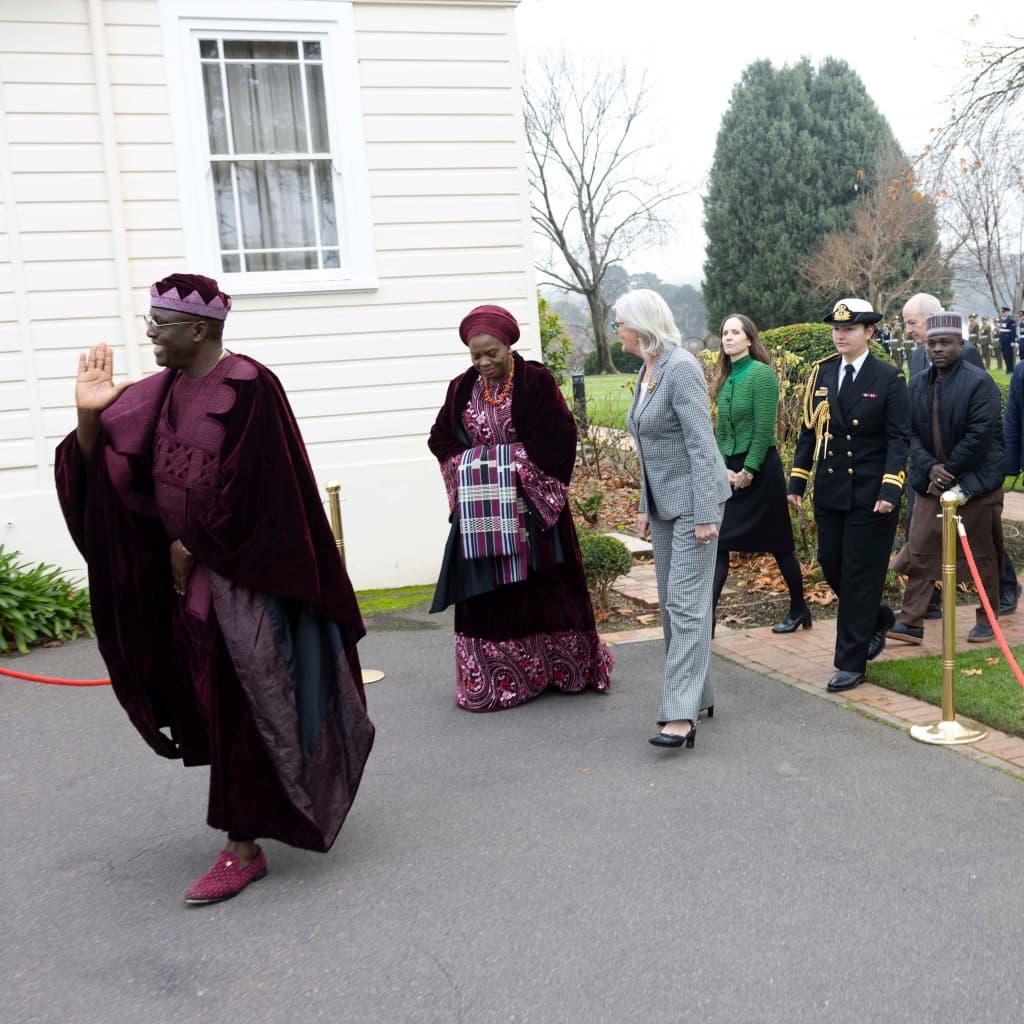
Former Deputy Governor of Lagos State, Femi Pedro, has formally assumed office as Nigeria’s High Commissioner to Australia, pledging to deepen economic cooperation, boost trade and investment, and strengthen engagement with Nigerians living across Australia and the Pacific region.
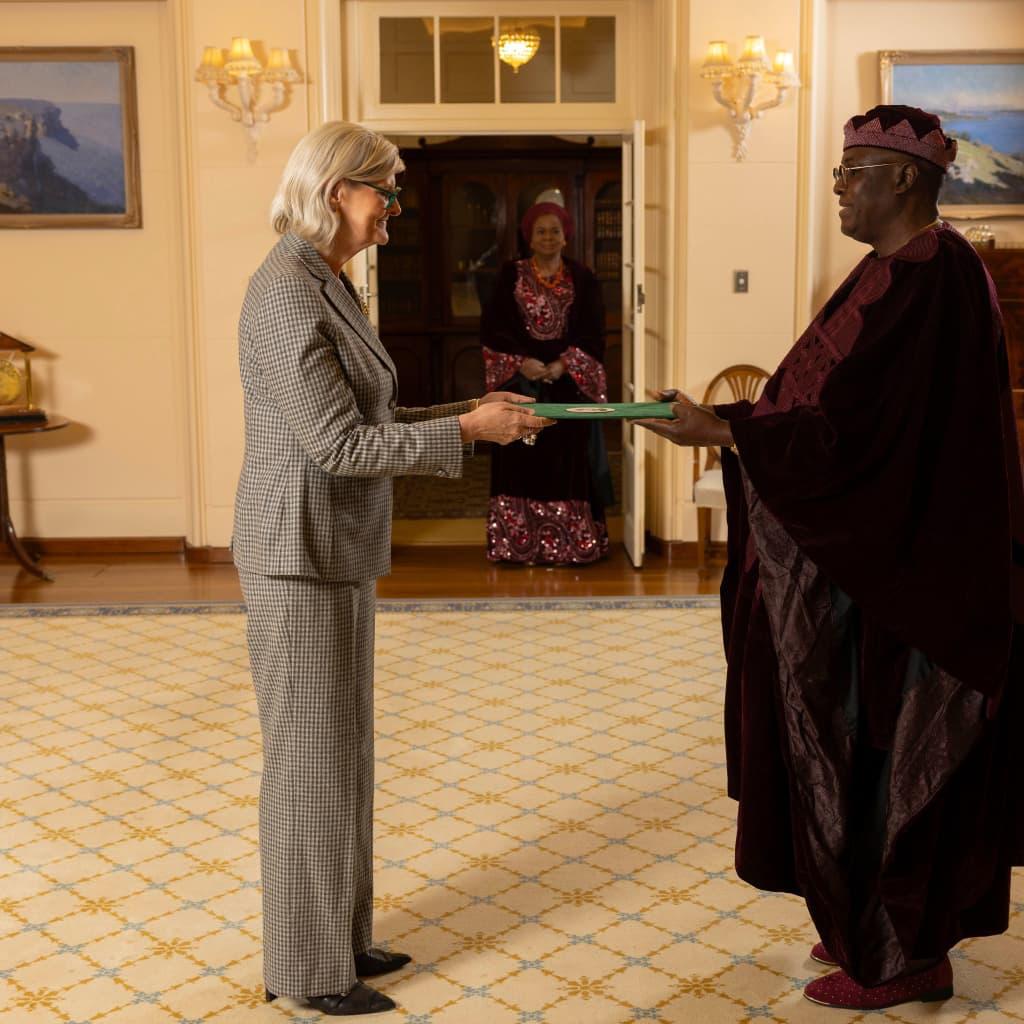
Pedro officially commenced his diplomatic duties after presenting his Letters of Credence to the Governor-General of Australia, Her Excellency the Honourable Ms. Sam Mostyn AC, in a ceremony that marks the beginning of his tenure as Nigeria’s envoy to Australia, with concurrent accreditation to New Zealand, Fiji, Solomon Islands and other Oceanic states.
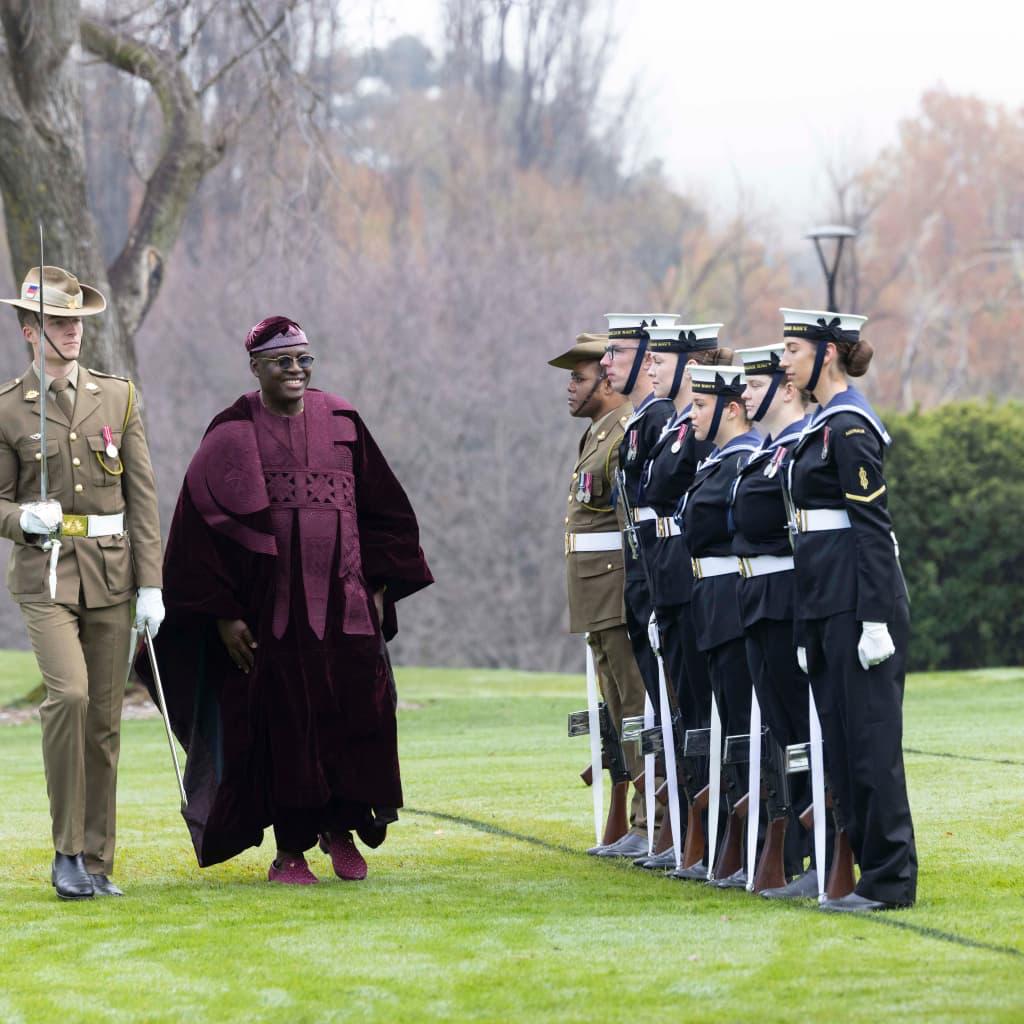
Describing the occasion as more than a ceremonial event, the envoy said his appointment represented a call to action aimed at expanding Nigeria’s footprint in one of the world’s most dynamic regions.
He noted that Nigeria and Australia enjoy a growing relationship anchored on shared Commonwealth values and mutual respect, stressing that both countries possess enormous opportunities for collaboration in strategic sectors, including critical minerals, agricultural innovation, education, technology and financial services.
According to him, Nigeria is open for business and ready to forge stronger partnerships capable of delivering economic growth and mutual prosperity.
Pedro pledged to work closely with the Australian government and stakeholders across the Pacific to attract investments, promote educational cooperation and encourage cultural exchanges that would benefit both nations.
The envoy also assured Nigerians residing in Australia and across the Oceanic states that the Nigerian mission under his leadership would remain accessible and responsive to their needs.
He said he was assuming office carrying not only the mandate of President Bola Ahmed Tinubu but also the hopes and aspirations of Nigerians at home and in the diaspora.
The High Commissioner disclosed that his diplomatic engagements would be guided by the Tinubu administration’s foreign policy doctrine anchored on the four pillars of Demography, Development, Diaspora and Democracy, while also promoting the National Values Charter as part of efforts to project a positive image of Nigeria globally.
He urged Nigerians in the region to see themselves as ambassadors of the country and partners in nation-building, noting that the diaspora community remains a critical asset in advancing Nigeria’s interests abroad.
Nigeria and Australia have in recent years expanded cooperation in trade, mining, education and security, with both countries increasingly exploring opportunities in the critical minerals sector amid the global transition to clean energy. Australia is also home to a growing Nigerian community, many of whom are contributing significantly to academia, healthcare, business and technology.
Pedro’s assumption of office comes at a time when the Federal Government is intensifying economic diplomacy and seeking to leverage its diaspora communities to attract investments, promote exports and strengthen bilateral relations with key partners across the world.
Femi Pedro Assumes Office as Nigeria’s High Commissioner to Australia, Pledges Stronger Trade, Diaspora Ties

Soldier Shoots Suspect During Struggle After Arrest in Enugu

Soldier Detained After Allegedly Shooting Two Civilians in Borno

Again, Kidnappers Arrested by DSS Convicted, Bag Death Sentence in Ekiti State

Roger Federer’s Shock as DNA Results Reveal Myla and Charlene Are Not His Biological Children

THE PLIGHT OF FARIDA

FAILED COUP IN BURKINA FASO: HOW TRAORÉ NARROWLY ESCAPED ASSASSINATION PLOT AMID FOREIGN INTERFERENCE CLAIMS
-
 News2 years ago
Roger Federer’s Shock as DNA Results Reveal Myla and Charlene Are Not His Biological Children
-
Opinions4 years ago
THE PLIGHT OF FARIDA
-
 News1 year ago
FAILED COUP IN BURKINA FASO: HOW TRAORÉ NARROWLY ESCAPED ASSASSINATION PLOT AMID FOREIGN INTERFERENCE CLAIMS
-

 News2 years ago
EYN: Rev. Billi, Distortion of History, and The Living Tamarind Tree
-
 Opinions5 years ago
POLICE CHARGE ROOMS, A MINTING PRESS
-

 ACADEMICS2 years ago
A History of Biu” (2015) and The Lingering Bura-Pabir Question (1)
-

 Columns2 years ago
Army University Biu: There is certain interest, but certainly not from Borno.
-

 Politics1 year ago
2027: Why Hon. Midala Balami Must Go, as Youths in Hawul and Asikira/Uba Federal Constituency Reject ₦500,000 as Sallah Gift
