
News
BCDC VANGUARD CALLS FOR ARREST OF FULANI LEADERS OVER CLAIMS MADE DURING RECENT NEWS CONFERENCE

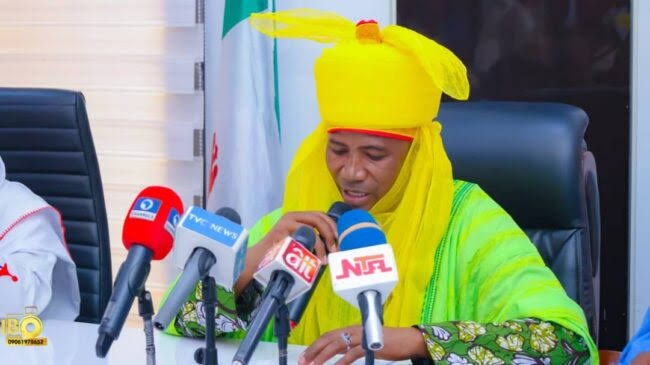
BCDC VANGUARD CALLS FOR ARREST OF FULANI LEADERS OVER CLAIMS MADE DURING RECENT NEWS CONFERENCE
By: Bodunrin Kayode
The Bokkos Cultural Development Council (BCDC) Vanguard has demanded for the immediate arrest, interrogation and prosecution of leaders and members of the Plateau State chapter of the Coalition of Fulani Registered Organizations (COFRO).
The chair of the vanguard Farmasum Fuddang through a signed statement said today that the recent news conference by some renegade fulani portrayed their brutal community as victims of the ongoing violence against residents on the Plateau.
BCDC Vanguard finds the statements made by the group to be provocative, inciting, diversionary, and deeply insulting to the true victims, whose mass graves are scattered throughout the State.
“This rhetoric reveals the actual perpetrators of the violence—identified Fulani terrorists—who have claimed more than 10,000 of our members over the past 15 years.
“This history of violence has often been misattributed to ‘unknown gunmen’ by genocide deniers, politicians, and conspirators trying to obscure the truth.
“The statement made by the group through its Chairman, Garba Abdullahi Muhammad, during a widely reported press briefing in Kaduna on April 8th, claims that Fulani herders in Plateau State are victims of “continuous aggression,” “injustice,” “criminality,” and “bias.”
“The statement implicates joint security task forces, whose officers have also fallen victim to Fulani militancy, including during the recent mass invasion of five Bokkos villages that resulted in the massacre of over 50 locals on April 2nd. It further demands the unconditional release of all arrested and detained suspects.
“BCDC Vanguard observes that such declarations often accompany mass killings attributed to Fulani militancy, exerting unnecessary pressure on security agencies to release all suspects, including those with confessions.
“A notable case is Jibrin Musa Goje, who confessed in a taped interview to leading the massacre of over 300 Christians during attacks on 36 villages in the 2023 Christmas season. Despite being arrested and presented to the media, Goje and other suspects were released without trial, despite strong incriminating evidence.
” The release of Mr. Goje and many other suspects poses an ongoing threat to both survivors and security operatives involved in their arrest. We assert that the persistent attacks in Bokkos, Bassa, and Mangu have involved the active participation of previously arrested Fulani militants, threatening not just non-Fulani residents but also the broader Fulani community that opposes their violent agenda.
“The demands by the so-called Coalition of Fulani Registered Organizations (COFRO) for the release of “all” suspects seem to indicate a calculated plan to perpetuate these threats and maintain a climate of terror in our villages.
“This exposes the true identity of the terrorists and their financiers, revealing their intentions to undermine the sovereignty of the Nigerian State.
“We urge the DSS, Police, Army, and all law enforcement agencies to regard this statement as a crucial lead toward identifying and dismantling the perpetrators behind the ongoing violence and to ensure the safety of innocent citizens.”
Thw chairman Fuddang had Amb. Duwam Bosco as secretary with seven other members including: “Machief Ayuba Barrs. Charles Amagong,John Apollos Maton Nantok Dashuwar, Cornelius Makopson, Austin Kamshak and Daniel Malgit Agandu”.
BCDC VANGUARD CALLS FOR ARREST OF FULANI LEADERS OVER CLAIMS MADE DURING RECENT NEWS CONFERENCE


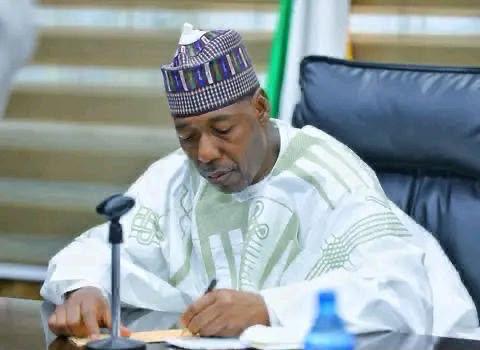
Zulum Appoints Ali Baware Pioneer DG of Rural Access Road Authority
Borno State Governor, Professor Babagana Umara Zulum, has approved the appointment of Engr. Ali Abubakar Baware as the pioneer Director-General of the Borno State Rural Access Road Authority (RARA).
The Authority, which came into effect on 14th July 2026, is saddled with the responsibility of managing, developing, reconstructing, rehabilitating and maintaining Class D roads across the state, including ancillary infrastructure such as bridges and drainage.
In a statement by the Special Adviser to the Governor on Media, Dauda Iliya, Engr. Baware was the immediate past Acting Permanent Secretary in the Ministry of Works and Housing.
A seasoned engineer and administrator, Engr. Baware has held several administrative positions and is a member of professional bodies, including the Nigerian Society of Engineers (NSE), the Council for the Regulation of Engineering in Nigeria (COREN) and the Nigerian Institute of Civil Engineers.
The appointment is for a period of four years in the first instance.
Governor Zulum congratulated the Director-General on his appointment and charged him to deploy his wealth of experience and expertise to make the new agency functional.
Zulum Appoints Ali Baware Pioneer DG of Rural Access Road Authority
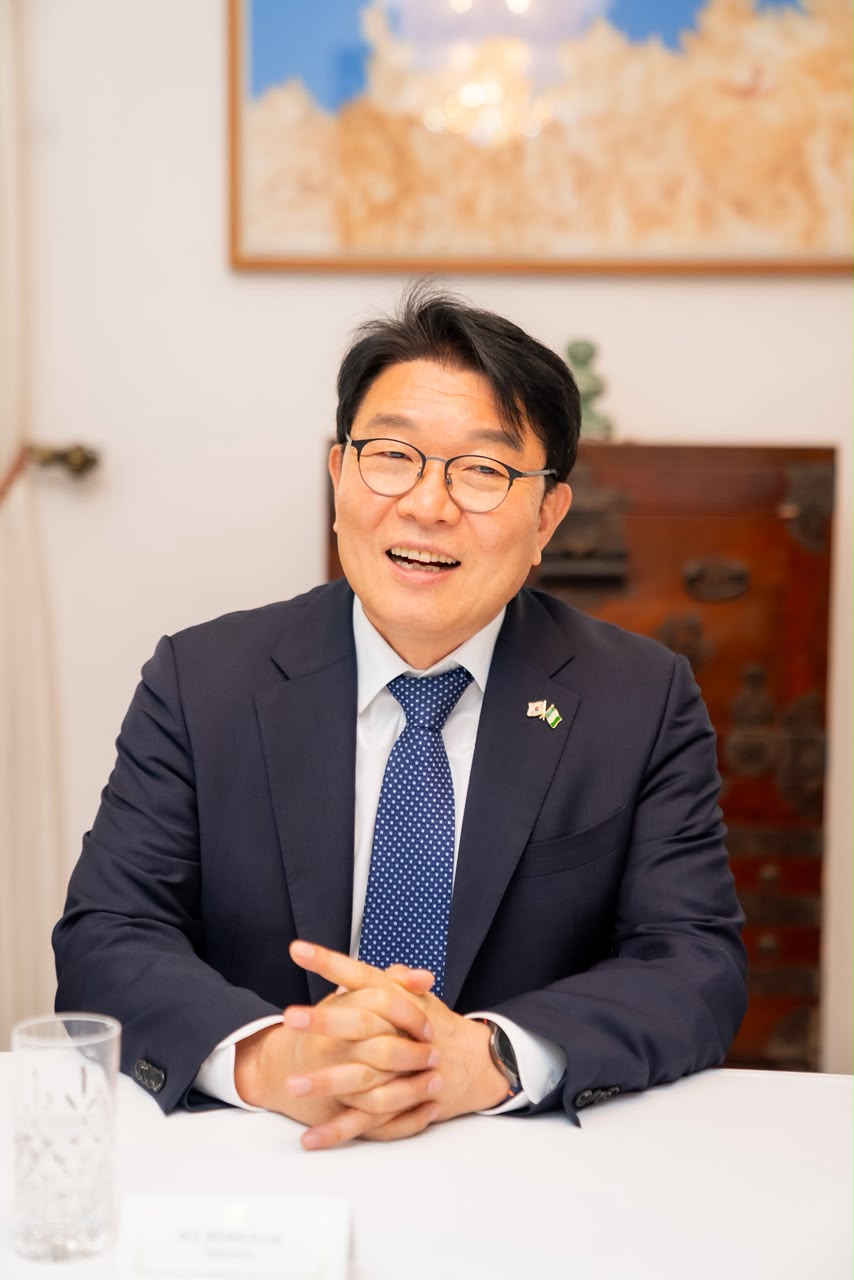
Korea Seeks Nigerian Manufacturing Shift, Urges Ratification of 20-Year Tax Treaty
…Ambassador calls for technology transfer, local production and investment beyond oil trade
By: Michael Mike
South Korea has urged Nigeria to restructure its trade relationship with the Asian country by shifting from crude oil exports and imports of manufactured goods to local production, technology transfer and investment in agriculture and industry.
Korean Ambassador to Nigeria, Jeong Yo-an, made the call on Wednesday in Abuja, saying the existing trade pattern had limited the potential of a bilateral relationship worth about $1.1 billion in 2025.
“Today, Nigeria sells us mostly oil and gas. Korea sells mostly cars, electronics and machinery. We can do much more than that,” he said.
Jeong identified local assembly, agricultural machinery production, digital skills, maritime services and emerging industries as priority areas for stronger cooperation.
He also urged Nigeria to ratify the double taxation agreement signed by both countries in 2006, saying the 20-year delay was affecting investor confidence.
He said predictable policies on foreign exchange, customs and taxation were necessary to attract long-term investments.
The ambassador cited the involvement of Korean companies in major Nigerian projects, including Daewoo Engineering and Construction’s work on the Nigeria LNG Train Seven project and the Indorama fertiliser plant. He also named Samsung, LG, Hyundai and Solpia among companies working with Nigerian partners in various sectors.
He encouraged Nigerian businesses to use the Korea Trade-Investment Promotion Agency (KOTRA) office in Lagos to establish links with Korean companies and explore opportunities in the Korean market.
The beauty and cosmetics industry, he added, offered prospects for local distribution, employment and partnerships, with Korean manufacturers expected to participate in the Beauty West Africa exhibition on November 13.
On development cooperation, Jeong said about 2,000 Nigerian government officials had received training in South Korea through the Korea International Cooperation Agency (KOICA).
He said KOICA’s Smart School project, implemented with the Universal Basic Education Commission, had reached about 8,000 pupils and trained more than 300 teachers and school administrators.
He also highlighted the Abuja Centre for Entrepreneurship, being developed in partnership with the Small and Medium Enterprises Development Agency of Nigeria and the United Nations Development Programme. Groundbreaking for the centre took place in September.
The facility is expected to provide young Nigerians with entrepreneurship training, mentorship and connections to finance and markets.
Jeong said Nigerian institutions would operate the centre, while a Training of Trainers programme would build local capacity to sustain its activities.
“A building alone does not create entrepreneurs,” he said, stressing the need to connect start-ups with investors, markets and private-sector operators.
He disclosed that KOICA was also working with the Food and Agriculture Organisation on agricultural initiatives aimed at creating green jobs for Nigerian youths.
Other areas of cooperation include digital development, postgraduate scholarships and government fellowships in information technology, public administration and health. The Nigeria-Korea Information Access Centre, established in Abuja in 2025, is also expected to strengthen digital literacy and access to technology resources.
The ambassador said future partnerships would place greater emphasis on private companies, start-ups and innovators, particularly in artificial intelligence, digital content and technology-based entrepreneurship.
He urged Nigeria to adapt lessons from South Korea’s development experience rather than attempt to replicate its model.
“The key word is not ‘copy’. The key word is ‘adapt’. Nigeria will write its own story. Korea is ready to share what we have learned,” he said.
On diplomatic relations, Jeong cited the 2024 Korea-Africa Summit in Seoul and the first Korea-Africa Foreign Ministers’ Meeting held in June as milestones in strengthening engagement.
He said South Korea welcomed Nigeria’s offer to host the seventh session of the Nigeria-Korea Joint Commission in Abuja.
He also disclosed that South Korea was working towards expanding its Official Development Assistance to $10 billion by 2030 and providing $14 billion in export financing to support Korean companies operating in Africa. The country is also planning to host the second Korea-Africa Summit in 2029.
The ambassador said cultural exchanges remained an important part of bilateral relations, disclosing that more than 300,000 people had participated in programmes organised by the Korean Cultural Centre Nigeria.
He said this year’s Korean Film Festival attracted about 1,000 participants, while the K-pop Festival in Lagos drew more than 400 young people. The 14th Korean Ambassador’s Cup Taekwondo Championship in Abuja also attracted about 350 athletes.
Jeong said the embassy planned to expand cultural activities to more Nigerian cities and universities and promote joint film and music productions. He disclosed that Nigerian creators had already produced two Korean-Nigerian drama productions.
He also pledged to support opportunities for Nigerian journalists to visit South Korea through media exchange programmes, including the World Journalists Conference.
The ambassador, a former military officer who served for 36 years before joining the diplomatic service, said he would focus on practical results during his tenure in Nigeria.
“The army taught me one simple lesson: trust is built when you keep your word. That is how I want to work in Nigeria – with more results,” he said.
Korea Seeks Nigerian Manufacturing Shift, Urges Ratification of 20-Year Tax Treaty
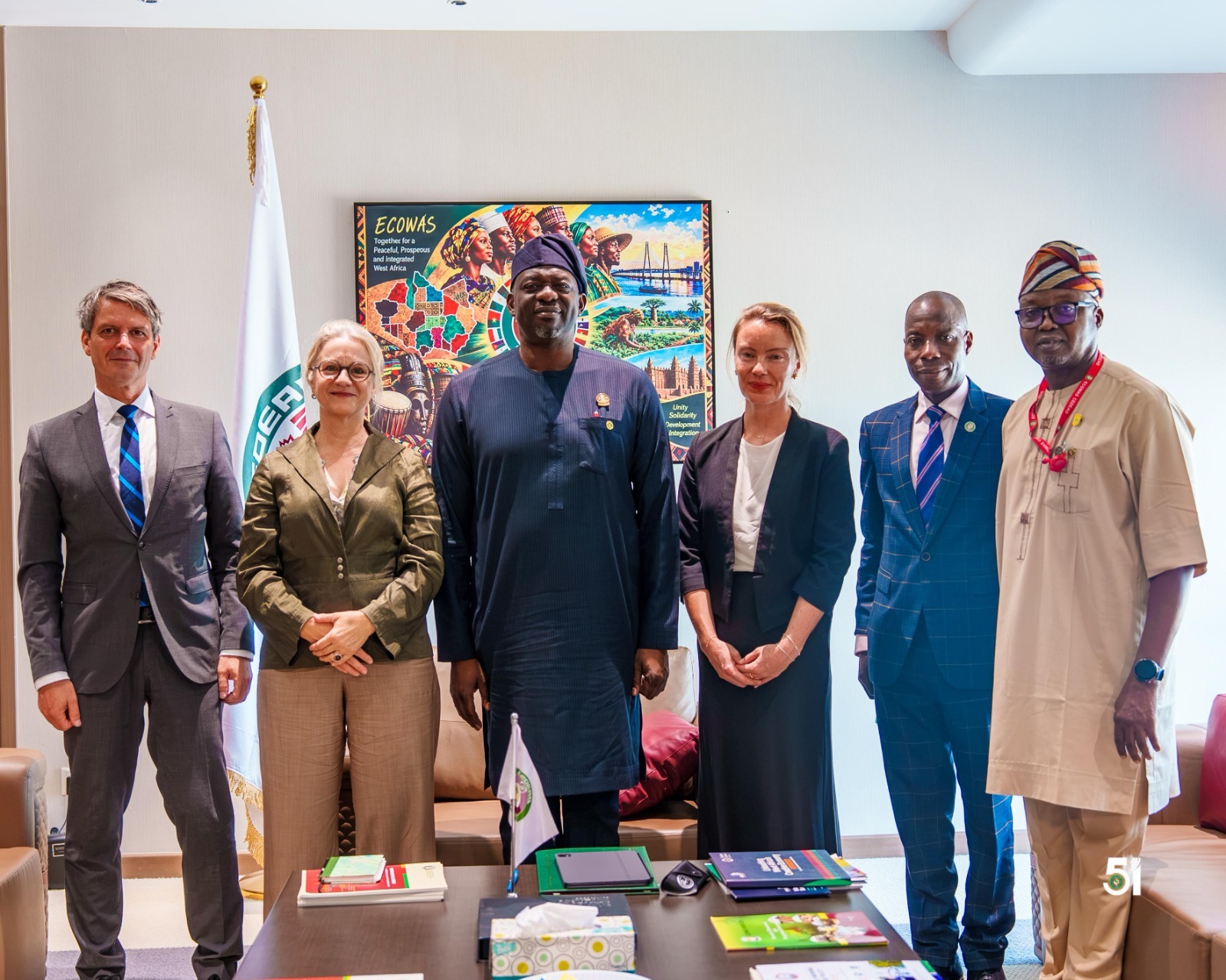
ECOWAS, Germany Open Strategic Dialogue as Berlin Commits €49m to West Africa
By: Michael Mike
The Economic Community of West African States (ECOWAS) and Germany have reaffirmed their commitment to strengthening bilateral cooperation, with Germany committing an additional €49 million to support regional development programmes for 2025 and 2026.
The commitment was highlighted during the opening of the strategic dialogue between ECOWAS and Germany in Abuja.
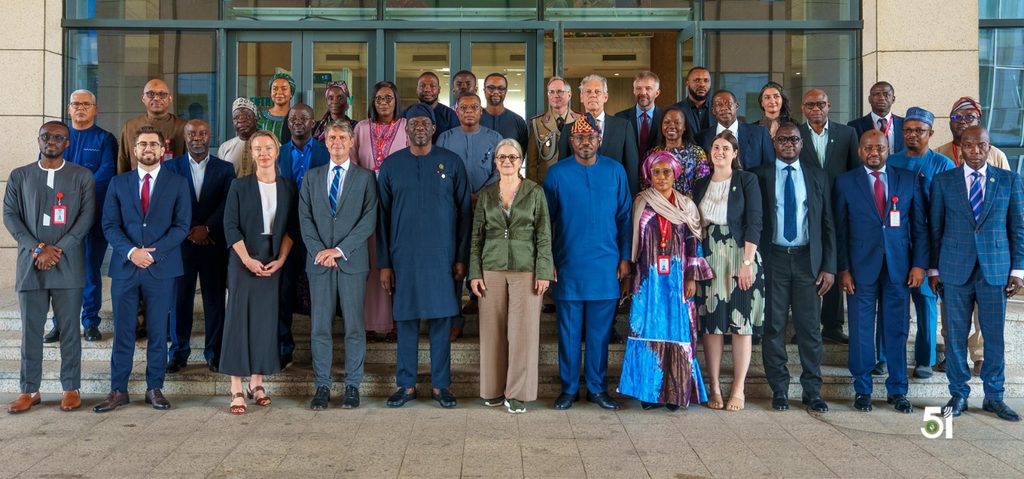
The Vice-President of the ECOWAS Commission, Anthony Ogunjimi, said the engagement marked a renewed approach to cooperation between the regional bloc and Germany, shifting from the traditional concept of consultation to a more strategic, open and constructive partnership.
He said the new strategic dialogue would provide an opportunity for both parties to deepen collaboration and address issues affecting regional development and the welfare of West African citizens.
Germany, which has been a partner to ECOWAS since 1985, has committed approximately €494 million in bilateral technical and financial cooperation over the years.
An additional €49 million was pledged for the 2025–2026 cooperation period during negotiations in November 2025.
The funding comprises €32.8 million for financial cooperation and €16.2 million for technical cooperation.
Ogunjimi, who spoke on behalf of the President of the ECOWAS Commission, Gen. Birame Diop, expressed appreciation to the German government for its longstanding partnership and support for the regional organisation and the people of West Africa.
The meeting was attended by the German Ambassador to Nigeria and ECOWAS, Stefan Rossel; a delegation from Germany’s Federal Ministry for Economic Cooperation and Development (BMZ), led by Karen Pfundt, Head of Division for West Africa II; representatives of the German development agency, GIZ; and directors and senior officials of the ECOWAS Commission.
The strategic dialogue is expected to provide a platform for reviewing existing cooperation and identifying areas for stronger collaboration between Germany and ECOWAS.
ECOWAS, Germany Open Strategic Dialogue as Berlin Commits €49m to West Africa

Army Expansion Deals Major Blow to Terrorists as Troops Rescue 16 Kidnap Victims, Recover AK-47 Rifles, RPG Bombs, 33 Motorcycles in Niger

Niger Police Arrest Four Suspects Over Alleged Plot to Sacrifice Biological Children for Money Rituals

Zulum Appoints Ali Baware Pioneer DG of Rural Access Road Authority

Roger Federer’s Shock as DNA Results Reveal Myla and Charlene Are Not His Biological Children

THE PLIGHT OF FARIDA

FAILED COUP IN BURKINA FASO: HOW TRAORÉ NARROWLY ESCAPED ASSASSINATION PLOT AMID FOREIGN INTERFERENCE CLAIMS
-
 News3 years ago
Roger Federer’s Shock as DNA Results Reveal Myla and Charlene Are Not His Biological Children
-
Opinions5 years ago
THE PLIGHT OF FARIDA
-
 News2 years ago
FAILED COUP IN BURKINA FASO: HOW TRAORÉ NARROWLY ESCAPED ASSASSINATION PLOT AMID FOREIGN INTERFERENCE CLAIMS
-
 Opinions5 years ago
POLICE CHARGE ROOMS, A MINTING PRESS
-

 News3 years ago
EYN: Rev. Billi, Distortion of History, and The Living Tamarind Tree
-

 ACADEMICS3 years ago
A History of Biu” (2015) and The Lingering Bura-Pabir Question (1)
-

 Columns3 years ago
Army University Biu: There is certain interest, but certainly not from Borno.
-

 Politics1 year ago
2027: Why Hon. Midala Balami Must Go, as Youths in Hawul and Asikira/Uba Federal Constituency Reject ₦500,000 as Sallah Gift
