
News
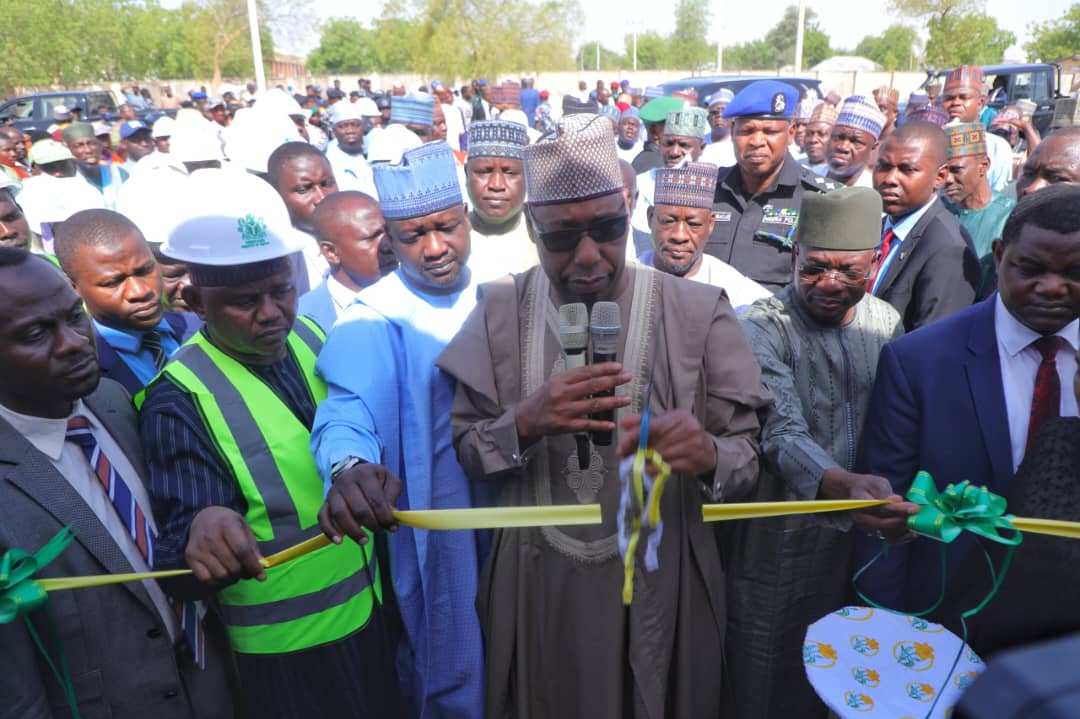
Zulum begins 7.1 km express road, Borno’s fourth flyover

Zulum begins 7.1 km express road, Borno’s fourth flyover
… To start new market, orthopaedic hospital, others
By: Our Reporter
Borno State Governor, Babagana Umara Zulum, flagged off the construction of a 7.1 km terminus junction to Molai express road with a 6-span bridge and the state’s fourth flyover along the busy Post Office area in Maiduguri, on Tuesday.
The projects, designed to address increasing vehicular traffic, aim to provide a seamless route for commuters and goods and significantly enhance access to key economic zones, schools and healthcare facilities.
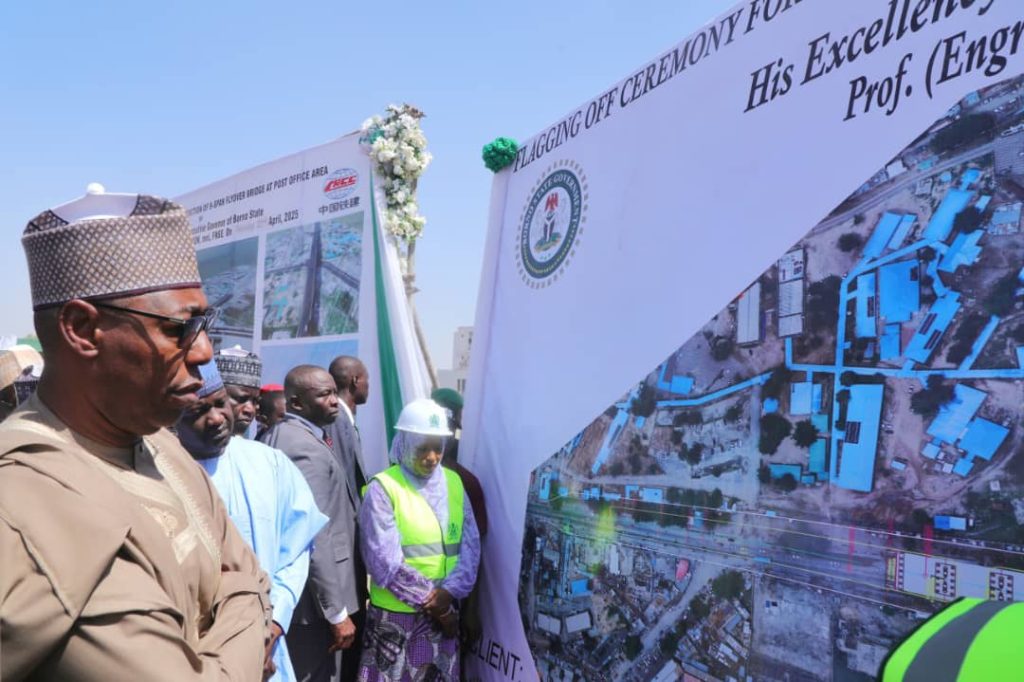
With an estimated completion timeline of 8 and 10 months, the projects are expected to create hundreds of jobs for skilled and unskilled workers, further contributing to the state’s economic recovery and resilience efforts.
Speaking at the groundbreaking ceremony for the construction of a 7.1km terminus-Molai express road along Tashan Kano, Zulum said, “In continuation of our urban renewal programme, this morning we are here to flag off the construction of 7.1 km dual carriageway from Borno express terminal to Molai and also the construction of an additional bridge downstream of the road.”
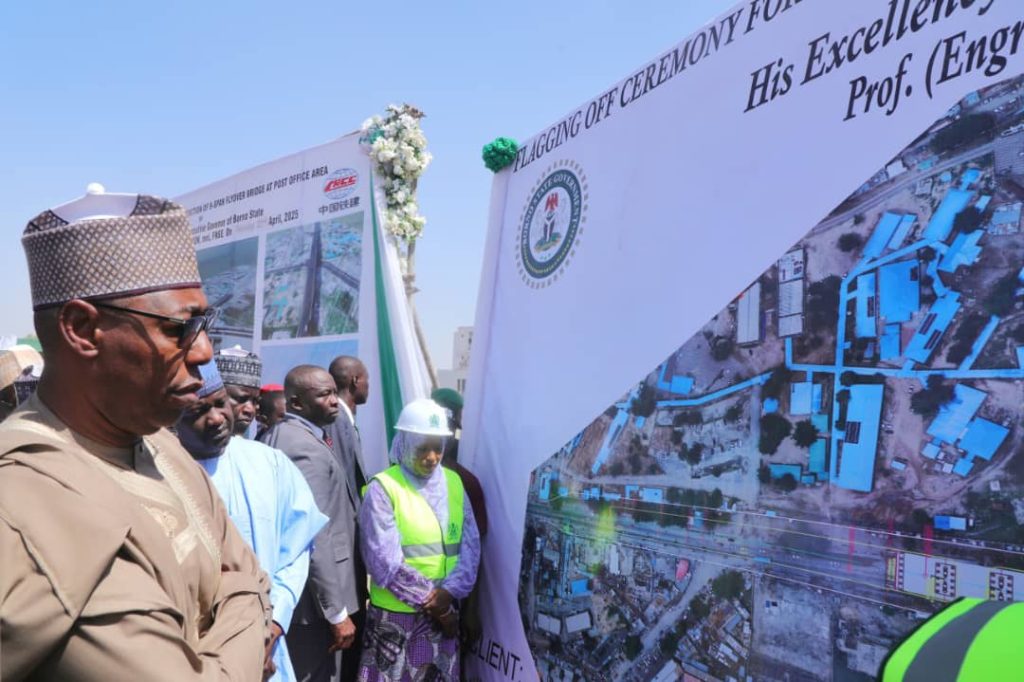
He added, “What we are doing is not only for beautification but also to accommodate the increasing population growth in Maiduguri. We must expand the city.”
In the meantime, Zulum also charged the contractors for all the projects to ensure strict compliance with quality specifications and timely completion.
“Ten months is 10 months, the total contract sum is 16bn and we have paid 50% of this amount. So, the contractor has no excuse for delaying the project. We have also kept aside the remaining 8bn to be paid when due,” Zulum said.
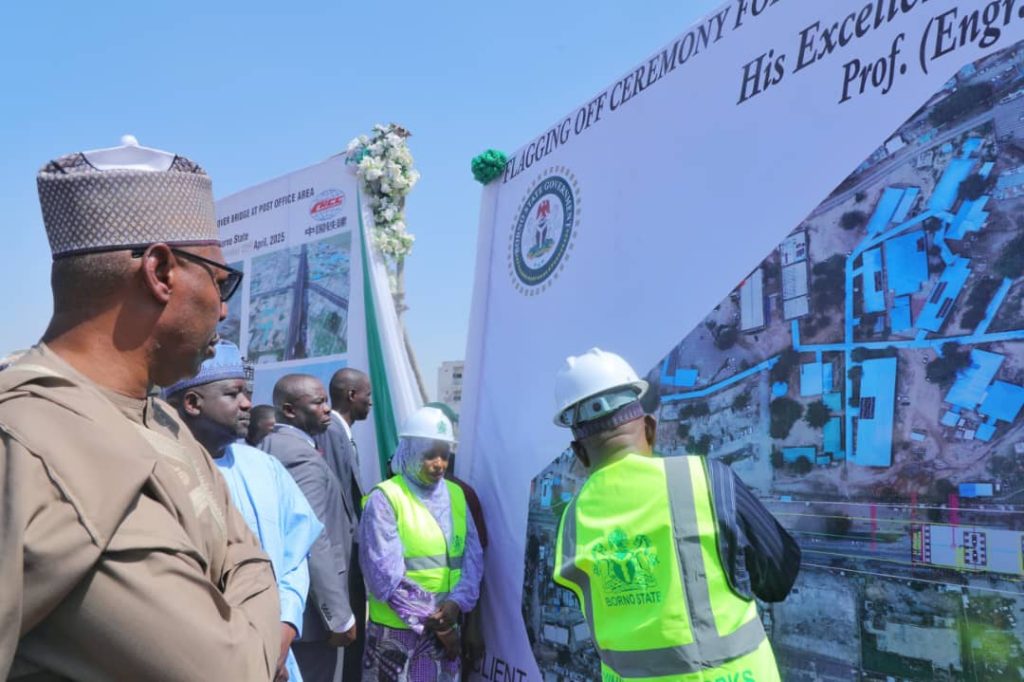
Also speaking, the commissioner for Works and Housing, Engr Mustapha Gubio, emphasised that the 6-span bridge is meant to link the new road along the two sides of the Ngada-Bul River.
The commissioner also acknowledged that the ministry will adequately monitor the projects and ensure diligent compliance with the contract specifications.
… To start new market, orthopaedic hospital, others
Meanwhile, Governor Babagana Umara Zulum has announced 5 key projects, including a new market, an orthopaedic hospital, another General Hospital, an international hotel, and a western bypass.
The Governor, who announced the 5 projects and many other developmental services on Tuesday in Maiduguri, assures that they will be completed before the expiration of his tenure.
“We want to construct a befitting additional market, an orthopaedic hospital, another General Hospital, an international hotel, and a western bypass. These are some of the major projects I want to execute before my tenure expires. Most importantly, completing all the ongoing projects,” Zulum stated.
Additionally, Governor Zulum expressed concern over the acute water shortage faced in Maiduguri Metropolis and surrounding communities which he said was caused by the destruction spurred by the flood disaster of last September (2024).
The Governor, however, appealed to residents for calm while assuring them that the state government is committed to addressing the problem. He said, “Maiduguri water supply network was damaged by last year’s flood, and the city is faced with acute water shortage. We are working very hard to complete the repair work on time.
He also stated, “I want to appeal to the people of the metropolis. The government is very aware of the situation and we are doing everything possible to address it.”
Zulum begins 7.1 km express road, Borno’s fourth flyover


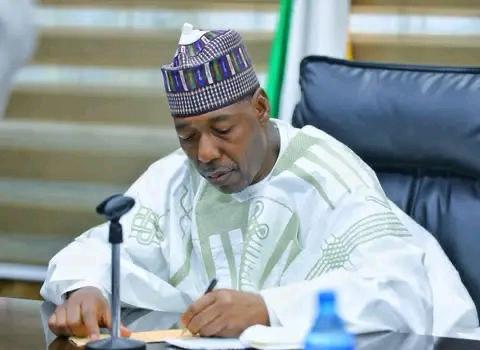
Zulum Appoints Engr Peter Samuel as General Manager BOSAMA
By: Our Reporter
Borno State Governor, Professor Babagana Umara Zulum, has approved the appointment of Engr Peter Samuel, MNSE, MNIAE, as the General Manager of Borno State Agricultural Mechanization Authority (BOSAMA).
In a statement by the Special Adviser to the Governor on Media, Dauda Iliya, the appointment was based on Engr Samuel’s outstanding professional competence, proven track record, and experience in agricultural engineering and mechanization.
The statement noted that Engr Samuel possesses the requisite qualifications, technical expertise and leadership capacity required to reposition BOSAMA in line with Governor Zulum’s agricultural transformation agenda.
The newly appointed General Manager is an Agricultural Engineer with academic, professional, administrative, and practical experience in agricultural mechanization, farm power and machinery, irrigation engineering, and agricultural infrastructure development.
He holds a Master of Engineering (M.Eng.) in Farm Power and Machinery from Joseph Sarwuan Tarka University, Makurdi (formerly the Federal University of Agriculture, Makurdi), a Postgraduate Diploma in Farm Management and Production Economics from Nasarawa State University, and a Bachelor of Engineering (B.Eng.) in Agricultural and Environmental Resources Engineering from the University of Maiduguri.
Engr Samuel has distinguished himself through years of meritorious service in teaching, research, agricultural engineering practice, and project implementation. He currently serves as a Lecturer in Farm Power and Machinery at Ramat Polytechnic, Maiduguri.
Over the years, he has held several strategic leadership positions, including General Manager of a commercial agricultural enterprise, Project Coordinator, Programme Coordinator, and Consultant on numerous agricultural development interventions implemented by reputable national and international organisations.
He is a member of the Nigerian Society of Engineers (NSE) and the Nigerian Institution of Agricultural Engineers (NIAE).
Governor Babagana Zulum congratulated the new General Manager on his appointment and urged him to deploy his wealth of knowledge, technical expertise, and experience in agricultural mechanization to strengthen the operations of BOSAMA
Zulum Appoints Engr Peter Samuel as General Manager BOSAMA
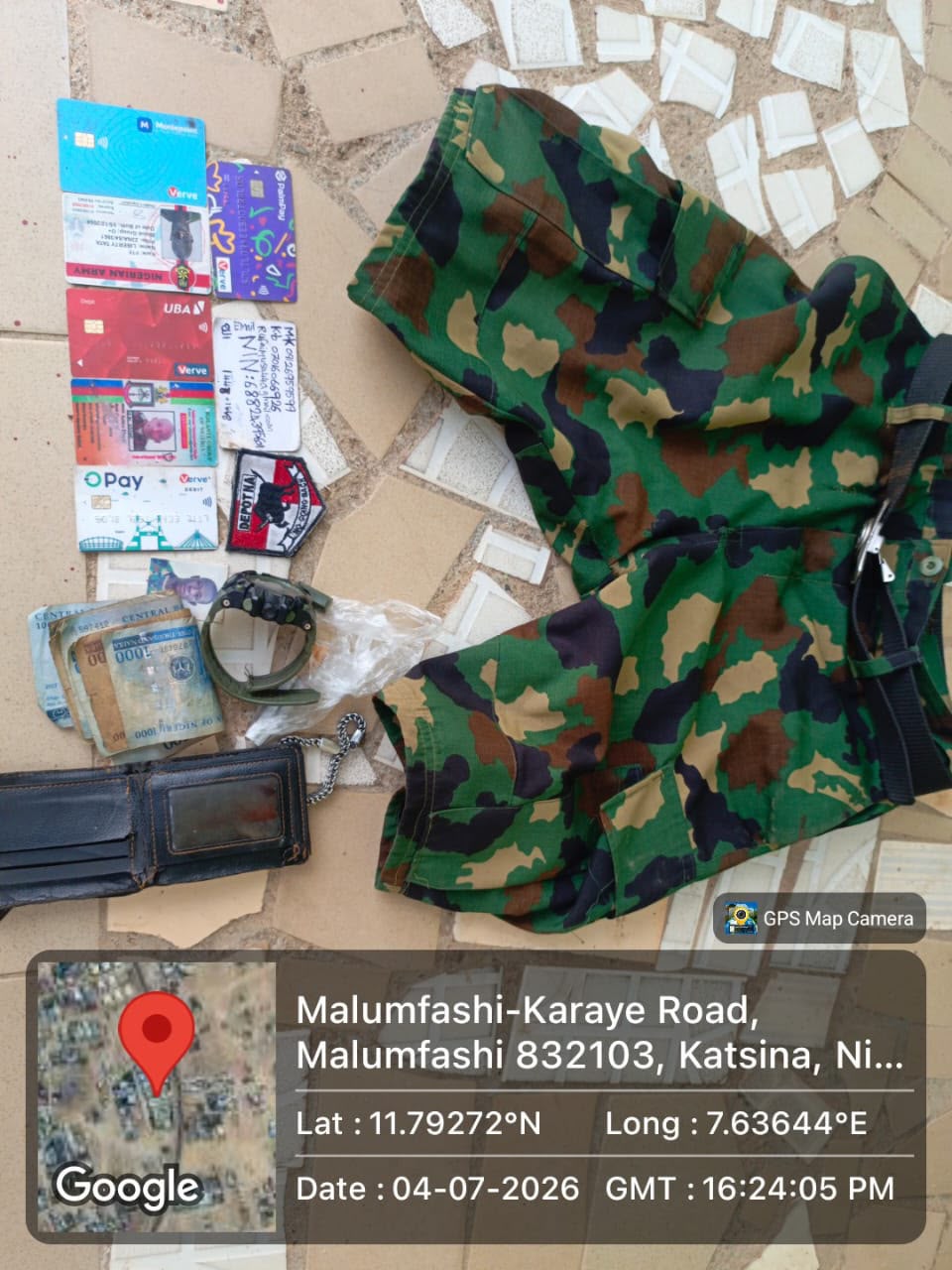
Troops Arrest Suspected Military Impostor in Katsina
By Zagazola Makama
Troops of 17 Brigade have arrested a suspected military impostor during a fighting patrol in Malumfashi Local Government Area.
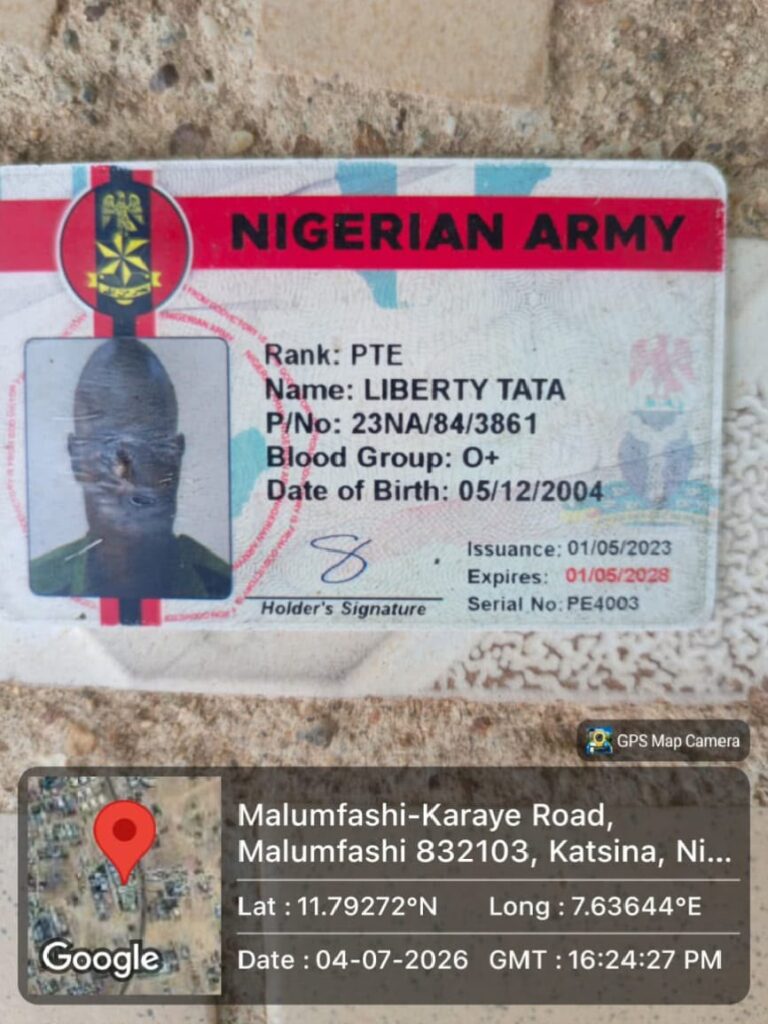
Security sources told Zagazola Makama that the suspect was apprehended at about 1:30 p.m. on July 4 by troops deployed at the Forward Operating Base (FOB) Malumfashi while conducting routine patrols within Malumfashi town.
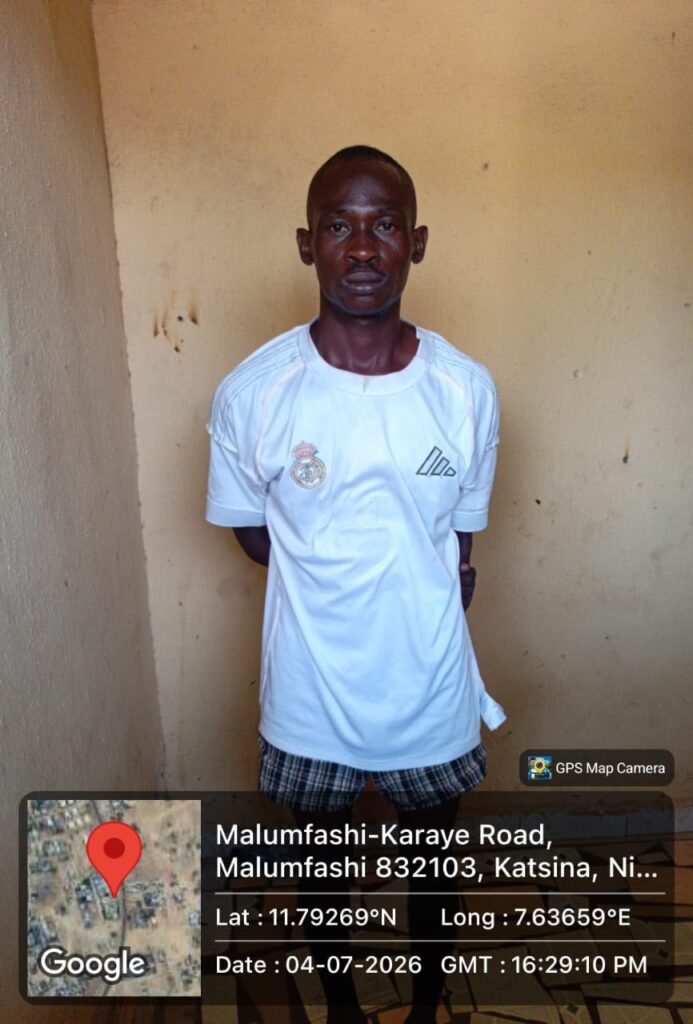
According to the sources, the suspect was intercepted while wearing a woodland camouflage three-quarter short, raising suspicion among the troops.
A search conducted on the suspect led to the recovery of a fake Nigerian Army identity card, four Automated Teller Machine (ATM) cards, one woodland camouflage three-quarter short, a wristwatch and the sum of ₦17,000.
The suspect and the recovered exhibits are currently in military custody pending further investigation.
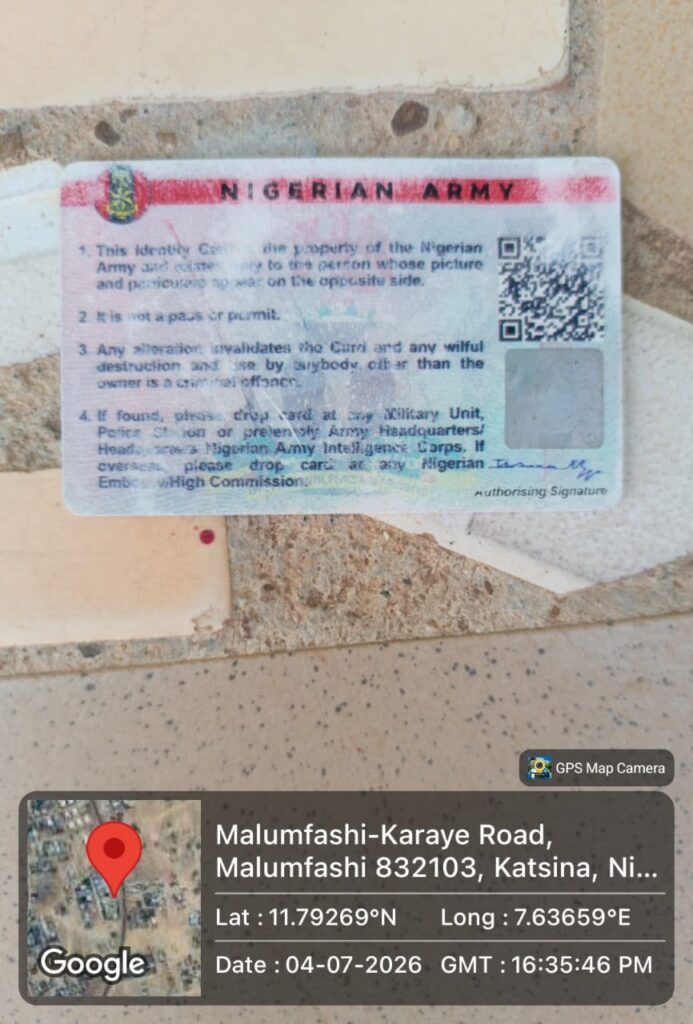
Military sources said the arrest forms part of ongoing efforts to curb impersonation of security personnel and other criminal activities within the area.
Troops Arrest Suspected Military Impostor in Katsina
Troops Recover 50 Rustled Cattle, Repel Suspected Rustlers in Kaduna
By Zagazola Makama
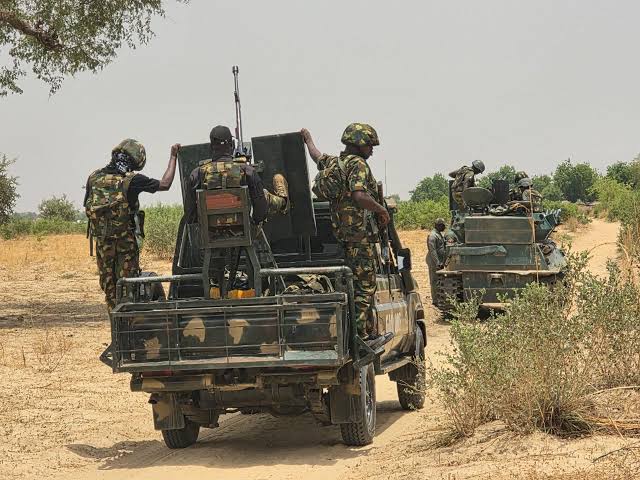
Troops deployed at the Forward Operating Base (FOB) Kankomi have recovered 50 rustled cattle after repelling suspected cattle rustlers during an ambush operation in Chikun Local Government Area.
Security sources told Zagazola Makama that the troops responded to a distress call at about 9:55 a.m. on July 4 over the activities of suspected rustlers at Ungwan Gontu community.
According to the sources, the troops swiftly laid an ambush and made contact with the fleeing suspects, forcing them to abandon the stolen livestock and escape into the surrounding area.
During the operation, the troops recovered 50 rustled cattle, which were subsequently identified and handed over to their rightful owner.
Military sources said efforts are ongoing to track down the fleeing suspects as security operations continue to combat cattle rustling and other criminal activities across Kaduna State.
Troops Recover 50 Rustled Cattle, Repel Suspected Rustlers in Kaduna

Zulum Appoints Engr Peter Samuel as General Manager BOSAMA

DSS Frees Cardiac Surgeon Martin Aghaji on Bail Over Alleged Economic Crime

Troops Arrest Suspected Military Impostor in Katsina

Roger Federer’s Shock as DNA Results Reveal Myla and Charlene Are Not His Biological Children

THE PLIGHT OF FARIDA

FAILED COUP IN BURKINA FASO: HOW TRAORÉ NARROWLY ESCAPED ASSASSINATION PLOT AMID FOREIGN INTERFERENCE CLAIMS
-
 News2 years ago
Roger Federer’s Shock as DNA Results Reveal Myla and Charlene Are Not His Biological Children
-
Opinions4 years ago
THE PLIGHT OF FARIDA
-
 News1 year ago
FAILED COUP IN BURKINA FASO: HOW TRAORÉ NARROWLY ESCAPED ASSASSINATION PLOT AMID FOREIGN INTERFERENCE CLAIMS
-

 News2 years ago
EYN: Rev. Billi, Distortion of History, and The Living Tamarind Tree
-
 Opinions5 years ago
POLICE CHARGE ROOMS, A MINTING PRESS
-

 ACADEMICS2 years ago
A History of Biu” (2015) and The Lingering Bura-Pabir Question (1)
-

 Columns2 years ago
Army University Biu: There is certain interest, but certainly not from Borno.
-

 Politics1 year ago
2027: Why Hon. Midala Balami Must Go, as Youths in Hawul and Asikira/Uba Federal Constituency Reject ₦500,000 as Sallah Gift
