
News
Illegal arms factory uncovered in Kaduna, four arrested


Illegal arms factory uncovered in Kaduna, four arrested
By: Zagazola Makama
An illegal firearms fabrication site has been uncovered in Giroji Village, Makarfi Local Government Area of Kaduna State, leading to the arrest of four individuals suspected to be involved in the production and distribution of locally made weapons.
Zagazola Makama gathered from security sources that the discovery followed credible intelligence on suspicious activity around a residential building in the area, which prompted swift action by surveillance operatives.
Two suspects, Shuaibu Abubakar, 35, and Ismail Shuaibu, 18, both from Unguwar Mani Danshoshiya in Kiru Local Government Area of Kano State, were caught in the act of fabricating firearms and cartridges.
A search of the premises resulted in the recovery of: Three locally made firearms, three skeletal gun frames, 14 cartridges, five T.06 live ammunition, Bench vice machine, Filing machine, Welding machine, Binding wire, Several iron rods and pipes and a bunch of keys.
Further investigation led to the arrest of two others Hassan Ibrahim, of Giroji Village, and Murtala Yakubu, of Kari in Makarfi. Both men were identified as members of a local vigilante group.
The four suspects have reportedly provided useful information regarding the extent of their operations, and the matter has been handed over to the appropriate authorities for further investigation and prosecution.
The discovery is expected to boost ongoing efforts aimed at curbing the proliferation of illegal weapons and addressing security challenges in the region.
Illegal arms factory uncovered in Kaduna, four arrested



Zulum calls for a shift from tractor ownership to modern agricultural services
By: Michael Mike
Borno State Governor, Babagana Umara Zulum, has called for a fundamental shift in Nigeria’s approach to agricultural mechanisation, stressing that the country must move beyond simply purchasing tractors to a more productive and modern, investment-driven agricultural system.
Zulum made the call while speaking at a High-level National Policy Dialogue on Agricultural Mechanisation organised by the Federal Ministry of Agriculture and Food Security in Abuja on Wednesday.
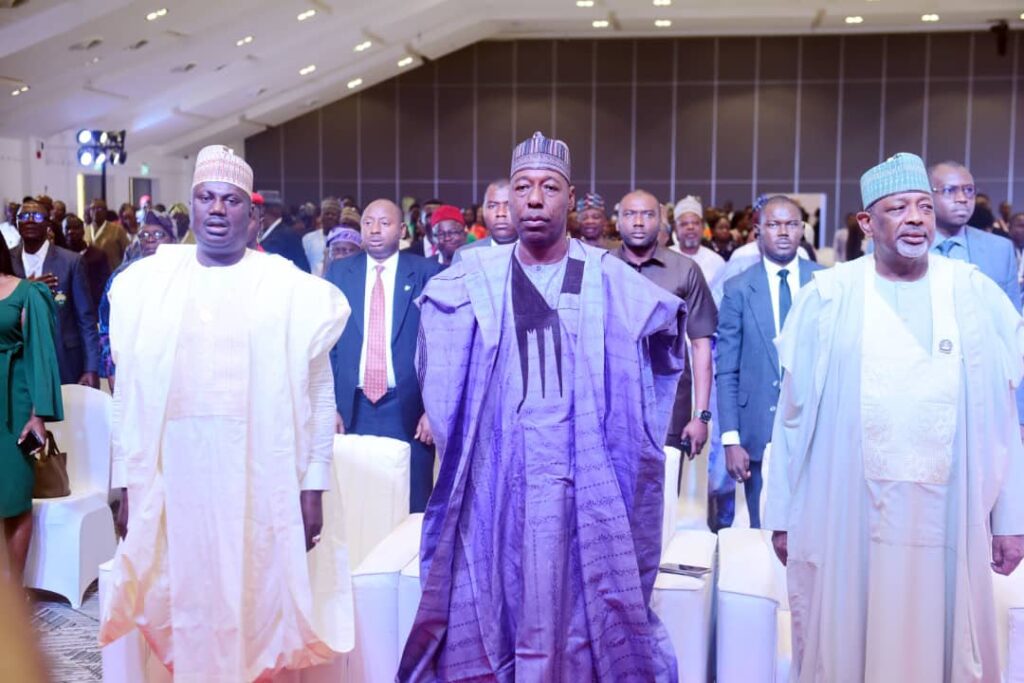
The Governor identified low productivity, limited technology, inadequate investment and weak value chains as major challenges facing Nigeria’s agricultural sector.
He emphasised that mechanisation should be delivered as a service, giving farmers timely access to land preparation, precision farming, irrigation and other modern agricultural technologies.
Commenting on Borno’s agricultural transformation initiatives, Zulum noted that massive investment by his administration in agriculture is central to rebuilding livelihoods and restoring communities affected by insecurity and displacement.
Zulum highlighted a four-pronged approach to agricultural mechanisation in Nigeria, including mechanising agriculture to increase productivity and reduce drudgery, digitalising agriculture to improve precision, intelligence, and efficiency, regenerating agricultural resources to ensure long-term sustainability, and investing in infrastructure, technology, and enterprises that will drive the transformation.

Zulum also called for stronger private-sector participation and innovative financing for local manufacturing and assembly of agricultural machinery, irrigation, renewable energy, storage, processing, value addition and youth- and women-led agricultural businesses.
He emphasised that Nigeria must not simply recreate the agriculture of yesterday, but build the agriculture of tomorrow, which should be modern, smart, climate-resilient, productive and inclusive.
The goal, he said, is to build an agricultural economy capable of feeding the nation, competing globally, creating jobs and delivering sustainable prosperity to rural communities.
The Governor was accompanied by the member of the House of Representatives, Engr Bukar Talba; Commissioner of Local Government and Emirates Affairs, Sugun Mai Mele; CEO/Managing Director of the Borno Investment Company, Mohammed Bukar Umar; and Permanent Secretary, Government House, Mustapha Ali Busiguma.
Zulum calls for a shift from tractor ownership to modern agricultural services

Troops Intercept 40 Cattle Over Alleged Farm Destruction in Plateau
By Zagazola Makama
Troops of Sector 4, Operation Enduring Peace (OPEP), have intercepted 40 cattle following a report of farmland destruction around the BCA area of Barkin Ladi Local Government Area of Plateau State.
A military source told Zagazola Makama that the troops responded to the report at about 4:00 p.m. on August 11, 2026, and mobilised to the affected area.
Upon arrival, the troops found 40 cattle grazing on the farmland, while the herders fled after sighting the security personnel.
The livestock were subsequently moved to a safe location to prevent further damage and facilitate the resolution of the incident.
Efforts are currently underway to identify and locate the owners of the cattle for further necessary action.
The intervention is part of ongoing security efforts in Plateau State to prevent farmer-herder disputes from escalating and protect agricultural communities from illegal grazing and related conflicts.
Troops Intercept 40 Cattle Over Alleged Farm Destruction in Plateau
India-Nigeria Trade Hits $9bn as Abuja, New Delhi Deepen Strategic Partnership
By: Michael Mike
India and Nigeria are deepening their strategic partnership across trade, investment, defence, energy, healthcare, agriculture and technology, with bilateral trade climbing to about $9 billion in the 2025–26 financial year, the Indian High Commissioner to Nigeria, Abhishek Singh, has disclosed.
Singh made the disclosure during a media briefing in Abuja, where he outlined the expanding relationship between the two countries and identified new opportunities for stronger economic and strategic cooperation.
The latest trade figure represents a substantial increase from the $7.13 billion recorded in 2024–25, reinforcing the growing importance of economic relations between Africa’s largest economy and one of the world’s major emerging powers.
According to the envoy, India-Nigeria relations have evolved significantly from their traditional foundations of historical goodwill and oil trade into a broad-based strategic partnership covering security, technology, food security, healthcare, agriculture and global governance.
“India-Nigeria relations are no longer defined only by historical goodwill or oil trade,” Singh said, stressing that the partnership was increasingly becoming multidimensional.
Over 200 Indian companies operating in Nigeria
Singh disclosed that more than 200 Indian companies are currently active in Nigeria, with investments covering pharmaceuticals, manufacturing, power, construction, consumer goods, healthcare and services.
He said many of the companies were not simply importing products into Nigeria but had established factories and production facilities in the country.
The investments, he added, have resulted in employment for close to 100,000 Nigerians, making Indian companies collectively one of the country’s largest private-sector employers.
The High Commissioner said the growing presence of Indian businesses reflected the confidence of investors from his country in Nigeria’s market and its long-term economic prospects.
Energy security takes centre stage
Energy security, he said, remains a critical pillar of the strategic relationship, with crude oil and liquefied natural gas continuing to play important roles.
But cooperation, according to Singh, is expanding beyond traditional oil trade to include Indian investments in Nigeria’s oil and gas industry, pipeline security, compressed natural gas conversion and liquefied petroleum gas infrastructure.
He stressed that India’s population of about 1.4 billion and Nigeria’s population of more than 230 million create enormous energy demand in both countries.
“This is all the more reason that the two great democracies, India and Nigeria, should cooperate more in the field of energy security,” he said.
Defence partnership gains momentum
The High Commissioner described defence and maritime security as another important pillar of the relationship, noting that cooperation between the two countries dates back several decades.
India, he said, supported Nigeria in establishing the National Defence Academy in Kaduna as well as the Naval College in Port Harcourt.
The two countries also face common security challenges, including terrorism, violent extremism, piracy, organised crime and illicit trafficking.
Singh said cooperation therefore covers intelligence sharing, counter-terrorism, defence training and maritime security, particularly in the Gulf of Guinea.
He disclosed that a Nigerian naval delegation was scheduled to travel to India for bilateral discussions, describing the continuing engagement as evidence of the depth of defence relations between the two countries.
Defence equipment and sales, he added, also remain areas of collaboration.
India extends $395m credit to Nigeria
The High Commissioner said India’s development partnership with Nigeria had also produced tangible results, including $395 million in concessional lines of credit.
He said India had further provided extensive technical and professional training to Nigerians through the Indian Technical and Economic Cooperation (ITEC) programme.
Nigerians have benefited from ITEC training in areas including auditing, teaching, rural development, electrification and other specialised fields, while members of the Nigerian Armed Forces have continued to receive training at leading Indian defence institutions.
Singh said India’s development assistance was based on sharing its strengths in areas that correspond with Nigeria’s own development priorities.
Among the areas identified are affordable medicines, Digital Public Infrastructure, agriculture, skills development, food security, climate-resilient development and space applications.
Pharmaceuticals, technology and agriculture emerging as growth areas
Healthcare is another major area of bilateral cooperation.
Singh pointed to India’s strength in pharmaceutical manufacturing, noting that the country is widely recognised as a major global supplier of medicines and remains one of the largest exporters of pharmaceutical products to Nigeria.
He said cooperation was also expanding into Digital Public Infrastructure, space applications, agricultural mechanisation, food security and climate-resilient development.
These, he said, represent some of the new frontiers of India-Nigeria cooperation.
Tinubu, Modi visits elevated ties
The High Commissioner traced the recent momentum in bilateral relations to increased high-level political engagement.
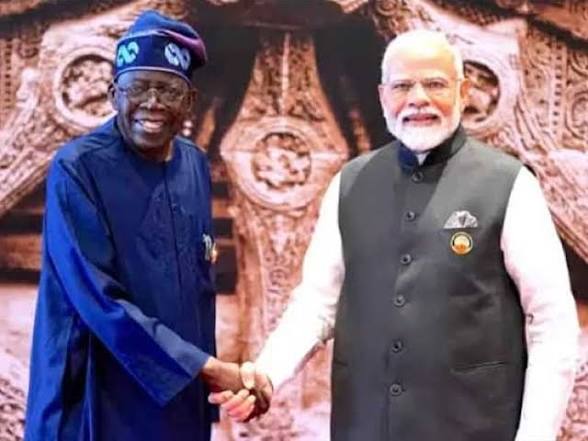
He recalled President Bola Ahmed Tinubu’s visit to India in September 2023 during India’s G20 presidency.
The visit was particularly significant, he said, because it coincided with the formal admission of the African Union as a full member of the G20.
The engagement was followed by Indian Prime Minister Narendra Modi’s state visit to Nigeria in November 2024—the first visit by an Indian prime minister to Nigeria in about 17 years.
During the visit, Modi held extensive discussions with President Tinubu on trade and investment, defence, energy, agriculture, healthcare, education, technology and security.
The significance attached to the relationship was further demonstrated when Nigeria conferred its highest national honour, the Grand Commander of the Order of the Niger (GCON), on the Indian Prime Minister.
Singh also recalled other high-level engagements, including the participation of India’s Defence Minister, Rajnath Singh, at President Tinubu’s inauguration in May 2023 and the visit of India’s External Affairs Minister, S. Jaishankar, to Abuja for the Sixth India-Nigeria Joint Commission Meeting in January 2024.
Tinubu invited to BRICS summit
Looking ahead, India is seeking stronger Nigerian participation in global economic and political platforms, particularly BRICS.
Singh disclosed that President Tinubu has been invited to the BRICS Leaders’ Summit scheduled for September 12–13, 2026, in New Delhi.
He expressed hope that the Nigerian President would lead a high-powered delegation to the summit.
The envoy said Nigeria’s participation was important because of its position as Africa’s largest economy and one of the world’s most populous nations.
India assumed the BRICS chairmanship in 2026, with the summit expected to focus on pressing global challenges, economic cooperation and outreach to partner countries.
India backs Nigeria’s UN Security Council bid
The two countries are also backing each other’s aspirations at the United Nations.
Singh disclosed that Nigeria has conveyed its support for India’s campaign for a non-permanent seat on the UN Security Council, while India has also conveyed its support for Nigeria’s candidacy.
India’s campaign is being promoted under the banner “SHANTI” — Securing Holistic Advancement through Norms, Trust and Integrity.
According to Singh, the campaign represents India’s vision of a peaceful, inclusive and reformed global order.
He reiterated India’s position that reform of the UN Security Council should involve expansion of both permanent and non-permanent membership categories.
60,000 Indians form bridge between both countries
Singh also highlighted the contribution of the Indian community in Nigeria, estimating that about 60,000 Indians live in the country.
Many, he said, are second- and third-generation Indians who are now deeply rooted in Nigerian society.
He expressed appreciation to the Nigerian government and people for providing the Indian community with the space and opportunities to thrive.
According to him, the community has become an important bridge between both countries in education, healthcare, culture and commerce.
He said many members of the community regard India as their motherland while also considering Nigeria their fatherland.
From 1958 liaison office to strategic partnership
India established its Liaison Office in Lagos in 1958, two years before Nigeria’s independence, marking an early foundation for the relationship between the two countries.
The relationship was elevated to a Strategic Partnership in October 2007, signalling a shift towards broader political, economic and security cooperation.
Nearly two decades later, Singh said the partnership had grown into a multidimensional relationship with significant implications for both countries and the wider Global South.
With bilateral trade now approaching $10 billion, more than 200 Indian companies operating in Nigeria, nearly 100,000 Nigerians employed by Indian firms and cooperation expanding across defence, energy, healthcare, agriculture and technology, the relationship between Abuja and New Delhi appears poised for an even deeper phase.
For India, Nigeria is no longer merely a major African trading partner. It is increasingly being positioned as a strategic partner in shaping the future of Africa, the Global South and the emerging multipolar world.
India-Nigeria Trade Hits $9bn as Abuja, New Delhi Deepen Strategic Partnership

Zulum calls for a shift from tractor ownership to modern agricultural services

Troops Intercept 40 Cattle Over Alleged Farm Destruction in Plateau

India-Nigeria Trade Hits $9bn as Abuja, New Delhi Deepen Strategic Partnership

Roger Federer’s Shock as DNA Results Reveal Myla and Charlene Are Not His Biological Children

THE PLIGHT OF FARIDA

FAILED COUP IN BURKINA FASO: HOW TRAORÉ NARROWLY ESCAPED ASSASSINATION PLOT AMID FOREIGN INTERFERENCE CLAIMS
-
 News2 years ago
Roger Federer’s Shock as DNA Results Reveal Myla and Charlene Are Not His Biological Children
-
Opinions4 years ago
THE PLIGHT OF FARIDA
-
 News1 year ago
FAILED COUP IN BURKINA FASO: HOW TRAORÉ NARROWLY ESCAPED ASSASSINATION PLOT AMID FOREIGN INTERFERENCE CLAIMS
-

 News2 years ago
EYN: Rev. Billi, Distortion of History, and The Living Tamarind Tree
-
 Opinions5 years ago
POLICE CHARGE ROOMS, A MINTING PRESS
-

 ACADEMICS2 years ago
A History of Biu” (2015) and The Lingering Bura-Pabir Question (1)
-

 Columns2 years ago
Army University Biu: There is certain interest, but certainly not from Borno.
-

 Politics1 year ago
2027: Why Hon. Midala Balami Must Go, as Youths in Hawul and Asikira/Uba Federal Constituency Reject ₦500,000 as Sallah Gift
