
News
Amnesty International must stop defending dangerous falsehoods in the name of free speech


Amnesty International must stop defending dangerous falsehoods in the name of free speech
By: Zagazola Makama
Once again, Amnesty International has taken a predictable but deeply troubling stance, this time, condemning the lawful detention of a social media influencer, Ghali Isma’il, who is facing charges over a false and provocative video announcing the death of Nigeria’s sitting President. In its hasty and one-sided statement, Amnesty labeled the Department of State Services’ (DSS) action as “a clear demonstration of abuse of power.” This knee-jerk condemnation reeks not only of bias but of a dangerous disregard for the responsibility that comes with free speech.
It’s important to remember that the Nigerian authorities are acting within the bounds of the law. Ghali Isma’il appeared before a competent magistrate and is being tried for spreading false information an issue of concern to public safety and stability. The viral video claiming the President’s death by poisoning, however unfounded and provocative, point to the need for responsible speech, especially in a period when misinformation can quickly escalate tensions or cause panic.
Let’s be clear: no one is above the law. Isma’il was not whisked away to a secret cell. He was arraigned before a competent magistrate court in Abuja and is being tried according to the laws of the land. The charges spreading false information with intent to cause public alarm and inciting disaffection against the government are not political fabrications.
They are legitimate concerns, especially when tied to a video falsely claiming that President Bola Tinubu had died after being poisoned, and presented with an air of certainty that could spark panic in a country already battling complex security and economic challenges.
If this is what Amnesty International classifies as “freedom of expression,” then the organization must clarify where it draws the line between speech and sabotage. Are we now to accept that individuals can publish death hoaxes about national leaders and peddle wild, fabricated conspiracy theories under the guise of digital activism? Would Amnesty extend this same compassion if the target were a leader in Europe or America?
Is it truly free speech when falsehoods threaten public order or incite unrest? Would Amnesty International hold the same stance if similar misinformation targeted leaders in other parts of the world? These are complex issues with no easy answers, but it is crucial that we weigh the right to expression against the potential harm caused by reckless or deliberately false content.
Let us also not forget that this is not Ghali Isma’il’s first brush with dangerous disinformation. He has repeatedly posted bizarre claims including that former U.S. President Donald Trump was compelling Nigeria to repatriate terrorists into the country and quoting the Minister of Foreign Affairs, Ambassador Yusuf Tugger, who never mentioned such in his interview. Yusuf said they are ex- convict from Venezuela but Ismail, said they are “Terrorists” . When does free speech become reckless speech? When does falsehood become a threat to national peace and cohesion? This calls for a measured discussion on when speech crosses into dangerous territory especially when it influences public perception and stability.
Moreover, one must ask: where was Amnesty International when ISWAP terrorists released gruesome videos of mass executions? Where was Amnesty when bandits kidnapped and murdered citizens or when IPOB loyalists torched police stations and killed security personnel? The silence or muted response from Amnesty International in those cases raises questions about consistency and priorities. Their silence in the face of these atrocities is deafening. Yet, whenever the Nigerian state acts to preserve order and prevent chaos, Amnesty rushes in with a press release always siding with the provocateur.
Ultimately, the right to free speech must be exercised responsibly. Supporting lawful limits when speech could threaten national peace isn’t a contradiction to human rights but a recognition of their importance in a complex society.
Amnesty International faces an important question: will it stand as a defender of genuine human rights and democratic stability, or does it risk becoming a platform that inadvertently enables disinformation that jeopardizes it?
This double standard is becoming increasingly apparent to Nigerians. The right to free speech must be protected, yes but it must also be exercised with responsibility. Defending lies that threaten national unity under the cloak of human rights advocacy is not activism; it is sabotage.
Amnesty International must decide: is it here to protect Nigeria’s democracy or to shield those who exploit social media to endanger it?
Zagazola Makama is a Counter Insurgency Expert and Security Analyst in the Lake Chad Region
Amnesty International must stop defending dangerous falsehoods in the name of free speech


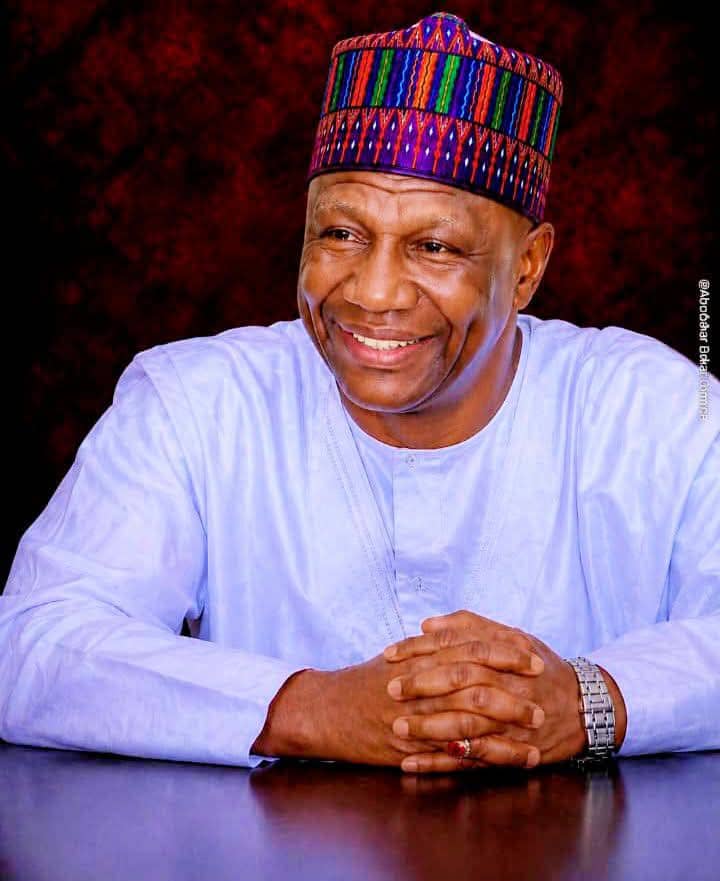
Yobe: Wali visits Emir of Damaturu
By: Yahaya Wakili
Yobe State All Progressives Congress (APC), 2027 gubernatorial candidate Alhaji Baba Malam Wali MNI, FCAN, has paid a courtesy visit to His Royal Highness, the Emir of Damaturu, Alhaji Shehu Hashimi II Ibn Umar Al-Amin El-Kanemi, at his palace in Damaturu.
During the visit, the APC governorship candidate, Alhaji Baba Malam Wali MNI, said they were at the emir’s palace to solicit the prayers and blessings of the emir.
According to Baba Wali, “We are in the race; therefore, the visit was very significant. We need the prayers of the royal fathers and leaders because they were very vital and important at this crucial time.
Responding, His Royal Highness, the emir of Damaturu, Alhaji Shehu Hashimi II Ibn Al-Amin El-Kanemi, thanked the governorship candidate for the visit and prayed Almighty Allah (SWT) would guide and protect him throughout his struggle in his life.
Those accompanying the incoming governor, Inshallah, in 2027 during the visit are his deputy, Barrister Saleh Samanja; APC State chairman, Alhaji Mohammed Gadaka; and Madakin Gudi.
Others are Alhaji Aji Yarima Bularafa, Hon. Commissioner of the Ministry of Wealth Creation, Empowerment, and Employment Generation; Hon. Nasiru Hassan Yusuf, candidate for the Federal House of Representatives, representing Damaturu, Gujba, Gulani, and Tarmuwa local government areas; and others.
The emir conferred the traditional title of Mukaddam of the Damaturu emirate council on Alhaji Baba Malam Wali, mni, and fcan, respectively.
Yobe: Wali visits Emir of Damaturu
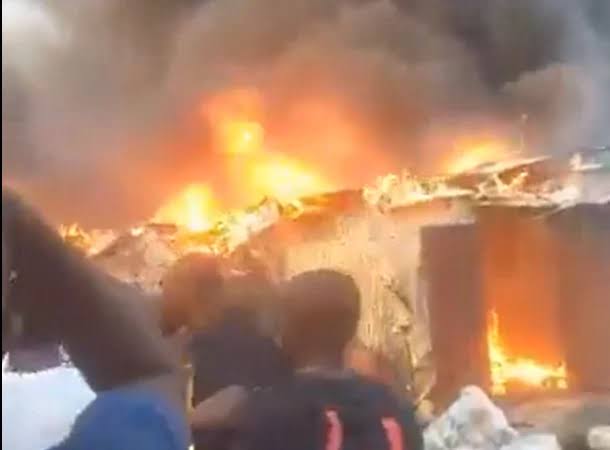
Fire Razes Building Material Shops in Satellite Town, Lagos
By Zagazola Makama
LAGOS — A fire outbreak has destroyed several building material shops along Fin-Niger, Satellite Town, Lagos State.
The incident occurred at about 6:10 a.m. on Aug. 18, when a distress call was received reporting a fire outbreak in the area.
Following the alert, a team of policemen and firefighters was swiftly mobilised to the scene.
The fire affected building material shops located at 58/196 Old Ojo Road, along Fin-Niger, Satellite Town.
The emergency responders successfully contained and extinguished the fire, preventing it from spreading further.
No casualty or loss of life was recorded in the incident.
The cause of the fire and the estimated value of property destroyed have not yet been established.
The police said investigation into the incident is ongoing to determine the circumstances surrounding the outbreak.
Fire Razes Building Material Shops in Satellite Town, Lagos
News
24 Bandits Killed As Army, DSS, Vigilantes Foil Mass Kidnap in Katsina Community, Rescue Victims
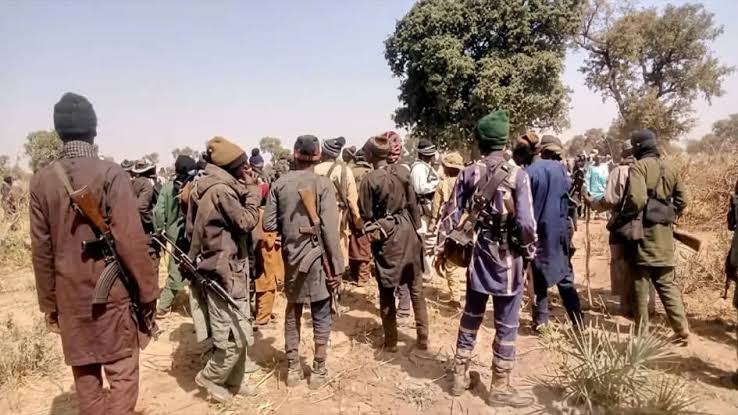
24 Bandits Killed As Army, DSS, Vigilantes Foil Mass Kidnap in Katsina Community, Rescue Victims
By: Zagazola Makama
At least 24 bandits were killed on Tuesday after soldiers of the Nigerian Army, operatives of the Department of State Services (DSS), Katsina Community Watch Corps foiled an attempt to mass-kidnap persons in Gidan Bawa village, Kandarawa Ward, Bakori Local Government Area of the state.
According to a security source, the operation followed sustained intelligence which uncovered plans by about 40 gunmen loyal to notorious bandit kingpin, Isiya Kwashen Garwa, to invade the village and abduct many residents, especially women and children.
The plot, sources said, was intended to replicate the mass abduction of residents of Woro community in Kwara State, ostensibly to embarrass the government.
Acting swiftly on the intelligence, DSS operatives mobilised the Community Watch Corps, and the Civilian Joint Task Force (CJTF) from Guga camp, and ambushed the bandits.
The source disclosed that the joint security operatives neutralised 24 bandits and rescued the abducted villagers.
Security operatives also recovered 19 stolen cattle from the community during the raid.
The source added that there were ongoing efforts to track down the fleeing bandits.
24 Bandits Killed As Army, DSS, Vigilantes Foil Mass Kidnap in Katsina Community, Rescue Victims

Yobe: Wali visits Emir of Damaturu

Police Arrest Two Suspected One-Chance Robbery Syndicate Members in Lagos

Fire Razes Building Material Shops in Satellite Town, Lagos

Roger Federer’s Shock as DNA Results Reveal Myla and Charlene Are Not His Biological Children

THE PLIGHT OF FARIDA

FAILED COUP IN BURKINA FASO: HOW TRAORÉ NARROWLY ESCAPED ASSASSINATION PLOT AMID FOREIGN INTERFERENCE CLAIMS
-
 News2 years ago
Roger Federer’s Shock as DNA Results Reveal Myla and Charlene Are Not His Biological Children
-
Opinions5 years ago
THE PLIGHT OF FARIDA
-
 News1 year ago
FAILED COUP IN BURKINA FASO: HOW TRAORÉ NARROWLY ESCAPED ASSASSINATION PLOT AMID FOREIGN INTERFERENCE CLAIMS
-

 News2 years ago
EYN: Rev. Billi, Distortion of History, and The Living Tamarind Tree
-
 Opinions5 years ago
POLICE CHARGE ROOMS, A MINTING PRESS
-

 ACADEMICS2 years ago
A History of Biu” (2015) and The Lingering Bura-Pabir Question (1)
-

 Columns2 years ago
Army University Biu: There is certain interest, but certainly not from Borno.
-

 Politics1 year ago
2027: Why Hon. Midala Balami Must Go, as Youths in Hawul and Asikira/Uba Federal Constituency Reject ₦500,000 as Sallah Gift
