
News
Why Kashim Shettima Is A Deciding Factor For APC’s Victory In 2027

Why Kashim Shettima Is A Deciding Factor For APC’s Victory In 2027
By Engr. Ishaku Ibrahim Mshelizza, MNSE, COREN
In 2023, when President Buhari’s 8- year tenure was coming to an end, then Candidate Tinubu as one of several powerful contenders to succeed him had to think and act strategically in order to win the contentious election. He needed a winning formular to realize his lifetime ambition (Emi Lokan) of presiding over the affairs of Nigeria.
As the first southern Muslim to contest seriously for the office, he needed a northern running mate with clout in order to realize his ambition, and against all expectations, he chose a fellow Muslim from the North East sub-Region with clout, pedigree and acceptability across regional and religious divides.
There was outrage and dissent by many of his friends and supporters over the Muslim – Muslim ticket (which last happened with Abiola- Kingibe in 1993). But the dissent didn’t last long as the choice of then Senator Kashim Shettima Mustapha of Borno Central was eventually accepted as a strategic political move and not intended to marginalize the Christian community.
In one of the most competitive and contentious elections ever, the Tinubu – Shettima ticket won decisively with the bulk of the votes coming from the North.
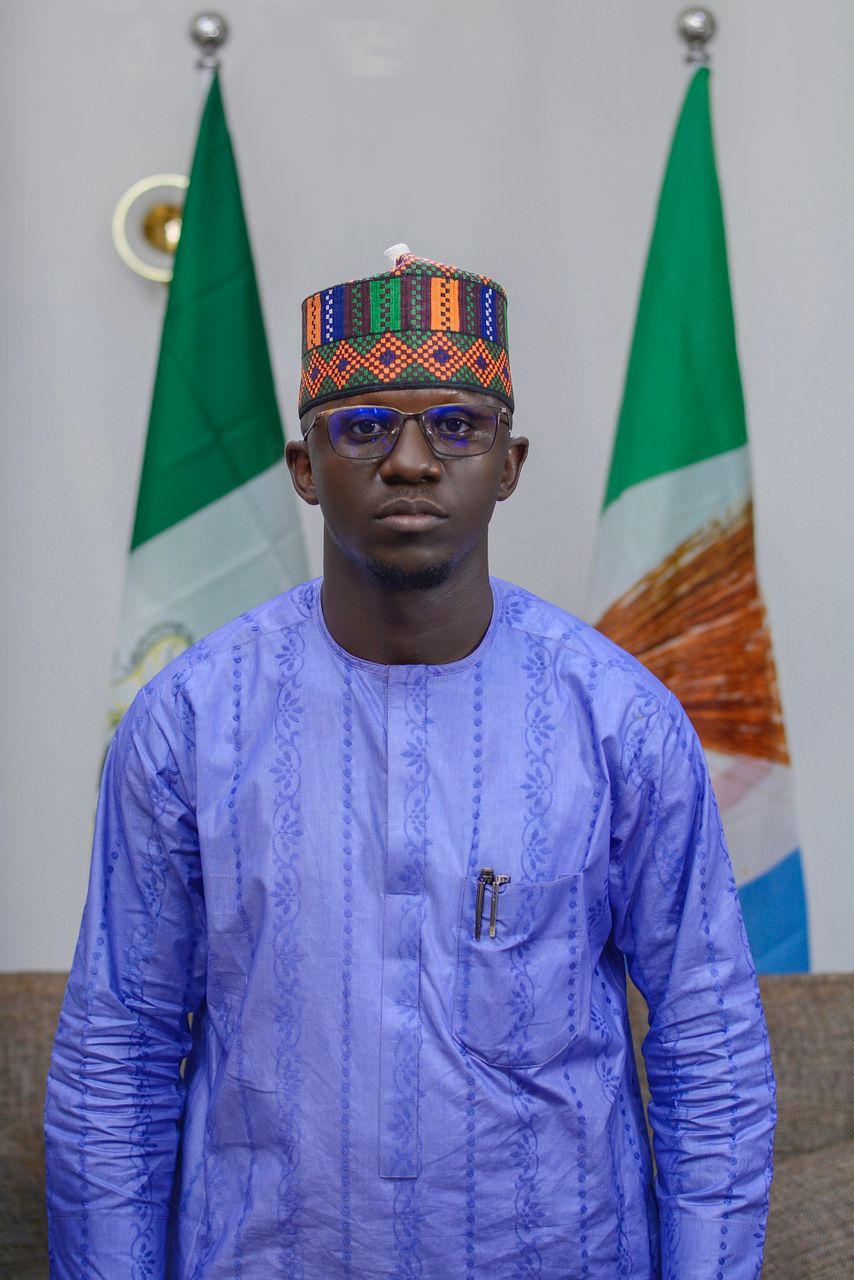
Vice President Kashim Shettima Mustapha, GCON, the 15th and current occupant of the office came fully prepared for the job with an intimidating resume. An Agricultural Economist and banker, he obtained his Bachelor’s degree from the University of Maiduguri and Masters in the same field from the University of Ibadan. After lecturing in the same field at the University of Maiduguri, he joined the banking industry where he rose to the position of a senior manager with Nigeria’s leading financial institution, Zenith Bank, from where his expertise was sought and he served as a Commissioner in key ministries in Borno State. He succeeded Governor Ali Modu Sheriff and served remarkably as Governor for two terms from 2011-2019 garnering the relevant experience as a politician and manager of diverse people and resources. He then won the senatorial election for Borno Central decisively in a keenly contested race, where he served his first term before emerging President Tinubu’s running mate in 2023.
He played a crucial role in mobilizing support for Tinubu who was contesting against a fellow Northeasterner, former Vice President Atiku Abubakar.
A voracious reader,book collector and good public orator, he has demonstrated his loyalty and capacity by representing President Tinubu in scores of countries across the globe and other High – Level events attracting commendations for Nigeria as well as his own deep understanding of the issues.
He has equally attracted support for President Tinubu across the North (54% of the nation’s population) by ensuring all sub- regions benefit immensely from development projects.
It is therefore illogical, irrational, against all convention and common sense that only two years into the first term of the Tinubu- Shettima Administration, there is a concerted effort by his political opponents as well as people suspected to be in the President’s inner circle to have him replaced as the running mate in 2027.
Apart from the his opponents in the Presidency, there are other prominent politicians from the North who are envious of how God has lifted up Kashim Shettima beyond their expectations. They are also not happy with how the Vice President has been impactful and supportive to the government of the day. Some of these self-centred and bitter politicians especially from Borno State are also behind the clamour to replace the Vice President.
Already, North East youth groups within the party have warned of dire consequences should he be replaced in 2027. But the most significant pointer to what would happen should President Tinubu listen to naysayers and negative nabobs of negativism, was the incident that happened at the APC North East Zonal Rally to endorse the Administration. Instead of endorsing Tinubu/ Shettima, both the North East Zonal Vice Chairman and the former National Chairman Dr Ganduje publicly proclaimed their endorsement of President Tinubu without even mentioning the name of the Vice President. The duo were immediately attacked and would have sustained serious injuries but for the quick intervention of the security agents at the venue who rushed them out to safety. The majority of the crowd were furious at this deliberate slight and provocation.
This incident was followed by a powerful press conference by the very popular Governor of Borno State, Prof. Babagana Umara Zulum who bluntly warned Tinubu and the APC that should Vice President Kashim Shettima be replaced in 2027, the party should forget about getting any votes from the sub-Region.
Many dedicated Party members and supporters have already warned those contemplating replacing Vice President Kashim Shettima that such ill-advised move will cost them 75% of their support in the North, not just the North East sub-Region.
It will not matter who replaces the Vice President and from which part of the North. The Party and Administration will be digging their political graves as their rule would be brought to an abrupt and miserable end.
Engr. Ishaku Ibrahim Mshelizza is a Politician and APC Stakeholder from Hawul LGA of Borno State.
Why Kashim Shettima Is A Deciding Factor For APC’s Victory In 2027


News
Cuba Blames U.S. Sanctions for Deepening Energy Crisis, Responds Cautiously to Reported $100m Aid Offer
Cuba Blames U.S. Sanctions for Deepening Energy Crisis, Responds Cautiously to Reported $100m Aid Offer
By: Michael Mike
The government of Cuba has intensified accusations against the United States over the island’s worsening electricity and economic crisis, while cautiously welcoming reports of a proposed $100 million American aid package amid growing humanitarian concerns.
In separate statements issued this week, Cuban President Miguel Díaz-Canel and government officials argued that the country’s severe power shortages, fuel scarcity, and economic hardship are direct consequences of decades-long U.S. sanctions and what Havana described as an increasingly aggressive “energy blockade.”
The latest developments come as Cuba experiences one of its most difficult periods in recent years, marked by prolonged blackouts, shortages of food and medicine, rising inflation, and mounting public frustration.
Díaz-Canel said the situation affecting Cuba’s National Power System had become “especially tense,” with authorities forecasting a deficit of more than 2,000 megawatts during peak evening demand.
According to the Cuban leader, fuel shortages alone were responsible for preventing the generation of at least 1,100 megawatts of electricity, significantly worsening blackouts across the country.
He accused Washington of deliberately obstructing fuel supplies to Cuba by threatening sanctions and punitive measures against countries and companies willing to trade with Havana.
“This dramatic worsening has a single cause: the genocidal energy blockade that the U.S. has imposed on our country,” Díaz-Canel declared.
The Cuban president argued that recent improvements in electricity supply during April demonstrated the direct relationship between fuel imports and power generation capacity.
He noted that the arrival of a single fuel tanker — out of the eight Cuba reportedly requires monthly — temporarily reduced electricity deficits and mitigated blackouts, though outages did not disappear entirely.
Díaz-Canel further accused sections of the U.S. media and political establishment of attempting to portray Cuba’s economic crisis as solely the result of government mismanagement while ignoring the impact of sanctions and economic restrictions.
According to him, neither the decades-old U.S. embargo nor the additional sanctions imposed during the administration of former President Donald Trump had succeeded in overthrowing the Cuban Revolution.
He alleged that more recent executive measures targeting fuel supplies, foreign trade, and investment in Cuba were specifically designed to increase suffering among ordinary citizens and provoke unrest against the government.
Despite the criticism, Havana has also reacted cautiously to reports that the United States Department of State had formally proposed an aid package valued at $100 million for Cuba.
In a separate government statement, Cuban authorities said it remained unclear whether the proposed assistance would come in the form of direct financial support or material aid such as fuel, food, or medicine.
The Cuban government said it was prepared to consider foreign aid offered in good faith and expressed openness to working with the Catholic Church in implementing humanitarian support efforts.
“We are willing to hear the details of the offer and how it would be implemented,” the statement said, while warning against any attempt to use humanitarian assistance for political leverage.
Havana maintained that the most meaningful support Washington could provide would be the easing of economic, commercial, financial, and energy restrictions imposed on the island.
Cuban officials argued that sanctions had intensified “as never before” in recent months, severely affecting nearly every sector of the economy and worsening living conditions for millions of citizens.
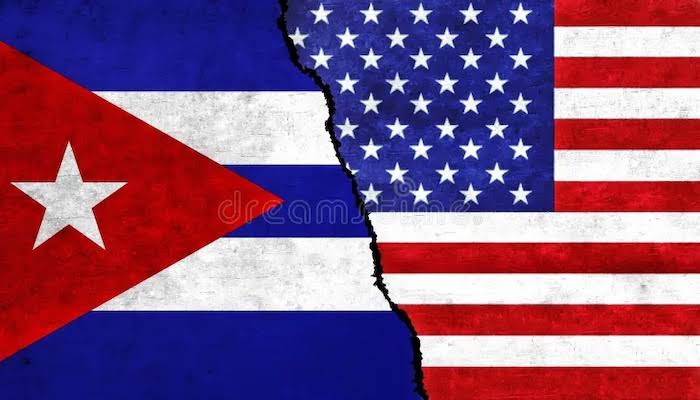
The latest exchange reflects the complicated and often confrontational relationship between Havana and Washington, which has remained strained for more than six decades despite intermittent attempts at diplomatic rapprochement.
While Cuba insists that U.S. sanctions are the central driver of its current crisis, critics of the Cuban government continue to point to structural inefficiencies, state control of the economy, and policy failures as major contributors to the country’s prolonged economic difficulties.
Nevertheless, the apparent willingness of both sides to discuss humanitarian assistance suggests a potentially significant, though cautious, opening for limited engagement amid escalating hardship on the island.
Cuba Blames U.S. Sanctions for Deepening Energy Crisis, Responds Cautiously to Reported $100m Aid Offer
Troops Arrest Suspected Gunrunner in Taraba State
By: Zagazola Makama
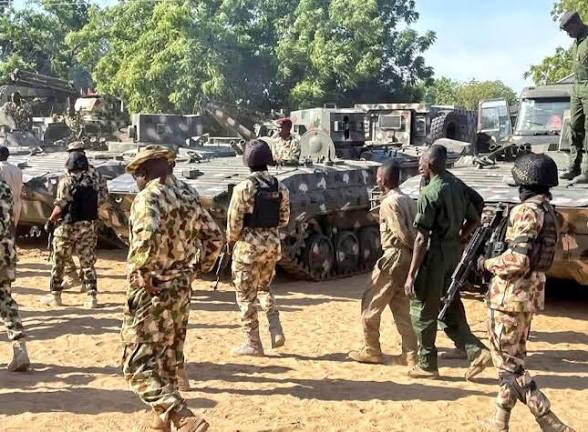
Troops of Operation Whirl Stroke (OPWS), in collaboration with Defence Intelligence Agency operatives and local vigilantes, have arrested a suspected gunrunner in Ardo-Kola Local Government Area of Taraba State.
Security sources said the arrest was made at about 7:45 a.m. on May 13 during an intelligence-led operation at Iware community in the area.
The suspect was reportedly apprehended following credible intelligence linking him to arms trafficking activities within the Amaseyo general area.
Preliminary interrogation revealed that the suspect was allegedly involved in illegal arms dealing, prompting his immediate arrest by the joint security team.
The suspect is currently in custody and undergoing further investigation, while security agencies say efforts are ongoing to dismantle arms trafficking networks operating within the state and surrounding areas.
Troops Arrest Suspected Gunrunner in Taraba State
Troops Rescue Kidnap Victim During Patrol in Kogi
By: Zagazola Makama
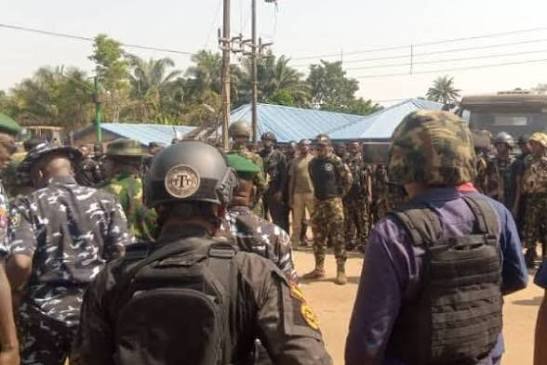
Troops of the Nigerian Army under Operation MESA have rescued a kidnap victim abandoned by suspected terrorists along the Obajana–Jakura–Tajimi axis in Lokoja Local Government Area of Kogi State.
Security sources said the rescue operation was carried out at about 9:00 a.m. on May 13 by troops of 12 Brigade during a fighting patrol along the old Obajana–Jakura–Tajimi road.
According to the report, the troops discovered the victim after suspected kidnappers abandoned him while fleeing from the advancing security personnel.
The rescued victim was subsequently reunited with his family after the operation.
Security patrols and clearance operations have continued along the route and adjoining communities as part of ongoing efforts to combat kidnapping and other criminal activities in the area.

Cuba Blames U.S. Sanctions for Deepening Energy Crisis, Responds Cautiously to Reported $100m Aid Offer

Troops Neutralise Two Terrorists During Clearance Operations in Borno

Governor Buni moves to appeal to guber aspirants to step down for Wali in Yobe

Roger Federer’s Shock as DNA Results Reveal Myla and Charlene Are Not His Biological Children

THE PLIGHT OF FARIDA

FAILED COUP IN BURKINA FASO: HOW TRAORÉ NARROWLY ESCAPED ASSASSINATION PLOT AMID FOREIGN INTERFERENCE CLAIMS
-
 News2 years ago
Roger Federer’s Shock as DNA Results Reveal Myla and Charlene Are Not His Biological Children
-
Opinions4 years ago
THE PLIGHT OF FARIDA
-
 News1 year ago
FAILED COUP IN BURKINA FASO: HOW TRAORÉ NARROWLY ESCAPED ASSASSINATION PLOT AMID FOREIGN INTERFERENCE CLAIMS
-

 News2 years ago
EYN: Rev. Billi, Distortion of History, and The Living Tamarind Tree
-
 Opinions4 years ago
POLICE CHARGE ROOMS, A MINTING PRESS
-

 ACADEMICS2 years ago
A History of Biu” (2015) and The Lingering Bura-Pabir Question (1)
-

 Columns2 years ago
Army University Biu: There is certain interest, but certainly not from Borno.
-

 Opinions2 years ago
Tinubu,Shettima: The epidemic of economic, insecurity in Nigeria
