
News
Marwa calls for collective action against drug abuse, cultism, banditry

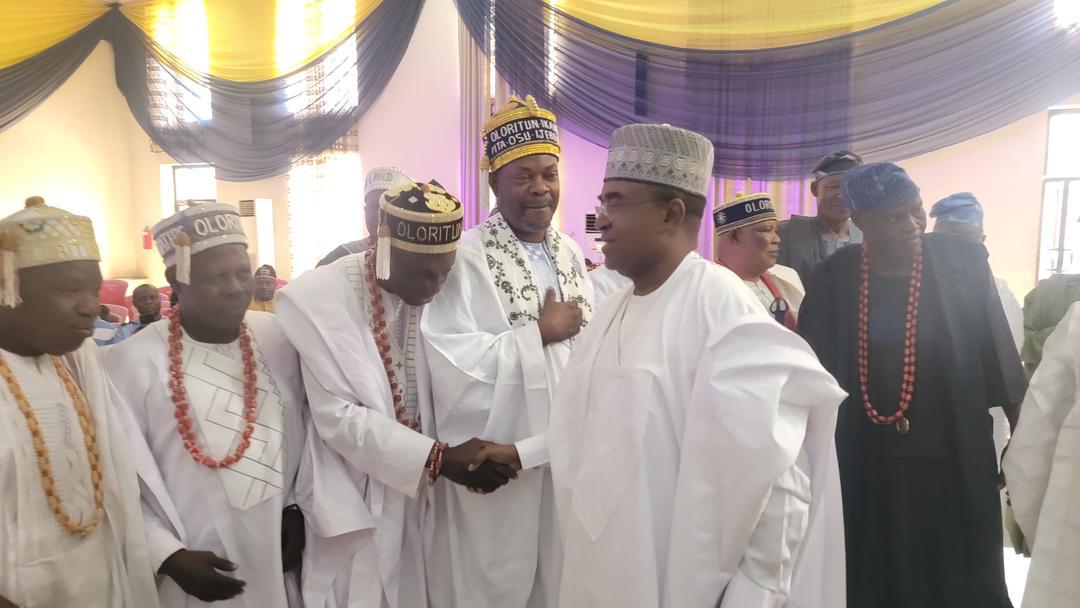
Marwa calls for collective action against drug abuse, cultism, banditry
By: Michael Mike
Chairman/Chief Executive of the National Drug Law Enforcement Agency (NDLEA), Brig. Gen. Buba Marwa (Rtd) has called for collective action involving families, religious and community leaders to stem the tide of substance abuse, cultism and banditry among Nigerian youths.
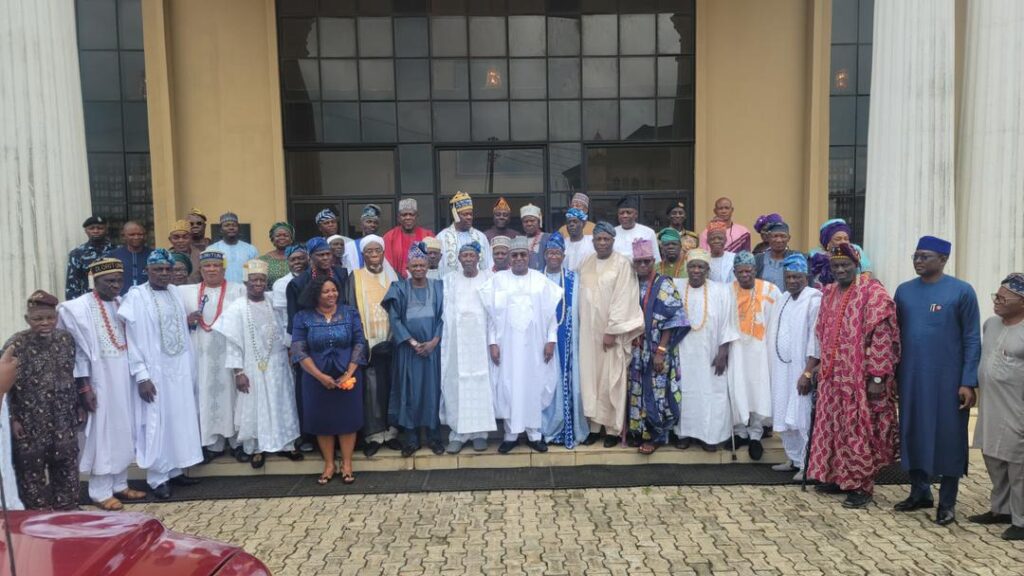
Marwa made the call while delivering the keynote address at a seminar with theme: “Dangers of drug abuse, cultism and banditry among youths”, organized by the Ijebu Ode Council of Olorituns in Ijebu Ode, Ogun state on Saturday
He called on all stakeholders to curb the menace of the inter-linked social vices of illicit drugs, cultism and banditry.
He said the triple threat of cult-related violence, rampant abuse of drugs and illicit substances, and the challenge of banditry across various regions, is a reality that must be dealt with decisively.
He said: “While these issues may appear distinct, they are intricately connected, feeding one another in a cycle of destruction that must be broken if our society is to thrive. Cultism, once largely confined to tertiary institutions, has insidiously spread into secondary schools and neighbourhoods. What began as secret gatherings has transformed into violent confraternities, often manipulated by political or criminal interests. These groups lure young people, often under the guise of brotherhood, protection or empowerment, into a world of fear, violence and premature death. Tragically, the hands of many of our youth have been stained with the blood of their peers, all for false promises of belonging and power.”
According to him, “It is projected that the number of people using drugs will increase by 40% in Africa. When they say Africa, I want us to think of Nigeria, because Nigeria has one of the highest drug use prevalences in the world.”
He however said that despite the projection by the United Nations Office on Drugs and Crime (UNODC), all hope is not lost. “As a nation and as communities, we still possess the power to reverse this trend”, he assured.
“The first step is collective responsibility. Parents, religious institutions, traditional rulers, educational authorities and community leaders must rise with one voice against these vices. The family unit must be strengthened as the first point of moral instruction, while schools should be safe spaces that promote discipline, mentorship and awareness.
“We must also invest in youth development by creating opportunities for education, entrepreneurship, skills acquisition and sports. Idle hands, as we know, are the devil’s workshop. When our young people find purpose and meaning, they are less likely to seek false validation from cults or drugs”, Marwa stated.
On how the NDLEA is responding to the challenge, Marwa said: “We have intensified our war against drug trafficking and abuse. Nationwide raids have led to significant seizures and arrests, which we share weekly on our official channels.
“In the past 54 months, we have arrested 67, 345 traffickers, including 95 barons, and 12, 415 of them are presently serving various jail terms. The barons we have arrested are not anonymous people in society. They include big business people and socialites—some of them have chieftaincy titles—and also government officials, including those tasked with maintaining law and order. That tells how deeply the rot had eaten into the fabric of our society.
“Within the period, we have seized more than 11.2 million kilograms of assorted illicit drugs and destroyed 1,572 hectares of cannabis farms mostly in Southwest States where some people are cultivating cannabis on a large scale, utilising land that should have been used for other cash crops for illicit crops.
“We are also scaling up our Drug Demand Reduction programmes, including school outreaches, community sensitisation and rehabilitation initiatives. We have within the same period conducted 11,584 sensitisatioin lectures in schools, work places, woship centres, motor parks, palaces of traditional rulers and communities, while 27, 187 drug users have been treated and rehabilitated through our 30 rehab facilities across the country in addition to thousands of others who have benefitted from the psychosocial support services provided on our toll-free helpline: 080010203040.”
The NDLEA boss, while challenging other stakeholders, said “we cannot do it alone. We need communities like Ijebu-Ode to partner with us, to speak up, to report suspicious activities and to support our advocacy drives.
“Moreover, security architecture must be enhanced at the grassroots level. Local vigilante groups, properly trained and coordinated, can serve as the eyes and ears of the community, working closely with law enforcement agencies to disrupt cult gatherings and prevent violent incidents.
“We must rekindle the moral and spiritual fabric of our society. We must remind our youth that there is dignity in labour, pride in learning and honour in integrity. The path to greatness is not paved with shortcuts of violence and drugs, but with hard work, vision and purpose.”
He commended the Council of Oloritun for organizing the seminar and the choice of the theme. “Your commitment to community and youth development is clear, and I encourage other councils across Nigeria to emulate this initiative. Let us rise as one people to rescue our children, secure our streets and restore the values that once defined our land”, he added.
In his welcome address, Chairman of the Council, Chief Adebisi Adeola Alausa commended Marwa for accepting the Council’s invitation. He said: “Your presence today reflects our shared commitment to safeguarding the future of our community and our nation. We are gathered here not merely as individuals, but as a united front, as traditional leaders, government officials, parents, educators, and most importantly, our youths, to confront challenges that threaten the very fabric of our society. The issues we address today, the drug abuse, cultism, and banditry, are not distant problems”
Chairman of the occasion, Senator Lekan Mustapha describe different approaches Marwa as a visionary leader based on his past records of performance as military governor of Borno and Lagos as well as his transformation of NDLEA into reckoning both locally and internationally. “That you honoured our invitation shows your passion for the job, the safety and protection of our youths from drug and other vices”, he added.
Marwa seized the opportunity of his presence in Ijebu Ode to pay the family of the late Awujale of Ijebu land, Oba Sikiru Adetona, a condolence visit.
Marwa calls for collective action against drug abuse, cultism, banditry


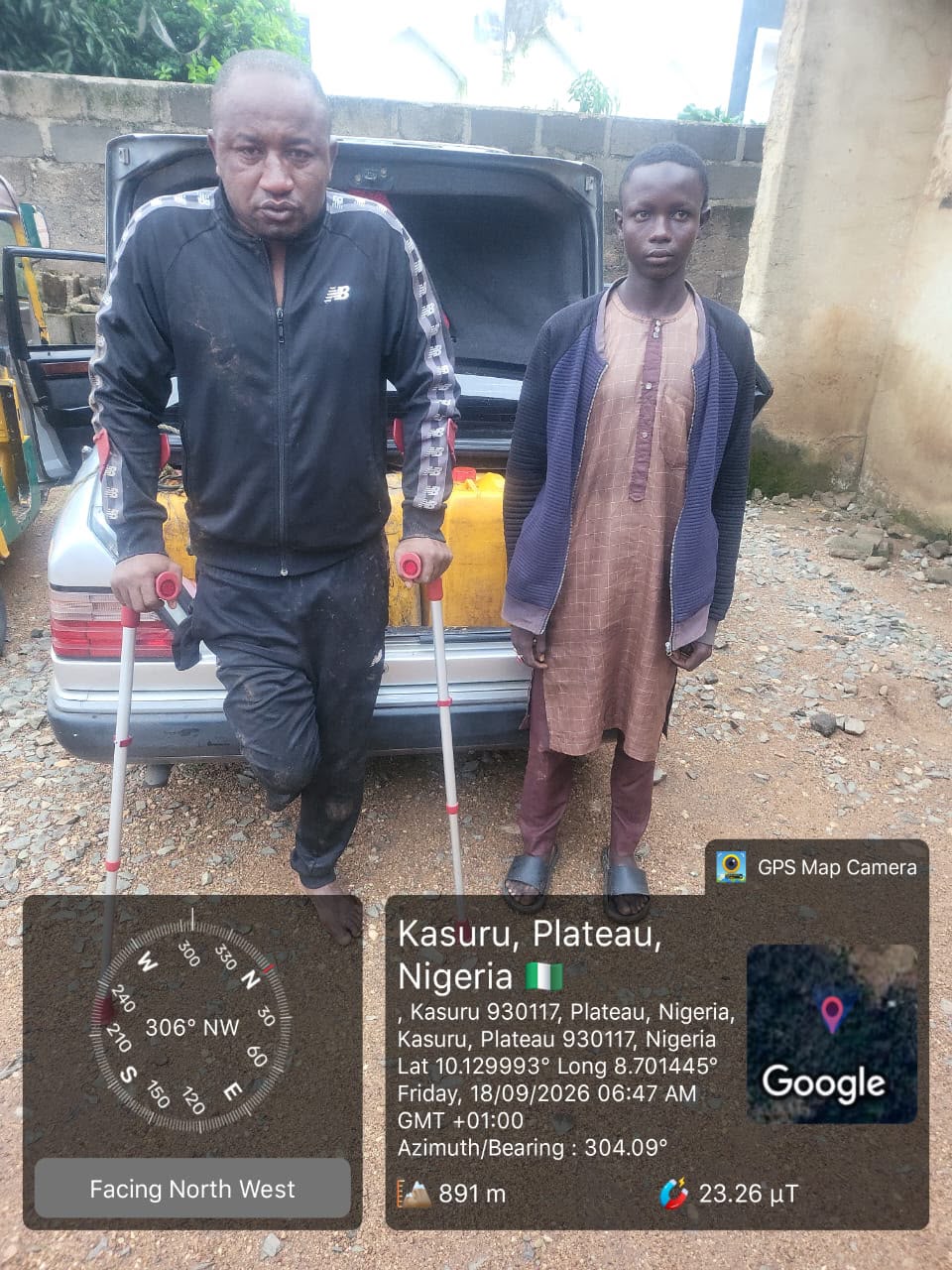
Troops arrest two suspects, recover suspected stolen goods in Plateau
By: Zagazola Makama
Troops of Sector 1, Operation Enduring Peace, have arrested two suspected criminals and recovered a vehicle loaded with suspected stolen items at Berger Junction, Mista-Ali, in Bassa Local Government Area of Plateau State.
The suspects were arrested at about 4:00 a.m. on September 18, 2026, following information about suspected criminals allegedly offloading stolen goods at the location.
The troops, acting on the report, swiftly mobilised to the area and arrested two suspects identified as Ibrahim Sulaiman, 33, and Ibrahim Husaini, 23.
The troops also recovered a Mercedes-Benz E220 vehicle allegedly loaded with suspected stolen items.
The recovered items included eight 25-litre containers of palm oil, four 4-litre containers of palm oil, two 50kg bags of rice, one 50kg bag of sugar, one carton of Maggi seasoning and an empty 25-litre jerrycan.
The suspects and recovered items were subsequently handed over to the Keystone Mista-Ali Outpost for further investigation and appropriate legal action.
Security sources said the arrest followed sustained intelligence gathering and patrol operations aimed at disrupting criminal activities and recovering stolen property in the area.
Troops arrest two suspects, recover suspected stolen goods in Plateau
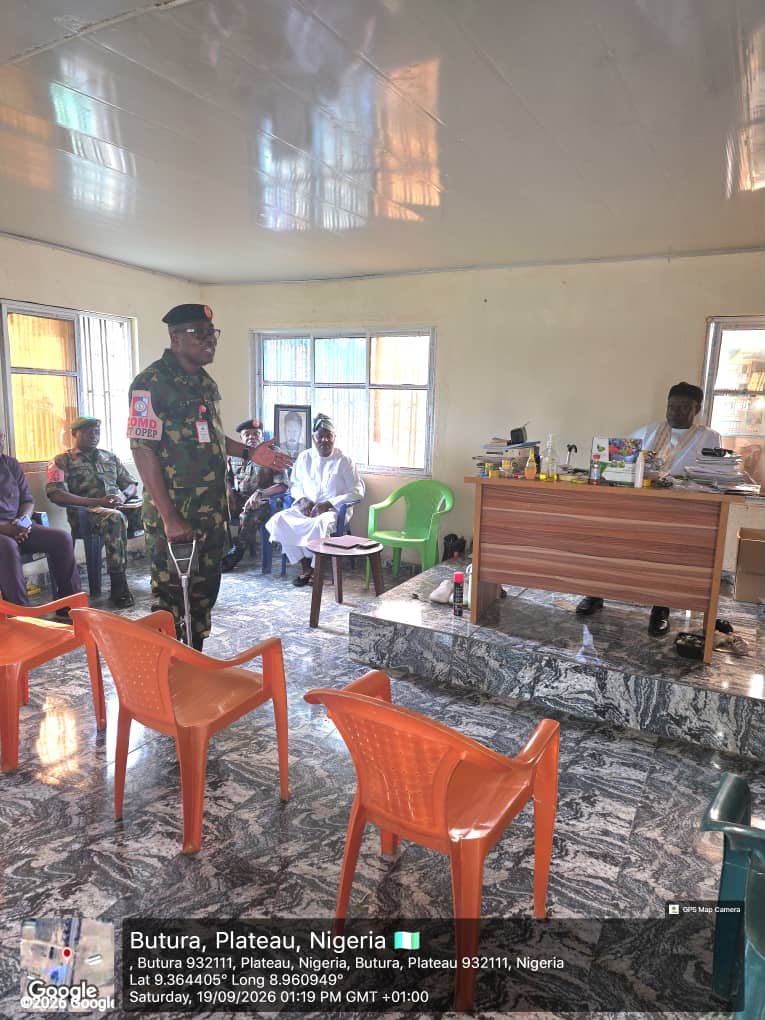
GOC 3 Division engages Bokkos stakeholders over farmer-herder conflicts
By: Zagazola Makama
The General Officer Commanding 3 Division and Commander, Operation Enduring Peace, Maj. Gen. W.M. Dangana, has engaged district heads and other stakeholders in Bokkos Local Government Area of Plateau State as part of efforts to address recurring farmer-herder conflicts in the area.
Maj. Gen. Dangana arrived at the headquarters of Sector 5, Operation Enduring Peace, in Bokkos at about 1:00 p.m. on September 19, 2026, where he was received by the Sector Commander.
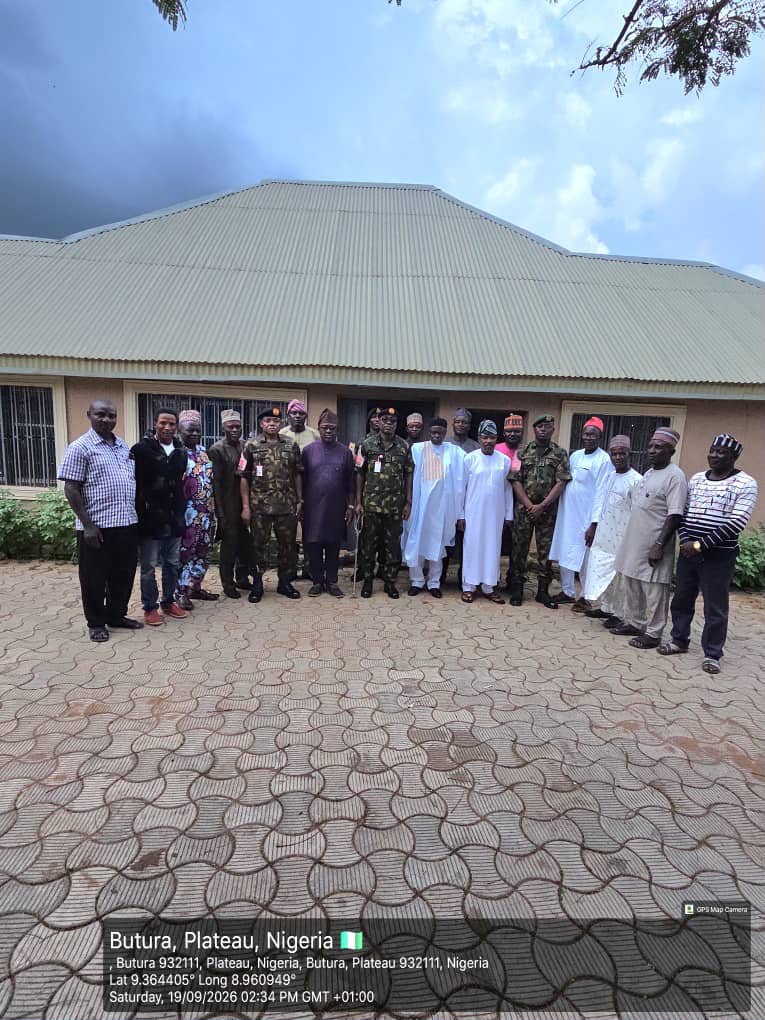
The GOC thereafter proceeded to the Palace of the Saf Bokkos, where he held an engagement meeting with district heads and other stakeholders from across the local government area.
The engagement formed part of ongoing non-kinetic efforts by the military and other stakeholders to address the underlying tensions between farming and herding communities and promote peaceful coexistence.
Discussions with traditional leaders and community stakeholders are expected to support the identification of local grievances, strengthen communication with security agencies and help prevent disputes from escalating into violence.
The engagement was conducted peacefully and without any incident.
GOC 3 Division engages Bokkos stakeholders over farmer-herder conflicts
Troops neutralise suspected terrorist in Kaduna, others flee with gunshot wounds
By: Zagazola Makama
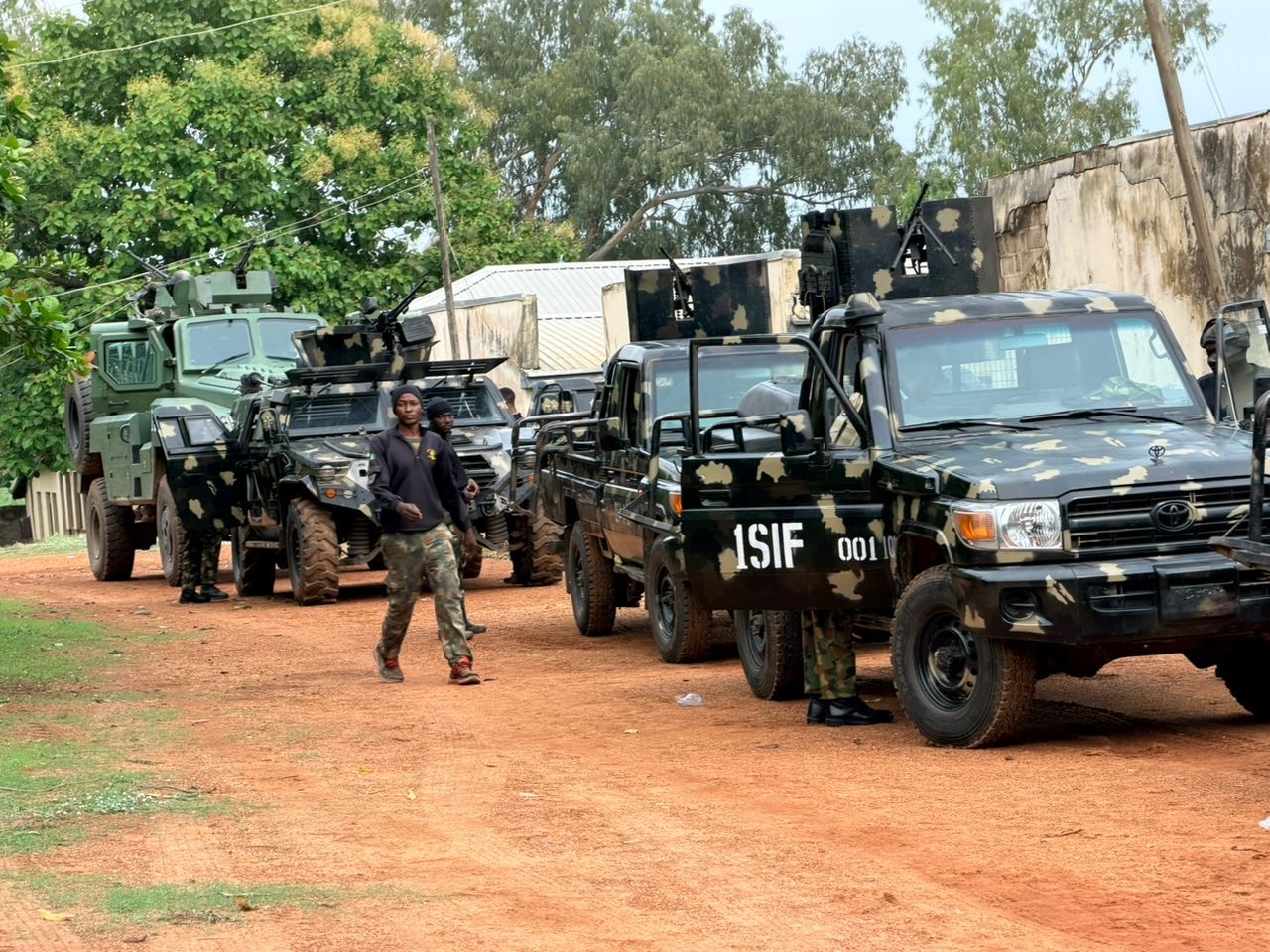
Troops of Sector 7, Sub-Sector 71 Sanga, have neutralised a suspected terrorist during an offensive operation at Ungwan Nungu village in Sanga Local Government Area of Kaduna State.
The operation was conducted at about 8:00 p.m. on September 18, 2026, after troops deployed at Ungwan Nungu responded to intelligence on the activities of suspected terrorists operating from a hideout in the community.
Upon arrival at the location, the troops made contact with the criminals, resulting in a gun battle during which one of the suspects, identified as Bashir Mohammed, was neutralised.
Other members of the group reportedly fled the scene with possible gunshot wounds sustained during the encounter.
Troops have commenced efforts to track and apprehend the fleeing suspects, while operations continue in the area to prevent the criminals from regrouping and further terrorising surrounding communities.
Troops neutralise suspected terrorist in Kaduna, others flee with gunshot wounds

Troops arrest two suspects, recover suspected stolen goods in Plateau

GOC 3 Division engages Bokkos stakeholders over farmer-herder conflicts

Troops neutralise suspected terrorist in Kaduna, others flee with gunshot wounds

Roger Federer’s Shock as DNA Results Reveal Myla and Charlene Are Not His Biological Children

THE PLIGHT OF FARIDA

FAILED COUP IN BURKINA FASO: HOW TRAORÉ NARROWLY ESCAPED ASSASSINATION PLOT AMID FOREIGN INTERFERENCE CLAIMS
-
 News3 years ago
Roger Federer’s Shock as DNA Results Reveal Myla and Charlene Are Not His Biological Children
-
Opinions5 years ago
THE PLIGHT OF FARIDA
-
 News1 year ago
FAILED COUP IN BURKINA FASO: HOW TRAORÉ NARROWLY ESCAPED ASSASSINATION PLOT AMID FOREIGN INTERFERENCE CLAIMS
-

 News3 years ago
EYN: Rev. Billi, Distortion of History, and The Living Tamarind Tree
-
 Opinions5 years ago
POLICE CHARGE ROOMS, A MINTING PRESS
-

 ACADEMICS3 years ago
A History of Biu” (2015) and The Lingering Bura-Pabir Question (1)
-

 Columns3 years ago
Army University Biu: There is certain interest, but certainly not from Borno.
-

 Politics1 year ago
2027: Why Hon. Midala Balami Must Go, as Youths in Hawul and Asikira/Uba Federal Constituency Reject ₦500,000 as Sallah Gift
