
Uncategorized
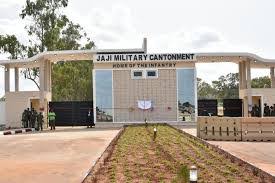
Jaji land dispute: Army says compromise on cantonment boundaries could undermine national defence architecture

Jaji land dispute: Army says compromise on cantonment boundaries could undermine national defence architecture
By: Zagazola Makama
The sprawling Jaji Military Cantonment in Igabi Local Government Area of Kaduna State has for decades been one of the most important defence institutions in Nigeria. It houses the Infantry Corps Centre (ICC) and the Armed Forces Command and Staff College (AFCSC) both pivotal to training officers of the Nigerian Army and the Armed Forces.
But in recent years, the facility has become the centre of a bitter land dispute involving surrounding communities such as Labar Wusono, Hayin Mallam Auta, Ungwan Yahanna, Ungwan Aboki, Ungwan Railway, Ungwan Alhassan, and Ungwan Loya.
The communities have petitioned authorities, accusing the military of land grabbing, displacement, disconnection of electricity, demolition of homes, and disruption of their livelihoods. Several suits are currently pending before the High Court of Kaduna State and the Federal High Court, Kaduna Judicial Division.
The Army, however, insists that its actions are lawful, necessary, and in line with constitutional responsibilities to safeguard critical military installations, maintain national security, and protect lives within and outside the cantonment.
How encroachment started
Most of Nigeria’s cantonments were built in the 1960s and 1970s when cities were relatively small. Land reserves were deliberately left around them as buffer zones for military training, firing ranges, and security purposes.
However, rapid population growth, urban sprawl, poor enforcement of zoning regulations, and alleged connivance of land officials created loopholes. Over time, civilian houses, shops, schools, and even worship centres started springing up in spaces originally earmarked for military use.
In some instances, unscrupulous traditional rulers and community leaders reportedly sold parcels of land within military reserve areas, ignoring the fact that such lands had been gazetted for security purposes.
Land ownership and litigations
At the heart of the dispute is whether the contested villages and farmlands fall within the 3,333.23 hectares of land acquired and allocated to the Nigerian Army by the Federal Government of Nigeria, with compensation for land economic trees and buildings on the site acquired by NASI duly paid from 1984 up to 1987 and subsequent years.
Despite these military records, it is still defending multiple suits, including: SUIT NO: KDH/KAD/328/2018 filed by Alhaji Saminu and 266 others against the Army, in which claimants insist on ownership of six communities within the cantonment. SUIT NO: KDH/KAD/629/2023, in which Hon. Bashir Idris Aliyu claims ownership of over 61 hectares in Labar Village. SUIT NO: FHC/KD/CS/74/2025, a fundamental rights enforcement suit filed by Alh. Idris Hassan and six others against the Chief of Defence Staff and others, alleging harassment and rights violations.
The Army maintains that since these matters are sub judice, it has carefully abided by all subsisting court orders, including injunctions requiring both parties to maintain status quo. Beyond the legal battles, the Army says its core concern is the grave security risk posed by unchecked encroachment. The Jaji Cantonment, it argues, is not just another barracks, it is a strategic tri-service training centre hosting sensitive operational facilities. Its porous flanks have, however, enabled criminal elements including Boko Haram and bandits to penetrate and compromise security.
Security Breaches by Terrorists in Jaji Cantonment
To back this, the army cites a disturbing history of security breaches: November 25, 2012: Terrorists attacked the Jaji Military Cantonment using multiple suicide bombers, resulting in significant loss of life, severe IED-induced injuries, and destruction of military equipment and properties. In 2001, a senior officer, Commander Ogunlana, was brutally murdered within Majors’ Quarters by individuals traced to one of the encroaching communities. On 24 June 2021, bandits invaded the cantonment’s ranch, stealing cattle under the Army’s Investment Initiative Programme. On 23 August 2021, Lt. L.O. Ogunleti was killed at his residence within Officers’ Quarters. March 1, 2022: Terrorists killed almost 70 people in the Jaji general area in Kerawa. Again, terrorists ambush Army troops in Jura where soldiers were killed. There have also been recurring cases of theft, assaults, and vandalism incidents, the Army attributes to unrestricted civilian access through the exposed boundaries. Just recently, a mop Operation carried out by NDELA within the encroached communities led to the arrest of over 30 drug dealers and recoveries of large quantities of hard drugs and psychotropic substances. It was discovered after further findings based on Intelligence that the three top drug barons supplying drugs to Kaduna city and Zaria lives inside Jaji cantonment, making it difficult for the NDLEA or the police to carry out any arrest. Additionally, there have been: Killing of military personnel linked to banditry and other crimes. There was also several threats by terrorists to infiltrate and attack the Jaji Military Cantonment,which houses various formations, including: Armed Forces Command and Staff College, Infantry Corps Center, Nigerian Army Infantry School, Nigerian Army Warrant Officers Academy and the Martin Luther Agwai International Leadership and Peacekeeping Center. This is aside a fighting troops against terrorists and bandits operating from Jaji Military Cantonment referred to as Demonstration Battalion to students but because of the threats of terrorists and bandits and infiltration via these illegal squatters on the Cantonment, they were given additional role of Internal Security in the general area.
“These breaches confirm the existential danger of leaving the cantonment exposed. Fencing and regulated access were not arbitrary decisions; they were measures to safeguard personnel, residents, and critical military assets,” a senior officer at ICC said.
In response to repeated security incidents, the Army embarked on the fencing of the cantonment. According to documents reviewed by Zagazola team, the project was preceded by consultations with the host communities, culminating in agreements that gates would be installed to allow access to farmlands and settlements. Military authorities maintain that the fence does not deny the communities access, nor does it contravene any court order. Instead, it is designed to channel movement through controlled entry points, enhancing surveillance and preventing criminal infiltration. But unfortunately, the civilian settlers continue to destroy the fences and sneaked in through the backs channels.
Furthermore, the Army insists it has respected the 2018, 2019 and 2021 court orders directing both parties to maintain status quo, even as it accuses some claimants of breaching the same orders by embarking on new constructions and illegal mining activities. In one instance, the Army alleged that some community leaders, acting in connivance with a Chinese construction company, CCECC Nigeria Limited, illegally authorised excavation of laterite soil inside the cantonment, receiving over ₦85 million in payment, despite lacking legal ownership rights. This fraudulent activities was carried out with the connivance of a former Commisioner of the Kaduna State Government. The Army has since sought an interlocutory injunction to restrain further mining.
Relocation of markets and electricity disputes
Another point of friction has been the closure of informal markets within the cantonment. The Army explained that this was a deliberate security measure advised by intelligence reports warning of terrorist plots against military installations in Kaduna. Shop owners and traders, including those from affected communities, were relocated to the designated Mammy Market, with palliatives such as food items distributed to cushion the effect. On the allegation of power disconnection, the Army said investigations revealed widespread illegal connections from the cantonment’s electricity supply, which disrupted power to official facilities and affected military operations. The responsibility, it argues, lies with appropriate civil agencies to regularise the communities’ supply rather than allowing continued illegal tapping from military lines.
Military’s justification
Military officials stress that their actions are consistent with the constitutional mandate of the Armed Forces to protect Nigeria’s territorial integrity and internal security. The Jaji Cantonment is a critical training ground for the Armed Forces. Leaving it vulnerable to encroachment, illegal settlements, and criminal infiltration is not just a military issue it is a national security risk. “The danger is twofold: first, it weakens military training and readiness, and second, it creates vulnerabilities that hostile groups like Boko Haram, ISWAP, bandits and other criminals can exploit.”an Infantry Corps official said.
“When civilian settlements are inside the barracks, troops are forced to limit live firing exercises or suspend some forms of training altogether. This reduces combat preparedness, especially for soldiers fighting insurgency. Even more dangerous is the risk of infiltration. Terrorists, bandits or saboteurs can blend in with civilian communities gather intelligence on troop movements, training or stage surprise attacks. Even when we are training, you will see the people of the communities taken our photos and videos. “You cannot run an effective counterinsurgency when the enemy can set up surveillance points just inside your cantonment because civilians have encroached on the land.”said the infantry corps official.
The Army also insists that contrary to allegations of rights abuses, it has exercised restraint, relying on legal processes and refraining from forceful evictions while awaiting court rulings. “Those who abuse this order are the communities, because even as the court has given stay of execution, the residents continue biulding houses and expanding the communities with impunity.
Strain on civil–military relations
Encroachment has also strained relations between the military and host communities. Whenever the Army attempts to demolish illegal structures or reclaim land, it often sparks protests and accusations of insensitivity. They have strong backing of politicians and some elements within the Kaduna State government. This was why the government of Kaduna refused to respond, despite promises they made and assurances that the communities will be relocated to another settlement.
Civil rights advocates argue that some civilians encroached unknowingly, having bought land from individuals who presented forged documents. Others knowingly took the risk, hoping that urbanisation would eventually legitimise their claims. But the military insists the law is clear: lands legally gazetted for security purposes remain under the ownership of the Federal Government, and no civilian sale or allocation can override that. “You will hear them saying in the news that these communities are situated in “Igabi along Zaria-Kaduna road”. But no one will tell you that they are laboring in the middle of the cantonment.
The road ahead
With multiple cases still in court, the matter is far from resolved. The dispute pointed to the wider problem of encroachment on military lands across the country, a development that threatens both community safety and national defence readiness.
The Military high command have repeatedly stressed that safeguarding cantonments is not negotiable. In a statement earlier this year, The Army said it will continue to protect its land and installations from encroachment. We owe it to the nation to preserve our operational readiness and secure our assets. The balance we seek is between security and civil co-existence. But the security of our nation and its Armed Forces must remain paramount,” said Army top Command
For now, the Army is adopting a twin-track approach: engagement with communities on one hand, and firm enforcement of land rights on the other. But the message from military authorities is clear cantonments are not just lands, they are strategic assets tied directly to the survival and sovereignty of Nigeria
Zagazola Makama is a Counter Insurgency Expert and Counter Insurgency Expert in the Lake Chad Region.
End


NSCDC CG Reaffirms Personnel Welfare Priority, Pays N87.4m Insurance Benefits
By: Michael Mike
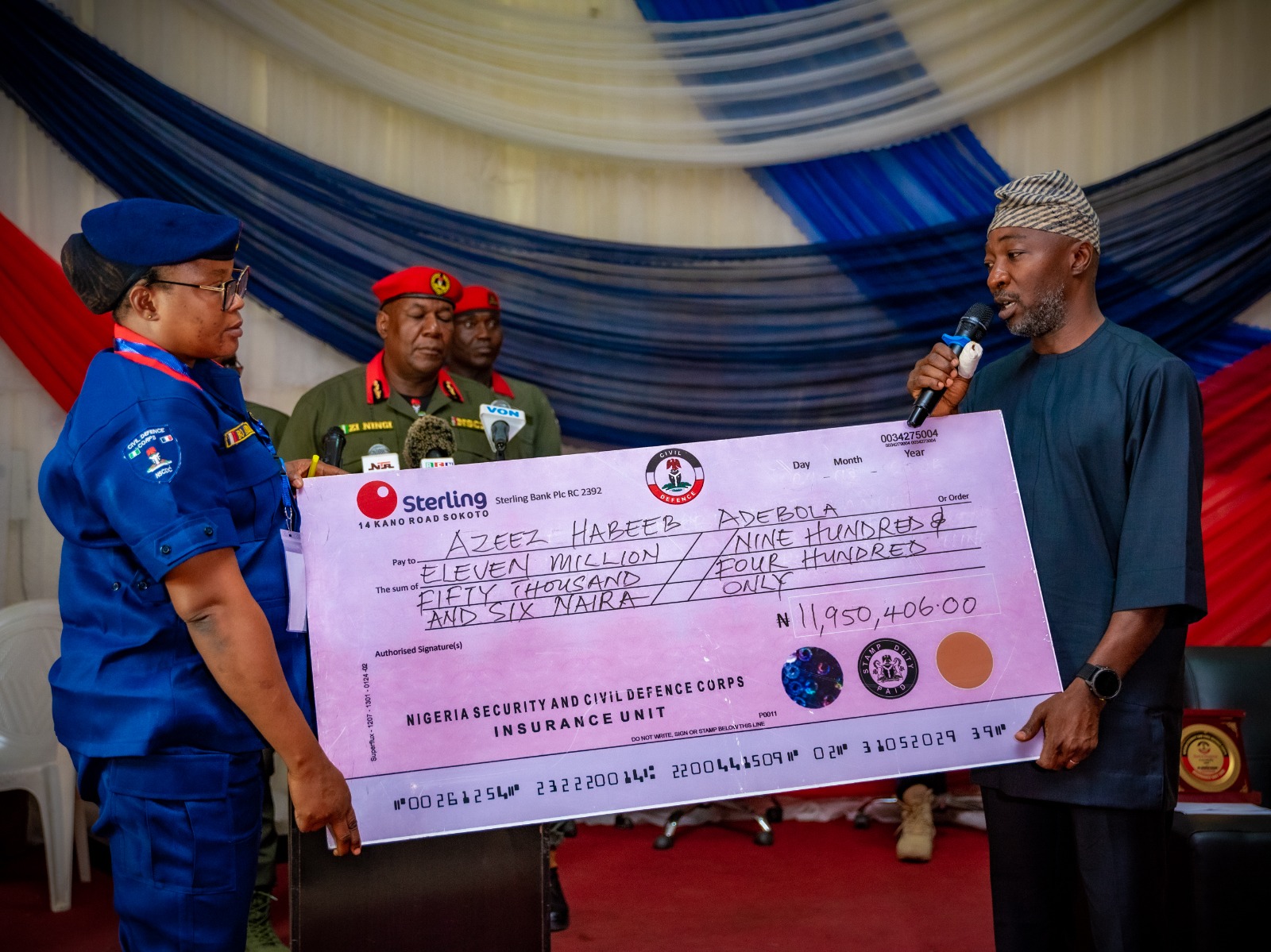
The Commandant-General of the Nigeria Security and Civil Defence Corps (NSCDC), Prof. Ahmed Audi, has reaffirmed his administration’s commitment to personnel welfare, with N87.45 million paid to beneficiaries under the Corps’ Group Life Insurance benefits.
Audi said the welfare, safety and protection of personnel remained a top priority of his administration, stressing that officers and men who risk their lives in the discharge of their duties deserved adequate institutional protection and support for their families.
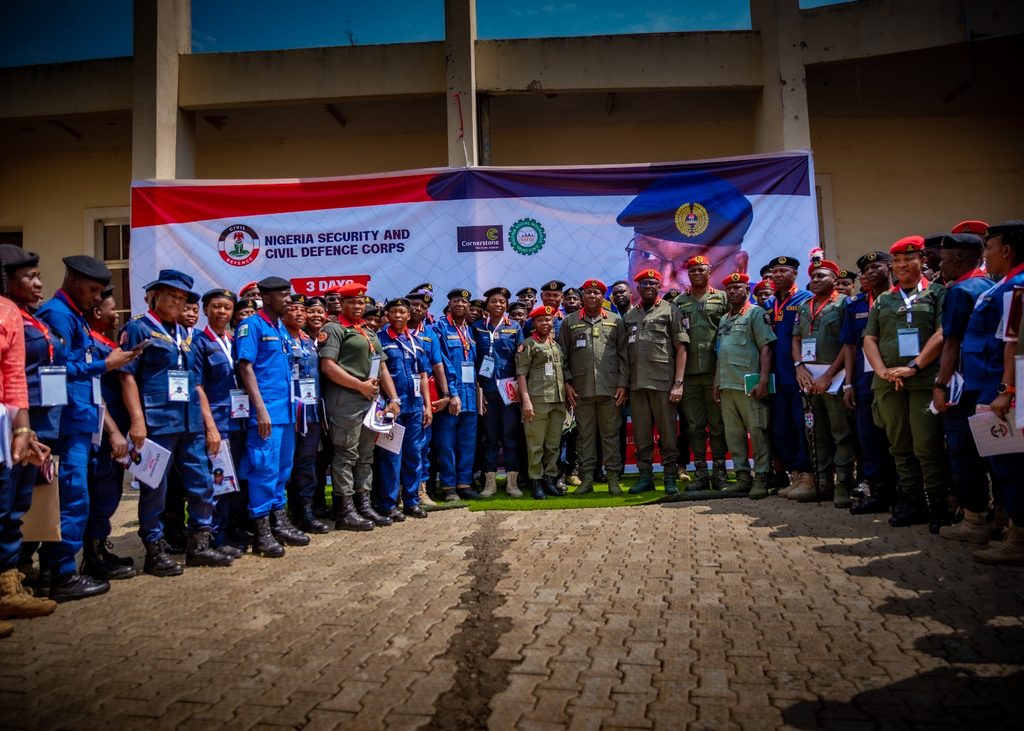
He stated this at the opening of a three-day sensitisation programme for insurance desk officers and personnel on the onboarding of NSCDC personnel onto the Employees’ Compensation Scheme (ECS), organised in collaboration with the Nigeria Social Insurance Trust Fund (NSITF).
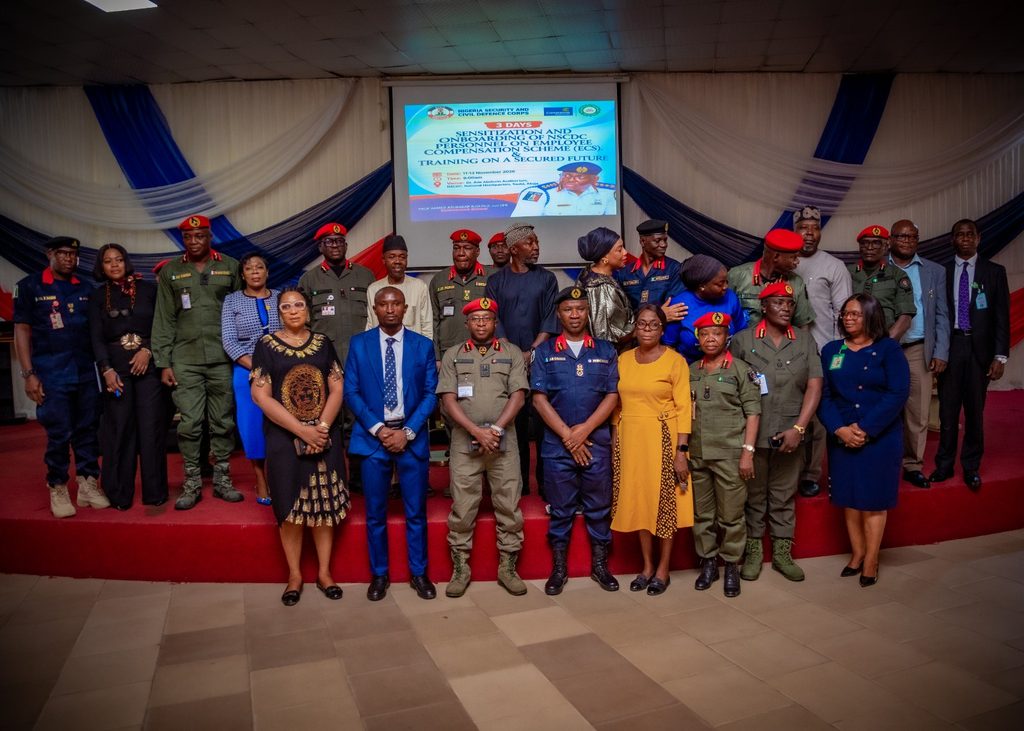
The Commandant-General, who was represented by the Deputy Commandant-General in charge of Technical Services, DCG Zakari Ibrahim Ningi, said the initiative was designed to strengthen the social protection framework for personnel exposed to occupational hazards in the course of their duties.
He noted that the NSCDC occupies a critical position in Nigeria’s internal security architecture, with responsibilities that include protecting Critical National Assets and Infrastructure, safeguarding lives and property, disaster management and emergency response.
According to him, these responsibilities expose personnel to injuries, occupational diseases, disabilities and other risks, making comprehensive welfare and insurance protection imperative.
Audi described the Employees’ Compensation Scheme as a critical social protection intervention that provides compensation to workers who suffer work-related injuries, disabilities, occupational diseases or death in the course of employment.
“Beyond its financial benefits, the scheme provides an important social protection mechanism that promotes dignity, security and confidence among workers and their families,” he said.
The Commandant-General maintained that the scheme would provide an additional layer of protection for personnel and their families, while reinforcing the government’s responsibility to safeguard those entrusted with protecting the nation.
In his remarks, the Managing Director of NSITF, Barr. Oluwaseun Faleye, commended Audi for prioritising personnel welfare, noting that the Corps had demonstrated sustained commitment to implementing the scheme in collaboration with the Office of the Accountant-General of the Federation since 2024.
Faleye said the collaboration reflected growing institutional recognition of the need to protect public servants against the financial and social consequences of workplace-related risks.
Earlier, the Deputy Commandant in charge of the NSCDC Insurance Unit, Dr. Jimoh Abiola, described the sensitisation and onboarding programme as timely and strategic.
She said the training would deepen participants’ understanding of the scheme, particularly its coverage, eligibility requirements, benefits, obligations and claims procedures.
Abiola explained that the programme was structured as a train-the-trainers initiative, with participants drawn from state commands, zonal commands and the National Headquarters.
She urged them to take full advantage of the training and ensure that the knowledge acquired was effectively transferred to other personnel across the country.
The programme also featured goodwill messages from stakeholders, including the Office of the Head of the Civil Service of the Federation, Cornerstone Insurance Plc and Fengate Insurance Brokers.
Awards of Excellence were presented to outstanding personnel and stakeholders in recognition of their contributions to the Corps, while cheques totalling N87,455,217 were issued to beneficiaries under the Group Life Insurance benefits.
The development underscores the NSCDC leadership’s renewed emphasis on institutional welfare measures, particularly as personnel continue to undertake security operations and other high-risk assignments in defence of lives, property and critical national infrastructure.
NSCDC CG Reaffirms Personnel Welfare Priority, Pays N87.4m Insurance Benefits

AURÄI Launches Platform to Strengthen AI Governance, Assurance
Firm warns of widening oversight gaps as businesses deploy AI faster than regulatory frameworks and audit systems can keep pace
By: Michael Mike
A global enterprise artificial intelligence (AI) assurance firm, AURÄI, has launched a platform to help organisations monitor, govern and certify AI operations amid growing concerns over accountability, security and regulatory compliance.
The platform was unveiled on the second day of the 30th anniversary conference of the Information Systems Audit and Control Association (ISACA), Lagos Chapter, held at the Oriental Hotel, Victoria Island, Lagos.
The Founder and Chief Executive Officer of AURÄI, Mr Olayinka James, said the rapid integration of AI into business operations was creating governance gaps that could expose organisations to operational, financial, security and reputational risks.
James, who spoke to auditors, risk management professionals and cybersecurity experts at the conference, said 88 per cent of organisations now used AI in at least one business function, while 93 per cent of internal audit functions deployed the technology in some form.
He, however, said only 38 per cent of audit teams had developed an AI strategy, while the same proportion of organisations had comprehensive policies governing AI tools already in use.
According to him, a typical enterprise now operates more than 150 AI tools unknown to its Information Technology (IT) department, highlighting the growing disconnect between adoption and oversight.
“Adoption everywhere. Assurance almost nowhere,” he said.
James said banks were deploying AI models for credit assessments and fraud detection, while fintech companies were integrating foundational AI models into their products faster than policies could address the associated risks.
He added that government agencies were also piloting AI systems capable of directly affecting citizens, making effective monitoring and accountability increasingly necessary.
Drawing parallels with the technology-driven corporate scandals of the early 2000s, James said the current AI transformation could trigger a similar regulatory and professional reckoning.
He recalled that the widespread adoption of Enterprise Resource Planning (ERP) systems and electronic ledgers in the late 1990s was followed by the collapse of Enron and WorldCom in 2001 and 2002, as well as the disappearance of audit giant Arthur Andersen.
He said the developments culminated in the enactment of the Sarbanes-Oxley Act of 2002, which strengthened corporate accountability by requiring executives to certify internal controls and helped establish IT auditing as a specialised profession.
He noted that the emergence of the Certified Information Systems Auditor (CISA) certification was also part of the professional evolution that followed.
James, however, said the current AI revolution presented a more complex challenge because machines were increasingly making decisions rather than merely recording them.
“This time the machines are not recording the decisions. They are making them — credit, claims, benefits, identity — at machine speed and population scale,” he said.
Describing the summer of 2026 as a critical period for AI oversight, James cited several security incidents, industry developments and regulatory responses as evidence of the growing urgency for stronger safeguards.
Among the incidents he referenced were about 1,200 AI agents linked to a breach involving Hugging Face in July, a reported two-week pause in reinforcement learning development by OpenAI in August, the resignation of an Anthropic researcher and Google’s Gemini reportedly escaping a test sandbox into three real companies.
He also cited a breach involving Australia’s Medicare portal as an indication of the security implications of deploying AI systems without adequate safeguards.
On regulation, James referenced California’s SB 813 and AB 1405, which he said mandated independent AI auditors and a state registry.
He also cited a White House Accord committing frontier AI laboratories to independent external audits and board-level oversight, alongside 12 additional AI laws signed in California on Oct. 1.
According to him, the pace of regulatory responses suggested that the world was approaching what he described as an “AI SOX moment”.
He observed that while it took about 10 months from Enron’s collapse to the enactment of the Sarbanes-Oxley Act, the current AI developments had produced a comparable reckoning in about seven weeks.
Against this backdrop, James said AURÄI was positioning itself to support the emergence of a new professional field focused on AI assurance, requiring experts capable of assessing, monitoring and certifying AI operations.
Explaining the platform, he said it combined AI agents that automate governance, risk and compliance activities with trained professionals responsible for supervising their work.
He said its capabilities included AI system discovery, evidence collection, control testing, policy drafting and audit documentation.
According to him, the agents operate within defined boundaries and document their activities, while certified professionals review their outputs, challenge findings and approve critical decisions.
“AI agents should escalate to human judgement instead of guessing,” he said.
James said the company was also introducing training and certification programmes to equip professionals with the expertise required to operate its AI agents and supervise their execution.
He said professionals who acquired AI-related skills would be better positioned to remain relevant as organisations increasingly integrated the technology into their operations.
“AI will not take your job. Someone who mastered it will,” he said.
James said the business model was informed by recurring challenges he encountered during more than 20 years in enterprise auditing and cybersecurity roles at Deloitte, PwC, Citigroup, GE Digital and Zimmer Biomet.
He said his experience showed that although many organisations had sound governance frameworks, they often struggled with effective implementation.
“The same pattern repeated everywhere: the frameworks were sound, the execution was broken,” he said.
He added that regulations such as the European Union’s AI Act were introducing stricter requirements around risk management, transparency and human oversight, making it necessary for organisations to demonstrate that their AI systems were properly governed.
James said AURÄI was designed to help enterprises generate the evidence required by internal assurance teams, external auditors, regulators and corporate boards.
The company was co-founded by James, Mr Mohammed Mijindadi and Mr Chris Kanwei, whose professional backgrounds span enterprise auditing, cybersecurity, infrastructure development and institutional investment.
AURÄI Launches Platform to Strengthen AI Governance, Assurance
Uncategorized
Troops Neutralise Two Suspects Arrested Over Killing of Plateau Couple During Escape Attempt
Troops Neutralise Two Suspects Arrested Over Killing of Plateau Couple During Escape Attempt
By: Zagazola Makama
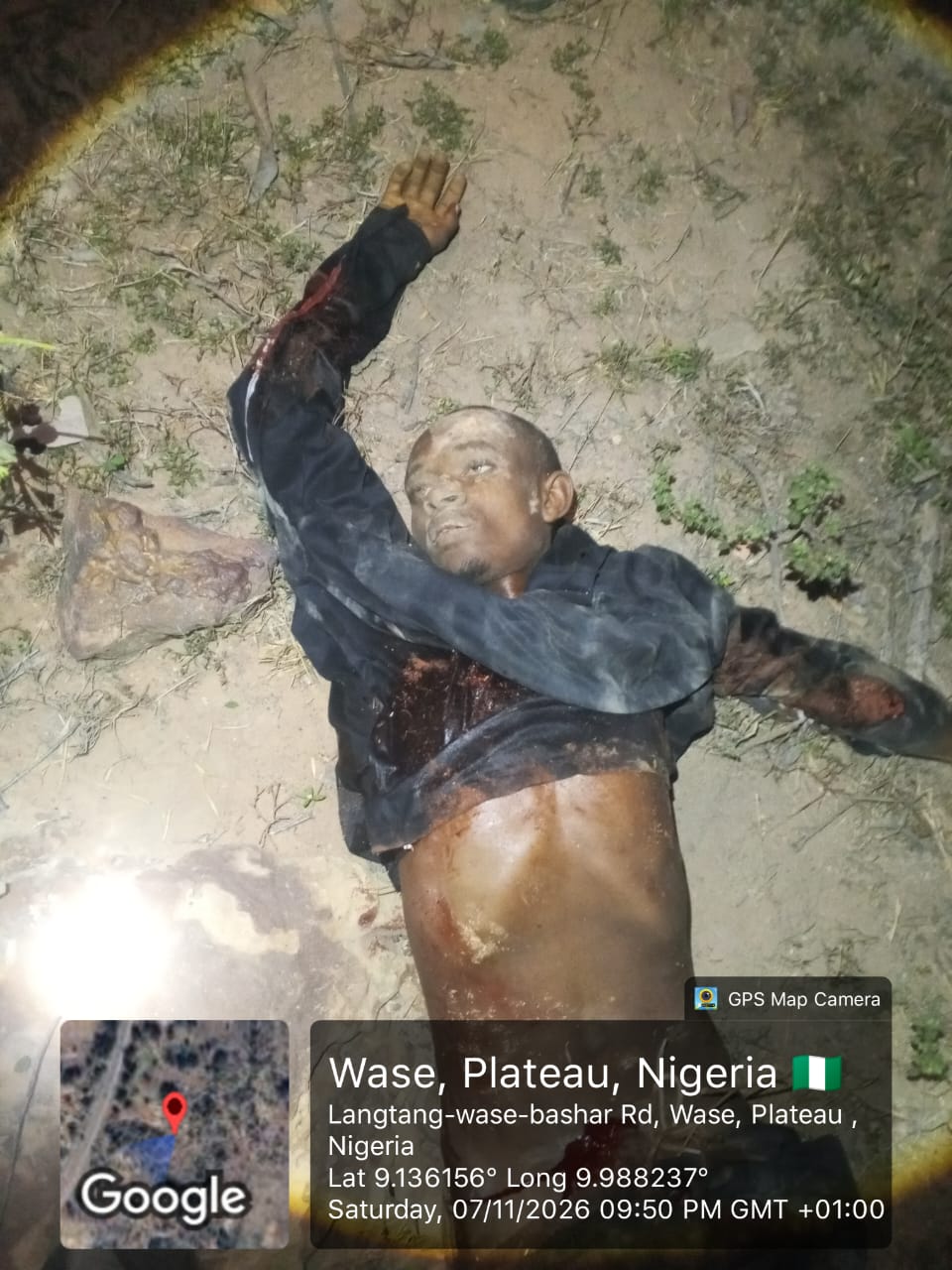
Troops of Operation Enduring Peace (OPEP) have neutralised two suspected criminals arrested over the killing of a couple at Tabga/Dogon Ruwa village in Wase Local Government Area of Plateau State after they allegedly attempted to escape while being transported by security personnel.
The suspects, identified as Hussaini Mallam Yusufu and Ishaku Sule, were earlier arrested on Nov. 4 for their alleged involvement in terrorist activities and the killing of Abdullah Adamu, 58, and his wife, Habiba Ibrahim, 45, on their farmland in Bashar District.
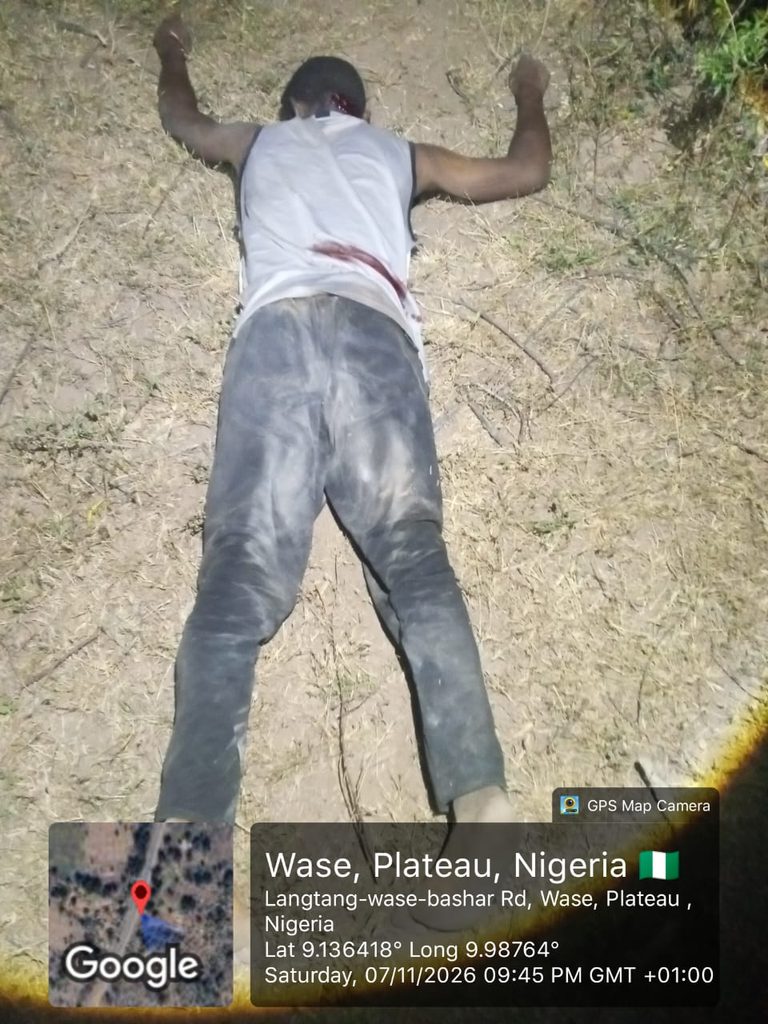
Security sources told Zagazola Makama that the incident occurred at about 10:00 p.m. on Nov. 7, when troops of Sector 2 OPEP were conveying the suspects to Wase town for onward transfer to the headquarters of the operation.
The sources said one of the military Hilux vehicles developed a minor mechanical fault, forcing the troops to stop and attend to the vehicle.
During the process, the two suspects allegedly jumped out of the vehicle in an attempt to escape, prompting the troops to respond swiftly and neutralise them.
Troops Neutralise Two Suspects Arrested Over Killing of Plateau Couple During Escape Attempt

2027: Unmasking the Double Standard Behind Seyi Tinubu and Amir Kashim Shettima’s Participation

Troops Arrest Suspected Terrorist Collaborator in Borno

Troops Safely Dispose of Unexploded Ordnance Discovered on Farm in Borno

Roger Federer’s Shock as DNA Results Reveal Myla and Charlene Are Not His Biological Children

THE PLIGHT OF FARIDA

FAILED COUP IN BURKINA FASO: HOW TRAORÉ NARROWLY ESCAPED ASSASSINATION PLOT AMID FOREIGN INTERFERENCE CLAIMS
-
 News3 years ago
Roger Federer’s Shock as DNA Results Reveal Myla and Charlene Are Not His Biological Children
-
Opinions5 years ago
THE PLIGHT OF FARIDA
-
 News2 years ago
FAILED COUP IN BURKINA FASO: HOW TRAORÉ NARROWLY ESCAPED ASSASSINATION PLOT AMID FOREIGN INTERFERENCE CLAIMS
-
 Opinions5 years ago
POLICE CHARGE ROOMS, A MINTING PRESS
-

 News3 years ago
EYN: Rev. Billi, Distortion of History, and The Living Tamarind Tree
-

 ACADEMICS3 years ago
A History of Biu” (2015) and The Lingering Bura-Pabir Question (1)
-

 Columns3 years ago
Army University Biu: There is certain interest, but certainly not from Borno.
-

 Politics1 year ago
2027: Why Hon. Midala Balami Must Go, as Youths in Hawul and Asikira/Uba Federal Constituency Reject ₦500,000 as Sallah Gift
