
National News
Curriculum Review: Nigeria Secondary Schools to now Offer Chinese Language- Mandarin- FCT

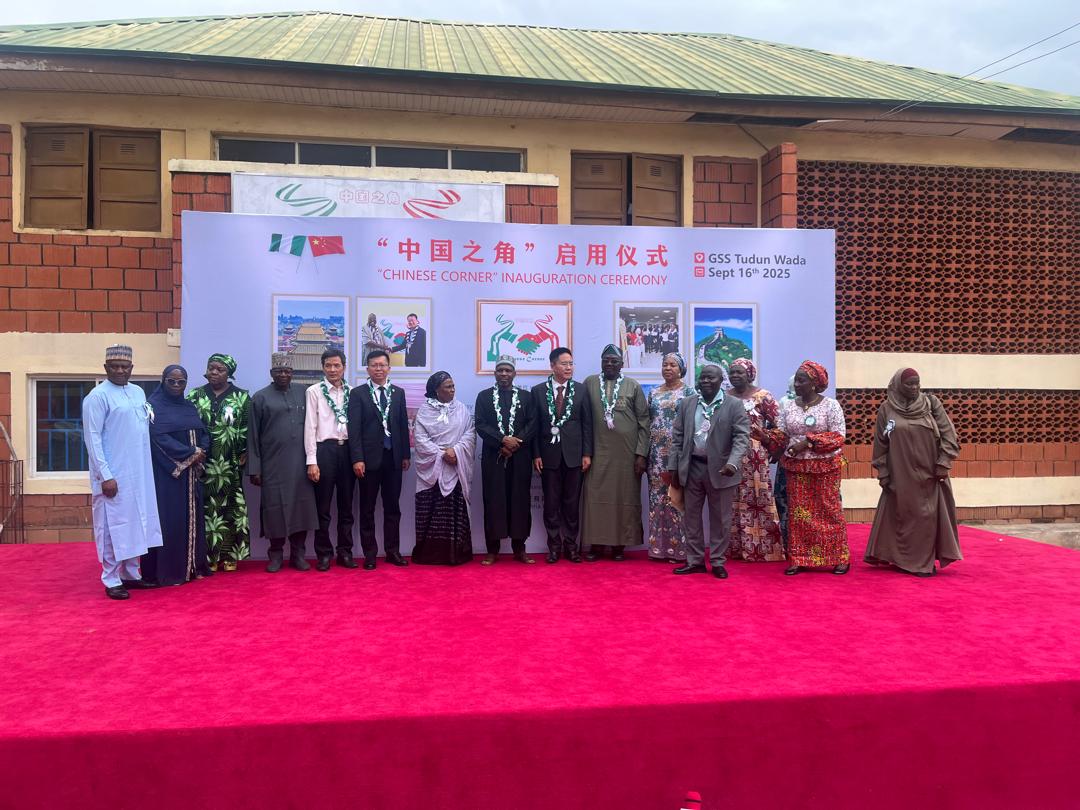
Curriculum Review: Nigeria Secondary Schools to now Offer Chinese Language- Mandarin- FCT
By: Michael Mike
The Chinese language, Mandarin has been added as one of the foreign languages to be offered in Senior Secondary Schools across the country in the newly reviewed secondary school curriculum.
This was disclosed on Tuesday by the Education Secretary, Federal Capital Territory Administration, Dr. Danlami Hayyo at the inauguration of the Chinese Corner at the Government Secondary School Tudun Wada, Abuja.
The project was sponsored by the biggest Chinese construction company in Nigeria, China Civil Engineering Construction Corporation as part of its Corporate Social Responsibility.
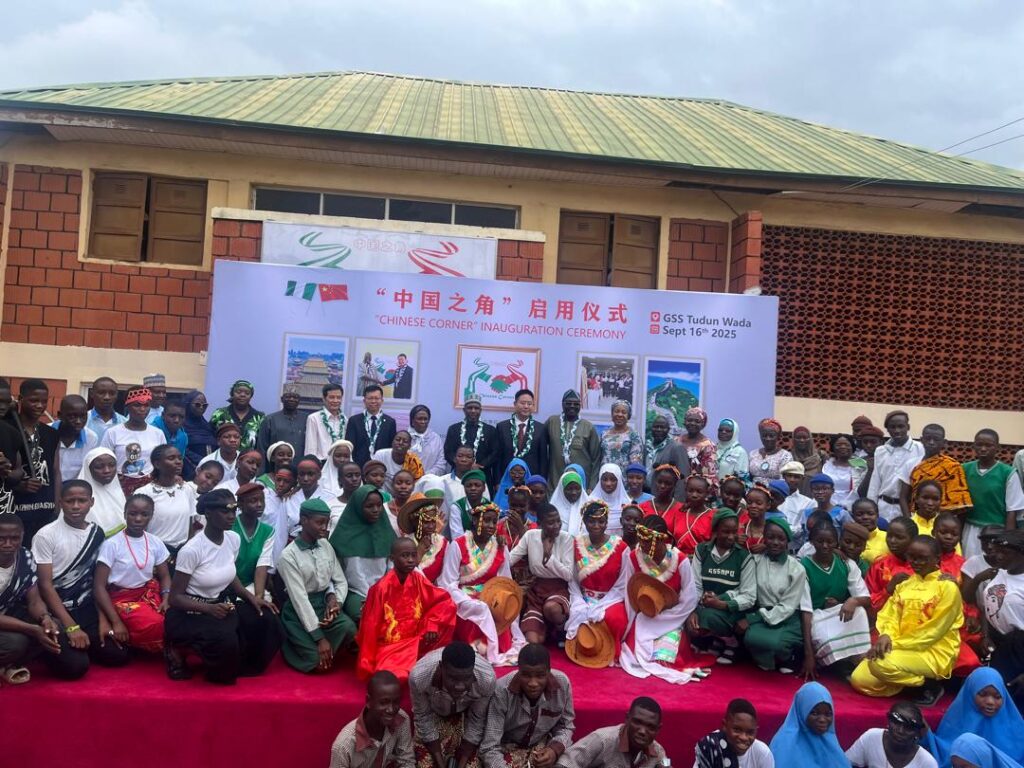
Hayyo noted the foresight of the FCT education board which introduced Mandarin in schools in FCT before the latest review of the curriculum.
He said: “May I inform you that in the recent review of our Curriculum, the Chinese language has been selected as one of the international languages to offer in Senior Secondary Schools.
“That is to say that, the FCT has been very visionary in introducing the subject in our schools through the Chinese corners early enough. Chinese Mandarin has the largest number of speakers in the world and today it has become the language of commerce, education and tourism.
“Our decision to delve into Chinese education and culture is a wise move.”
The FCT Education Secretary also disclosed that the inauguration of the new centre on Tuesday brings to 14 the number of Chinese centres in Abuja.
The centres he said are established in Secondary schools across the Federal Capital city.
He said: “The bilateral relations has seen to the establishment of 13 Chinese corners and having the commissioning
of the 14th Corner in G.S.S Tudun Wada today.”
The corners, he said “have greatly enhanced education and cultural exchange between Nigeria and China. It has opened a window for better understanding and appreciation of our various cultures and it has also given our students the opportunity to pursue their further education in China.”
He also pointed out that staff and teachers have benefitted from the collaboration by attending capacity building in China.
“Today we are proud to say that it is only the FCT that has Chinese Corner in her schools in the whole federation,” he added.
On behalf of the Minister of FCT, Nyesom Wike, the Education Secretary also appreciated the Chinese government and Embassy for their support and commitment to promote people to people exchange for the good of all.
“Your friendship has confirmed what the Chinese say as “Hai nei Cun zhiji tianya ruo bi lin” (a bosom friend brings distant lands near),” concluded.
In his remarks, the Chinese Counselor, Yang Jianxing said that the idea of the Chinese Corner was birthed as a result of China’s appreciation of the mutual relationship between both countries.
He explained, “Twelve years ago, out of the cherishment for China-Nigeria friendly relations and the expectation for cultural exchanges between the two countries, the Chinese Embassy in Nigeria and the FCT Secondary Education Board of Nigeria joined hands to establish the “Chinese Corner” as a unique platform
for cultural and educational exchanges.
“Over the past more than ten years, this seemingly simple platform has long become a link connecting Chinese and Nigerian cultures, a bridge narrowing the hearts of young people from the two countries, and one of the most popular cultural check-in spots among teachers and students in Abuja.
“For students, the “Chinese Corner” is not only an immersive classroom for learning Chinese and experiencing Chinese
culture, but also a window to observe the world. Chinese is one of the most widely spoken languages in the world.”
He also added: “ The Chinese diplomatic missions in Nigeria will also continue to support China-Nigeria cooperation in various fields such as culture and education, and continuously promote the building of a closer China-Africa and China-Nigeria community with a shared future.
“Today, the inauguration of the “Chinese Corner” is not an end, but a new starting point for cultural exchanges between China and Nigeria.”
In his welcome address, the Director/Secretary of FCT Secondary Education Board, Dr. Muhammed Ladan said the initiative is a testimonial of the strong bilateral relations between China and Nigeria.
He stressed that the initiative “aims at promoting mutual understanding and people to people exchanges.”
He pointed out that “The Chinese Corners aims at not just fostering people to people exchanges but to provide resources for learning Mandarin and potential scholarship to China. It is also to strengthen diplomatic relations through artistic collaboration.”
Providing background information, Ladan said that “the FCT – SEB came into existence in 2013 with the prototype in G.S.S Garki, before the other eleven added in 2014. By 2024 one more was added at G.S.S Wuse Zone 3, and this year two more are about to be added, courtesy of prominent Chinese companies in Nigeria”.
Curriculum Review: Nigeria Secondary Schools to now Offer Chinese Language- Mandarin- FCT



AT 3RD AFRICA MINERALS STRATEGY GROUP HIGH-LEVEL ROUNDTABLE
President Tinubu Rallies Aggressive Alliance To Guard Africa’s Mineral Wealth
** *Charges continent to stop exporting wealth, start profiting from its own resources
** *Says Africa’s future being fashioned from minerals must have room for continent’s ambition
By: Our Reporter
President Bola Ahmed Tinubu has called for a fresh continental push to end the historical exploitation of Africa’s critical mineral resources, urging African nations to unite and halt the export of raw materials.
Accordingly, he demanded an aggressive alliance among African countries to ensure the continent transitions from a mere supplier of raw minerals to a hub for local processing, manufacturing, and value addition.
The Nigerian leader made the call on Monday in New York, United States, during the AMSG High-Level Roundtable on Critical Minerals Development in Africa held on the sidelines of the ongoing 81st Session of the United Nations General Assembly (UNGA).
Convened and chaired by President Tinubu, his deputy, Vice President Kashim Shettima, alongside AMSG Chairman and Nigeria’s Minister of Solid Minerals, Dr. Dele Alake, the high-level dialogue, themed, “From Resources to Wealth: Continental Cooperation for Mineral Value Addition, Data Sovereignty, Innovative Financing and Critical Minerals Security,” focuses on transforming the continent’s mineral wealth into sustainable economic growth.
In his address delivered by Senator Shettima at the Roundtable, the President told African leaders and other stakeholders that the continent cannot claim to be wealthy while its children wallow in poverty amid mines that enrich the world.
“For generations, Africa has furnished the materials of prosperity elsewhere. Our duty is to ensure that the future being fashioned from African minerals has room for African ambition,” he declared.
President Tinubu regretted that mineral-rich communities lack infrastructure, jobs, and a stake in their own wealth at a time when global demand for clean energy, AI, and advanced manufacturing has made Africa’s critical minerals—like cobalt, copper, lithium, and rare earth elements—indispensable to global supply chains and economic security.
The answer to such deprivation, he observed, “must be processing, refining, batteries, components, African technologies and competitive skills,” noting that “the worth of a mine must be counted in the lives it improves.
“Jobs, industries, infrastructure, technology transfer, African enterprise participation and prosperity retained across generations must measure our progress from resources to wealth,” he maintained.
The Nigerian leader warned, however, that no African country can achieve this alone, adding that competing through lower royalties, weaker local content, and excessive concessions will only weaken the continent’s negotiating power.
“Fragmentation leaves us exporting raw materials and buying finished goods at a premium. Cooperation gives our markets scale, our industries integration, our financing reach and our negotiations authority,” he said.
Back home, the President noted that Nigeria must require local value addition for new mining licenses, strengthen geological data and investor access, organize artisanal miners into cooperatives, combat illegal mining, and improve regulatory accountability
“Revenue rose from approximately ₦6 billion in 2023 to over ₦38 billion in 2024 and between ₦68.1 billion and ₦70 billion in 2025. Major foreign investment commitments and large-scale lithium processing capacity developed and commissioned in Nasarawa State demonstrate the possibilities,” he added.
He drew attention to his administration’s mining policy direction, which stipulates that minerals extracted in Nigeria must sustain Nigerian industries, workers, skills, and communities, saying ongoing reforms indicate that “firm terms can attract serious capital.”
Offering other African nations the Nigerian experience for adaptation across the continent, President Tinubu called for “reliable partnerships grounded in mutual benefit, shared responsibility, sovereign equality and respect for our priorities, with fair market access, industrial investment and technology partnerships that build African capabilities.”
He implored member countries of the AMSG to speak with one voice to promote Africa’s collective interest, insisting that reliability must never mean dependency, and partnership must never demand inequality.
On the Continental Integration and Economic Assurance Declaration adopted and signed at the Roundtable, the President said it must establish a predictable, investment-ready environment for Africa’s Strategic Mineral Corridors, harmonised policies, responsible investment and shared infrastructure.
He stated that the Declaration’s authority must survive the signing ceremony through a binding programme with timelines, financing, implementation and public accountability, even as he urged African nations to specify national and regional contributions; development finance institutions and sovereign investors to propose financing platforms.
Declaring the Roundtable open, the Nigerian leader spearheaded an aggressive alliance to retain the continent’s mineral wealth, saying, “Africa’s power resides in its people, markets and ingenuity. No outsider will organise our continent or place our industrial interests above their own. We must integrate our markets, mobilise African capital and negotiate with one voice wherever our interests converge.
“Our industrial growth can strengthen global prosperity, the energy transition and secure supply chains. Minerals confer no automatic prosperity; vision, investment and industry must earn it. Political will must turn mineral promise into enduring African wealth.”
Earlier, Chairman of the AMSG and Nigeria’s Minister of Minister of Solid Minerals, Mr. Dele Alake, said the group is proposing a Continental Integration and Economic Assurance Declaration (CIEAD) as a landmark continental framework designed to establish a unified architecture for Africa’s critical and solid minerals value chains.
He said the strength of the gathering reflected the journey and progress made in Africa’s solid minerals sector as manifested in the growth of the Africa Minerals Stategy Group (AMSG).
Alake urged African countries that have yet to join the group to do so in the bid to ensure synergy of efforts, ideas and resources needed for Africa’s natural resources.
He observed that Africa’s minerals ambitions cannot be realised by policy implementation alone as fully integrated partnership designed across financial transactions and infrastructure development as the way forward.
On his part, Kenya’s Minister of Blue Economy and Maritime Affairs, Mr. Hassan Ali Joho, underscored the importance of domestic resource mobilisation as a catalyst for solid mineral development in Africa and beyond.
He added that for members of the AMSG to achieve holistic transformation, members must stay transparent, competitive and work towards greater alignment of licensing procedure while respecting the sovereignty of member states of the group.
There were also contributions from representatives of the governments of Liberia, Chad and Tanzania, among other stakeholders.
AT 3RD AFRICA MINERALS STRATEGY GROUP HIGH-LEVEL ROUNDTABLE
ECOWAS Court Turns to Media as Enforcement Gap Threatens Impact of Regional Justice
…Abuja workshop seeks to strengthen judicial reporting and public accountability over Member States’ compliance with court decisions
By: Michael Mike
The ECOWAS Community Court of Justice is seeking to strengthen the role of journalists in holding Member States accountable for implementing its judgments, as concerns persist over the enforcement of decisions issued by the regional judicial institution.
The President of the Court, Hon. Justice Ricardo Claudio Monteiro Gonçalves, made the call at the opening of a three-day training workshop for journalists from ECOWAS Member States, urging participants to use their media platforms to draw attention to governments’ obligations under regional treaties.
He said the Court’s existing enforcement mechanism places responsibility for executing its judgments on Member States, but described the level of compliance as below expectation.
“Let me also urge you to use your media platforms to engage Member States on the need to faithfully implement the decisions of the Court in accordance with their treaty obligations,” Gonçalves said.
His remarks placed the spotlight on a central challenge facing regional justice: ensuring that judicial decisions translate into practical outcomes for individuals and communities.
The ECOWAS Community Court of Justice serves as a regional judicial institution within the Economic Community of West African States, with jurisdiction that includes human rights cases involving Member States.
Its judgments can address allegations of human rights violations and provide remedies to applicants. However, enforcement depends on mechanisms involving national authorities rather than the Court independently executing its own decisions.
Under Article 24 of the Court’s Supplementary Protocol, judgments are enforced through a writ of execution submitted by the Chief Registrar to the relevant Member State, where execution proceeds according to domestic civil procedure rules.
The Court has also explained in its jurisprudence that Member States have obligations to comply with its judgments, while its own authority to directly enforce those decisions is limited.
This arrangement makes cooperation between the regional institution and national authorities an important part of the enforcement process. Differences in domestic procedures, institutional capacity and the implementation of regional legal instruments can affect how judgments are carried out.
The Court has identified enforcement as an area requiring stronger coordination with national institutions. In 2026, it held bilateral engagements with national authorities in countries including Guinea, Sierra Leone and Nigeria to discuss compliance, institutional cooperation and practical enforcement challenges.
These engagements form part of broader efforts to improve the implementation of decisions across the region.
Gonçalves said limited public understanding of the Court’s mandate, procedures, jurisdiction and judgments was partly linked to gaps in media coverage.
He stressed that journalists need a sound understanding of the institution’s composition, structure and legal responsibilities to communicate its work accurately.
The president said the workshop was designed to improve judicial reporting and establish a network of journalists across the ECOWAS region who would report regularly on the Court’s activities.
“This training is, therefore, very important for the Community Court of Justice,” he said.
He expressed confidence that contributions from the Court’s Registry and Research Departments, alongside technical experts in journalism and judicial reporting, would help achieve the initiative’s objectives.
The workshop is expected to strengthen participants’ ability to explain court proceedings, interpret judgments and communicate the implications of regional judicial decisions to the public.
The media training comes amid continuing institutional efforts to improve compliance with ECOWAS Court judgments through closer engagement with national enforcement authorities.
In February 2026, the Court convened a meeting with Nigerian authorities on the status of enforcement of its decisions. Similar engagements in Sierra Leone and Guinea focused on cooperation, identifying implementation challenges and strengthening coordination between the Court and national institutions.
A further regional meeting of Competent National Authorities was scheduled in Cotonou, Benin, in June 2026, as part of efforts to develop a collaborative framework for enforcement.
The initiatives reflect the importance of national institutions in carrying out regional judgments and the need for more consistent procedures across jurisdictions.
Against this background, the Court’s engagement with journalists introduces a public communication dimension to its compliance efforts, encouraging media professionals to explain the obligations arising from judgments and report on implementation.
The training brought together journalists drawn primarily from national broadcast media organisations across 12 ECOWAS Member States.
The participating countries are Benin, Cabo Verde, Côte d’Ivoire, Ghana, Guinea-Bissau, Guinea, Liberia, Sierra Leone, Senegal, The Gambia, Togo and Nigeria.
The initiative forms part of the Court’s Annual Cascade Workplan and is aligned with its Strategic Plan 2026–2030.
In particular, it supports Strategic Goal 4, which focuses on transparency, stakeholder engagement and strategic accountability, as well as Strategic Objective 4.2, which seeks to strengthen platforms for regular engagement with stakeholders.
Through the training, the Court aims to expand public awareness of its work and encourage sustained reporting on its judgments and activities.
For the participating journalists, the task extends beyond covering courtroom proceedings to explaining what decisions mean, which institutions are responsible for implementation and what progress is being made in giving effect to the Court’s rulings.
ECOWAS Court Turns to Media as Enforcement Gap Threatens Impact of Regional Justice
…Abuja workshop seeks to strengthen judicial reporting and public accountability over Member States’ compliance with court decisions
By: Michael Mike
The ECOWAS Community Court of Justice is seeking to strengthen the role of journalists in holding Member States accountable for implementing its judgments, as concerns persist over the enforcement of decisions issued by the regional judicial institution.
The President of the Court, Hon. Justice Ricardo Claudio Monteiro Gonçalves, made the call at the opening of a three-day training workshop for journalists from ECOWAS Member States, urging participants to use their media platforms to draw attention to governments’ obligations under regional treaties.
He said the Court’s existing enforcement mechanism places responsibility for executing its judgments on Member States, but described the level of compliance as below expectation.
“Let me also urge you to use your media platforms to engage Member States on the need to faithfully implement the decisions of the Court in accordance with their treaty obligations,” Gonçalves said.
His remarks placed the spotlight on a central challenge facing regional justice: ensuring that judicial decisions translate into practical outcomes for individuals and communities.
The ECOWAS Community Court of Justice serves as a regional judicial institution within the Economic Community of West African States, with jurisdiction that includes human rights cases involving Member States.
Its judgments can address allegations of human rights violations and provide remedies to applicants. However, enforcement depends on mechanisms involving national authorities rather than the Court independently executing its own decisions.
Under Article 24 of the Court’s Supplementary Protocol, judgments are enforced through a writ of execution submitted by the Chief Registrar to the relevant Member State, where execution proceeds according to domestic civil procedure rules.
The Court has also explained in its jurisprudence that Member States have obligations to comply with its judgments, while its own authority to directly enforce those decisions is limited.
This arrangement makes cooperation between the regional institution and national authorities an important part of the enforcement process. Differences in domestic procedures, institutional capacity and the implementation of regional legal instruments can affect how judgments are carried out.
The Court has identified enforcement as an area requiring stronger coordination with national institutions. In 2026, it held bilateral engagements with national authorities in countries including Guinea, Sierra Leone and Nigeria to discuss compliance, institutional cooperation and practical enforcement challenges.
These engagements form part of broader efforts to improve the implementation of decisions across the region.
Gonçalves said limited public understanding of the Court’s mandate, procedures, jurisdiction and judgments was partly linked to gaps in media coverage.
He stressed that journalists need a sound understanding of the institution’s composition, structure and legal responsibilities to communicate its work accurately.
The president said the workshop was designed to improve judicial reporting and establish a network of journalists across the ECOWAS region who would report regularly on the Court’s activities.
“This training is, therefore, very important for the Community Court of Justice,” he said.
He expressed confidence that contributions from the Court’s Registry and Research Departments, alongside technical experts in journalism and judicial reporting, would help achieve the initiative’s objectives.
The workshop is expected to strengthen participants’ ability to explain court proceedings, interpret judgments and communicate the implications of regional judicial decisions to the public.
The media training comes amid continuing institutional efforts to improve compliance with ECOWAS Court judgments through closer engagement with national enforcement authorities.
In February 2026, the Court convened a meeting with Nigerian authorities on the status of enforcement of its decisions. Similar engagements in Sierra Leone and Guinea focused on cooperation, identifying implementation challenges and strengthening coordination between the Court and national institutions.
A further regional meeting of Competent National Authorities was scheduled in Cotonou, Benin, in June 2026, as part of efforts to develop a collaborative framework for enforcement.
The initiatives reflect the importance of national institutions in carrying out regional judgments and the need for more consistent procedures across jurisdictions.
Against this background, the Court’s engagement with journalists introduces a public communication dimension to its compliance efforts, encouraging media professionals to explain the obligations arising from judgments and report on implementation.
The training brought together journalists drawn primarily from national broadcast media organisations across 12 ECOWAS Member States.
The participating countries are Benin, Cabo Verde, Côte d’Ivoire, Ghana, Guinea-Bissau, Guinea, Liberia, Sierra Leone, Senegal, The Gambia, Togo and Nigeria.
The initiative forms part of the Court’s Annual Cascade Workplan and is aligned with its Strategic Plan 2026–2030.
In particular, it supports Strategic Goal 4, which focuses on transparency, stakeholder engagement and strategic accountability, as well as Strategic Objective 4.2, which seeks to strengthen platforms for regular engagement with stakeholders.
Through the training, the Court aims to expand public awareness of its work and encourage sustained reporting on its judgments and activities.
For the participating journalists, the task extends beyond covering courtroom proceedings to explaining what decisions mean, which institutions are responsible for implementation and what progress is being made in giving effect to the Court’s rulings.
ECOWAS Court Turns to Media as Enforcement Gap Threatens Impact of Regional Justice
National News
Tinubu orders full investigation into deaths of suspected illegal miners in NSCDC custody
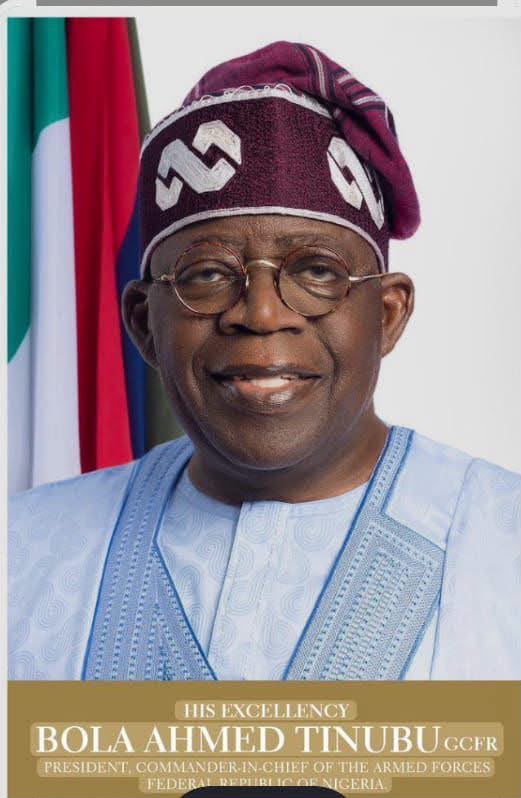
Tinubu orders full investigation into deaths of suspected illegal miners in NSCDC custody
By: Our Reporter
President Bola Tinubu has ordered a full, transparent and unhindered investigation into the deaths of suspected illegal miners detained by the Nigeria Security and Civil Defence Corps (NSCDC) following enforcement operations around the Lt. General Mohammed Inuwa Wushishi Estate in Minna, Niger State.
In a statement issued by the Special Adviser to the President on Information and Strategy, Bayo Onanuga, the President said the life of every Nigerian matters and that no citizen should lose their life while in government custody as a result of negligence, abuse, inhumane treatment or dereliction of duty.
Tinubu expressed deep concern over the reported deaths, describing the development as a grave matter requiring urgent investigation and accountability.
He said while the Federal Government would continue to combat illegal mining and other criminal activities across the country, enforcement operations must be conducted strictly within the law and with full respect for the dignity and fundamental rights of persons in custody.
The President stressed that the fact that the victims were suspected of illegal mining did not remove their right to life, dignity and humane treatment while in government custody.
He warned that the government would not tolerate mass deaths arising from official negligence, dereliction of duty or failure by public officials to protect people placed under their care.
“Where the investigation establishes that any official, through action, abuse or negligence, contributed to these deaths, such an officer must be arrested and prosecuted in accordance with the law. There must be accountability,” Tinubu said.
The President directed relevant authorities to ensure that the investigation is comprehensive, transparent and unhindered, covering the circumstances of the arrests, the conditions under which the detainees were held, the events leading to their deaths and the conduct of all officials involved.
The directive comes as the Niger State Government has also constituted a Committee of Inquiry to establish the circumstances surrounding the deaths, with Deputy Governor Yakubu Garba as Chairman and Commissioner for Homeland Security Maurice Magaji as Secretary.
The Niger State Government said forensic examinations and autopsies would be conducted to establish the exact cause of death, while the NSCDC Commandant General has suspended the Niger State Commandant, Suberu Siyaka Aniviye, and members of his team to allow investigations to proceed.
Tinubu orders full investigation into deaths of suspected illegal miners in NSCDC custody

Alleged Wire Tapping: Court Reserves Ruling on El-Rufai’s No Case Submission

AT 3RD AFRICA MINERALS STRATEGY GROUP HIGH-LEVEL ROUNDTABLE

Terrorists rustle 120 cattle, kill two herders in Wase, Plateau

Roger Federer’s Shock as DNA Results Reveal Myla and Charlene Are Not His Biological Children

THE PLIGHT OF FARIDA

FAILED COUP IN BURKINA FASO: HOW TRAORÉ NARROWLY ESCAPED ASSASSINATION PLOT AMID FOREIGN INTERFERENCE CLAIMS
-
 News3 years ago
Roger Federer’s Shock as DNA Results Reveal Myla and Charlene Are Not His Biological Children
-
Opinions5 years ago
THE PLIGHT OF FARIDA
-
 News1 year ago
FAILED COUP IN BURKINA FASO: HOW TRAORÉ NARROWLY ESCAPED ASSASSINATION PLOT AMID FOREIGN INTERFERENCE CLAIMS
-

 News3 years ago
EYN: Rev. Billi, Distortion of History, and The Living Tamarind Tree
-
 Opinions5 years ago
POLICE CHARGE ROOMS, A MINTING PRESS
-

 ACADEMICS3 years ago
A History of Biu” (2015) and The Lingering Bura-Pabir Question (1)
-

 Columns3 years ago
Army University Biu: There is certain interest, but certainly not from Borno.
-

 Politics1 year ago
2027: Why Hon. Midala Balami Must Go, as Youths in Hawul and Asikira/Uba Federal Constituency Reject ₦500,000 as Sallah Gift
