
News
Troops humiliate ISWAP in Ngamdu, kill 15 terrorists in ngamdu battle

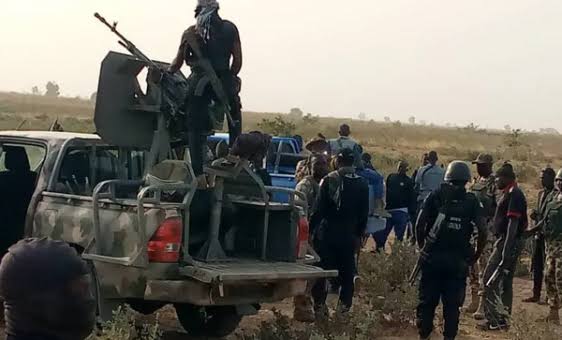
Troops humiliate ISWAP in Ngamdu, kill 15 terrorists in ngamdu battle
By: Zagazola Makama
In yet another demonstration of tactical superiority and resilience, troops of Operation Hadin Kai have repelled a coordinated attack by Islamic State West Africa Province (ISWAP) terrorists on Ngamdu in Kaga Local Government Area of Borno State, killing 15 insurgents and uncovering their mass grave.
Zagazola Makama learnt that the attack, which occurred in the early hours of Friday, was described by military sources as “one of the most daring but costly misadventures” by ISWAP fighters, who launched simultaneous assaults on troops from three different flanks.
According to reliable sources, the terrorists began the offensive from the Gonori axis around 3 a.m., apparently to divert troops’ attention from their main objective. The diversionary assault was swiftly contained by the gallant troops, forcing the attackers to retreat with casualties.
The second wave of attack, launched along the Maiduguri–Damaturu highway, involved the use of command Improvised Explosive Devices (IEDs), rocket-propelled grenades.
Despite the intensity of the assault, troops advancing from Benisheikh managed to charge through the ambush position, though one Mine-Resistant Ambush Protected (MRAP) vehicle sustained damage to its engine and tyres.
The third flank of the attack targeted Alpha Company’s defensive location near the main supply route, but despite minor infiltration into their outer perimeter, the soldiers held their ground firmly and neutralized several of the attackers in close-quarter combat.
The sources said four soldiers paid the supreme price while three were wounded in action during the encounter.
Subsequent intelligence gathered from local sources revealed that ISWAP fighters conducted a mass burial for 15 of their slain members at Bula Wura village near Wasaram, less than 24 hours after the failed operation.
“The attack was well-coordinated but the response was even more professional. The terrorists came in waves, using multiple tactics, but our men held their ground and made them pay heavily,” said one military sources.
The military has also intensified clearance operations along the Maiduguri–Damaturu highway after terrorists planted IEDs to delay reinforcements. The road was temporarily closed for demining operations to ensure the safety of commuters.
As the military continues to dominate the theatre of operations, local communities are beginning to express renewed confidence in the ongoing counter-terrorism efforts, which have seen a steady decline in insurgent activities across major highways and rural settlements in recent months.
Troops humiliate ISWAP in Ngamdu, kill 15 terrorists in ngamdu battle



Troops Rescue Kidnap Victim Abandoned by Fleeing Abductors in Plateau
By Zagazola Makama
Troops of Sector 3, Operation Enduring Peace (OPEP), have rescued a 47-year-old woman, Mrs Pollina Alfred, who was kidnapped from her residence in Dong Village, Jos North Local Government Area of Plateau State.
The rescue operation was conducted on August 11, 2026, following the abduction of the victim from her residence in the community.
A military source told Zagazola Makama that troops launched a search operation at about 7:00 a.m. and tracked the kidnappers to the Rafin Bauna general area in Bassa Local Government Area of the state.
The troops subsequently came under pressure as they intensified their search, forcing the kidnappers to abandon the victim and flee into the surrounding area.
Mrs Alfred was found and rescued by the troops without further harm.
Following the rescue, the victim was debriefed by the security personnel before being reunited with her family.
Troops Rescue Kidnap Victim Abandoned by Fleeing Abductors in Plateau
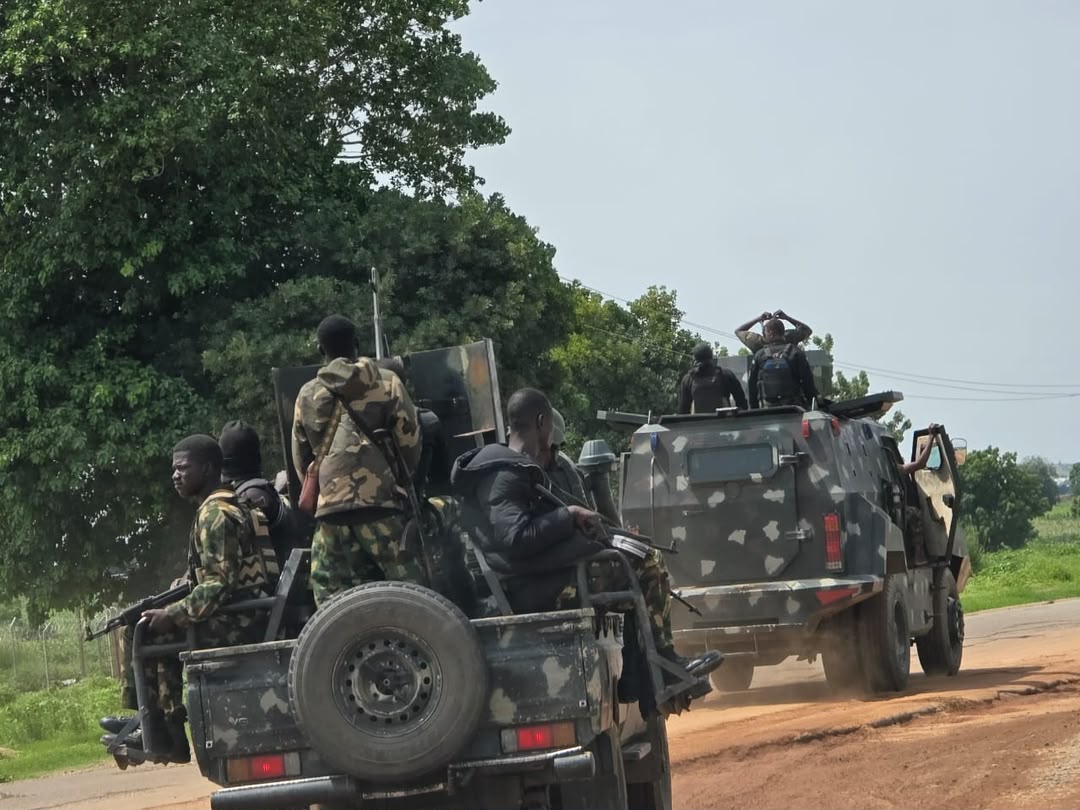
Troops Foil Armed Berom Militias Moving To Attack Fulani Communities in Mangu, Plateau
By Zagazola Makama
Troops of Operation Enduring Peace (OPEP) have engaged armed Berom militias following reports of their movement from Barkin Ladi Local Government Area to carry out attacks in some fulani communities in Mangu Local Government Area of Plateau State.
A military source told Zagazola Makama that troops of Sub-Sector 81, reinforced by additional personnel from Headquarters Sector 8, mobilised to the general area at about 7:00 a.m. on August 11, 2026, following an advance report on the movement of the armed group.
The militias were reportedly moving towards Gwomgada, Dorong and Kaduno communities in Langai District of Mangu LGA.
The troops subsequently made contact with the armed group at Makera and Kaduno communities, leading to a firefight.
The engagement forced the militias to withdraw towards the general area of Jos East Local Government Area.
The troops are currently pursuing the fleeing group to deny them freedom of action and prevent further attacks on communities.
In a reinforcement effort, a detachment of the Special Forces has also been dispatched from Headquarters, Operation Enduring Peace, to support the troops operating in the area.
Further details on the operation are expected as the military continues its efforts to contain the threat and secure affected communities.
Troops Foil Armed Berom Militias Moving To Attack Fulani Communities in Mangu, Plateau
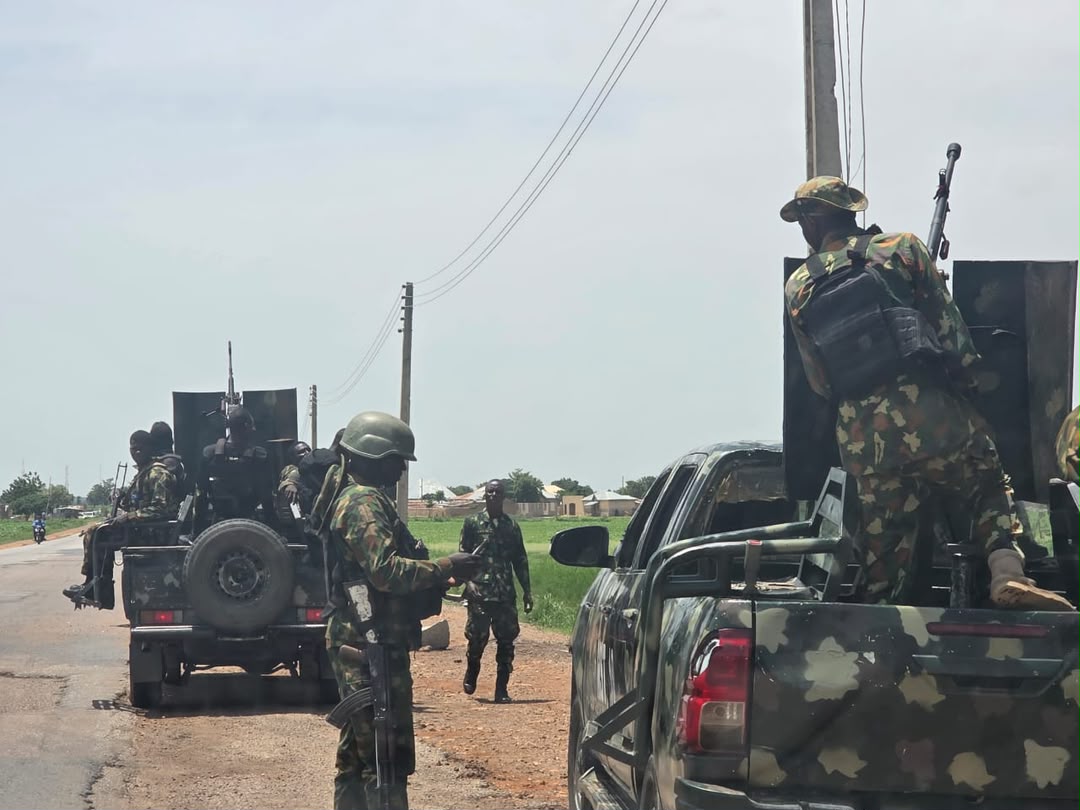
Troops Repel Fulani Bandits Attack, Secure Farmlands in Mangu, Plateau
By Zagazola Makama
Troops of Sector 8, Operation Enduring Peace (OPEP), have repelled an attack by suspected armed Fulani bandits during a response to reports of farmland destruction at Manja Forest in Mangu Local Government Area of Plateau State.
A military source told Zagazola Makama that the incident occurred at about 12:45 p.m. on August 11, 2026, following reports that armed herders suspected to be Fulani militias were destroying farmlands in the area.
The troops swiftly mobilised to the location and made contact with the armed group.
A firefight ensued, during which the troops employed superior firepower and forced the militias to withdraw in disarray.
The source said the troops expended 10 rounds of 7.62mm x 54mm ammunition and 19 rounds of 12.7mm x 108mm ammunition during the engagement.
Following the encounter, the troops maintained dominance of the area to prevent the attackers from regrouping or launching further attacks against farmers and other residents.
The troops also engaged community leaders and members of the Vigilante Group of Nigeria (VGN), urging them to sustain neighbourhood watch activities and promptly report suspicious movements to security agencies.
The operation is part of ongoing efforts by Operation Enduring Peace to protect farming communities, prevent attacks and maintain security across vulnerable areas of Plateau State.
Troops Repel Fulani Bandits Attack, Secure Farmlands in Mangu, Plateau

Troops Rescue Kidnap Victim Abandoned by Fleeing Abductors in Plateau

Troops Restore Normalcy After Drivers Block Highway, Vandalise Government Property in Plateau

Farmer arrested after killing Fulani Harder during altercation in Kaduna

Roger Federer’s Shock as DNA Results Reveal Myla and Charlene Are Not His Biological Children

THE PLIGHT OF FARIDA

FAILED COUP IN BURKINA FASO: HOW TRAORÉ NARROWLY ESCAPED ASSASSINATION PLOT AMID FOREIGN INTERFERENCE CLAIMS
-
 News2 years ago
Roger Federer’s Shock as DNA Results Reveal Myla and Charlene Are Not His Biological Children
-
Opinions4 years ago
THE PLIGHT OF FARIDA
-
 News1 year ago
FAILED COUP IN BURKINA FASO: HOW TRAORÉ NARROWLY ESCAPED ASSASSINATION PLOT AMID FOREIGN INTERFERENCE CLAIMS
-

 News2 years ago
EYN: Rev. Billi, Distortion of History, and The Living Tamarind Tree
-
 Opinions5 years ago
POLICE CHARGE ROOMS, A MINTING PRESS
-

 ACADEMICS2 years ago
A History of Biu” (2015) and The Lingering Bura-Pabir Question (1)
-

 Columns2 years ago
Army University Biu: There is certain interest, but certainly not from Borno.
-

 Politics1 year ago
2027: Why Hon. Midala Balami Must Go, as Youths in Hawul and Asikira/Uba Federal Constituency Reject ₦500,000 as Sallah Gift
