
Military
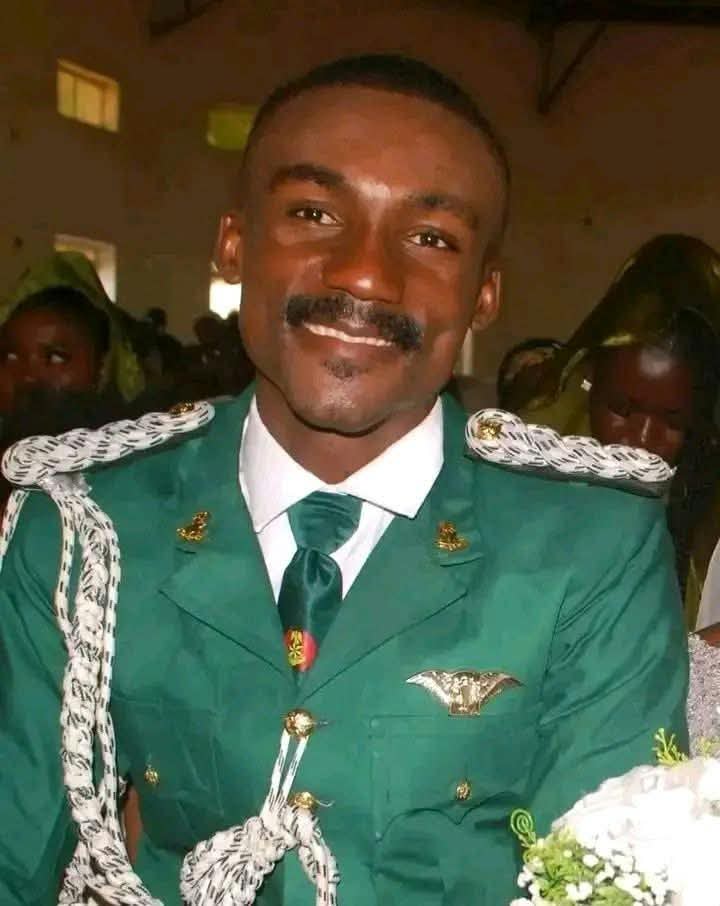
Group Captain Agom: A Soldier’s Heart, An Officer of Excellence, and A True Gentleman


Group Captain Agom: A Soldier’s Heart, An Officer of Excellence, and A True Gentleman
By: Dr. James Bwala
In a world that often measures greatness through the lens of accolades and public recognition, true excellence frequently lies in the quiet, steadfast resolve of individuals whose character shapes their legacy. Group Captain Agom epitomizes such excellence—a soldier whose heart beats with unwavering commitment, an officer whose professionalism is unmatched, and a gentleman whose virtues shine in every action. To understand the significance of Group Captain Agom is to appreciate the nuanced interplay between duty, leadership, and the moral fabric that holds society together.

Group Captain Agom’s military career stands as a testament to his profound dedication to service and country. Enlisting at a young age, he quickly distinguished himself through a combination of tactical brilliance and unwavering discipline. His training—not merely academic but deeply rooted in practical experience—laid the foundation for his ascent through the ranks. In an era where the number of missions is often equated with success, Agom’s approach transcended such metrics; he focused on the integrity of operations and the well-being of his subordinates. His ethos emphasized that effective military leadership is predicated not solely on strategic victories but equally on the ability to inspire a sense of purpose and belonging among team members.

Leadership in the military is seldom an isolated pursuit; it requires a delicate balance of command and camaraderie. Group Captain Agom embodies this balance with remarkable finesse. He understands that a successful leader must not only issue orders but also forge genuine relationships built on trust and respect. His colleagues, especially in the medical field, recount numerous instances where he prioritized the needs of his team, ensuring that they felt valued and understood. Such dedication fosters loyalty and motivates soldiers to rise above challenges. Simply referred Dr. Agom. Agom’s foresight in nurturing these relationships has cultivated a culture of openness within his command, allowing for innovative ideas and solutions to flourish while minimizing the fear of failure.

Dr. Agom’s commitment to excellence extends beyond immediate responsibilities. He is an ardent advocate for professional development, understanding that a well-trained soldier is an invaluable asset. Under his leadership, mentorship programs were instituted, encouraging junior officers to pursue additional training and education. Agom often emphasizes the importance of continual learning, recognizing that the medical field as well as the battlefieldis constantly evolving. This vision for growth not only elevates individual skill sets but also strengthens the entire unit, making it more formidable against adversaries.

READ ALSO: https://newsng.ng/vp-kashim-shettima-in-president-tinubus-words-competent-capable-reliable-and-able/
His footsteps in Kaduna, where he is currently serving, go beyond his military acumen; Group Captain Agom is revered for his principles of integrity and honor. In a profession where ethical dilemmas frequently arise, he remains resolute in his commitment to doing what is just, even when it is not the easy path. His reputation for fairness precedes him, as both peers and subordinates recognize his unwavering adherence to ethical standards. Such a commitment inspires confidence, galvanizing those around him to cultivate the same virtues. It illustrates a vital point: leadership is not merely about authority; it is deeply intertwined with moral responsibility.

As a true gentleman, Dr. Agom carries himself with humility and grace. He possesses a rare quality—an innate ability to connect with people from all walks of life, whether they be high-ranking officials or those in lower ranks. His genuine interest in others, coupled with his listening skills, enables him to foster inclusive environments where every voice is heard. This attribute is particularly significant in the armed forces, where diverse perspectives can lead to innovative strategies in critical situations. Agom’s interactions remind us that effective leadership is predicated upon mutual respect and understanding, qualities that are essential in a collaborative environment.


The realm of military service is often fraught with personal sacrifice. The toll of long deployments, the emotional weight of warfare, and the ever-present uncertainty can challenge even the most resilient individuals. Group Captain Agom’s empathy towards the struggles faced by his comrades exemplifies the depth of his character. He actively advocates for mental health support within the forces, understanding that a soldier’s strength is not merely measured by physical prowess but also by emotional resilience. His initiatives have led to improved mental health resources, fostering a culture where seeking help is seen as a sign of strength rather than weakness.
When we consider the broader impact of Agom’s contributions, it becomes evident that his influence extends beyond the immediate military environment. He serves as a role model for subsequent generations of leaders. By exemplifying the virtues of dedication, integrity, and humility, Agom inspires young officers to aspire to greatness, not just in terms of rank, but in their overall character. His life illustrates that true success is not answered by titles or accolades alone; it is defined by the positive impact one leaves on others.

In persuading individuals of the necessity to celebrate figures like Group Captain Agom, we must highlight that such exemplary role models are crucial for the fabric of society. They embody the values that nations strive to uphold—courage, honor, and commitment to a greater cause. These attributes are not merely military in nature; they transcend the armed forces and seep into every aspect of civil society. By uplifting and recognizing leaders like Agom, we encourage the cultivation of these values in future generations, promoting a cycle of excellence and moral fortitude.
For me, and these personal notes, Group Captain Agom is much more than a decorated officer; he is a paragon of what it means to serve with heart and honor. His dual identity as a soldier and gentleman offers a powerful narrative about what it means to lead effectively. Through his actions and values, he teaches us that leadership is not solely confined to a position of power but is rooted in the ability to inspire, uplift, and create an environment where everyone can thrive. As we reflect on his legacy, let us commit ourselves to embodying these virtues in our own lives, thereby honoring the spirit of service that Group Captain Agom represents. He is not just a soldier; he is a cornerstone of what it means to be an exceptional human being, a true gentleman, and an officer of excellence.
* James Bwala, Ph.D., a security strategy analyst, writes from Abuja.
Group Captain Agom: A Soldier’s Heart, An Officer of Excellence, and A True Gentleman


Why Would the Military Ignore a Soldier Celebrating Convicted Terrorist Nnamdi Kanu?
By: Zagazola Makama
There is something profoundly disturbing about the argument being advanced by those demanding the intervention of Tarok military generals over the detention of Gabriel Lamdip, popularly known as the “Push Up King.”
The attempt to turn this matter into an ethnic solidarity campaign, while conveniently ignoring the gravity of the alleged conduct, is both misplaced and deeply troubling. The question is not whether Lamdip is Tarok, whether he enjoys the support of influential military officers or whether his family deserves compassion.
The real question is simple: Can a serving soldier publicly demonstrate solidarity with a separatist figure associated with violence against Nigerian security personnel and expect the military to look the other way?
Absolutely not!
Let us stop hiding behind sentiment and confront the issue squarely. A serving soldier is not an ordinary civilian. He wears the uniform of the Nigerian Armed Forces, carries the responsibility of defending the Constitution and has sworn allegiance to the Federal Republic of Nigeria. His conduct, particularly on matters touching national security, separatist agitation and threats to national unity, must reflect the discipline and loyalty expected of a member of the military.
If the video in question shows Lamdip performing push-ups in apparent solidarity with Nnamdi Kanu, the leader of the proscribed Indigenous People of Biafra (IPOB), then the matter deserves serious institutional attention. The explanation that Kanu shares a birthday with the soldier’s son does not automatically erase the implications of such an act.
Since when did a child’s birthday become a convenient excuse for a serving soldier to publicly associate himself with a figure whose movement has been linked by the Nigerian government to deadly attacks against members of the nation’s security forces?
This is not about denying anyone the right to hold personal opinions. It is about the special obligations that come with wearing a military uniform. The Armed Forces are not a social club where personnel can freely blur the line between personal admiration, political activism and institutional loyalty.
And those rushing to condemn the Army for investigating this matter should first remember the blood of Nigerian security personnel shed in the violence associated with IPOB and its armed wing, the Eastern Security Network (ESN).
The record is grim.
On May 3, 2022, Master Warrant Officer Audu Linus and Private Gloria Mathew were abducted while travelling in Imo State. They were brutally murdered and beheaded. In a statement issued the following day, the Presidency attributed the killings to IPOB and condemned the gruesome crime.
On July 13, 2021, an attack on troops at the Iggah/Asaba checkpoint in Uzo-Uwani Local Government Area of Enugu State reportedly left two soldiers dead. The Nigerian Army attributed the attack to IPOB and its Eastern Security Network.
In November 2021, two police inspectors, identified as Akubo and Adamu, were abducted and murdered. Their bodies were reportedly decapitated, while footage of the killings was circulated. The Federal Government attributed the operation to IPOB members.
On May 30, 2024, armed men attacked a military checkpoint in Abia State. The Nigerian Army blamed IPOB for the attack, which reportedly killed five soldiers. Six civilians also died in the violence, according to an account cited in the UK government’s country report.
The figures announced by the Federal Government are equally alarming. In October 2021, the then Attorney-General of the Federation, Abubakar Malami, disclosed that a government committee had attributed 175 security personnel deaths between October 2020 and June 2021 to IPOB and ESN. The figure comprised 128 police officers, 37 military personnel and 10 other security operatives.
The committee also attributed 164 attacks on police stations and security formations to the group.
These were official government figures, and they paint a disturbing picture of the scale of violence confronting security institutions during that period.
Beyond attacks on security personnel, communities in the South-East have also endured killings, abductions, intimidation, attacks on public infrastructure and the violent enforcement of sit-at-home orders. Ordinary citizens, traders, transport operators, civil servants and other residents have paid a heavy price for the activities of armed groups operating under separatist banners. So, what exactly are the critics asking the Nigerian Army to do? Look away? Pretend that nothing happened.
The Army is not a private association belonging to any ethnic group. It is a national institution. Its loyalty is to Nigeria, not to ethnic pressure groups, political sympathisers or individuals who believe that connections and influence should place someone beyond scrutiny.
If Lamdip has done nothing wrong, he should have nothing to fear from a fair and transparent investigation. But if the evidence establishes a breach of military regulations, he must face the appropriate consequences under the law.
Why Would the Military Ignore a Soldier Celebrating Convicted Terrorist Nnamdi Kanu?
GOC 5 Division Visits Army Units in Nasarawa, Receives Support from Loko Emir
By: Zagazola Makama
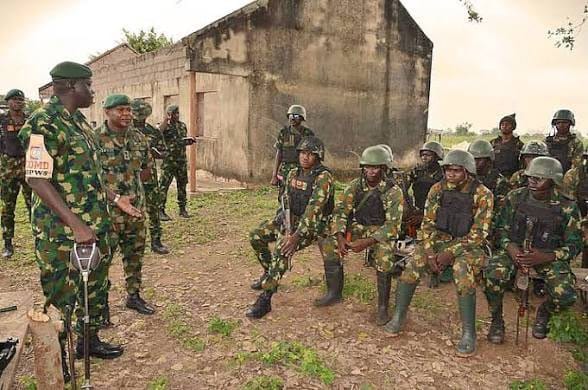
The General Officer Commanding (GOC) 5 Division, Maj.-Gen. MK Gara, has visited troops of 351 Army Regiment in Loko and 106 Battalion in Toto, both in Nasarawa Local Government Area of Nasarawa State, as part of efforts to assess operational activities and strengthen engagement with local stakeholders.
Security sources told Zagazola Makama that Gara, accompanied by the Commander 10 Brigade and other officers, visited the 351 Army Regiment location in Loko on Nov. 6, 2026.
The GOC was received and briefed by the Commanding Officer on the unit’s operational activities before being conducted round its temporary location.
He subsequently paid a courtesy visit to the Emir of Loko, Alhaji Abubakar, who presented four motorcycles to the GOC in support of the unit’s operational activities.
Gara and his entourage later proceeded to 106 Battalion in Toto, within the same local government area.
The visit was reported to have been conducted without any incident.
GOC 5 Division Visits Army Units in Nasarawa, Receives Support from Loko Emir
Military
Army Expansion Deals Major Blow to Terrorists as Troops Rescue 16 Kidnap Victims, Recover AK-47 Rifles, RPG Bombs, 33 Motorcycles in Niger

Army Expansion Deals Major Blow to Terrorists as Troops Rescue 16 Kidnap Victims, Recover AK-47 Rifles, RPG Bombs, 33 Motorcycles in Niger
By: Zagazola Makama
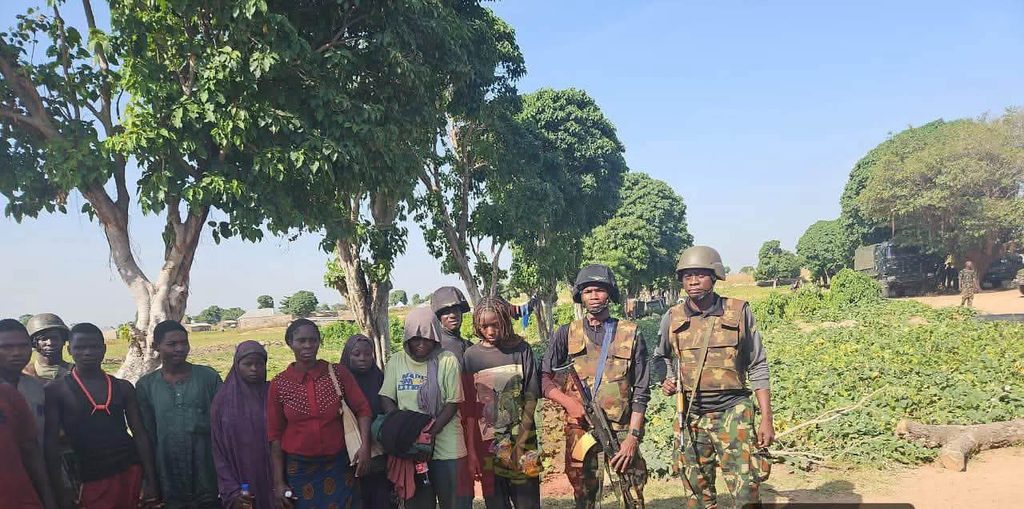
Troops of the Nigerian Army’s 18 Brigade have dealt significant blows to terrorists and kidnapping gangs operating across Niger State, rescuing 16 abducted persons and recovering assault rifles, rocket-propelled grenade (RPG) bombs, ammunition and 33 motorcycles in a series of operations.
The operations, conducted between November 3 and 5, 2026, highlight the growing operational reach of the Nigerian Army following the expansion of its formations and enhanced deployment of troops to vulnerable areas.
In the first operation on November 5, troops, acting on credible intelligence about the movement of terrorists from Mashegu Local Government Area towards Rijiyan Nagwamatse in Kontagora Local Government Area of Niger State, established an ambush along suspected criminal routes.
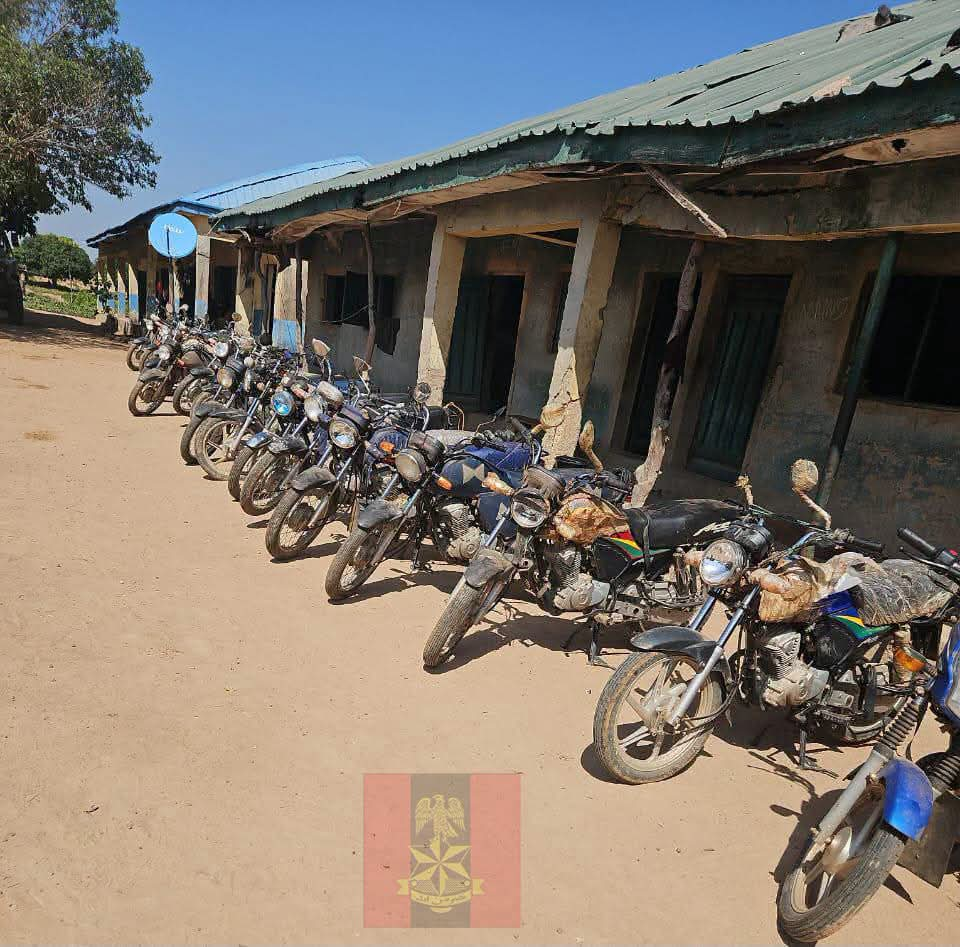
The troops subsequently made contact with the armed group, which had reportedly abducted residents of the area, and engaged them in a fierce encounter, neutralising an unconfirmed number of terrorists and rescuing 16 kidnapped victims.
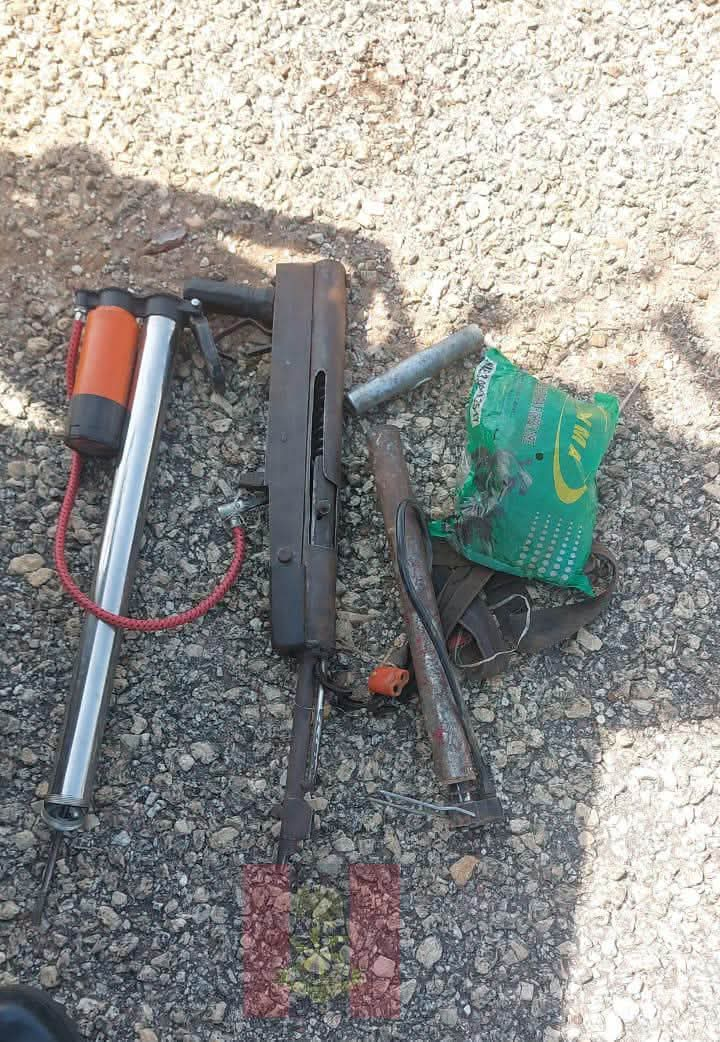
A search of the operational area led to the recovery of two AK-47 rifles, seven magazines, three RPG high-explosive anti-personnel bombs, 33 motorcycles, assorted ammunition and N4.105 million in cash.
In a related operation on November 3, troops intercepted another group of terrorists moving from Makuku Village in Sakaba Local Government Area of Kebbi State towards Tungan Kawo in Rijau Local Government Area of Niger State.
The troops engaged the criminals in a fierce firefight, forcing them to retreat into the surrounding forest with varying degrees of gunshot wounds.
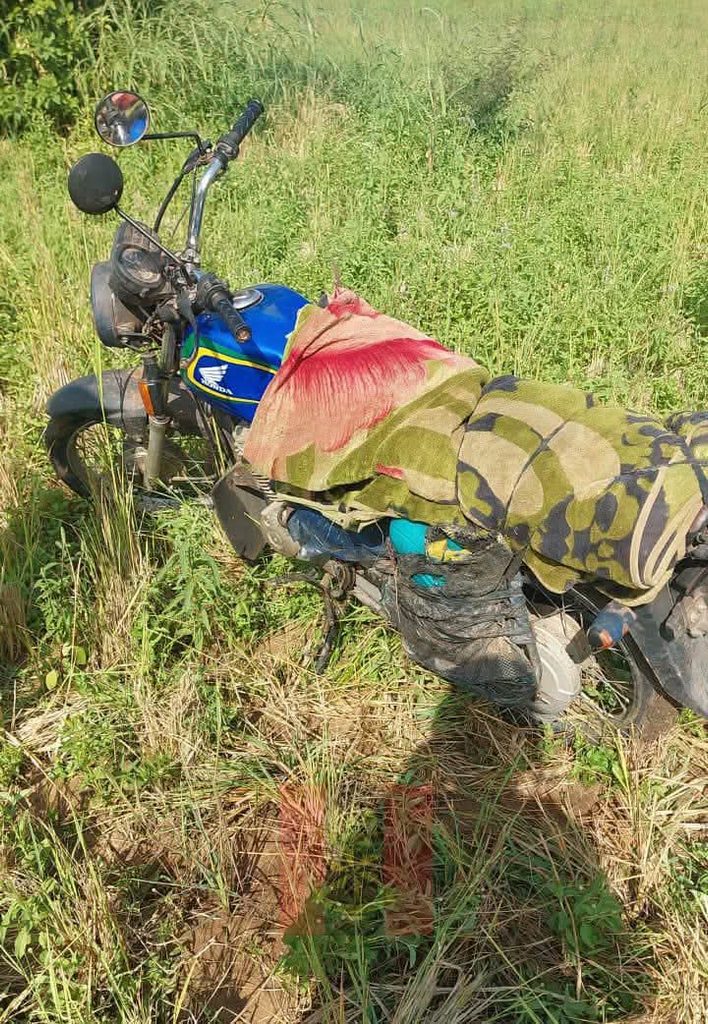
A subsequent exploitation of the area resulted in the recovery of five motorcycles, a mobile phone, N644,300 and other sundry items.
The 16 rescued victims have received first aid and were subsequently handed over to the appropriate authorities for reunification with their families, while the recovered weapons, ammunition and other items remain in military custody.
The Commander, 18 Brigade, commended the troops for their gallantry, resilience and commitment to duty, urging them to sustain the operational momentum and intensify efforts to rid the Brigade’s Area of Responsibility of criminal elements.
The latest successes underscore the importance of the Nigerian Army’s ongoing expansion, which is strengthening its operational footprint, improving rapid response capabilities and enabling sustained pressure against terrorist networks, particularly across the volatile North-West and North-Central security corridors.
The recovery of 33 motorcycles, in particular, represents a significant disruption to the mobility and logistics of armed groups that rely heavily on motorcycles to transport fighters, weapons and supplies across remote communities and forest routes.
Army Expansion Deals Major Blow to Terrorists as Troops Rescue 16 Kidnap Victims, Recover AK-47 Rifles, RPG Bombs, 33 Motorcycles in Niger

Borno 2027: The General’s Charge and How Zulum Unleashes Borno’s Heavyweight Political Squad

Troops Intercept Abandoned Toyota Camry Loaded with 315 Sachets of Suspected Indian Hemp in Kaduna

NSCDC CG Reaffirms Personnel Welfare Priority, Pays N87.4m Insurance Benefits

Roger Federer’s Shock as DNA Results Reveal Myla and Charlene Are Not His Biological Children

THE PLIGHT OF FARIDA

FAILED COUP IN BURKINA FASO: HOW TRAORÉ NARROWLY ESCAPED ASSASSINATION PLOT AMID FOREIGN INTERFERENCE CLAIMS
-
 News3 years ago
Roger Federer’s Shock as DNA Results Reveal Myla and Charlene Are Not His Biological Children
-
Opinions5 years ago
THE PLIGHT OF FARIDA
-
 News2 years ago
FAILED COUP IN BURKINA FASO: HOW TRAORÉ NARROWLY ESCAPED ASSASSINATION PLOT AMID FOREIGN INTERFERENCE CLAIMS
-
 Opinions5 years ago
POLICE CHARGE ROOMS, A MINTING PRESS
-

 News3 years ago
EYN: Rev. Billi, Distortion of History, and The Living Tamarind Tree
-

 ACADEMICS3 years ago
A History of Biu” (2015) and The Lingering Bura-Pabir Question (1)
-

 Columns3 years ago
Army University Biu: There is certain interest, but certainly not from Borno.
-

 Politics1 year ago
2027: Why Hon. Midala Balami Must Go, as Youths in Hawul and Asikira/Uba Federal Constituency Reject ₦500,000 as Sallah Gift
