
News
If Not for Fear of Boko Haram’s Bombs Jonathan Would Have Fully Removed Fuel Subsidy – Sanusi

If Not for Fear of Boko Haram’s Bombs Jonathan Would Have Fully Removed Fuel Subsidy – Sanusi
By: Michael Mike
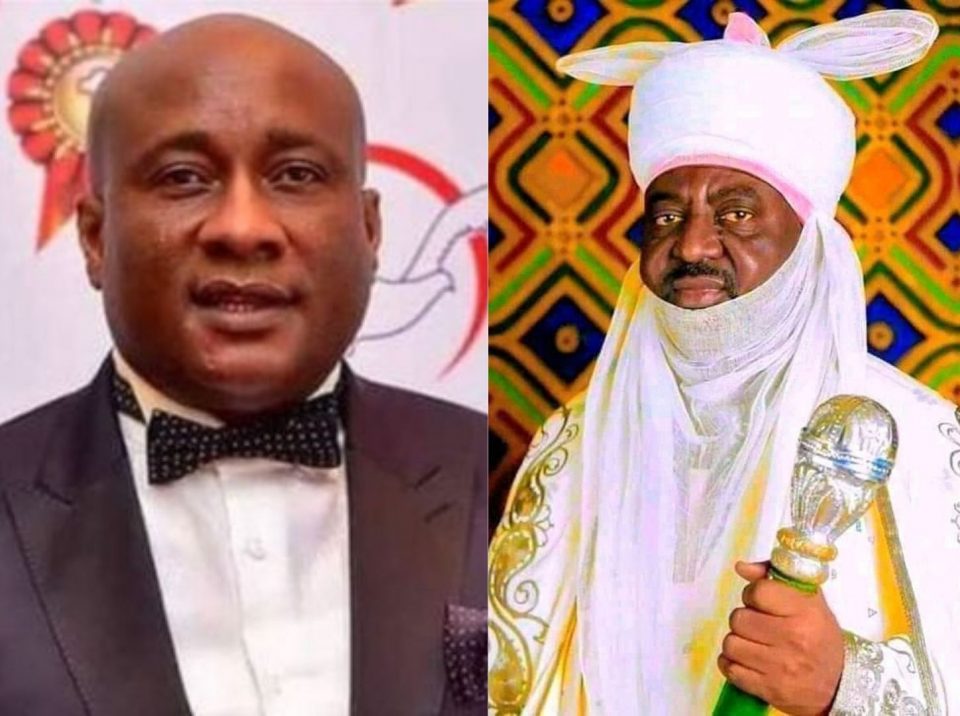
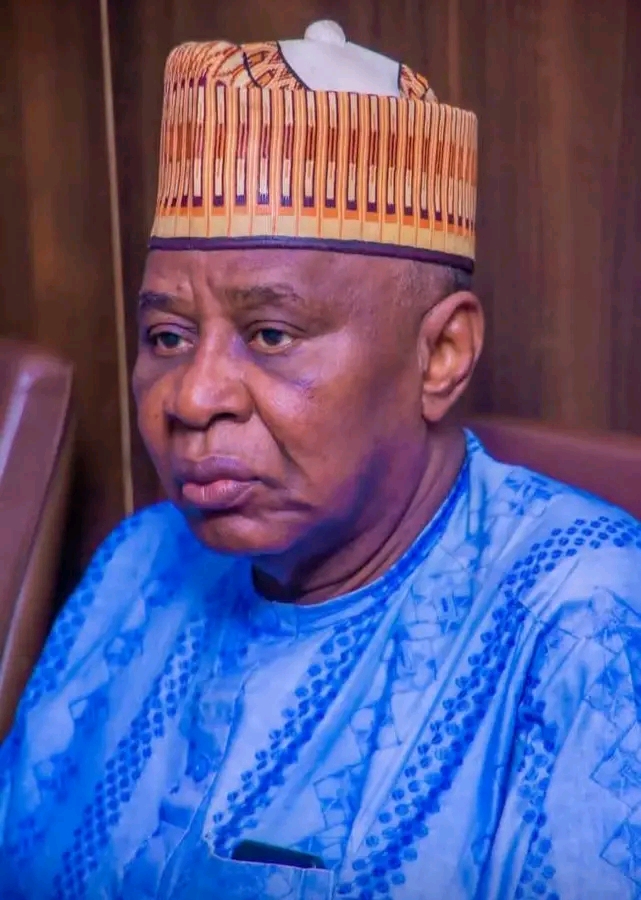
The Emir of Kano, Muhammadu Sanusi II has disclosed that the decision to suspend the fuel subsidy removal by President Goodluck Jonathan was because of the fear of Boko Haram’s suicide attacks on protesters and never because of the protest in itself.
Speaking at the Oxford Global Think Tank Leadership Conference, themed: “Better Leader for a Better Nigeria,” the Emir, who was at the time the Governor of Central Bank of Nigeria (CBN) and the prime promoter of fuel subsidy removal, said the right definition for what was happening with what was termed fuel subsidy was a hedge with the government paying to keep the price at a point at all time.
He said: “It was not a subsidy, it was a hedge. You see, a subsidy by definition, the government says I’ll pay X percent of the price. That’s the subsidy. I’ll pay 20 percent of the price. Whatever it is. Price goes up, you pay more, I pay more. Price goes down, you pay less, I pay less. What we had in this country is what in risk management you call a naked hedge. The worst possible derivative you can have.
“The government said to Nigerians, 200 million Nigerians, you will not pay more than X amount per litre. On petrol, no matter what the price of petrol is. So all price goes up from $40 to $140, the federal government pays the difference.
“Exchange rate moves from $155 to $300, the government pays the difference. Interest rates move from 5 percent to 15 percent, the government pays. Remember the price of petrol and what the calculations include, the cost of crude, the cost of the by-product, the cost of transportation, even interest rates, demurrage.
“If you look at the template, all of those amounts were being absorbed. The federal government was saying I have an unlimited pocket. So move from a point where we were using revenues to pay subsidies to where we had to borrow money to pay subsidies, to where we had to borrow money to pay interest on the borrowed money, we had become bankrupt.
“Anyone who takes a naked hedge ends up being bankrupted, especially with a commodity where you don’t control the price. So this was the point in 2012. Now, if Nigerians had allowed the Jonathan government to remove the subsidy in 2011, that would have been pain.
But that pain would have been a very, very tiny fraction of what we are facing today. This is the cost of today. At that time, we worked out the numbers in the Central Bank, and I stood up and put my credit in front of the line and said, remove the subsidy today, inflation moves up from 11 percent to 13 percent. I will bring it down a bit later. Oh, that’s about 30-something percent inflation. That was where we were.”
On Jonathan’s decision to suspend the planned subsidy removal, the Emit said: “And you know, the only reason the government compromised at that time, maybe you should know this, the only reason the government compromised and did 50% not 100% was Boko Haram. Because there were thousands of Nigerians on the streets in Lagos and Kano and Kaduna and all that. We had suicide bombers in the country.
“And it was like, if one day one of these suicide bombers goes to these Nigerians and explodes the bomb, and you have 200 corpses, it will no longer be about subsidy. So I got to give President Jonathan the credit. He was determined to do it.
He noted that Nigeria is a classless society, explaining that: “If you take the people you call leaders, go to the Senate, go to the House of Reps, you can go and pick 109 Nigerians at random, without election.
Put them in the Senate chambers and the results may not be different from what you’re getting out. Because the truth is, you have highly educated people in government, but they live like illiterates. They forget their education behind.
“When you talk about praise singing, why would a man who is an educated man, an accomplished man, why would he be a praise singer to anyone? Why would he not be able to face his boss and say, for that, we’re not doing very good, this is the truth? And how would a person in government not have the confidence to listen to those around him and take criticism?
“You have got people who are supposed to be the representatives of the values of society. By the time you become a governor, honestly, you should be beyond looking for money. You have been given an opportunity to take care of the lives of millions of people, to educate children, to save lives, to provide healthcare, to build infrastructure, while all you are thinking of is a house? I mean, are you that cheap?
“And you see them, and I remember the day they leave office, after a few years, they die, and the children are fighting over the money. Then they get the money, and then they go on drugs, and everything is wasted. That money would have been better spent, educating millions of young people, and save their lives. So if we really want to fix this country, we need to have a class. The ruling class needs to have values. Values beyond the market.”
He decried that many leaders are surrounded by sycophants, adding that: “We need to begin to ask as leaders who do we surround ourselves with?”
On his part, Mr. Atedo Peterside, a Nigerian entrepreneur, investment banker and economist, the founder of Stanbic IBTC Bank and Anap Foundation, lamented that many politicians do not come to serve their people but rather to steal.
He decried that the cause of underdevelopment in Africa is that leadership is mainly about state capture and corruption.
He alleged that. “They came to capture what belongs to everybody, that’s for the common good, for themselves and their narrow elites. Until we solve that problem, we will remain in this field.“
He noted that it is not about the beauty or otherwise of reforms, stating that the difference is the sincerity. “Did the leader come to serve or did he come to steal?”
He lamented that: “People take positions not based on the truth, but based on what personal agenda they are pursuing. So I’ll be the first one to give credit to this government for removing the fuel subsidy, which some of us started campaigning for from the very first economic summit over 30 years ago.
“But the same president must take the blame for sabotaging the efforts to remove the fuel subsidy in the past, in 2012. The speeches are there. But the best time to have planted the tree was 25 years ago.
“The second best time is now, so let’s focus on the now. The important thing is that the government has done the correct thing in terms of removing an unaffordable subsidy. The same government has done the correct thing, which has been done before, to give us what I would consider to be largely market-determined exchange rates, which gives you some exchange rates stability.
“So you ask me, what would I have done differently? That question shows that anybody with the right brain on his head would have done those two things. But guess what? How long does it take to do those things?“
He said: “We had market-determined exchange rates largely. So that’s a one-day action. You bite the bullet on the first day.
“What differentiates you thereafter is your subsequent actions. So those measures improve fiscal balance. They give all three tiers of government so much more revenue.
“And that’s where the problem starts. What is the point of giving the thief more revenue if he’s only going to steal it? So across all the local governments of Nigeria, across every state government, and at the federal level, the real test is what is being done with that revenue in their hands. Is that revenue supposed to be used to fuel 400 cars to escort the president to the airport and cut off the revenue in the process? Is that what you did it for? Let me tell you what the correct thing was.
“The real difficulty, the real action, the real result was to help eliminate poverty, was to get the economy functioning. As soon as we did those two things, what could be done, each of them, when you take a day, an announcement, is your subsequent actions. When the economic summit turned 25 years, I was in this same room.
“I recommended that the government measure a mutual subsidy. I also said that as soon as we do it, the following day, even the day before, start distributing cash to the poorest Nigerians. They all have names.”
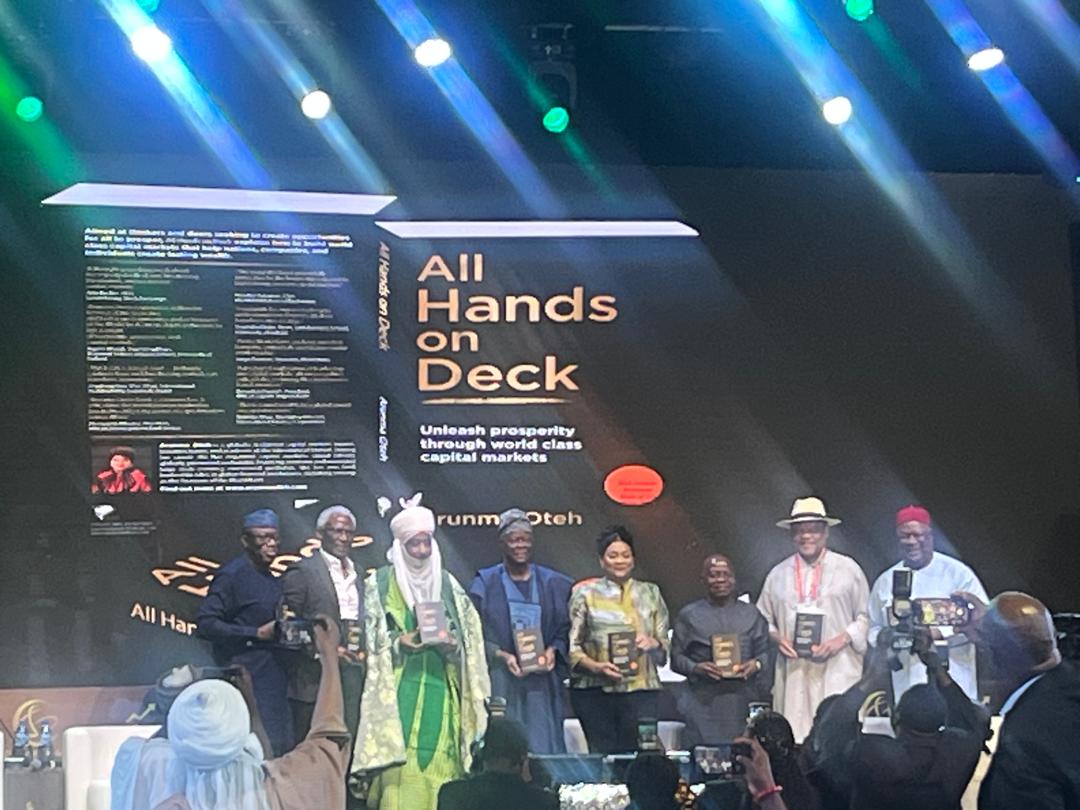
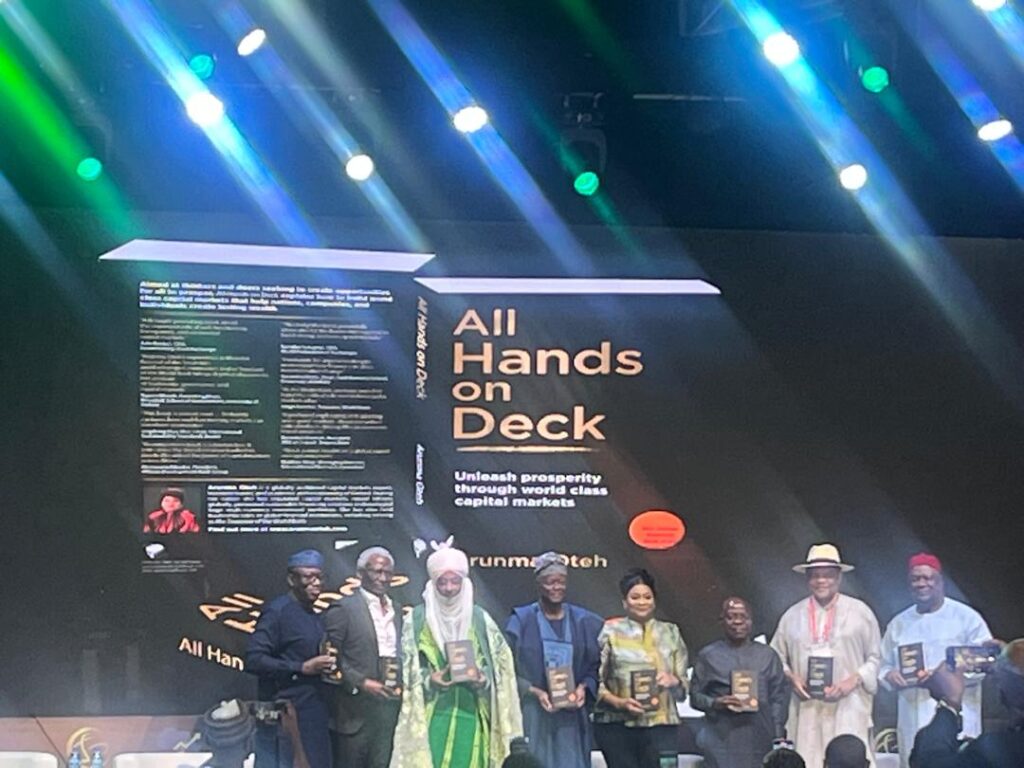
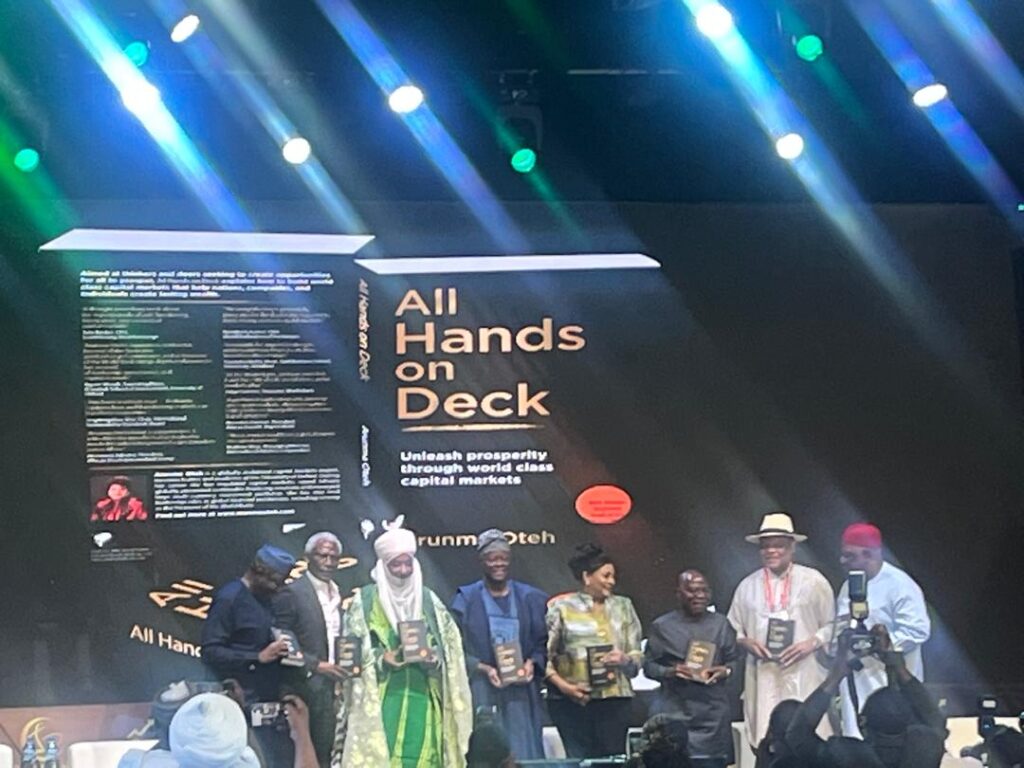
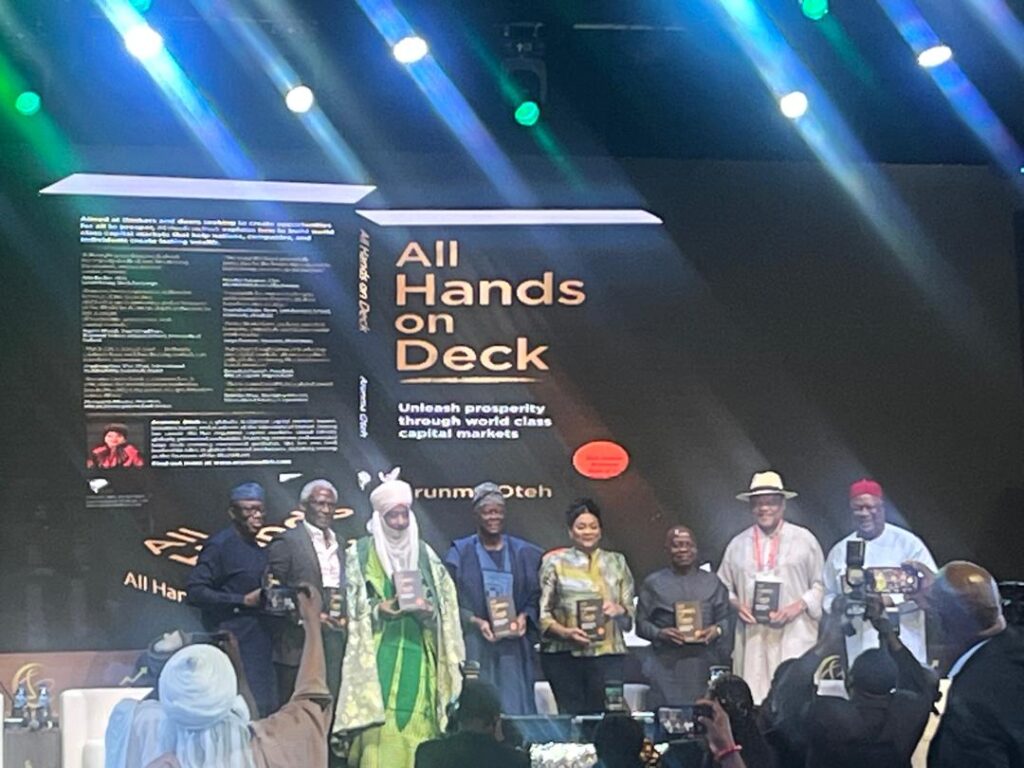
The Former Director General Nigerian Stock Exchange and Convener of the meeting, Arunma Otey: “Nigeria, is a great example of what the possibilities are. When all hands are on deck.”
Otey who also used the occasion to present her book: “All Hands on Decj: Unleash Prosperity through World-Class Capital Markets,” said: “We do think that we need to continue to focus on the openness of finance, share in some of the very inclusive approaches. We need to build a bigger pie, and we need to make sure that that pie is available to our creators.”
She noted that: “One of the things that will help our nation is a focus on reasonably priced long-term patient capital. And so part of what I advocate for is creating the environment that allows us to have long-term patient capital that is available to businesses, that is available to government. And when I say available to government, the current government, previous governments have invested in infrastructure.
She added that: “We need to invest in infrastructure in this nation. I was looking at data as I was thinking about this conference, and China, over the years, invested 24% of its GDP in infrastructure. At best we do 4-5%. If we want to reach the infrastructure deficit in our nation, we would have to do at least 12%. So there’s some foundational things we will do.”
Otey said: “We need to scale. We need to do much more. And we need to raise money, so that small businesses can do better, so that the government can do more.
And we as individuals need to invest in our nation. And that’s why the time is now hands on deck.”
She asked: “Why aren’t we exploiting those 40 minerals in commercial quantities? Why are minerals still in the exclusive list of the federal government? Why can’t we have it decentralised, so that every state can produce the minerals in their own state? Why are we decentralising a nation of 230 million people?”
On his part, the Minister of Finance and Coordinating Minister of The Economy, Mr. Wale Edun, said: “Today we are talking about leadership. And I’ll just briefly say that, yes, Africa, with all its human resources, and of course, that is the most important resource that Africa has now. We are going to be the world’s workforce.
Africa will provide by 2030 or so 25% of the world’s workforce. We are a young continent compared to the aging continents of Asia, aging continents of Europe. So we have to prepare ourselves for that historic role.
“In Nigeria, leadership changed in 2023. And the under president, Bola Ahmed, changed for the better. If you look at the record, if you look at the statistics, if you look at the progress that has been made since 2023.
“However, the statistics, the improved growth rates, the stable exchange rates, the lowering inflation, those are just one side of the story. And the most important aspect is the human side, the effect on people’s daily experience, the cost of food, the cost of transport, how they are living their lives. And it is to that that I think rather than focusing on the various statistics, what I will say is that there is an attempt to ensure that the pains of reform have immediately been alleviated.”
He added that: “And that’s why there is in place a transparent, accountable, and robust system providing direct payments, in the first instance, to a total of 15 million households. And you know, in the holding area, before we joined this gathering, there were comments that in their villages, in their towns, they have not had reports of anybody receiving those payments. So immediately, we called for the data, and shortly we will give them the data of the people that have received first, second, and third payments directly.”
If Not for Fear of Boko Haram’s Bombs Jonathan Would Have Fully Removed Fuel Subsidy – Sanusi


Police Foil IED Attack, Destroy Explosive Device in Zamfara
By: Zagazola Makama
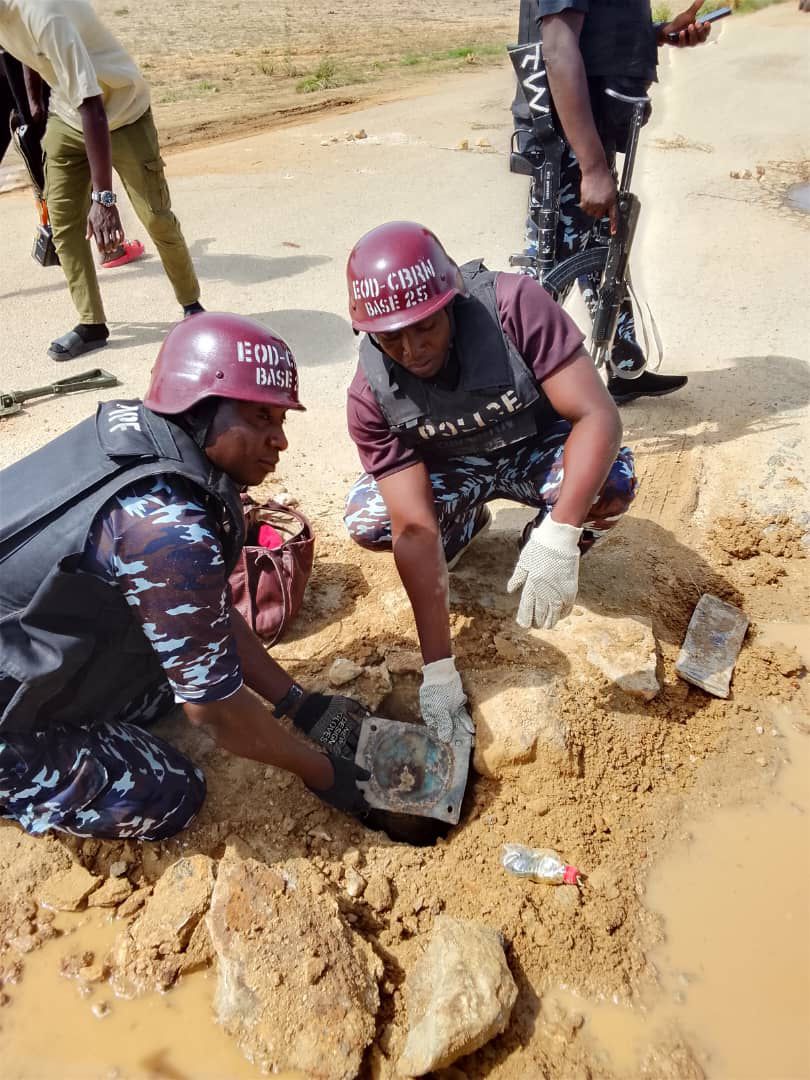
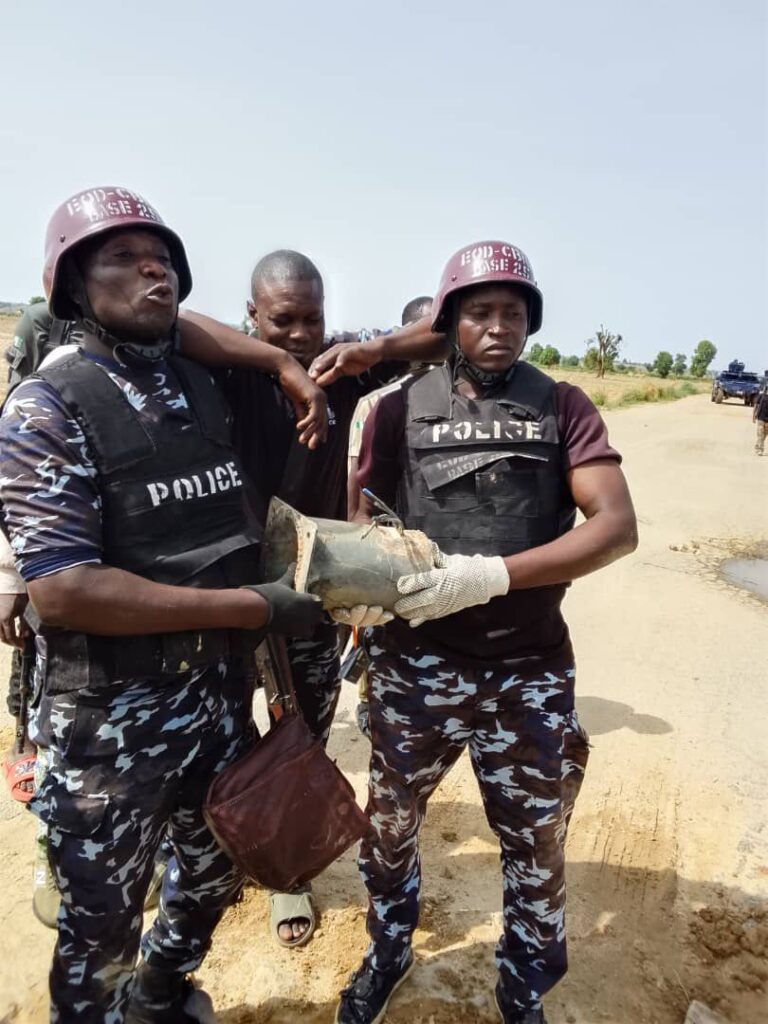
The Zamfara State Police Command says it has successfully foiled a planned attack after its Explosive Ordnance Disposal (EOD) unit discovered and safely destroyed an Improvised Explosive Device (IED) in Tsafe Local Government Area of the state.
The Command said the operation was carried out on Friday at about 4:15 p.m. along the Kunchin Kalgo axis following credible intelligence received through community engagement efforts.
According to a statement issued by the Command, operatives of the Violence Crime Response Unit (VCRU), in collaboration with the EOD team, swiftly mobilised to the area after receiving information about a suspected explosive device planted by bandits.
Preliminary findings indicated that the device was strategically planted along the road with the intent of causing mass casualties among commuters and other road users.
The statement added that the timely response of the operatives led to the safe detection, evacuation and controlled destruction of the explosive device before it could cause any harm.
The Command commended the vigilance and cooperation of local residents, describing community support as critical to ongoing security operations in the state.
It further assured residents that efforts were ongoing to identify, arrest and prosecute those responsible for planting the device.
The police also disclosed that patrols had been intensified across vulnerable areas to prevent similar incidents and ensure the safety of road users.
The Commissioner of Police, A.M. Bello, reiterated the Command’s commitment to sustained operations against banditry and other violent crimes in Zamfara State.
Police Foil IED Attack, Destroy Explosive Device in Zamfara
Russia’s Role in the Widening Insecurity in Africa
By Ipole Amajama
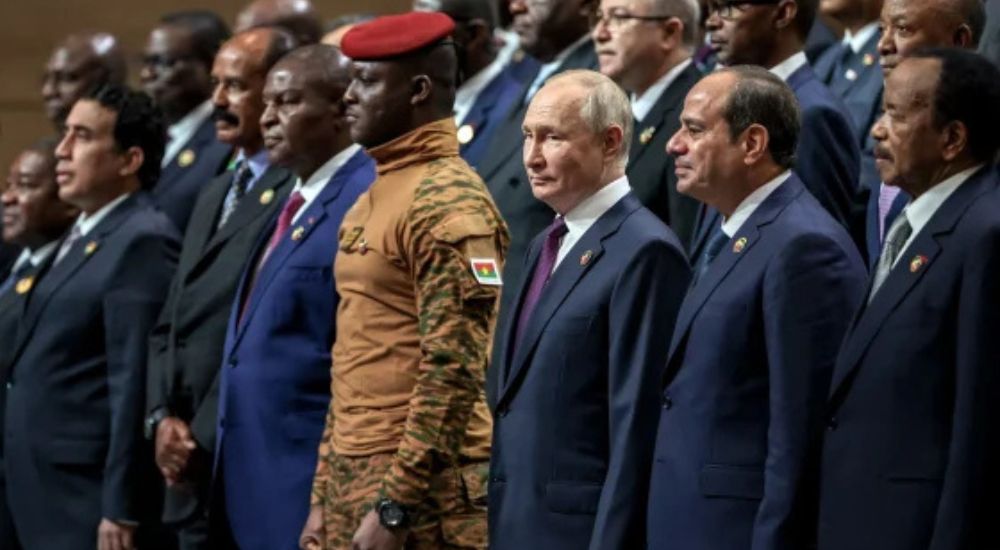
The African continent is once again at the centre of a geopolitical storm. From the Sahel to Nigeria, insecurity is spreading at an alarming speed, threatening fragile states and destabilising entire regions. While local dynamics and systemic weaknesses play a role, Russia’s involvement raises troubling questions about its motives and the consequences for Africa and beyond.
Nigeria faces a growing terrorist threat that is no longer confined to its borders. The collapse of governance in several states of the Alliance of Sahelian Juntas (AES) has created fertile ground for extremist groups. These failed states have become incubators of insecurity, exporting violence into neighbouring countries. The challenge is no longer whether to support or oppose the junta, but how to deal with their failures and the regional consequences of their isolation.
Russia’s actions in Africa reveal a clear pattern: its primary aim is not to stabilise the continent but to create a secondary frontline against the West. By fostering instability in Africa, Moscow seeks to divert European attention and resources away from Ukraine. The Kremlin’s involvement is less about partnership and more about exploiting chaos for strategic advantage.
This raises a critical question: is Russia simply incapable of offering meaningful support, or is it deliberately spreading insecurity? The evidence suggests that Moscow benefits from turmoil in Africa, whether by design or by opportunism.
Whatever happens in Africa has little direct impact on Russia. The continent is geographically distant, and Russia’s economic ties with African nations are minimal. In fact, Africa’s collapse could even benefit Moscow. African oil, gas, and mineral exports compete with Russia’s own. If insecurity disrupts African production, global prices rise—strengthening Russia’s export revenues.
Europe, however, bears the brunt of Africa’s instability. Migratory pressure from conflict zones is already reshaping European politics. Far-right parties, often sympathetic to Russia, are gaining ground in countries like France and the UK. By exacerbating insecurity in Africa, Moscow indirectly fuels migration flows that influence European voters. This strategy weakens European unity and undermines support for Ukraine.
From a Russian perspective, encouraging instability in Africa is a shrewd way to manipulate European politics. The more Africans flee insecurity and attempt to reach Europe, the greater the strain on European societies. This pressure amplifies populist narratives, strengthens far-right movements, and erodes mainstream political consensus. Since many far-right parties are pro-Russia, the Kremlin gains strategic leverage by destabilising Africa.
Russia’s record in the Sahel is damning. It has done nothing to fight terrorism. Instead, it has encouraged juntas to isolate themselves from the international community, sever ties with African neighbours, and expel Western intelligence and military support. In exchange, the Sahel states received nothing of substance. Russian involvement has failed to improve security, governance, or economic conditions. On the contrary, the situation has worsened.
It is difficult to determine whether Russia is acting with malicious intent or simply behaving irresponsibly. Either way, the outcome is the same: worsening insecurity. Moscow’s promises of support have proven empty. Its presence has deepened instability, leaving African populations more vulnerable than before.
The hypothesis of a cynical will to facilitate insecurity cannot be dismissed. Russia appears to be the only clear winner of Africa’s suffering. By exploiting chaos, Moscow strengthens its geopolitical position, increases its export revenues, and undermines European resolve.
The lesson is stark: Africa must never again rely on a self-proclaimed outside “saviour.” Russia’s involvement has shown that external powers may prioritise their own interests over African stability. The continent must instead build resilience through self-reliance and multilateral cooperation.
African nations should pursue balanced partnerships that preserve freedom of action. By engaging with multiple partners—regional organisations, international institutions, and diverse allies—Africa can avoid dependency and secure more effective support. Only through collective action can African states confront terrorism, strengthen governance, and protect their sovereignty.
Russia’s role in Africa is not about solidarity or development. It is about exploiting insecurity to advance its global strategy. By destabilising Africa, Moscow weakens Europe, strengthens far-right allies, and boosts its own economic position. Whether through negligence or deliberate manipulation, Russia has worsened Africa’s plight.
The challenge for Africa is to recognise this reality and chart a new path. The continent must rely on itself, build multilateral frameworks, and reject the false promises of external saviours. Only then can Africa safeguard its future and prevent its suffering from being weaponised to serve foreign ambitions.
Amajama, a social commentator, writes from Abuja and can be reached via amajamaip@gmail.com
Russia’s Role in the Widening Insecurity in Africa
Buni approved the appointment of Yerima as the new emir of Ngazargamu.
By: Yahaya Wakili
Governor Mai Mala Buni CON, COMN of Yobe state has approved the appointment of Alhaji Yerima Ibn Mahmud as the new Emir of Ngazargamu.
This is contained in a statement signed and issued today, 12th June, 2026, by the acting secretary to the state government, Dr. Mohammed Goje, in Damaturu.
The appointment of the new emir of Ngazargamu followed the demise of the late emir, Alhaji Tijjani Ahmed Ibn-Saleh Geidam, who passed away recently in Cairo, Egypt, after a protracted illness.
Until his appointment, the new Mai Ngazargamu was the Turakin Ngazargamu, an office he held for 16 years. He was also a member of the State House of Assembly.
The new emir of Ngazargamu, Alhaji Yerima Ibn Mahmud, has at different times served as a member of the State Executive Council and the state commissioner for livestock development before the new appointment.
Governor Mai Mala Buni, while congratulating the new emir and the Ngazargamu emirate, urged the new emir to use his wealth of experience to unite the people, promote peace and peaceful coexistence, and foster economic growth of the emirate, Yobe State, and Nigeria as a whole.
Similarly, Governor Buni called on the people to support the new emir to execute the functions of his office diligently, effectively, and efficiently for the benefit of the people, peace, unity, and prosperity of the emirate.
Buni approved the appointment of Yerima as the new emir of Ngazargamu.

Police Foil IED Attack, Destroy Explosive Device in Zamfara

WHEN TERRORISTS MOCK THE STATE

Russia’s Role in the Widening Insecurity in Africa

Roger Federer’s Shock as DNA Results Reveal Myla and Charlene Are Not His Biological Children

THE PLIGHT OF FARIDA

FAILED COUP IN BURKINA FASO: HOW TRAORÉ NARROWLY ESCAPED ASSASSINATION PLOT AMID FOREIGN INTERFERENCE CLAIMS
-
 News2 years ago
Roger Federer’s Shock as DNA Results Reveal Myla and Charlene Are Not His Biological Children
-
Opinions4 years ago
THE PLIGHT OF FARIDA
-
 News1 year ago
FAILED COUP IN BURKINA FASO: HOW TRAORÉ NARROWLY ESCAPED ASSASSINATION PLOT AMID FOREIGN INTERFERENCE CLAIMS
-

 News2 years ago
EYN: Rev. Billi, Distortion of History, and The Living Tamarind Tree
-
 Opinions4 years ago
POLICE CHARGE ROOMS, A MINTING PRESS
-

 ACADEMICS2 years ago
A History of Biu” (2015) and The Lingering Bura-Pabir Question (1)
-

 Columns2 years ago
Army University Biu: There is certain interest, but certainly not from Borno.
-

 Politics1 year ago
2027: Why Hon. Midala Balami Must Go, as Youths in Hawul and Asikira/Uba Federal Constituency Reject ₦500,000 as Sallah Gift
