
News
Analysts question US motives in Nigeria, warn against foreign military intervention

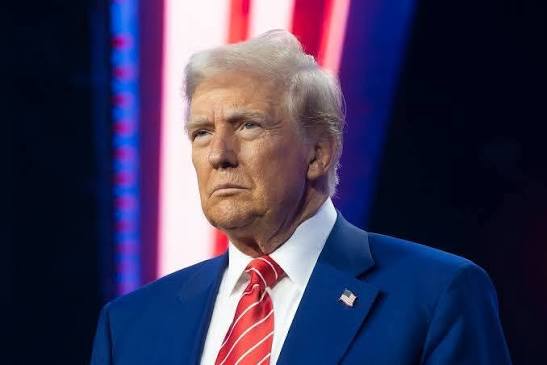
Analysts question US motives in Nigeria, warn against foreign military intervention
By: Zagazola Makama
Growing conversations among security analysts and policy observers in Nigeria are questioning what they describe as the United States’ “renewed interest” in Nigerian security, especially following recent international reactions to killings in parts of the North.
In recent weeks, statements by some U.S. politicians and evangelical groups have framed the attacks by armed groups in Nigeria as a “persecution of Christians”, throwing debates among local diplomats and defence experts that the narrative could be used as justification for foreign military involvement.
Several analysts who spoke to Zagazola Makama said history shows that no foreign military power deploys troops across oceans purely on humanitarian grounds.
A geopolitical researcher in Abuja, who requested anonymity because of the sensitivity of the subject, stated: “There is no such thing as military charity. Wherever the U.S. deploys troops, there is a strategic economic interest – oil, minerals, or military positioning.”
He cited examples of American involvement in Iraq, Libya, and Afghanistan, where interventions were initially framed around “rescue missions”, democracy, fighting Islamist Jihadist or counter-terrorism, but ended with prolonged military presence, destruction, or resource access.
According to him, the narrative of a “Christian genocide” could be a psychological operation to create public sympathy and legitimacy for intervention. “Once intervention is framed as saving victims, public resistance becomes weak. That is how foreign bases are negotiated.” said the sources.
Nigeria sits on an estimated 37 billion barrels of crude oil and possesses rare earth minerals, including lithium, uranium, and gold. These are increasingly vital to defence, tech, and energy industries worldwide.
Very soon Nigeria may start receiving proposal suggesting a U.S. military presence in strategic locations tied to resources. Places like Port Harcourt (oil-rich Niger Delta), Tsafe in Zamfara and Sokoto (gold and uranium belt), and Konduga in Borno (reported uranium deposits) as areas repeatedly discussed informally by foreign security actors.
It is a well known fact that the United States holds vast intelligence on all activities of bandits in the North West and ISWAP or Boko Haram terrorists in the North but has declined to share actionable data or lift restrictions on military procurement. Even after Nigeria secured financing to acquire long-range surveillance drones, the U.S. declined to approve the deployment, despite Nigeria meeting all requirements.
US has the biggest surveillance platform in West Africa, they monitor the entire Sahel and West Africa from satellites and aerial ISR platforms. They see every movement of bandits and terrorists. They know their coordinates,” the source said but when it comes to enabling Nigeria to end terrorism, the response becomes diplomatic and procedural.”
He also cited instances where U.S. legislation restricted Nigeria’s access to key military equipment, leading to the prolonged war on terrorism including the recent blocked transaction of equipment from Saudi Arabia.
Security analysts argue that the same countries expressing concern over insecurity frequently frustrate Nigeria’s attempts to strengthen its own capability.
“You cannot claim to be worried about terrorism while blocking the tools needed to fight terrorism,” the analyst said.
In recent years, African countries such as Niger, Burkina Faso, Guinea and Mali have removed U.S. and French military partnerships, accusing Western governments of interference or resource-driven agendas. Transitional leaders in some of these countries have alleged that foreign actors undermined internal political stability. While the U.S. government has repeatedly denied involvement in any such activities, African analysts maintain that Western foreign policy is often transactional.
Despite the concerns, the Nigerian government insists that any international partnerships must respect national sovereignty.
“Nigeria welcomes support, not dominance. Assistance must strengthen Nigeria’s capability, not replace it.”said top Government official.
Analysts question US motives in Nigeria, warn against foreign military intervention


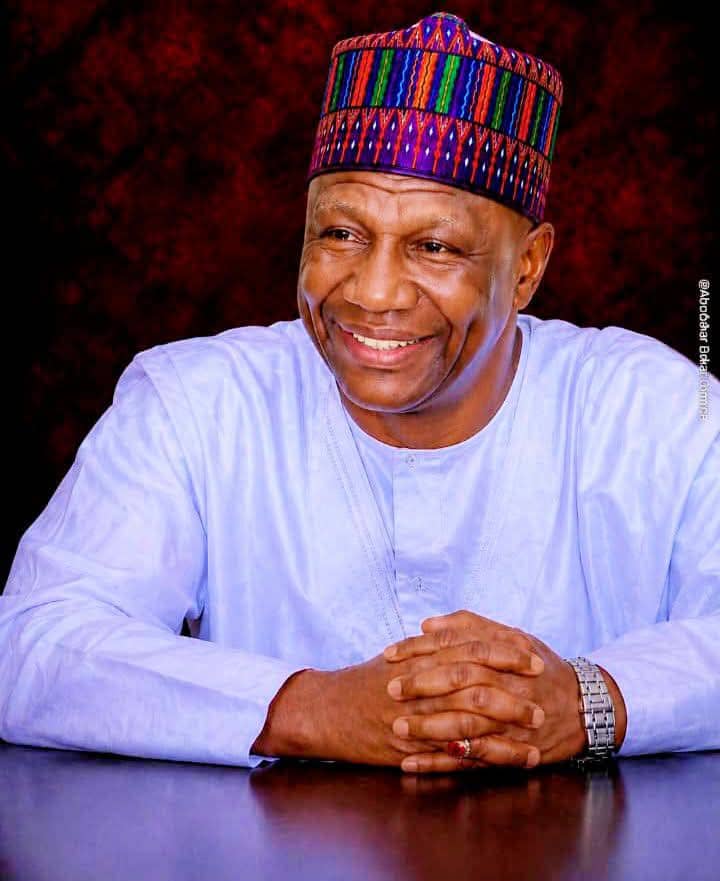
Yobe: Wali visits Emir of Damaturu
By: Yahaya Wakili
Yobe State All Progressives Congress (APC), 2027 gubernatorial candidate Alhaji Baba Malam Wali MNI, FCAN, has paid a courtesy visit to His Royal Highness, the Emir of Damaturu, Alhaji Shehu Hashimi II Ibn Umar Al-Amin El-Kanemi, at his palace in Damaturu.
During the visit, the APC governorship candidate, Alhaji Baba Malam Wali MNI, said they were at the emir’s palace to solicit the prayers and blessings of the emir.
According to Baba Wali, “We are in the race; therefore, the visit was very significant. We need the prayers of the royal fathers and leaders because they were very vital and important at this crucial time.
Responding, His Royal Highness, the emir of Damaturu, Alhaji Shehu Hashimi II Ibn Al-Amin El-Kanemi, thanked the governorship candidate for the visit and prayed Almighty Allah (SWT) would guide and protect him throughout his struggle in his life.
Those accompanying the incoming governor, Inshallah, in 2027 during the visit are his deputy, Barrister Saleh Samanja; APC State chairman, Alhaji Mohammed Gadaka; and Madakin Gudi.
Others are Alhaji Aji Yarima Bularafa, Hon. Commissioner of the Ministry of Wealth Creation, Empowerment, and Employment Generation; Hon. Nasiru Hassan Yusuf, candidate for the Federal House of Representatives, representing Damaturu, Gujba, Gulani, and Tarmuwa local government areas; and others.
The emir conferred the traditional title of Mukaddam of the Damaturu emirate council on Alhaji Baba Malam Wali, mni, and fcan, respectively.
Yobe: Wali visits Emir of Damaturu
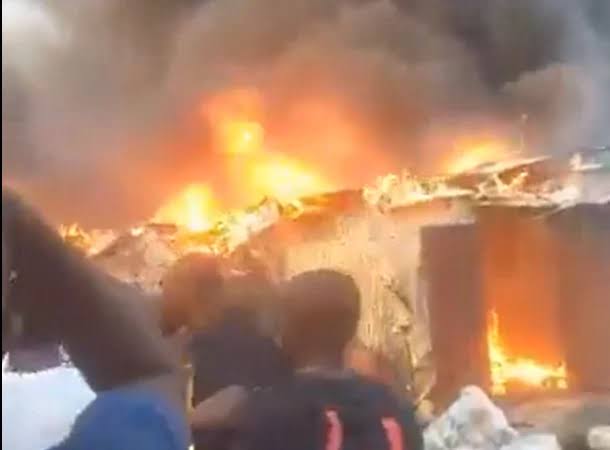
Fire Razes Building Material Shops in Satellite Town, Lagos
By Zagazola Makama
LAGOS — A fire outbreak has destroyed several building material shops along Fin-Niger, Satellite Town, Lagos State.
The incident occurred at about 6:10 a.m. on Aug. 18, when a distress call was received reporting a fire outbreak in the area.
Following the alert, a team of policemen and firefighters was swiftly mobilised to the scene.
The fire affected building material shops located at 58/196 Old Ojo Road, along Fin-Niger, Satellite Town.
The emergency responders successfully contained and extinguished the fire, preventing it from spreading further.
No casualty or loss of life was recorded in the incident.
The cause of the fire and the estimated value of property destroyed have not yet been established.
The police said investigation into the incident is ongoing to determine the circumstances surrounding the outbreak.
Fire Razes Building Material Shops in Satellite Town, Lagos
News
24 Bandits Killed As Army, DSS, Vigilantes Foil Mass Kidnap in Katsina Community, Rescue Victims
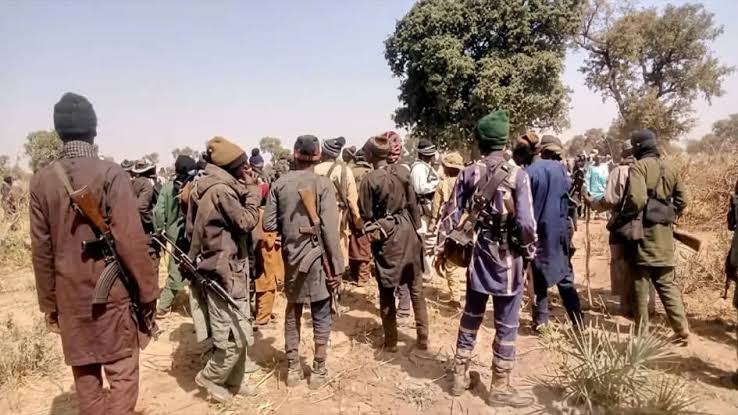
24 Bandits Killed As Army, DSS, Vigilantes Foil Mass Kidnap in Katsina Community, Rescue Victims
By: Zagazola Makama
At least 24 bandits were killed on Tuesday after soldiers of the Nigerian Army, operatives of the Department of State Services (DSS), Katsina Community Watch Corps foiled an attempt to mass-kidnap persons in Gidan Bawa village, Kandarawa Ward, Bakori Local Government Area of the state.
According to a security source, the operation followed sustained intelligence which uncovered plans by about 40 gunmen loyal to notorious bandit kingpin, Isiya Kwashen Garwa, to invade the village and abduct many residents, especially women and children.
The plot, sources said, was intended to replicate the mass abduction of residents of Woro community in Kwara State, ostensibly to embarrass the government.
Acting swiftly on the intelligence, DSS operatives mobilised the Community Watch Corps, and the Civilian Joint Task Force (CJTF) from Guga camp, and ambushed the bandits.
The source disclosed that the joint security operatives neutralised 24 bandits and rescued the abducted villagers.
Security operatives also recovered 19 stolen cattle from the community during the raid.
The source added that there were ongoing efforts to track down the fleeing bandits.
24 Bandits Killed As Army, DSS, Vigilantes Foil Mass Kidnap in Katsina Community, Rescue Victims

Yobe: Wali visits Emir of Damaturu

Police Arrest Two Suspected One-Chance Robbery Syndicate Members in Lagos

Fire Razes Building Material Shops in Satellite Town, Lagos

Roger Federer’s Shock as DNA Results Reveal Myla and Charlene Are Not His Biological Children

THE PLIGHT OF FARIDA

FAILED COUP IN BURKINA FASO: HOW TRAORÉ NARROWLY ESCAPED ASSASSINATION PLOT AMID FOREIGN INTERFERENCE CLAIMS
-
 News2 years ago
Roger Federer’s Shock as DNA Results Reveal Myla and Charlene Are Not His Biological Children
-
Opinions5 years ago
THE PLIGHT OF FARIDA
-
 News1 year ago
FAILED COUP IN BURKINA FASO: HOW TRAORÉ NARROWLY ESCAPED ASSASSINATION PLOT AMID FOREIGN INTERFERENCE CLAIMS
-

 News2 years ago
EYN: Rev. Billi, Distortion of History, and The Living Tamarind Tree
-
 Opinions5 years ago
POLICE CHARGE ROOMS, A MINTING PRESS
-

 ACADEMICS2 years ago
A History of Biu” (2015) and The Lingering Bura-Pabir Question (1)
-

 Columns2 years ago
Army University Biu: There is certain interest, but certainly not from Borno.
-

 Politics1 year ago
2027: Why Hon. Midala Balami Must Go, as Youths in Hawul and Asikira/Uba Federal Constituency Reject ₦500,000 as Sallah Gift
