
News
FCTA, UN Women, and Traditional Rulers Unite to End Gender-Based Violence

FCTA, UN Women, and Traditional Rulers Unite to End Gender-Based Violence
By: Michael Mike
The Federal Capital Territory Administration (FCTA) Women Affairs Secretariat, in collaboration with UN Women, is partnering with traditional leaders across the FCT to eliminate gender-based violence and promote safer communities for women and girls.
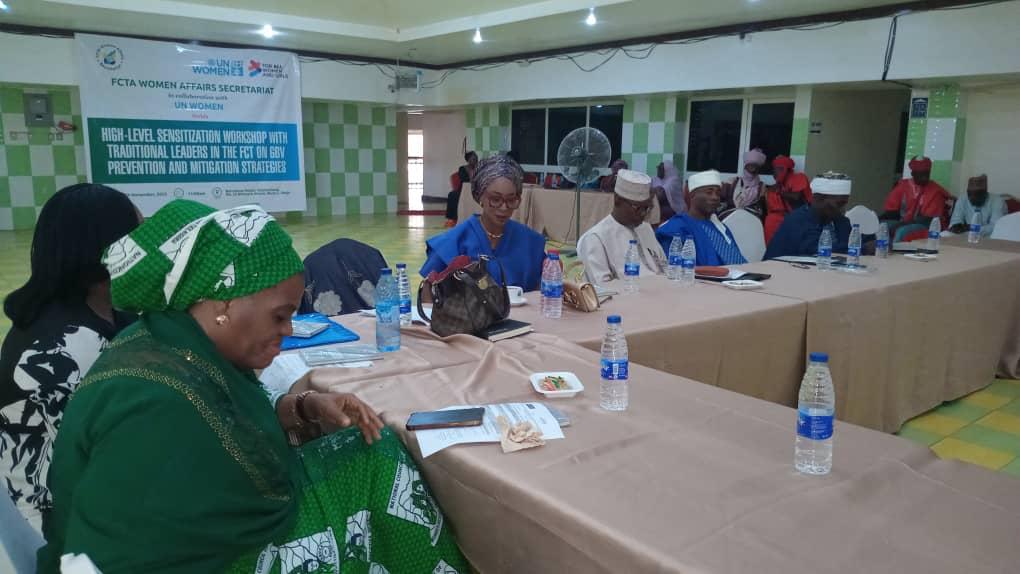
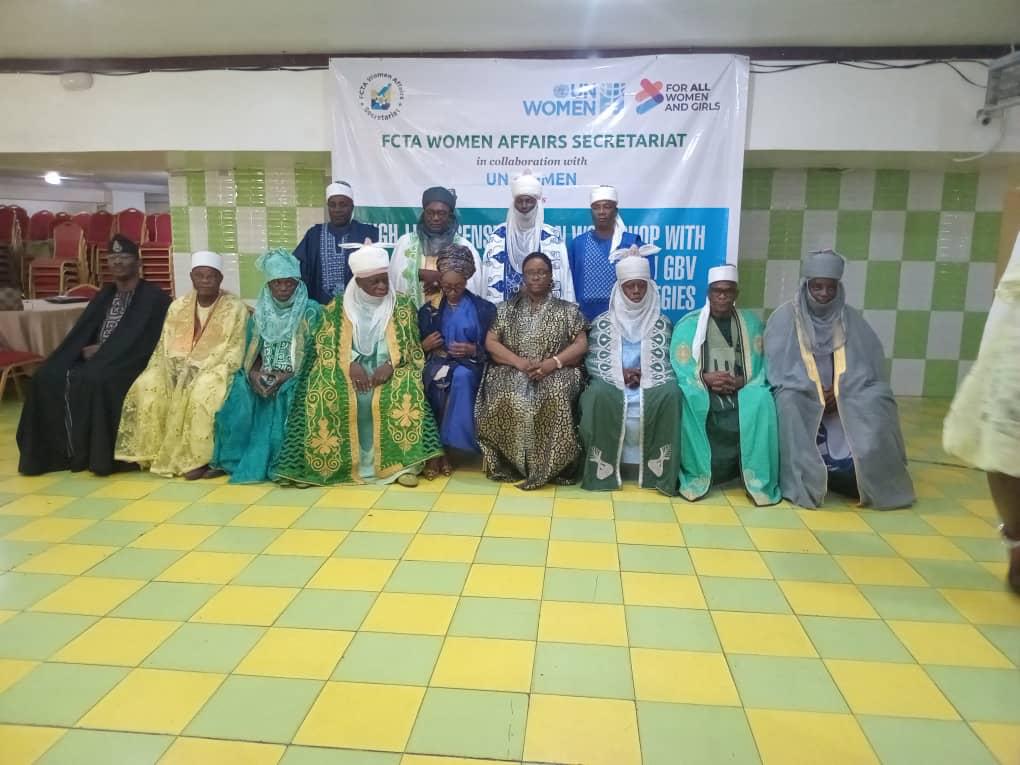
At a high-level sensitization workshop held in Abuja, influential traditional rulers from across the territory gathered to strengthen grassroots action, reshape harmful cultural norms, and reinforce community-driven accountability in the fight against gender-based violence (GBV).
The initiative, supported by the Ford Foundation, is part of a wider national effort where traditional leaders are playing a pivotal role in promoting gender equality and protecting women’s rights. Through dialogue, advocacy, and local policy reform, the collaboration aims to end practices such as child marriage, female genital mutilation, and other forms of abuse.
In her keynote address, UN Women Representative to Nigeria and ECOWAS, Beatrice Eyong, stressed that gender-based violence (GBV) is not only a moral and social crisis but also an economic one. She explained that violence against women has measurable financial costs, reducing national productivity and growth.
“Gender-based violence is not just a social issue. It’s not just a medical or personal issue. Statistics show that GBV is an economic problem one that reduces a country’s GDP by as much as 2%, costing nations billions of naira every year. It affects men, women, and entire communities, limiting our collective ability to prosper.”
Eyong illustrated how the long-term impact of GBV goes beyond physical or emotional harm, deepening poverty by preventing millions of women from contributing meaningfully to society and the economy.
“Gender-based violence perpetuates poverty and reduces people’s capacity to produce. Imagine 30 million Nigerian women unable to reach their potential because of fear and harm that’s billions lost to our economy each year. Every time a woman is silenced, beaten, or denied opportunity, the nation loses talent, creativity, and productivity.”
She spoke passionately about how denying girls education through early marriage or harmful traditional practices creates lifelong barriers to empowerment, prosperity, and equality.
“Imagine a young girl who, at 15, is taken out of school to be married off. That single act shifts her entire life into poverty because she never got the chance to learn a trade or complete her education. When girls are denied knowledge and opportunity, they are denied power. Educating a girl means equipping a future mother, leader, and nation builder it’s the most powerful tool we have to break the cycle of gender-based violence.”
Eyong emphasized that the involvement of traditional rulers is critical to ending GBV, as they hold moral authority and deep cultural influence. She pointed to examples across Nigeria where royal fathers have led transformative campaigns against harmful practices.
“Traditional rulers are not only custodians of culture but also moral compasses and agents of transformation. Across Nigeria, we have seen royal fathers lead the charge against practices like child marriage, female genital mutilation, and widowhood rites. When traditional institutions speak, communities listen and that power can be used to protect women, empower girls, and inspire a generation of change-makers.”
In closing, Eyong issued a heartfelt call for unity among government, traditional leaders, and communities to create a future where every woman and girl can live without fear.
“This session is not just a meeting; it is a movement a movement to reimagine leadership, to protect our daughters, and to preserve the integrity of our communities. The commitments made here will spark community dialogues across the FCT and beyond. Together traditional rulers, women leaders, youth, and partners we can end gender-based violence, one declaration, one action, and one community at a time.”
Pioneer Mandate Secretary, FCT Women Affairs Secretariat (WAS), Dr. Adedayo Benjamins-Laniyi began her address by emphasizing that the workshop is not just a formal gathering but a rallying movement for change a collective call to action bringing together traditional leaders, policymakers, and community influencers to end GBV and protect women across all FCT communities.
“Today’s gathering is more than a meeting. It is a movement of conscience and collaboration a shared commitment to end the scourge of gender-based violence and to build communities where women and girls live, learn, and thrive without fear.”
She highlighted the indispensable role of traditional rulers in influencing social behavior and shaping moral values. According to her, royal fathers are not just custodians of tradition but powerful agents whose authority reaches places where government policy often cannot.
“Our traditional leaders remain the heartbeat of our cultural identity, the moral custodians of our communities. Your wisdom, influence, and authority reach where government policy cannot into the hearts, homes, and history of our people.”
Dr. Benjamins-Laniyi urged traditional rulers to use their authority and influence to lead the transformation from within by turning culture into a force for protection rather than harm. She said the conversation with traditional institutions will help craft homegrown strategies for ending GBV.
She added that: “Through the culture of the royal monarchy, we will have colours that make our GBV action not only shine but show and tell a story that is not just local but global. The strategies we create here today will translate influence into impact and tradition into transformation making every chiefdom in the FCT a zero-tolerance zone for gender-based violence.”
She appealed for a societal mindset shift — from silence to solidarity, from stigma to support and reaffirmed that ending GBV requires collective action by leaders, communities, and citizens alike.
“Beyond structures and policies, we need a change of mindset. Let this workshop ignite a new spirit where silence is replaced by solidarity, where stigma gives way to support, and where culture becomes a catalyst for compassion, not a cover for harmful practices. The protection of women is not just a woman’s issue it is a humanity issue.”
Mandate Secretary, Area Council Services Secretariat (ACSS), Hon. Bitrus Garki commended the workshop’s focus on traditional rulers, noting that their participation was significant because they play a crucial role in addressing issues affecting communities at the grassroots level.
He said: “This workshop for traditional rulers has come at the right time because issues of this nature have always been part of their responsibilities in the palaces. It is rare to have such an assembly of royal fathers, and their presence here shows how important this fight against gender-based violence is to them and their communities.”
He assured participants and development partners that the traditional rulers present would take the message of the workshop back to their respective communities, ensuring that the fight against GBV reaches the grassroots and achieves real, lasting impact.
“I want to assure you that the message from today’s workshop will reach the grassroots. Once that happens, the aim has been achieved. Our royal fathers will amplify this message in their palaces and communities, helping us move toward the total eradication of gender-based violence across the FCT.”
His Royal Highness Haruna Tanko Jibrin, Gomo of Kuje, representing the Ona of Abaji, HRH Alhaji (Dr.) Adamu Baba Yunusa, expressed the commitment of traditional rulers to championing the cause.
He said: “I am delighted to be part of this important workshop on an issue that deeply affects our communities. We appreciate the FCTA and UN Women for organizing this engagement for traditional rulers in the FCT. We stand firmly in support of efforts to end gender-based violence in the FCT and across Nigeria. We will continue to work and speak out until GBV is completely eliminated.”
His Royal Highness Luka Ayedoo Nizassan III, Chairman, Council of Chiefs, Kwali Area Council, narrated a distressing case of child molestation involving a young child, Chibuke, who was abused by a perpetrator, Abbas. The case was initially reported to the police, and while the suspect was released, authorities and community leaders ensured continued follow-up. The matter was then reported to the local government council, which provided support to the child and her mother. Persistent advocacy and intervention from the council and traditional leaders eventually ensured that justice was served, sending a strong message that GBV will not be tolerated in the community.
He stressed that the council and chiefdoms are actively working to eradicate physical and sexual violence in their communities, highlighting the ongoing efforts to build a culture of reporting, awareness, and collective action against GBV.
“Our commitment is clear. We support the fight against gender-based violence. In my chiefdom, we have totally dealt with it
it never existed here. We are working to ensure that such harmful practices do not interfere with the safety and wellbeing of our communities.”
He emphasized the importance of concerted efforts among traditional rulers and communities to prevent new cases of violence and encourage a culture of reporting and response.
“We are all working together to ensure we do not have new cases of gender-based violence. We are building a culture of reporting, response, and awareness so that families and cultural lineages understand that such harmful practices have no place in our communities.”
FCTA, UN Women, and Traditional Rulers Unite to End Gender-Based Violence


News
NSCDC Rescues 15 Trafficked Children, Recovers Stolen Rifles, Busts Telecom Vandalism Syndicate
NSCDC Rescues 15 Trafficked Children, Recovers Stolen Rifles, Busts Telecom Vandalism Syndicate
By: Michael Mike
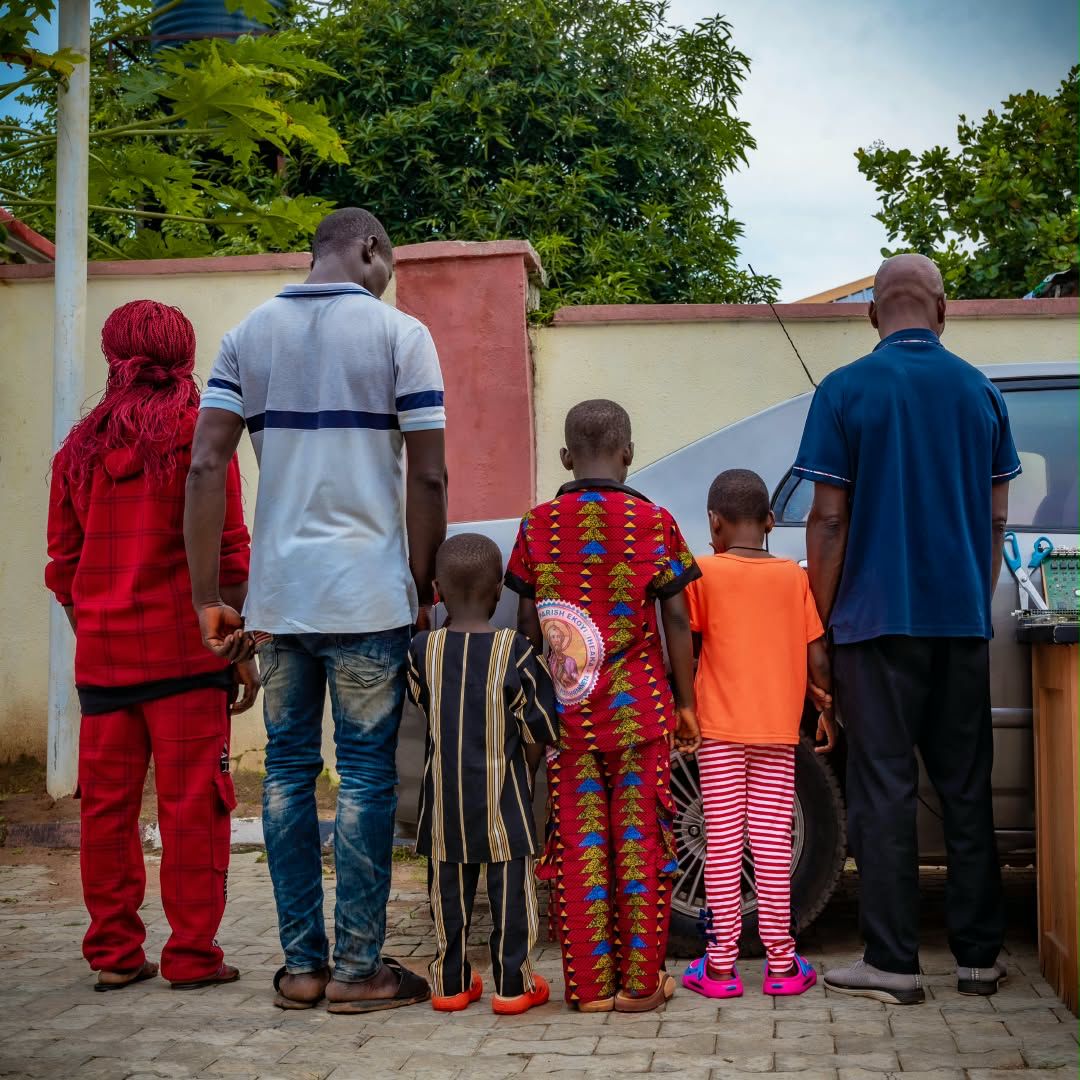
The Nigeria Security and Civil Defence Corps (NSCDC) has rescued 15 trafficked children, recovered three stolen service rifles and dismantled an inter-state syndicate involved in the vandalism and theft of telecommunications infrastructure across Delta and Kano States.
The breakthroughs were recorded by the Commandant General’s Special Intelligence Squad (CG’s SIS) in a series of intelligence-led operations targeting child trafficking, illegal arms diversion, internal corruption and critical infrastructure vandalism.
The National Public Relations Officer of the Corps, Assistant Commandant of Corps Babawale Afolabi, disclosed this in a statement issued on Friday.
He said the operations were conducted in line with the zero-tolerance policy of the Commandant General, Prof. Ahmed Audi, towards crime, corruption and the destruction of national assets.
On child trafficking, Afolabi said the squad commenced investigation following a petition over missing children in Kokona Local Government Area of Nasarawa State.
Investigations, he said, uncovered a syndicate allegedly led by one Anderson Archibong, who posed as an official of an organisation operating a purported “Back to School Project” under the National Council of Child Rights Advocate.
According to him, Archibong allegedly exploited low-income parents before trafficking their children to buyers across the country.
He said 16 children were fraudulently taken in January 2026 and allegedly sold for ₦2 million each.
“Through intelligence-led operations across transit routes, 15 of the 16 children were successfully rescued in Anambra, Imo, Enugu and other eastern transit corridors,” he said.
Afolabi added that three alleged buyers—Joy Julius, Ngozi and Eze Lazarus—were arrested and had confessed to their involvement, while efforts were ongoing to locate the remaining child.
In a separate investigation into illegal arms diversion, CG’s SIS operatives traced a missing AK-47 rifle to a serving NSCDC officer attached to the CG’s Crack Squad.
The officer, CAII Igah Ameh James, was allegedly found to have stolen an assigned AK-47 rifle, with breach number 02028, abandoned his duty post and transported the weapon to Otukpo, Benue State.
Investigators established that James allegedly sold the rifle to a middleman, Abakpa Simon Anthony, for ₦700,000, while Anthony subsequently sold it to an alleged illicit arms buyer, Sunday Akor, also known as IBB, for ₦800,000.
The rifle and two empty magazines were recovered following the arrest of the suspects.
The Corps also uncovered another arms diversion case at its Adamawa State Command following an armoury inventory audit.
Afolabi said the investigation led to the arrest of ASCI Peter Ardo, a former Head of Armoury, and CCA Boniface Lawyer.
He said investigations revealed that between 2018 and 2024, Ardo allegedly removed two unserviceable G3 service rifles, with breach numbers 10S838 and 69112944, from the armoury and sold them to Lawyer for ₦210,000 and ₦220,000 respectively.
The weapons were subsequently resold to a civilian, while Ardo allegedly altered physical inventory registers to conceal the removals and evade detection during routine checks.
Both officers, he said, were in custody after allegedly making full confessions.
Meanwhile, the CG’s SIS has also dismantled a network allegedly responsible for vandalising telecommunications infrastructure in Delta and Kano States.
Afolabi said operatives arrested Henry Dennis while allegedly vandalising an IHS telecommunications tower site in Uvwie Local Government Area of Delta State, where 12 vandalised telecom panels were recovered.
Further investigation reportedly exposed a wider network allegedly involving a scrap-market owner and financier, Yusuf Musa, who is accused of financing the theft operations and facilitating the resale of stolen telecommunications components.
The Corps said financial tracing uncovered suspicious transactions conducted through digital payment platforms, while efforts were underway to obtain search and arrest warrants for other members of the syndicate who remained at large.
The Commandant General commended the CG’s SIS for what he described as its tactical coordination and operational efficiency.
The NSCDC said internal administrative and disciplinary proceedings against implicated personnel had been concluded, while its Directorate of Legal Services had been directed to commence prosecution of the arrested suspects before courts of competent jurisdiction.
The Corps reaffirmed its commitment to protecting vulnerable citizens, safeguarding critical national infrastructure and maintaining integrity and accountability within its ranks.
NSCDC Rescues 15 Trafficked Children, Recovers Stolen Rifles, Busts Telecom Vandalism Syndicate
Troops rescue two abducted victims, recover terrorists’ motorcycles in Katsina
By Zagazola Makama
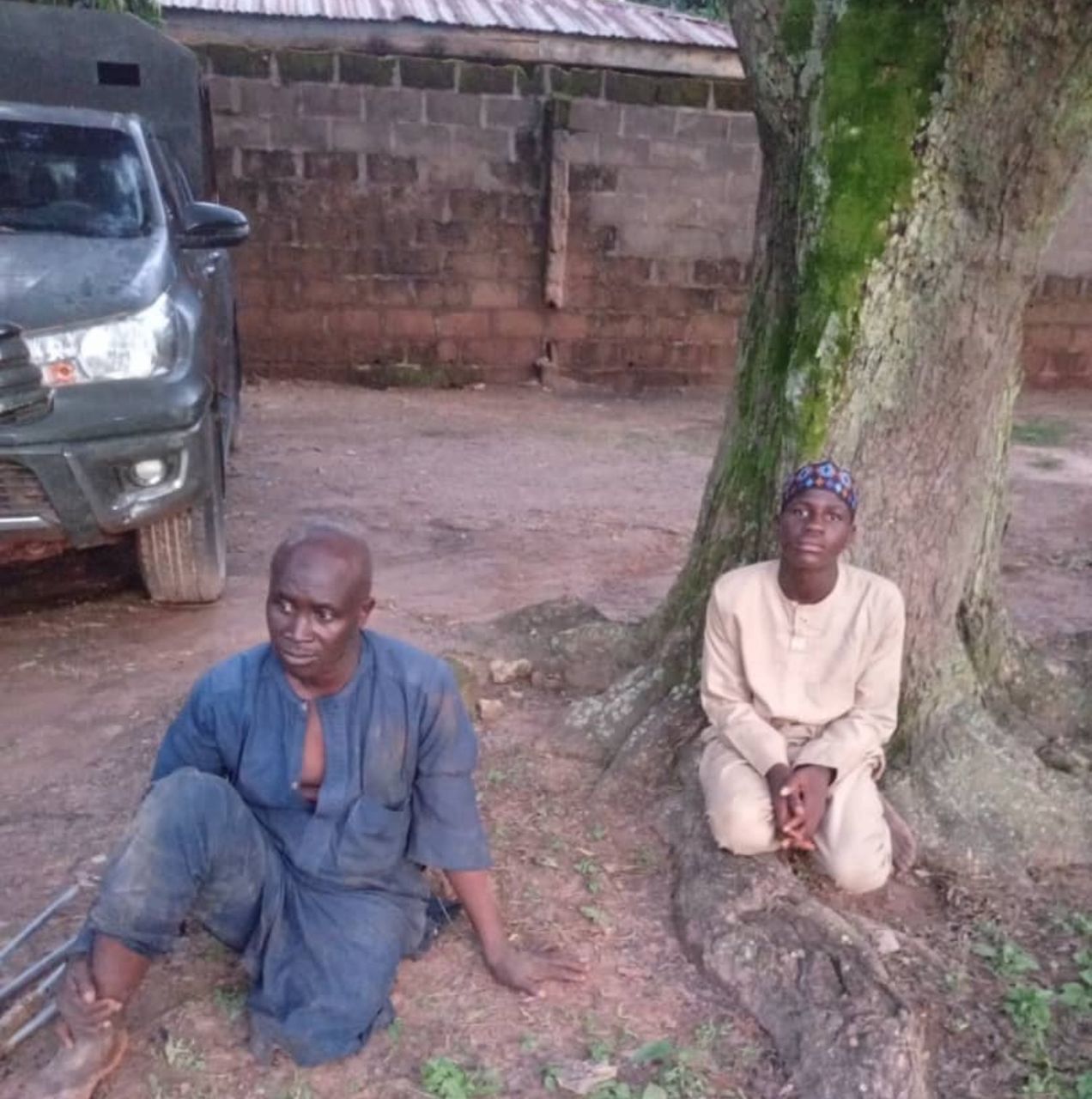
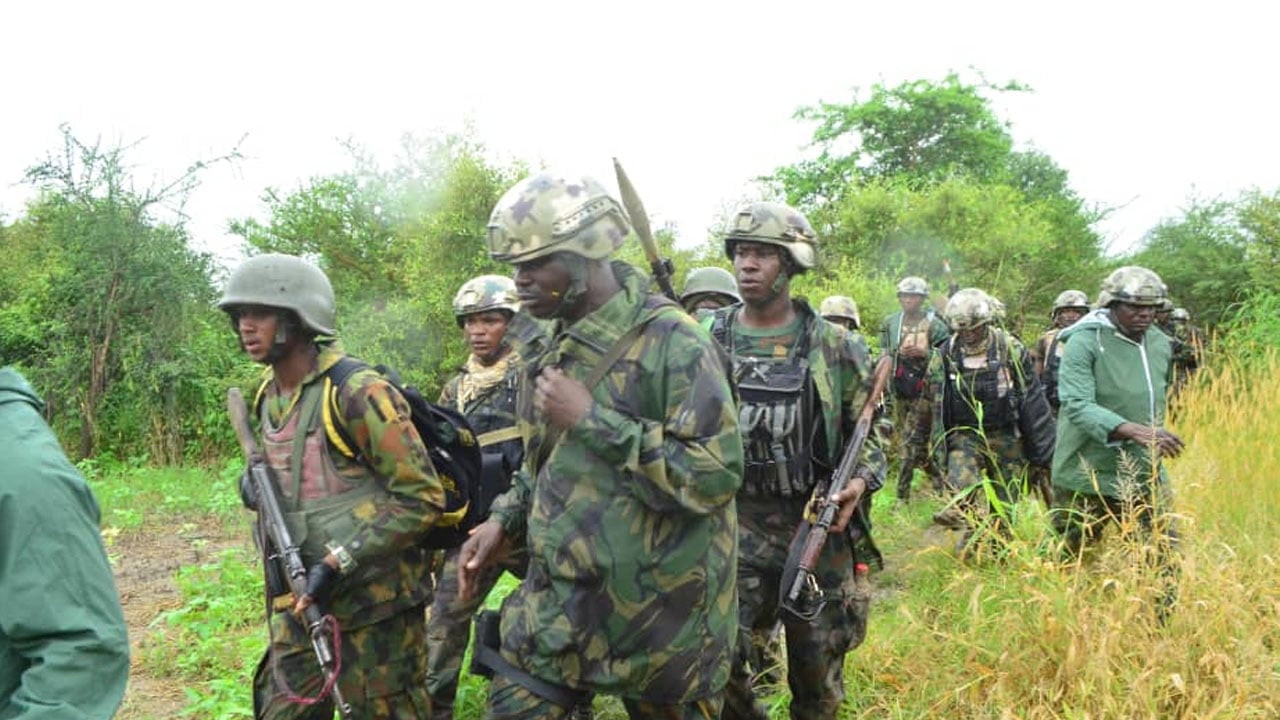
Troops of Sector 2, Operation FANSAN YAMMA, have rescued two abducted victims and recovered two motorcycles belonging to terrorists during a counter-terrorism operation in Sabuwa Local Government Area of Katsina State.
The troops, deployed for counter-terrorism and anti-banditry operations in the state, encountered an armed terrorist group while conducting routine security operations in the area.
The troops engaged the terrorists with superior firepower, forcing them to flee in disarray into the surrounding terrain.
During a subsequent search and clearance operation along the terrorists’ escape route, the troops rescued two male victims who had earlier been abducted along the Dandume–Damari axis.
The troops also recovered two motorcycles reportedly used by the terrorists to conduct their criminal activities.
The rescued victims are currently receiving necessary care and assessment before being reunited with their families.
Troops have maintained a heightened state of vigilance in the general area to safeguard local communities and prevent further attacks and criminal activities along critical transit corridors.
The operation forms part of the ongoing efforts by Operation FANSAN YAMMA to disrupt terrorist and bandit networks and restore lasting peace across the North-West.
Troops rescue two abducted victims, recover terrorists’ motorcycles in Katsina
Troops rescue 23 abducted civilians, foil kidnapping attempt in Zamfara
By Zagazola Makama
Troops of Operation FANSAN YAMMA have rescued 23 abducted civilians and foiled a separate kidnapping attempt during operations in Zamfara State.
The operations were conducted as part of ongoing counter-terrorism and anti-banditry efforts to disrupt criminal groups operating across the state.
In Anka Local Government Area, troops on combat patrol around the outskirts of Wuya Town encountered a group of terrorists and successfully secured the release of 23 kidnapped civilians.
The victims comprised three adult males and 20 females. Preliminary debriefing revealed that they were abducted from Gummi Local Government Area and had been held in captivity for about three weeks.
The rescued victims are currently receiving medical attention and other necessary support before being reunited with their families.
In a separate operation in Bungudu Local Government Area, troops responded to intelligence indicating that armed bandits had infiltrated Dankurmi Town with the intention of abducting residents.
The troops swiftly mobilised to the area and engaged the attackers in a heavy firefight.
The superior firepower of the troops forced the bandits to retreat without succeeding in abducting any civilian.
According to security sources, traces of blood were subsequently discovered along the terrorists’ withdrawal route, indicating that some of the attackers may have sustained gunshot wounds during the encounter.
Troops have maintained a strong presence in the area and are continuing operations to track the fleeing terrorists.
The latest successes further demonstrate the sustained efforts of Operation FANSAN YAMMA to rescue abducted citizens, disrupt bandit networks and restore security across Zamfara State.
Troops rescue 23 abducted civilians, foil kidnapping attempt in Zamfara

APC received 5000 decampees in Yobe

Borno APC candidate, Gubio attacked by ISWAP as security forces repel deadly ambush

NSCDC Rescues 15 Trafficked Children, Recovers Stolen Rifles, Busts Telecom Vandalism Syndicate

Roger Federer’s Shock as DNA Results Reveal Myla and Charlene Are Not His Biological Children

THE PLIGHT OF FARIDA

FAILED COUP IN BURKINA FASO: HOW TRAORÉ NARROWLY ESCAPED ASSASSINATION PLOT AMID FOREIGN INTERFERENCE CLAIMS
-
 News2 years ago
Roger Federer’s Shock as DNA Results Reveal Myla and Charlene Are Not His Biological Children
-
Opinions5 years ago
THE PLIGHT OF FARIDA
-
 News1 year ago
FAILED COUP IN BURKINA FASO: HOW TRAORÉ NARROWLY ESCAPED ASSASSINATION PLOT AMID FOREIGN INTERFERENCE CLAIMS
-

 News2 years ago
EYN: Rev. Billi, Distortion of History, and The Living Tamarind Tree
-
 Opinions5 years ago
POLICE CHARGE ROOMS, A MINTING PRESS
-

 ACADEMICS3 years ago
A History of Biu” (2015) and The Lingering Bura-Pabir Question (1)
-

 Columns3 years ago
Army University Biu: There is certain interest, but certainly not from Borno.
-

 Politics1 year ago
2027: Why Hon. Midala Balami Must Go, as Youths in Hawul and Asikira/Uba Federal Constituency Reject ₦500,000 as Sallah Gift
