
News
ECOWAS Calls on Islamic Scholars to Bring Up Workable Arrangements to Tackle Extremism, Terrorism in West Africa

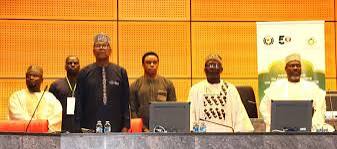
ECOWAS Calls on Islamic Scholars to Bring Up Workable Arrangements to Tackle Extremism, Terrorism in West Africa
By: Michael Mike
The Economic Community of West African States (ECOWAS) has called on Islamic scholars to devise a workable arrangement to tackle extremism and fight back terrorism in the West African subregion.
Speaking at the West African Islamic Conference on Security & Governance, on Thursday in Abuja, the President of ECOWAS Commission, Dr. Omar Alieu Touray said terrorism and violent extremism are threats to the sub-region’s peace and development.
Touray promised to support the modernisation of the Quranic educational system in the subregion, while praising Nigeria’s President Bola Tinubu for his plan to return out of school children back to school..
He stressed the need to protect the schools, students and teachers, with the ultimate aim of ending the phenomena of street-begging, child abuse, and the vulnerability of the Quranic schools’ goers to radicalization and recruitment by extremism and terrorist groups.
Touray said: “This gathering is a demonstration of our continued commitment to the pursuit of peace and security in West African. In the last decade, terrorism and violent extremism have exerted a huge toll on the socio-economic well-being of our people. West Africa and Israel have become the front lines of the global fight against terrorism. The 2025 Global Terrorism Index report reveals a significant shift in global terrorism patterns, with Africa emerging as the new hub of terrorism. The Sahel region, in particular, has seen a dramatic increase in terrorism. For us now, we have emphasized the application of non-kinetic and kinetic strategies in tackling the menace.
“Our Regional Action Plan Against Terrorism outlines a series of initiatives in this regard. This plan provides roles for multiple actors from both state and non-state institutions.
“Therefore, this conference, which examines the role of Islamic organisations in countering terrorism and violent extremism, fits squarely with the regional non-kinetic initiatives.
“Terrorism and violent extremism are a threat to our communities. We must therefore work both to prevent extremism and tackle terrorism, wherever it occurs. In a region with a youthful population, it is important to pay attention to the situation of these youths and support them to channel their energies to positive activities.
“The situation of the traditional Quranic schools, known as the Tsangaya in Nigeria, Makaranta in Ghana, the Daraa in the Semigandian area, is the focus of our Preventive Action Against Radicalization and Violent Extremism in this country.
“The condition of these youths in our region is one that demands our urgent attention.
“We need to improve and modernize the school system and convert them into conducive and formalized centers of learning and economic empowerment.
“These schools accommodate millions of young people in the region, but they are not given the attention they require. The situation makes both the teachers and their students vulnerable to recruitment by criminal organizations, including terrorist groups.We cannot therefore ignore these important institutions and democracies.
“We are therefore pleased to see that the custodians of these traditional Quranic schools have come forward to take the lead in their modernization across West Africa and the Sahara. ECOWAS invites all stakeholders here and elsewhere to support this initiative led by the Jamiat Ansari Fideli at Tijaniyya.In supporting the initiatives of our religious organizations, we are also complementing the efforts of our national government and regional organizations.”
He commended President Bola Tinubu who has established the National Commission for Alimajiri and Arab School Children Education to support the provision of quality religious and non-religious education. He also commended Ghana and Senegal for their various policies to address situations.
“The goal is to better supervise and calibrate children, eradicate forced begging, and support educational structures that need to be established,” he added.
Besides the government initiatives, there are others led by foundations and non-governmental organisations.
He also assured that “Together with the UN and other stakeholders, we will, inshallah, work with governments and other stakeholders to build on the outcome of this conference by implementing joint projects for the modernization of the traditional Quranic schools.Protecting these schools, their students and teachers, will end the phenomena of street begging, child abuse, and the vulnerability of the Quranic school goers to radicalization and recruitment by extremism and terrorist groups.
“Excellencies, let us spare no effort to secure West Africa and the Sahel from insecurity and reverse the negative indices for a stable, peaceful, united, and prosperous Africa…”
The Emir of Kano, Sanusi Mohammed II charged scholars to help create peace and harmony within the sub-region.
He said: “Let us strive to create a region where every individual can live in peace, security, and dignity. Let us work together to build a brighter future for our children and our community.
“In closing, I would like to say that this conference is not the end, but the beginning. It is a step towards a new era of cooperation and collaboration in West Africa and the South. Let us remain committed to our shared goals, and work together to create a region of peace, stability, and prosperity for all.”
Some of the resolutions of the conference include: Participants advocating for reforms that blend Islamic and formal education, improved funding, teacher training, and policy inclusion to restore the system’s relevance; calling for collaborative efforts among government, religious leaders, and stakeholders to modernize and sustain the Almajiri system.
They agreed on the need for collaboration between government, scholars, and security agencies to strengthen counter-terrorism education, promote interfaith dialogue, and enhance social inclusion, adding that empowering Islamic leadership is essential for sustainable peace, national security, and community resilience against terrorism.
They called for structured peace education, collaboration with government, civil society and capacity building for Imams in mediation and dialogue; and advocate that Islamic organisations remain critical partners in fostering social harmony, preventing violence, and sustaining peace across diverse communities.
They call for multi-sectoral collaboration among government, religious institutions, and civil society to promote youth empowerment, civic engagement and social justice; and insisted that radicalisation requires holistic, sustainable interventions that tackle inequality and restore trust between citizens and the state.
They called on government to support, community involvement and policy inclusion to restore dignity and purpose to Almajiri education; affirming that education reform is key to empowerment, productivity and national development.
They called for strengthening grassroots structures, including youth groups, women’s associations, and religious councils, to lead awareness, dialogue, and early-warning efforts, also calling for comprehensive reforms integrating Islamic and Western curricula, skill acquisition, and digital literacy to prepare learners for modern opportunities.
They said there is need for government and development partners to support community-based peacebuilding with funding, training, and policy inclusion, and the need for empowering communities as active agents of security fosters resilience, social cohesion, and long-term stability in the fight against violent extremism.
They agreed that terrorists are indifference to what faith anybody belongs and as a result both Muslims and Christians everywhere, particularly Nigeria, are victims of their violent inclined approach.
They noted and appreciated the establishment of the commission on the Almajiri traditional system and the recognision of the teachers therein as such; and called on Muslims and Christians to continue to genuinely cooperate and understand themselves in order to frustrate the attempts of the successes of negative interests and pitching them against each other.
ECOWAS Calls on Islamic Scholars to Bring Up Workable Arrangements to Tackle Extremism, Terrorism in West Africa


News
NSCDC Rescues 15 Trafficked Children, Recovers Stolen Rifles, Busts Telecom Vandalism Syndicate
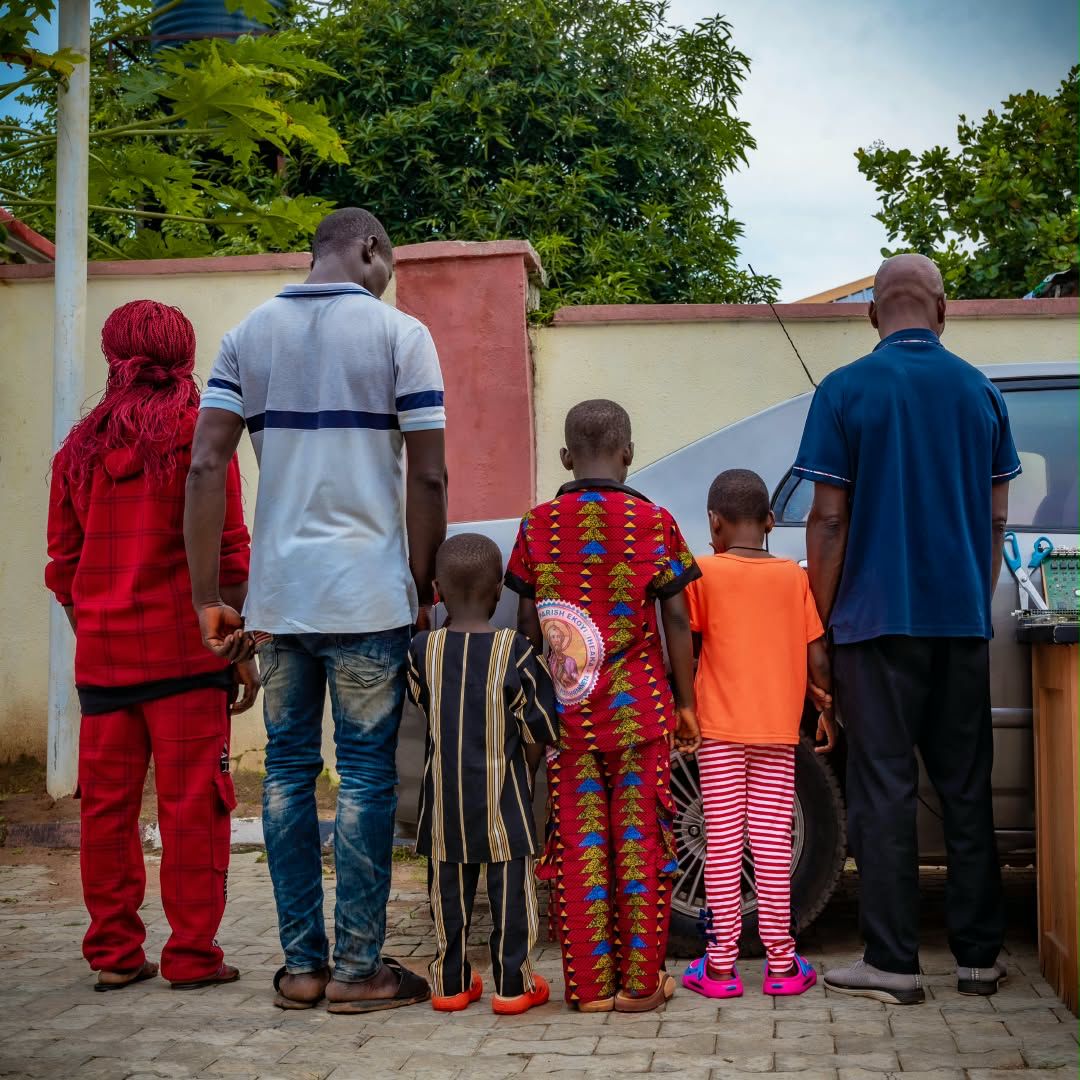
NSCDC Rescues 15 Trafficked Children, Recovers Stolen Rifles, Busts Telecom Vandalism Syndicate
By: Michael Mike
The Nigeria Security and Civil Defence Corps (NSCDC) has rescued 15 trafficked children, recovered three stolen service rifles and dismantled an inter-state syndicate involved in the vandalism and theft of telecommunications infrastructure across Delta and Kano States.
The breakthroughs were recorded by the Commandant General’s Special Intelligence Squad (CG’s SIS) in a series of intelligence-led operations targeting child trafficking, illegal arms diversion, internal corruption and critical infrastructure vandalism.
The National Public Relations Officer of the Corps, Assistant Commandant of Corps Babawale Afolabi, disclosed this in a statement issued on Friday.
He said the operations were conducted in line with the zero-tolerance policy of the Commandant General, Prof. Ahmed Audi, towards crime, corruption and the destruction of national assets.
On child trafficking, Afolabi said the squad commenced investigation following a petition over missing children in Kokona Local Government Area of Nasarawa State.
Investigations, he said, uncovered a syndicate allegedly led by one Anderson Archibong, who posed as an official of an organisation operating a purported “Back to School Project” under the National Council of Child Rights Advocate.
According to him, Archibong allegedly exploited low-income parents before trafficking their children to buyers across the country.
He said 16 children were fraudulently taken in January 2026 and allegedly sold for ₦2 million each.
“Through intelligence-led operations across transit routes, 15 of the 16 children were successfully rescued in Anambra, Imo, Enugu and other eastern transit corridors,” he said.
Afolabi added that three alleged buyers—Joy Julius, Ngozi and Eze Lazarus—were arrested and had confessed to their involvement, while efforts were ongoing to locate the remaining child.
In a separate investigation into illegal arms diversion, CG’s SIS operatives traced a missing AK-47 rifle to a serving NSCDC officer attached to the CG’s Crack Squad.
The officer, CAII Igah Ameh James, was allegedly found to have stolen an assigned AK-47 rifle, with breach number 02028, abandoned his duty post and transported the weapon to Otukpo, Benue State.
Investigators established that James allegedly sold the rifle to a middleman, Abakpa Simon Anthony, for ₦700,000, while Anthony subsequently sold it to an alleged illicit arms buyer, Sunday Akor, also known as IBB, for ₦800,000.
The rifle and two empty magazines were recovered following the arrest of the suspects.
The Corps also uncovered another arms diversion case at its Adamawa State Command following an armoury inventory audit.
Afolabi said the investigation led to the arrest of ASCI Peter Ardo, a former Head of Armoury, and CCA Boniface Lawyer.
He said investigations revealed that between 2018 and 2024, Ardo allegedly removed two unserviceable G3 service rifles, with breach numbers 10S838 and 69112944, from the armoury and sold them to Lawyer for ₦210,000 and ₦220,000 respectively.
The weapons were subsequently resold to a civilian, while Ardo allegedly altered physical inventory registers to conceal the removals and evade detection during routine checks.
Both officers, he said, were in custody after allegedly making full confessions.
Meanwhile, the CG’s SIS has also dismantled a network allegedly responsible for vandalising telecommunications infrastructure in Delta and Kano States.
Afolabi said operatives arrested Henry Dennis while allegedly vandalising an IHS telecommunications tower site in Uvwie Local Government Area of Delta State, where 12 vandalised telecom panels were recovered.
Further investigation reportedly exposed a wider network allegedly involving a scrap-market owner and financier, Yusuf Musa, who is accused of financing the theft operations and facilitating the resale of stolen telecommunications components.
The Corps said financial tracing uncovered suspicious transactions conducted through digital payment platforms, while efforts were underway to obtain search and arrest warrants for other members of the syndicate who remained at large.
The Commandant General commended the CG’s SIS for what he described as its tactical coordination and operational efficiency.
The NSCDC said internal administrative and disciplinary proceedings against implicated personnel had been concluded, while its Directorate of Legal Services had been directed to commence prosecution of the arrested suspects before courts of competent jurisdiction.
The Corps reaffirmed its commitment to protecting vulnerable citizens, safeguarding critical national infrastructure and maintaining integrity and accountability within its ranks.
NSCDC Rescues 15 Trafficked Children, Recovers Stolen Rifles, Busts Telecom Vandalism Syndicate
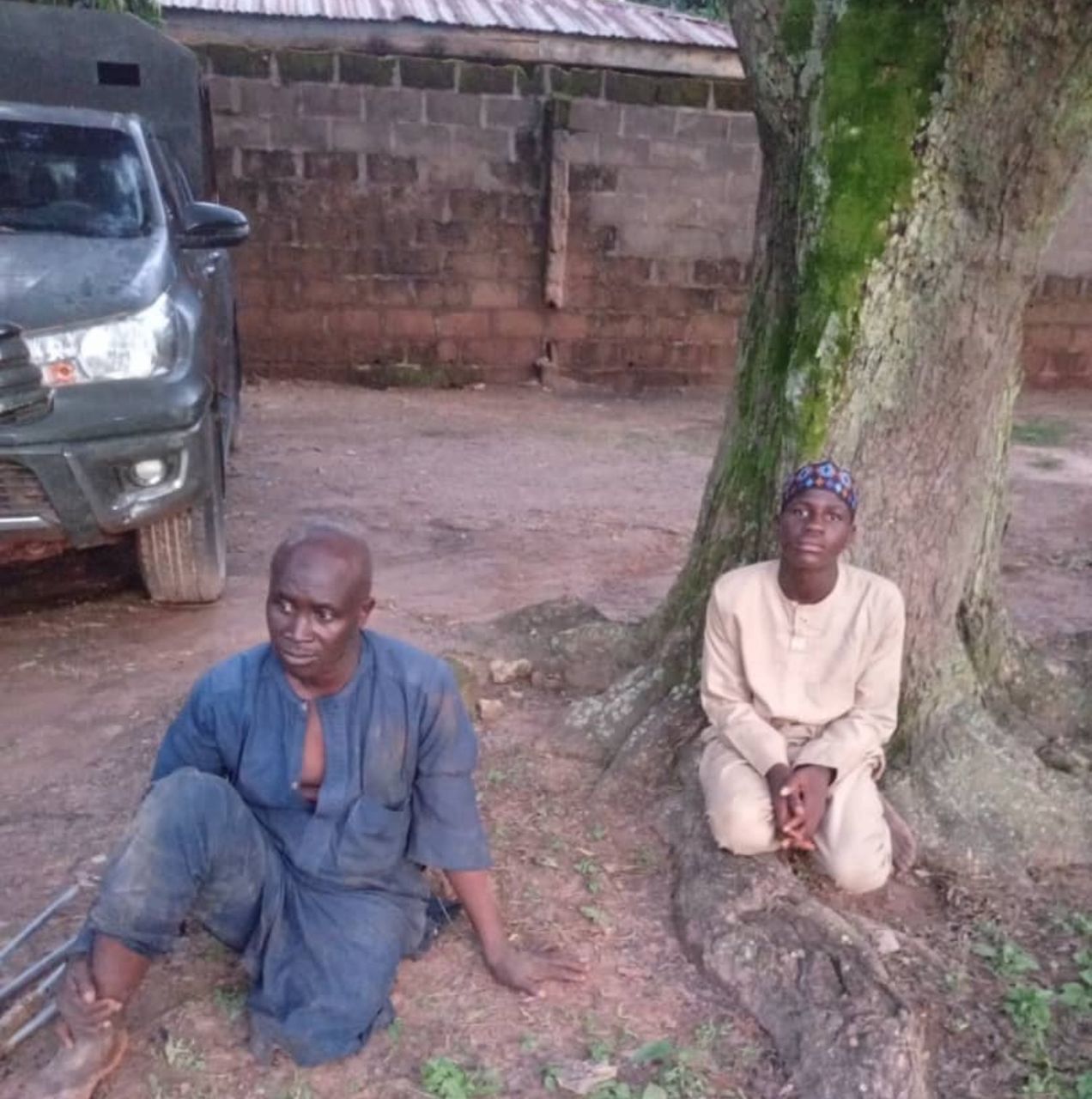
Troops rescue two abducted victims, recover terrorists’ motorcycles in Katsina
By Zagazola Makama
Troops of Sector 2, Operation FANSAN YAMMA, have rescued two abducted victims and recovered two motorcycles belonging to terrorists during a counter-terrorism operation in Sabuwa Local Government Area of Katsina State.
The troops, deployed for counter-terrorism and anti-banditry operations in the state, encountered an armed terrorist group while conducting routine security operations in the area.
The troops engaged the terrorists with superior firepower, forcing them to flee in disarray into the surrounding terrain.
During a subsequent search and clearance operation along the terrorists’ escape route, the troops rescued two male victims who had earlier been abducted along the Dandume–Damari axis.
The troops also recovered two motorcycles reportedly used by the terrorists to conduct their criminal activities.
The rescued victims are currently receiving necessary care and assessment before being reunited with their families.
Troops have maintained a heightened state of vigilance in the general area to safeguard local communities and prevent further attacks and criminal activities along critical transit corridors.
The operation forms part of the ongoing efforts by Operation FANSAN YAMMA to disrupt terrorist and bandit networks and restore lasting peace across the North-West.
Troops rescue two abducted victims, recover terrorists’ motorcycles in Katsina
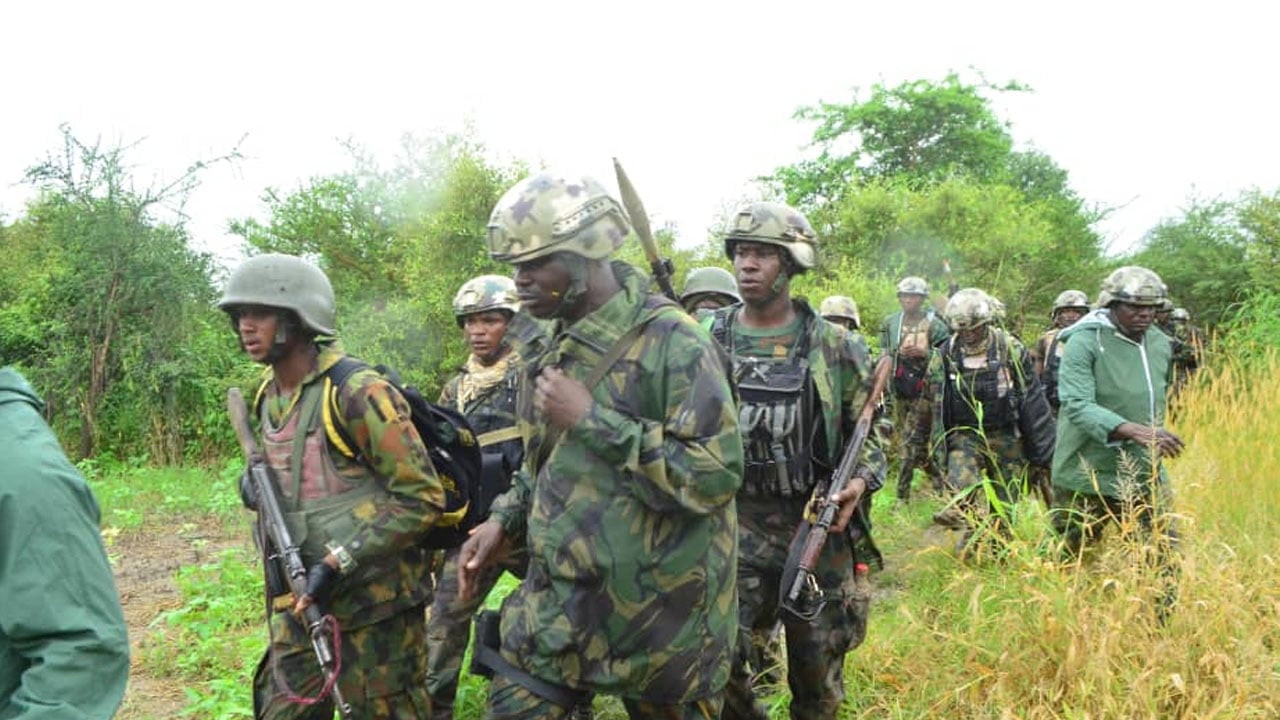
Troops rescue 23 abducted civilians, foil kidnapping attempt in Zamfara
By Zagazola Makama
Troops of Operation FANSAN YAMMA have rescued 23 abducted civilians and foiled a separate kidnapping attempt during operations in Zamfara State.
The operations were conducted as part of ongoing counter-terrorism and anti-banditry efforts to disrupt criminal groups operating across the state.
In Anka Local Government Area, troops on combat patrol around the outskirts of Wuya Town encountered a group of terrorists and successfully secured the release of 23 kidnapped civilians.
The victims comprised three adult males and 20 females. Preliminary debriefing revealed that they were abducted from Gummi Local Government Area and had been held in captivity for about three weeks.
The rescued victims are currently receiving medical attention and other necessary support before being reunited with their families.
In a separate operation in Bungudu Local Government Area, troops responded to intelligence indicating that armed bandits had infiltrated Dankurmi Town with the intention of abducting residents.
The troops swiftly mobilised to the area and engaged the attackers in a heavy firefight.
The superior firepower of the troops forced the bandits to retreat without succeeding in abducting any civilian.
According to security sources, traces of blood were subsequently discovered along the terrorists’ withdrawal route, indicating that some of the attackers may have sustained gunshot wounds during the encounter.
Troops have maintained a strong presence in the area and are continuing operations to track the fleeing terrorists.
The latest successes further demonstrate the sustained efforts of Operation FANSAN YAMMA to rescue abducted citizens, disrupt bandit networks and restore security across Zamfara State.
Troops rescue 23 abducted civilians, foil kidnapping attempt in Zamfara

APC received 5000 decampees in Yobe

Borno APC candidate, Gubio attacked by ISWAP as security forces repel deadly ambush

NSCDC Rescues 15 Trafficked Children, Recovers Stolen Rifles, Busts Telecom Vandalism Syndicate

Roger Federer’s Shock as DNA Results Reveal Myla and Charlene Are Not His Biological Children

THE PLIGHT OF FARIDA

FAILED COUP IN BURKINA FASO: HOW TRAORÉ NARROWLY ESCAPED ASSASSINATION PLOT AMID FOREIGN INTERFERENCE CLAIMS
-
 News2 years ago
Roger Federer’s Shock as DNA Results Reveal Myla and Charlene Are Not His Biological Children
-
Opinions5 years ago
THE PLIGHT OF FARIDA
-
 News1 year ago
FAILED COUP IN BURKINA FASO: HOW TRAORÉ NARROWLY ESCAPED ASSASSINATION PLOT AMID FOREIGN INTERFERENCE CLAIMS
-

 News2 years ago
EYN: Rev. Billi, Distortion of History, and The Living Tamarind Tree
-
 Opinions5 years ago
POLICE CHARGE ROOMS, A MINTING PRESS
-

 ACADEMICS3 years ago
A History of Biu” (2015) and The Lingering Bura-Pabir Question (1)
-

 Columns3 years ago
Army University Biu: There is certain interest, but certainly not from Borno.
-

 Politics1 year ago
2027: Why Hon. Midala Balami Must Go, as Youths in Hawul and Asikira/Uba Federal Constituency Reject ₦500,000 as Sallah Gift
