
Politics
APC Chairmanship: ‘Why we are mobilizing support for Senator Kashim Shettima’ – Nigerian Youths

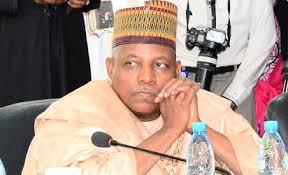
APC Chairmanship: ‘Why we are mobilizing support for Senator Kashim Shettima’ – Nigerian Youths
By: James Bwala, Maiduguri
Former governor of Borno state and Senator Representing Borno Central at the National Assembly, Senator Kashim Shettima may not have indicated interest in vying for the position of the APC National Chairmanship. But youths across party lines have joined the band wagon to mobilize support for the Senator while also making a clarion call for him to speak out. The youths who spoke to NEWSng said that they have neither read his lips or observed his body language to inform their call but that they have studied the political lines in the country where observation showed that the Borno strong man may be the right candidate for the position if he decided to answer the call to duty.
Also Read: Electricity Restored in Maiduguri, One year after Boko…
Ahmed Ahmed, a politician in Yobe state observed that, the situation in the country today has presented a phase that requires a man with vision to champion the cause of the ruling party –The APC. According to him, ” With respect to late Chinua Achibe with the title of his novel: ‘ Things Fall Apart.’ He said, indeed things have fallen apart in the country both politically and administratively. And that Nigerians are now looking at governor’s, who had left better legacies as politicians and administrators to lead political parties especially the ruling party.
According to him, “Looking at the background, Kashim Shettima appears to have possessed all the qualities. Without mincing words, I have personally observed that, most of the people in line have no qualifications to stair Nigeria out of the troubled waters as would Kashim Shettima if given the opportunity to lead APC in the coming months. I have joined thousands of supporters in making the clarion call. I also hope that he will yield as this is an opportunity to save the country from shipwreck.
Asked why he is joining hundreds of mobilizers to call on the former Borno state governor to join the race for the National Chairmanship of the ruling APC, Ahmed Ahmed said, “First, there is nothing to lose for Kashim Shettima. He is a serving Senator and one of the key Senators Nigeria is blessed with. Secondly, his activities as the people’s senator has differentiated him looking at the roles he took and his presentations at the floor of the senate, which score him for any job he wishes to take now or in the future. On a third count, I would like to observe that, putting all those seeking to lead the APC on a balanced scale, you would agree with me that Kashim Shettima has left a legacy, which is working in Borno state. I have been to Maiduguri several times as I have been to many states. I know where Kashim Shettima left as a governor and where Zulum continues. You are also a testimony to those facts. He said.
Also speaking to NEWSng on the leadership of the ruling APC, a member of the opposition party, PDP in Borno state, Alhaji Tijjani Umar said, his views are no different from thousands of people calling on former Borno state governor to make appearance like others seeking to help this country out of the woods.
“Although I am from the opposition, I know what is right for this country at this moment. Senator Kashim Shettima shares a vision for a better Nigeria. The APC administration has failed this country. In the north particularly, we have been caged by the activities of bandits, Boko Haram and kidnappers. This problem needs a holistic approach and at this time we should not be looking at party differences. The PDP have chosen their own Chairman, every Nigerian is looking at what APC may produce. This will determine where the country may be heading to in 2023. I hope that they make the right choice. They should not parade candidates who are not sellable to the Nigerian people.” He said
Also Read: Bandits leader, Bello Turji injured in military raid in…
Speaking on the matter arising, Jinjiri Ibrahim, a stakeholder in the APC Kano told NEWSng that, in as much as he would want APC to continue in 2023. The choice of leadership may make or mar the party. “I have read a lot about all the contending figures or personalities and I know them and know their capacity. A few days ago, I was approached by a certain group clamouring for better leadership in the APC. I told them only when APC has a personality with a vision, the party may suffer or put millions of Nigerians further into want and perdition. I am a member of the APC; we are not deaf to hearing the positions of millions of our people from within the party. I can give you an example of what is happening with the party here in Kano. We now have two factions although I will not tell you where I belong but of course you know that this is about leadership. I mean the right leadership. Kano should be a case study for APC at the National level.
“Like I said, I know all of them that their names have been mentioned. Not all of them have made a move yet. Those who indeed have made a move are few at this time. Senator Kashim Shettima is a man of honour. I have respect for him and I know that like other two or three Nigerians are calling, he makes a list of better candidates we are looking at this time of our history.” He said.
Also Read: Bandits kill 20 in Kaduna
Adamu Garba, a politician in Abuja said, “Talking about courageous leadership, I will vote for Kashim Shettima. Courage is not about bulldozing your way into a position of leadership. Courage is about your level of thinking and your capacity to build long and lasting relationships. I have no doubt about this about Kashim Shettima, he could be the answer to so many problems in the APC. I think President Muhammadu Buhari should begin to look at legacies he is going to leave behind. The right man for the job should be sought out.”
According to Garba, APC should enforce a debate among those seeking to occupy the position of leadership and draw lines that will hold them accountable. “I know for a fact that some of the contending personalities have nothing to offer for the party, but I won’t mention names. However, a keen observer should be able to make good judgments about those who have taken a step and those who may be making consultations. Fact checks should be the direction for the party.”
While speaking to a group of young Nigerians ready to come alive on the issues of leadership in the ruling party, the Yola base group at a meeting in Dugeri calls for support for the former Borno state governor, Kashim Shettima. The group which was led by Modu Ajiya, a citizen of Borno state and a Yola based businessman and politician said they are going to mobilize Nigerians to ensure a credible personality occupy the position of the National Championship of the All Progressive Congress, APC and to lead the party to victory in 2023.
Modu said, “We have come a long way and our campaign for a better Nigeria is gaining ground. Most of us are drawn from the APC youths wing both at state and National levels. We also have strong support from youths in the opposition because we have one target, which is national interest. Our calls are for our leaders in the APC National to see reasons for taking this country out of the troubled waters and to give the youths a platform to fulfill their dreams and aspirations. We see among the candidates people with the same characteristics of wanting to occupy a position without having a blueprint of what they intend to achieve for the greater majority. This has informed our call for the former Borno state governor, Kashim Shettima. This is our clarion call and we are going to mobilize the youths in APC and Nigeria to have a say about the future of this country.”
APC Chairmanship: ‘Why we are mobilizing support for Senator Kashim Shettima’ – Nigerian Youths



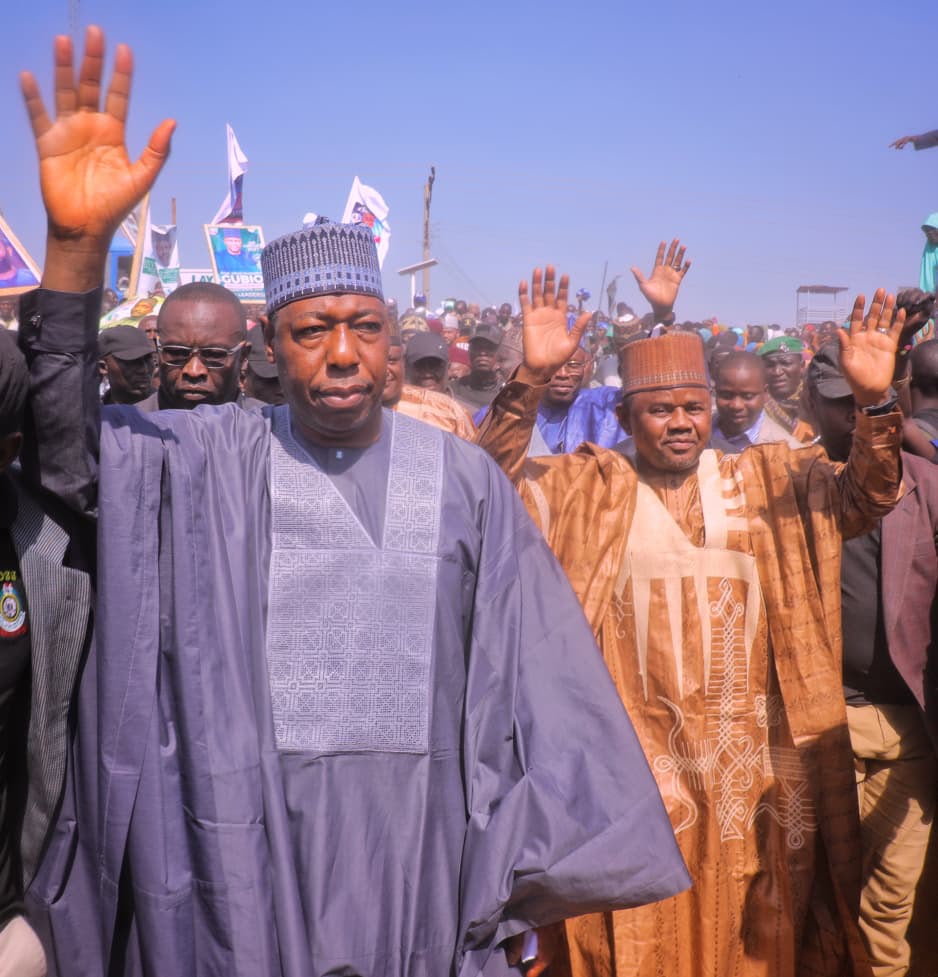
Campaign Train: Zulum Storms Mafa, Dikwa, Gamboru Ngala to Rousing Reception
By: Our Reporter
The All Progressives Congress (APC) in Borno State has stepped up its campaign across the state, after the successful presidential campaign rally in Maiduguri.
Borno State Governor, Professor Babagana Umara Zulum, led the campaign train to his home local government area, Mafa, and on to Dikwa and Ngala, where large crowds of party supporters turned out to give him a rousing welcome.
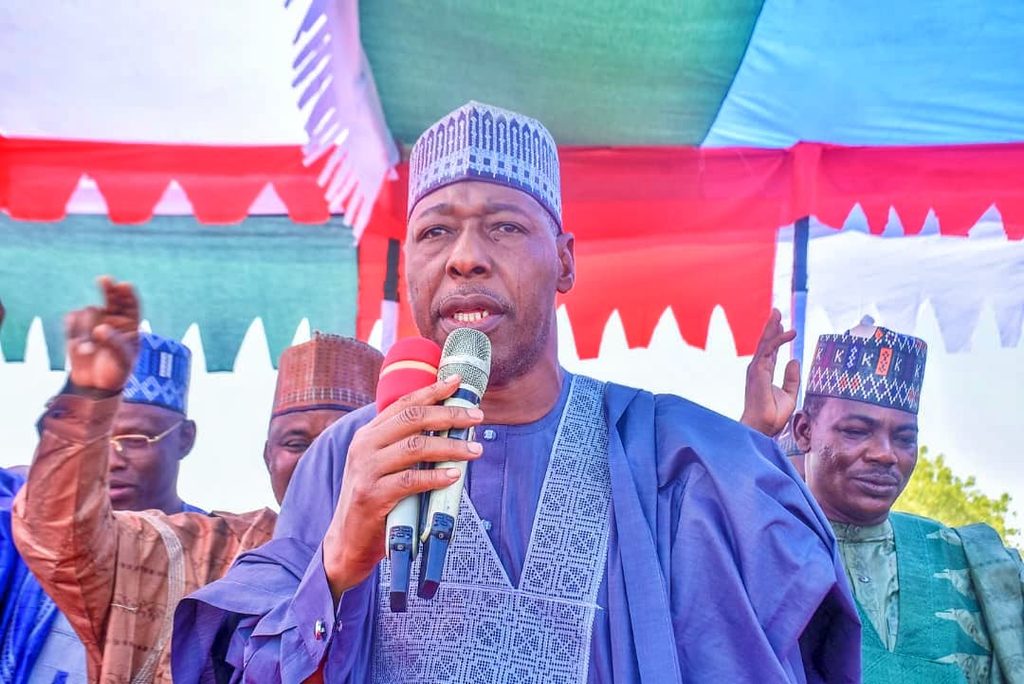
Party leaders said the turnout across the three local government areas showed that the APC is becoming more popular in the state.
Speaking to a cheering crowd in Mafa, Governor Zulum thanked residents for their solidarity and support.
He urged them to turn that support into votes for the APC and its candidates. He called on voters to come out in large numbers on January 16 and February 6, 2027.
The APC governorship candidate, Engr. Mustapha Gubio, said he had come to Mafa to thank the people for their support rather than to campaign.
He promised to build on the achievements of the Zulum administration and to deliver more dividends of democracy to the people.
The Senator representing Borno Central, Kaka Shehu Lawan, and the APC Deputy National Chairman (North), Hon. Ali Bukar Dalori, also urged the electorate to vote for the party’s candidates from the President to state assembly.
Similar rallies were also held in Dikwa and Gamboru-Ngala, where large crowds of supporters came out to receive the governor and his entourage.

Addressing party enthusists and supporters, Governor Zulum promised to liase with the federal government to fast track the rehabilitation of the Mafa–Dikwa–Gamboru-Ngala road.

The rally was attended by the APC deputy governorship candidate, Hon. Ali Abdullahi Isa; member representing Maiduguri Metropolitan in the House of Representatives, Hon. Abdulkadir Rahis; member representing Marte/Monguno/Nganzai, Hon. Bukar Talba; House of Representatives candidate for Dikwa/Mafa/Konduga, Dr. Kaumi Umara Zulum; House of Representatives candidate for Bama/Ngala/Kala-Balge, Hon. Mustapha Abdullahi (Babani); APC State Chairman, party executives and other party leaders.
Campaign Train: Zulum Storms Mafa, Dikwa, Gamboru Ngala to Rousing Reception
Politics
Beyond VP Shettima: Atiku’s Real Test Is Offering Nigerians a Credible Alternative for 2027
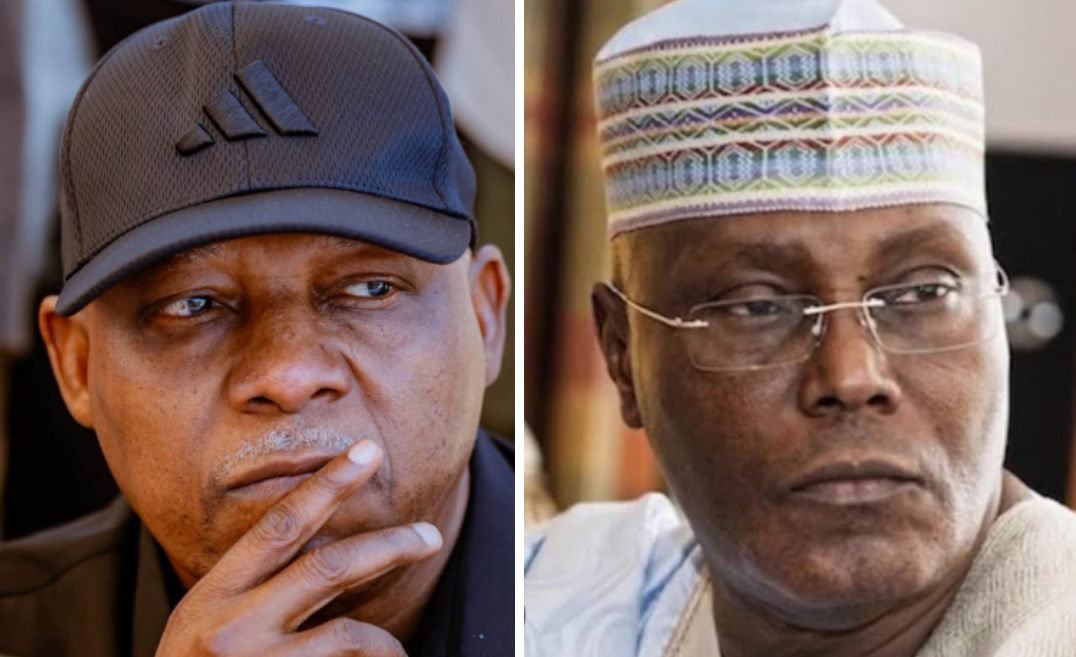
Beyond VP Shettima: Atiku’s Real Test Is Offering Nigerians a Credible Alternative for 2027
By: Dr. James Bwala
The political atmosphere in Nigeria is often shaped by sharp exchanges, personal attacks, and dramatic claims about who wields the greatest influence in government. This tendency was recently reflected in a story bearing the caption “2027: Atiku Lambasts VP Shettima: ‘Even Tinubu’s Wife, Son, Command More Influence Than You.’” The statement is provocative, but it also raises an important question: should political leadership be measured by the volume of one’s influence, the number of people surrounding one in the Presidential Villa, or the ability to serve the nation responsibly?
Atiku Abubakar, as a former vice president and a prominent opposition figure, has every right to criticize the administration of President Bola Ahmed Tinubu. In a democracy, opposition voices are necessary. They help hold government accountable, expose weaknesses, and offer citizens alternative perspectives. However, criticism becomes less valuable when it is reduced to personal attacks, speculation about influence, or attempts to diminish the constitutional role of another public officer. Atiku should understand that leadership is not measured by how loudly one criticizes others or by the level of personal influence one commands. It is measured by responsibility, competence, service, integrity, and the ability to present credible solutions to national problems.
Vice President Kashim Shettima occupies a constitutional office created and recognized by the Nigerian Constitution. He is not in the Presidential Villa merely to compete for influence with the President’s family, political allies, or other powerful individuals around government. His position is defined by law, public responsibility, and the duties assigned to him by the president within the constitutional framework. Whether or not one agrees with the policies of the Tinubu administration, the office of the vice president deserves respect. Its significance should not be reduced to informal calculations about who has the president’s ear or who commands more influence behind the scenes.
Atiku, having served as vice president between 1999 and 2007, ought to understand the nature of the office better than most politicians. He knows that the vice president does not operate as a rival president or as an independent center of executive authority. The vice president works within a political and constitutional arrangement in which the president remains the head of the executive branch. The effectiveness of the vice president, therefore, cannot always be judged by public confrontation, dramatic announcements, or visible competition with the president. In many circumstances, loyalty, consultation, coordination, and quiet policy work are more valuable than public displays of power.
Vice President Shettima’s calm disposition and loyalty to the administration should not automatically be interpreted as weakness or irrelevance. In public life, restraint is often mistaken for a lack of courage, while loudness is mistaken for strength. Yet a leader who refuses to engage in every political quarrel may be demonstrating discipline rather than incompetence. Shettima has generally presented himself as a supportive partner to President Tinubu. He has defended the administration, represented Nigeria at important national and international events, and participated in discussions concerning economic development, investment, agriculture, security, and social welfare. Whether his performance is considered adequate is open to public debate, but it is unfair to suggest that constitutional relevance depends on constant public confrontation.
Leadership is not a contest to determine who commands the most informal influence. In government, influence has meaning only when it is used to produce results. A person may have access to powerful individuals and still fail to improve the lives of ordinary citizens. Another person may operate quietly and yet contribute significantly to policy development, institutional stability, and national progress. The real test of public office is not how often an officeholder appears in political headlines but whether citizens benefit from his or her decisions.
This is why Atiku’s political interventions should go beyond attacks on Shettima. Nigerians are facing serious and urgent challenges: rising living costs, unemployment, insecurity, weak public institutions, poor infrastructure, educational decline, inadequate healthcare, and a fragile economy. Citizens want to know how political leaders intend to address these problems. They want clear answers about job creation, energy supply, food security, industrial development, public-sector reform, and the protection of vulnerable households. They need proposals that can be examined, debated, and implemented. Personal insults do not provide these answers.
If Atiku intends to contest the presidency again in 2027, his responsibility is to present a comprehensive and convincing program for national renewal. He should explain how his administration would improve the economy, strengthen democratic institutions, fight corruption, reform the security sector, and create opportunities for young Nigerians. He should show how his policies would differ from those of the present government and why Nigerians should trust him with power. A serious presidential aspirant must offer more than criticism; he must offer direction.
The electorate should not be expected to vote for political personalities merely because they are experienced, famous, or capable of attacking the government. Nigerians require leaders with practical plans, credible teams, and a demonstrated commitment to public service. The country cannot afford to return to an era in which politicians make broad promises during campaigns and later govern without a clear strategy. Political parties and presidential candidates must be judged by the quality of their ideas, the realism of their proposals, and their willingness to be held accountable.
Atiku’s political record and experience give him a strong platform from which to make meaningful contributions to national debate. He has occupied one of the highest offices in the land and has participated in Nigeria’s political and economic development for decades. He therefore has the capacity to speak authoritatively about governance. However, experience alone does not guarantee effectiveness. Former officeholders must be prepared to learn from the past, acknowledge shortcomings, and demonstrate that they possess fresh ideas for present challenges. Nigeria of today is different from Nigeria of twenty years ago. The population is larger, the economy is more complex, technology has transformed public expectations, and young people are demanding greater transparency and opportunity.
For this reason, Atiku should avoid relying on old political formulas or presenting himself simply as an alternative to whoever occupies the presidency. Nigerians need to know what he stands for beyond opposition to Tinubu. What is his economic philosophy? How would he manage public resources? Would he continue, reverse, or modify existing reforms? How would he protect poor Nigerians from the effects of economic adjustment? What would he do to ensure that public enterprises serve the national interest? These questions deserve detailed answers.
The reference to political “marabouts” and the fear of leaders who may perform “abracadabra” with government organizations reflects a genuine concern among Nigerians. Public institutions and state-owned enterprises must not be treated as personal property or political rewards. Their reform, privatization, commercialization, or restructuring should be based on transparent processes, economic evidence, and the public interest. Nigerians do not need magical promises or mysterious solutions. They need competent management, accountable institutions, honest leadership, and policies that can withstand public scrutiny.
The same standard should apply to every political actor, including the Tinubu administration and Vice President Shettima. Defending Shettima’s constitutional position does not mean that his performance should be beyond criticism. The vice president, like every public official, must be open to evaluation. Nigerians have the right to ask what he has achieved, what responsibilities he has undertaken, and how his office has contributed to solving national problems. Respect for his office should not become an excuse for avoiding accountability. At the same time, accountability must be based on facts and policy outcomes, not on personal comparisons involving the president’s wife, children, or other relatives.
Public debate improves when it focuses on institutions and results rather than rumors about influence. The claim that one person has more influence than another may generate headlines, but it does not help citizens understand how government works. Informal access is not a substitute for constitutional authority. A minister, adviser, family member, or political ally may influence a decision, but such influence must not be confused with legitimate public responsibility. In a constitutional democracy, authority should be exercised through recognized offices and accountable processes.
Vice President Shettima’s relationship with President Tinubu also demonstrates the importance of political cooperation within an executive administration. Disagreements may exist behind closed doors, as they do in every serious government, but public officeholders must maintain a degree of unity if government is to function effectively. Constant public conflict between the president and vice president would create instability and undermine confidence in the country. Shettima’s willingness to support the president does not necessarily mean that he lacks independent judgment. It may reflect an understanding that political differences should be managed responsibly rather than turned into public spectacles.
Atiku, as a former holder of the same office, should appreciate this reality. Instead of mocking Shettima’s style or questioning his relevance, he should engage the vice president and the administration on policy. If the government’s economic reforms are hurting citizens, he should explain what alternatives he proposes. If insecurity is worsening, he should provide a better security framework. If unemployment is rising, he should outline a credible employment strategy. If government-owned organizations are being reformed, he should explain what model he believes would protect public assets and improve efficiency.
Nigeria’s democracy will benefit when opposition politics moves from personal rivalry to intellectual competition. Parties should compete over who can provide better healthcare, stronger schools, safer communities, more reliable electricity, and a more productive economy. Candidates should debate how to improve tax collection without overburdening citizens, how to attract investment without compromising national interests, and how to use technology to reduce corruption and improve public services. These are the issues that should define the road to 2027.
Indeed, Atiku should focus on presenting his vision for Nigeria rather than attempting to shift public attention toward questions about Shettima’s influence. Nigerians are not looking for political drama alone. They are looking for leadership that can help them survive present difficulties and build a better future.
*James Bwala, PhD, writes from Abuja
Beyond VP Shettima: Atiku’s Real Test Is Offering Nigerians a Credible Alternative for 2027
Politics
Beyond Politics: The Imperative of Stakeholder Support for Engr. Mustapha Gubio’s Vision for a United and Educated Borno
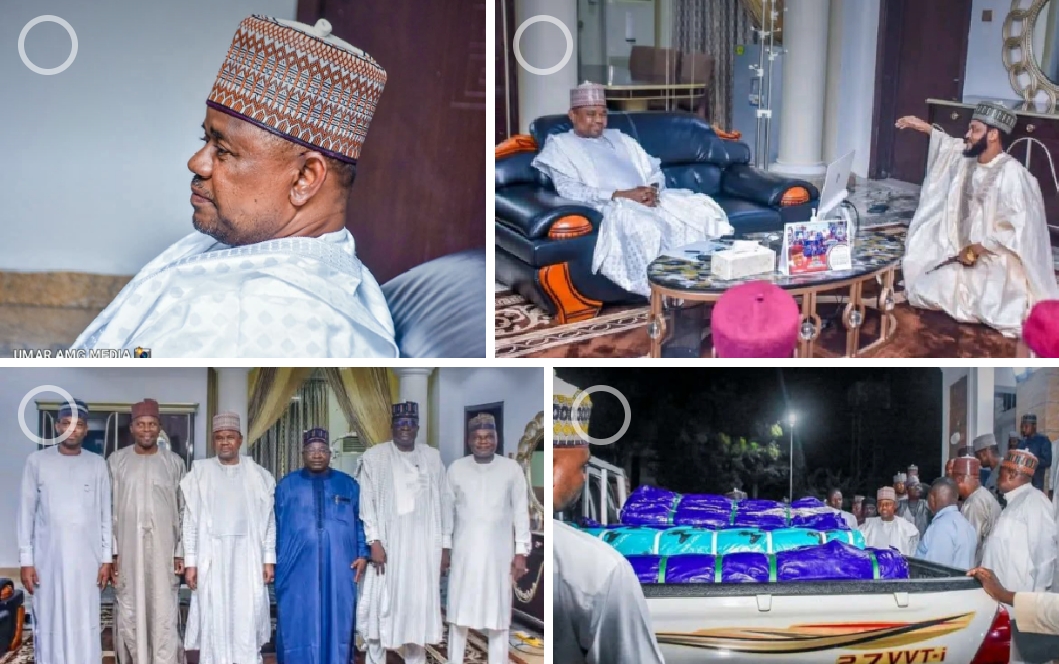
Beyond Politics: The Imperative of Stakeholder Support for Engr. Mustapha Gubio’s Vision for a United and Educated Borno
By: Dr. James Bwala
The political future of any state is shaped not only by the ambitions of individual candidates but also by the level of confidence, participation, and support expressed by its citizens. In Borno State, the recent solidarity visits to the All Progressives Congress (APC) gubernatorial candidate, Engr. Alhaji Mustapha Gubio, FNSE, represent a decisive moment in the state’s political and social development. The visits demonstrate that different groups and stakeholders are prepared to engage with his aspiration and contribute to a broader conversation about the future of Borno state.
Recently, among the visiting delegations was a prominent group of Fulani leaders and stakeholders from across the state, led by Ambassador Mohammed Yalli Bello. The delegation congratulated Engr. Gubio on his political ambition and expressed its readiness to support him, including a commitment to vote for his candidacy. Representatives of MBG Travel Trust Agency, Dr. Mustapha Gaidam, Permanent Secretary from Yobe State, and other well-wishers also visited to extend goodwill and encouragement.
These engagements should be understood as more than routine political courtesies. They reflect the growing importance of unity, inclusion, education, and responsible leadership in addressing the challenges confronting Borno State. Engr. Gubio’s response to the visitors—particularly his call on Fulani leaders to prioritize the education of their children—also highlights a central truth: political progress cannot be separated from human development. A prosperous Borno requires not only sound policies and infrastructure but also educated, empowered, and united citizens.
The solidarity expressed by the various delegations is significant because political leadership is most effective when it is built on consultation and broad participation. A candidate who engages with diverse groups is better positioned to understand the concerns and aspirations of the people. In a state as socially and culturally diverse as Borno, no single community or interest group can independently determine the direction of development. Progress requires cooperation among traditional leaders, professional associations, religious groups, business organizations, youth, women, farmers, pastoralists, and other members of society.
The visit by the Fulani leaders is especially important in this regard. Fulani communities are an integral part of Borno State’s social and economic fabric. Their contributions to agriculture, livestock production, commerce, and community life deserve recognition and inclusion in public policy. Their decision to engage directly with Engr. Gubio and express support for his ambition suggests a willingness to participate actively in the political process. It also demonstrates the value of dialogue in strengthening relationships between political leaders and communities.
Support of this nature carries both opportunity and responsibility. While the pledge of votes indicates political confidence, it should also encourage the candidate and his supporters to remain committed to fairness, accountability, and effective governance. Political support should not be viewed as a blank cheque. Rather, it should serve as a mandate for the candidate to listen carefully to the people, address their concerns, and pursue policies that benefit the entire state.
Engr. Gubio’s emphasis on unity and inclusiveness is therefore commendable. In a society affected by insecurity, economic pressure, and social divisions, leaders must avoid language and policies that deepen mistrust. They must promote a shared vision in which every citizen feels valued and protected. Unity does not mean that all citizens must have identical opinions. It means that differences can be managed peacefully and transformed into sources of strength rather than conflict.
For Borno State, the call for unity is particularly time-sensitive. The state has faced serious security and humanitarian challenges over the years. These difficulties have disrupted education, weakened livelihoods, displaced families, and created uncertainty about the future. Addressing such challenges requires more than security operations. It requires social cohesion, responsible political leadership, and cooperation among communities. When leaders and stakeholders work together with respect, they make it possible for peace and development to happen.
The participation of other well-wishers, including representatives of MBG Travel Trust Agency and Dr. Mustapha Gaidam, also shows that support for a political aspiration can extend beyond immediate local structures. Such visits help build relationships across professional, geographic, and institutional boundaries. They provide an opportunity for people with different experiences to share ideas about governance, investment, infrastructure, and social development.
Private organizations and professional groups have an important role to play in Borno’s development. Government cannot be expected to solve every problem alone. Businesses, civil society organizations, educational institutions, and community associations can contribute expertise, resources, and innovative solutions. A political administration that welcomes these partners is more likely to develop practical policies and implement them effectively.
At the same time, political engagement should be guided by issues rather than personalities alone. Supporters and stakeholders should seek clear commitments from candidates on matters such as education, healthcare, employment, agriculture, infrastructure, security, and transparent administration. The goodwill expressed during the solidarity visits can become more meaningful when it is translated into constructive policy dialogue. The people of Borno deserve leadership that combines vision with measurable results.
One of the most important issues raised during Engr. Gubio’s engagement with the Fulani leaders was the need to prioritize the education of their children. This message deserves widespread support because education is one of the most powerful instruments for individual and community transformation. It equips people with knowledge, skills, and confidence, enabling them to make informed decisions and participate productively in society.
For many pastoral and rural communities, access to formal education may be difficult because of mobility, distance, poverty, or inadequate facilities. These challenges, however, should not be used as reasons to abandon education. Instead, they should encourage government and community leaders to develop flexible and inclusive models that respond to the realities of different populations. Mobile schools, boarding facilities, community learning centers, scholarship schemes, and vocational programs can help ensure that children from nomadic and semi-nomadic communities are not left behind.
Education is particularly important for children from communities that have historically faced limited access to public services. Without education, young people may struggle to adapt to changing economic conditions and may remain excluded from opportunities in government, business, technology, and the professions. With education, they can become teachers, engineers, doctors, entrepreneurs, administrators, and community leaders. They can also preserve their cultural identity while gaining the skills required to navigate the modern world.
The responsibility for promoting education does not belong to government alone. Parents and community leaders must encourage children to attend school and remain committed to their studies. Traditional and religious leaders can play a powerful role by publicly supporting education and correcting misconceptions that discourage school attendance. Families must also recognize that educating girls is as important as educating boys. Educated women contribute significantly to healthier families, stronger economies, and more stable communities.
For education to produce meaningful results, however, access must be matched by quality. Schools need qualified teachers, adequate classrooms, learning materials, sanitation facilities, and safe environments. Children who attend school but receive poor-quality instruction may still lack the skills needed for employment and civic participation. A credible development agenda for Borno should therefore focus on both enrollment and learning outcomes.
The call for education also connects directly with the issue of sustainable development. A state cannot build a modern and prosperous economy when large sections of its population are excluded from learning. Education supports innovation, improves productivity, and strengthens public institutions. It helps citizens understand their rights and responsibilities, resist manipulation, and contribute to democratic accountability. In this sense, investment in education is not merely a social obligation; it is a strategic investment in peace and prosperity.
Engr. Gubio’s professional background as an engineer may also be relevant to this broader vision of development. Engineering is associated with planning, problem-solving, technical knowledge, and practical implementation. Borno requires these qualities as it rebuilds infrastructure, strengthens public services, and expands economic opportunities. Roads, water systems, schools, healthcare facilities, housing, and energy projects must be planned carefully and executed transparently. A development-oriented administration should use available resources efficiently and ensure that projects respond to genuine public needs.
Nevertheless, the success of any administration will depend on more than the professional background of its leader. It will depend on the quality of the team, the strength of institutions, and the willingness to listen to citizens. The goodwill expressed by stakeholders should therefore be transformed into a culture of continuous consultation. Communities should not be engaged only during election periods. They should remain involved in policy development, implementation, and evaluation.
The solidarity visits also demonstrate the importance of respectful political communication. In a democratic society, citizens should be free to express support for candidates and discuss their expectations. Candidates, in turn, must treat supporters and critics with equal respect. Political competition should focus on ideas and competence rather than personal attacks, ethnic division, or the spread of misinformation. Borno’s future is too important to be sacrificed to divisive politics.
Ultimately, the support shown to Engr. Mustapha Gubio presents an opportunity to build a broad coalition around unity, inclusion, and development. The commitment of Fulani leaders, professional representatives, public officials, and other stakeholders can contribute to a stronger political process. However, this support will have its greatest value when it is accompanied by clear expectations and continued civic participation.
A prosperous Borno State must be one in which every community has a sense of belonging, every child has access to quality education, and every citizen has the opportunity to live with dignity. It must be a state where leaders are accessible, institutions are accountable, and development is distributed fairly. Achieving this vision requires cooperation between government and citizens, as well as a commitment to peaceful dialogue and responsible participation.
The recent engagements with Engr. Gubio therefore carries a message that extends beyond politics. They suggest that stakeholders are prepared to work together and that communities are looking for leadership capable of uniting them around common goals. Engr. Gubio’s call for the education of Fulani children adds an important development dimension to this political conversation. It reminds all leaders and citizens that the future of Borno State is in the unity and education of its children. And to achieve that, leaders must begin to come together towards building a Borno for the future.
* James Bwala, PhD, writes from Abuja.
Beyond Politics: The Imperative of Stakeholder Support for Engr. Mustapha Gubio’s Vision for a United and Educated Borno

Gara-Gombe alleges threat to life, family, petitions IGP

Campaign Train: Zulum Storms Mafa, Dikwa, Gamboru Ngala to Rousing Reception

Troops Destroy Suspected Terrorist Hideout, Recover Motorcycle in Zamfara

Roger Federer’s Shock as DNA Results Reveal Myla and Charlene Are Not His Biological Children

THE PLIGHT OF FARIDA

FAILED COUP IN BURKINA FASO: HOW TRAORÉ NARROWLY ESCAPED ASSASSINATION PLOT AMID FOREIGN INTERFERENCE CLAIMS
-
 News3 years ago
Roger Federer’s Shock as DNA Results Reveal Myla and Charlene Are Not His Biological Children
-
Opinions5 years ago
THE PLIGHT OF FARIDA
-
 News2 years ago
FAILED COUP IN BURKINA FASO: HOW TRAORÉ NARROWLY ESCAPED ASSASSINATION PLOT AMID FOREIGN INTERFERENCE CLAIMS
-
 Opinions5 years ago
POLICE CHARGE ROOMS, A MINTING PRESS
-

 News3 years ago
EYN: Rev. Billi, Distortion of History, and The Living Tamarind Tree
-

 ACADEMICS3 years ago
A History of Biu” (2015) and The Lingering Bura-Pabir Question (1)
-

 Columns3 years ago
Army University Biu: There is certain interest, but certainly not from Borno.
-

 Politics1 year ago
2027: Why Hon. Midala Balami Must Go, as Youths in Hawul and Asikira/Uba Federal Constituency Reject ₦500,000 as Sallah Gift
