
News
Lost Talents on Our Roads: A Call to Remember, Support, and Act

Lost Talents on Our Roads: A Call to Remember, Support, and Act
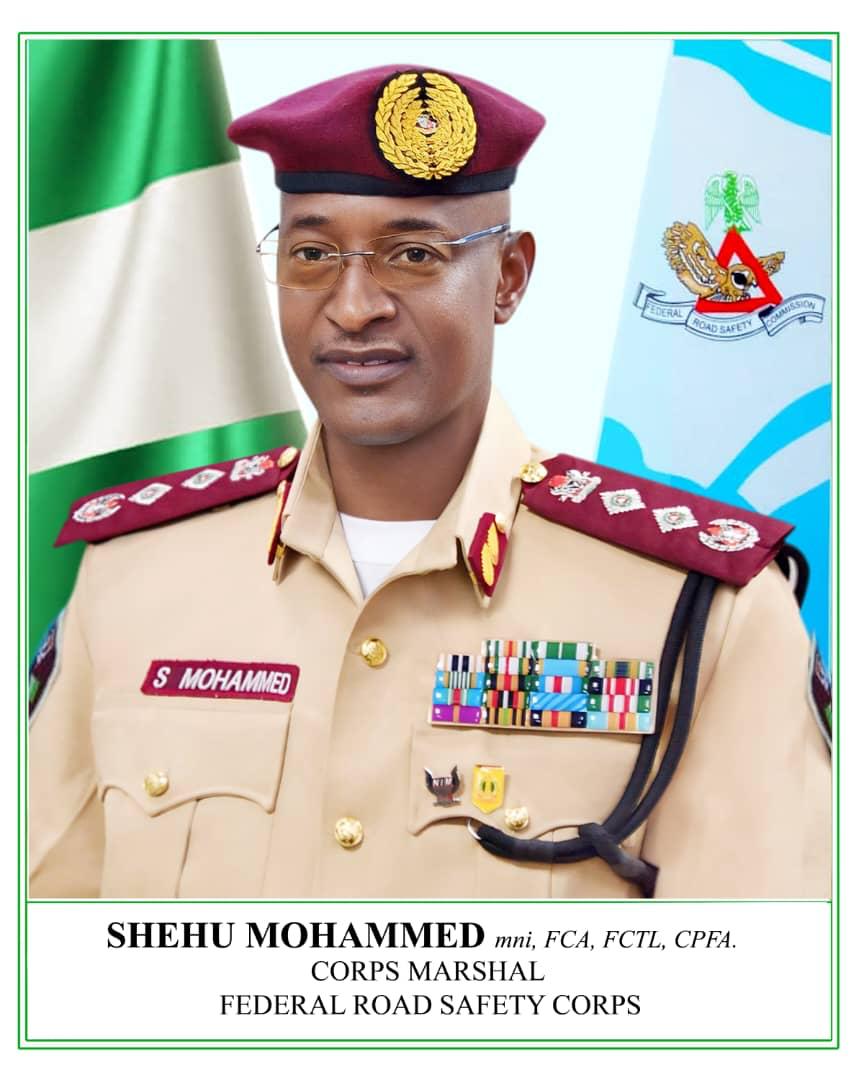
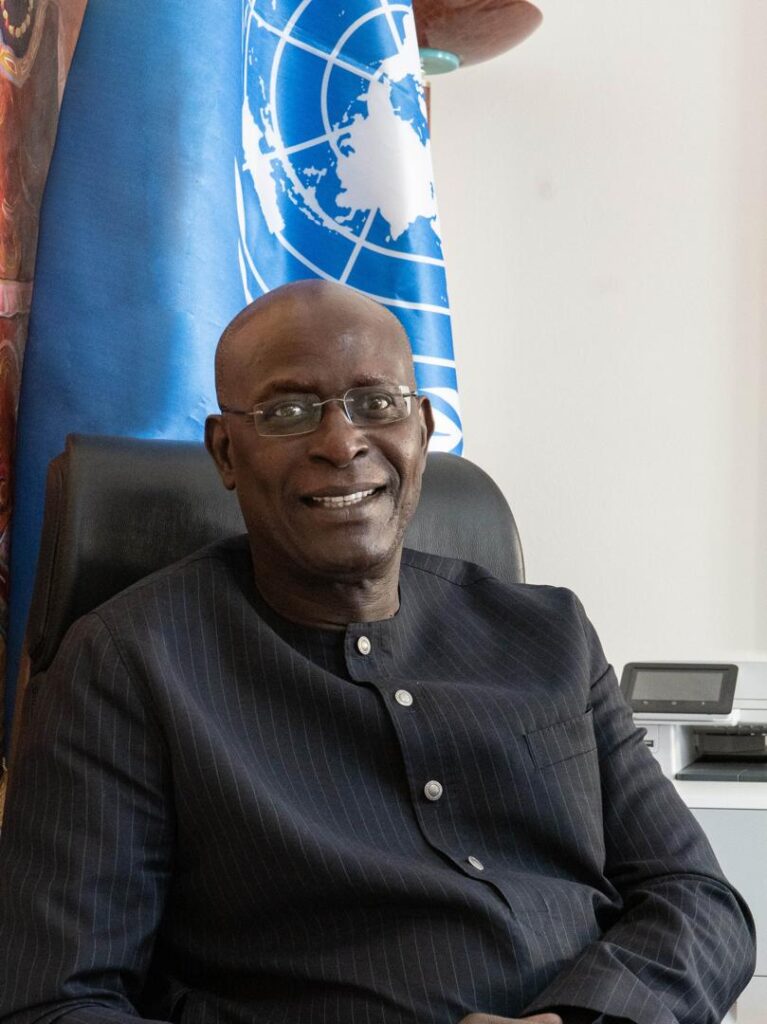
By: Mohamed Malick Fall & Shehu Mohammed
Every day, lives are shattered. Dreams are cut short. Families are left in silence. On our roads, tragedy unfolds, not in distant lands, but in our own streets and communities. Children, young people, parents, neighbours—gone forever.
This is no ordinary loss. This is a pandemic of sorrow. A hidden crisis claiming millions each year. According to the WHO 2023 Global status report on road safety, road crashes claim approximately 1.19 million lives and injure nearly 50 million people annually, with the greatest burden borne by low- and middle-income countries.
In Africa, road traffic remains the leading cause of death among youth aged 5–29, with pedestrians and cyclists among the most vulnerable. Each number is not just a statistic; it is a life, a story, a promise unfulfilled.
On this World Day of Remembrance for Road Traffic Victims, we pause, remember, and mourn. But remembrance is not enough, we must act.
In Nigeria, every life lost on the road is a talent lost to our nation: a young person, a parent, a worker, taken too soon. A quiet room where laughter once lived. A deserted playground.
An empty stage. These are the spaces where absence speaks the loudest.
Road traffic injury is one of the leading causes of death for children and young people; the leaders, innovators, artists, teachers, and builders of tomorrow. When we lose them, we lose potential, progress, and hope.
Too often, our response is muted. Laws are weak, enforcement is inconsistent, and road deaths are treated lightly. A crash is called an “accident,” as if fate alone is to blame. But we know better: these are preventable tragedies. Every crash has a cause. Every injury leaves a mark that can last a lifetime.
We must acknowledge the tireless work of emergency responders, police, paramedics, and doctors. They face heartbreak daily, rushing to scenes of carnage, lifting bodies, comforting the wounded, offering solace where sorrow overwhelms. They are heroes, but even their courage cannot compensate for unsafe roads and broken systems.
The World Day of Remembrance calls on us to Remember. Support. Act. We remember the lives lost. We support those left behind—the families, the injured, and the communities. We act with urgency, compassion, and resolve.
Action begins with awareness. Every road user must understand that safety is a shared responsibility. Roads are not racetracks. Vehicles are not weapons. Speed kills. Distraction kills. Carelessness kills. Respect saves lives.
Action requires enforcement. Traffic laws must be clear, fair, and applied consistently. Speed limits are lifelines. Seatbelts, helmets, and child restraints are shields against death. Every driver, passenger, and cyclist must feel the weight of responsibility.
Action demands infrastructure. Safe roads, clear signs, pedestrian crossings, street lighting, and proper markings save lives. Governments, communities, and civil society must design roads that protect rather than endanger.
Action calls for empathy. Victims and their families deserve support, psychological care, medical aid, legal assistance, compensation, and recognition. The pain of loss should never be deepened by neglect.
On this day, we honor those taken too soon and the resilience of those who survive. We pledge not to let their talents vanish into silence. Their stories will guide us; their memory will drive us to change.
Every life saved is a victory. Every law enforced is progress. Every child protected is a promise kept. We have the knowledge, the tools, and the will. What remains is action; bold, urgent, persistent.
To the families of those lost: your grief is seen. Your sorrow is shared. Your loved ones are not forgotten. Their memory lives in every campaign, every policy, every act of prevention.
To our leaders: the cost of inaction is measured in lives; the cost of indifference, in tears. Invest in road safety. Strengthen laws. Build safer streets. Educate citizens. Every measure matters. Every moment counts.
To every citizen: your choices matter. Your speed matters. Your attention matters. One second of caution can save a lifetime. One act of responsibility can prevent unimaginable pain.
On this World Day of Remembrance, we say again: Remember. Support. Act. Not tomorrow, not later, but today.
Let us turn grief into resolve, loss into action. Roads must become safe again. Talents must not be lost again. Lives must be valued. Families must be spared. Together, we can rewrite the story of our roads.
Remember the lost. Support the living. Act to prevent more heartbreak. Every life matters. Every family matters. Every future matters.
Mr Mohamed Malick Fall is the UN Resident and Humanitarian Coordinator in Nigeria while Mr Shehu Mohammed (mni) is the Corps Marshal/ CEO of the Federal Road Safety Corps (FRSC)
Lost Talents on Our Roads: A Call to Remember, Support, and Act


News
Police, Troops Rescue Kidnapped INEC Staff, Repel Bandits, Recover Hundreds of Rustled Cattle in Zamfara
Police, Troops Rescue Kidnapped INEC Staff, Repel Bandits, Recover Hundreds of Rustled Cattle in Zamfara
By Zagazola Makama
A joint security operation involving the Zamfara State Police Command and military personnel has rescued a kidnapped staff member of the Independent National Electoral Commission (INEC), thwarted coordinated bandit attacks, and recovered hundreds of rustled cattle following separate operations in Gummi, Talata Mafara and Gusau Local Government Areas of Zamfara State.
Intelligence sources told Zagazola Makama that the operations followed a series of coordinated attacks launched by heavily armed bandits across the affected communities.
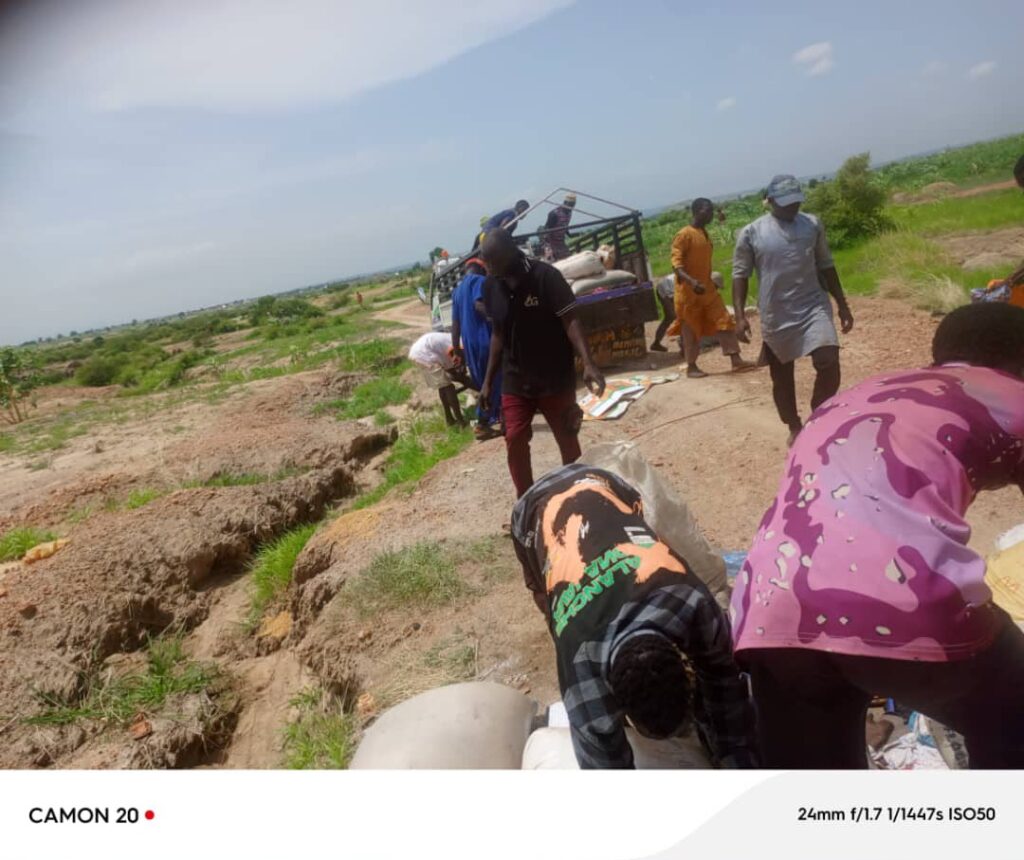
The sources said that at about 3:30 p.m. on July 7, a large group of armed bandits riding on about 50 motorcycles stormed villages in the Ruwan Bore District of Talata Mafara Local Government Area, rustling hundreds of cattle during the attack.
A woman sustained a gunshot injury from a stray bullet and was evacuated to the General Hospital in Talata Mafara, where she is receiving treatment.
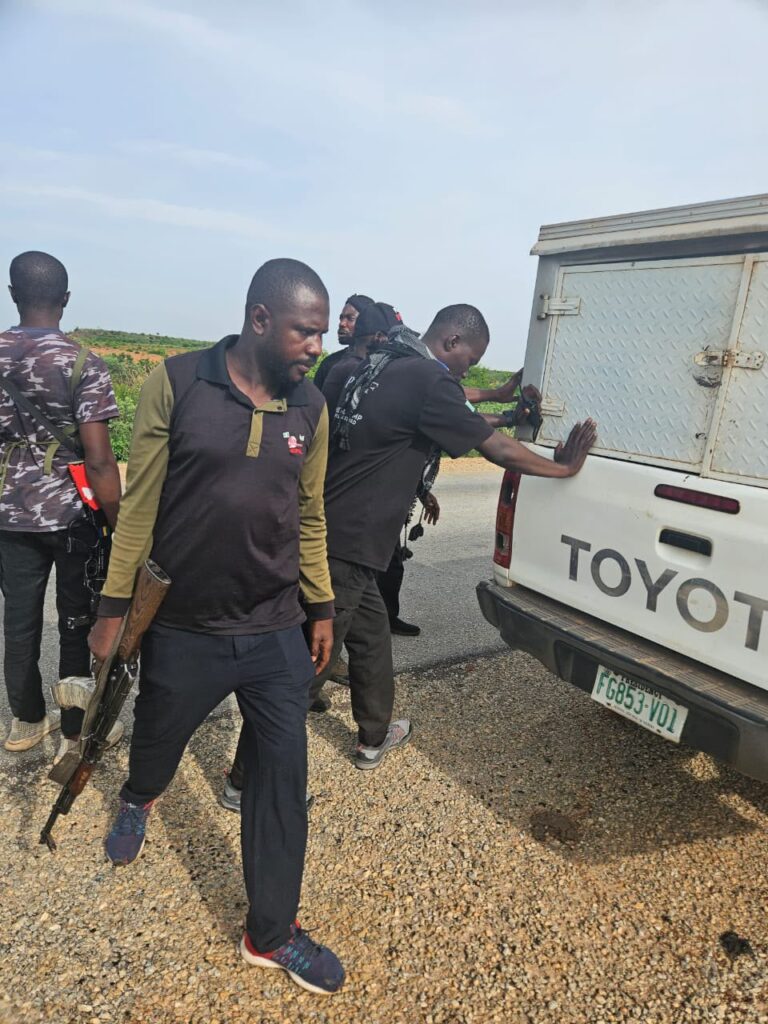
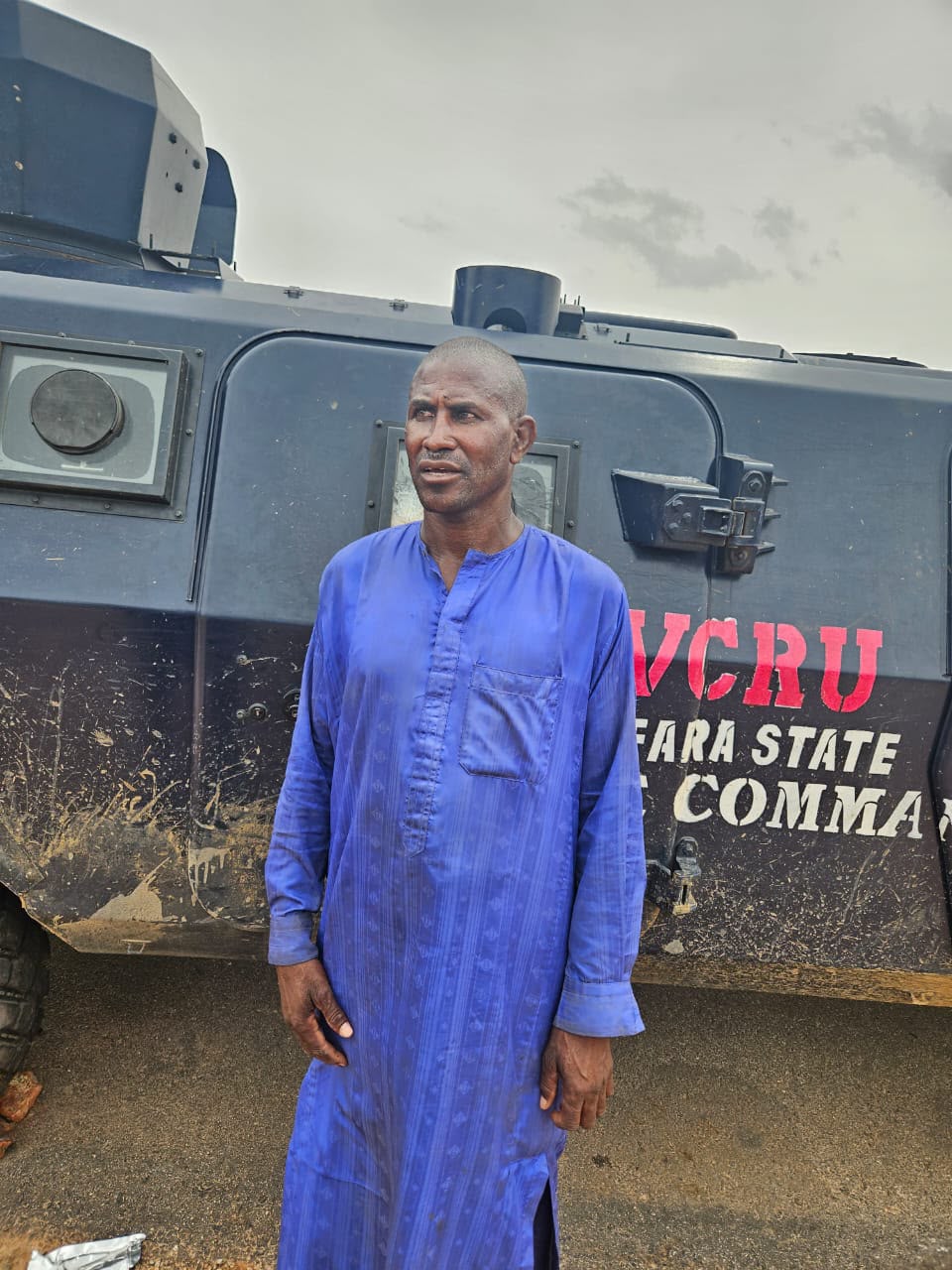
The attackers subsequently advanced toward Gummi Local Government Area, where they abducted Mr. Aliyu Mohammed, an INEC staff member who was on official assignment with the National Examinations Council (NECO). The official had transported examination scripts collected from secondary schools in Gummi to Sokoto before he was intercepted and kidnapped along the Gummi–Sokoto Road.
Security sources said the victim’s official white Toyota Hilux vehicle with registration number FG 853-V01 was later found abandoned at Tafkin Area.
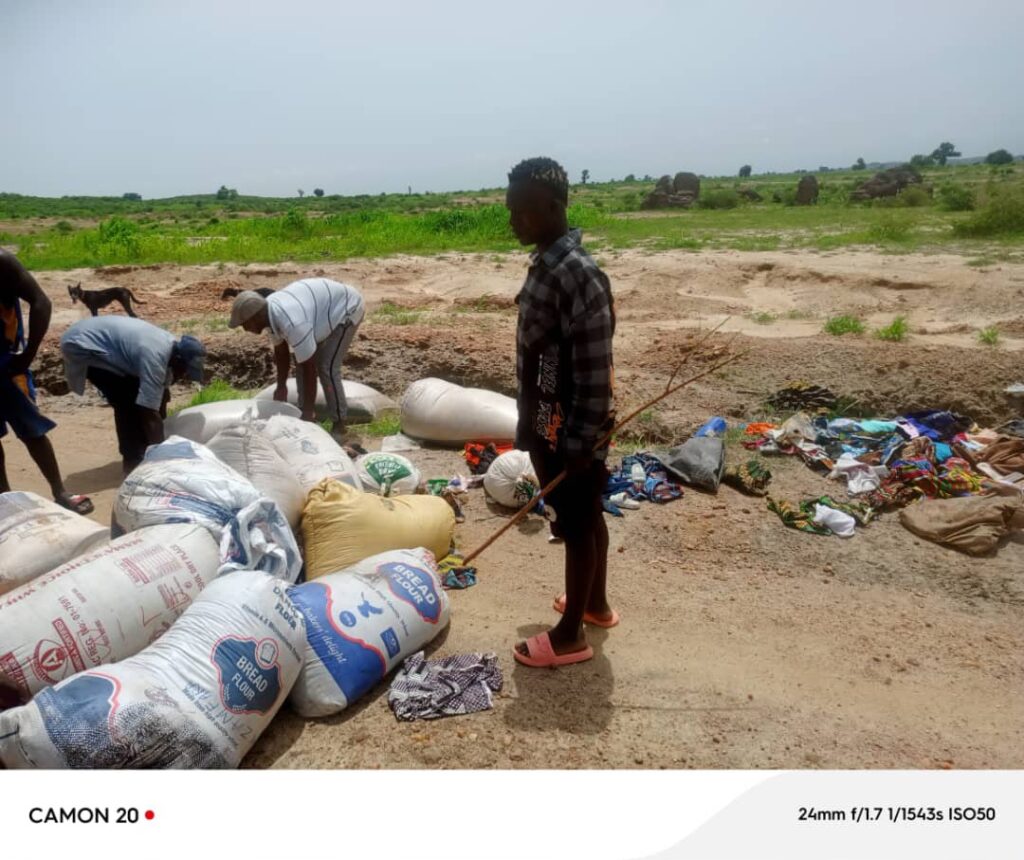
Police operatives from Gummi Division responded promptly, recovered the abandoned vehicle and secured the examination scripts, which were subsequently handed over to the Principal of Government Unity Secondary School, Gummi, Mr. Ashiru Umar, for onward transmission to the appropriate NECO office in Sokoto.
Following intelligence that a large concentration of armed bandits had regrouped inside Gando Forest after inviting reinforcements from neighbouring Sokoto and Kebbi States to retaliate against recent security operations, the Zamfara State Police Command deployed its Violent Crime Response Unit (VCRU) to reinforce military troops already conducting operations in the area.
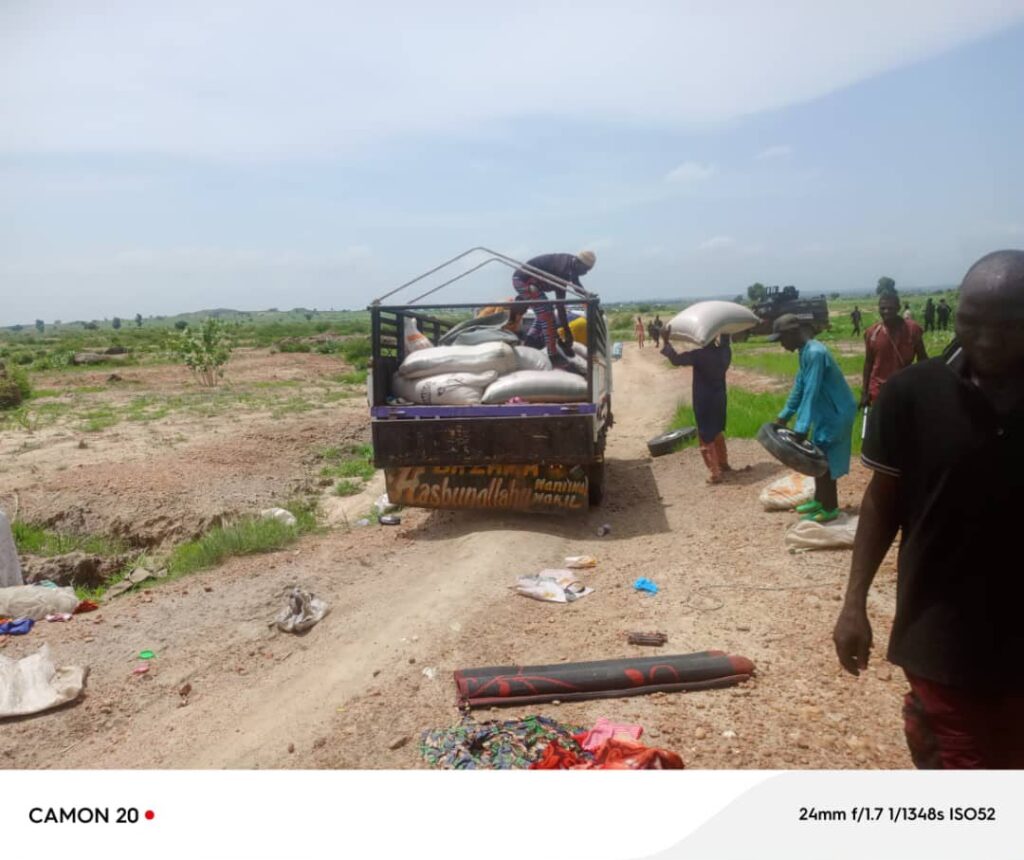
The combined security team engaged the bandits in a fierce gun battle that began at about 2:45 a.m. on July 8.
According to the sources, the superior firepower of the joint force overwhelmed the bandits, forcing them to flee into the forest with significant casualties, while several escaped with gunshot wounds.
During the operation, the kidnapped INEC official and another abducted victim were rescued unhurt. Security operatives also recovered hundreds of rustled cattle, which were subsequently returned to their rightful owners.
In a related operation on July 8 at about 9:55 a.m., security operatives responded to a distress call reporting the abduction of several motorists and farmers at Kwanar Ganuwa in Gusau Local Government Area.
Personnel of the VCRU, supported by the Police Mobile Force (PMF), engaged the bandits in a gun battle, compelling them to abandon their captives and flee into the surrounding forest.
All the victims were rescued unharmed and evacuated to safety.
The Commissioner of Police in Zamfara State, CP A.M. Bello, reaffirmed the Command’s commitment to sustaining offensive operations against banditry and other violent crimes across the state. He also urged residents to continue supporting security agencies with timely and credible information to enhance ongoing efforts to restore peace and security.
Police, Troops Rescue Kidnapped INEC Staff, Repel Bandits, Recover Hundreds of Rustled Cattle in Zamfara
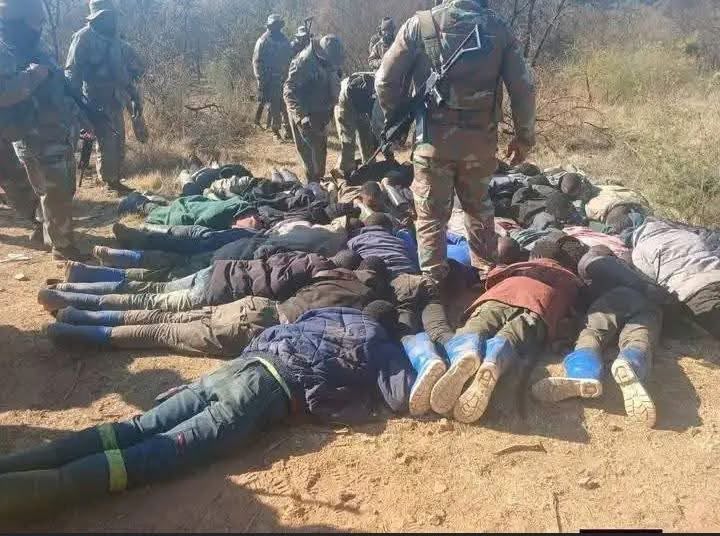
South African Security Forces Arrest 137 in Major Illegal Mining Crackdown in Gauteng
By Zagazola Makama
South African security agencies have arrested 137 suspects during a coordinated operation targeting illegal mining activities in Gauteng Province, authorities said.
The operation was carried out by the South African Police Service (SAPS) in conjunction with the South African National Defence Force (SANDF), Sibanye Protection Services, and Fidelity Specialised Services as part of ongoing efforts to dismantle illegal mining syndicates operating across the province.
According to security officials, the suspects include undocumented foreign nationals from Nigeria, Mozambique, Zimbabwe, and Lesotho who were allegedly engaged in unlawful mining activiti.p
Two additional suspects were also arrested for unlawful possession of ammunition and for allegedly aiding and abetting illegal immigrants.
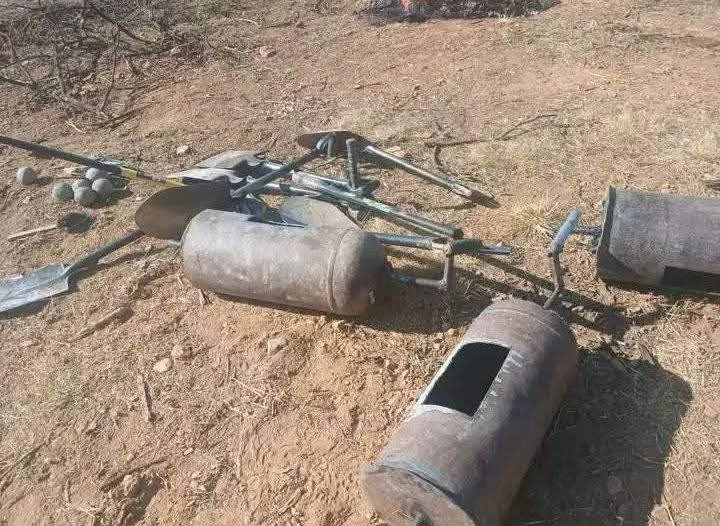
During the operation, security personnel recovered a cache of items believed to have been used in the illegal mining operations, including mining tools, food supplies, and alcoholic beverages.
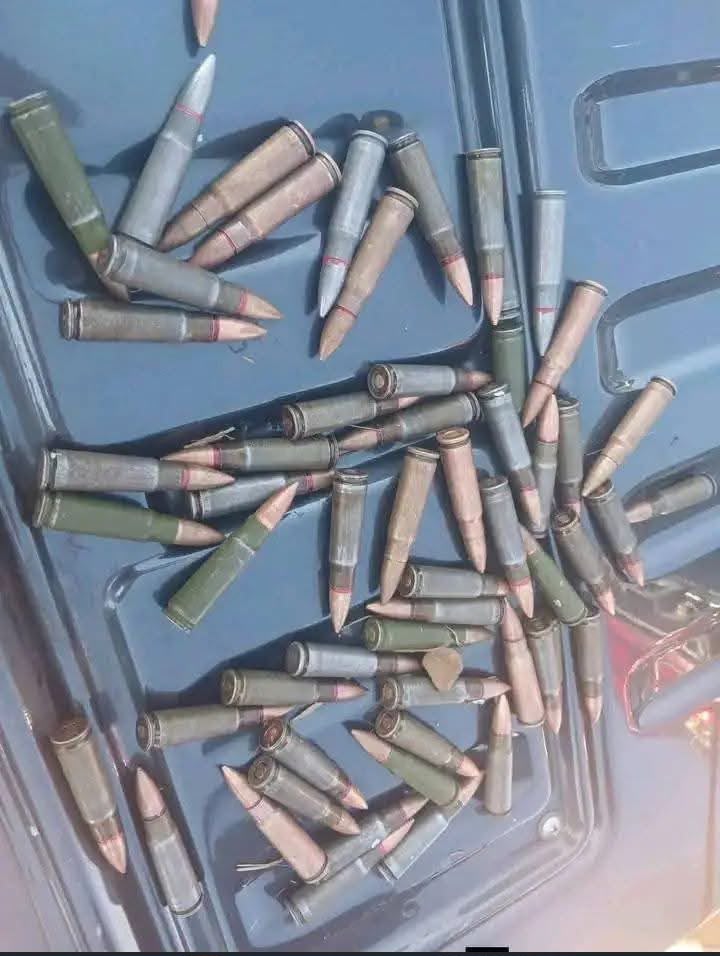
Authorities also seized a 9mm pistol, two magazines, and 118 rounds of AK-47 ammunition.
The operation forms part of sustained security measures by South African law enforcement agencies to curb illegal mining, which has increasingly been linked to organised criminal networks, illegal firearms, immigration offences, and violent crimes in parts of Gauteng.
The arrested suspects are expected to face prosecution after the conclusion of investigations, while security agencies said efforts to dismantle illegal mining syndicates across the province would continue.
South African Security Forces Arrest 137 in Major Illegal Mining Crackdown in Gauteng
News
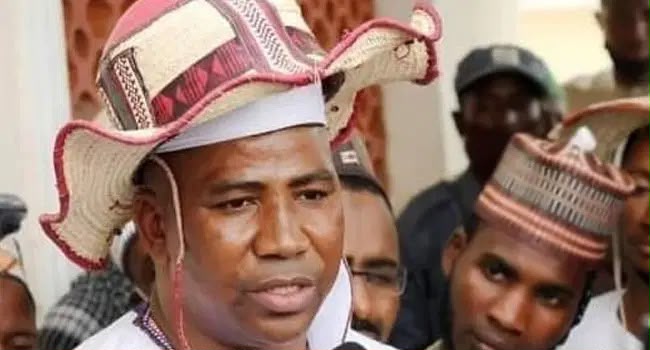
Miyetti Allah President Bello Bodejo Pleads Not Guilty to $2.63 Million Money Laundering, Terrorism Financing Charges
Miyetti Allah President Bello Bodejo Pleads Not Guilty to $2.63 Million Money Laundering, Terrorism Financing Charges
By Zagazola Makama
The National President of Miyetti Allah Kautal Hore, Bello Bodejo, on Thursday pleaded not guilty to a 12-count charge bordering on alleged money laundering and terrorism financing before the Federal High Court in Abuja.
Bodejo was arraigned by the Economic and Financial Crimes Commission (EFCC) before Justice Inyang Ekwo over allegations involving the laundering of 2.63 million dollars.
The anti-graft agency also accused the Miyetti Allah leader of financing terrorism.
At the commencement of proceedings, EFCC counsel informed the court that the matter was scheduled for the defendant to take his plea on the charges.
Counsel to the defendant, Ahmed Raji, SAN, did not oppose the application.
After the 12-count charge was read to him, Bodejo pleaded not guilty to all the counts.
Following the plea, the court adjourned the matter for further proceedings in accordance with the law.
Miyetti Allah President Bello Bodejo Pleads Not Guilty to $2.63 Million Money Laundering, Terrorism Financing Charges

Police, Troops Rescue Kidnapped INEC Staff, Repel Bandits, Recover Hundreds of Rustled Cattle in Zamfara

South African Security Forces Arrest 137 in Major Illegal Mining Crackdown in Gauteng

Miyetti Allah President Bello Bodejo Pleads Not Guilty to $2.63 Million Money Laundering, Terrorism Financing Charges

Roger Federer’s Shock as DNA Results Reveal Myla and Charlene Are Not His Biological Children

THE PLIGHT OF FARIDA

FAILED COUP IN BURKINA FASO: HOW TRAORÉ NARROWLY ESCAPED ASSASSINATION PLOT AMID FOREIGN INTERFERENCE CLAIMS
-
 News2 years ago
Roger Federer’s Shock as DNA Results Reveal Myla and Charlene Are Not His Biological Children
-
Opinions4 years ago
THE PLIGHT OF FARIDA
-
 News1 year ago
FAILED COUP IN BURKINA FASO: HOW TRAORÉ NARROWLY ESCAPED ASSASSINATION PLOT AMID FOREIGN INTERFERENCE CLAIMS
-

 News2 years ago
EYN: Rev. Billi, Distortion of History, and The Living Tamarind Tree
-
 Opinions5 years ago
POLICE CHARGE ROOMS, A MINTING PRESS
-

 ACADEMICS2 years ago
A History of Biu” (2015) and The Lingering Bura-Pabir Question (1)
-

 Columns2 years ago
Army University Biu: There is certain interest, but certainly not from Borno.
-

 Politics1 year ago
2027: Why Hon. Midala Balami Must Go, as Youths in Hawul and Asikira/Uba Federal Constituency Reject ₦500,000 as Sallah Gift
