
National News
NO APPREHENSION- IKOYI MARRIAGE REGISTRY LEGAL AND VALID – DR. BELGORE


NO APPREHENSION- IKOYI MARRIAGE REGISTRY LEGAL AND VALID – DR. BELGORE
By: Michael Mike, Abuja
The Federal Government on Tuesday assures that the Ikoyi Marriage registry is legal and valid.
FG urged the general public-especially prospective couples wishing and planning to contract their marriages at the Ikoyi Marriage Registry or any other Federal Marriage Registry under the Ministry of Interior, that they are free to do so, as the 1999 Constitution legally empowers the Federal Government to contract such marriages.
The Permanent Secretary and Principal Registrar of Marriages, Dr. Shuaib Belgore confirmed this statement while fielding questions in his office.
Also Read: Police encourage, motivate Officers, As IGP Alkali Visits…
Belgore emphatically submitted that the misinformation and totally incorrect news making the rounds recently in the Social media-was incorrect and should be disregarded.
He further stated that there should be no cause for apprehension to all intending couples who have planned to be married during this festive period-and at any other time at the Ikoyi Marriage Registry in Lagos or at any other Federal Marriage Registry.
He stressed that the Federal High Court in three previous decisions had affirmed the powers of the Ministry to conduct statutory marriages, based on the provision of the Constitution, marriage acts and Legal Notices issued by the President and Minister of Interior.
He stated that “these judgements are valid, subsisting and binding, until set aside by a superior court, which is not the case.”
NO APPREHENSION- IKOYI MARRIAGE REGISTRY LEGAL AND VALID – DR. BELGORE


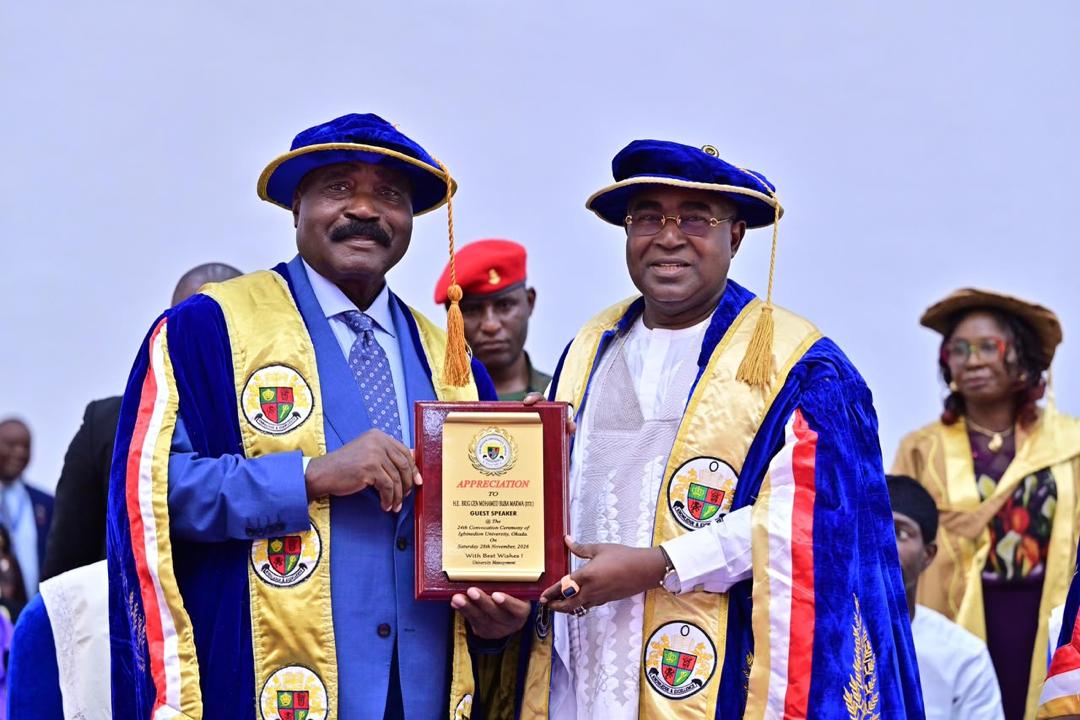
Marwa Warns Youths Against Drug Abuse, Quick Wealth, Urges Entrepreneurship
By: Michael Mike
The Chairman/Chief Executive Officer of the National Drug Law Enforcement Agency (NDLEA), Brig. Gen. Buba Marwa (rtd), has urged Nigerian youths to shun illicit drugs, shortcuts to wealth and get-rich-quick schemes, insisting that entrepreneurship and productive engagement are critical to building a prosperous nation.
Marwa warned that no pressure, disappointment or personal challenge was worth sacrificing one’s mental health to drug abuse, urging young graduates to embrace discipline, integrity and legitimate enterprise as they begin their journey into the labour market.
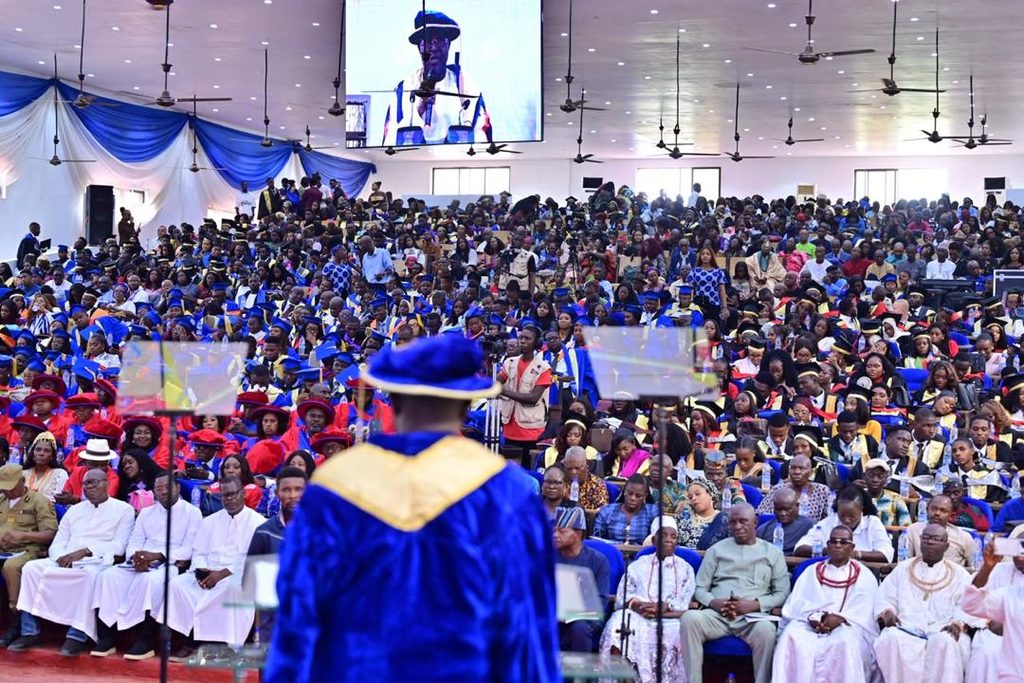
He gave the charge on Saturday while delivering the 24th Convocation Lecture of Igbinedion University, Okada, Edo State, titled, “Graduates’ Transition to Nation Building: A Case for Sustainable Entrepreneurship and Scalable Value Chains in the University.”
Addressing the graduating class of 2026, Marwa said the country was waiting for the graduates to demonstrate what they could contribute to national development, stressing that nation-building required people willing to create opportunities rather than depend solely on existing jobs.
“I will not stand here and pretend this is easy. A speech that ignores your anxieties is a speech not worth giving. But I will say what experience has taught me in uniform, in public office, and now in the war against illicit drugs: a nation is not built by those who wait to be employed. It is built by those who decide to be useful,” he said.
The NDLEA boss, who spoke in the presence of the Proprietor and Chancellor of the university, Sir Chief Gabriel Igbinedion, Esama of Benin Kingdom, represented by the Deputy Chancellor, Chief Lucky Igbinedion; Pro-Chancellor and Chairman of the Governing Council, Prof. Ahmed Mora; Vice-Chancellor, Prof. Lawrence Ezemonye; members of the Governing Council and Senate, parents and other guests, said his experience in the anti-drug campaign had reinforced the connection between unemployment, hopelessness and drug-related criminality.
According to him, the agency’s operations have exposed the vulnerability of young people to drug trafficking and abuse, particularly those desperate for money, employment or a sense of belonging.
He said the agency had encountered couriers recruited because they could not afford rent, farmers pushed into cultivating illicit crops by poor economic conditions and university-trained youths who drifted from frustration into experimentation and dependence.
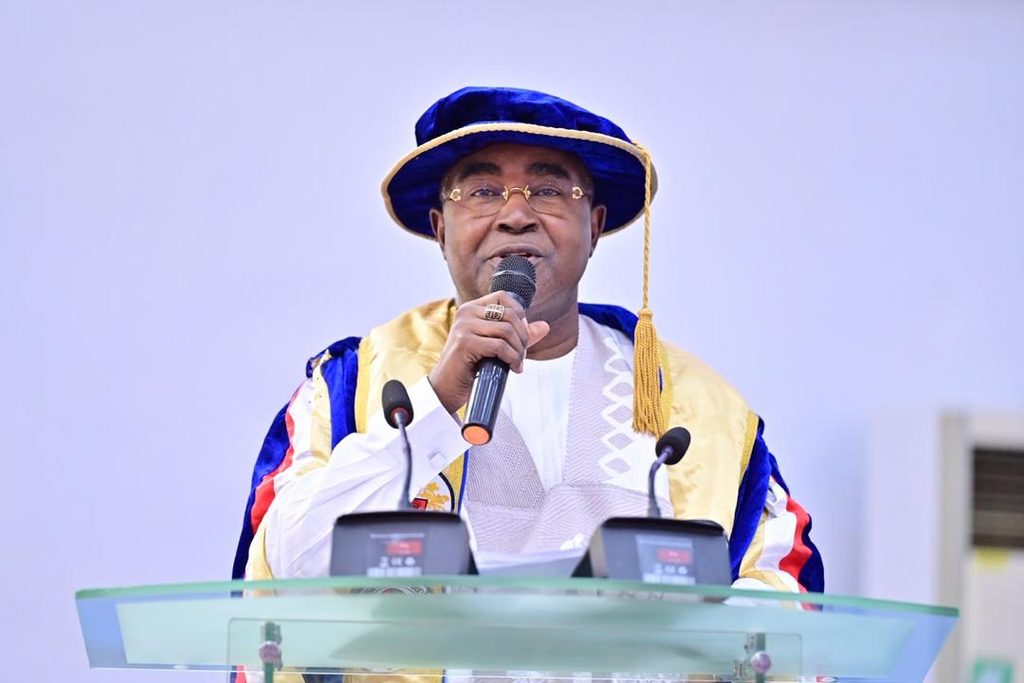
“Different faces, one pattern. Idleness without hope is the most fertile soil for drug abuse and trafficking,” he said.
Marwa explained that trafficking networks exploit unemployment and desperation by offering young people quick money, false status and a sense of belonging, adding that productive engagement could help protect youths from criminal exploitation.
“Every young person who is gainfully engaged, running a business or working in a productive chain, is a recruit these networks have lost,” he said.
He said the NDLEA’s approach to combating drug-related challenges was not limited to arrests and seizures but also included creating awareness, reducing demand, rehabilitation and promoting opportunities that could discourage young people from turning to illicit activities.
“Enforcement closes doors that lead to harm. Entrepreneurship opens doors that lead to dignity. A country needs both,” he said.
The NDLEA chief said the philosophy also underpinned the agency’s War Against Drug Abuse (WADA) advocacy campaign, which promotes prevention, sensitisation and support for people struggling with drug-related problems.
He disclosed that 54,517 persons had been counselled, treated and rehabilitated in the agency’s 31 rehabilitation centres nationwide, while 17,673 WADA outreaches had been conducted in schools, campuses, markets, motor parks, places of worship, workplaces and communities within the last five years.
Marwa stressed that people battling drug dependence should be treated with compassion and supported towards recovery, rather than simply being stigmatised or criminalised.
He also commended Igbinedion University for integrating entrepreneurship into its academic and institutional culture, describing its Entrepreneurial Skills Acquisition Centre as a model that had attracted the attention of the National Universities Commission.
He noted that the centre was adopted by the NUC as a model for universities across the country, adding that the institution’s approach to enterprise development offered valuable lessons for graduate employment and national productivity.
“The University has not only taught you about enterprise; it has practised it before your eyes. The poultry farm feeds the bakery, and the bakery feeds the campus. That is a value chain in miniature, and it is the blueprint for the Nigeria we want,” he said.
Offering the graduates three guiding principles for their transition into the world of work and enterprise, Marwa urged them to build sustainable businesses, understand value chains and embrace personal discipline.
On building businesses that would endure, he emphasised financial discipline, integrity, environmental responsibility and social purpose, warning that businesses founded on dishonesty, illicit proceeds and shortcuts were unlikely to stand the test of time.
“Nigeria does not lack starters. We lack finishers,” he said, adding that ventures built on sharp practices and illicit money were unsustainable.
“Whatever promises overnight wealth without honest work is a trap, and I have seen where it ends,” he warned.
On value chains, Marwa urged graduates to look beyond isolated business activities and identify opportunities across production, processing, distribution, storage and marketing, noting that Nigeria’s dependence on exporting raw commodities while importing processed products continued to deprive the country of jobs and economic value.
“Every time we ship out raw produce and buy back the processed version, we export jobs,” he said.
He advocated the development of legitimate, regulated and quality-assured pharmaceutical value chains involving young pharmacists, chemists, biotechnologists and logistics entrepreneurs, saying such investments could improve public health, create employment and weaken the illicit drug market.
He also called for greater investment in agricultural processing, storage, market access and fair pricing, arguing that making farming profitable would reduce the incentive for farmers to engage in illicit crop cultivation.
“A strong legitimate value chain is the best security policy a nation can have,” he said.
On discipline, Marwa described it as the foundation for creativity, innovation and sustainable success, warning graduates against substances marketed as a means of coping with stress, deadlines, loneliness or peer pressure.
“Some of the brightest minds I know were lost not to failure but to a chemical that promised to help them cope. Your brain is the most valuable asset you will ever own. Protect it,” he said.
He encouraged the graduates to support friends who might be struggling with substance abuse and seek professional assistance when necessary, stressing that asking for help was not a sign of weakness.
Marwa also urged parents to support their children’s entrepreneurial initiatives, including unconventional ventures, while calling on governments to improve access to finance, reliable electricity, business-friendly regulations and stable policies to help small businesses thrive.
He said the Federal Government’s Renewed Hope Agenda under President Bola Ahmed Tinubu was focused on improving the ease of doing business and supporting small and medium-scale enterprises to boost productivity and employment.
He further urged private sector leaders to integrate young entrepreneurs into their supply chains and strengthen industry-academia partnerships, while calling on universities to transform their campuses into practical centres for enterprise development.
Charging the graduating students to start small, build partnerships, continually acquire knowledge and avoid shortcuts that could harm others, Marwa said integrity remained a more enduring foundation for success than speed.
He urged them to uphold the university’s SITER values of Scholarship, Integrity, Team Spirit, Enterprise and Responsiveness as they pursue their careers and contribute to society.
“Go out from this auditorium, not as hunters of vacancies but as architects of opportunity. Build things that last. Build chains that grow. Build lives that others can lean on. And in doing so, build a nation so full of purpose that the dark trade in drugs finds no room, and no recruits, within it,” he said.
Marwa Warns Youths Against Drug Abuse, Quick Wealth, Urges Entrepreneurship
EU Launches ₦152.9m Fund to Protect Women from Electoral Violence Ahead of 2027 Polls
…Warns against intimidation, political exclusion, says support not for campaign financing
By: Michael Mike
Team Europe has launched a €100,000 (about ₦152.9 million) Rapid Response Fund to provide emergency protection, medical, legal and psychosocial assistance to women threatened by political and election-related gender-based violence ahead of Nigeria’s 2027 general elections.
The initiative, unveiled Tuesday in Abuja, is expected to run from November 2026 to March 2027 under the European Union Support to Democratic Governance in Nigeria programme (EU-SDGN), through experienced implementing partners and qualified service providers.
The fund, launched on the eve of the 16 Days of Activism against Gender-Based Violence, is targeted at women whose participation in the electoral process is threatened, including candidates, voters, election observers, journalists and other electoral actors facing intimidation, violence or credible threats.
The intervention, according to Team Europe, comprising the European Union and its member-state missions in Nigeria, draws on lessons from the 2023 general elections and earlier electoral cycles, which exposed the vulnerability of women to politically motivated violence and intimidation.
Speaking at the launch, the Ambassador of Ireland to Nigeria, Lesley Ní Bhriain, said the effectiveness of efforts to combat violence against women would be measured by the ability of survivors to report incidents safely, access protection and care, and pursue justice without fear.
“Violence used to silence women is a means of exclusion. It has no place in democratic life,” she said.
Ní Bhriain said the initiative was designed to bridge the gap between advocacy against gender-based violence and the practical assistance required by women confronted with threats and attacks during the electoral process.
Depending on assessed needs and approved criteria, beneficiaries may receive emergency medical care, legal advice and representation, psychosocial support, temporary safe accommodation, emergency transportation and urgent digital safety assistance.
The fund may also be deployed to address credible and imminent threats before further harm occurs, officials said.
The Irish ambassador stressed that the intervention was strictly a protection and assistance mechanism, not campaign financing or support for political parties or candidates.
Requests, she said, would be evaluated based on eligibility, urgency and assessed needs, irrespective of party affiliation, political connections or public profile, while survivors would not be compelled to recount their experiences publicly, grant interviews or appear in photographs as a condition for receiving assistance.
In a joint statement, Team Europe Heads of Mission said the intervention was intended to ensure that women facing violence could access timely support without compromising their dignity or privacy.
The Chief Executive Officer of the Nigerian Women Trust Fund (NWTF), Brenda Anugwom, described the initiative as a significant shift from advocacy and documentation to providing practical, timely assistance to women confronting political violence and abuse.
She said women must not only be allowed to enter political spaces but also be able to remain, compete, lead and exercise power without fear.
“Women must not only have the right to enter political spaces, they must have the right to remain, to compete, to lead, to exercise power without fear. This is the democracy that we all yearn for,” Anugwom said.
The Head of the EU Delegation to Nigeria and ECOWAS, Gautier Mignot, said the fund was established in response to concerns raised by civil society partners and evidence of gender-based attacks against women in various electoral roles during the 2019 and 2023 elections.
Mignot said the intervention, valued at approximately €100,000, was created under the EU-funded Support to Democratic Governance in Nigeria programme to offer rapid assistance to women facing threats during the electoral period, particularly as the country approaches the 2027 polls.
He said the initiative would help women access urgent relief through established service providers and existing expertise, while ensuring that assistance was delivered under clear safeguards and accountability procedures.
The fund’s organisers said requests would be screened and referred for assessment by a dedicated review committee in line with approved eligibility procedures and available resources.
Women seeking assistance have been directed to use designated HerStoryOurStory channels through 0806 429 2526 or herstoryourstoryng@gmail.com, rather than contacting the EU Delegation or European member-state missions directly.
Team Europe also called on political parties and leaders to reject and prevent gender-based violence, while urging relevant authorities to protect those at risk, investigate reported offences and ensure access to justice.
The media was equally urged to report responsibly, respect survivors’ privacy and provide accurate information about available support.
The Heads of Mission said the fund complemented, but did not replace, the responsibility of public institutions or the need for sustained efforts to strengthen laws, protection services and accountability.
“The test is not only what we say during these 16 days, but whether women can access support when they need it,” the Heads of Mission said.
“That is our commitment as Team Europe in Nigeria: solidarity translated into practical assistance, respect for women’s choices and accountability for what we deliver.”
Also endorsing the initiative, the Executive Director of the Ene Obi Centre for Development, Ene Obi, described women participating in Nigeria’s electoral process as an “endangered species”, warning that the prevailing political atmosphere could fuel further intimidation and gender-based violence ahead of the 2027 elections.
Obi, a former Country Director of ActionAid Nigeria, expressed concern over what she described as the prevailing “body language” of the electoral environment, saying the signals suggested that violence against female voters, candidates, journalists and election workers could escalate without urgent intervention.
Recalling the experiences of women during previous general elections, she cited the killing of Salome Abuh, a Peoples Democratic Party women leader in Kogi State, who was burnt alive in her home in 2019, as well as the killing of another woman, identified as Victoria, during the 2023 election period in front of her husband and children.
“From our history, the history of general elections, you know what women have been through. The language, the body language of the election, what we are seeing, is that violence will increase,” Obi said.
She also decried structural barriers to women’s political participation, including godfatherism, the monetisation of politics and party practices that undermine female representation.
According to her, women who secure party tickets are sometimes pressured to relinquish their candidacies, further weakening their chances of representation in elected offices.
“They are an endangered species. Most of the women that have even gotten the tickets, they’ve asked them to step down. So where are we getting the representation? Because of the power of money, because of godfatherism, and because the parties are the ones that are dictating what is going on,” she said.
Obi welcomed the introduction of dedicated protection funds, saying they could strengthen the capacity of women’s rights organisations to respond to threats against women across the electoral spectrum, including voters, election personnel and female journalists.
While acknowledging the difficulty of establishing precise figures on casualties and incidents of intimidation, she said civil society groups were monitoring developments and would continue to support women facing threats.
She warned perpetrators against targeting women during the electoral process.
“There is a lot of intimidation in this election, as you may know. And so we are keeping our eyes open and we hope to support,” she said, adding, “If you touch one woman, we will come after you.”
EU Launches ₦152.9m Fund to Protect Women from Electoral Violence Ahead of 2027 Polls
National News
ECOWAS, World Bank Intensify Drive to Bridge West Africa’s Electricity Gap, Target 1,800 Communities

ECOWAS, World Bank Intensify Drive to Bridge West Africa’s Electricity Gap, Target 1,800 Communities
By: Michael Mike
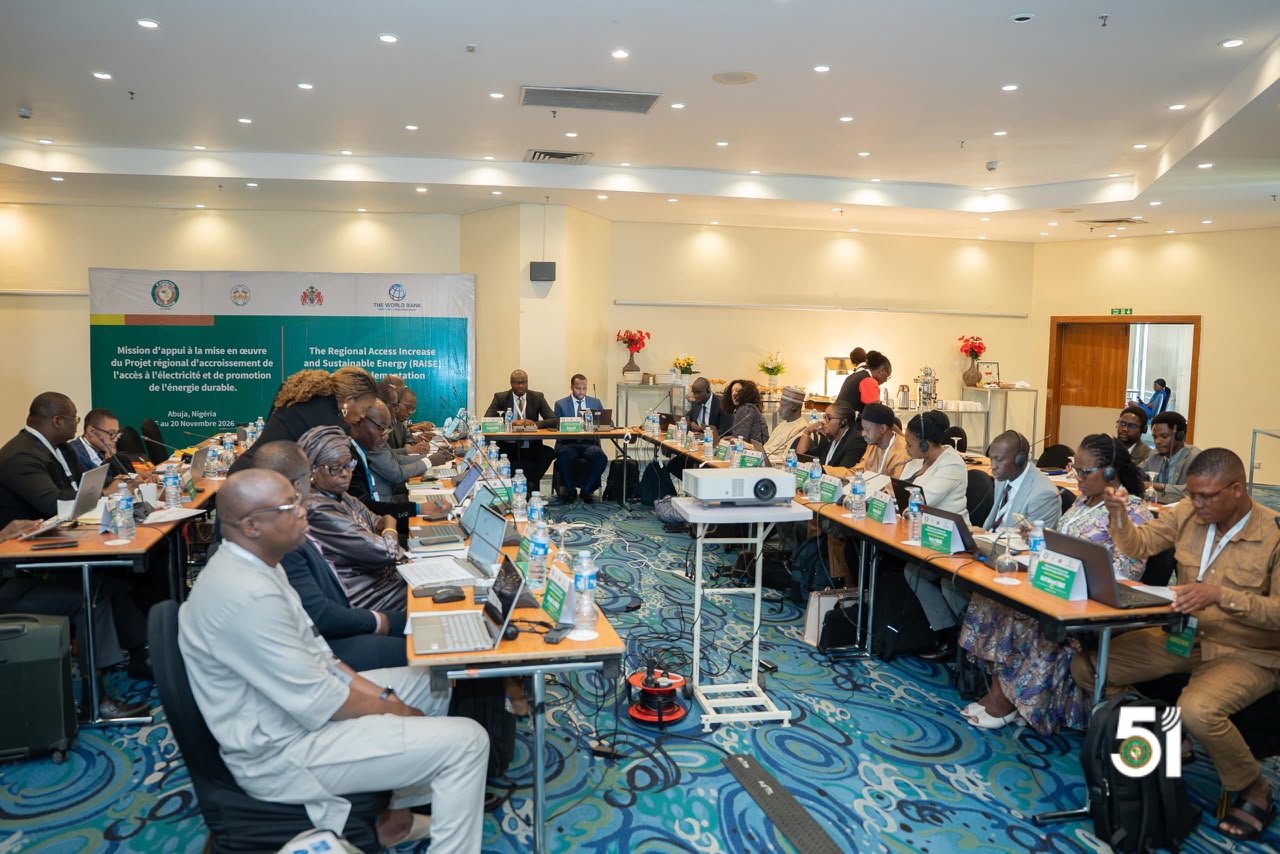
The Economic Community of West African States (ECOWAS) Commission and the World Bank have intensified efforts to address persistent electricity access deficits in West Africa, launching a five-day implementation support mission for a US$160 million regional energy project targeting underserved communities in Togo and The Gambia.
The mission, which commenced on 16 November and will run until 20 November 2026 in Abuja, Nigeria, is designed to assess implementation progress, address operational challenges and strengthen coordination among institutions responsible for delivering the Regional Access Increase and Sustainable Energy (RAISE) Project.
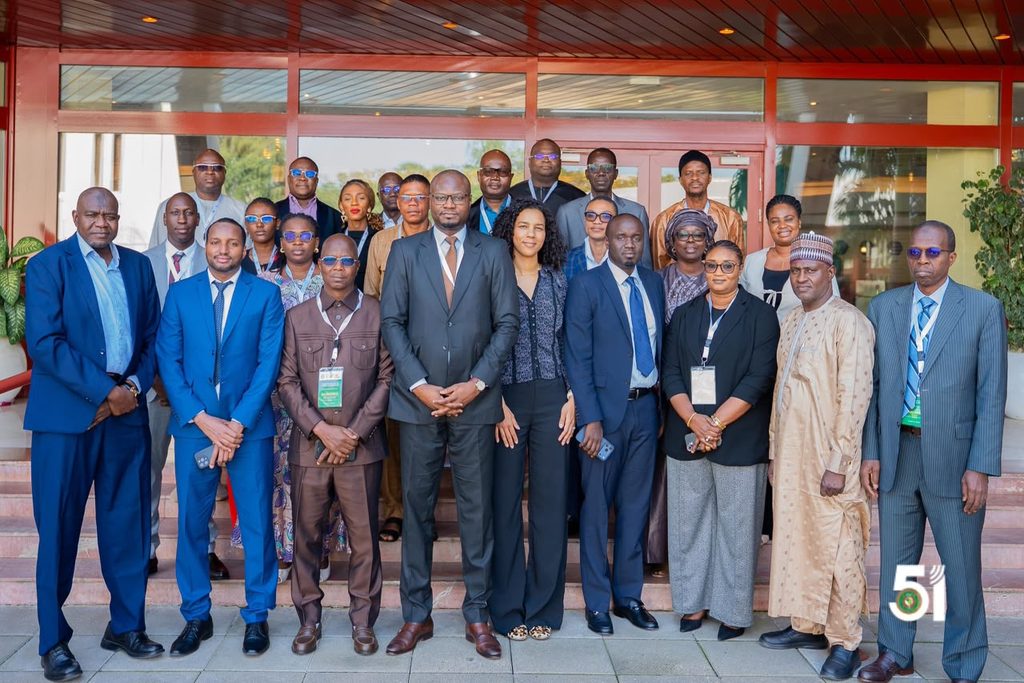
The initiative targets the electrification of 1,800 localities, the provision of 202,000 household electricity connections and the facilitation of 242 megawatts (MW) of renewable energy generation capacity.
The project is expected to expand access to reliable and sustainable electricity, particularly in rural and underserved communities where inadequate power infrastructure continues to constrain economic activities, education, healthcare delivery and other essential services.
During the five-day engagement, the ECOWAS Commission and World Bank teams will review implementation arrangements, examine progress against project objectives, identify operational bottlenecks and agree on measures to accelerate delivery.
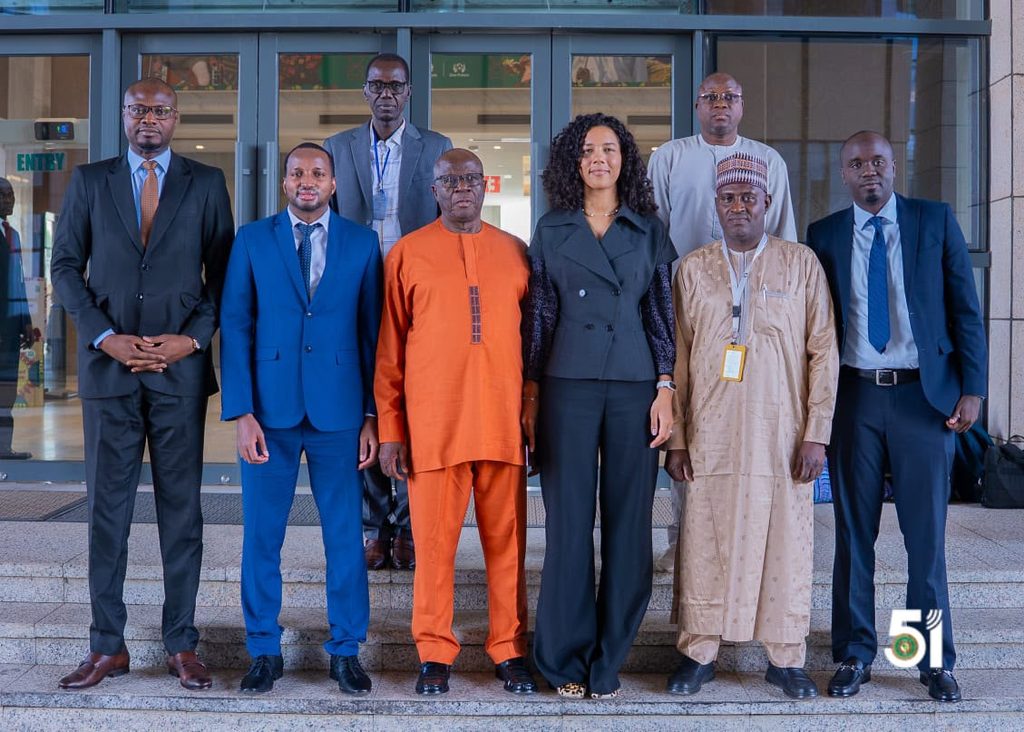
The mission commenced with a meeting between the World Bank delegation and the ECOWAS Commissioner for Infrastructure, Energy and Digitalisation, Amin Amidu, during which the Directorate of Energy and Mines briefed the Commissioner on the project’s objectives, implementation arrangements and ongoing collaboration with the World Bank.
Amidu, who assumed office on 1 September 2026, reaffirmed his commitment to monitoring the Directorate’s activities, acknowledging that inadequate electricity access remains one of the major development challenges confronting West Africa.
He noted that limited financial resources continue to constrain efforts to close the regional electricity gap, stressing the importance of sustained partnerships and strategic investments in the energy sector.
The Director of the ECOWAS Directorate of Energy and Mines, Arkadius Koumoin, underscored the importance of electricity as a fundamental driver of socioeconomic development.
He observed that the continued absence of electricity in many rural communities across West Africa remains a significant obstacle to improved livelihoods, economic opportunities and inclusive growth.
Koumoin reaffirmed ECOWAS’s commitment to coordinated regional interventions, noting that access to reliable and sustainable energy remains central to the organisation’s Vision 2050 aspiration of building a more integrated, prosperous and people-centred West Africa.
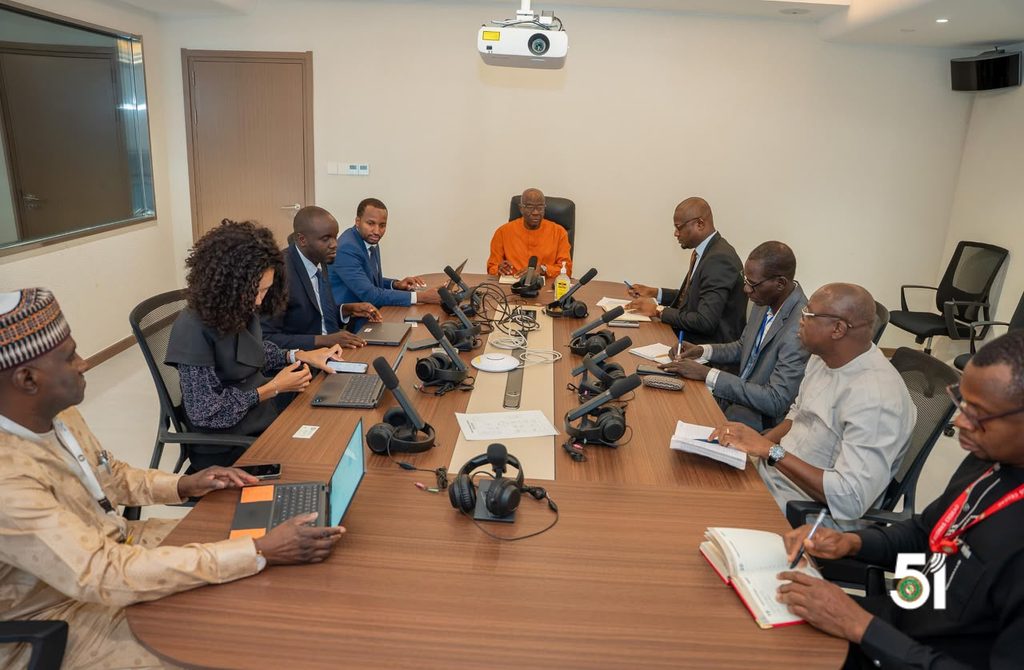
The World Bank’s Task Team Leader for the RAISE Project, Ebrima Bah, described the initiative as an important regional development intervention and commended the progress recorded so far.
He noted that the project had benefited from lessons and experiences gained from previous initiatives, providing a favourable foundation for implementation. He expressed optimism that the project could be completed within three to four years.
The mission will also examine critical implementation components, including the preparation of the 2027 Annual Work Plan and Budget, environmental and social safeguards, regional procurement activities, financial management arrangements and national procurement processes in Togo and The Gambia.
The RAISE Project became effective on 29 October 2026, following a US$10 million grant agreement signed between ECOWAS and the World Bank in July 2026 to facilitate regional coordination and implementation.
The RAISE Project comes against the backdrop of persistent electricity access challenges across West Africa, where inadequate infrastructure, high generation costs, unreliable supply and affordability constraints continue to undermine economic development.
Despite progress in expanding electricity infrastructure, significant disparities remain between urban and rural communities, with many households and businesses still lacking access to reliable power.
The electricity deficit has particularly affected rural economies, limiting opportunities for small businesses, agricultural processing, digital services and other productive activities that depend on dependable electricity.
The World Bank has identified infrastructure constraints, high electricity generation costs, affordability challenges and weaknesses in power sector institutions as major obstacles to expanding electricity access across the region.
In Togo and The Gambia, the RAISE Project is designed to address these challenges through expanded electricity distribution networks, household connections and renewable energy development.
The World Bank estimates that the initiative could generate labour income gains equivalent to approximately 11,700 jobs annually through direct and indirect economic effects, including about 9,200 in Togo and 2,500 in The Gambia.
Beyond its immediate targets in Togo and The Gambia, RAISE forms part of broader efforts to strengthen regional electricity infrastructure, improve cross-border power trade and accelerate access to affordable and sustainable energy across West Africa.
The initiative complements the West Africa Regional Electricity Market Programme (WA-REMP), a regional framework supported by the World Bank to strengthen electricity trade, improve energy security and expand access to power across the sub-region.
The programme, approved by the World Bank in January 2025 with an initial financing framework of US$1.6 billion, builds on the work of the West African Power Pool (WAPP), which is developing an interconnected electricity market to enable countries to exchange power and make more efficient use of available generation resources.
The regional integration programme builds on more than 4,000 kilometres of high-voltage transmission lines constructed to connect electricity networks across 15 West African countries, facilitating cross-border electricity trade.
The wider regional electricity agenda has also contributed to improved electricity services for more than three million people across six West African countries between 2019 and 2025.
RAISE complements these interventions by focusing on the last-mile challenge of connecting underserved communities and households to electricity while encouraging renewable energy development.
The project also aligns with the World Bank’s Mission 300 ambition to provide electricity access to 300 million people across sub-Saharan Africa by 2030.
Through these complementary initiatives, ECOWAS and the World Bank are pursuing a coordinated approach that combines regional electricity integration with investments in local distribution networks, renewable energy and household connections.
The successful implementation of RAISE is therefore expected to contribute not only to improved electricity access in Togo and The Gambia but also to ECOWAS’s broader objectives of regional integration, economic transformation and sustainable development.
ECOWAS, World Bank Intensify Drive to Bridge West Africa’s Electricity Gap, Target 1,800 Communities

Gara-Gombe alleges threat to life, family, petitions IGP

Campaign Train: Zulum Storms Mafa, Dikwa, Gamboru Ngala to Rousing Reception

Troops Destroy Suspected Terrorist Hideout, Recover Motorcycle in Zamfara

Roger Federer’s Shock as DNA Results Reveal Myla and Charlene Are Not His Biological Children

THE PLIGHT OF FARIDA

FAILED COUP IN BURKINA FASO: HOW TRAORÉ NARROWLY ESCAPED ASSASSINATION PLOT AMID FOREIGN INTERFERENCE CLAIMS
-
 News3 years ago
Roger Federer’s Shock as DNA Results Reveal Myla and Charlene Are Not His Biological Children
-
Opinions5 years ago
THE PLIGHT OF FARIDA
-
 News2 years ago
FAILED COUP IN BURKINA FASO: HOW TRAORÉ NARROWLY ESCAPED ASSASSINATION PLOT AMID FOREIGN INTERFERENCE CLAIMS
-
 Opinions5 years ago
POLICE CHARGE ROOMS, A MINTING PRESS
-

 News3 years ago
EYN: Rev. Billi, Distortion of History, and The Living Tamarind Tree
-

 ACADEMICS3 years ago
A History of Biu” (2015) and The Lingering Bura-Pabir Question (1)
-

 Columns3 years ago
Army University Biu: There is certain interest, but certainly not from Borno.
-

 Politics1 year ago
2027: Why Hon. Midala Balami Must Go, as Youths in Hawul and Asikira/Uba Federal Constituency Reject ₦500,000 as Sallah Gift
