
News
How Nigeria’s rapid military intervention in Benin reshaped West Africa’s anti-coup momentum

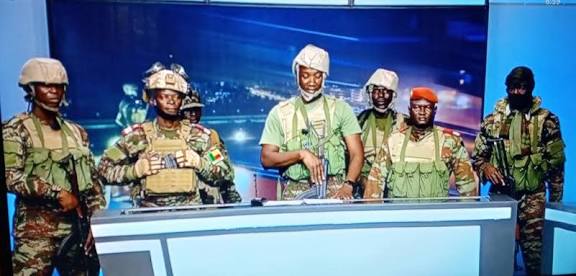
How Nigeria’s rapid military intervention in Benin reshaped West Africa’s anti-coup momentum
By: Zagazola Makama
The failed coup attempt in Benin Republic is far more than an isolated disturbance in West Africa. It is a political earthquake whose tremors are being felt all the way from Cotonou to Bamako, Niamey and Ouagadougou.
For the military juntas entrenched in the Sahel, Sunday’s events were a nightmare scenario a decisive blow to their hope of expanding the “putschist club” across the region.
President Patrice Talon’s firm, composed address to the nation late Sunday night delivered the final stamp of legitimacy. But what many are now acknowledging is this: Nigeria’s swift and disciplined intervention was the game-changer.
In the early hours of the crisis, as coup plotters seized the National TV station and attempted to entrench themselves, the Government of the Republic of Benin activated its mutual defence channels with Abuja. Within minutes, Nigeria’s Chief of Defence Staff, General Olufemi Oluyede, acting under the directive of President Bola Ahmed Tinubu, activated a rapid-response military operation.
The Nigerian Air Force fighter jets were ordered into Beninese airspace to dominate the skies, neutralise hostile positions, and support loyalist forces. Simultaneously, Nigerian ground forces mobilised and crossed into Benin under Benin-led coordination, providing reinforcement to secure key installations and restore constitutional order.
This single act of regional leadership changed the trajectory of the coup, shattered the momentum of the plotters, and halted what could have become a prolonged national crisis.
ECOWAS was already mobilising, but Nigeria’s decisive action set the tone and provided the operational backbone that ended the coup within hours. It was a clear demonstration that Abuja remains the stabilising anchor of West Africa politically, diplomatically, and militarily.
As Talon spoke last night, the fear in junta capitals was visible. Social media networks aligned with the juntas scrambled to spin the failure: “It’s not over yet!” “Talon is bluffing!” “Stay vigilant!”
But beneath the bravado was panic. Their long-held dream to expand military rule into coastal West Africa had collapsed and Nigeria’s intervention made that collapse irreversible.The night became a theatre of desperation, with fake democrats, pseudo-intellectuals and Pan-African opportunists trying to salvage their ideological embarrassment. They resorted to tired diversionary tactics, attacking ECOWAS, questioning its motives, and searching for excuses.
But the truth was undeniable: The coup failed because the region, led by Nigeria, refused to allow another country to fall. But expected, some Nigerians, often those who do not follow security operations, took to social media asking: “Why didn’t Nigeria use this same energy against terrorists and bandits?”
An absurd question. It is as if these people have never seen the daily reports of: Dozens of terrorists neutralised across Zamfara, Katsina, Kaduna and Borno, mass destruction of ISWAP and Boko Haram enclaves, bandit kingpins eliminated, thousands of kidnapped victims rescued, large quantities of weapons recovered, aerial bombardments carried out week after week
Nigeria has been fighting terrorists with unmatched intensity, To compare the two operations, one a cross-border rapid-intervention mission lasting hours, and the other a domestic counterterrorism war spanning over 15 years is intellectually dishonest. What happened in Benin was not “energy Nigeria never shows.” It was a different type of mission a rapid, high-precision, multinational constitutional defence operation and Nigeria executed it flawlessly.
The larger significance of the failed coup is now evident. It has: exposed the weakness of the Sahel juntas, halted their push to expand military authoritarianism southwards, sent a message that ECOWAS has finally adapted and will no longer tolerate illegal takeovers and reaffirmed Nigeria’s decisive role in shaping regional security outcomes.
The supporters of the juntas are terrified and they should be. Because Sunday marked the beginning of a new countdown. The ideological project of the Sahel military regimes is weakening, and their attempt to export instability has backfired spectacularly. The next months will be critical. The Sahelian juntas, already struggling with insecurity, economic collapse, and public frustration, now face an emboldened regional order.
Nigeria’s leadership, demonstrated so clearly in Benin, has restored confidence that democratic stability in West Africa can and will be defended.
The failed coup in Benin did not only preserve a nation’s democracy. It reset the balance of power in the region. And Nigeria stood at the centre of that pivotal moment.
The clock is ticking for the putschist regimes.
History has resumed its rightful course.
Zagazola Makama is a Counter Insurgency Expert and Security Analyst in the Lake Chad Region
How Nigeria’s rapid military intervention in Benin reshaped West Africa’s anti-coup momentum



June 12: Credible Elections Are a Fundamental Human Right, Not a Privilege – NHRC
By: Michael Mike
As Nigeria marks Democracy Day, the Executive Secretary of the National Human Rights Commission, Chief Tony Ojukwu (OFR, SAN), has declared that credible elections are a fundamental human right that must be guaranteed to every citizen, rather than a privilege granted by those in power.
In a statement commemorating the significance of June 12, Ojukwu said the annulled 1993 presidential election remains the strongest evidence that Nigeria is capable of conducting free, fair, and transparent elections when democratic institutions respect the will of the people.
According to him, the electoral framework introduced by Humphrey Nwosu, particularly the Option A4 and Modified Open Ballot systems, demonstrated that electoral credibility is achievable when election management bodies operate with integrity, transparency, and strict adherence to the law.
The NHRC boss emphasized that the right of citizens to participate in governance through genuine elections is guaranteed under Nigeria’s Constitution and regional human rights instruments, stressing that electoral misconduct amounts to a direct assault on fundamental freedoms.
He noted that practices such as voter suppression, vote buying, electoral violence, and manipulation of election results should not be viewed merely as administrative shortcomings but as serious violations of civil and political rights.
Ojukwu expressed concern that more than three decades after the June 12 election, many of the challenges that undermine electoral credibility continue to persist, weakening public confidence in democratic institutions and diminishing citizens’ faith in the electoral process.
“Whenever elections lose their integrity, the rights to freedom of expression, association, participation, and peaceful assembly are also placed at risk,” he said.
The human rights advocate called on the Independent National Electoral Commission (INEC), political parties, security agencies, the judiciary, civil society organizations, and the media to remain committed to neutrality, transparency, and accountability in the conduct of elections.
He assured Nigerians that the Commission would intensify its monitoring of electoral processes across the country, document violations, and pursue appropriate remedies for victims in line with its statutory mandate.
Ojukwu also urged the National Assembly to strengthen legal safeguards that protect the independence of electoral institutions and improve citizens’ access to electoral justice.
He maintained that institutionalizing electoral integrity remains critical to deepening democracy and safeguarding the right of every Nigerian to freely choose their leaders, adding that the NHRC is prepared to collaborate with government and other stakeholders to ensure that credible elections become a permanent feature of the nation’s democratic culture.
The statement, signed by Director of Corporate Affairs and External Linkages, Fatimah Agwai Mohammed, underscored the Commission’s commitment to advancing democratic governance through the protection and promotion of electoral rights.
June 12: Credible Elections Are a Fundamental Human Right, Not a Privilege – NHRC

ActionAid Says June 12 Democratic Promise Remains Unfulfilled Amid Poverty, Rights Violations
By: Michael Mike
As Nigerians mark Democracy Day, ActionAid Nigeria has raised concerns over what it describes as the country’s failure to fully realize the democratic ideals symbolized by June 12, warning that shrinking civic space, rising poverty, insecurity and weak governance threaten the nation’s democratic future.
In a statement issued to mark the June 12 celebration, the Country Director of ActionAid Nigeria, Andrew Mamedu, said the decision by former President Muhammadu Buhari in 2018 to recognize June 12 as Democracy Day was a significant step toward correcting the injustice surrounding the annulment of the 1993 presidential election won by Moshood Kashimawo Olawale Abiola.
According to the organisation, the declaration was more than a symbolic gesture; it represented a commitment to uphold the will of the Nigerian people and strengthen democratic governance. However, ActionAid argued that eight years later, many of the aspirations associated with that promise remain unrealized.
The organisation expressed concern over what it called a growing crackdown on civic freedoms, citing reports of arrests, prosecutions and intimidation of journalists, activists and citizens critical of government actions.
It referenced data from the National Human Rights Commission indicating that hundreds of thousands of human rights complaints were recorded in April 2026, including allegations of extrajudicial killings, abuse of authority and restrictions on freedom of expression and peaceful assembly.
ActionAid also criticized the application of the Cybercrimes Act against journalists and activists, pointing to cases involving media practitioners and civil society actors who were reportedly arrested or prosecuted after exposing governance failures or questioning official claims.
The group further warned that Nigeria’s electoral system faces significant challenges ahead of the 2027 general elections. It argued that the Electoral Act 2026 was enacted without sufficient stakeholder consultation and called for urgent amendments to strengthen public confidence in the electoral process.
According to the organisation, preserving electoral credibility is essential to avoiding a repeat of the political crisis that followed the annulment of the June 12, 1993 election.
Beyond electoral concerns, ActionAid raised alarm over worsening socio-economic conditions, noting that millions of Nigerians continue to struggle with poverty despite decades of democratic rule.
The organisation cited statistics showing that more than 130 million Nigerians live in multidimensional poverty, while insecurity, including banditry, kidnapping and armed conflict, continues to disrupt livelihoods across many communities.
It argued that poverty and insecurity are interconnected challenges stemming from governance failures, weak institutions and limited accountability.
ActionAid also criticized what it described as weak fiscal transparency, alleging that the concurrent implementation of multiple federal budgets has undermined effective oversight and accountability in public spending.
The organisation maintained that these governance shortcomings have contributed to Nigeria’s poor performance in global assessments of government effectiveness.
To address the challenges, ActionAid called on the Federal Government and the National Assembly to undertake comprehensive reforms, including amendments to the Electoral Act, protection of civic freedoms, improved security measures, strengthened social protection programmes and greater transparency in public finance management.
Mamedu stressed that Democracy Day should serve as more than a ceremonial event, urging leaders to take concrete actions that reflect the aspirations of Nigerians for accountable governance, justice and inclusive development.
He said that while recognizing June 12 was an important milestone, the true measure of that decision lies in the government’s commitment to protecting democratic institutions, expanding civic freedoms and improving the welfare of citizens.
ActionAid pledged to continue working with communities and civil society organizations across the country to promote accountability and ensure that the democratic ideals associated with June 12 are translated into tangible benefits for Nigerians.
ActionAid Says June 12 Democratic Promise Remains Unfulfilled Amid Poverty, Rights Violations
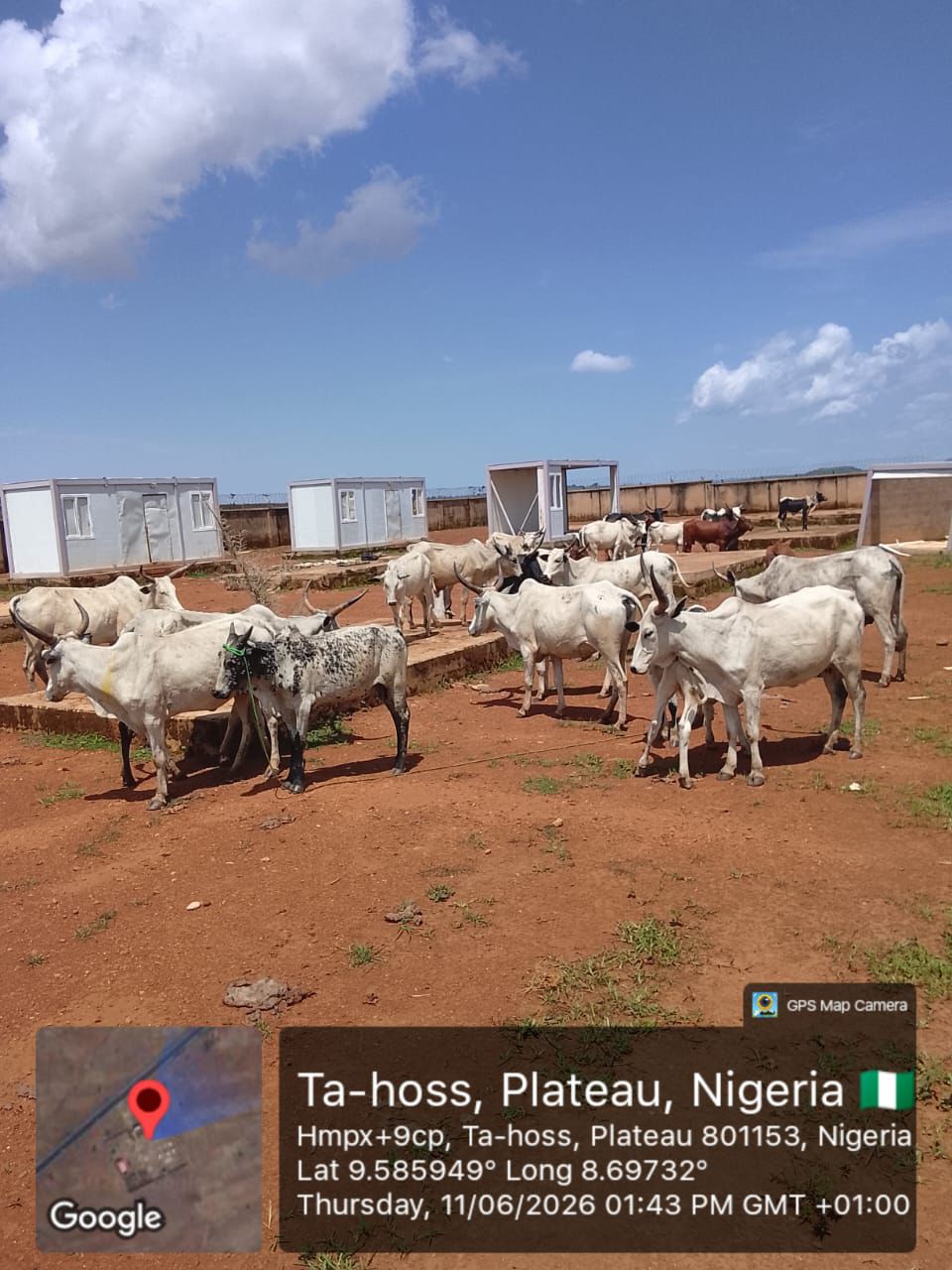
Troops Recover 61 Cattle During Anti-Kidnapping Raid in Plateau
By: Zagazola Makama
Troops of Operation Enduring Peace have recovered 61 cattle during a clearance operation in Riyom Local Government Area of Plateau State.
Security sources disclosed that the operation was conducted on Thursday as part of ongoing efforts to track down suspected kidnappers who fled following sustained military pressure in the area.
The sources said troops of Sector 6 Operation Safe Haven carried out coordinated raids on suspected hideouts and high-ground locations around Sopp, Hawan Kibo and Rafin Sanyi communities in Riyom LGA.
According to the sources, the operation involved cordon-and-search activities targeting suspected kidnappers’ camps, dens and livestock enclosures believed to be linked to criminal networks operating in the area.
During the operation, troops recovered 61 cattle suspected to belong to the fleeing criminals.
“All identified camps, hideouts and cattle enclosures within the general area were searched during the operation. A total of 61 cattle suspected to belong to the criminals were recovered,” a security source said.
The source, however, noted that no arrests were made as the suspects had fled before the troops arrived.
The recovered cattle have been taken into military custody pending further investigation and necessary action by relevant authorities.
The operation forms part of ongoing efforts by security agencies to dismantle kidnapping networks and other criminal groups operating in parts of Plateau State.
Troops Recover 61 Cattle During Anti-Kidnapping Raid in Plateau

June 12: Credible Elections Are a Fundamental Human Right, Not a Privilege – NHRC

ActionAid Says June 12 Democratic Promise Remains Unfulfilled Amid Poverty, Rights Violations

Troops Recover 61 Cattle During Anti-Kidnapping Raid in Plateau

Roger Federer’s Shock as DNA Results Reveal Myla and Charlene Are Not His Biological Children

THE PLIGHT OF FARIDA

FAILED COUP IN BURKINA FASO: HOW TRAORÉ NARROWLY ESCAPED ASSASSINATION PLOT AMID FOREIGN INTERFERENCE CLAIMS
-
 News2 years ago
Roger Federer’s Shock as DNA Results Reveal Myla and Charlene Are Not His Biological Children
-
Opinions4 years ago
THE PLIGHT OF FARIDA
-
 News1 year ago
FAILED COUP IN BURKINA FASO: HOW TRAORÉ NARROWLY ESCAPED ASSASSINATION PLOT AMID FOREIGN INTERFERENCE CLAIMS
-

 News2 years ago
EYN: Rev. Billi, Distortion of History, and The Living Tamarind Tree
-
 Opinions4 years ago
POLICE CHARGE ROOMS, A MINTING PRESS
-

 ACADEMICS2 years ago
A History of Biu” (2015) and The Lingering Bura-Pabir Question (1)
-

 Columns2 years ago
Army University Biu: There is certain interest, but certainly not from Borno.
-

 Politics1 year ago
2027: Why Hon. Midala Balami Must Go, as Youths in Hawul and Asikira/Uba Federal Constituency Reject ₦500,000 as Sallah Gift
