
News
Nigeria’s ADSW 2026 Participation, A Boost to Climate Action- Onuigbo

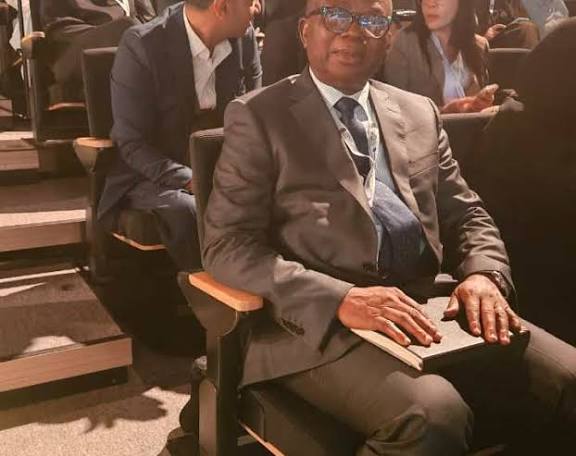
Nigeria’s ADSW 2026 Participation, A Boost to Climate Action- Onuigbo
By: Michael Mike
A leading Nigerian climate change advocate and former National Assembly member, Rt. Hon Sam Onuigbo has described Nigeria’s participation in the 2026 Abu Dhabi Sustainability Week (ADSW) as a critical step towards advancing the country’s climate action agenda, strengthening international partnerships, and accelerating sustainable development.
Onuigbo, who spoke on phone to our correspondent from Abu Dhabi where he is currently attending the meeting, said the global event is of great significance, noting that the Abu Dhabi Sustainability Week, one of the world’s foremost sustainability platforms, provides Nigeria with a rare opportunity to align its national priorities with global climate solutions while attracting much-needed investment into green sectors of the economy.
According to the former lawmaker who sponsored Nigeria’s Climate Change Act of 2021, ADSW 2026 is not just another international conference for Nigeria but a strategic space where climate ambition meets real investment, innovation, and action.
He said: “Nigeria’s presence signals our readiness to transition to a greener economy while addressing energy poverty, unemployment, and climate vulnerability.
“Nigeria’s participation is boosted by the physical presence and address by President Bola Ahmed Tinubu both in 2025 and 2026. It is heartwarming that the President in his speech mentioned Nigeria’s readiness to partner with the rest of the world and even extended open invitation to them.
“Not only that, the President signalled Nigeria’s firm commitment to a green and inclusive transition, declaring that the country is aligning climate action with energy access, economic goal and social development.
“I want to commend Mr. President for announcing that Nigeria will co-host investopia with the United Arab Emirates (UAE) in Lagos in February as part of efforts to attract global investors and accelerate sustainable investment inflows into the country.”
Onuigbo, who currently represents the South-East geopolitical zone on the Governing Board of the North East Development Commission (NEDC), disclosed that Nigeria’s attendance will strengthen its influence in global climate and sustainability discussions.
He said: “As Africa’s most populous country and largest economy, Nigeria’s development choices have far-reaching implications for the continent. Participation at ADSW allows our country to clearly present its climate challenges ranging from flooding and desertification to energy access gaps while contributing African perspectives to global policy conversations.”
He emphasised the investment potential tied to the event. “Abu Dhabi Sustainability Week attracts global financiers, development partners, and technology providers focused on renewable energy, climate-smart agriculture, water security, and green infrastructure.
“Nigeria’s engagement creates direct pathways for funding solar and wind energy projects, waste-to-energy initiatives, andsustainable transport systems. At a time when Nigeria is pushing for energy transition that leaves no one behind, ADSW provides access to investors who are actively seeking bankable green projects in emerging markets and this can translate into jobs, improved power supply, and sustainable economic growths”
Giving more insight into what Nigeria stands to benefit, Onuigbo disclosed that Nigerian policymakers, researchers, entrepreneurs, and youth delegates attending ADSW are expected to gain exposure to global best practices in clean technology, climate resilience, artificial intelligence, and sustainable urban development.
“These insights are vital for strengthening local institutions and improving policy implementation back home,” he said.
He further noted that Nigeria’s participation reinforces its commitment to meeting international climate obligations, including its Nationally Determined Contributions (NDCs) under the Paris Agreement and the Sustainable Development Goals (SDGs) adding that active engagement at ADSWenhances Nigeria’s credibility and improves access to climate finance and technical support.
The Abia State- born advocate also stressed the importance of showcasing Nigerian innovation on a global stage.
“Nigeria has a growing community of climate-focused startups and innovators. ADSW gives them visibility, partnerships, and the chance to scale their solutions beyond our borders,” he said.
Onuigbo described Nigeria’s participation in Abu Dhabi Sustainability Week 2026 as a message of hope and responsibility stressing “It tells the world that Nigeria is serious about sustainability and tells our young people that climate action is central to our future. This is a step in the right direction for a resilient and inclusive Nigeria.”
Nigeria’s ADSW 2026 Participation, A Boost to Climate Action- Onuigbo


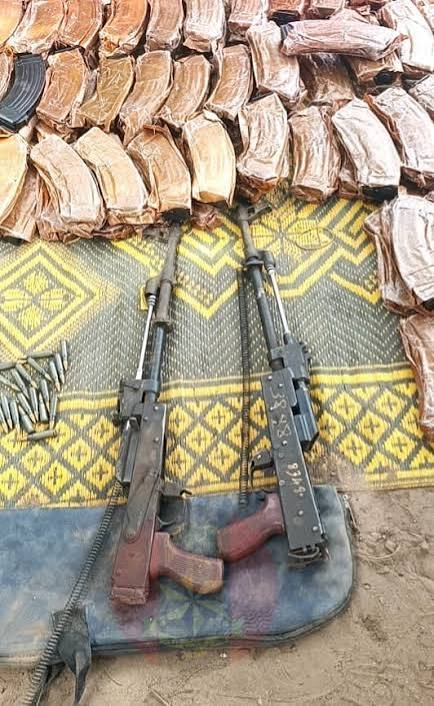
Troops Recover AK-47 Rifle in Raid on Suspected Gunrunners’ Hideout in Taraba
By: Zagazola Makama
Troops of Operation MESA have recovered an AK-47 rifle, a magazine and three rounds of 7.62mm special ammunition during a raid on a suspected gunrunners’ hideout in Gassol Local Government Area of Taraba State.
Security sources said the operation was carried out at about 12:15 a.m. on June 30 by troops of the 20 Model Battalion deployed in Gassol, in collaboration with a team from the Defence Intelligence Agency (DIA).
The sources said the joint team conducted the intelligence-led raid on a suspected gunrunners’ hideout at Kwatan Nanido Village following credible information on illegal arms activities in the area.
Although no suspect was arrested during the operation, the troops recovered one AK-47 rifle, one magazine and three rounds of 7.62mm special ammunition abandoned at the location.
The recovered items have been taken into military custody for further investigation and necessary action.
Security sources said efforts were ongoing to identify and apprehend members of the suspected gunrunning syndicate as operations continue to curb the proliferation of illegal arms and enhance security across the state.
Troops Recover AK-47 Rifle in Raid on Suspected Gunrunners’ Hideout in Taraba
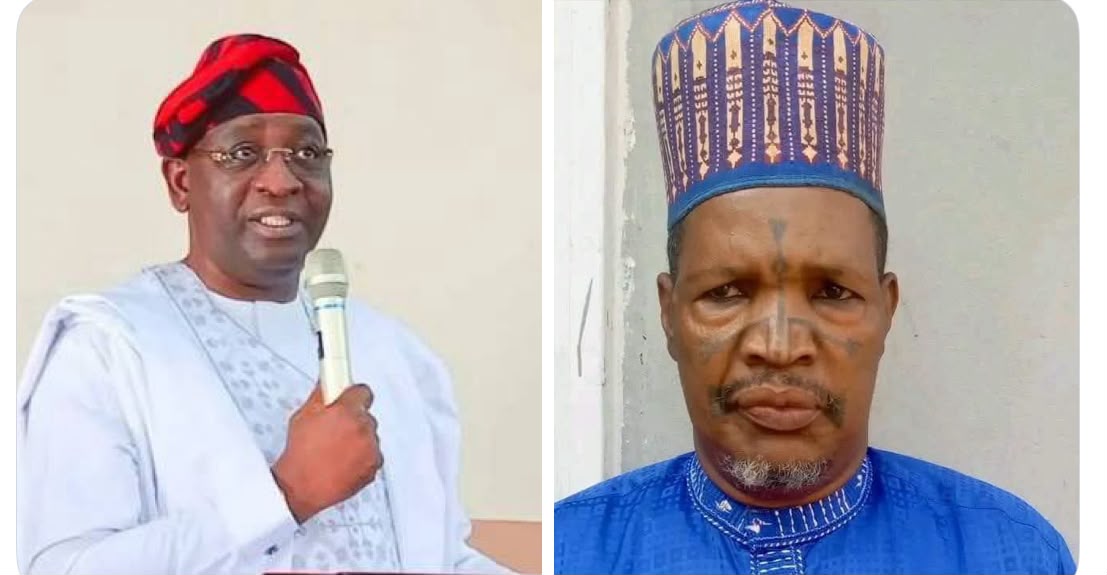
Benue Deputy Gov. Visit family Slain MACBAN Leader, Urges Calm as Police Probe Killing
By: Zagazola Makama
The Benue State Government, in collaboration with the Nigeria Police Force, has paid a condolence visit to the family of the late Fulani community leader, Alhaji Risku Muhammad, in Ohimini Local Government Area, urging residents to remain calm as investigations into his killing continue.
The condolence visit took place on Tuesday and was led by the Deputy Governor of Benue State, who represented Gov. Hyacinth Alia.
The delegation included the Assistant Inspector-General of Police in charge of Zone 4, Makurdi, the Commissioner of Police, Benue State Command, representatives of the Sultan of Sokoto, the leadership of the Miyetti Allah Cattle Breeders Association of Nigeria (MACBAN), other security agencies and relatives of the deceased from different parts of the country.
During the visit, the delegation sympathised with the bereaved family and appealed to them and members of the Fulani community not to resort to self-help or reprisals.
They urged them to allow security agencies to carry out a thorough and impartial investigation into the circumstances surrounding the killing.
The delegation assured the family that the government and security agencies were committed to ensuring that those responsible for the homicide are identified and brought to justice.
Police authorities said the case was under active investigation by the State Criminal Investigation Department (CID), adding that efforts were ongoing to unravel the circumstances surrounding the incident.
The Benue State Government reiterated its commitment to maintaining peace and security across the state and called on all residents to continue supporting security agencies with credible information that could aid the investigation.
Benue Deputy Gov. Visit family Slain MACBAN Leader, Urges Calm as Police Probe Killing
Three Herders Killed in Ambush in Plateau, MACBAN Calls for Investigation
By: Zagazola Makama
Three cattle herders were reportedly killed and one other injured in an ambush by unidentified gunmen while grazing livestock in Gero-Rafin Bauna area of Jos South Local Government Area of Plateau State.
The Chairman of the Miyetti Allah Cattle Breeders Association of Nigeria (MACBAN) in Plateau, Alhaji Ibrahim Yusuf Babayo, confirmed the incident and condemned the attack.
Babayo called on security agencies to carry out a thorough investigation into the killings and ensure that those responsible are arrested and prosecuted.
According to him, the bodies of the three victims were discovered in a forest after an extensive search by members of the community.
He alleged that the victims were brutally killed during the attack.
The MACBAN chairman further claimed that the latest incident came barely two weeks after four other herders were reportedly killed in the same general area, adding that their bodies had yet to be recovered.
Babayo urged the authorities to take urgent steps to improve security in vulnerable communities and prevent further attacks.
He also appealed to members of the affected communities to remain calm and allow security agencies to investigate the incident.
As of the time of filing this report, the Plateau State Police Command had not issued an official statement on the incident.
The circumstances surrounding the attack and the identity of the perpetrators remain unclear.
Three Herders Killed in Ambush in Plateau, MACBAN Calls for Investigation

Troops Recover AK-47 Rifle in Raid on Suspected Gunrunners’ Hideout in Taraba

Benue Deputy Gov. Visit family Slain MACBAN Leader, Urges Calm as Police Probe Killing

Three Herders Killed in Ambush in Plateau, MACBAN Calls for Investigation

Roger Federer’s Shock as DNA Results Reveal Myla and Charlene Are Not His Biological Children

THE PLIGHT OF FARIDA

FAILED COUP IN BURKINA FASO: HOW TRAORÉ NARROWLY ESCAPED ASSASSINATION PLOT AMID FOREIGN INTERFERENCE CLAIMS
-
 News2 years ago
Roger Federer’s Shock as DNA Results Reveal Myla and Charlene Are Not His Biological Children
-
Opinions4 years ago
THE PLIGHT OF FARIDA
-
 News1 year ago
FAILED COUP IN BURKINA FASO: HOW TRAORÉ NARROWLY ESCAPED ASSASSINATION PLOT AMID FOREIGN INTERFERENCE CLAIMS
-

 News2 years ago
EYN: Rev. Billi, Distortion of History, and The Living Tamarind Tree
-
 Opinions5 years ago
POLICE CHARGE ROOMS, A MINTING PRESS
-

 ACADEMICS2 years ago
A History of Biu” (2015) and The Lingering Bura-Pabir Question (1)
-

 Columns2 years ago
Army University Biu: There is certain interest, but certainly not from Borno.
-

 Politics1 year ago
2027: Why Hon. Midala Balami Must Go, as Youths in Hawul and Asikira/Uba Federal Constituency Reject ₦500,000 as Sallah Gift
