
News
CDN Backs Federal Government’s U.S. Lobby Contract, Calls It Strategic Security Move


CDN Backs Federal Government’s U.S. Lobby Contract, Calls It Strategic Security Move
By: Michael Mike
The Coalition in Defence of Nigeria (CDN) has publicly supported the Federal Government’s decision to engage a United States-based lobbying firm over allegations of Christian genocide in Nigeria, describing the move as a strategic step toward strengthening the nation’s security and international relations.
In a statement released on Sunday in Abuja, the coalition insisted that the engagement of the lobby firm is not merely a public relations exercise but a deliberate investment in Nigeria’s long-term stability and global credibility.
The National Publicity Secretary of CDN, Mallam Isa Shehu, said Nigeria is currently grappling with serious security challenges such as terrorism, insurgency, banditry, kidnapping, and organized crime. He noted that these threats extend beyond Nigeria’s borders and are often connected to international networks involved in arms trafficking, extremist financing, and cybercrime.
Shehu argued that hiring a reputable U.S. lobbying firm would help Nigeria build stronger partnerships with foreign governments, particularly in areas of intelligence sharing, counter-terrorism collaboration, and technical support for security agencies.
He further explained that the move would ensure that Nigeria’s security concerns receive greater attention in Washington and other global decision-making centres, reinforcing the government’s commitment to protecting lives and restoring peace across the country.
The coalition stressed that tackling insecurity requires collective effort, not just government action. It called on civil society groups, business leaders, political actors, and ordinary citizens to play their roles in promoting national unity and security.
While acknowledging that the lobby contract alone cannot solve Nigeria’s security problems, the CDN maintained that it is a valuable diplomatic tool that could strengthen the country’s position on the global stage.
The group urged Nigerians to support the Federal Government’s decision, saying the issue is not political but essential for national survival and development.
The CDN concluded by reaffirming its full backing for the initiative and calling for nationwide solidarity in the fight against insecurity.
CDN Backs Federal Government’s U.S. Lobby Contract, Calls It Strategic Security Move


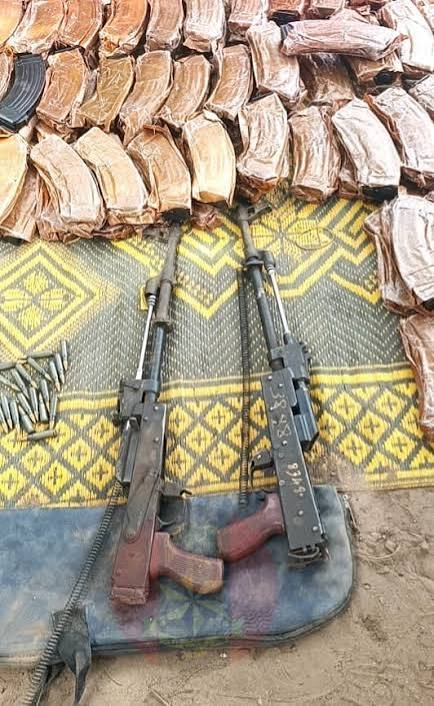
Troops Recover AK-47 Rifle in Raid on Suspected Gunrunners’ Hideout in Taraba
By: Zagazola Makama
Troops of Operation MESA have recovered an AK-47 rifle, a magazine and three rounds of 7.62mm special ammunition during a raid on a suspected gunrunners’ hideout in Gassol Local Government Area of Taraba State.
Security sources said the operation was carried out at about 12:15 a.m. on June 30 by troops of the 20 Model Battalion deployed in Gassol, in collaboration with a team from the Defence Intelligence Agency (DIA).
The sources said the joint team conducted the intelligence-led raid on a suspected gunrunners’ hideout at Kwatan Nanido Village following credible information on illegal arms activities in the area.
Although no suspect was arrested during the operation, the troops recovered one AK-47 rifle, one magazine and three rounds of 7.62mm special ammunition abandoned at the location.
The recovered items have been taken into military custody for further investigation and necessary action.
Security sources said efforts were ongoing to identify and apprehend members of the suspected gunrunning syndicate as operations continue to curb the proliferation of illegal arms and enhance security across the state.
Troops Recover AK-47 Rifle in Raid on Suspected Gunrunners’ Hideout in Taraba
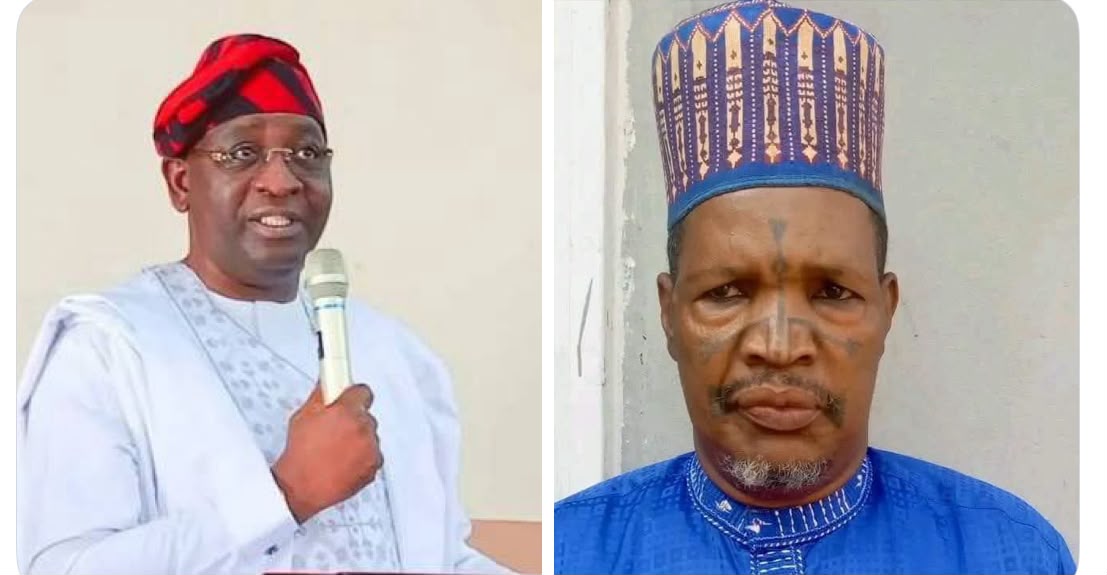
Benue Deputy Gov. Visit family Slain MACBAN Leader, Urges Calm as Police Probe Killing
By: Zagazola Makama
The Benue State Government, in collaboration with the Nigeria Police Force, has paid a condolence visit to the family of the late Fulani community leader, Alhaji Risku Muhammad, in Ohimini Local Government Area, urging residents to remain calm as investigations into his killing continue.
The condolence visit took place on Tuesday and was led by the Deputy Governor of Benue State, who represented Gov. Hyacinth Alia.
The delegation included the Assistant Inspector-General of Police in charge of Zone 4, Makurdi, the Commissioner of Police, Benue State Command, representatives of the Sultan of Sokoto, the leadership of the Miyetti Allah Cattle Breeders Association of Nigeria (MACBAN), other security agencies and relatives of the deceased from different parts of the country.
During the visit, the delegation sympathised with the bereaved family and appealed to them and members of the Fulani community not to resort to self-help or reprisals.
They urged them to allow security agencies to carry out a thorough and impartial investigation into the circumstances surrounding the killing.
The delegation assured the family that the government and security agencies were committed to ensuring that those responsible for the homicide are identified and brought to justice.
Police authorities said the case was under active investigation by the State Criminal Investigation Department (CID), adding that efforts were ongoing to unravel the circumstances surrounding the incident.
The Benue State Government reiterated its commitment to maintaining peace and security across the state and called on all residents to continue supporting security agencies with credible information that could aid the investigation.
Benue Deputy Gov. Visit family Slain MACBAN Leader, Urges Calm as Police Probe Killing
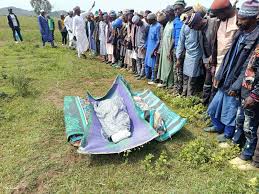
Three Herders Killed in Ambush in Plateau, MACBAN Calls for Investigation
By: Zagazola Makama
Three cattle herders were reportedly killed and one other injured in an ambush by unidentified gunmen while grazing livestock in Gero-Rafin Bauna area of Jos South Local Government Area of Plateau State.
The Chairman of the Miyetti Allah Cattle Breeders Association of Nigeria (MACBAN) in Plateau, Alhaji Ibrahim Yusuf Babayo, confirmed the incident and condemned the attack.
Babayo called on security agencies to carry out a thorough investigation into the killings and ensure that those responsible are arrested and prosecuted.
According to him, the bodies of the three victims were discovered in a forest after an extensive search by members of the community.
He alleged that the victims were brutally killed during the attack.
The MACBAN chairman further claimed that the latest incident came barely two weeks after four other herders were reportedly killed in the same general area, adding that their bodies had yet to be recovered.
Babayo urged the authorities to take urgent steps to improve security in vulnerable communities and prevent further attacks.
He also appealed to members of the affected communities to remain calm and allow security agencies to investigate the incident.
As of the time of filing this report, the Plateau State Police Command had not issued an official statement on the incident.
The circumstances surrounding the attack and the identity of the perpetrators remain unclear.
Three Herders Killed in Ambush in Plateau, MACBAN Calls for Investigation

Troops Recover AK-47 Rifle in Raid on Suspected Gunrunners’ Hideout in Taraba

Benue Deputy Gov. Visit family Slain MACBAN Leader, Urges Calm as Police Probe Killing

Three Herders Killed in Ambush in Plateau, MACBAN Calls for Investigation

Roger Federer’s Shock as DNA Results Reveal Myla and Charlene Are Not His Biological Children

THE PLIGHT OF FARIDA

FAILED COUP IN BURKINA FASO: HOW TRAORÉ NARROWLY ESCAPED ASSASSINATION PLOT AMID FOREIGN INTERFERENCE CLAIMS
-
 News2 years ago
Roger Federer’s Shock as DNA Results Reveal Myla and Charlene Are Not His Biological Children
-
Opinions4 years ago
THE PLIGHT OF FARIDA
-
 News1 year ago
FAILED COUP IN BURKINA FASO: HOW TRAORÉ NARROWLY ESCAPED ASSASSINATION PLOT AMID FOREIGN INTERFERENCE CLAIMS
-

 News2 years ago
EYN: Rev. Billi, Distortion of History, and The Living Tamarind Tree
-
 Opinions5 years ago
POLICE CHARGE ROOMS, A MINTING PRESS
-

 ACADEMICS2 years ago
A History of Biu” (2015) and The Lingering Bura-Pabir Question (1)
-

 Columns2 years ago
Army University Biu: There is certain interest, but certainly not from Borno.
-

 Politics1 year ago
2027: Why Hon. Midala Balami Must Go, as Youths in Hawul and Asikira/Uba Federal Constituency Reject ₦500,000 as Sallah Gift
