
News
Emerging World Order and Africa’s Lessons from the Trump Era

Emerging World Order and Africa’s Lessons from the Trump Era
By Oumarou Sanou
The post–Cold War international order was never perfect, but it rested on an implicit bargain: economic integration, shared security frameworks, and a rules-based multilateral system that, however asymmetrical, offered predictability. Today, that fragile system is cracking. What we are witnessing is not merely a shift in global power centres; it is a contest for the very architecture that governs the relations between the powerful and the weak.
In Davos earlier this year, Canadian Prime Minister Mark Carney delivered a speech that resonated far beyond Canadian audiences. He warned that the world is experiencing “a rupture, not a transition” in the international order—a rupture driven by great power rivalry, coercive economic instruments, and the abandonment of long-standing norms that underpinned international cooperation. Carney’s admonition was clear: “If we are not at the table, we are on the menu.”
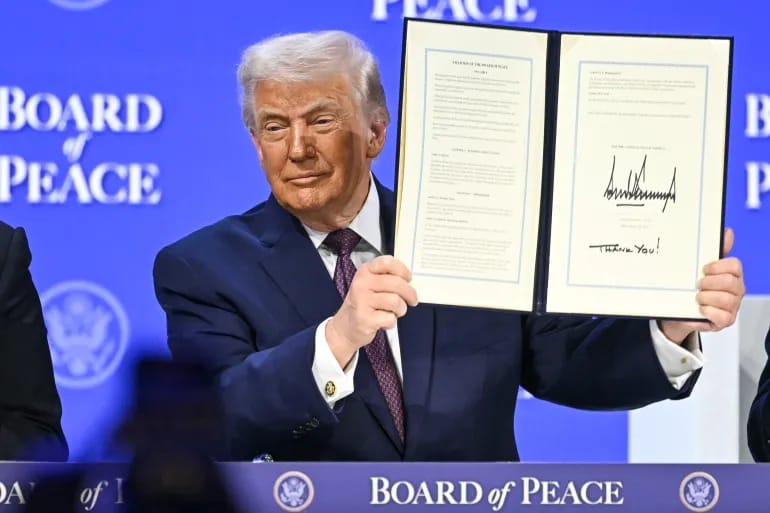
Carney’s words are particularly relevant in light of the behaviour of the United States under President Donald Trump. Whether it was threats of acquisition or control over Greenland, aggressive tariff wars, or overt economic coercion against traditional allies like Canada, Trump’s actions revealed a willingness to privilege raw national interests over collective stability and legal norms.
Trump’s repeated threats to Greenland—suggesting the United States might pursue control of the territory and even floating military options—were not only alarming in themselves but illustrative of a broader willingness to subordinate sovereignty to strategic ambition. When such rhetoric comes from a self-described champion of “America First,” it sends a sobering message: might still make right in the world, even among countries that claim to champion democracy and the rule of law.
Meanwhile, revelations that officials from Washington held private meetings with Alberta separatist activists in Canada stirred fears of foreign interference in a neighbour’s internal affairs. Critics in Ottawa denounced these contacts as a breach of Canadian sovereignty. Such actions, whether driven by geopolitical opportunism or domestic political theatre, further illustrate the weakening of mutual respect that once characterised Western alliances.
Yet it is not only Western allies who have felt the tremors of this shifting order. Trump’s use of tariffs as negotiation tools—far beyond strategic trade leverage, extending toward punitive measures against Canada, Mexico, and other trading partners—underscored a willingness to weaponise economic integration itself. The result: fractured alliances, defensive economic posturing in Europe and Asia, and a deterioration of trust that had anchored global cooperation for decades.
For Africa, these developments are not abstract. They serve as both a warning and a lesson.
First, the era of assuming predictable behaviour from great powers—whether the United States, Europe, or others—is over. If a democracy like the US can threaten tariffs or territorial ambitions without significant institutional pushback, what then for African states facing far more powerful neighbours or external influences? Africa must understand that in a multipolar scramble, goodwill will not protect it. Sovereignty must be backed by strategy and diversified partnerships.
Secondly, the Trump era illustrates the limits of aligning too closely with any one power. African nations have long faced pressure to choose between Western influence and alternative models—whether from Russia, China, or other actors. What Africa needs, as Carney suggested for middle powers, is “cooperation without subordination”: strategic alignment that preserves autonomy rather than replacing one patron with another.
This is where many pseudo-pan-African narratives fall short. They paint Africa’s choices as binary—either anti-Western or pro-Russian/Chinese. Such framing is simplistic and dangerous. Africa’s challenge is not to replace one hegemon with another, but to craft an independent strategy rooted in its own developmental priorities, not the geopolitical interests of outsiders.
Africa also faces internal vulnerabilities that external actors can exploit. Just as the alleged Trump Administration’s interactions with Canadian separatists raised fears of meddling in domestic cohesion, many African states grapple with separatist movements, ethnic tensions, and governance deficits. These internal fractures could be manipulated by external powers seeking influence–be it the US, Russia, China, EU and the others. Nigeria’s own experience with separatist agitation, for example, could invite unwelcome foreign interest if not managed within a strong governance framework.
The Trump era also underscores the importance of resilience in global institutions. Carney’s critique of the “rules-based order” highlighted how powerful states can weaken norms and leverage economic integration as coercion rather than cooperation. For Africa, which relies on international norms for trade, security, and diplomacy, this erosion is dangerous. It means engaging not only in bilateral relationships but also strengthening regional architecture—from the African Union to ECOWAS and the African Continental Free Trade Area (AfCFTA)—to buffer external shocks and present collective leverage.
Moreover, Africa must invest in economic self-reliance and intra-continental cooperation. Reliance on distant powers for security, investment, or economic growth leaves African states vulnerable to external shocks and policy whims. Strengthening intra-African trade, harmonising regulations, and building joint capacities in critical sectors can provide a foundation from which African states negotiate rather than capitulate.
Finally, the African diplomatic corps must be modernised. Africa needs representation that not only attends global summits but actively shapes narratives and defends African interests. Just as Western powers deploy elaborate strategic communication and lobbying capabilities, African states must professionalise their diplomatic engagements to protect sovereignty and influence outcomes.
The emerging world order is marked by competition, not cooperation. This reality will not change simply by wishing it so. Africa’s response must be pragmatic, strategic, and rooted in its own interests—not in reaction to external pressures but in pursuit of its own vision of prosperity, stability, and sovereign self-determination.
Oumarou Sanou is a social critic, Pan-African observer and researcher focusing on governance, security, and political transitions in the Sahel. He writes on geopolitics, regional stability, and African leadership dynamics. Contact: sanououmarou386@gmail.com
Emerging World Order and Africa’s Lessons from the Trump Era
8


Troops Foil ISWAP/JAS Attack on Military Position in Borno, Recover UXOs
By: Zagazola Makama
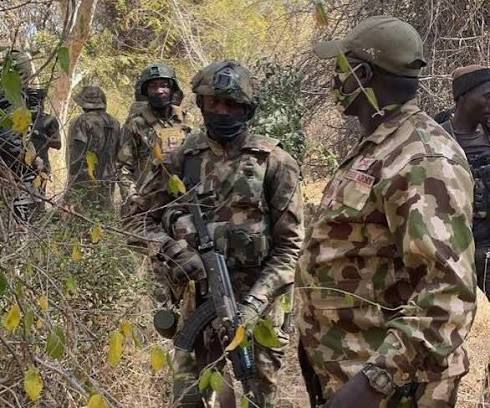
Troops of 3 Battalion (Mechanised)/24 Task Force Brigade have successfully repelled an attack by suspected Islamic State West Africa Province (ISWAP) terrorists in Ngala Local Government Area of Borno State.
Security sources said the attack occurred at about 2:44 a.m. on June 12 when terrorists launched coordinated assaults on the troops’ location from Wurge, Manawaji and Kinuba.
According to the sources, the troops engaged the attackers with superior firepower, supported by reinforcements from battalion headquarters, as well as mortar and artillery fire support, forcing the insurgents to withdraw.
Following the encounter, the fleeing terrorists retreating and scampered into the bushes.
At about 5:45 a.m., troops and auxiliary forces conducted a follow-up exploitation along the withdrawal route towards Wurge, during which three RPG-7 high-explosive unexploded ordnances (UXOs) and two torchlights were recovered.
The sources further disclosed that a main battle tank developed technical faults during the aftermath of the engagement, while one soldier sustained injuries from fragments of an RPG blast.
The wounded personnel was evacuated to the 3 Battalion Regimental Aid Post (RAP) for medical treatment.
Military authorities said clearance and follow-up operations were ongoing in the area to consolidate gains and prevent further terrorist regrouping.
They reaffirmed commitment to sustaining aggressive counter-terrorism operations across the North-East theatre.
Troops Foil ISWAP/JAS Attack on Military Position in Borno, Recover UXOs
Katsina Govt Confirms Death of Retired Major General Rabe in Bandits’ Captivity
By: Zagazola Makama
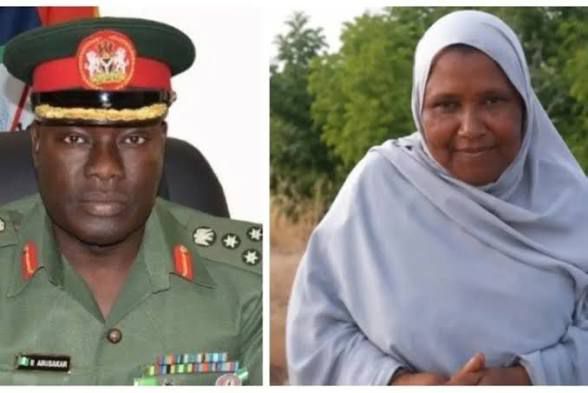
The Katsina State Government has announced the death of retired Major General Rabe Abubakar while in the captivity of bandits.
The government, in a statement issued on Friday by the Commissioner for Internal Security and Home Affairs, Dr Nasiru Mu’azu, described the development as tragic and a major loss to the state and the nation.
According to the statement, the retired senior military officer died from complications arising from diabetes and hypertension while in captivity.
The government said that despite sustained efforts by the state government and security agencies to secure his release, the situation ended in tragedy.
“The deceased retired general died a natural death from complications of diabetes and hypertension,” the statement said.
It noted that the late officer’s abduction and subsequent death represented not only a loss to his immediate family and Katsina State but also a monumental loss to the country.
Governor Dikko Umaru Radda expressed deep condolences to the family of the deceased, describing the incident as a dark moment and a reminder of the need for intensified efforts against criminal elements threatening peace and security.
The governor reaffirmed the state government’s commitment to working closely with the Federal Government and security agencies to ensure that those responsible for the abduction are brought to justice.
He also assured residents that the government remained resolute in its determination to eliminate banditry and safeguard lives and property across the state.
The government prayed for the repose of the soul of the late retired Major General and urged citizens to continue supporting security agencies in the fight against insecurity.
Katsina Govt Confirms Death of Retired Major General Rabe in Bandits’ Captivity
Zulum Delivers Relief, Cash Support to 434 Ngoshe Residents Rescued from Boko Haram
By: Our Reporter
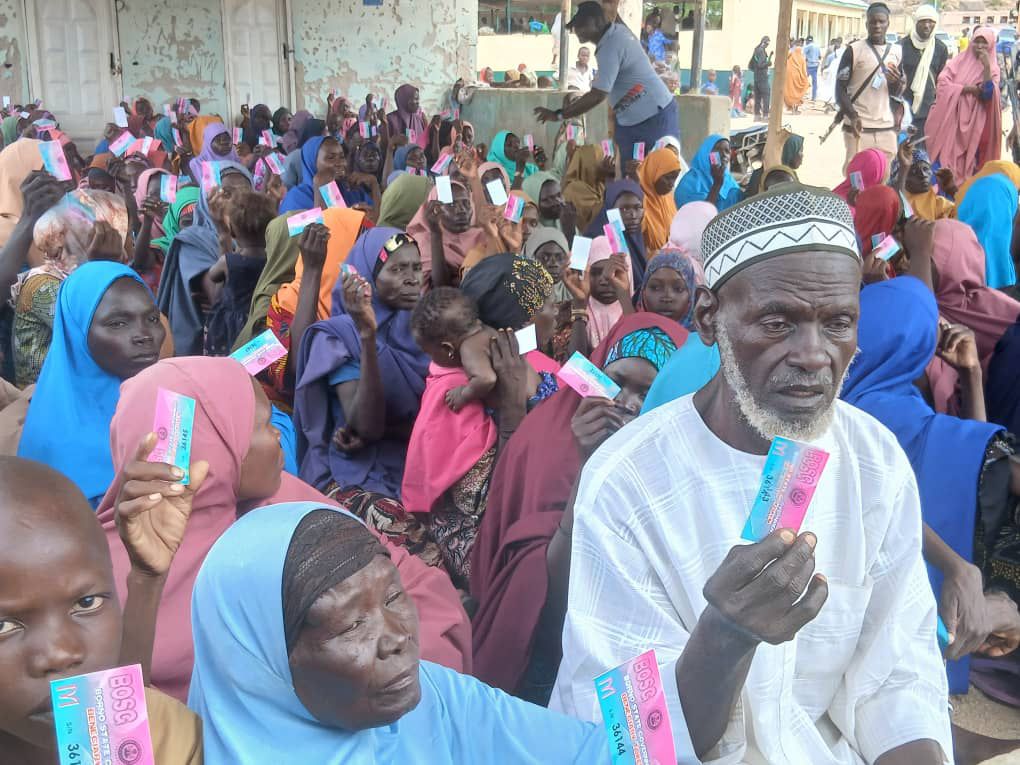
Borno State Government has distributed relief materials to 434 indigenes of Ngoshe community in Gwoza Local Government Area who were recently rescued by security agencies after spending three months in Boko Haram captivity.
Governor Babagana Umara Zulum visited the victims in Pulka on Monday and directed the immediate distribution of food and non-food items to support their recovery and reintegration.
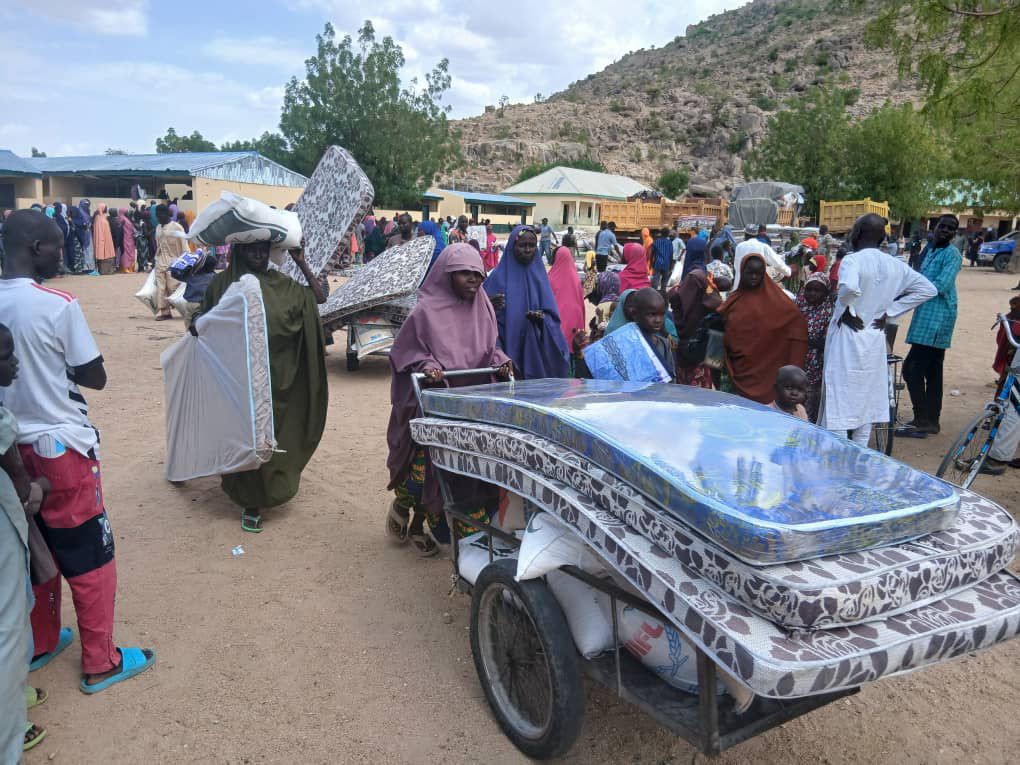
In compliance with the Governor’s directive, the Director General of the Borno State Emergency Management Agency (SEMA), Alhaji Ali Abdullahi Isa, promptly supervised the distribution exercise.
Each rescued person received a bag of rice, a bag of maize grits, a mattress, a wrapper, and a shadda, while children received two pairs of clothing.
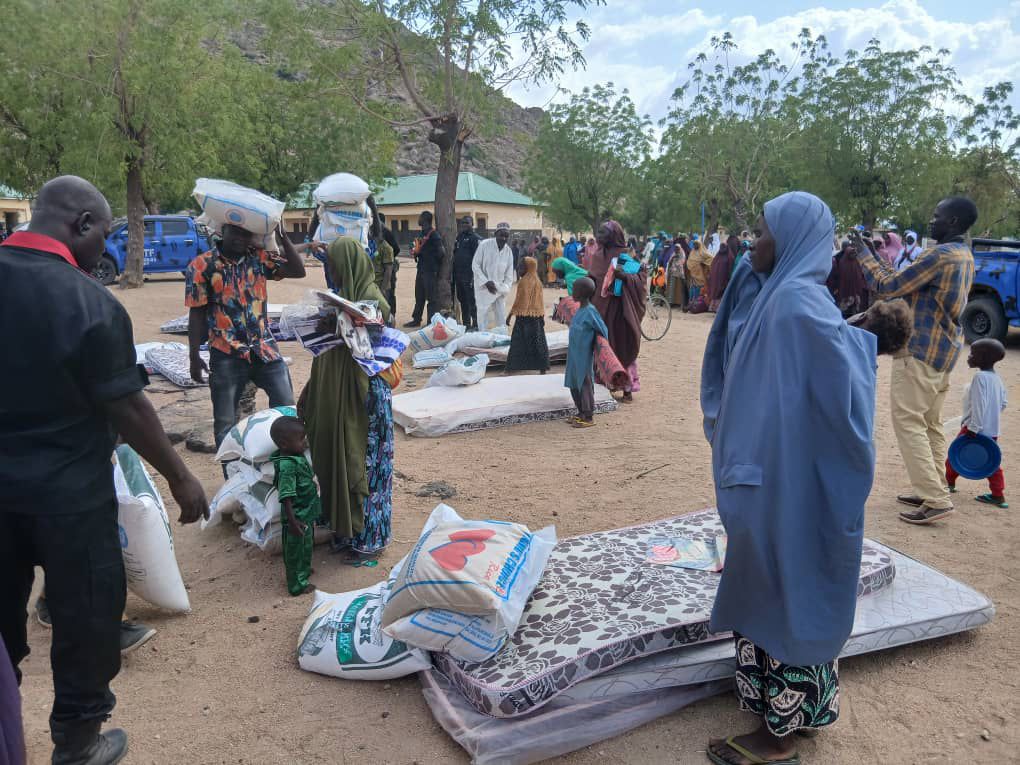
In addition, 208 heads of households received N50,000 each, fulfilling Governor Zulum’s earlier pledge of financial assistance.
Speaking during the distribution, the SEMA Director General said the intervention was part of the government’s immediate response to ease the hardship faced by the rescued victims.
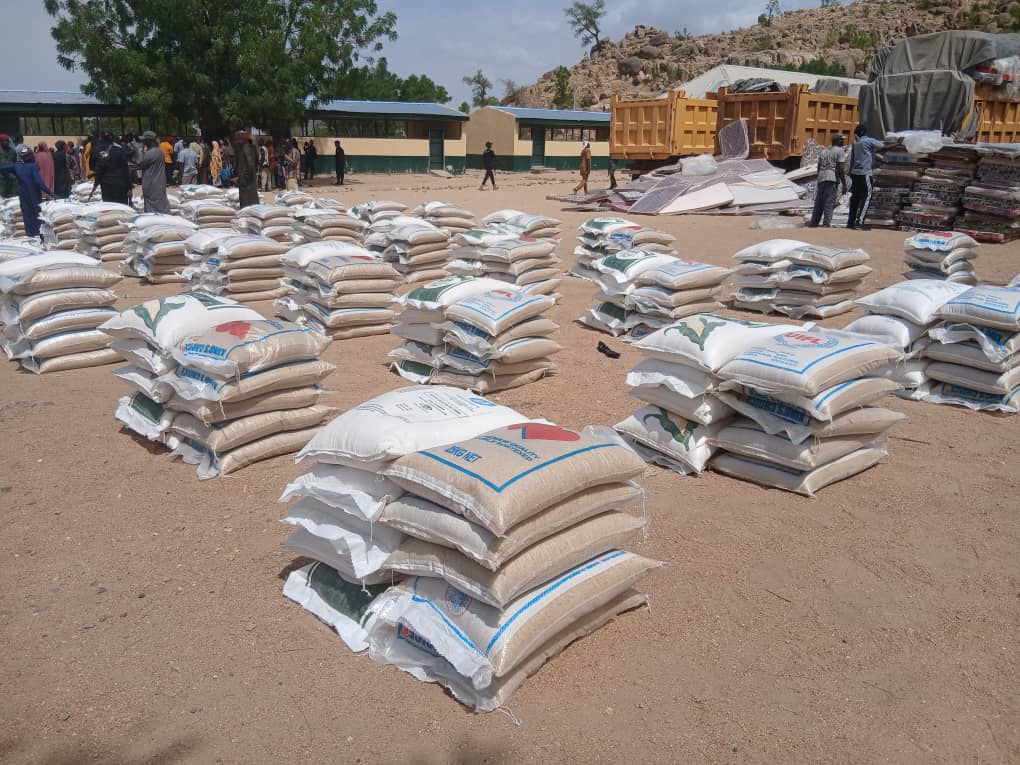
“I am here at the instance of His Excellency, Governor Babagana Umara Zulum, who was here some few days ago, and to deliver the items he directed that it should be given to you as emergency relief,” Ali stated.
The rescued individuals are currently receiving medical care and psychosocial support at a government facility. Upon completion of the rehabilitation process, they will be reintegrated into their respective communities.
The exercise was carried out alongside the Chairman of Gwoza local government, representatives of the Ngoshe community, and other officials.
Zulum Delivers Relief, Cash Support to 434 Ngoshe Residents Rescued from Boko Haram

Troops Recover AK-47 Rifle, Ammunition in Failed ISWAP Reconnaissance Operation in Borno

Troops Foil ISWAP/JAS Attack on Military Position in Borno, Recover UXOs

Katsina Govt Confirms Death of Retired Major General Rabe in Bandits’ Captivity

Roger Federer’s Shock as DNA Results Reveal Myla and Charlene Are Not His Biological Children

THE PLIGHT OF FARIDA

FAILED COUP IN BURKINA FASO: HOW TRAORÉ NARROWLY ESCAPED ASSASSINATION PLOT AMID FOREIGN INTERFERENCE CLAIMS
-
 News2 years ago
Roger Federer’s Shock as DNA Results Reveal Myla and Charlene Are Not His Biological Children
-
Opinions4 years ago
THE PLIGHT OF FARIDA
-
 News1 year ago
FAILED COUP IN BURKINA FASO: HOW TRAORÉ NARROWLY ESCAPED ASSASSINATION PLOT AMID FOREIGN INTERFERENCE CLAIMS
-

 News2 years ago
EYN: Rev. Billi, Distortion of History, and The Living Tamarind Tree
-
 Opinions4 years ago
POLICE CHARGE ROOMS, A MINTING PRESS
-

 ACADEMICS2 years ago
A History of Biu” (2015) and The Lingering Bura-Pabir Question (1)
-

 Columns2 years ago
Army University Biu: There is certain interest, but certainly not from Borno.
-

 Politics1 year ago
2027: Why Hon. Midala Balami Must Go, as Youths in Hawul and Asikira/Uba Federal Constituency Reject ₦500,000 as Sallah Gift
